ALTIOR AI ADVANTAGERead the blog
Altior Daily AI Briefing

Infrastructure Is Becoming Part of the Model Story

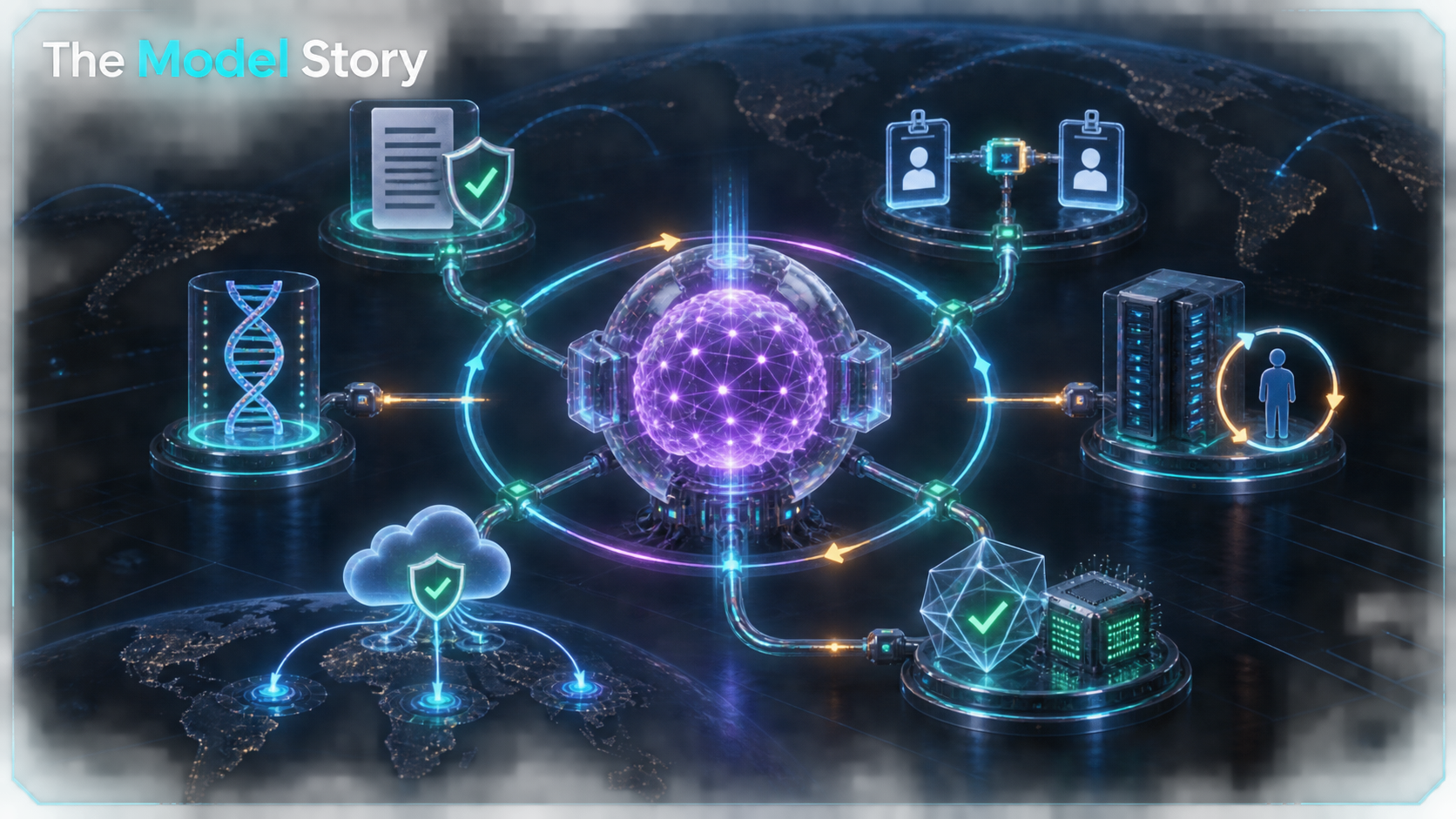
2026-09-19 — Infrastructure is becoming part of the model story: governed feedback loops, deployment routes, access controls and verification now determine whether capability can be used reliably in production.

Infrastructure Is Becoming Part of the Model Story
The day in view

The day in view

*Altior Daily AI Briefing · 19 September 2026*

Altior — our view today

The model is no longer the whole product. This issue tracks the operational layer around it: governed feedback loops, deployment routes, access controls and verification. Those are not back-office details. They determine whether capability can be used reliably in production.

OpenAI / ChatGPT / Codex

OpenAI / ChatGPT / Codex

Astra for Law: the system around the model

OpenAI is positioning GPT-6 Astra for legal work alongside legal search, controls and specialist workflows. The important point is not simply that a more capable model exists. It is that a high-stakes deployment needs a surrounding system: retrieval, permissions, review paths and a workflow shaped for the job.

Access is narrow, and the performance evidence remains supplier-reported. That matters. Legal claims need independent scrutiny, especially where model output may influence professional judgement. For operators, the lesson is clear: a model alone is not a legal product. The operating controls are part of the offer.

Our takeTreat vertical AI claims as system claims. Ask what is retrieved, who can act, where review happens and what evidence supports the performance statement.

Source

ChatGPT plugins can connect multiple accounts

Max Stoiber says most ChatGPT plugins can now connect multiple accounts. Developers do not need code changes for the underlying connection behaviour; adding a profile tool to an MCP server can give ChatGPT the information it needs to label accounts clearly.

That sounds like a small integration detail. It is not. Account context is one of the first places an otherwise useful assistant becomes unsafe or confusing. If a user can distinguish which identity they are acting through, it is easier to keep work, customers and permissions separated.

Our takeIdentity context is a practical control. Clear account labels help keep work, customers and permissions separated.

Google / Gemini / DeepMind / Antigravity

Google / Gemini / DeepMind / Antigravity

AlphaGenome Atlas maps every possible DNA letter change

Google says AlphaGenome Atlas maps every possible DNA letter change in the human genome to help decode genetic causes of disease. The work points at a demanding use case for model-assisted interpretation: the search space is vast, the domain is specialised and downstream decisions require care.

For operators outside biology, the broader pattern still applies. High-value model systems do not remove expertise; they concentrate it where it matters most. A useful mapping layer can help people prioritise investigation, but it does not turn uncertain biology into settled clinical judgement.

Our takeThe strongest AI applications make expert review more targeted; they do not replace the conditions that make a judgement trustworthy.

Zhipu / GLM

Zhipu / GLM

GLM-5.3 and the Feedback Loop That Made Its Infrastructure Work

Z.ai says GLM-5.3 helped take its Flash inference stack from a first run to production in under two weeks. The claimed mechanism was a human-governed optimisation loop: the model contributed within a process bounded by people, verification and operational goals.

That is a more useful framing than “recursive self-improvement”. Infrastructure work becomes valuable when changes can be tested against latency, reliability, cost and deployment constraints. A model can accelerate the iteration, but it should not be the sole judge of its own output or the release gate for production systems.

Our takeThe transferable capability is disciplined feedback: keep humans in the loop, make outcomes measurable and verify every change before it becomes infrastructure.

Source
NousResearch / Hermes

NousResearch / Hermes

Hermes Agent adds native Amazon Bedrock support

Hermes Agent now supports Amazon Bedrock through the native Converse API, Anthropic SDK routing and OpenAI models via Bedrock Mantle. The integration also covers IAM authentication, Guardrails and cross-region inference.

For a team running more than one model family, the value is not merely more endpoints. Native cloud interfaces and controls determine how identity, routing, safety settings and regional capacity behave once an agent reaches production. That is where a prototype either becomes governable or becomes a collection of exceptions.

Our takeMulti-model systems need a control plane, not a pile of adapters. Native identity, guardrail and routing support are operational capability.

Source
Other

Other

Cloudflare open-sources its security-audit agent skill

Cloudflare has open-sourced a security-audit skill for coding agents. It orchestrates isolated agents through six phases: reconnaissance, coverage-led hunting, candidate validation, structured output, independent record verification and target-neutral reporting.

The sequence is the story. Security work needs both breadth and scepticism. A system that separates discovery from validation and then independently checks its records has a clearer path to useful evidence than one agent producing an unexamined list of possible bugs.

Our takeAgentic security should be designed as an audit trail. Independent verification is not optional if the output will drive remediation.

Source

Local AI Is Becoming an Operating Choice

Local and smaller models are moving closer to practical deployment. Google’s Gemma 4 12B integration points to multimodal work on a current 16GB Mac, while ternary compression research and a 4B query-planning result continue to improve the capability available per pound, watt and deployment constraint.

The question is shifting from whether a team can run a model locally to where local operation produces the better trade-off. Privacy, latency, offline availability, hardware cost and maintenance all belong in that decision. Centralised models still have a place; they are no longer the only credible default.

Our takeLocal AI is an operating choice. Choose it when the constraints and controls are better than the cloud alternative.

Source

Ternary Bonsai 2 27B compresses Qwen3.8-27B into a 9× smaller footprint

PrismML says Ternary Bonsai 2 27B compresses Qwen3.8-27B into a footprint nine times smaller. It combines ternary weights with FP16 group-wise scaling while targeting reasoning, coding, vision and agentic capability.

Compression matters operationally because model size shapes where a system can run, how much it costs and what latency it can sustain. The capability claims should be tested against the workload a team actually needs. A smaller footprint is an advantage only if quality survives the task, safety and reliability checks around it.

Our takeModel efficiency is becoming a deployment lever. Benchmark the workload, then decide whether the smaller model changes the economics enough to matter.

Source

Bend 2.0 makes formal proof a mainstream pitch

Bend 2.0 describes itself as a fast language that blocks AI mistakes via proof while supporting CPU and GPU parallelism. It is an ambitious claim, but it puts a useful idea in the foreground: some classes of error should be prevented by construction rather than discovered after a model-generated change reaches production.

Formal methods are not a universal substitute for testing or review. They can, however, make specific guarantees explicit and machine-checkable. That matters as AI-assisted coding increases the volume of changes teams need to assess.

Explore more at the [Altior blog](https://altior.digital/blog/) or browse the [prompt library](https://altior.digital/blog/prompts/).

Our takePut verification closer to the code when the failure mode justifies it. Proof is strongest where the property is clear and the cost of being wrong is high.

Source
ALTIOR AI ADVANTAGE
Keep reading

Build with evidence.

Build AI systems with controls that can survive review.

The Altior blogThe prompt library