Astra for Law is the system around the model
OpenAI has paired GPT-6 Astra with legal search, controls and specialist workflows. The promise is substantial; the evidence and access remain bounded.

The notable part of Astra for Law is not simply a new model in a legal interface. OpenAI has combined GPT-6 Astra with legal-analysis instructions, settings for thorough work, a U.S. legal search index and connected tools for firm workflows.
OpenAI says the index covers more than 230 million URLs across case law, statutes, regulations, court rules and administrative decisions. That creates a different proposition from ordinary web search: a system intended to retrieve authorities and surface relevant passages while lawyers retain responsibility for verification and judgment.
The system is the story
Astra for Law is a package of model capability, legal retrieval, controls and connected workflows—not a frontier model operating alone.
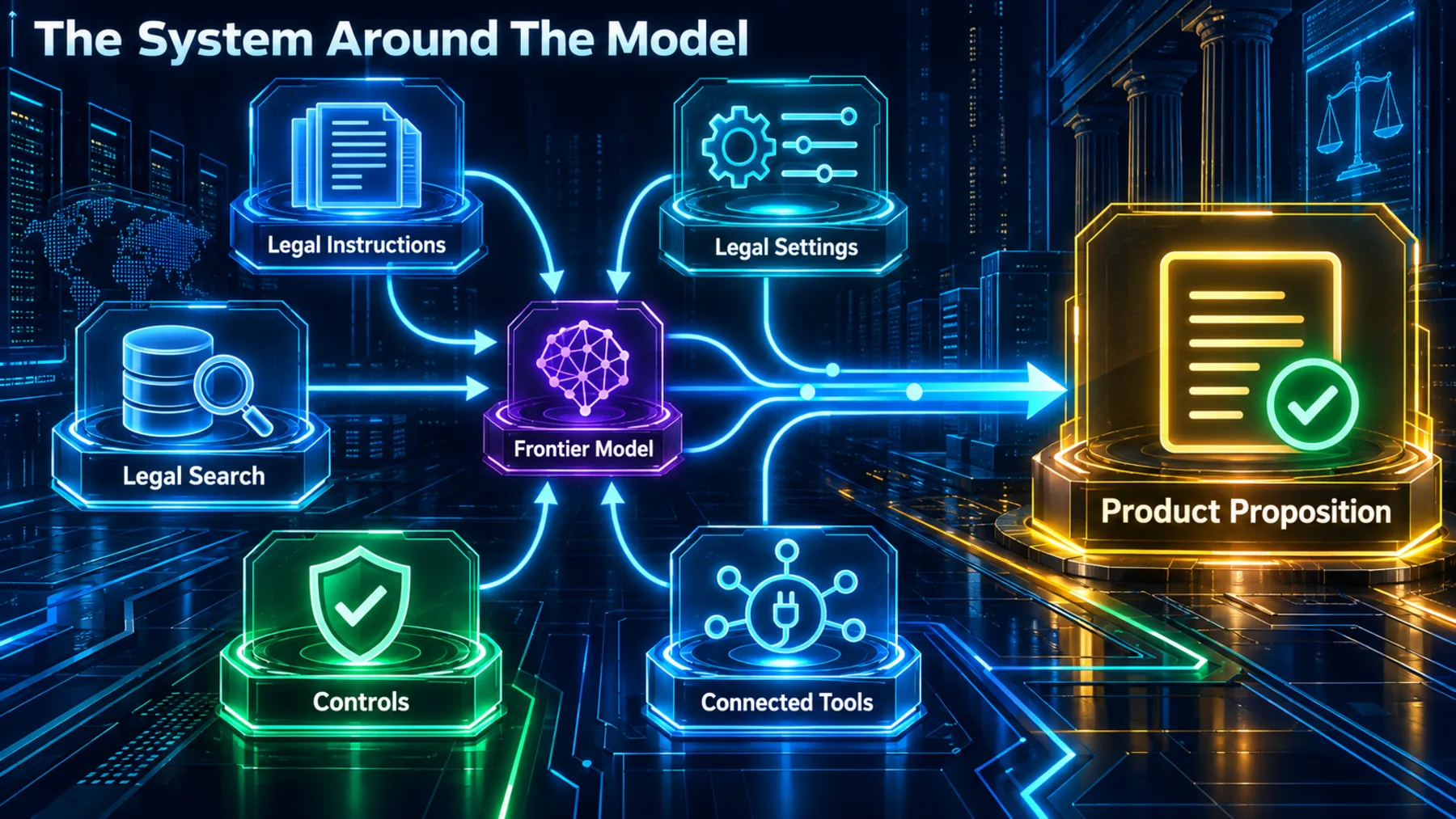
That distinction matters because legal work is shaped by the path to an answer as much as the answer itself. A useful system needs to find relevant authority, expose the supporting passage, work within a firm’s tools and leave room for professional challenge.
OpenAI’s framing is open and composable: firms can use specialist products, bring their own tools and knowledge, and adapt community-built skills. The model sits inside that arrangement; it is not the whole product.
What OpenAI reports
The headline improvement comes from OpenAI’s own private benchmark setup, under its highest reasoning condition.
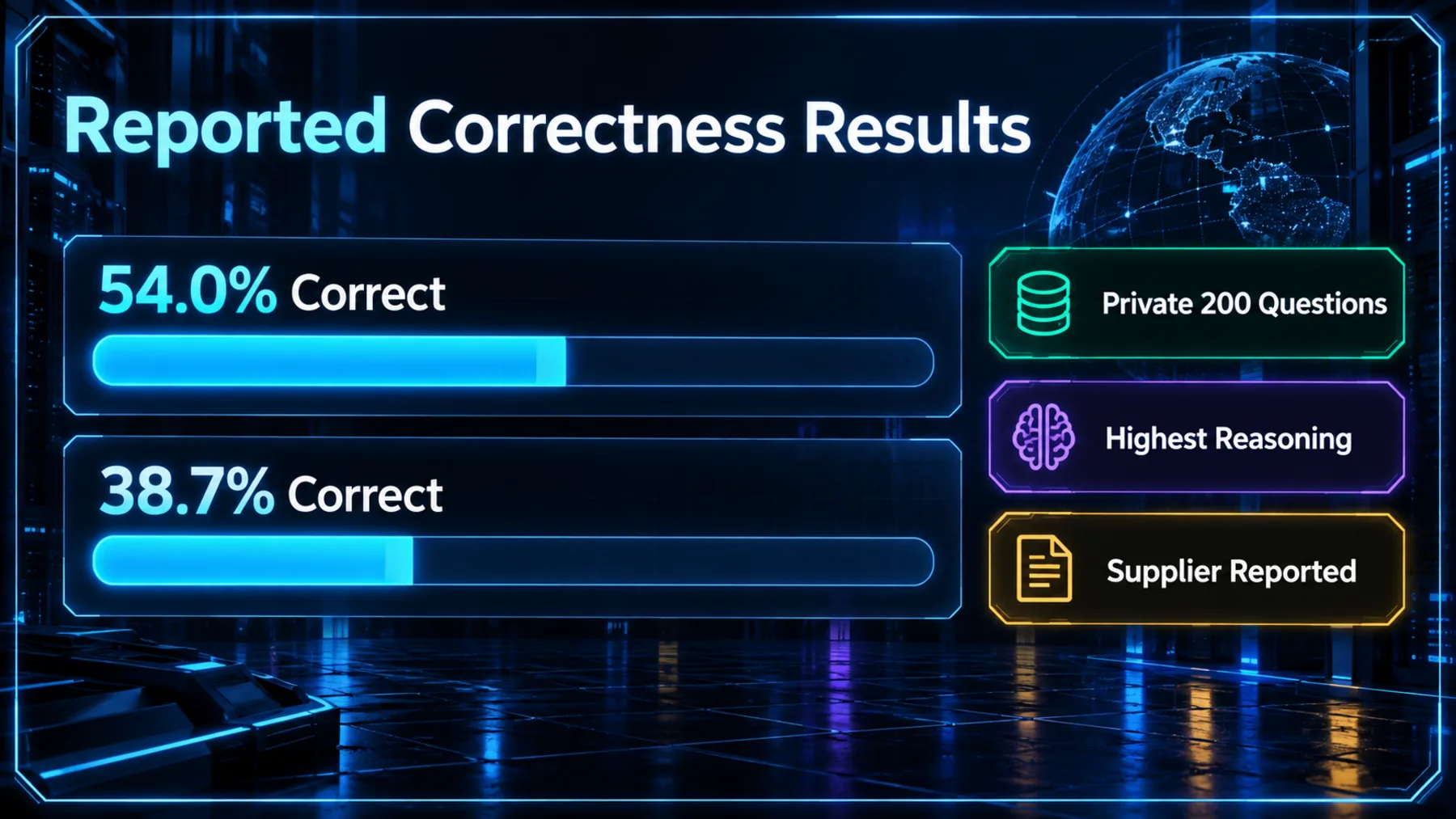

OpenAI says Astra for Law passed the evaluation’s overall correctness check on 54.0% of questions, compared with 38.7% for GPT-6 Astra using web search alone. It describes that difference as a 40% relative improvement.
The stronger reading is also the more cautious one. These are supplier-reported results from a private 200-question Vals AI Legal Research Bench validation set, run at the highest reasoning effort for both systems. They indicate what OpenAI observed in that setup; they do not independently establish legal reliability or professional fitness.
The benchmark needs its conditions
The numbers are meaningful only alongside the test design, comparison and source of the claim.

The benchmark is useful as a directional receipt for the product design. It compares the complete Astra for Law configuration with GPT-6 Astra using web search alone, so it points to the value of the surrounding legal system as well as the model.
It should not be stretched beyond that. The evaluation is private, the conditions are specific and the claim comes from OpenAI. In legal work, a stronger retrieval loop still leaves the duty to inspect authorities, test the reasoning and apply professional judgment.
Astra for Law passed the evaluation’s overall correctness check on 54.0% of questions, compared with 38.7% for GPT-6 Astra using web search alone.
OpenAI
What the product evidence shows
OpenAI’s launch materials describe a legal-work system designed around retrieval, context and lawyer judgment.
The product evidence is clearest when it stays close to the launch materials. OpenAI describes legal-analysis and writing instructions, settings for thorough work, and a legal index that searches U.S. authorities across more than 230 million URLs, with sources added daily.
That is a workflow claim rather than a claim that a model has solved legal work. The intended gain is better access to relevant material and context; the legal conclusion still has to withstand lawyer verification.
Research still ends with judgment
A useful legal research loop moves from a lawyer’s question to evidence, then back to professional verification.
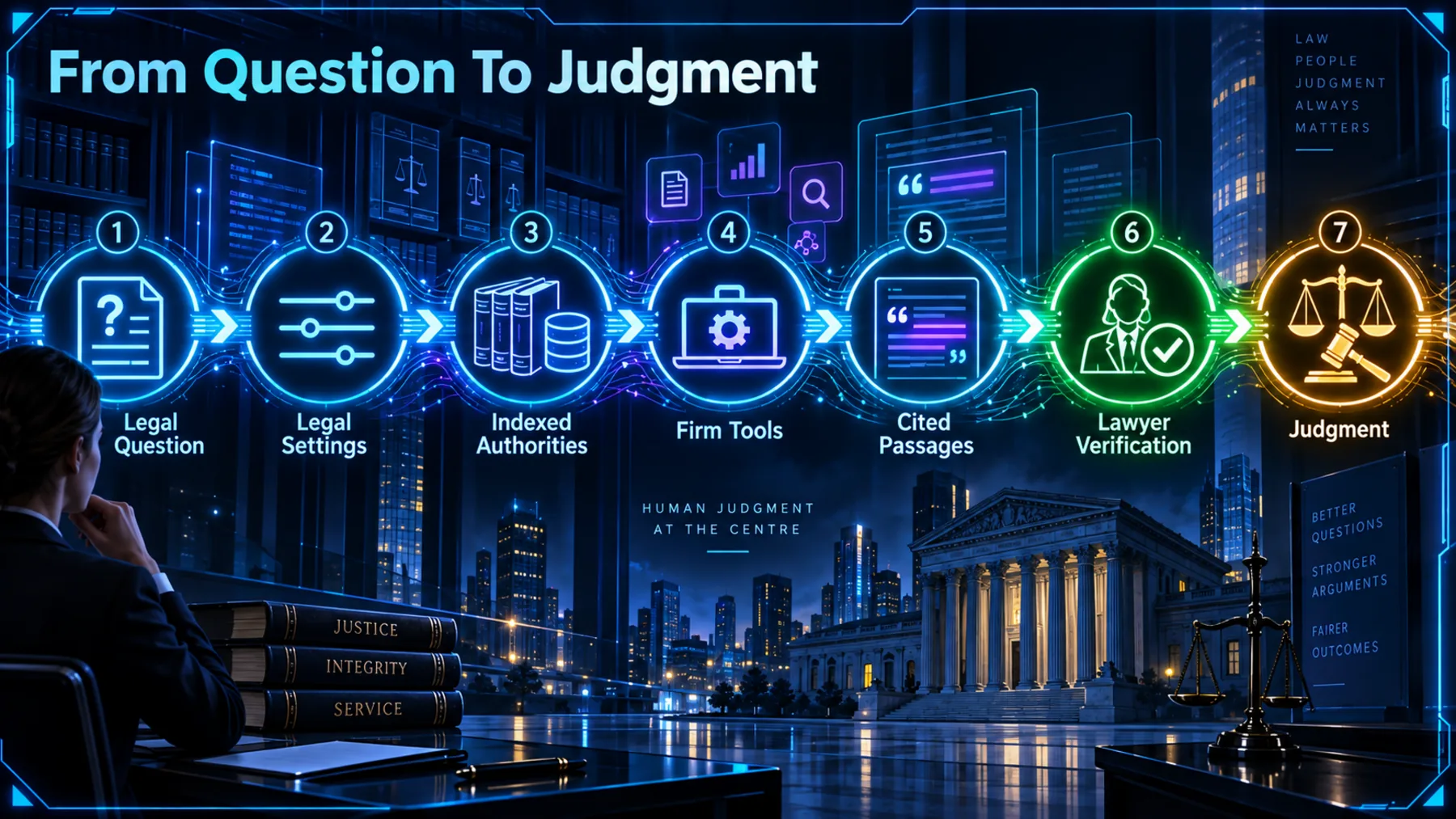
OpenAI’s legal search proposition starts with a question that needs to be bounded by jurisdiction, issue and context. The system then draws on legal instructions, settings and indexed authorities to retrieve material that may be relevant.
The key step follows retrieval. We still need to inspect the cited passage, test whether the authority applies and decide what the evidence means for the matter at hand. The workflow can accelerate research; it does not transfer judgment.
What firms actually get
Access begins with selected firms, while OpenAI describes ChatGPT, Codex and a future API as the routes into the system.

Initial access
Selected law firms receive Trusted Access in ChatGPT and Codex.
Connected tools
OpenAI announced 26 partner-built plugins, 9 community plugins and 47 custom skills.
Professional control
Lawyers remain responsible for verification and judgment before research informs legal work.
For now, Astra for Law is not a broadly available legal product. OpenAI says it will initially be offered to selected law firms through Trusted Access in ChatGPT and Codex, with API availability coming soon.
The ecosystem matters here. OpenAI announced 26 partner-built plugins, 9 community plugins and 47 custom skills. Those numbers describe an expanding set of possible connections, not a guarantee that every workflow is ready or dependable for every firm.
The value is in the working system
The meaningful change is a more deliberate route from legal question to evidence, with professional judgment still in the centre.
The model matters, but the legal product is the system that helps us find, inspect and verify the authority around it.
AI News analysis of OpenAI’s launch materials
Astra for Law is most interesting as a systems launch. OpenAI is combining model capability with retrieval, instructions, controls and specialist connections in an attempt to make legal AI more useful in the flow of work.
The test is not whether the model can produce a confident answer. It is whether the system helps us locate better evidence, understand its limits and preserve the review discipline that legal work requires. Wider access, independent evaluation and dependable use in real workflows will determine how much of the launch holds up.
Turn a research question into a verifiable legal research plan
I am researching this U.S. legal question: [insert question]. Break it into the governing issues, jurisdictions and time limits that matter. Search for the most relevant cases, statutes, regulations, court rules and administrative decisions. For each authority, provide a short explanation of relevance, the precise supporting passage, a link or citation, and any uncertainty or conflicting authority. Do not reach a final legal conclusion. End with a verification checklist identifying what counsel should check before relying on this research.Ready to copy
Watch the evidence, not just the launch
OpenAI’s announcement sets out a clear product direction, but the important proof will arrive after the launch materials: broader access, API availability, independent evaluation and evidence from real legal workflows.
Until then, the measured view is straightforward. Astra for Law may improve the research loop; lawyers still need to verify the work and make the judgment.
Try the promptWhat to watch next
- Access Whether Trusted Access expands beyond selected law firms.
- API availability When OpenAI makes the promised API route available and under what constraints.
- Independent evaluation Whether external testing can assess performance beyond OpenAI’s private benchmark.
- Workflow evidence Whether firms can show dependable, lawyer-verified use in real legal research workflows.