WebMCP gives AI agents an explicit action path
OpenAI says compatible websites can expose purpose-built tools that ChatGPT or Codex may use directly.
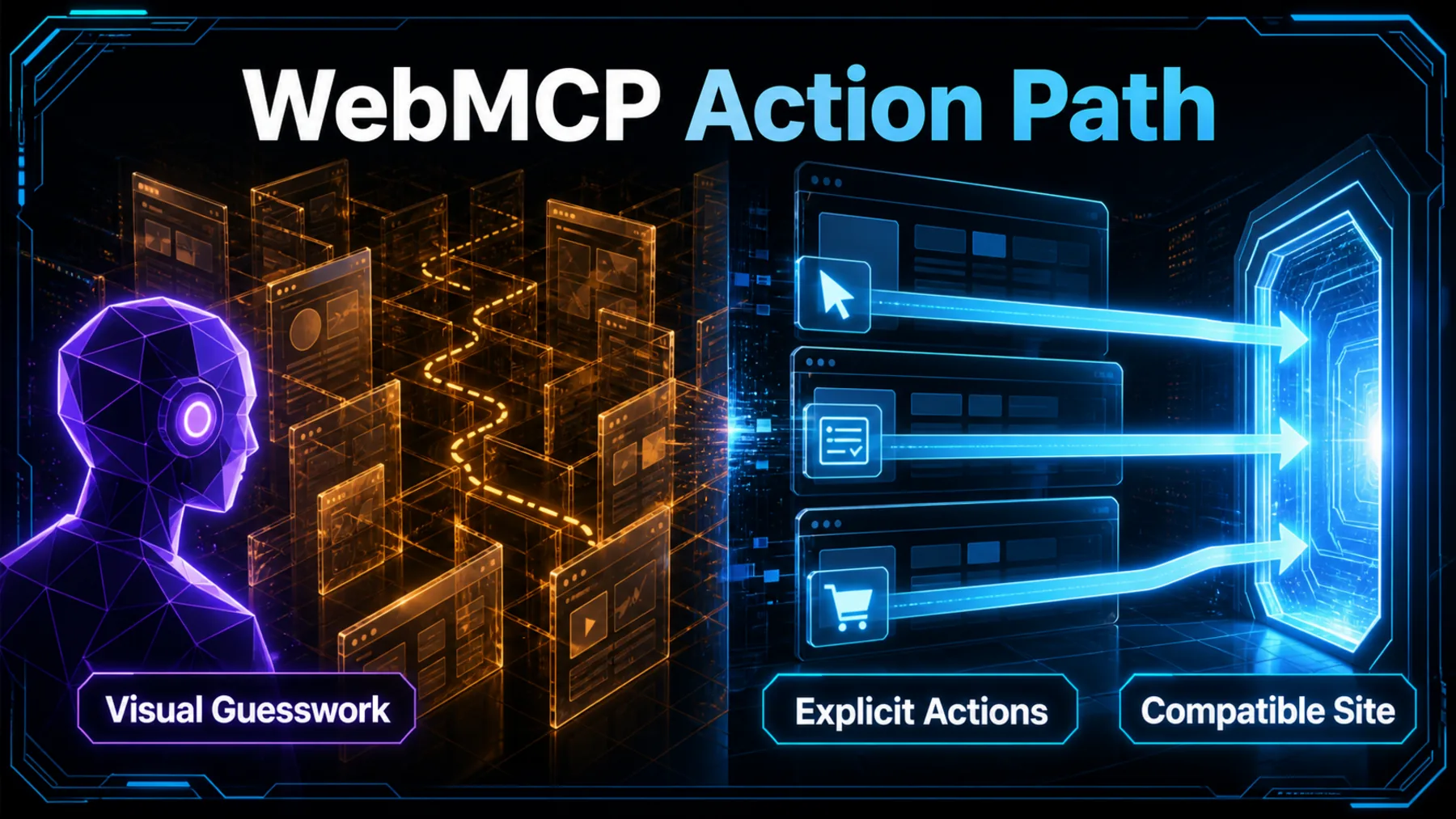
Most web tasks still ask an agent to interpret what it sees, decide what matters, and infer where to act. OpenAI’s WebMCP announcement describes a different arrangement: a participating web app exposes tools that an agent can use directly on the page.
The promise is narrower than universal web automation. WebMCP is experimental, the site must be compatible, and OpenAI has named only specific support surfaces.
A page can declare its actions
The proposed change is from interpreting an interface to using task-specific controls a compatible site makes available.
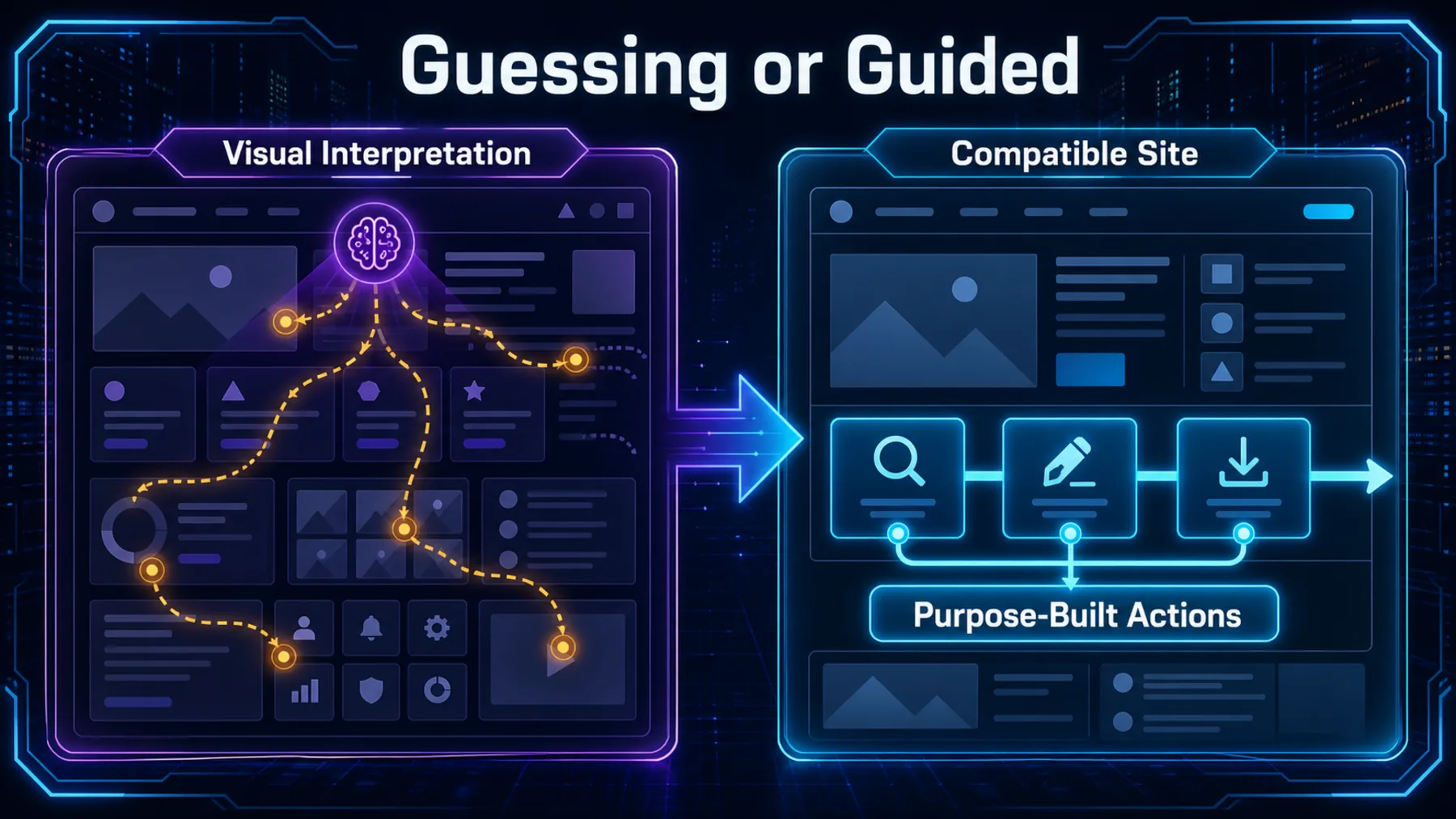
Visual browsing asks an agent to reason from the interface in front of it. It may need to identify forms, buttons, labels, and the sequence that connects them. That can be useful, but it also leaves the intended path implicit.
WebMCP makes the intended action path more deliberate. OpenAI describes web apps exposing tools directly to agents; the practical appeal is less guesswork about where an action lives, provided the site has chosen to support it.
What OpenAI actually announced
OpenAI describes an experimental standard, compatible-site behaviour, and support being added to two named surfaces.
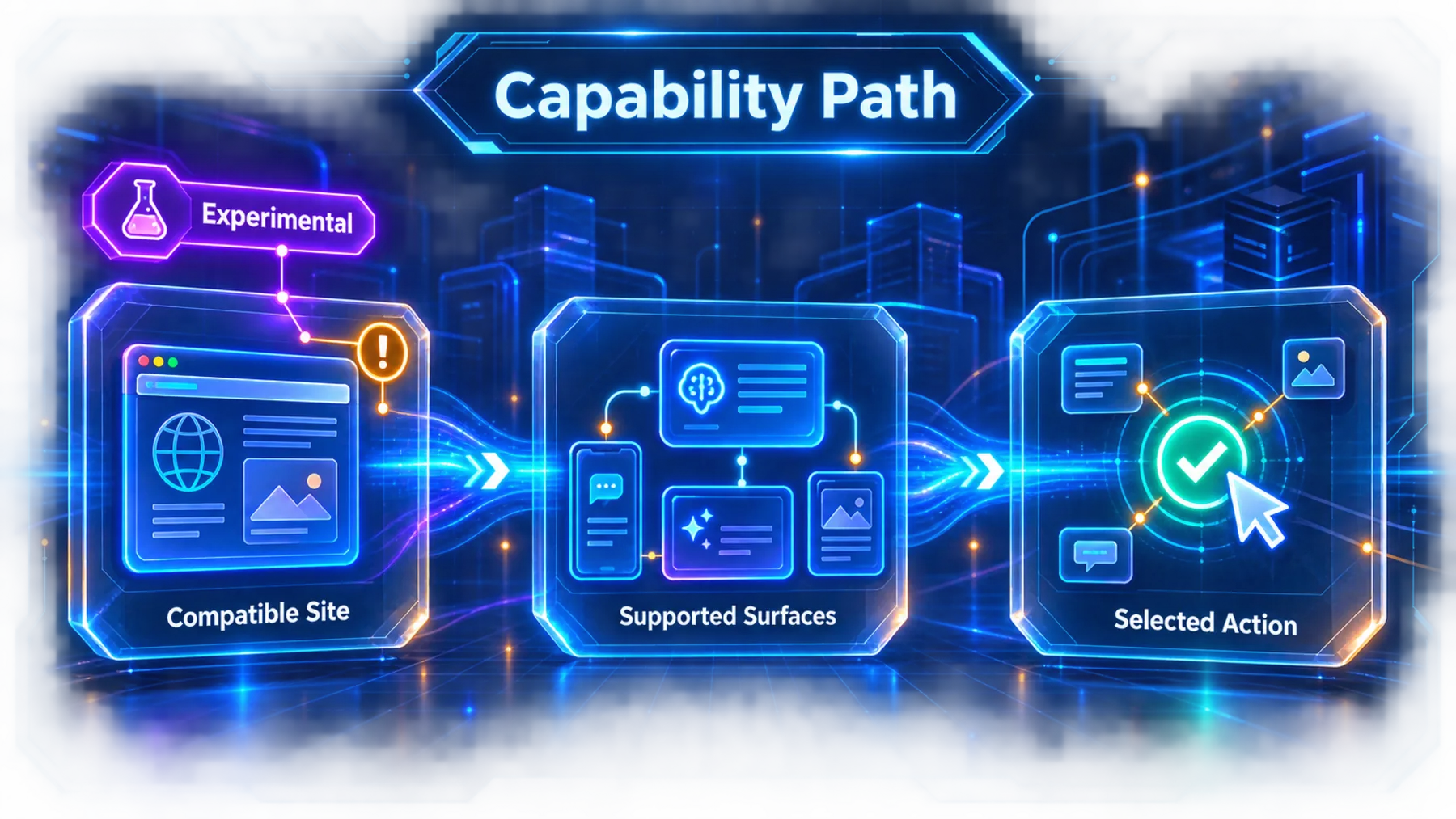
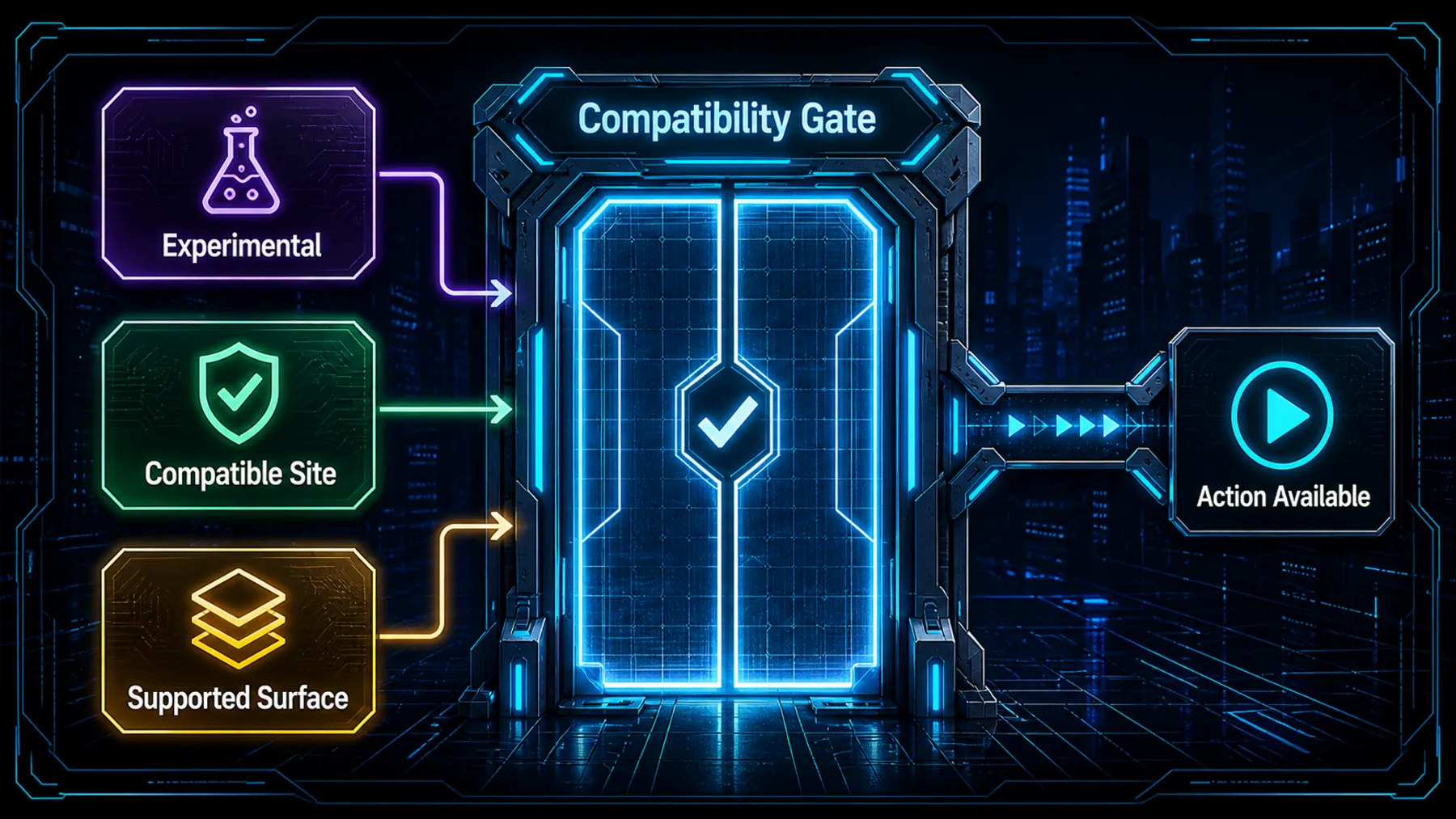
OpenAI says it is adding WebMCP support in the ChatGPT desktop app’s built-in browser and ChatGPT Sites. It also says ChatGPT or Codex can automatically use a compatible website to complete a task.
Those statements establish the shape of the announcement, not a complete rollout map. The source does not set out version requirements, availability by account or geography, or the technical and operational boundaries behind the claim.
The claim, in OpenAI’s words
The source defines WebMCP as experimental and describes web apps exposing tools that agents can use directly.
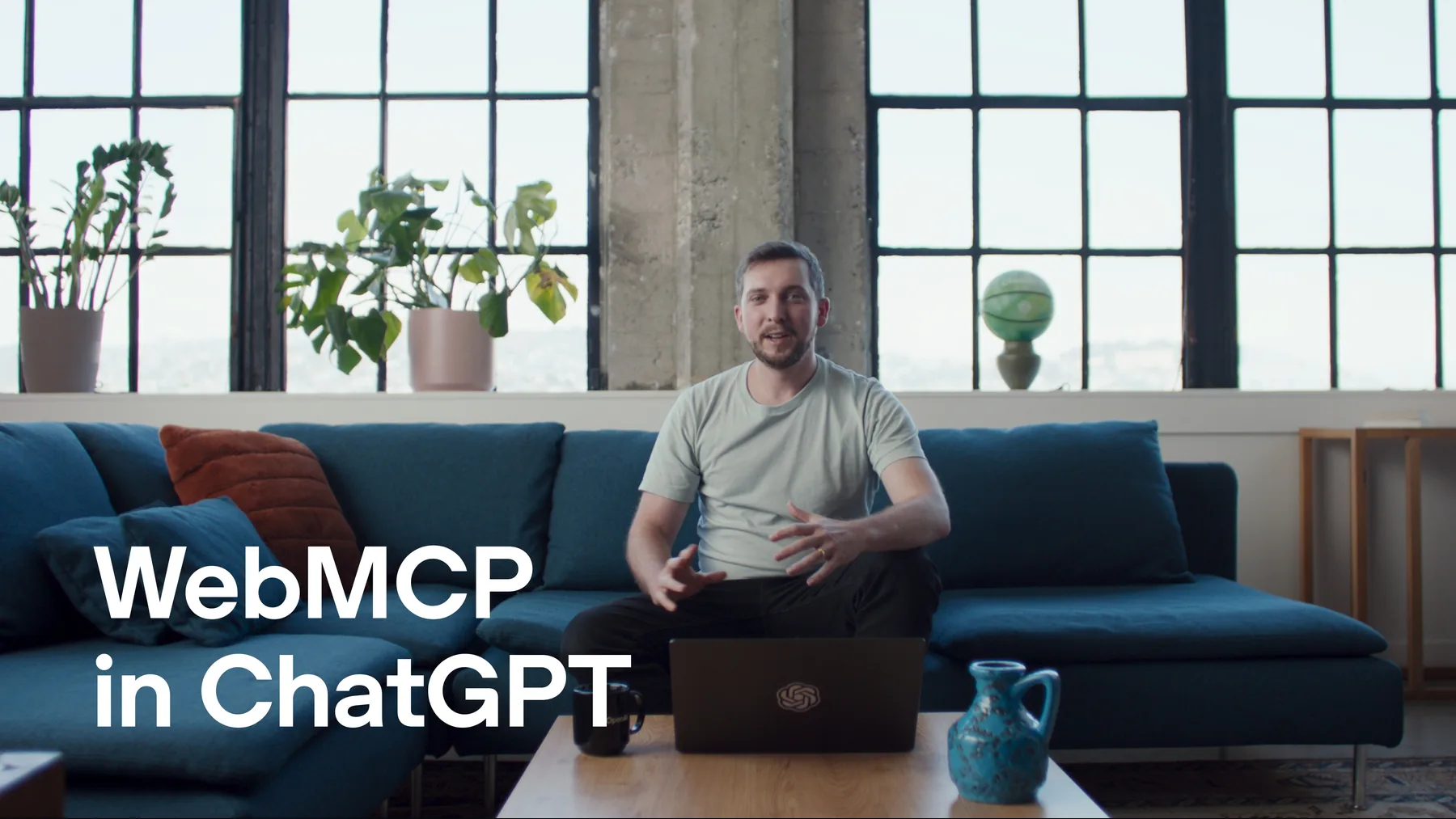
The key language comes from OpenAI Developers’ thread, where WebMCP is presented as an experimental open standard for web apps to expose tools that agents can use directly on the page.
The scope matters as much as the claim. OpenAI says compatible websites can be used by ChatGPT or Codex; it does not say every website, client, account, or operating environment is covered.
“WebMCP is an experimental open standard that lets web apps expose tools that agents can use directly on the page to complete tasks faster and more reliably.”
OpenAI Developers, WebMCP thread, 25 August 2026
The proof — and its limits
The source supports an announced capability path, while leaving many practical conditions unresolved.
The announcement supports a focused conclusion: OpenAI is adding support to the named ChatGPT surfaces, and compatible sites may expose tools for ChatGPT or Codex to use. It does not establish a finished specification or broad availability.
Permissions, security, pricing, privacy, implementation detail, reliability, and failure behaviour remain open questions in the material supplied. We should treat them as questions rather than fill them with familiar assumptions about agent browsing.
How the action path works
A compatible website exposes tools; an OpenAI agent can use a selected tool directly on the page.
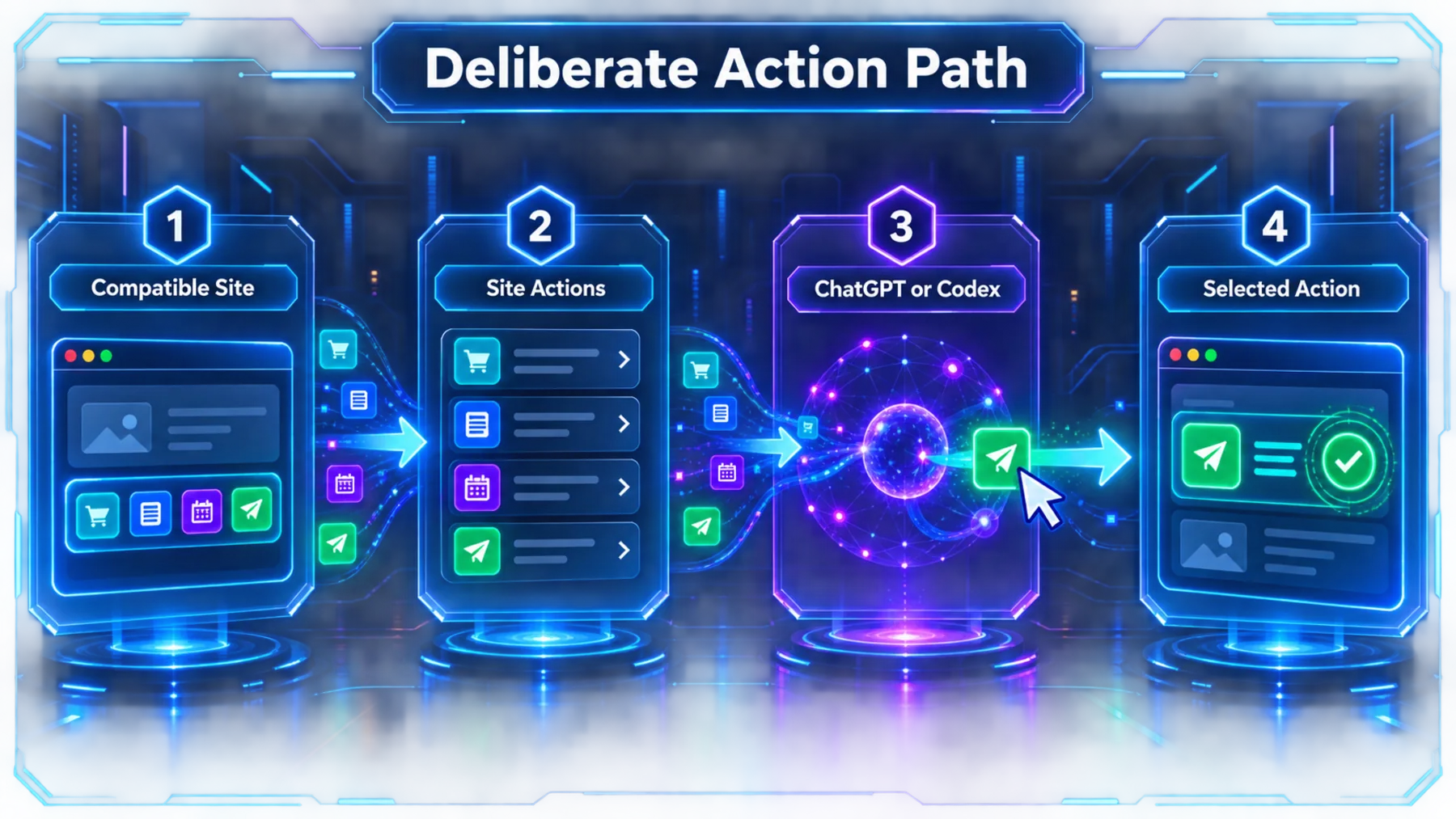
The useful mental model is a site presenting a small set of actions it intends an agent to use. Instead of relying solely on what an interface looks like, the agent can work with controls the site has explicitly exposed.
This does not remove the conditions around the task. The site still needs to be compatible, and the announcement does not explain how access, consent, authentication, or exceptions are handled.
What we would experience
The first practical gate is compatibility, followed by a named OpenAI surface and an action the site has chosen to expose.
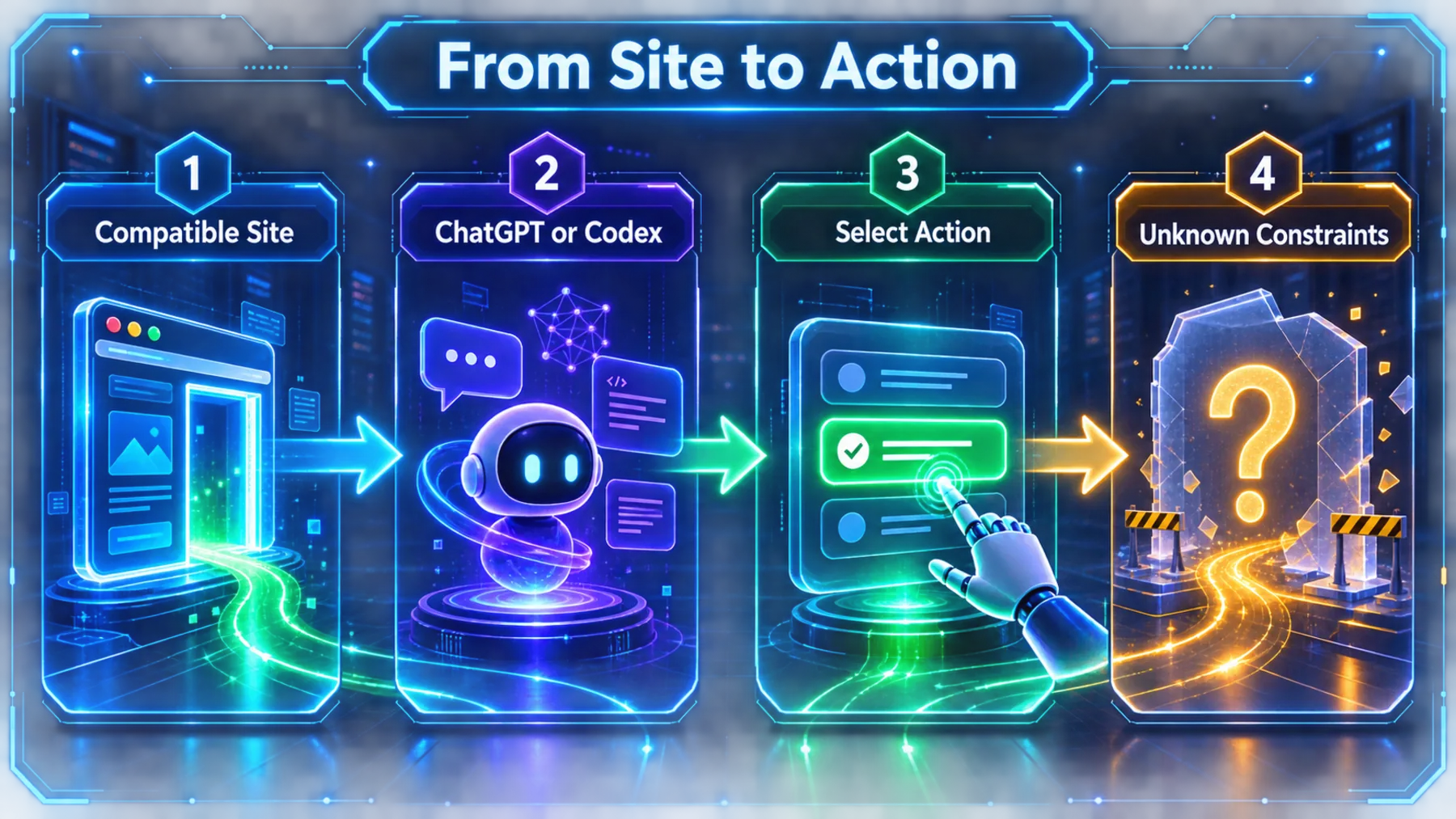
For us, the value would be a clearer route through a web task: use a compatible site, work from the actions it makes available, and keep the site’s intended path visible rather than inferred.
The constraint is equally clear. We cannot assume that a familiar site participates, that every task is exposed, or that the same route exists across devices, plans, or locations.
Webpages can become action surfaces
OpenAI’s announcement points towards websites declaring usable actions rather than leaving agents to infer every move from the interface.
The meaningful change is a website making its intended task path explicit: less interpretation of the page, more use of actions the site deliberately exposes.
Based on OpenAI Developers’ WebMCP announcement
The announcement matters because it changes the relationship between an agent and a webpage. A page is no longer only something to inspect; on compatible sites, it may also be a place where the site presents an explicit set of usable actions.
That is a promising direction, not a settled conclusion. WebMCP is experimental, and the evidence supplied does not tell us how widely the approach will work or how its important safeguards will operate.
Map a source-bounded WebMCP action path
Act as a product analyst. Based only on these stated facts: WebMCP is an experimental open standard; a compatible web app can expose tools that an agent may use directly on the page; OpenAI is adding support in the ChatGPT desktop app’s built-in browser and ChatGPT Sites. Produce a four-step action-path diagram, then list the unanswered questions about permissions, security, availability, pricing, implementation details, and failure behaviour. Do not assume universal support, measured reliability, or a final standard.Ready to copy
Watch the conditions around the promise
The next useful evidence is not another broad claim; it is clarity on which sites participate, where support is available, and how the practical safeguards work.
Try the promptSignals that could change the takeaway
- Compatible websites
- Support surfaces
- Permissions and security
- Practical evidence