Gemma exploration, without the repository hop
A community-built browser playground brings the Gemma family into one visual journey, while its ownership and privacy boundaries remain open questions.

Trying a model family can begin with more setup than insight: repositories, install steps and a fragmented sense of what belongs together. Google Gemma says WebGemma brings that first pass into a browser-based playground built by community creator Nitin Tiwari.
That is the immediate appeal. The project may make early exploration feel more direct, but the source does not establish that Google owns, operates or supports it.
Less setup, more orientation
The useful shift is not a promise of frictionless deployment; it is a clearer starting point for understanding the Gemma family.
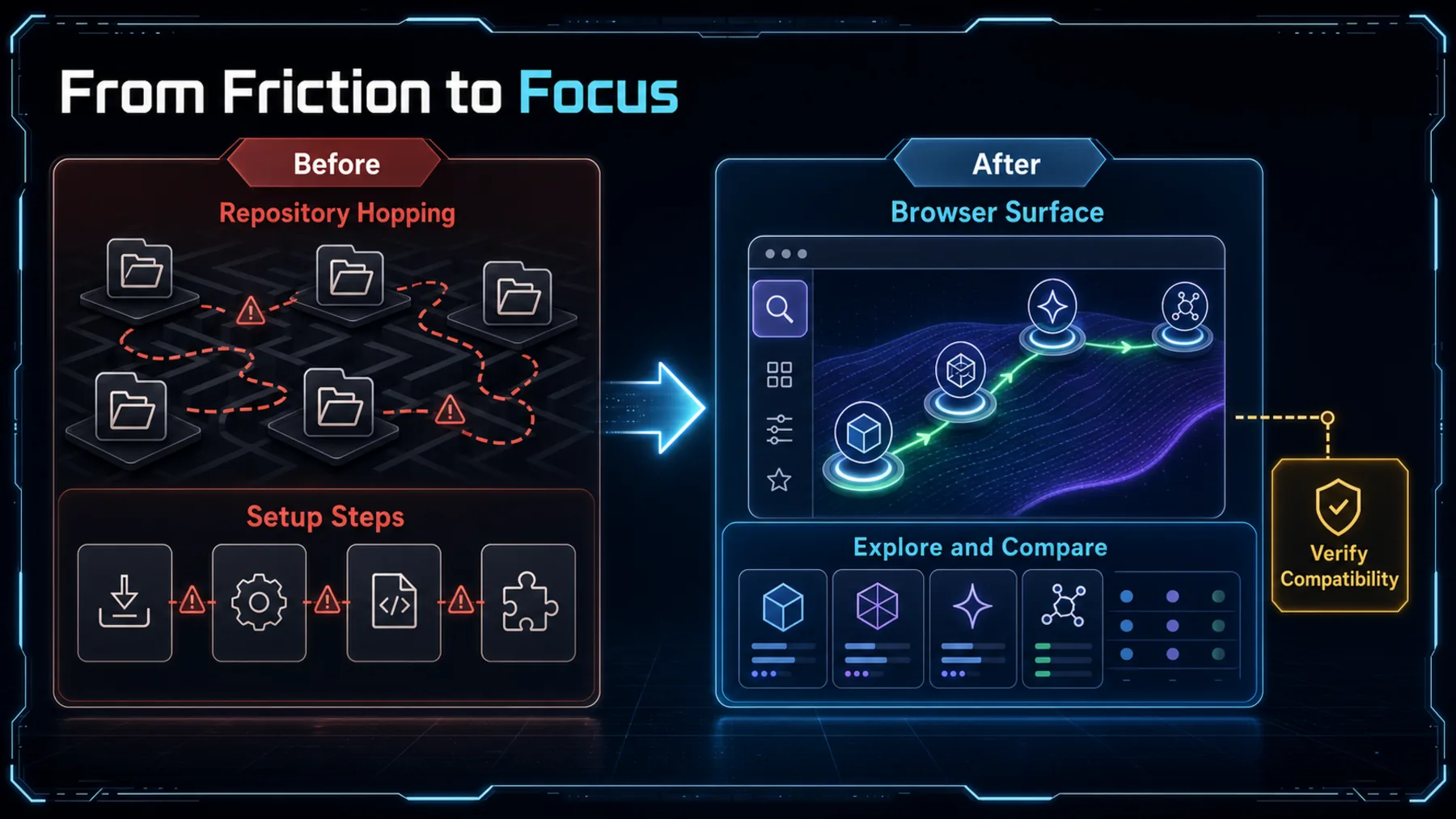
Google Gemma says we no longer need to jump between repositories: the advertised route moves from an interactive model timeline into a browser playground. That can make the first question—what should we explore?—easier to answer before a local toolchain enters the picture.
The distinction matters. A simpler first encounter is valuable on its own, even when the underlying execution, coverage and trust boundaries still need checking.
A timeline beside the test
Google Gemma’s post joins a visual history of the family to a place to try models, rather than treating discovery and testing as separate chores.
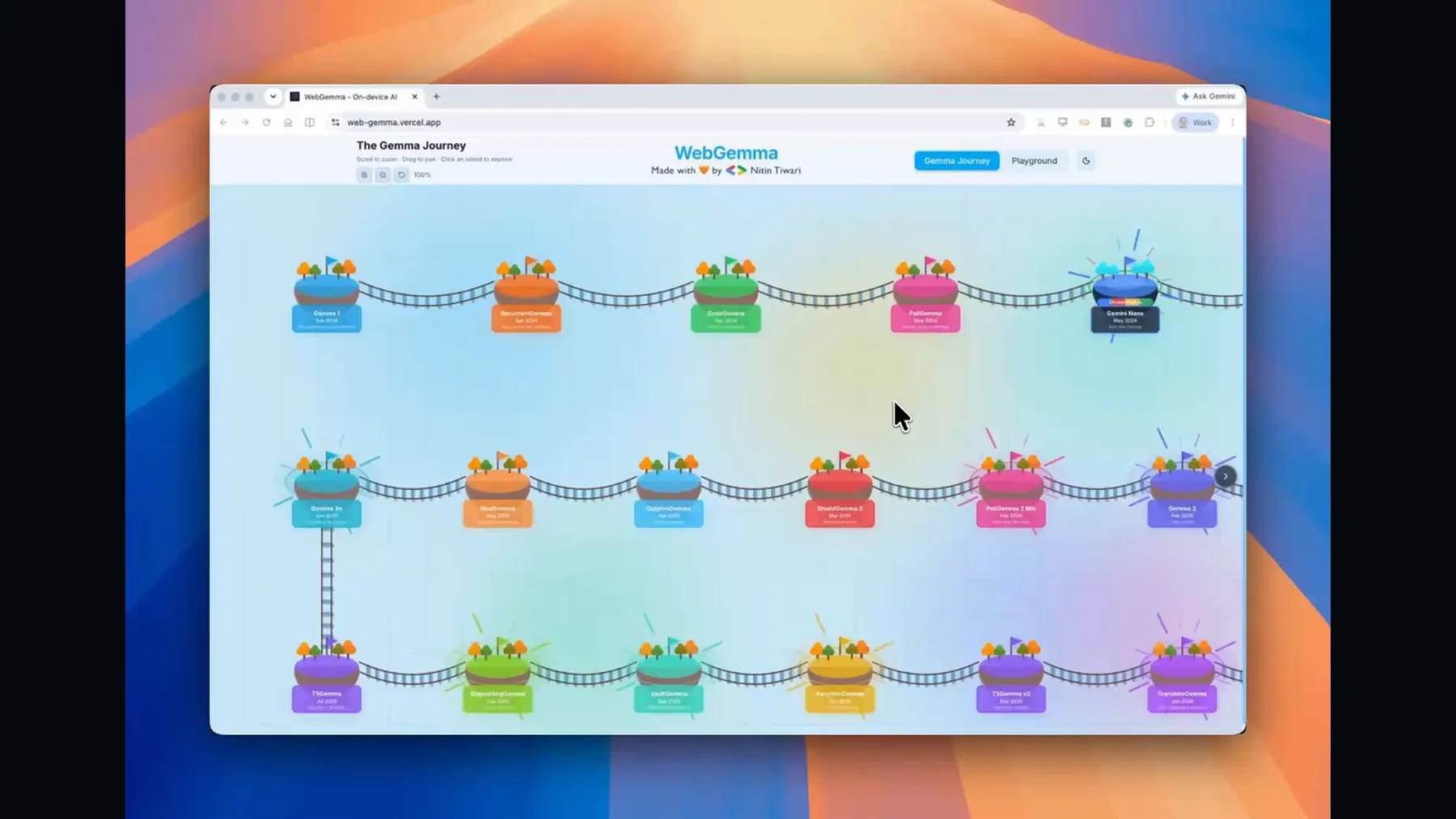
The post names WebGPU and Transformers.js as the layers behind the experience, and says the playground can test 10+ models. In plain terms, WebGPU can give a web app access to graphics acceleration, while Transformers.js is a way to run machine-learning models in web apps.
Those are useful clues to the intended journey, not a complete technical account. The approved source does not enumerate the models or versions behind the 10+ claim.
The promise, in Google Gemma’s words
The announcement is clear about the intended experience and equally clear that the playground is community-built.
“Community-built” is the phrase doing the most work here. Google Gemma promoted the playground and later credited @NSTiwari21, but the post does not establish Google ownership, operation, maintenance or official support.
The no-installation wording is also Google Gemma’s claim. It describes the proposed entry point; it does not verify how the experience behaves across every browser or device.
“You no longer need to jump between repositories.”
Google Gemma, X thread
What the post shows—and does not
The captured material supports the announcement and the depicted interface, but it is not an independent technical audit.
The available evidence is a supplier-authored X thread, its continuation and a captured video poster. Together, they support the narrow claim that Google Gemma promoted this browser playground and depicted the Gemma Journey experience.
They do not settle the questions that sit behind a browser interface: network calls, storage, privacy, security, offline behaviour, compatibility, reliability or production readiness.
A browser path, not a verdict
The announced flow is simple: orient ourselves in the family, choose a model, then test—while keeping the supplier claim separate from verified behaviour.
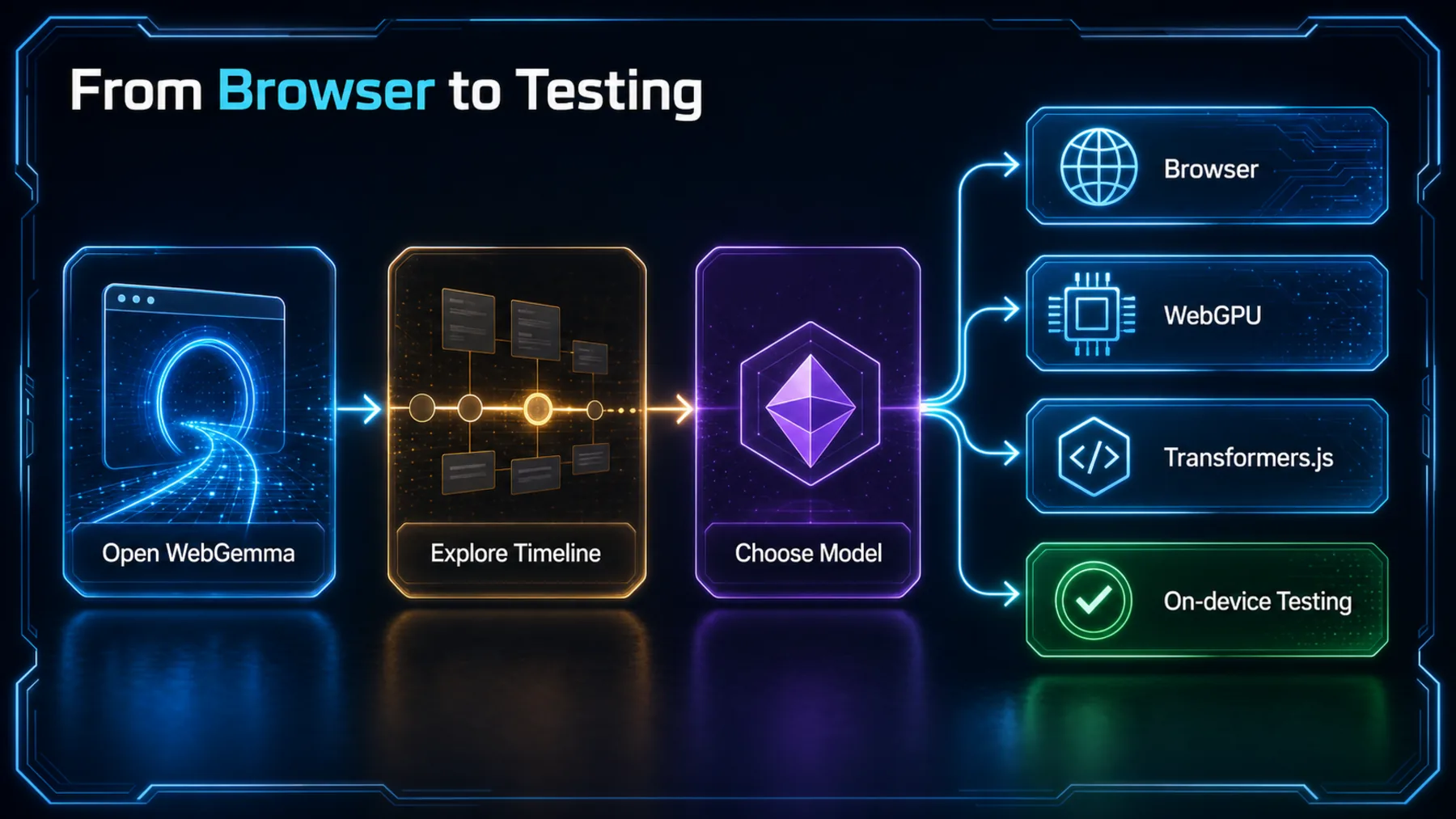
The design idea is to collapse several early decisions into one journey. We move from a visual map of the Gemma family to a place to try a model, rather than beginning with a repository and hoping the context becomes clear later.
That is a stronger promise of orientation than of trust. The post tells us how the experience is meant to feel; it does not independently prove what happens under the surface.
Explore first, verify the rest
A quick route into a model family can be useful without being a reason to assume ownership, privacy or readiness.
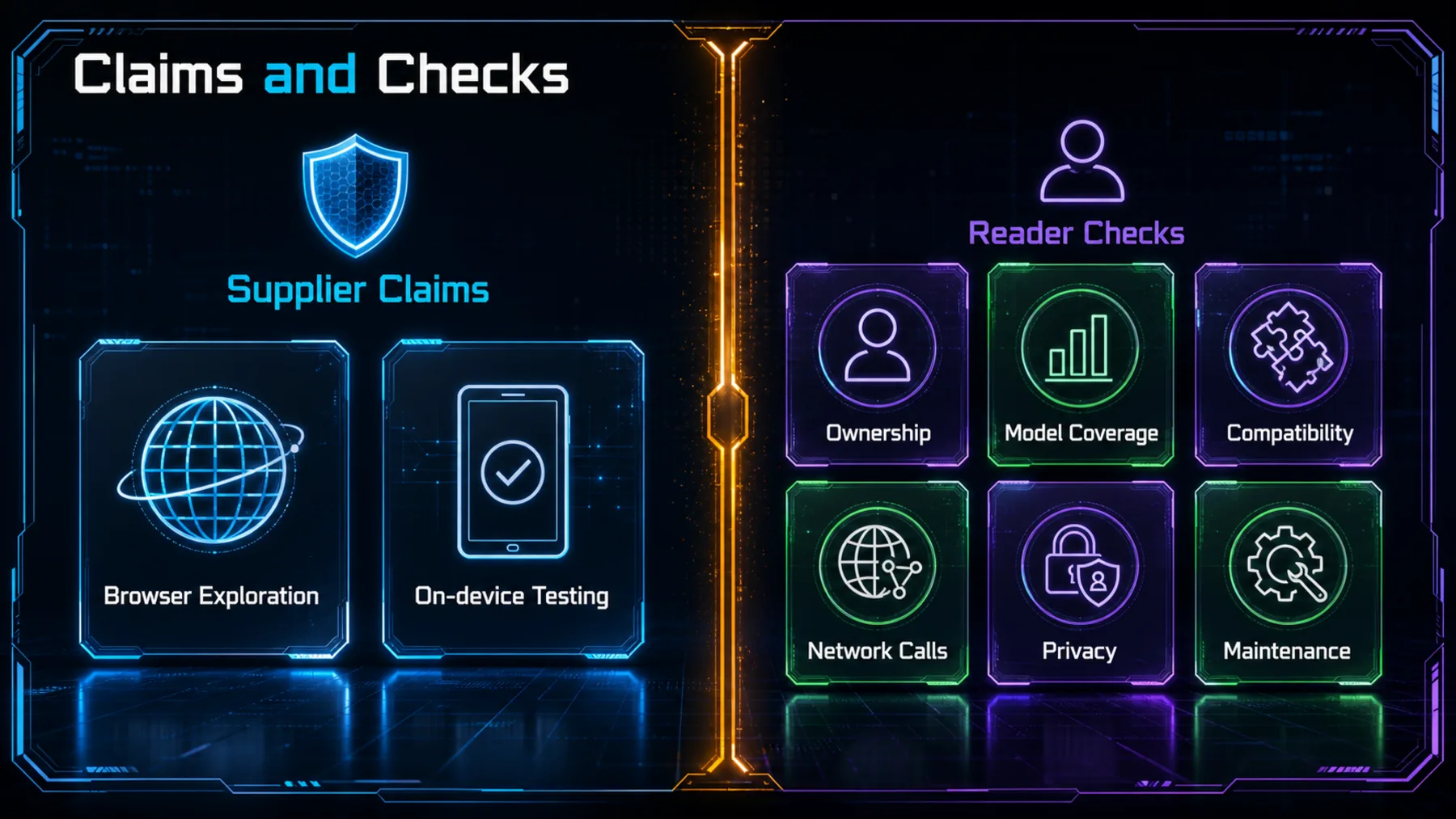
Ownership
Confirm who operates, maintains and supports the project.
Behaviour
Inspect model coverage, compatibility, network calls and data handling.
Readiness
Establish security, reliability and fit for the intended use.
The source gives us a promising exploration surface, not a completed trust case. Google Gemma says the testing is securely on-device, yet no independent audit in the approved material verifies execution, privacy or network behaviour.
That leaves a practical sequence: use the playground to get oriented, then check the conditions that would make it safe and dependable for the job in hand.
The value is faster evaluation
WebGemma’s strongest idea is not that it resolves every technical question, but that it may let us ask better ones sooner.
A browser playground can earn its place before it earns our trust. If it helps us see the Gemma family, identify a model to investigate and reduce the friction of a first pass, it has already changed the quality of the evaluation.
The careful reading is also the useful one: explore the promise, preserve the caveats, and make the trust checks explicit before we rely on the result.
The faster the first look becomes, the more deliberate we can be about what still needs proof.
Creator Broadcast synthesis
Map the exploration path
Act as an AI evaluation assistant. Using only the information in this prompt, write a concise comparison table with three rows: what Google Gemma says WebGemma offers, what that may make easier during first-pass model exploration, and what still needs independent verification. Facts: Google Gemma describes a community-built browser playground with an interactive Gemma Journey timeline, WebGPU, Transformers.js, and 10+ models; it also says testing is securely on-device. Do not infer ownership, privacy, offline behaviour, compatibility, or production readiness.Ready to copy
Explore first. Verify before relying.
Use the playground to understand the shape of the Gemma family, then test the ownership, coverage, compatibility, network and privacy questions that the announcement leaves unanswered.
Try the promptWhat to watch next
- Ownership and maintenance
- Exact model coverage
- Network and privacy behaviour
- Compatibility and readiness