Sakana Namazu: one API call, Japanese reasoning.
Sakana Namazu brings Japanese-specialised reasoning to OpenRouter, but convenient access does not settle where company data travels.

OpenRouter says Sakana Namazu is live on its platform, placing a model built for Japanese language and business contexts behind a familiar API route. The promise is practical: specialised reasoning can be reached without building a separate integration.
The more useful question arrives before the first serious request. If we are considering real company data, language relevance is only one part of the decision; the handling terms and processing path matter just as much.
Access is not assurance
A straightforward route to a model can still leave material governance questions unanswered.
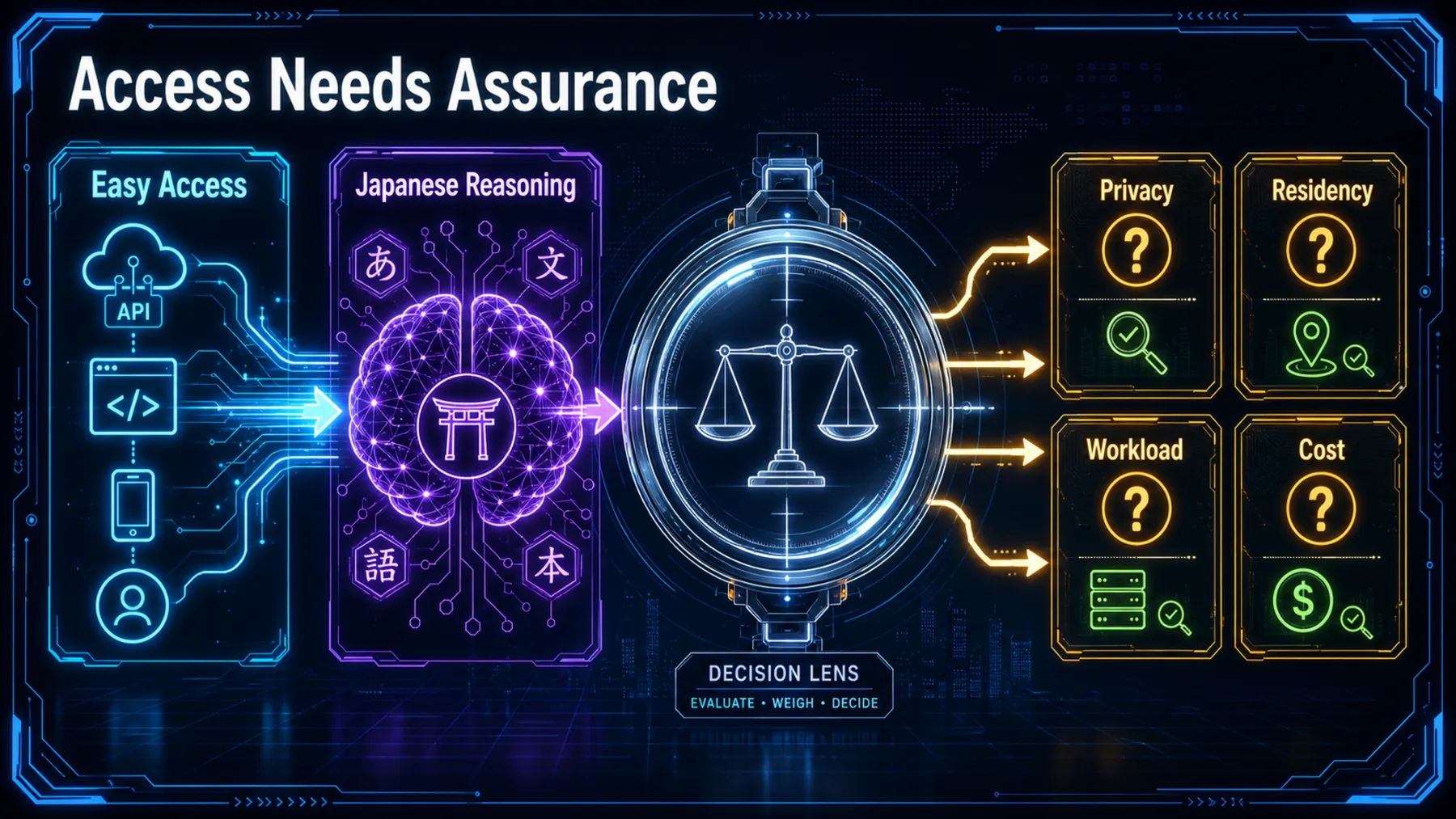
OpenRouter describes Sakana Namazu as a Japanese-specialised reasoning model, with additional training for Japanese language and business contexts. That may make it relevant to work where local language and context carry weight, but it is a stated capability rather than independent proof of performance.
The model page also carries the constraint that changes the decision. OpenRouter warns that Sakana AI may use inputs for training and improvement by default unless an opt-out is set, and that processing entirely within Japan is not guaranteed. This is a check to make before deployment, not evidence of wrongdoing.
Check the path first
A useful pilot starts with evidence, not an assumption that the route fits.
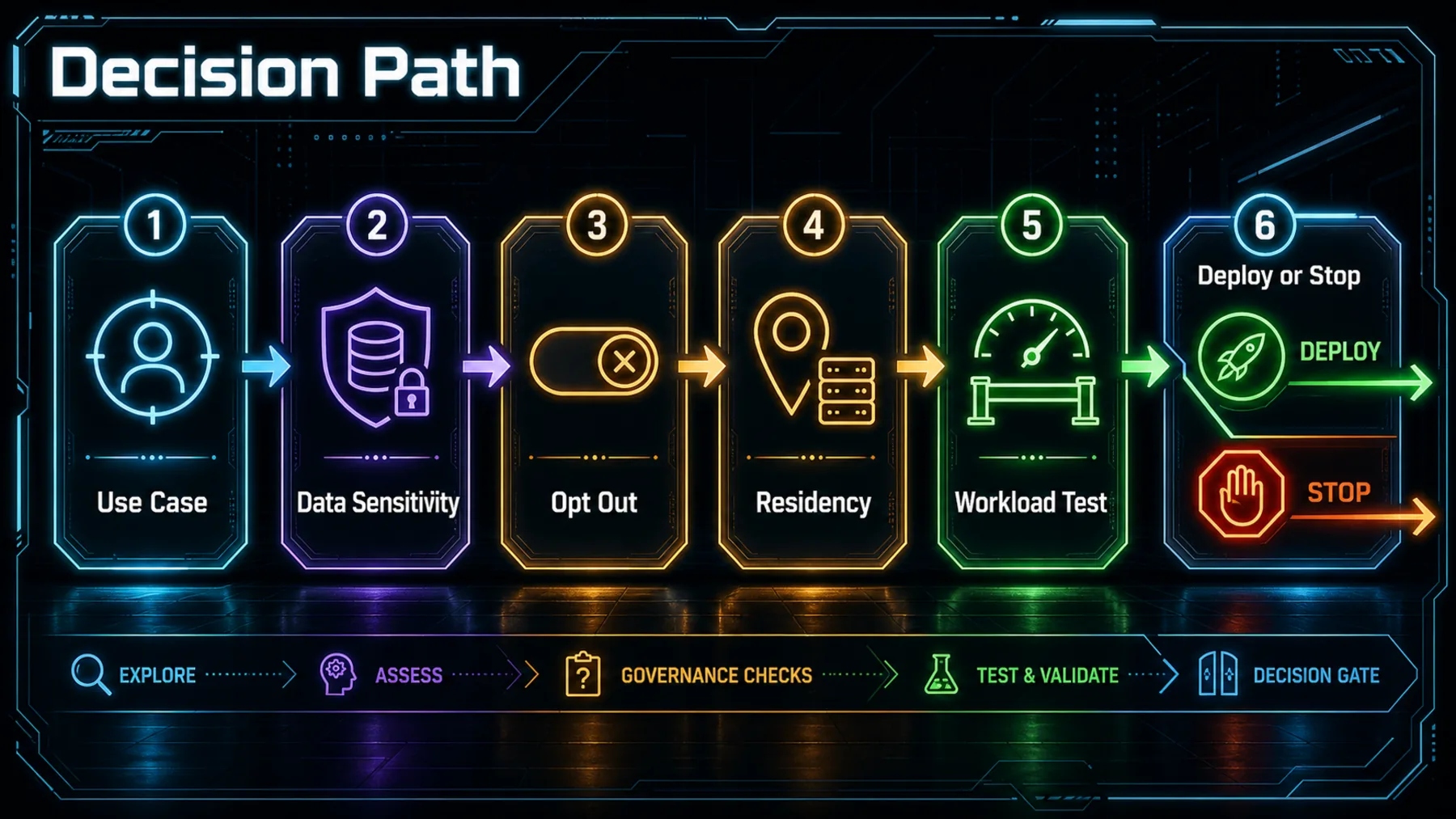
The first move is to classify the intended workload. A low-risk test with non-sensitive material asks a different question from a workflow containing customer, financial or internal operational data.
We then need evidence that the selected route, opt-out setting and processing expectations match our requirements. Current pricing and availability also need checking at the point of use, because OpenRouter lists them as live terms rather than fixed commitments.
What OpenRouter actually said
The launch establishes availability, while the broader decision remains ours.
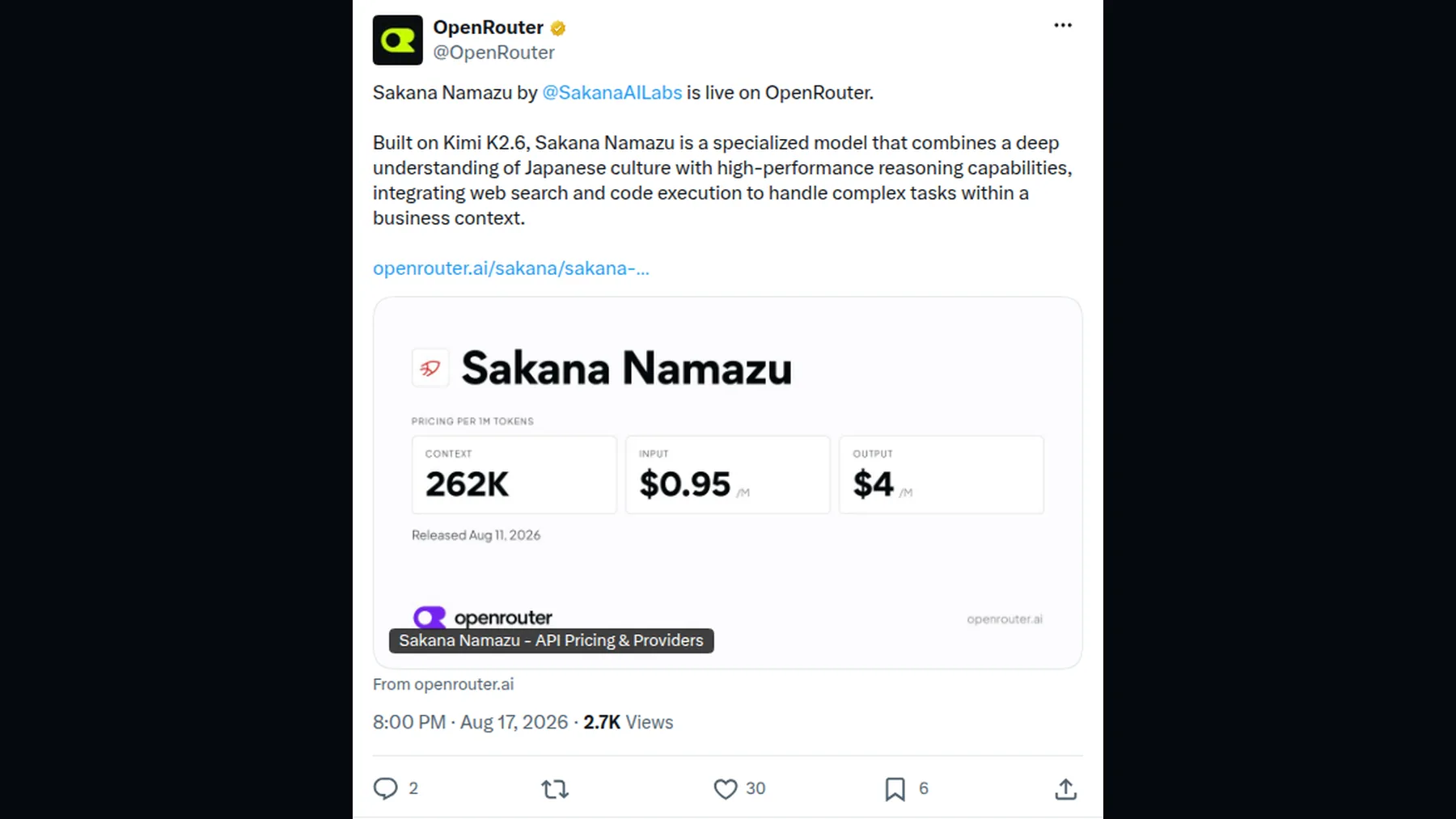
OpenRouter’s announcement describes Sakana Namazu as a model built on Kimi K2.6, combining Japanese cultural understanding, reasoning, web search and code execution for business tasks. Those are OpenRouter’s claims about the release.
For us, the announcement is the start of due diligence rather than the end of it. It shows that the route exists; it does not independently validate the model’s cultural understanding, reasoning quality or fit for a specific workload.
“Sakana Namazu by @SakanaAILabs is live on OpenRouter.”
OpenRouter
The warning beneath the promise
The relevant language sits in the model page’s data-handling terms.
This wording does not prove that data will leave Japan, nor does it make a legal conclusion for any organisation. It does mean we cannot treat Japanese specialisation as a residency guarantee.
The opt-out is a practical control, but it still needs to be confirmed in the relevant account and route. Where our requirements are stricter than the published terms, the sensible outcome is to keep real company data out of the test until evidence closes the gap.
A model request has a path
The request moves through OpenRouter before it reaches the model route selected for it.
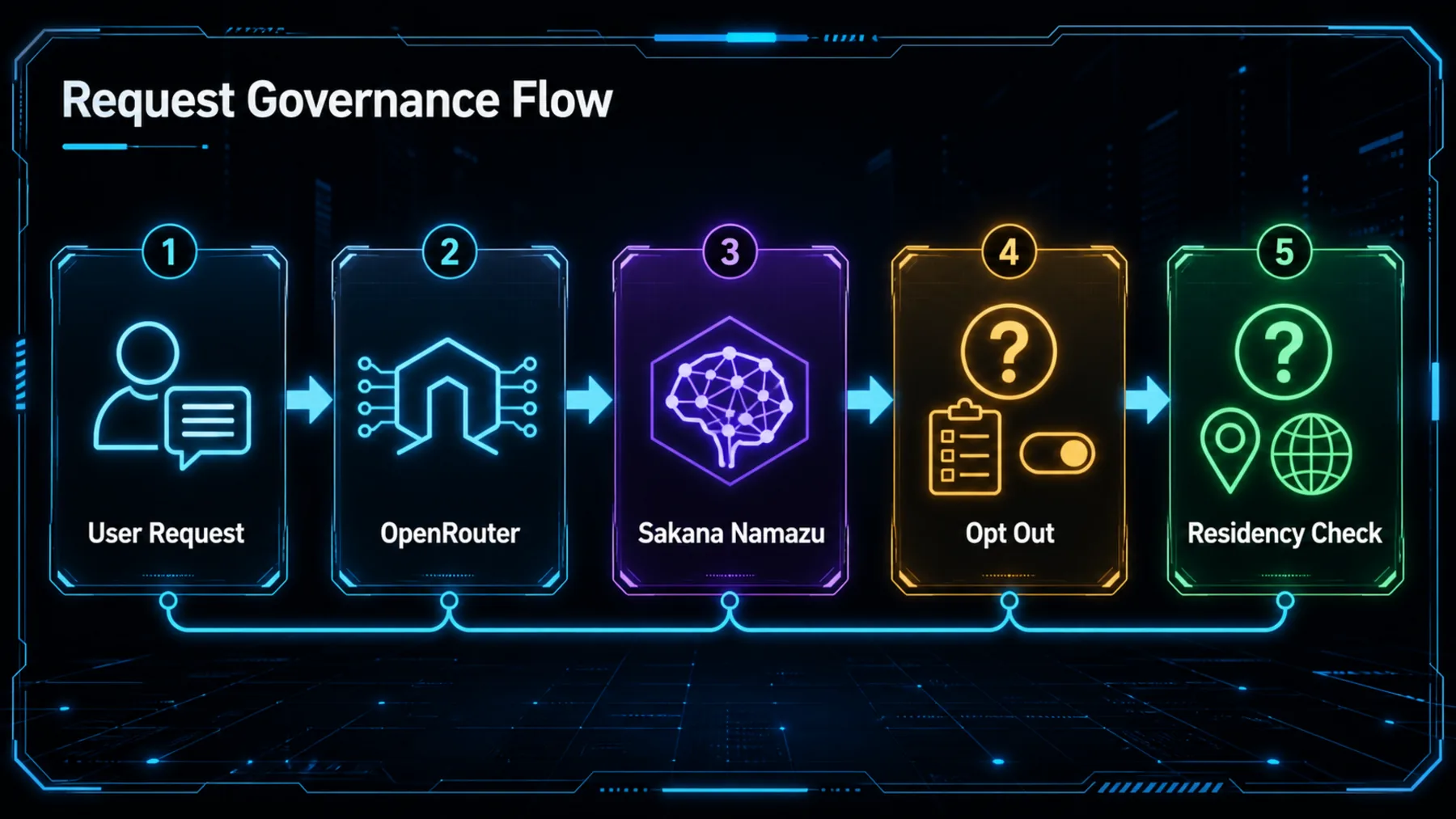
OpenRouter acts as the API route between our application and the model provider. That makes access simpler, but it also means the operational question is about the full request path rather than the model name alone.
A diagram can clarify the decision without pretending to be an infrastructure audit. We need the current terms, the applicable data controls and a workload test before treating the route as suitable for production information.
Test before we trust
A small, controlled evaluation can establish whether the route belongs in our workflow.
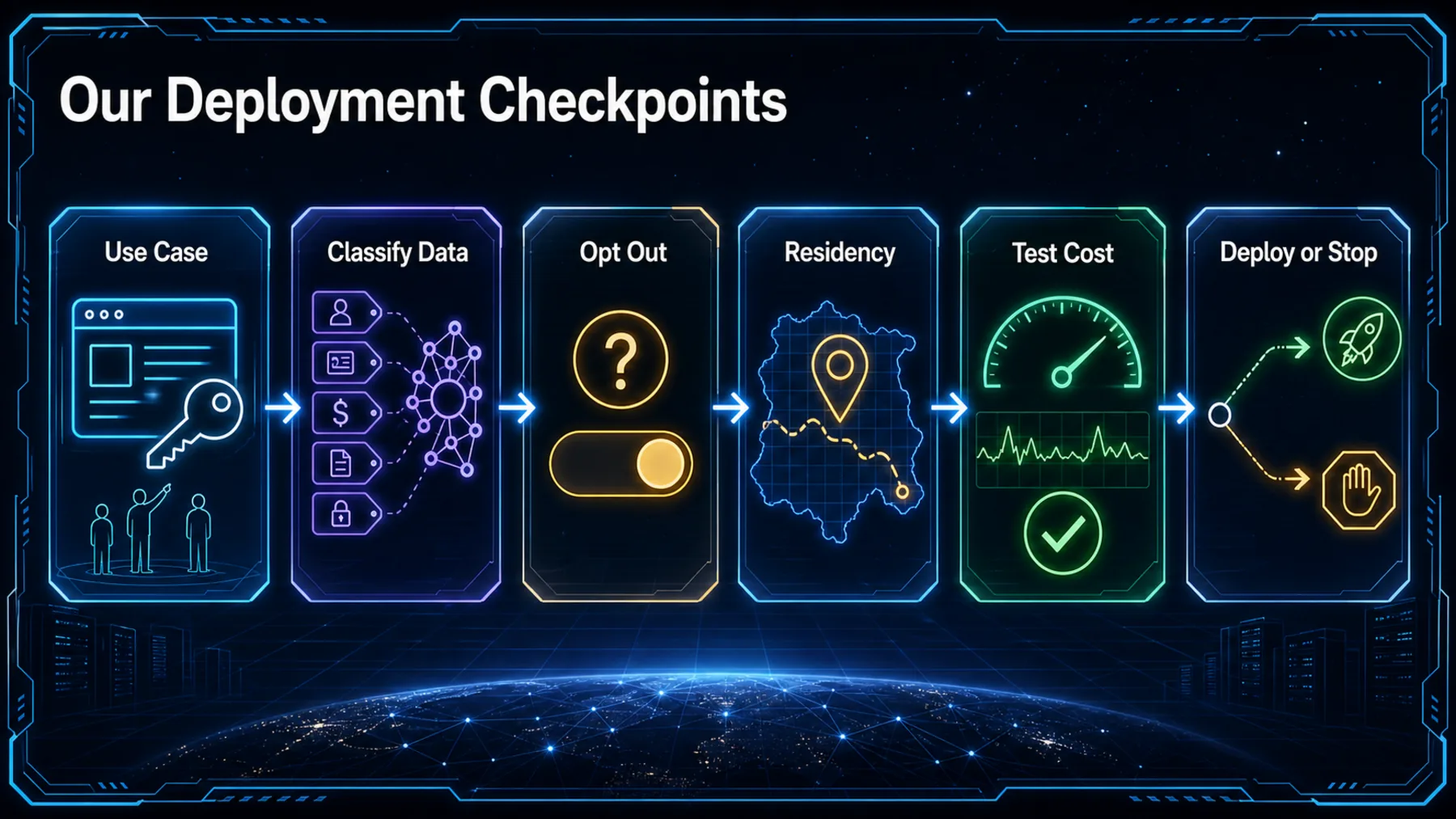
We can begin with a representative task that contains no sensitive company material. That gives us a way to assess whether Japanese specialisation is relevant to our work without assuming the handling terms are already acceptable.
If the test is promising, the next decision is governance rather than enthusiasm. We verify the opt-out, match the data path to our requirements, review current commercial terms and decide whether the evidence supports a wider deployment.
Classify data
Keep sensitive company information out until the route meets our requirements.
Confirm controls
Verify the training-use opt-out and the conditions that apply to our account.
Test workload
Use a representative task before deciding whether the model earns a larger role.
Specialisation earns a test
A relevant model may deserve evaluation; governance decides whether it deserves our data.
Japanese specialisation can make Sakana Namazu worth testing. It cannot answer the data-path question for us.
Synthesis of OpenRouter’s announcement and model-page terms
OpenRouter’s launch makes Sakana Namazu easier to evaluate. Its stated Japanese language and business focus may be useful where context matters, but a capability claim and an organisational fit are different things.
The disciplined reading is straightforward: test the model on suitable material, then make the data decision from evidence about the route, controls and current terms.
Governance check for a new model route
Act as our AI governance reviewer. We are considering Sakana Namazu through OpenRouter for Japanese business work. OpenRouter says inputs may be used for training by default unless we opt out in the Sakana Console, and processing entirely within Japan is not guaranteed. Produce a three-column table: requirement, evidence we have, evidence still needed. Cover data classification, opt-out confirmation, processing location, current commercial terms and a representative workload test. End with either ‘pilot with non-sensitive data’ or ‘stop pending evidence’, and explain why in two sentences.Ready to copy
Verify before real data
Use the governance check to decide whether a limited, non-sensitive pilot is appropriate, or whether the unanswered evidence means we should stop here.
Try the promptWhat could change the decision
- Opt-out status
- Processing expectations
- Workload evidence
- Current terms