Qwen3.8-Flash-Next opens Qwen4’s efficiency playbook early
Alibaba has opened Qwen3.8-Flash-Next as an early look at the architectural ideas intended for Qwen4—without releasing Qwen4 itself.
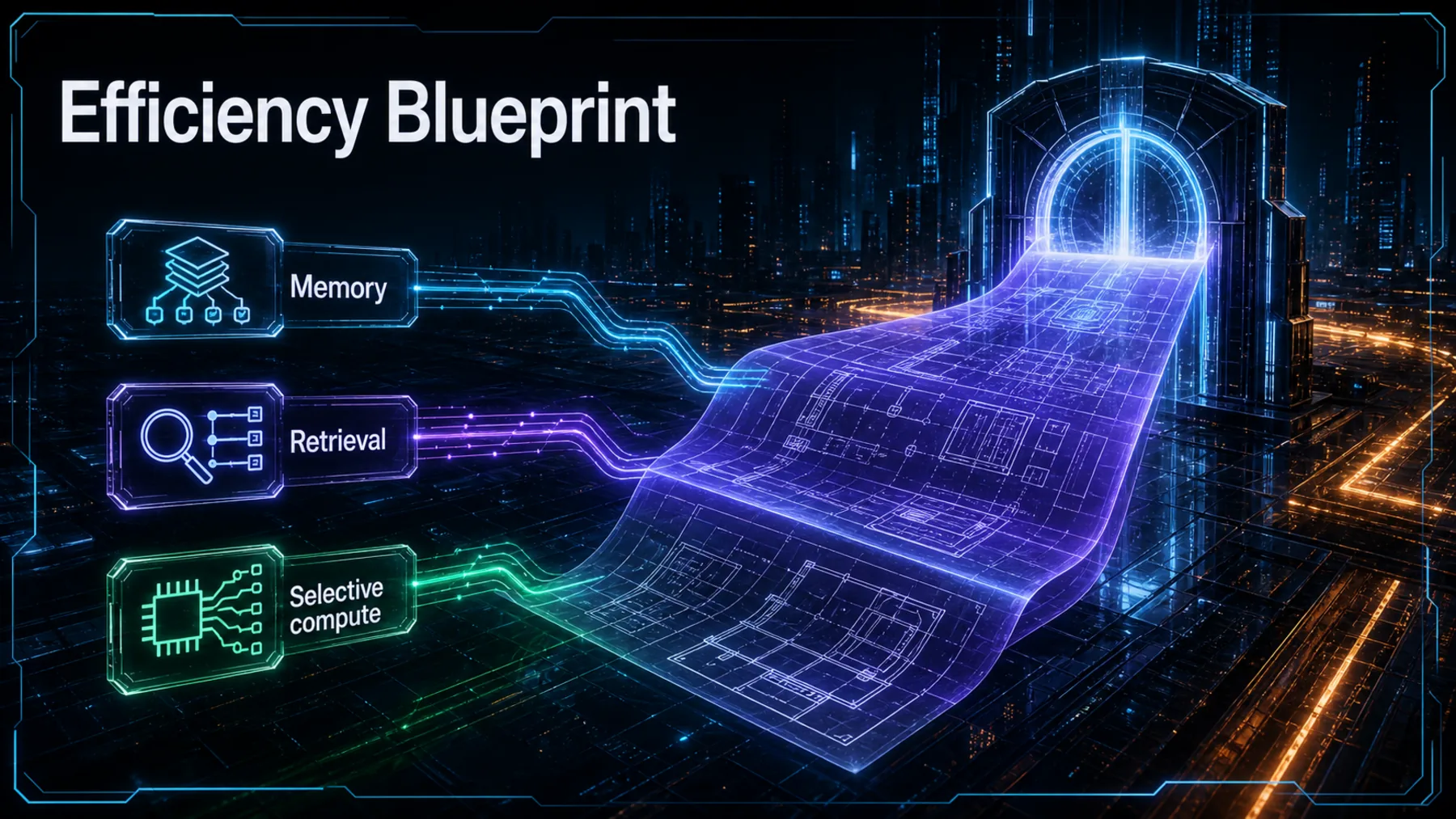
Alibaba’s announcement offers an unusually clear glimpse of a future model family before that family exists as a release. Qwen3.8-Flash-Next is open-weight, and Alibaba says it exposes architectural changes that will inform Qwen4.
The apparent contradiction is deliberate: 125B main-model parameters, another 51B in N-gram embeddings, yet 6B active parameters per token. The proposal is not simply to make a model larger, but to make its expensive work more selective.
Capacity does not mean constant compute
Alibaba’s preview separates what the system can hold from what it says it needs to activate at any one moment.
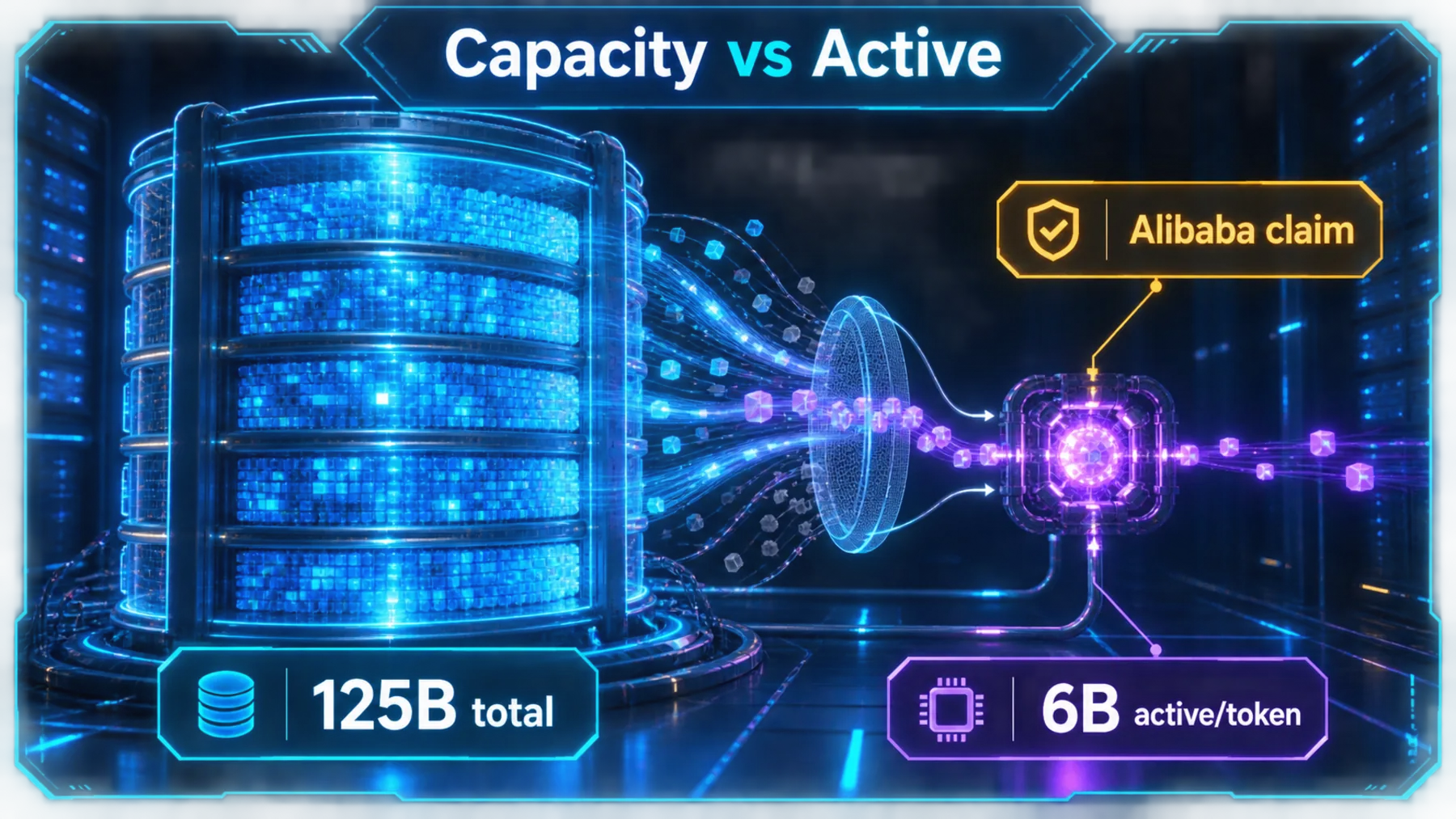
That distinction matters wherever long documents, codebases and repeated office work make every additional token expensive. A model can carry a large store of capacity without treating every part of it as live compute on every step.
Alibaba’s claim is that compressed memory, selective retrieval and sparse activation change the cost shape of that work. It is a promising design argument; the practical gains still need validation beyond Alibaba’s published evidence.
The preview’s numbers, kept in proportion
The published architecture is concrete. Its cost and capability outcomes remain Alibaba claims.
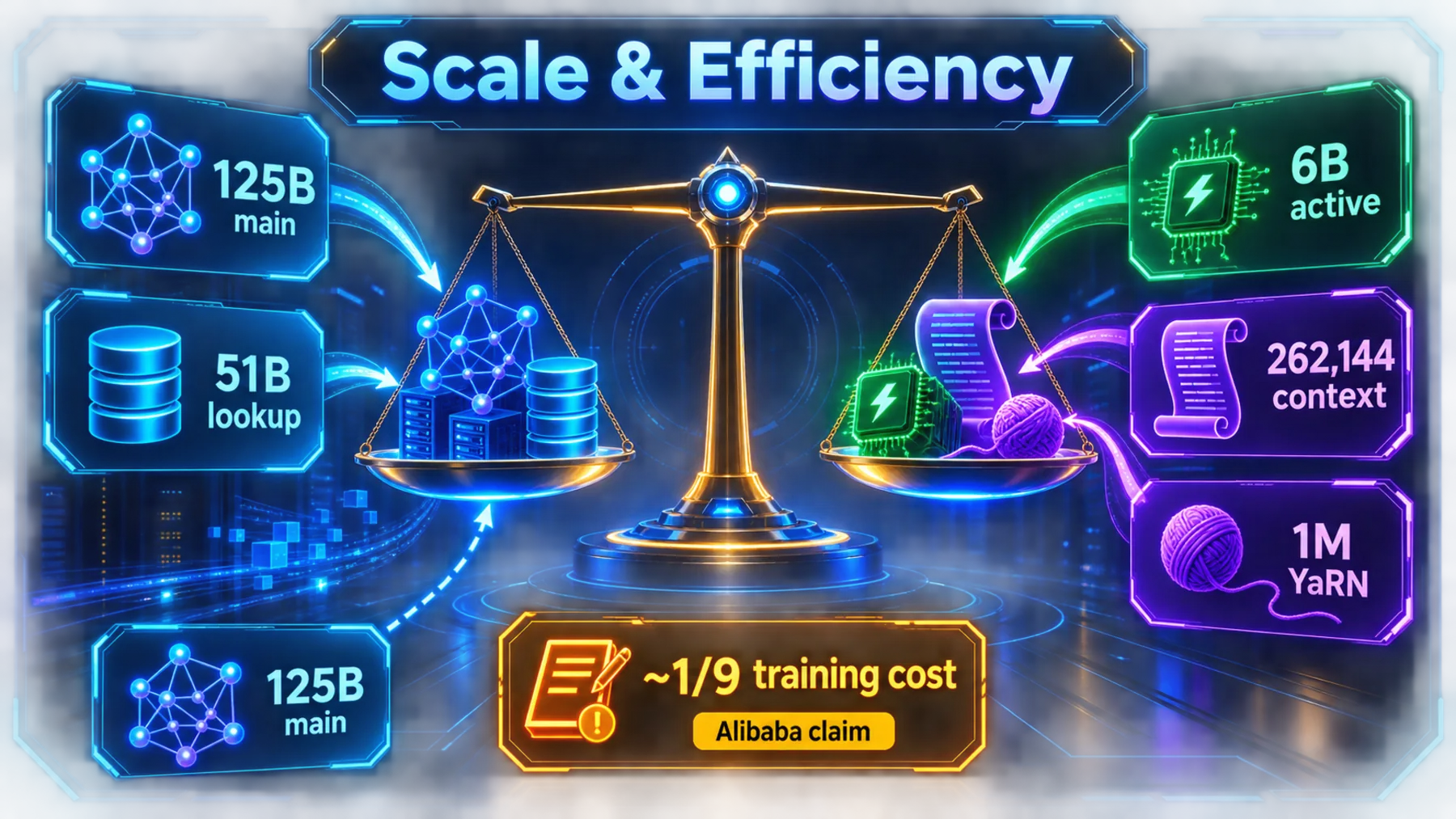
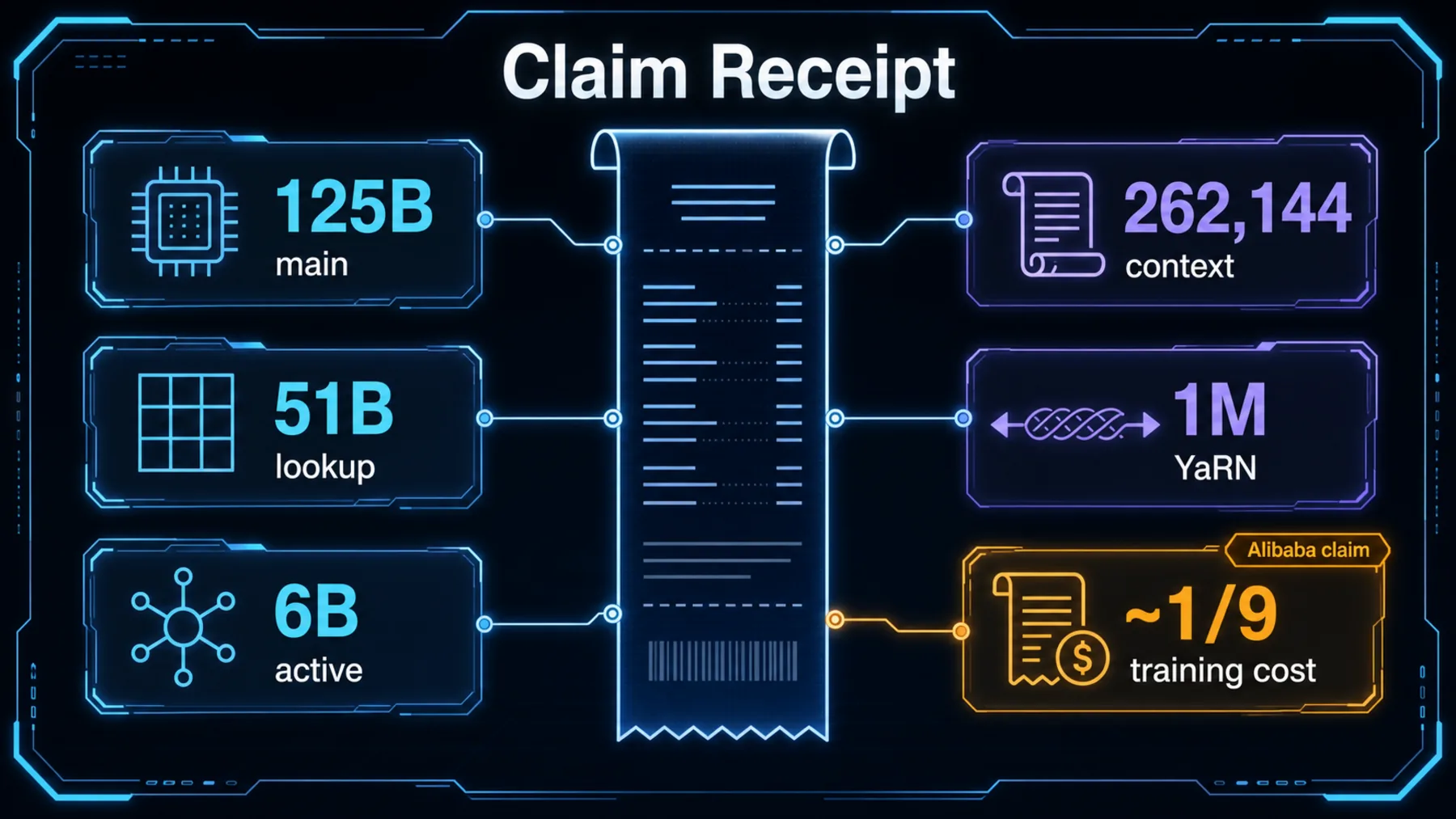
The figures explain why the preview deserves more than a launch-note reading. Total capacity and active computation are being treated as separate levers: one for what the system can represent, another for what it must pay to process each token.
Alibaba also describes a native 262,144-token context window and a 1M-token YaRN extension. The source’s speed and throughput comparisons carry experimental conditions, so they should not be read as general workload guarantees.
This is an early preview, not Qwen4
Alibaba says the weights are open so the community can examine the architecture before the full Qwen4 family is built.
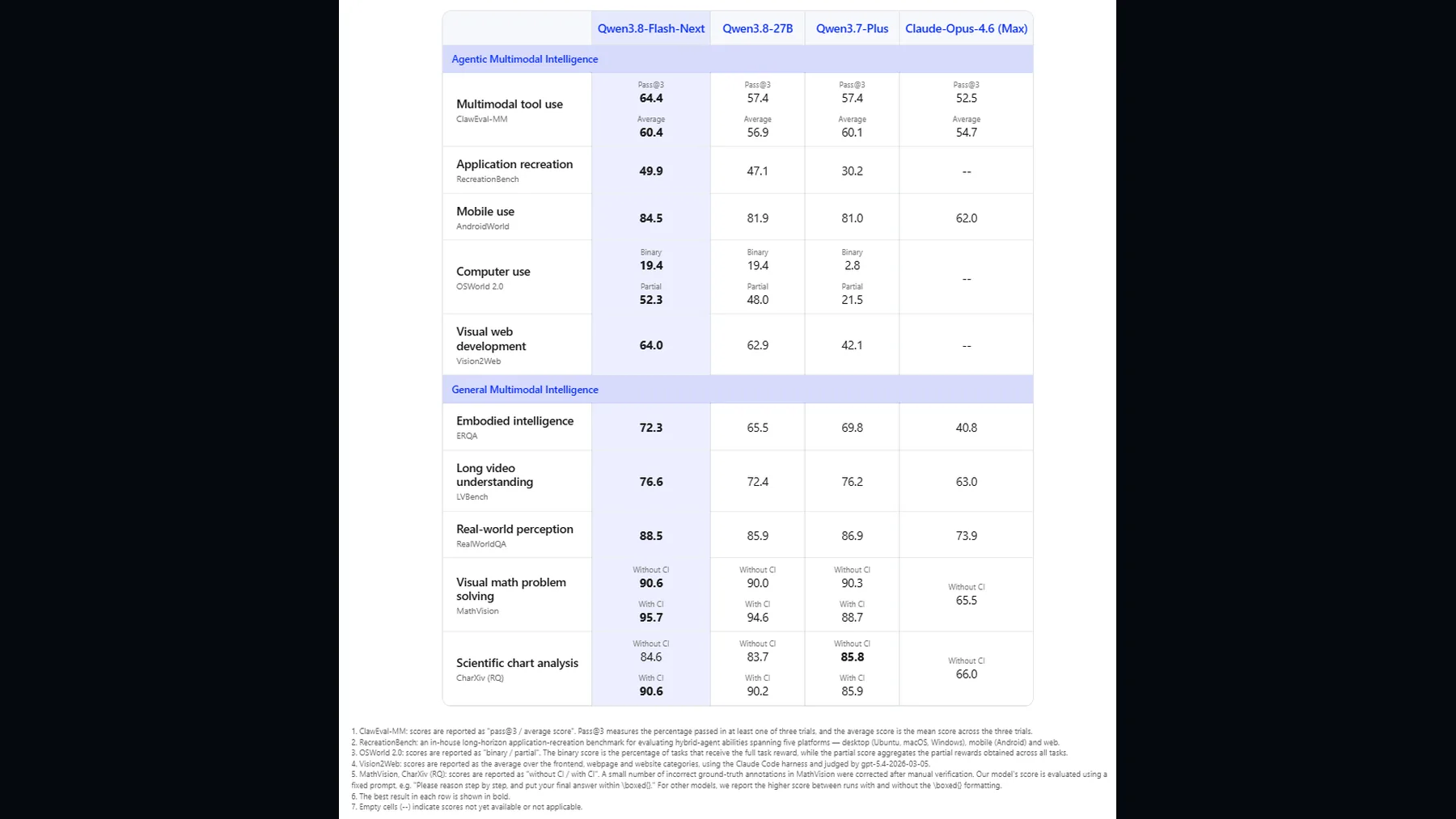
The wording matters. Alibaba has not presented Qwen4 as a released family; it has presented Qwen3.8-Flash-Next as an early preview of architecture intended for it.
That makes this release more useful as a blueprint than a verdict. We can inspect the direction of travel now, while keeping the claims about capability, cost and benchmarks in their proper published context.
“We are again releasing the architectural changes early, so that the community can examine them before the full Qwen4 model family is built on top of them.”
Alibaba Cloud Community
Remember broadly, retrieve precisely
Alibaba’s attention design aims to compress history, identify useful context and avoid reopening everything at once.
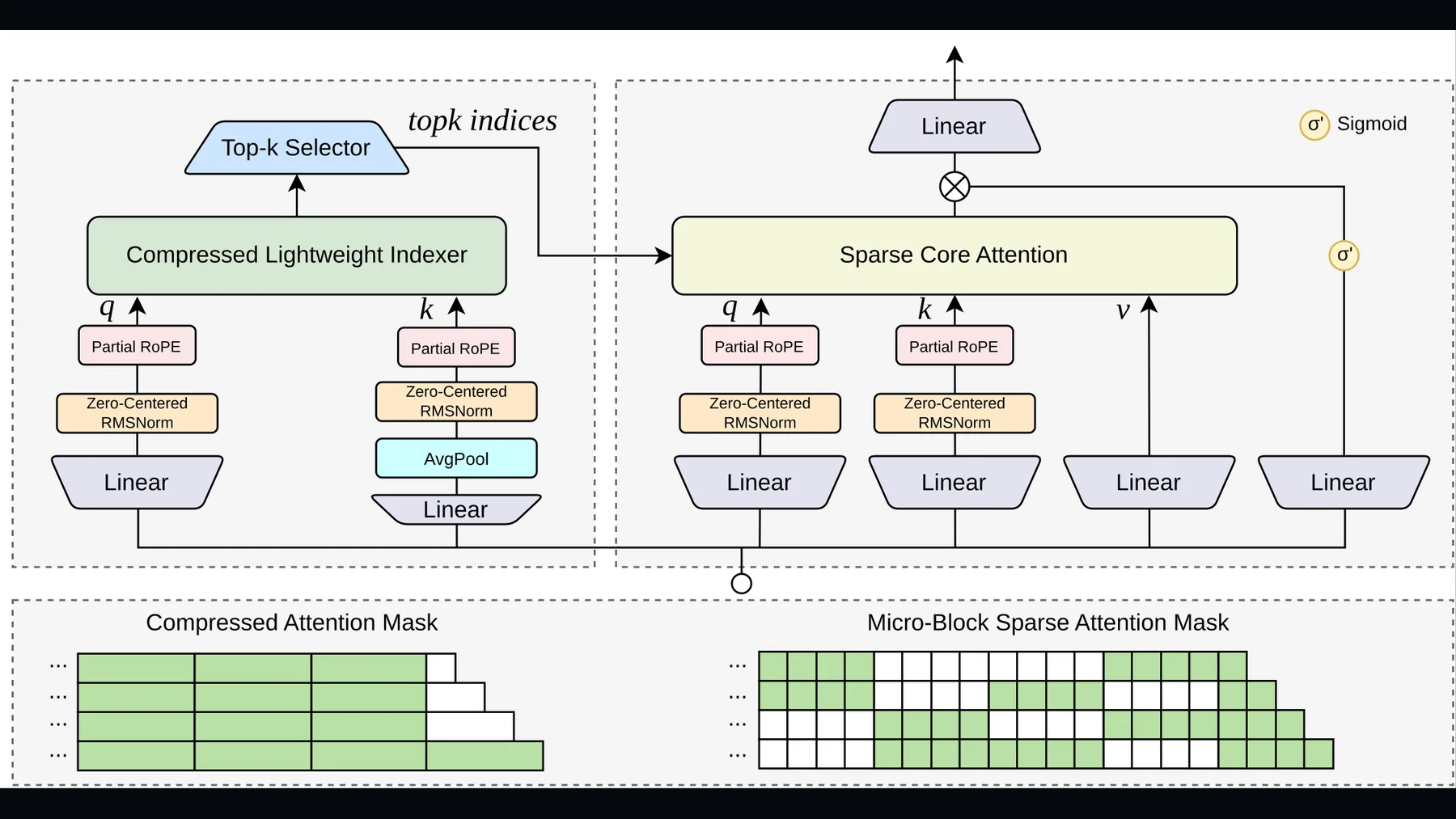
Alibaba describes Gated DeltaNet as the compressed notebook: a way to carry forward history without treating the full past as equally expensive at every turn. Qwen Sparse Attention then acts as the index, selecting relevant context at micro-block granularity.
The plain-language payoff is simple. Rather than repeatedly reopening an entire archive, the architecture aims to bring forward the parts most likely to matter. Alibaba says this reduces the cost of attention on long sequences.
Store more, open less
Three linked mechanisms divide the job between memory, retrieval and selective computation.
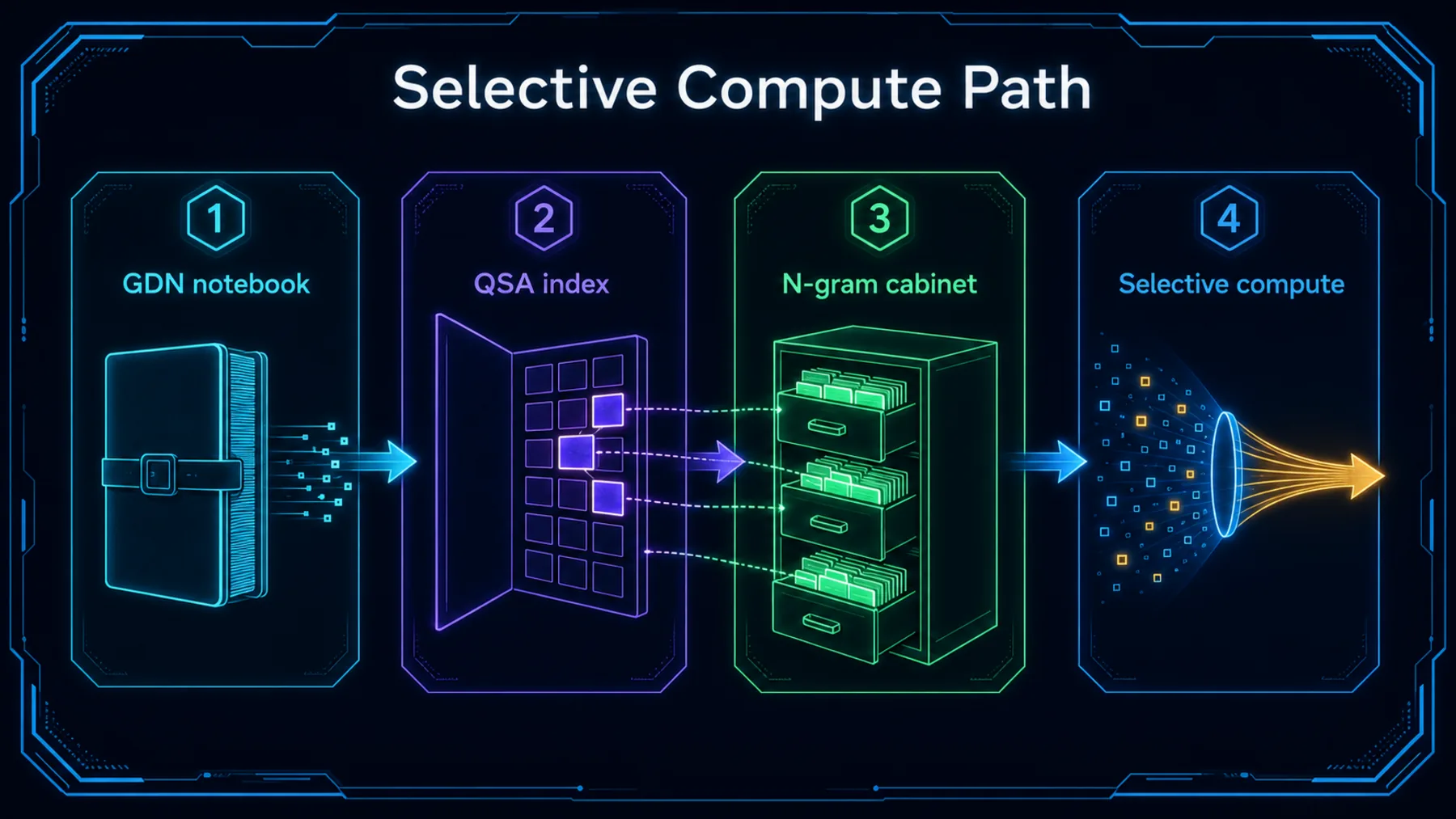
GDN is the compressed notebook. It retains a usable history without requiring the model to re-read every page in full. QSA is the index: it identifies which small blocks of that history deserve attention for the next step.
N-gram embedding is the phrase cabinet. Alibaba says local context can look up additional capacity from a table that may sit in host memory, with asynchronous prefetching intended to overlap that work with model computation.
Compress
GDN carries forward a compact history.
Select
QSA opens the most relevant context blocks.
Recall
N-gram embeddings add local-pattern memory.
Use the preview as a test bed
The open weights invite examination; QwenCloud access is a separate service path with a distinct model name.
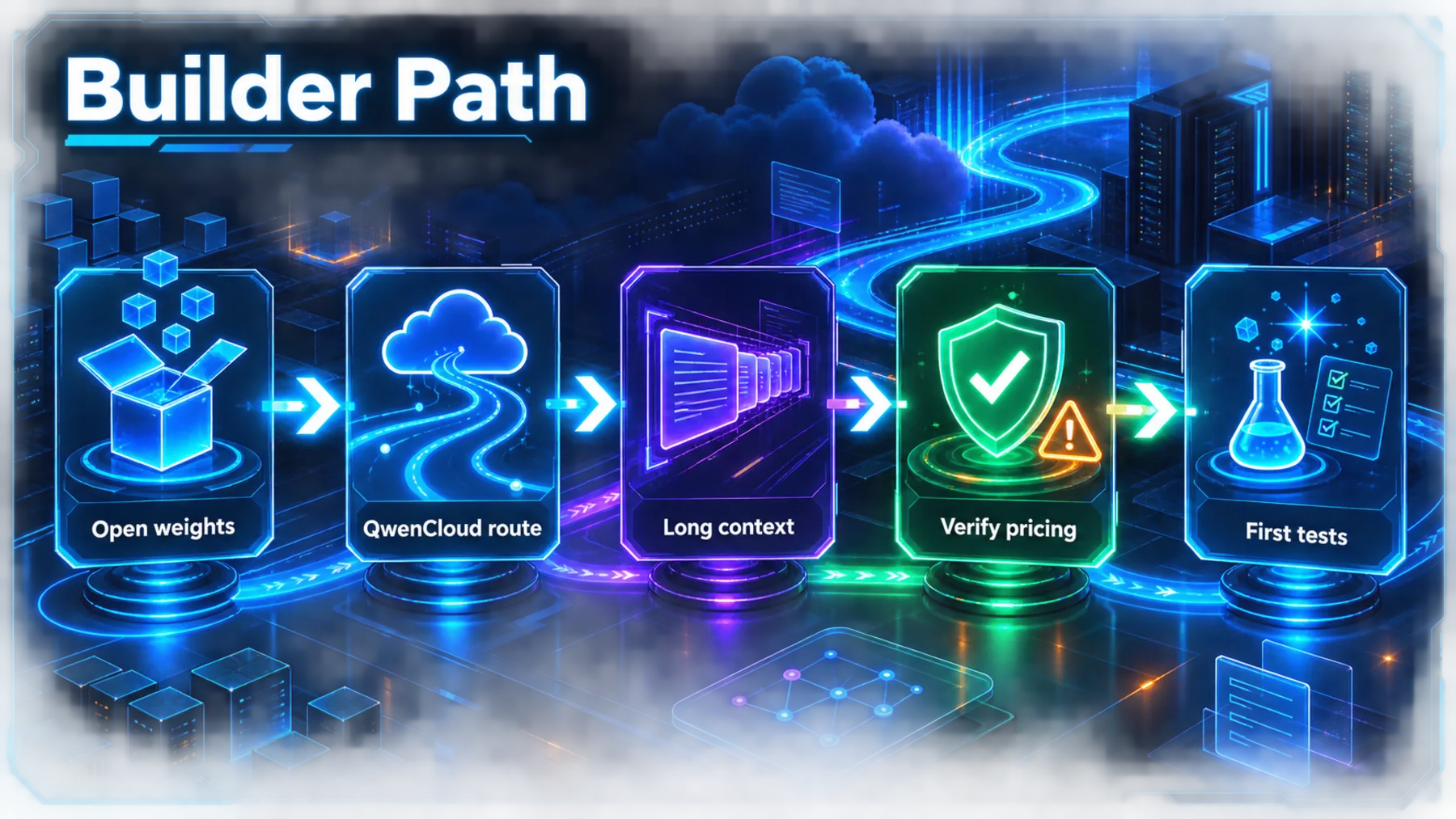
For builders, the immediate opportunity is inspection and controlled testing. Alibaba says the Qwen3.8-Flash-Next weights are available through its named open-model channels, while QwenCloud uses the distinct production name Qwen3.8-Flash.
A sensible first test is not a broad claim about speed or savings. It is a long-context task with a clear retrieval requirement: can the system find the relevant passages, preserve the important qualifiers and show where the answer came from?
Inspect
Examine the open-weight preview as its own release.
Separate
Keep QwenCloud’s Qwen3.8-Flash distinct.
Verify
Test retrieval and cost on a real workload.
The bet is selective intelligence
Alibaba’s preview argues that useful capacity can be broad while the costly path through it stays narrow.
The useful capacity may be broad; the expensive path through it may not need to be.
Altior synthesis of Alibaba’s published architecture description
The stronger reading is not that Qwen3.8-Flash-Next has settled the economics of long-context AI. It is that Alibaba has made its preferred answer visible early: compress what can be compressed, retrieve what matters, and activate only the route required for the next token.
If that design holds up outside Alibaba’s own reporting, the consequential shift will be less about headline parameter totals and more about how intelligently a system chooses not to compute.
Test selective retrieval on a long brief
Act as a systems analyst. Read this 1,200-word project brief, identify the five passages most relevant to a proposed implementation decision, and return: (1) a ranked list of the passages with one-sentence reasons, (2) a 150-word decision summary, and (3) three unanswered questions. Do not invent facts; distinguish direct evidence from inference.Ready to copy
Watch the evidence, not just the scale
Track the eventual Qwen4 release, independent testing and real workload economics before turning this architectural preview into a broader capability or cost conclusion.
Try the promptWhat could change the takeaway
- Qwen4 release details
- Independent evaluations
- Real workload economics
- Service access details