The Model Is an Agent Stack Play
Qwen Cloud is pooling models and tools for several agents, while Qoder is temporarily cutting the rate applied to preview-model coding work.
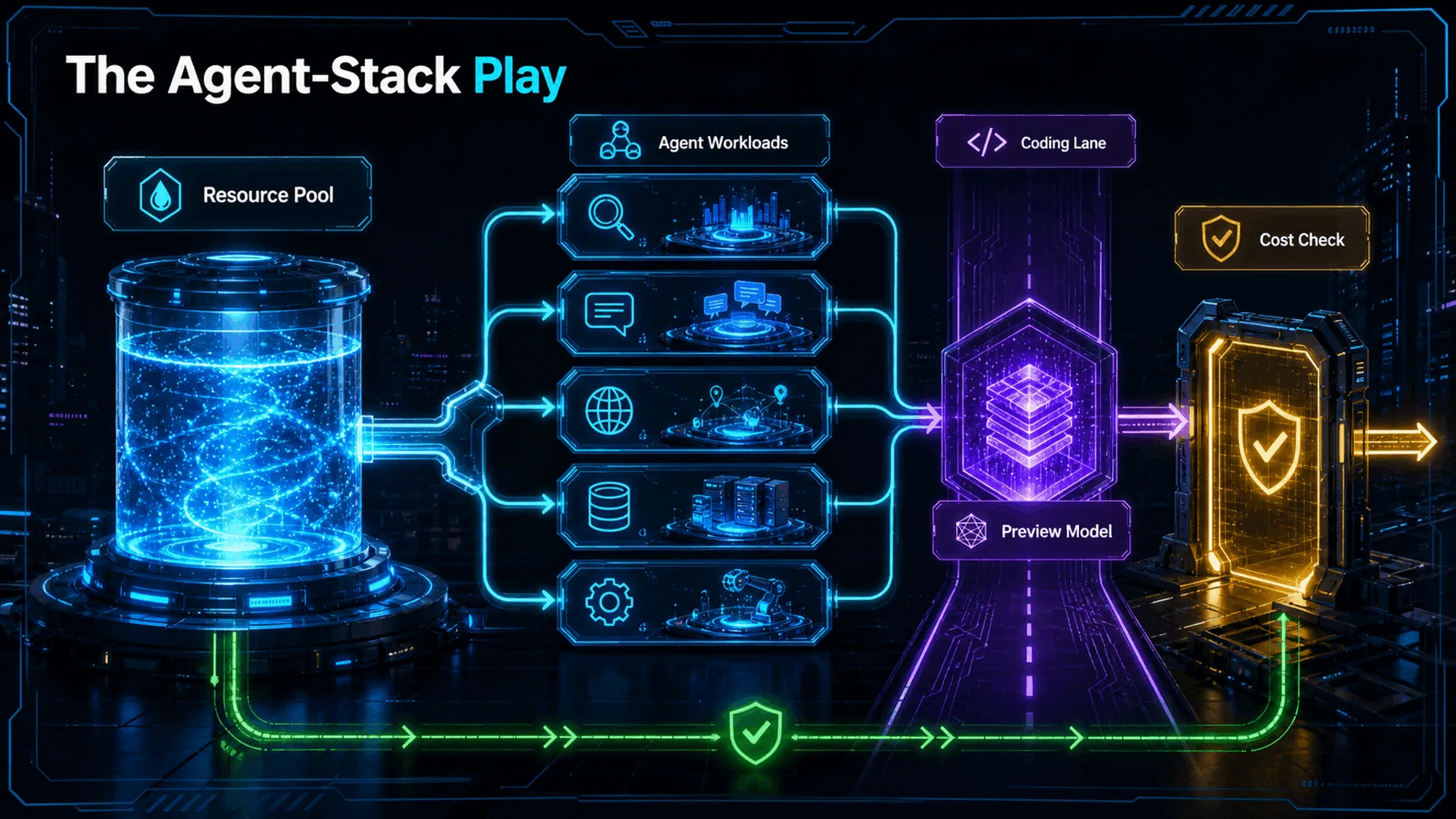
This is less a story about another large model entering a picker than about how we can put that model to work. Qwen Cloud is selling a shared subscription for varied agent tasks; Qoder is offering a coding-focused route with a temporary commercial incentive.
The attractive numbers come with boundaries. Qwen Cloud says plans start at $6 per month, while its claim of up to eight simultaneous agents applies to Pro. Qoder says its 0.01x multiplier is available now, but does not give an expiry date in the cited post.
Agent Access Changes the Calculation
The practical question is whether one pool can support useful specialist work without multiplying plans or obscuring the bill.
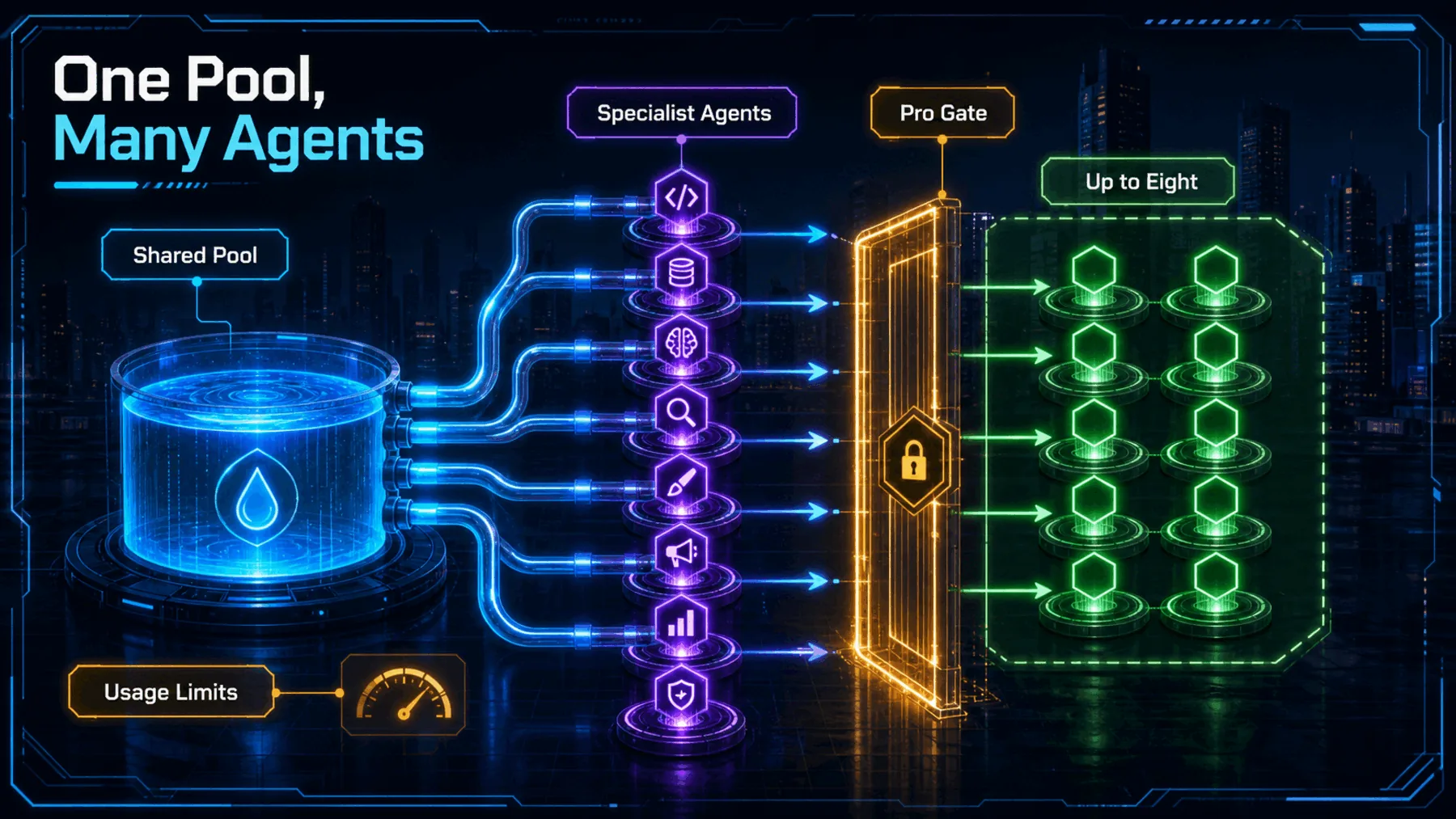
A small agent stack rarely needs every worker to do the same thing. We might use one agent for research, another for code and another for media, each drawing on different models or tools. Qwen Cloud says Token Plan Individual brings the Qwen family, HappyHorse, GLM and DeepSeek together with web search, image search and code interpreter.
That packaging could reduce the friction of maintaining separate services, but access is not the same as unlimited capacity. The source does not establish how far each tier's credits will stretch across our workload, and the up-to-eight-agent claim belongs specifically to Pro.
Two Offers, Different Economics
One offer pools varied agent work; the other temporarily lowers the multiplier on a coding platform.
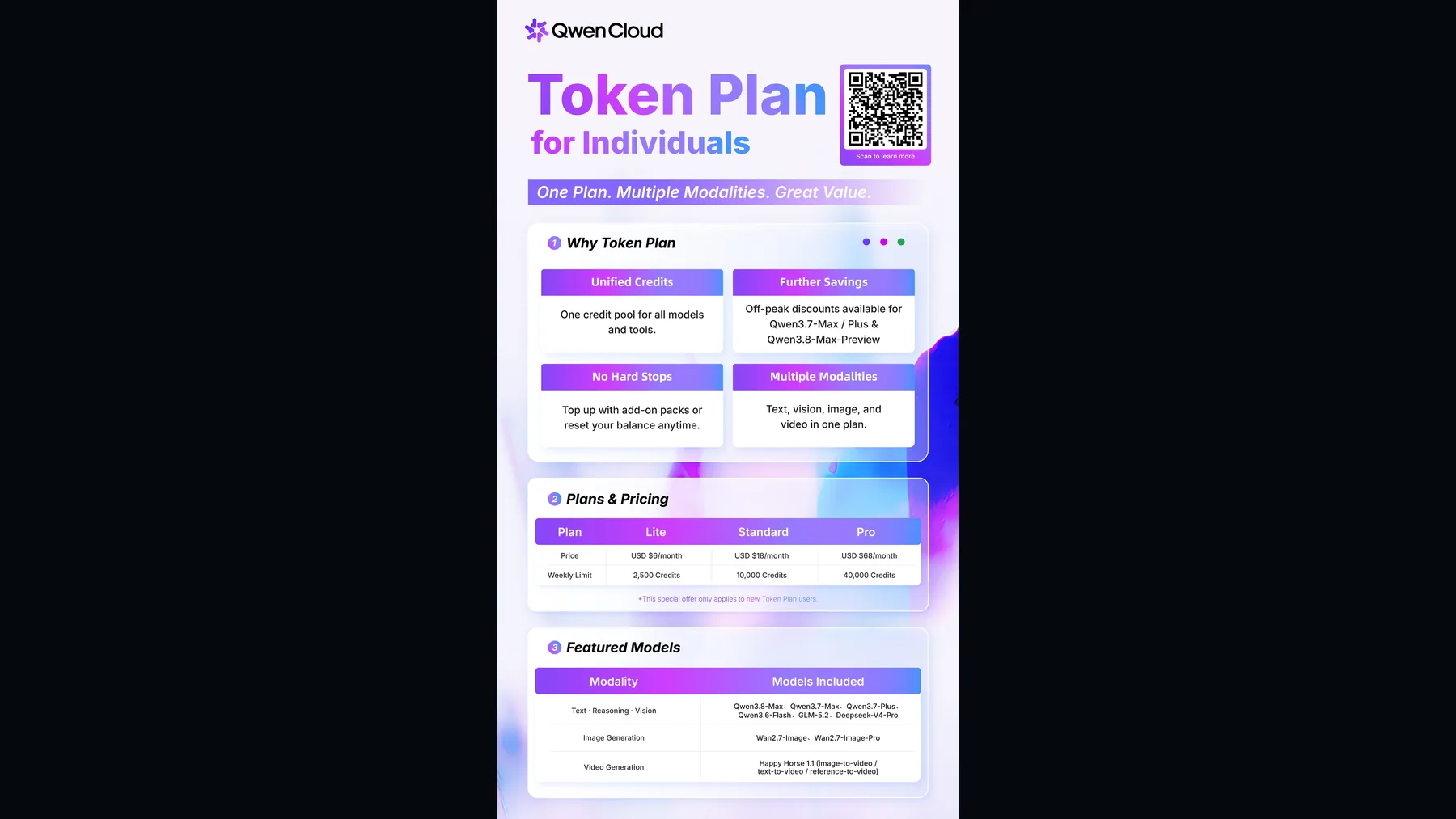
Qwen Cloud's route is broad: one subscription, several named model families, multiple modalities and included tools. Its appeal rests on consolidation, although the cited material does not show that the entry tier can support the same concurrency as Pro or that its credits suit every mix of work.
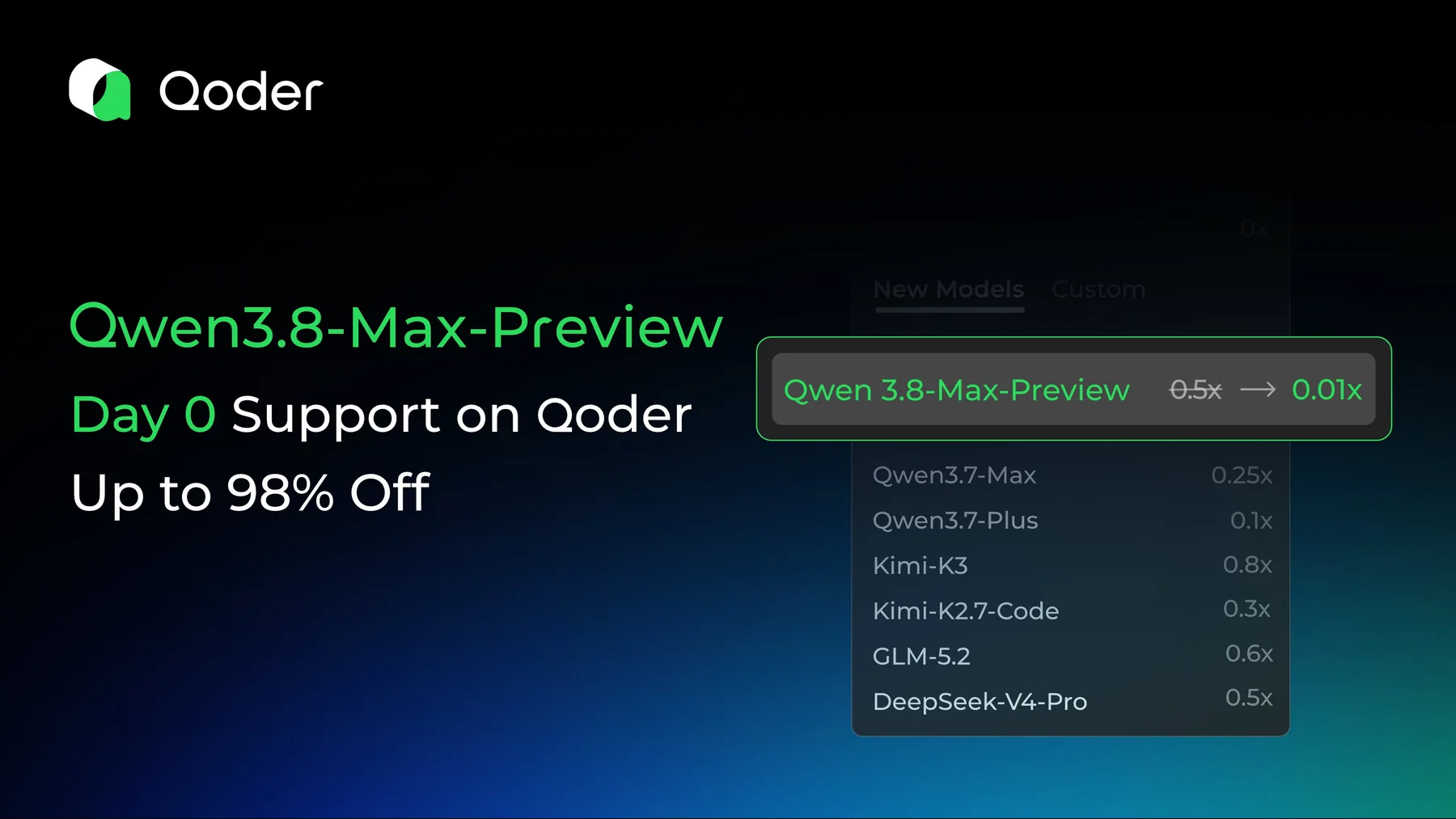
Qoder's route is narrower and more immediate. Qoder says Qwen3.8-Max-Preview is live in its coding platform and advertises a temporary move from a 0.5x multiplier to 0.01x. That tells us the current charging signal, not the final cost of a completed task or the quality of the result.
What Qwen Cloud Says
The original announcement supports the pooled-access proposition, while keeping price and concurrency claims separate.
Qwen Cloud is explicit about the starting price and the breadth of access it advertises. It separately says a single Token Plan can power up to eight agents at the same time on Pro and includes web search, image search and code interpreter.
Those statements describe Qwen Cloud's offer; they do not independently establish availability, output quality or value for our workload. The promotional poster also says its special offer applies to new Token Plan users.
“Even better, a single Token Plan can power up to 8 agents at the same time (for Pro Plan), so your whole agent stack runs on one subscription.”
Qwen Cloud, 20 July 2026
The Discount Has Limits
Qoder's launch post makes a strong temporary rate claim, but leaves duration and task-level cost unresolved.
Qoder places the preview model inside a coding-agent product and says it is built for autonomous, long-horizon tasks. It also advertises a current reduction from a 0.5x multiplier to 0.01x.
Both the capability language and the commercial numbers come from Qoder. The cited post gives no expiry date, and a lower multiplier alone cannot tell us the effective cost of a successful coding job. We still need to measure usage, intervention and result quality.
How the Choice Works
Start with the workload, then test eligibility, limits, quality and effective cost before scaling.
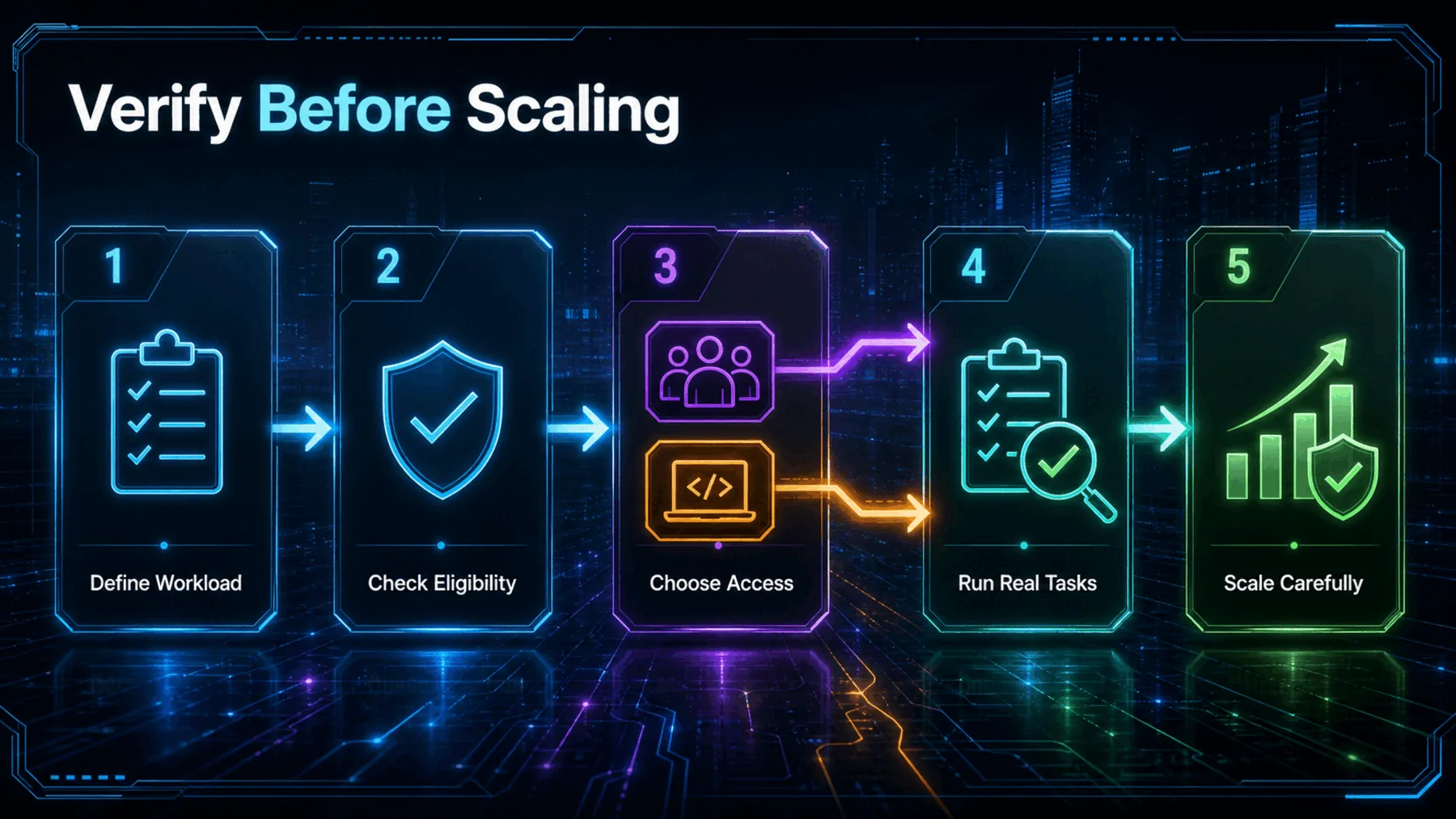
If our workload spans research, coding and media, Qwen Cloud's pooled catalogue is the more relevant proposition to investigate. If the pressure comes from long coding runs, Qoder's temporary multiplier may deserve the first test. Neither route wins simply because its headline number is larger or smaller.
Before committing, we should confirm eligibility and the exact tier, record the credits or usage consumed, and judge whether the output completes the intended task with acceptable intervention. That turns two launch offers into comparable operating evidence.
What We Should Test
A controlled task tells us more than a starting price, concurrency ceiling or temporary multiplier.
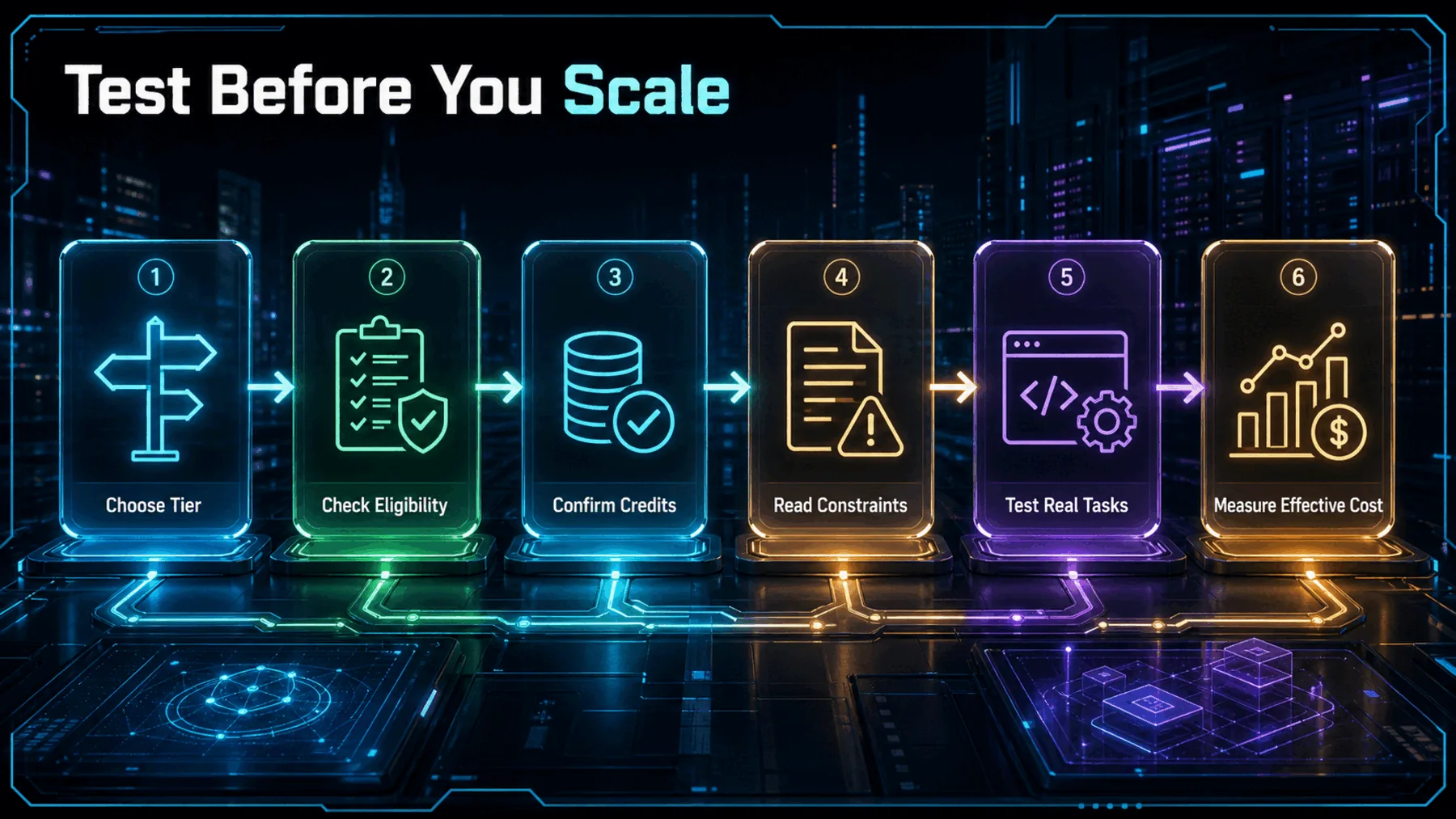
We should begin with a task we genuinely repeat, not a demonstration designed to flatter the product. For a multi-agent route, that could be a compact research-to-code-to-media workflow. For the coding route, it could be a bounded repository task with explicit acceptance criteria.
During each run, we should record waiting time, interventions, failed attempts, credits or usage consumed and whether the final output meets the brief. The useful comparison is the cost of an acceptable result under ordinary constraints, not the promotional rate in isolation.
Access Is the Real Launch
The competitive move is the way the model is packaged around actual work.
A model launch becomes an agent-stack launch when distribution, tools and workload economics determine what we can actually build with it.
Creator Broadcast synthesis
Qwen Cloud and Qoder are using the same preview-model moment to make different propositions. Qwen Cloud wants one plan to become the shared supply line for several kinds of agents. Qoder wants a temporary rate cut to draw substantial coding work into its platform.
That is why the access layer matters more than the model headline alone. The winning route will be the one that turns advertised capability into reliable work at a cost we can sustain after eligibility conditions and temporary incentives are stripped away.
Stress-test the two Qwen3.8 access routes
Act as a cautious AI operations analyst. We are choosing between Qwen Cloud Token Plan Individual and Qoder for a recurring workload that uses one research agent, one coding agent and one media agent. Using only the offer facts below, compare the two routes without assuming unlisted prices, credits, limits or performance: Qwen Cloud says its plans start at $6 per month, combine several model families and tools in one credit pool, and allow up to eight simultaneous agents on Pro; its special offer is limited to new Token Plan users. Qoder says Qwen3.8-Max-Preview is available in its coding platform and currently carries a temporary 0.01x multiplier instead of 0.5x. Produce: (1) a compact comparison table covering intended workload, eligibility, tier dependency, known cost signal and unknowns; (2) the three facts we must verify in each service before paying; (3) one representative task to run on both routes; and (4) a decision rule based on measured task quality, credits consumed and effective cost. Label every unverified proposition as a supplier claim and do not calculate savings from missing usage data.Ready to copy
Watch the Real Cost
Run one representative task, capture the credits, limits, intervention and output quality, and choose on the effective cost of useful work rather than the launch headline.
Try the promptFive signals behind the price
- Tier
- Eligibility
- Credits and limits
- Offer duration