OpenAI Ultrafast: Faster Output, Not Faster Everything
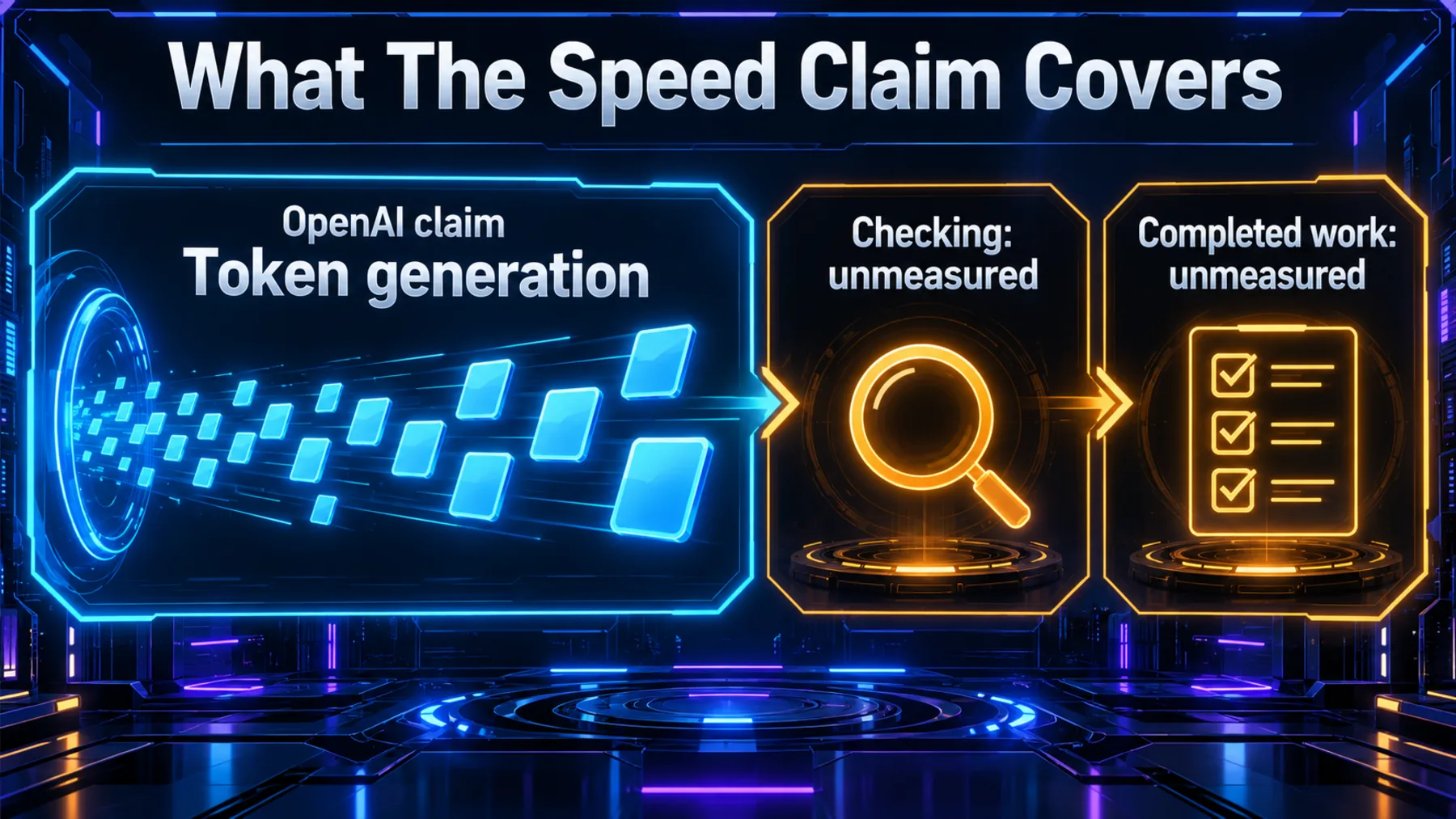
OpenAI’s premium speed tier promises faster token generation, but that does not establish how much sooner we get checked, usable work.

When we ask an AI coding tool for help, waiting for the answer can interrupt the work. OpenAI calls Ultrafast its premium speed tier, with claims aimed at how quickly output is generated in Codex and the API. That makes the promise attractive—and makes the distinction between faster output and a faster finished job worth keeping.
Less Waiting Could Help Us
The potential benefit depends on where the delay sits in our work.
If we are ready to continue but still watching an answer appear, faster output could shorten that pause. If the harder part is checking the answer or making it useful, quicker generation alone may leave much of the job untouched.
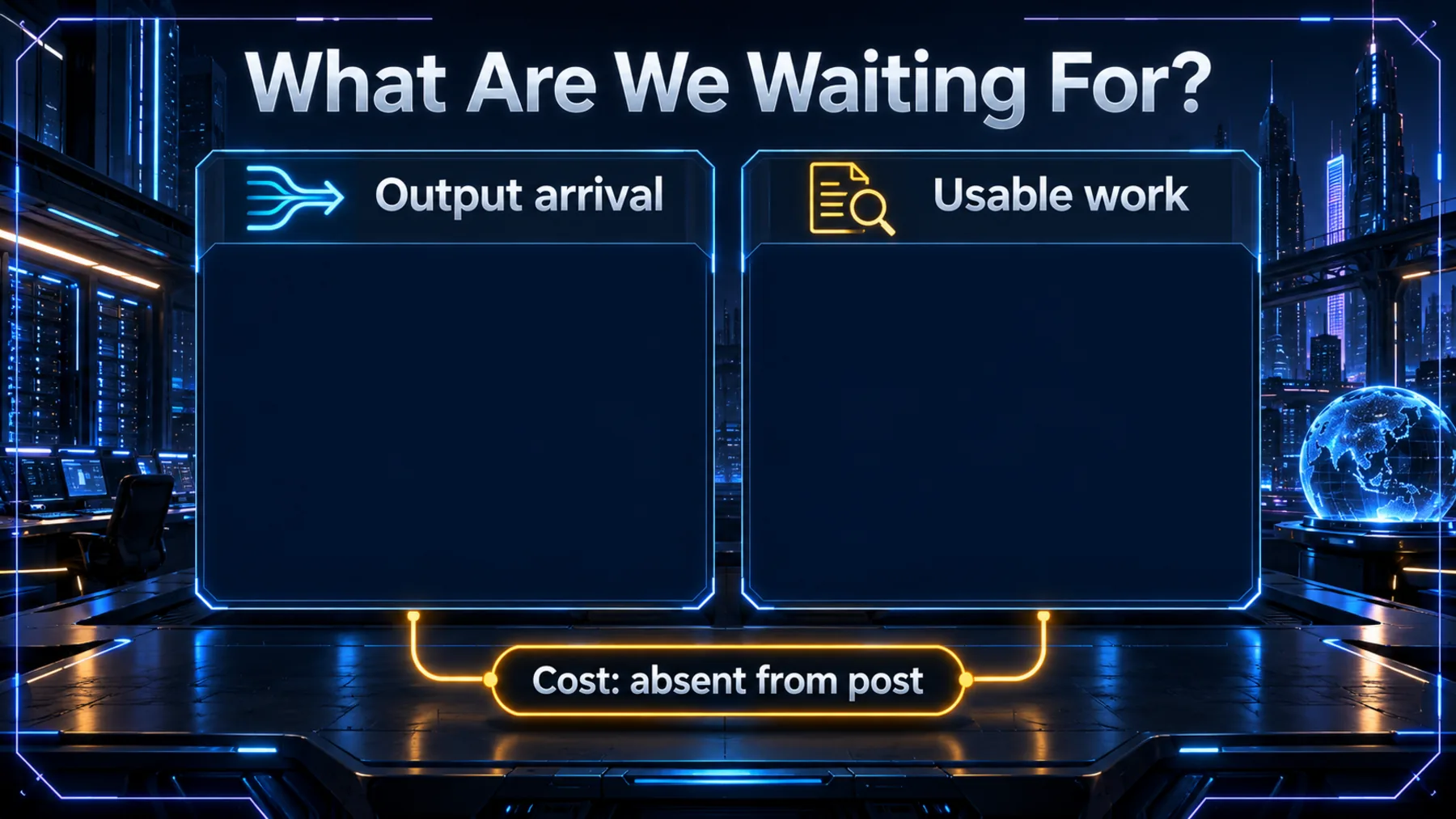
Before judging the value of a premium tier, we need to separate two observations: when the output arrives and when we have something we can use. What, exactly, do OpenAI’s announced numbers measure?
OpenAI’s Numbers Describe Output Speed
The Codex and API claims are separate, and their qualifications matter.
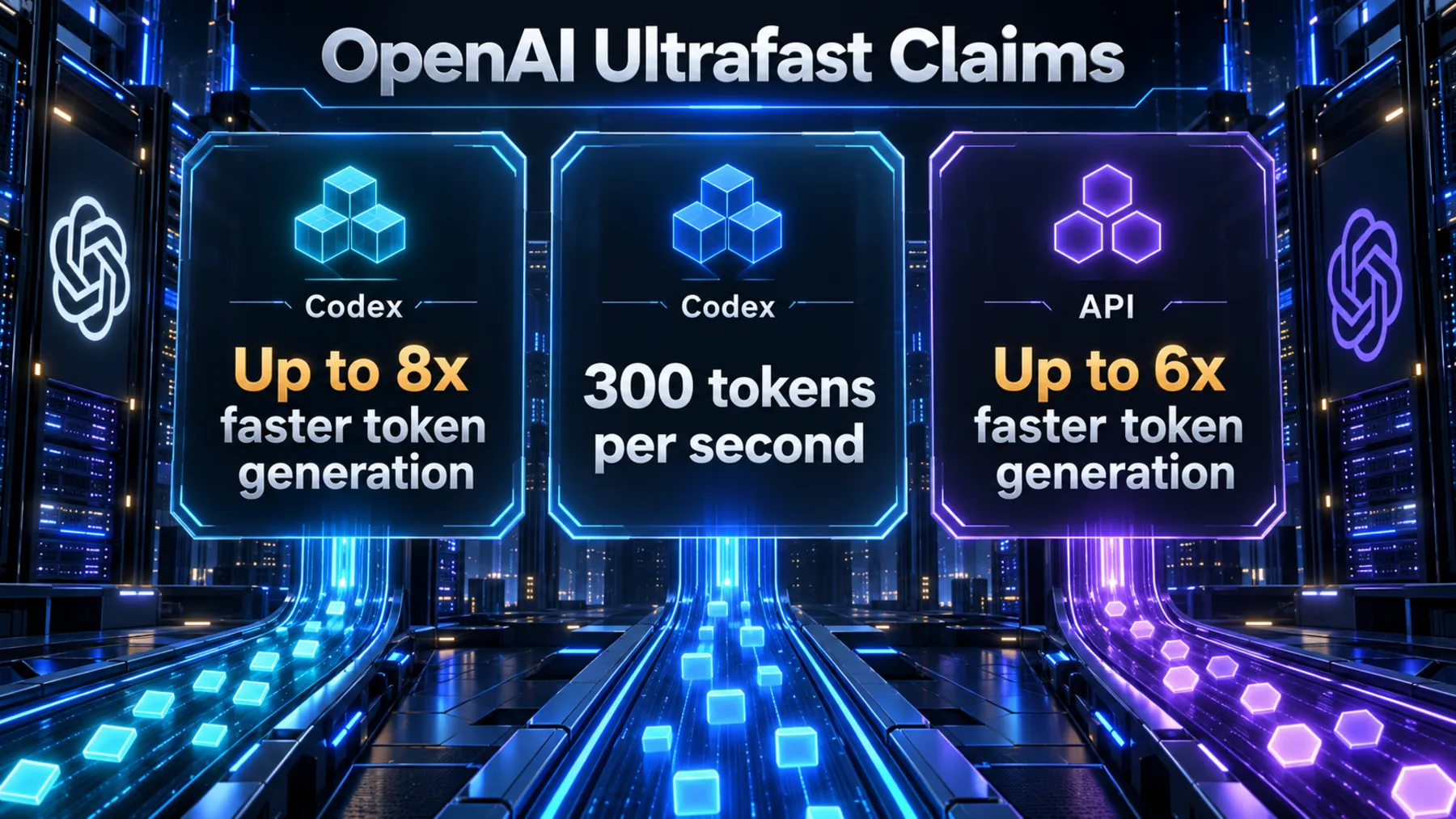
OpenAI says Ultrafast offers up to 8x faster token generation in Codex, with 300 tokens per second stated alongside that claim. For the API, OpenAI separately says up to 6x. The 300-token figure belongs to Codex; the sentence does not assign it to the API.
“Up to” is part of both claims, not a promise of the same increase on every task. The post gives no benchmark conditions or shared comparison baseline, so these figures cannot support a calculated baseline throughput or a prediction of our total task time.
Keep OpenAI’s Exact Wording
The announcement establishes what OpenAI says, not whether the performance has been independently reproduced.
The complete sentence keeps the important boundaries together: the premium tier, the “up to” qualifications, token generation and the two different settings. Reading it intact avoids turning a qualified output-speed claim into a promise about the whole job.
The captured post records that announcement. It is evidence of OpenAI’s statement, not an independent test of Ultrafast.
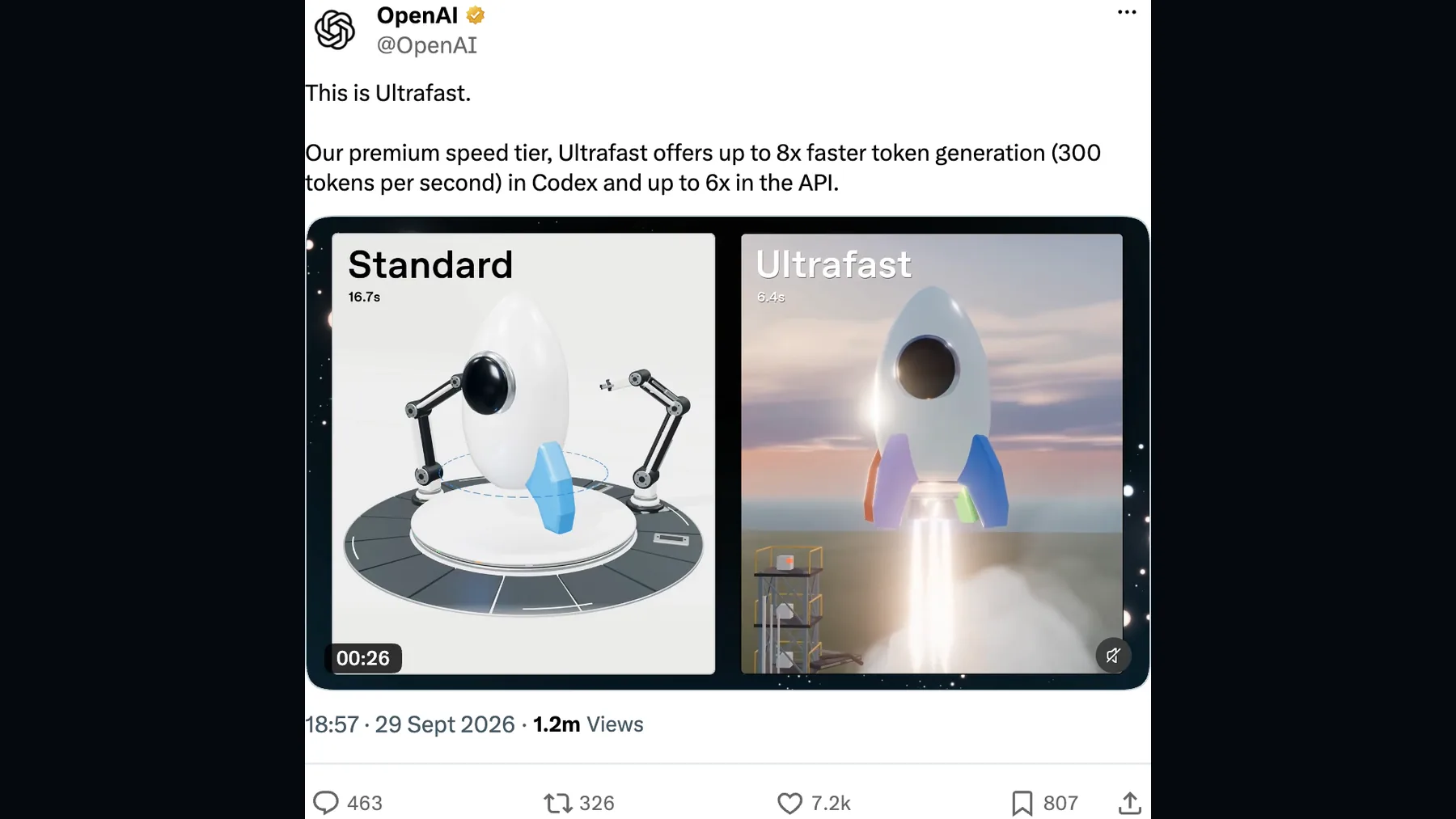
Our premium speed tier, Ultrafast offers up to 8x faster token generation (300 tokens per second) in Codex and up to 6x in the API.
OpenAI · https://x.com/OpenAI/status/2104993966043320759
A Statement Is Not a Benchmark
The post and its attached illustration do not establish an independently validated speed comparison.
The available video evidence is limited to one observed frame of OpenAI’s attached comparison. The full video and audio were not downloaded or transcribed, so that frame cannot support a complete account of the demonstration or a validated comparison of timings.
The useful evidence here is narrower: we can preserve the exact claim and identify who made it. We cannot turn the illustration into measured results or derive another speed ratio from it.
Output Comes Before the Finished Job
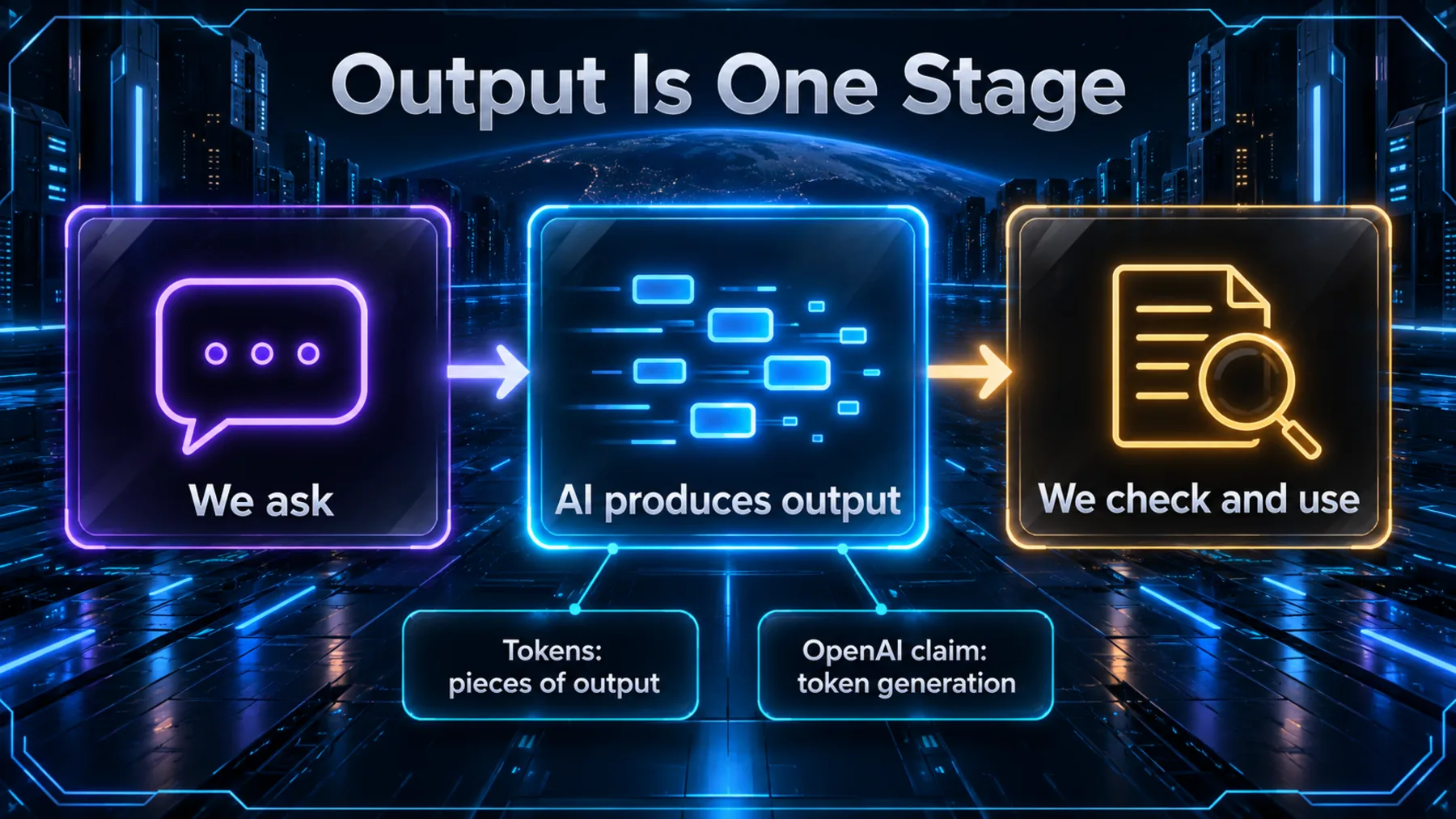
Producing pieces of an answer is different from checking and using it.
We ask for help, the AI produces output, and then we check whether we can use the result. Tokens are pieces of that generated output—not finished tasks and not necessarily whole words. Token-generation speed describes the production step.
That distinction does not tell us how Ultrafast works internally, how good its answers are or how long checking will take. It simply explains why an increase in output speed does not establish an equivalent reduction in the time needed to finish the job.
Test Where We Actually Wait
If access is available, our own task can help us judge whether quicker output makes a useful difference.
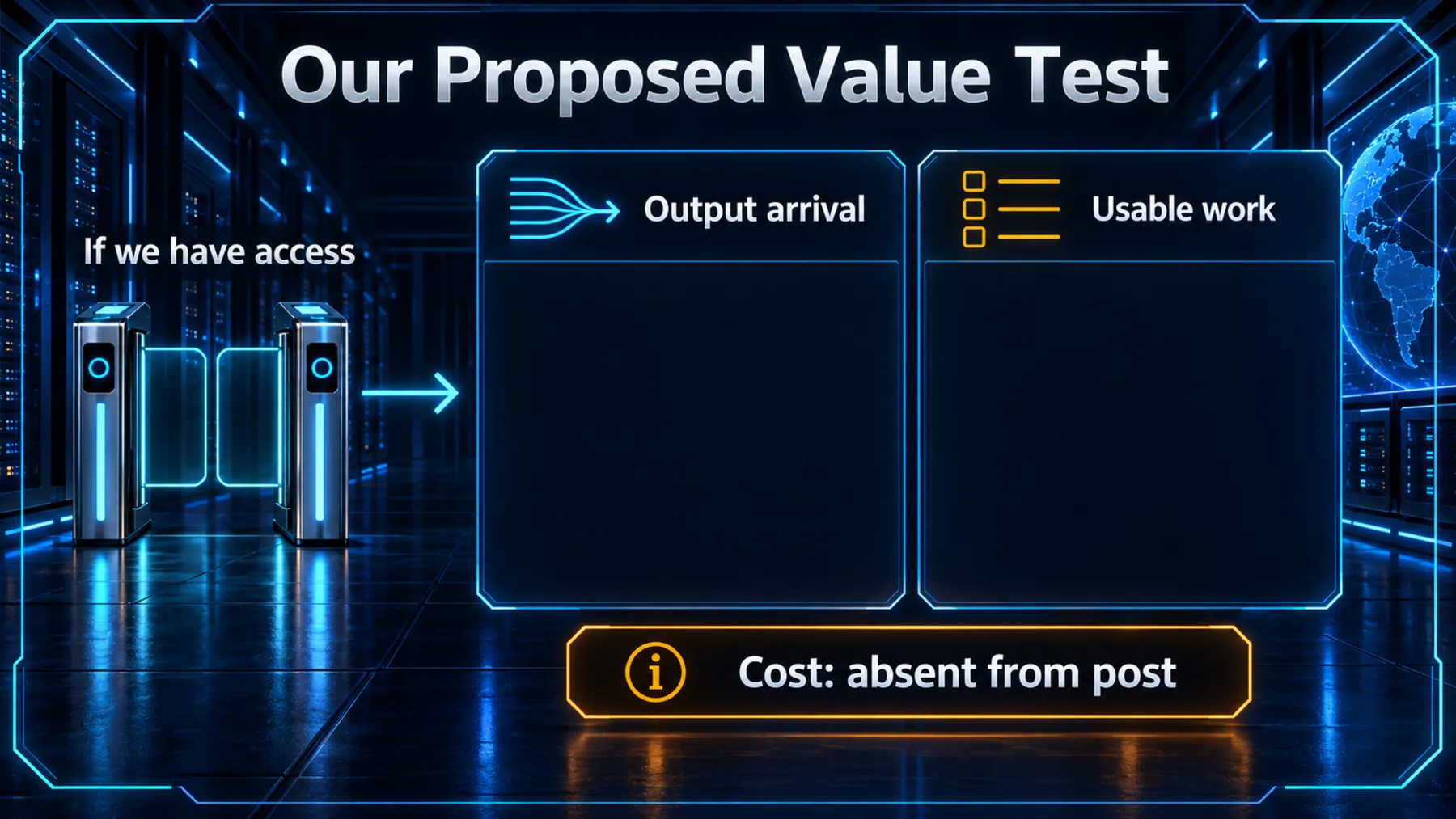
We would first check current official information for access and cost. This post gives no price, eligibility, rollout scope or activation instructions, so it cannot tell us whether we can use Ultrafast or what we would pay.
If we confirm access, we could compare the same task with and without the tier, recording output arrival separately from completion of a checked, usable result. Keeping the task and checking criteria comparable would make the observations more useful, without turning them into a controlled benchmark.
This is a proposed test, not one we have run. Its purpose is to find out whether the waiting Ultrafast targets is the waiting that matters in our work.
Judge the Work, Not Just the Output
OpenAI’s claim gives us a reason to examine the waiting step, not a result for our whole workflow.
Ultrafast’s appeal is specific: potentially less waiting while output is generated. Whether that becomes a worthwhile benefit depends on access, cost and how much that pause holds up our task—none of which this announcement settles.
The prompt below uses OpenAI’s exact passage to separate the claims from the unproven payoff and propose a comparison we could make. It asks for a decision note, not invented benchmark results.
Faster output is the promise. Usable work is the test.
Altior · editorial interpretation
Separate the speed claim from the payoff
Analyse the following OpenAI announcement using only the quoted passage. Do not browse, add product details or invent measurements. OpenAI says: “Our premium speed tier, Ultrafast offers up to 8x faster token generation (300 tokens per second) in Codex and up to 6x in the API.” Produce a short decision note for our AI-assisted coding workflow. First, separate the Codex and API claims in a table, preserving every qualification and assigning 300 tokens per second only to Codex. Then explain what these claims do not establish about time to a checked, usable result. Mark price, eligibility, rollout scope, activation instructions and benchmark conditions as not stated in this passage; do not infer them. Finally, propose one small comparison we could make if we confirm access and cost separately: observe output arrival and completion of a checked, usable result for the same coding task with and without Ultrafast. State what we would need to keep comparable, which observations we would record and why this would be a local value test rather than independent validation of OpenAI’s figures. End with three concrete questions about whether output waiting is the bottleneck in our workflow. Provide no fabricated results or predicted savings.Ready to copy
Compare Output with Usable Work
If access becomes available to us and we have confirmed the cost, compare output arrival with checked-work completion on one familiar task. That keeps the value question tied to our work rather than the headline multiplier.
Try the promptQuestions This Post Leaves Open
- Price: what would the premium speed tier cost us?
- Eligibility and rollout: would our account or API workflow have access?
- Benchmark conditions: what tasks and comparison baseline underpin OpenAI’s figures?