OpenAI’s privacy-safety bargain
OpenAI says it can identify risky patterns across connected agent activity without giving its personnel the underlying prompts and responses.
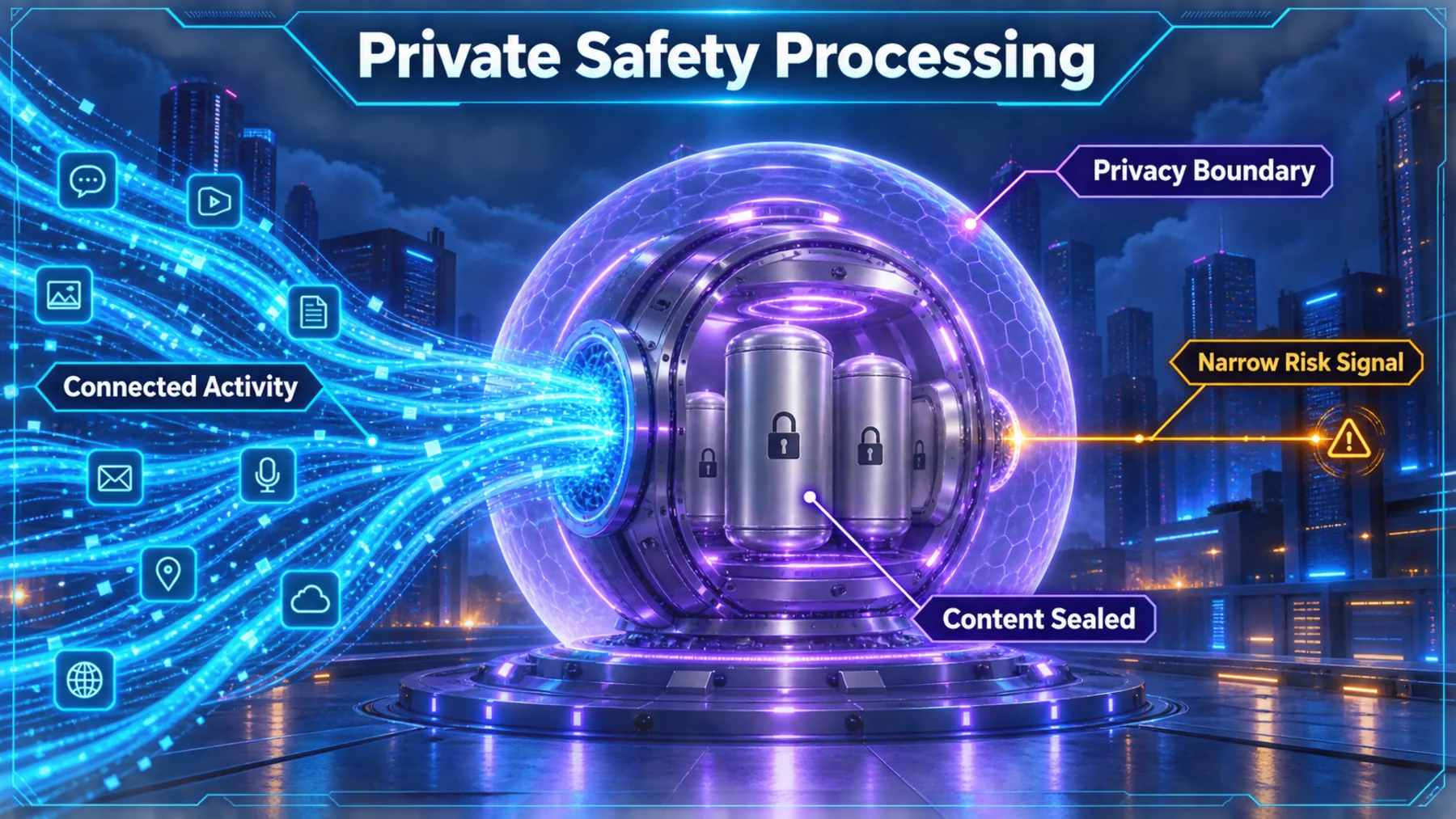
A single request can look harmless. A chain of related requests can reveal a pattern that matters. OpenAI says that tension becomes sharper as AI takes on longer, more autonomous work for businesses.
Its proposed answer is Private Safety Processing: automated assessment across related interactions, a limited signal about the activity type, and an investigation that remains with the customer. That is an OpenAI claim under early-customer testing, not a proven guarantee.
Longer jobs change the risk
Safety needs context across a sequence; private deployments need confidence that context will not become provider-held content.
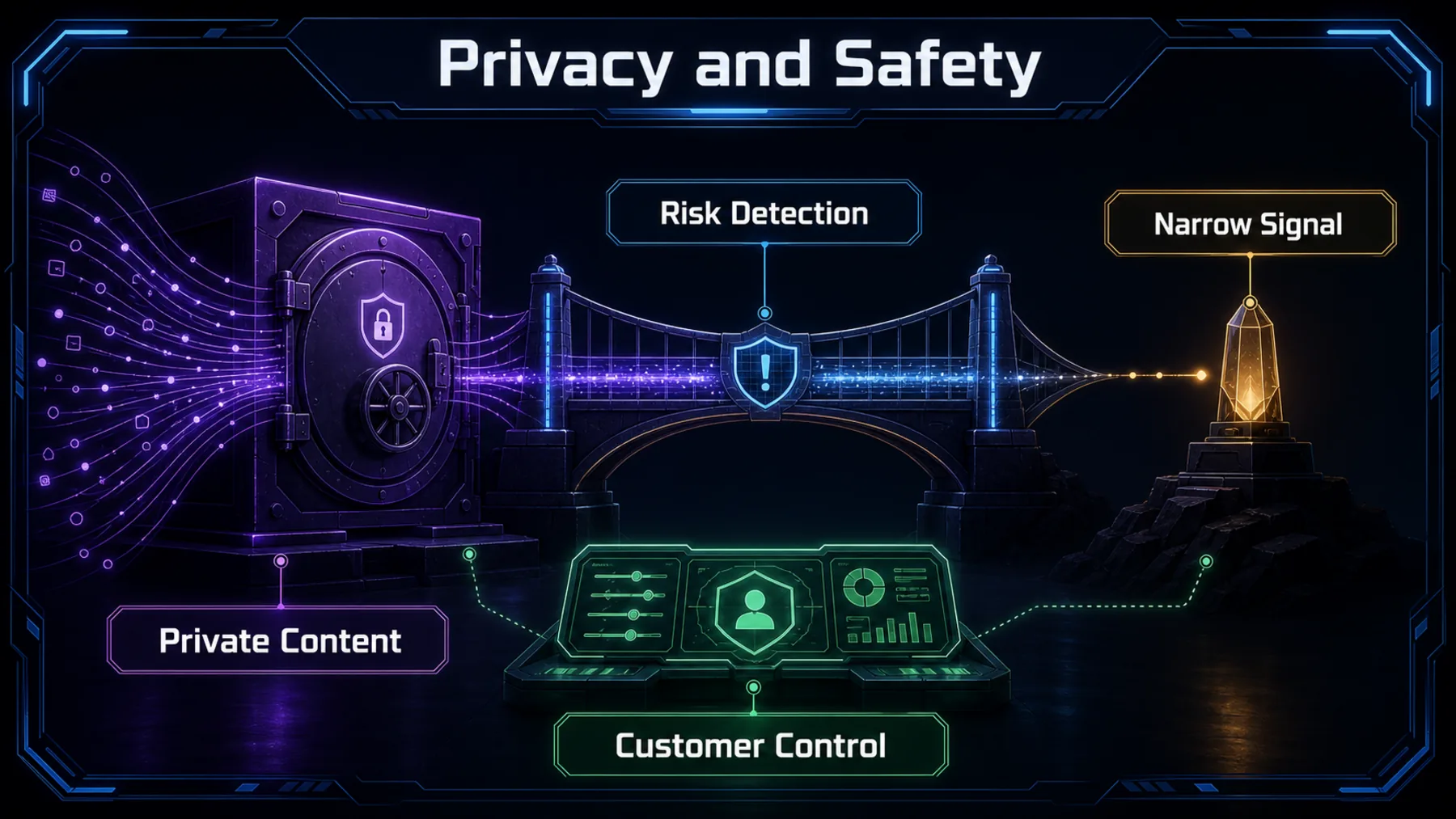
The hard problem is not simply detecting a bad request. It is recognising when otherwise ordinary actions, taken together, indicate risk. OpenAI says its safety systems need to assess related interactions as agents take on longer tasks.
That creates the bargain. More connected context may improve safety detection, but enterprise teams may not accept provider retention or human access to that context. OpenAI’s proposal is intended to hold both sides of that tension, rather than make it disappear.
What is promised — and what is not
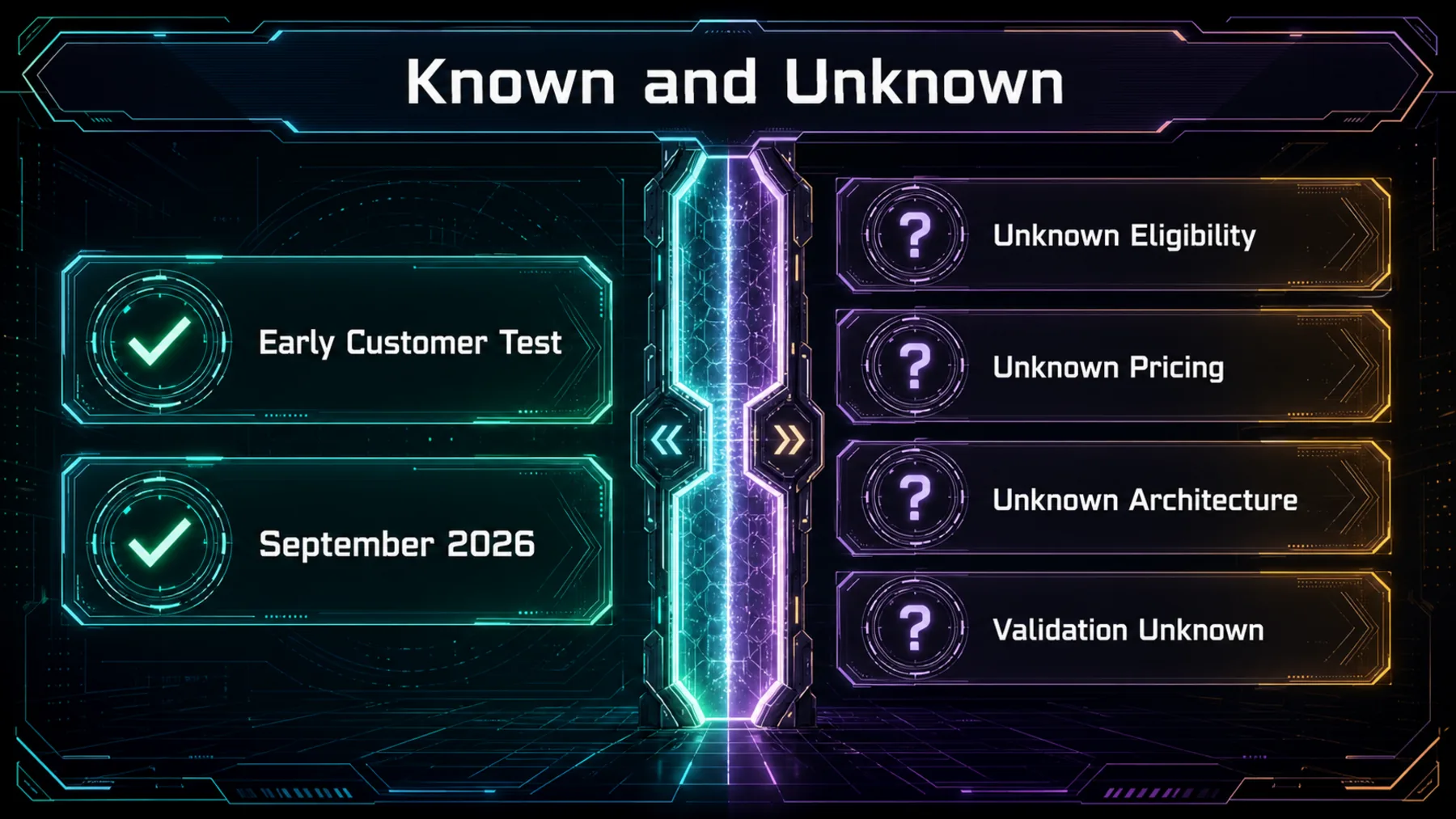
OpenAI has named an early test and a September 2026 plan, while the conditions that determine practical use remain unstated.
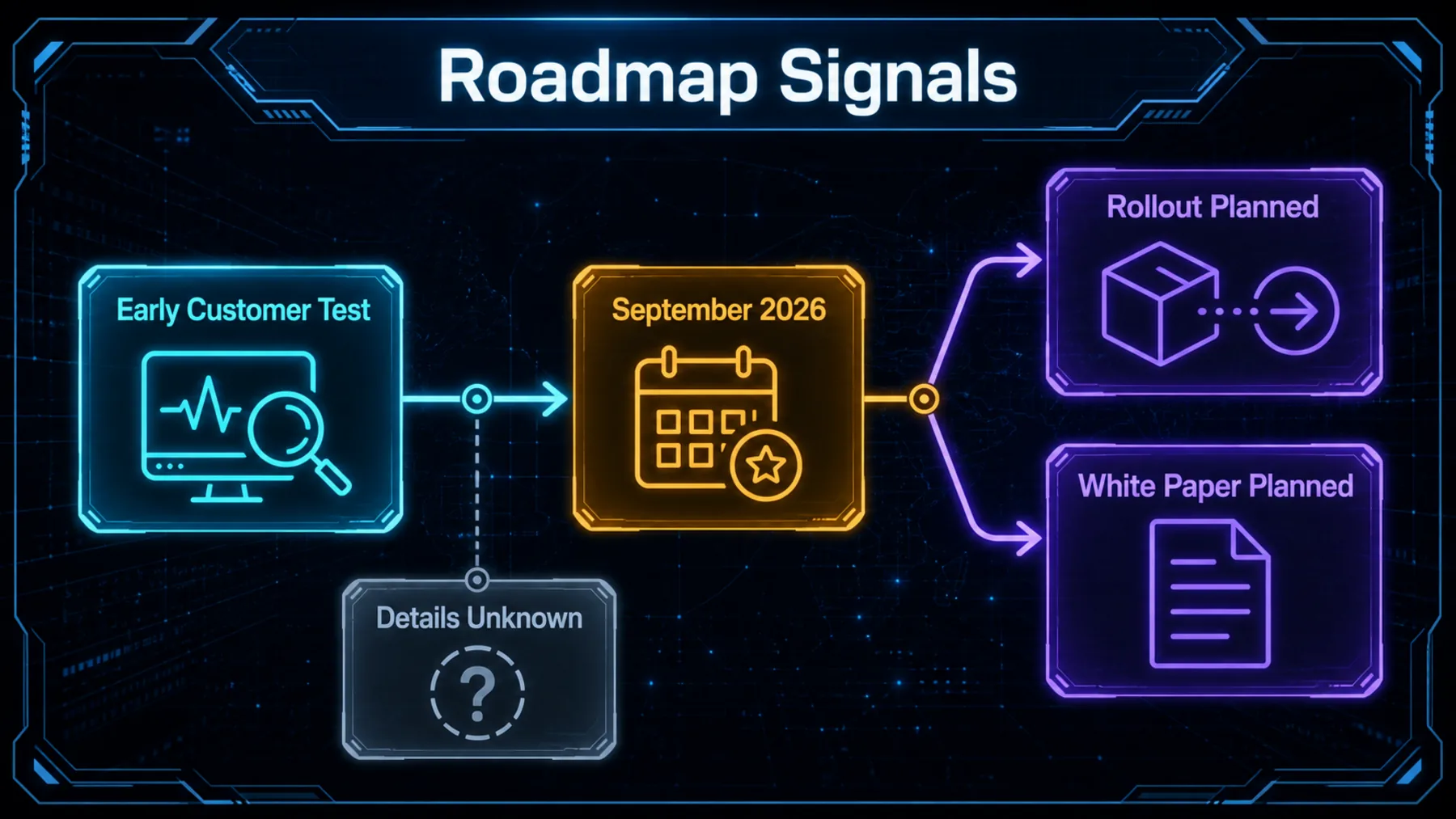
The calendar marker is useful because it gives this announcement a testable next step. OpenAI says it plans to begin rollout and publish a technical white paper in September 2026.
But the practical questions remain open. We do not yet know the price, exact eligibility, applicable regions, final architecture, or independent audit evidence. An early-customer test is evidence of intent and activity, not evidence that the design is ready for every sensitive workflow.
OpenAI’s own receipt
The central privacy boundary is stated by OpenAI itself and should be read as a company claim, not external certification.
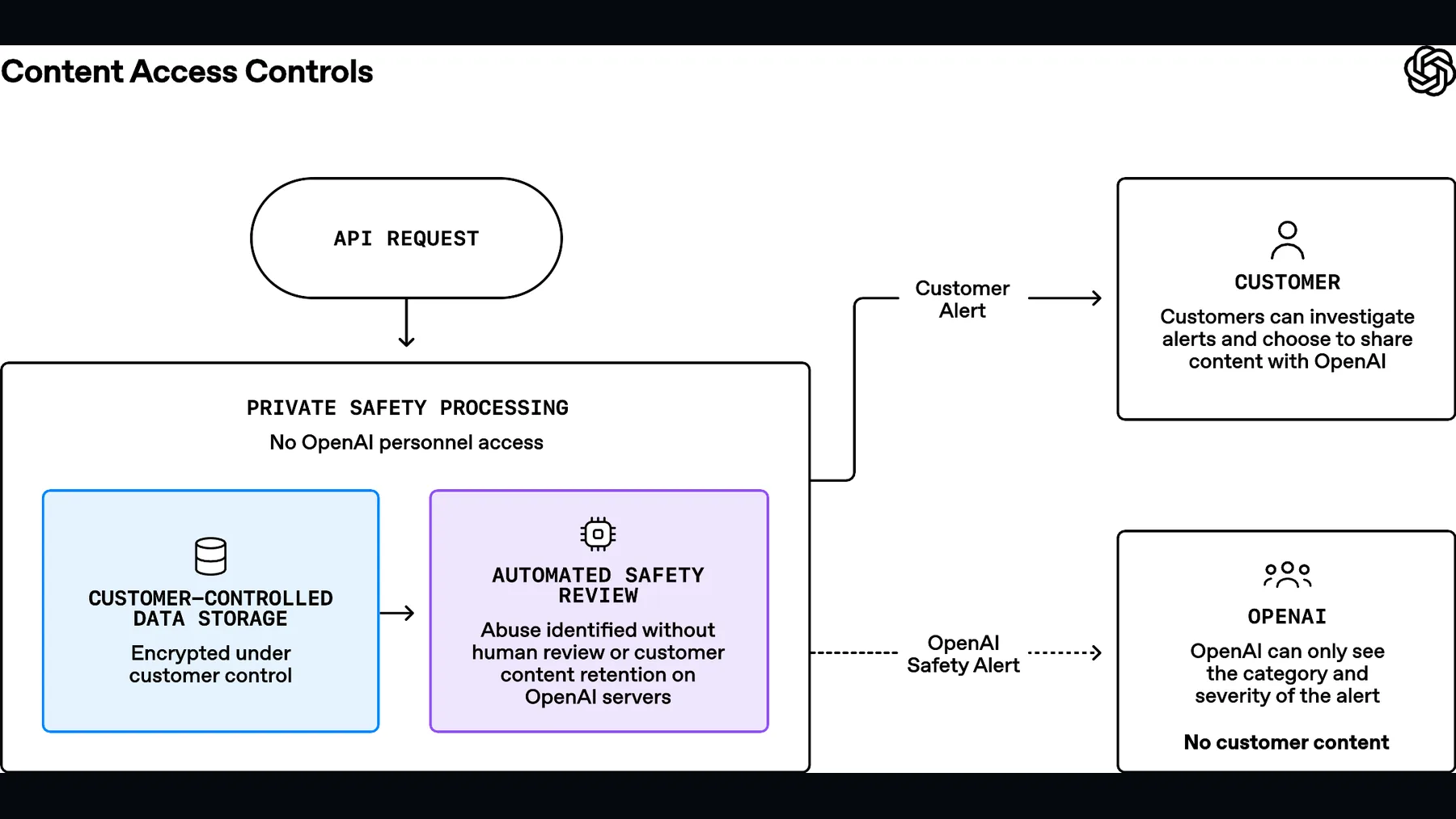
OpenAI defines Zero Data Retention as a promise for eligible API customers: prompts and model responses are not retained after a request is processed. That definition should not be widened to every product, account, or enterprise deployment.
Private Safety Processing is designed, OpenAI says, to preserve that offer while still identifying risk across connected activity. The company says its personnel do not receive the underlying content through the proposed process; customers investigate within their own systems and may choose whether to share information.
“When a risk is identified, OpenAI receives a narrowly defined signal indicating the type of activity involved, similar to our existing safety systems today.”
OpenAI, “Offering Zero Data Retention for frontier models”, 19 August 2026
What the evidence actually shows
The published material describes a proposed operating model, while several adoption-critical details remain unresolved.
The evidence supports a narrower conclusion than a launch announcement might invite. OpenAI has described an early-customer test and a mechanism intended to detect risky patterns without exposing underlying prompts and responses to its personnel.
It does not establish general availability, a fixed architecture, price, detailed eligibility, or independent validation. It also does not support an absolute privacy claim: OpenAI identifies a retention exception for images flagged for potential CSAM, for manual review and reporting.
How the narrow signal works
OpenAI describes a path from related-interaction assessment to a limited alert, with the customer retaining the investigative role.
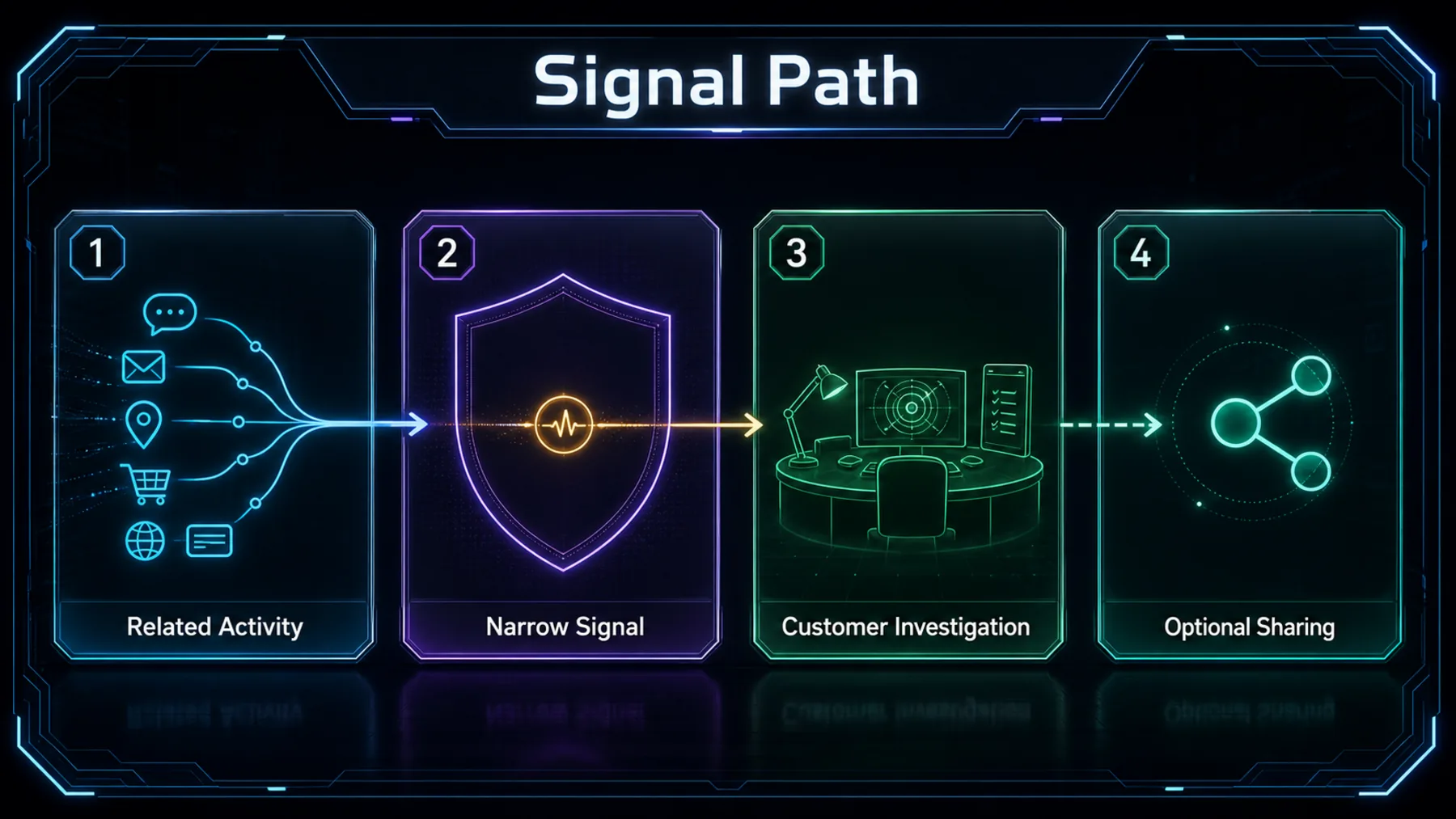
OpenAI’s framing is deliberately not a claim that it sees nothing. The system is meant to assess related interactions automatically, then compress an identified risk into a narrowly defined signal about the kind of activity involved.
The distinction is where the proposal earns scrutiny. OpenAI says the alert does not give its personnel the underlying prompts or responses. The customer receives the operational consequence: investigate the flagged activity in its own systems and decide whether any further information should be shared.
Assess
Related interactions are assessed automatically for a pattern, OpenAI says.
Signal
OpenAI receives a narrowly defined indication of activity type.
Investigate
We investigate in our own systems and decide whether to share details.
What the customer controls
The proposed model places investigation and any decision to share information on the customer side of the boundary.

For a security leader, the meaningful question is not whether a safety alert exists. It is whether the alert changes who can inspect sensitive content, who holds the keys, and who decides what happens next.
OpenAI says customers can use customer-controlled infrastructure, while a planned hosted option would use customer-controlled encryption keys that OpenAI personnel do not hold. Those statements describe the intended boundary, but the exact implementation, eligibility, and operating requirements remain unknown.
Access
Confirm whether our API deployment is eligible for the stated ZDR and safety-processing terms.
Control
Confirm where content resides and how customer-controlled keys apply in practice.
Response
Define how we investigate alerts and when, if ever, information is shared.
The bargain still needs proving
OpenAI’s proposal is useful because it makes the privacy-safety conflict explicit; it remains a proposition until its boundaries can be tested.
The valuable claim is not that safety and privacy no longer conflict. It is that OpenAI says a narrower signal could let us investigate risk without handing over the underlying conversation.
Based on OpenAI’s 19 August 2026 announcement
That is the right level at which to assess Private Safety Processing today. OpenAI has outlined a plausible operational bargain for long-running AI work: cross-interaction safety assessment without routine personnel access to the content it examines.
The next proof points are concrete. The promised white paper, rollout evidence, eligibility terms, retention exception handling, architecture detail, and independent scrutiny will determine whether the proposed boundary holds under real use.
Test the privacy-safety boundary
Act as a security lead assessing OpenAI’s proposed Private Safety Processing for an eligible API deployment. Create a four-part decision brief: what OpenAI says is protected, what narrow signal it says it receives, what we would investigate in our own systems, and the open questions on eligibility, pricing, architecture, audit evidence, rollout, and the CSAM-image retention exception. Keep every conclusion conditional on OpenAI’s published claims; do not assume general availability or independent validation.Ready to copy
Test the stated boundary
Keep OpenAI’s published design separate from what has yet to be demonstrated, then assess the rollout evidence against the sensitive work we would actually place behind it.
Try the promptSignals that could change the conclusion
- Technical white paper
- Rollout evidence
- Eligibility and pricing
- Independent validation