GPT-5.6-Cyber: a 95% leap, with a tighter gate
OpenAI reports a striking internal result for GPT-5.6-Cyber, then limits its use to approved defensive work.
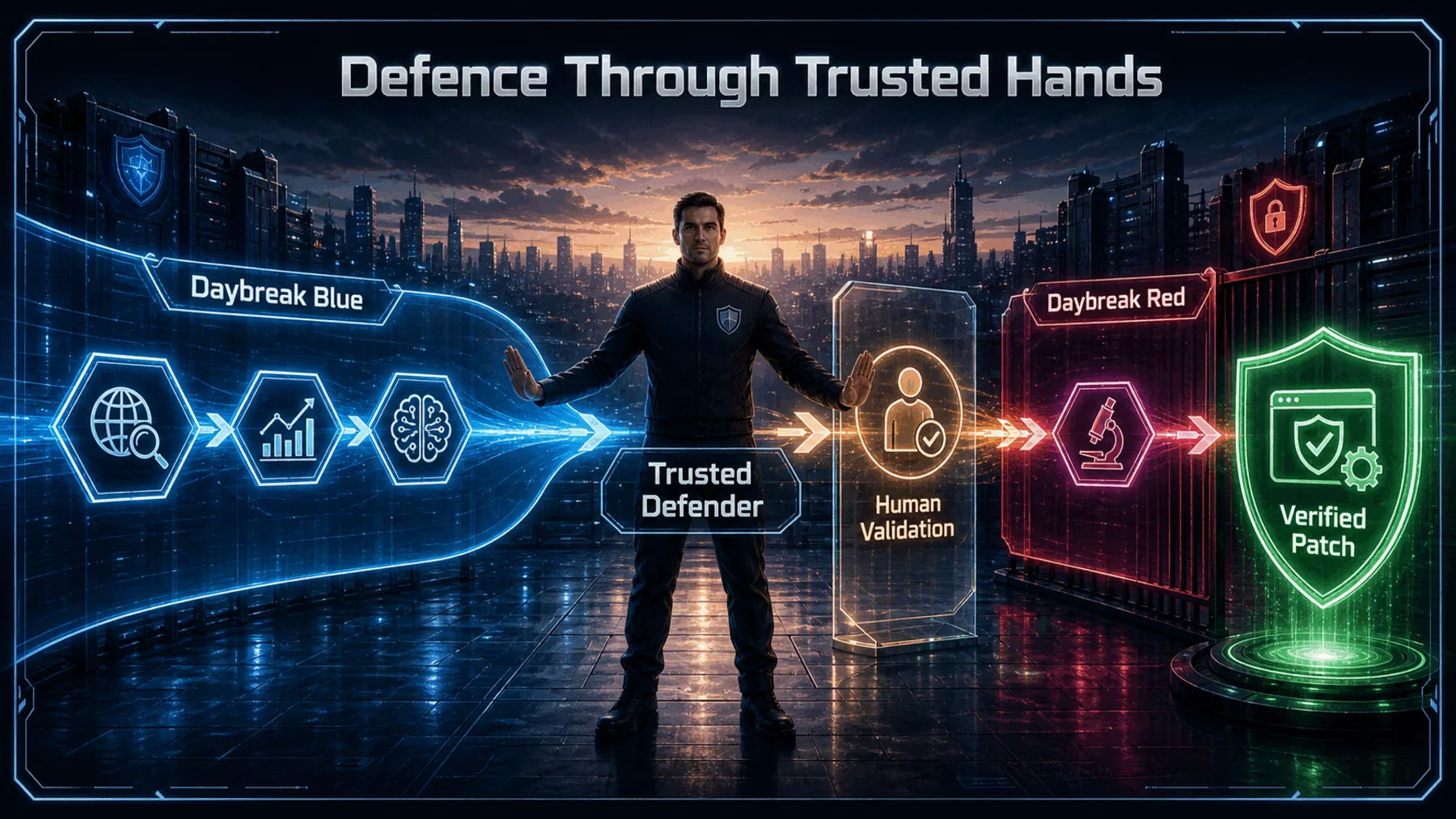
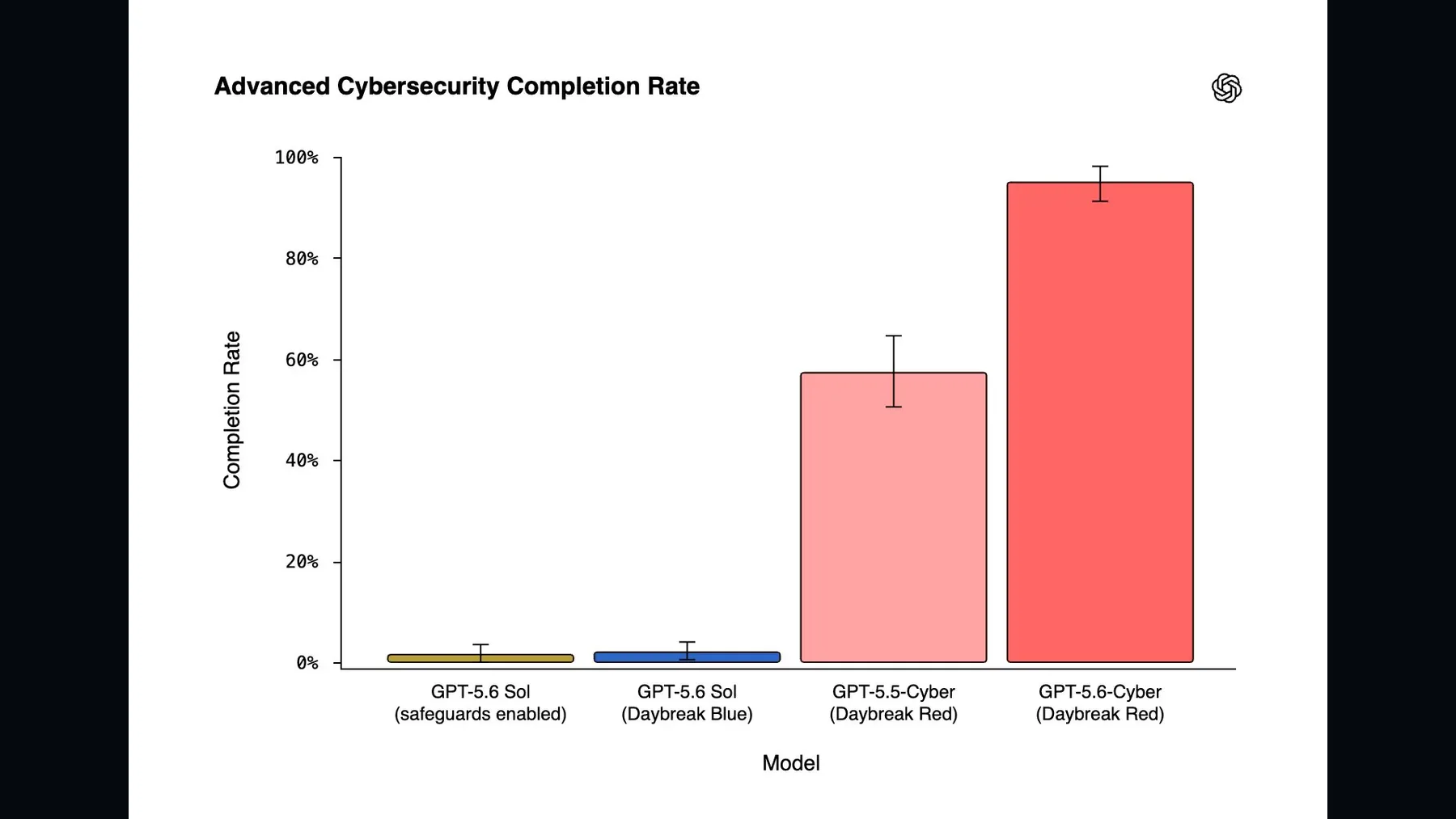
OpenAI says GPT-5.6-Cyber completed 95.0% of one internal advanced cybersecurity task set. That is a sharp move from the 1.5% reported for GPT-5.6 Sol and 2.0% for Sol with Daybreak Blue access, but it is not independent validation or a claim of universal superiority.
The model sits in Daybreak Red, OpenAI’s tighter route for experienced researchers doing authorised vulnerability work. Most defenders, OpenAI says, should begin in Daybreak Blue.
Why the gate matters
A stronger dual-use capability changes who should use it, under what scope, and with which safeguards.
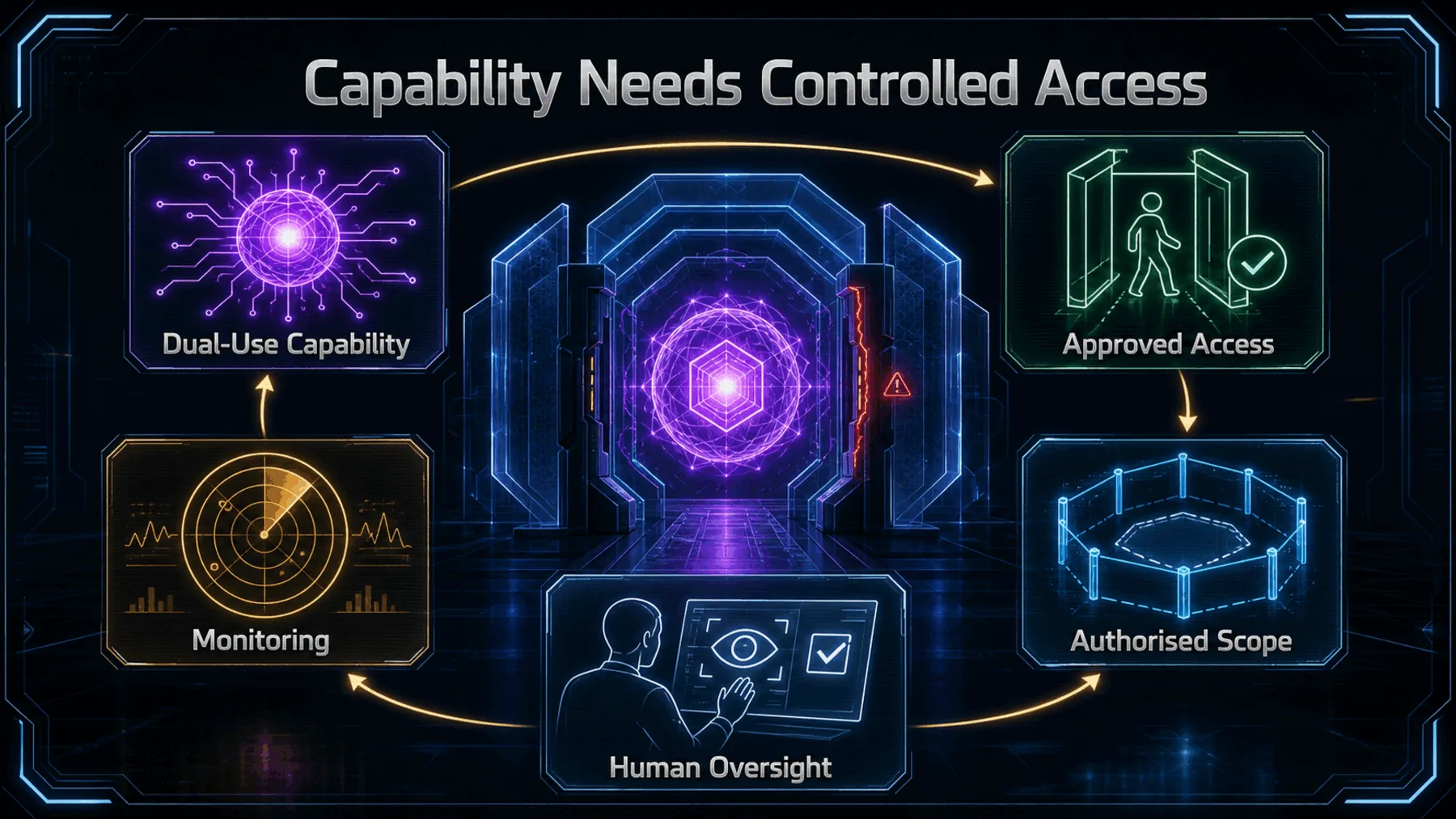
OpenAI’s argument is not simply that a specialised cyber model is more capable. It is that the higher-risk work needs identity checks, monitoring, approved-use restrictions and a defined authorised scope around it.
That distinction matters. Safeguards can constrain how a capability is used; they do not independently prove that every outcome will be safe or that the underlying performance claim is settled.
Two lanes, different work
Blue is the starting point for most defenders; Red is the narrower route for authorised specialist research.
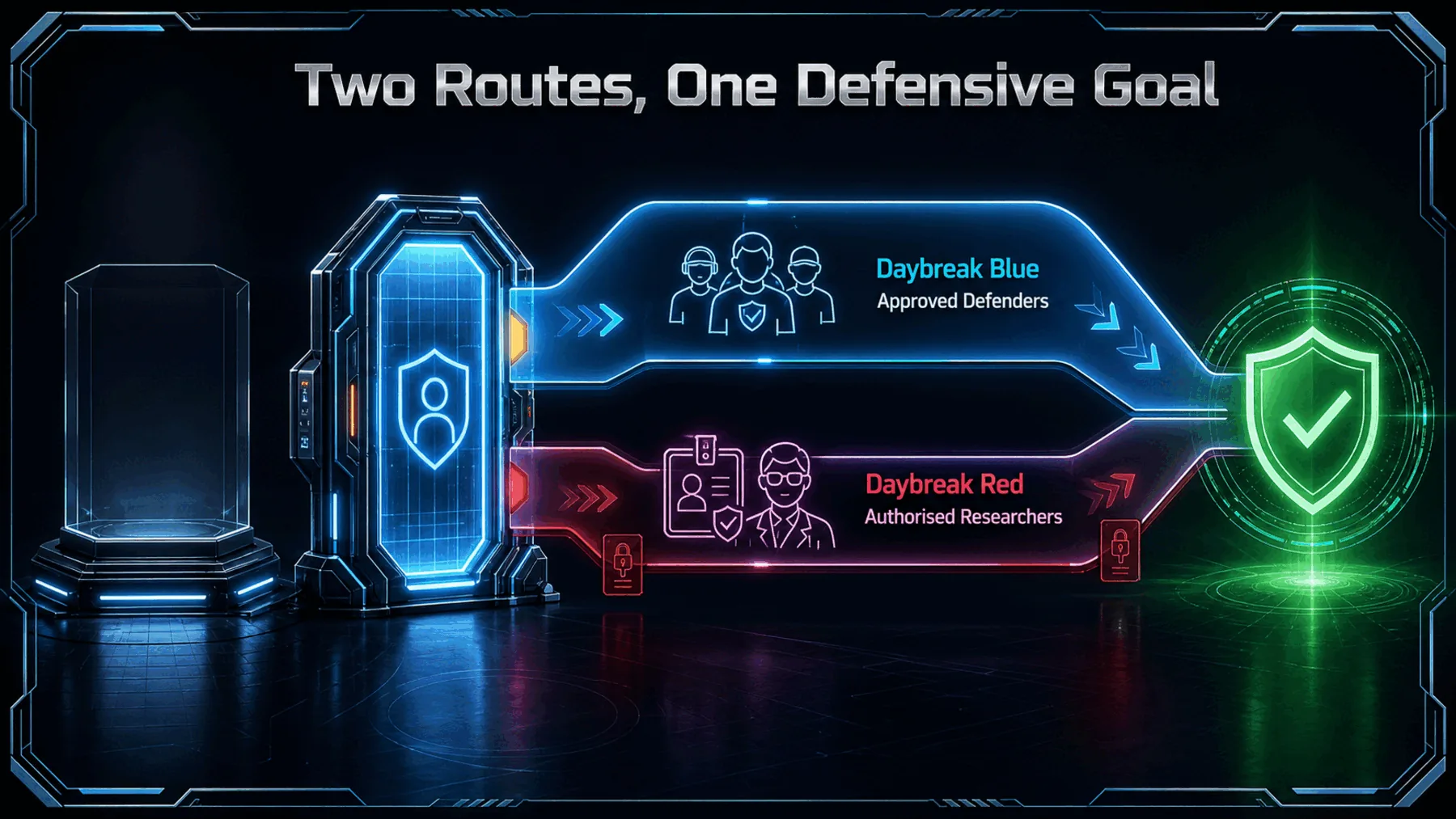
Daybreak Blue provides access to GPT-5.6 Sol for approved defensive work. Daybreak Red is for purpose-trained cybersecurity models, including GPT-5.6-Cyber, where the work is authorised and the access bar is higher.
The practical implication is clear: this is not presented as a broad public chatbot release. Both routes are application-based, and OpenAI has not stated a price.
A finding, then a patch
OpenAI says GPT-5.6-Cyber helped identify a chainable V8 issue that Google fixed.
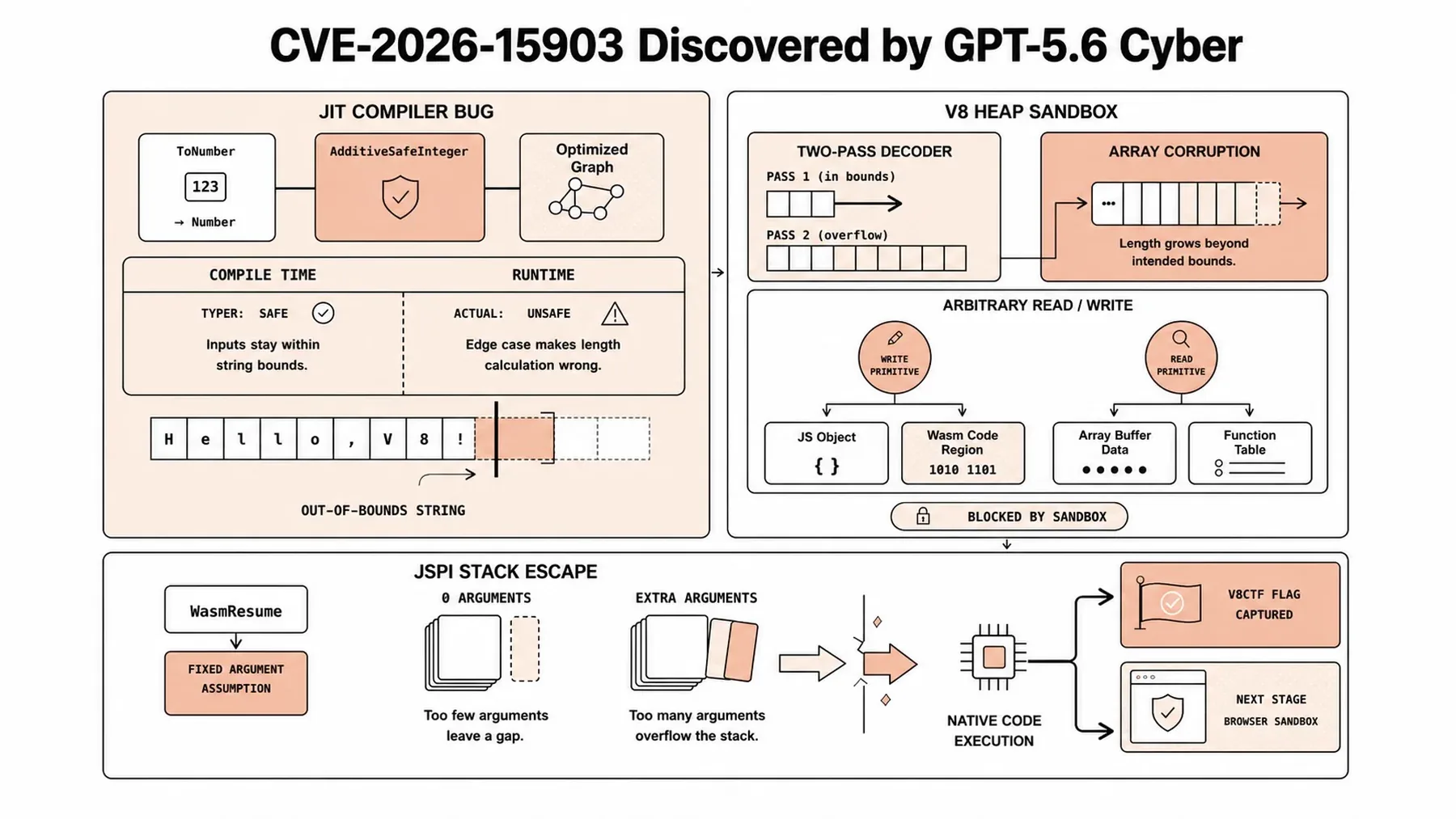
This is the most concrete part of OpenAI’s case. It says the model helped identify two V8 vulnerabilities that could be chained to corrupt memory and escape the V8 heap sandbox, before Google fixed the issue as CVE-2026-15903.
The wording matters. OpenAI reports assistance in identifying the finding; it does not establish autonomous discovery, autonomous patching, or a general result across security research.
GPT-5.6-Cyber helped identify two V8 vulnerabilities that could be chained to corrupt memory and escape the V8 heap sandbox.
OpenAI
A launch is not proof
OpenAI’s announcement establishes the product context; it does not independently validate the claims around it.
OpenAI’s launch material makes the direction of travel clear: a specialised model, a Blue-and-Red access split, and stronger controls around the work it considers higher risk.
It cannot do more than that. The published material is OpenAI’s own evidence, and the available extraction does not expose the full methodology notes for the internal evaluations.
From scope to patch
The useful path is not autonomous hacking; it is authorised research that ends in accountable remediation.
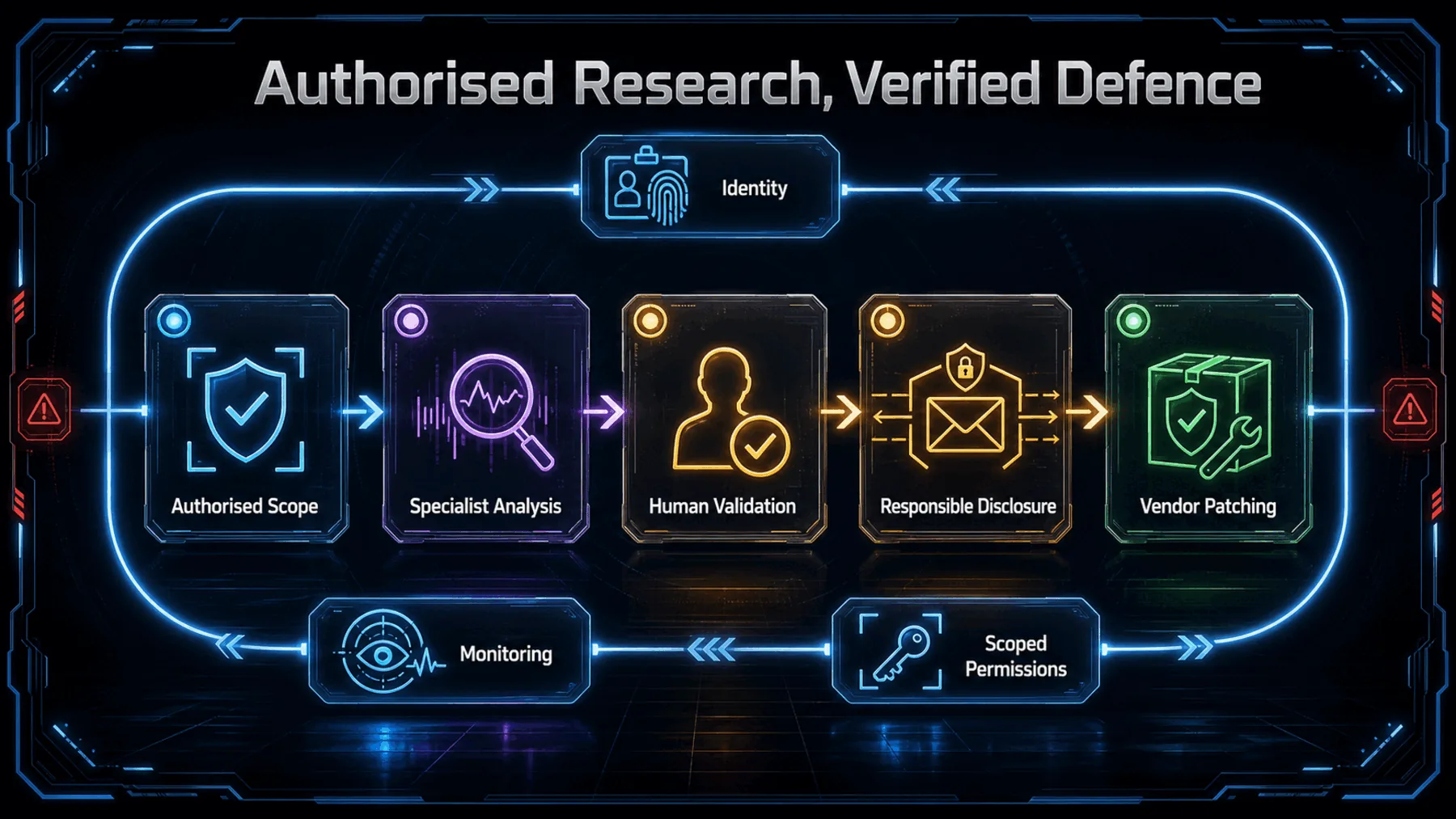
The defensible version of this workflow begins before a model is asked to do anything: the organisation, scope and permissions are already defined. Specialist analysis can then support human investigators working within that boundary.
A meaningful result still needs validation, responsible disclosure and vendor action. The patch is the outcome that matters; the model is one part of a controlled process.
Where 95% stops travelling
The specialist result is strong in one internal test, but OpenAI reports weaker outcomes elsewhere.
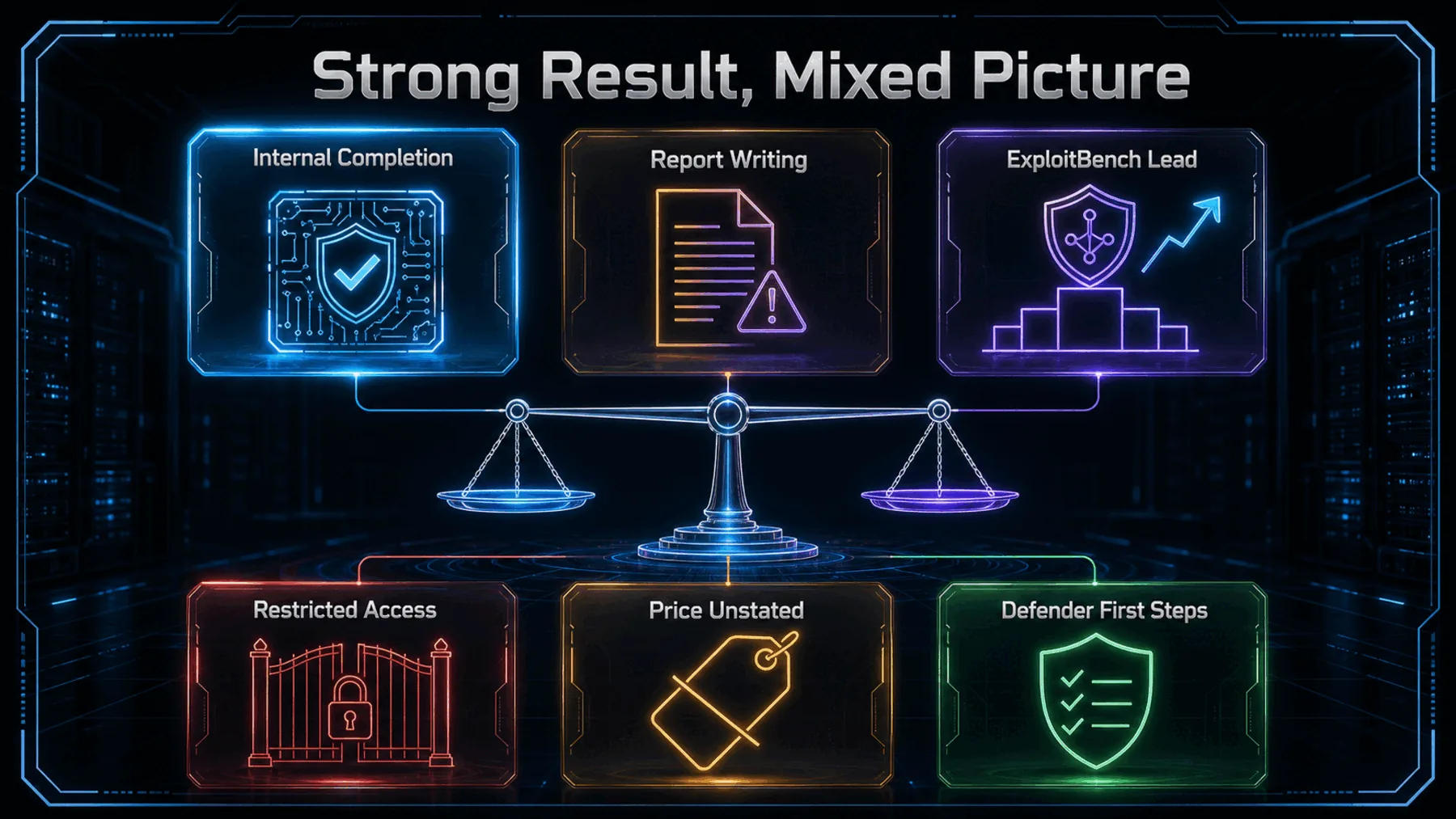
The 95.0% figure is attention-grabbing because it is so far above the other reported completion figures. But it belongs to one OpenAI internal evaluation, whose complete methodology was not available in the extracted material.
OpenAI also reports that GPT-5.6-Cyber performs worse than GPT-5.6 Sol on vulnerability discovery and report writing, and that Sol leads at 300 turns on ExploitBench. Specialisation appears to change the shape of performance, not erase trade-offs.
Access
Confirm whether the proposed work and organisation meet the application and authorisation requirements.
Scope
Define the systems, permissions and validation boundary before specialist analysis begins.
Evidence
Compare OpenAI’s published results with the independent validation and methodology still missing.
Specialisation raises the bar
The stronger the dual-use capability becomes, the more consequential the controls around it become.
OpenAI’s announcement is most persuasive when read as a paired claim: a purpose-trained cyber model can produce a strong result in a particular internal task, and access to that kind of capability needs tighter conditions.
The important question is not whether a headline number wins every comparison. It is whether the capability, evidence, access and accountability hold together in real defensive work.
The more specialised the capability, the less the control question can be treated as an afterthought.
Synthesis from OpenAI’s Daybreak announcement and published article
Turn a guarded finding into a patch plan
Act as a defensive security analyst. Using only this incident brief, produce: (1) a five-step triage plan, (2) a short validation checklist, and (3) a responsible-disclosure summary. Brief: a JavaScript engine issue may allow memory corruption and sandbox escape; the work is authorised, evidence is incomplete, and the goal is to help a vendor patch safely. Do not provide exploit code, payloads, bypass techniques, or attack steps. State assumptions and identify the evidence still needed.Ready to copy
Follow the evidence, not the headline
Treat the 95.0% result as OpenAI’s internal evidence, then watch whether fuller methodology, independent validation and defensible outcomes make the case stronger.
Try the promptWhat could change the reading
- Independent validation
- Fuller methodology
- Access evolution
- Defensive outcomes