OpenAI Agents Grow. What Actually Multiplied?
Agentic weekly active users in OpenAI EU small and medium-sized businesses reached 8.1x the 7 May baseline by 5 October. That measures adoption, not business output.

OpenAI’s EU small-business agentic weekly-user measure moved from 1.0x on 7 May to 8.1x on 5 October. The headline is a sharp rise in how many people are active each week with these tools.
Alongside that growth sits a separate finding: more than half of AI use among OpenAI’s EU enterprise and business customers now involves agents. One measure tracks weekly users over time; the other describes the composition of AI use.
Agents Are Becoming Part of Business AI
For us, the significance starts with growing use—not an assumed leap in what a business produces.
We can read these figures as a sign that agents are becoming a larger part of business AI use. Agents are AI tools used to carry out tasks; the adoption figures tell us about their use, rather than showing a particular job being completed.
For those of us running small teams, that distinction matters. A growing weekly-user measure helps us understand uptake. To make sense of both findings, we first need to ask: which people are counted, and which AI use is being measured?

Weekly Users and Share of Use Differ
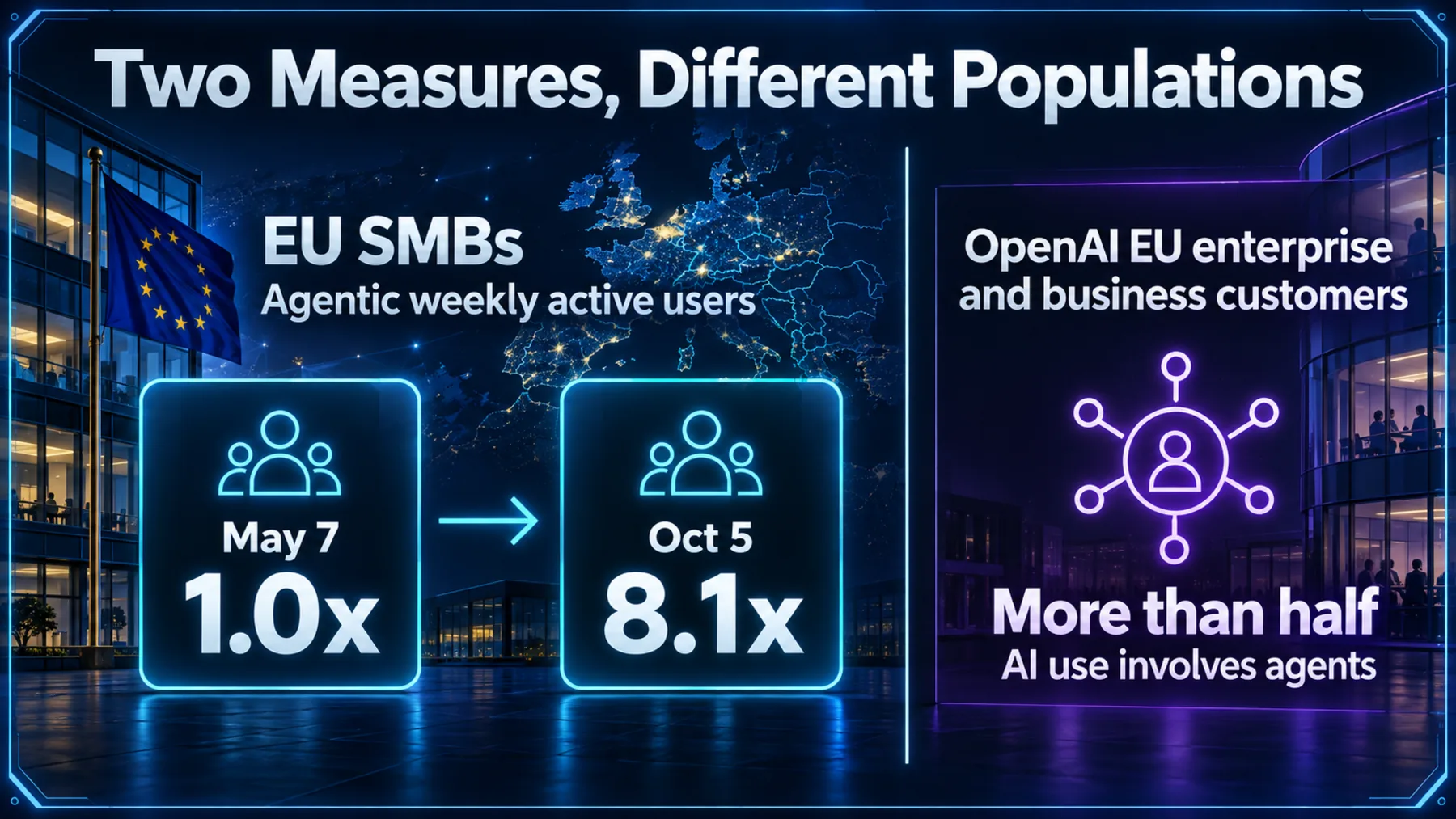
The 8.1x comparison and the more-than-half finding describe different populations and different measures.
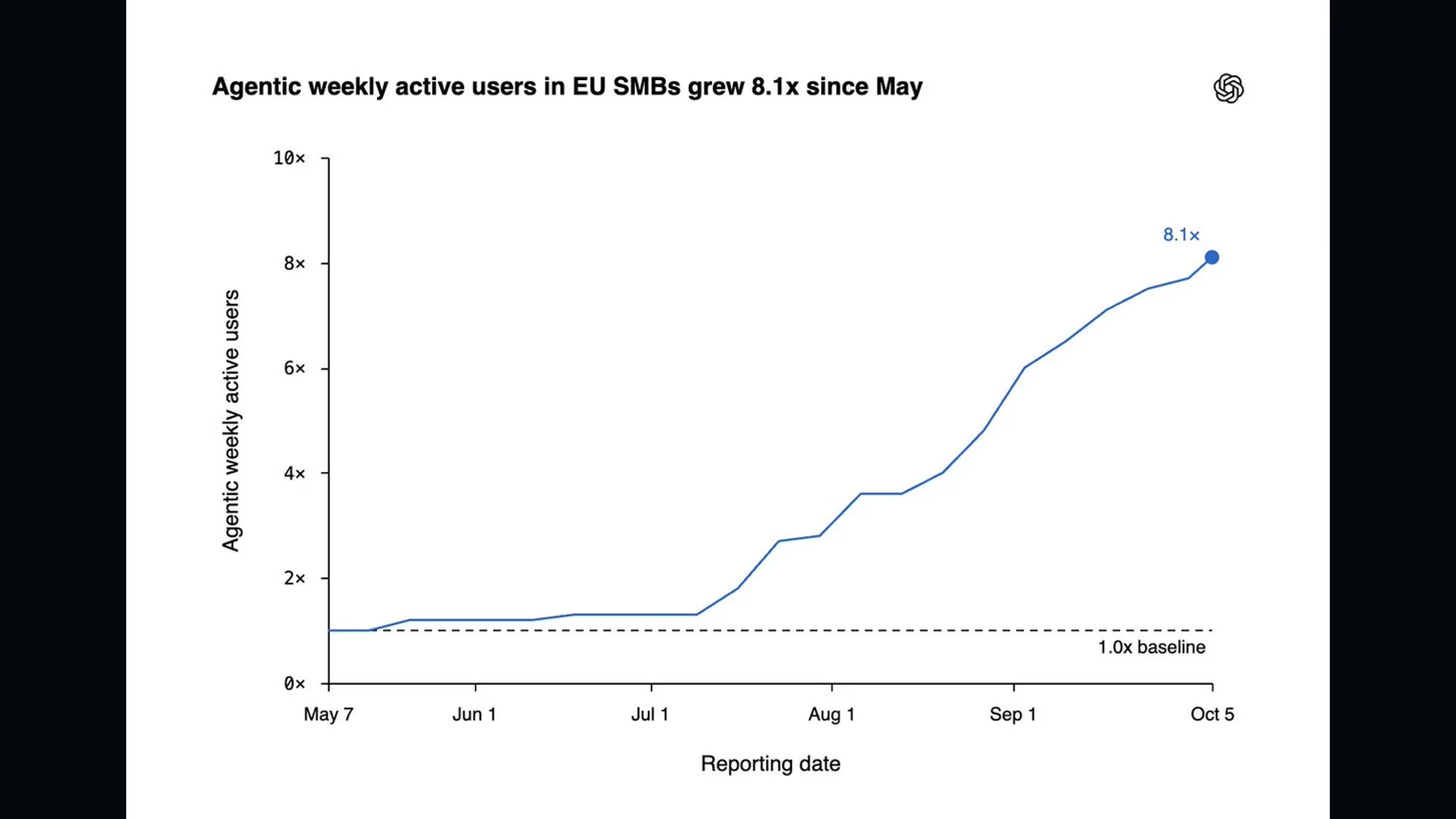
The chart follows agentic weekly active users in OpenAI’s EU small and medium-sized businesses. Its baseline is 1.0x on 7 May; its endpoint is 8.1x on 5 October.
The post’s other figure concerns OpenAI’s EU enterprise and business customers: more than half of their AI use now involves agents. This is a share of AI use within that customer population, not a percentage of European businesses.
Keeping the measures apart lets us see both findings clearly: growth in small-business weekly users, alongside agents’ majority share of AI use in the separately described customer group.
OpenAI’s Post Puts Both Findings Together
The prose uses 8x for small-business user growth; the attached chart gives the 8.1x endpoint.
OpenAI brings the two findings together in the first paragraph of its announcement. The wording places agents’ share of AI use beside the rise in small-business users.
The quotation below keeps OpenAI’s wording intact, including “our” and “8x”. The attached chart gives the more precise 8.1x figure for agentic weekly active users. These are two presentations of the small-business growth finding, not separate growth series.
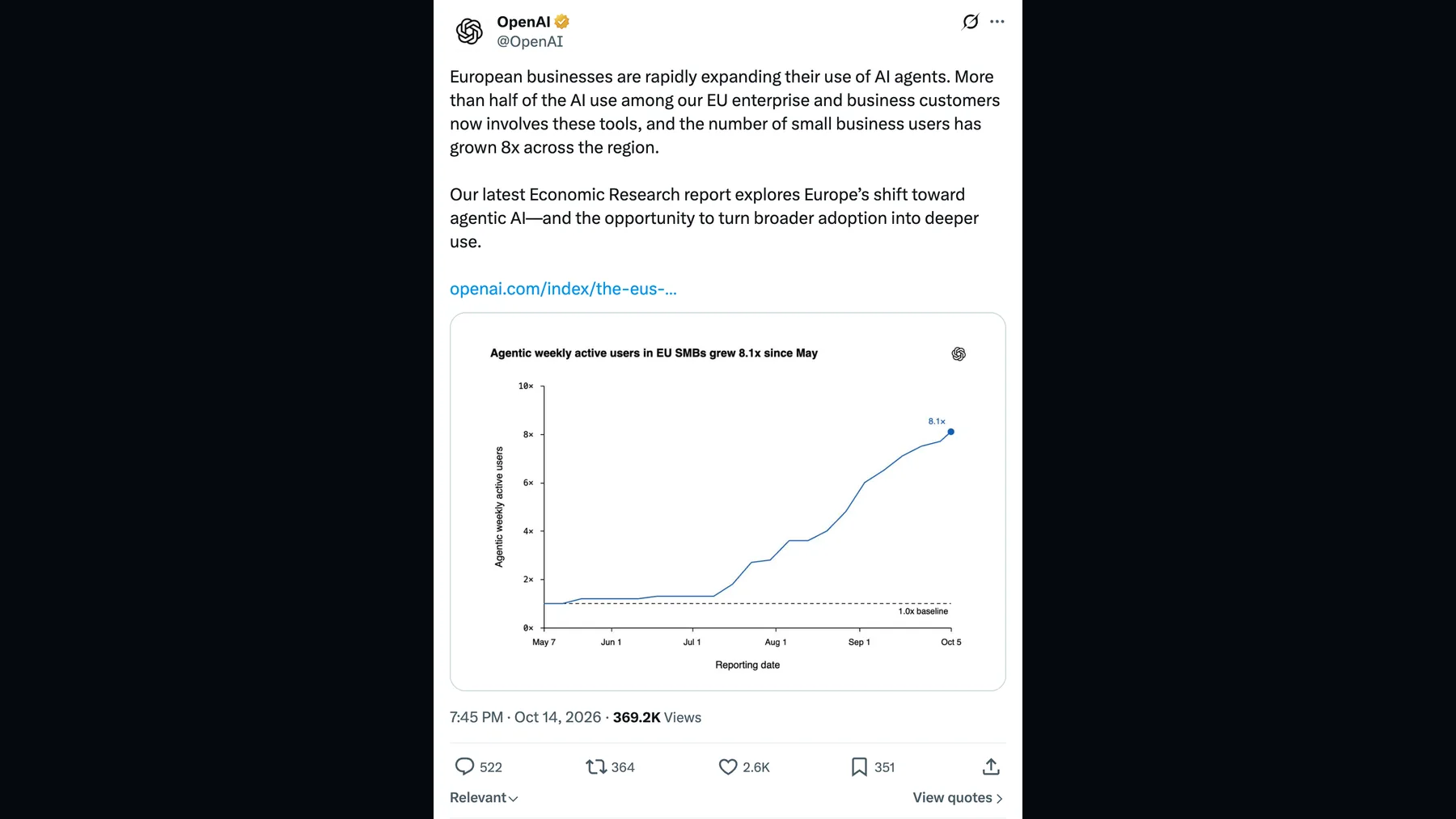
More than half of the AI use among our EU enterprise and business customers now involves these tools, and the number of small business users has grown 8x across the region.
OpenAI
Start With the Label, Then the Number
“Agentic weekly active users in EU SMBs” tells us what the 8.1x figure counts.
We get the clearest reading by starting with the metric label. “Weekly active users” is a count of people active over a weekly period; the chart expresses that measure relative to its starting level.
The dates set the comparison: 7 May to 5 October. Read together, the label and endpoints describe growth in weekly agentic users within the EU SMB cohort—not the number of businesses adopting agents across Europe.
A Larger Weekly-User Measure, Not Multiplied Output
The baseline makes the scale of change visible without supplying an absolute user count.
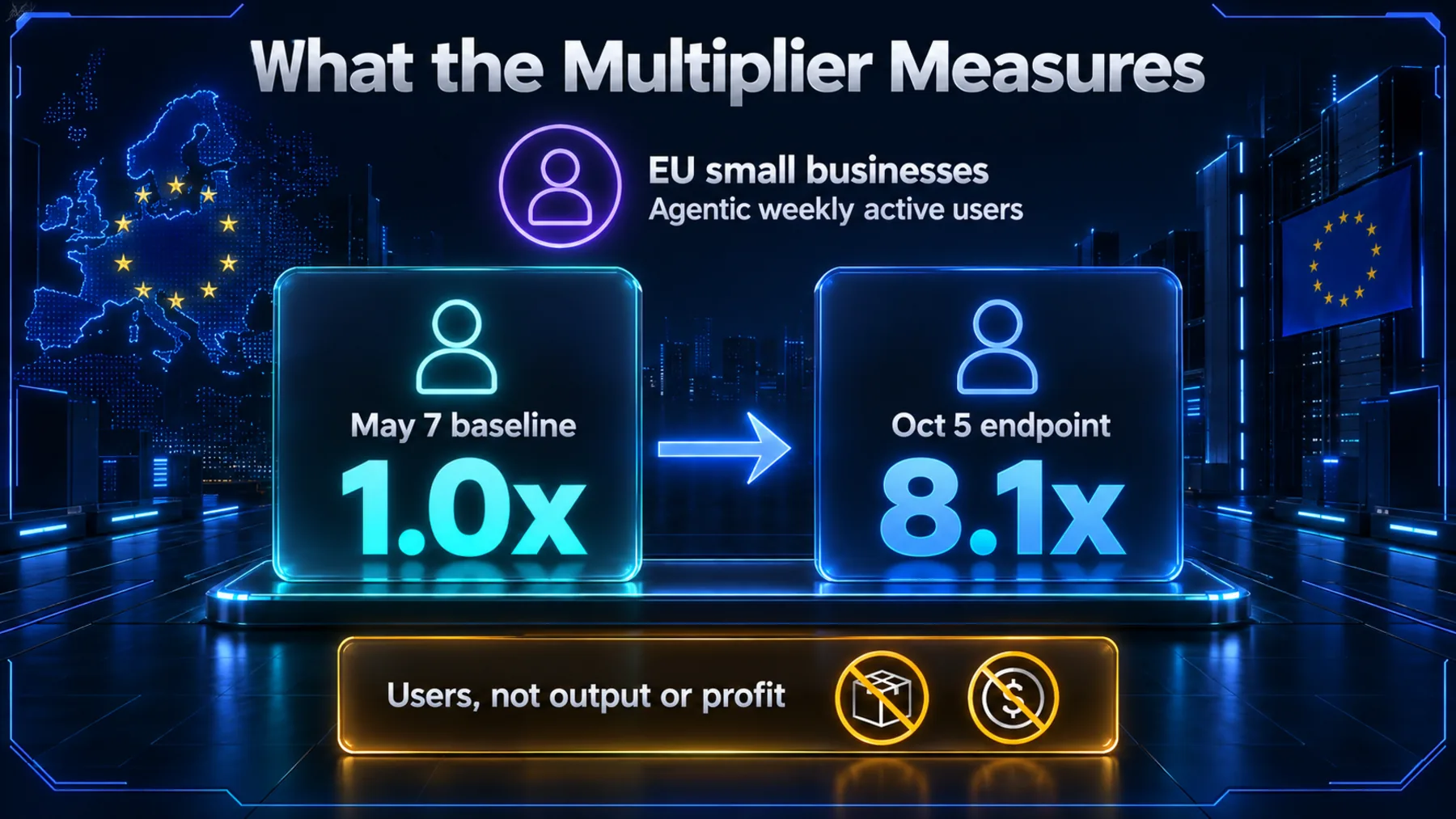
Setting the starting level to 1.0x gives us a reference point. At 8.1x, the endpoint is 8.1 times that baseline weekly-user measure. We can understand the relative change without knowing the absolute number of people at either end.
The multiplier belongs to that measure alone. It does not describe work completed, revenue or profit, and it does not mean that the same individuals became eight times more productive.
We Keep the Cohort With the Claim
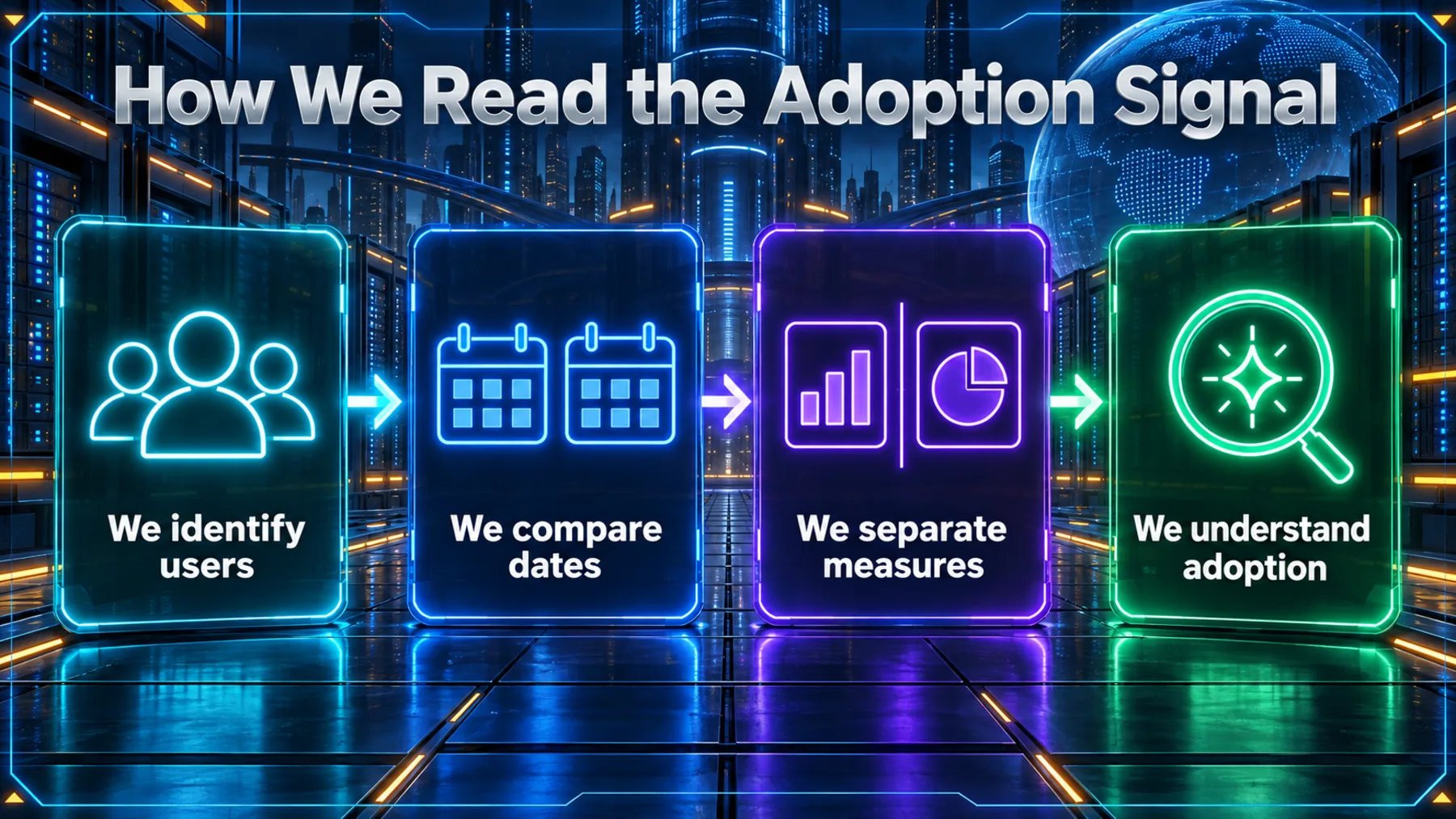
We identify who is counted before deciding what the adoption figures mean.
We begin with EU small and medium-sized businesses and compare the weekly-user baseline with the endpoint. We then set that growth measure beside—not inside—the separate finding about agents’ share of AI use among OpenAI’s EU enterprise and business customers.
That gives us a useful business reading: we see broader agent adoption while keeping the measures intact. We can then consider OpenAI’s next point, deeper use, as an opportunity rather than an outcome these figures have already established.
Broader Adoption Opens the Deeper-Use Question
The figures establish growing use. OpenAI frames deeper use as the next opportunity.
The strongest takeaway is the adoption finding itself. Small-business agentic weekly active users reached 8.1x the baseline, while agents accounted for more than half of AI use in the separately described EU enterprise and business customer population.
OpenAI closes by pointing to the opportunity to turn broader adoption into deeper use. We should keep that distinction: the growth is reported; deeper use is the opportunity ahead.
the opportunity to turn broader adoption into deeper use
OpenAI · second paragraph · https://x.com/OpenAI/status/2110442001749659890
Turn the agent-adoption figures into a clear briefing
Write a plain-language briefing of 150–200 words in British English using only the OpenAI material supplied below. Begin with the main adoption finding. Explain the two measures separately, preserving their different populations and denominators. Include 7 May, 5 October, the 1.0x baseline and the 8.1x endpoint. Explain what the multiplier means without treating weekly-user growth as growth in business output, productivity or profit. Preserve 'more than half' without inventing an exact percentage or turning it into a share of companies. Explain that the post's 8x wording rounds the chart's 8.1x figure, rather than describing a second growth series. Close with the distinction between broader adoption and the opportunity for deeper use. Include the source link. Do not add facts from the linked research report or invent product capabilities, prices, workflows or absolute user counts. OpenAI post, first paragraph: “European businesses are rapidly expanding their use of AI agents. More than half of the AI use among our EU enterprise and business customers now involves these tools, and the number of small business users has grown 8x across the region.” OpenAI post, second paragraph: “Our latest Economic Research report explores Europe’s shift toward agentic AI—and the opportunity to turn broader adoption into deeper use.” Attached chart transcription: Agentic weekly active users in EU small and medium-sized businesses: 1.0x baseline on 7 May; 8.1x on 5 October. This is a relative weekly-user measure, not an absolute user count. Source: https://x.com/OpenAI/status/2110442001749659890Ready to copy
Keep 8.1x Attached to Weekly Users
EU SMB agentic weekly active users reached 8.1x the 7 May baseline by 5 October. Separately, more than half of AI use among OpenAI’s EU enterprise and business customers involves agents.
[Revisit OpenAI’s original post and chart](https://x.com/OpenAI/status/2110442001749659890).
Try the promptWhat we’ll look for next
- Further weekly-user comparisons for the same EU SMB cohort.
- Updates to agents’ share of AI use among OpenAI’s EU enterprise and business customers.
- Evidence showing how broader adoption becomes deeper use.