Muse Glimmer: A powerful agent, closer to home
Meta’s 30B Muse Glimmer puts an always-on agent on one high-memory machine—but local still comes with real hardware and proof limits.
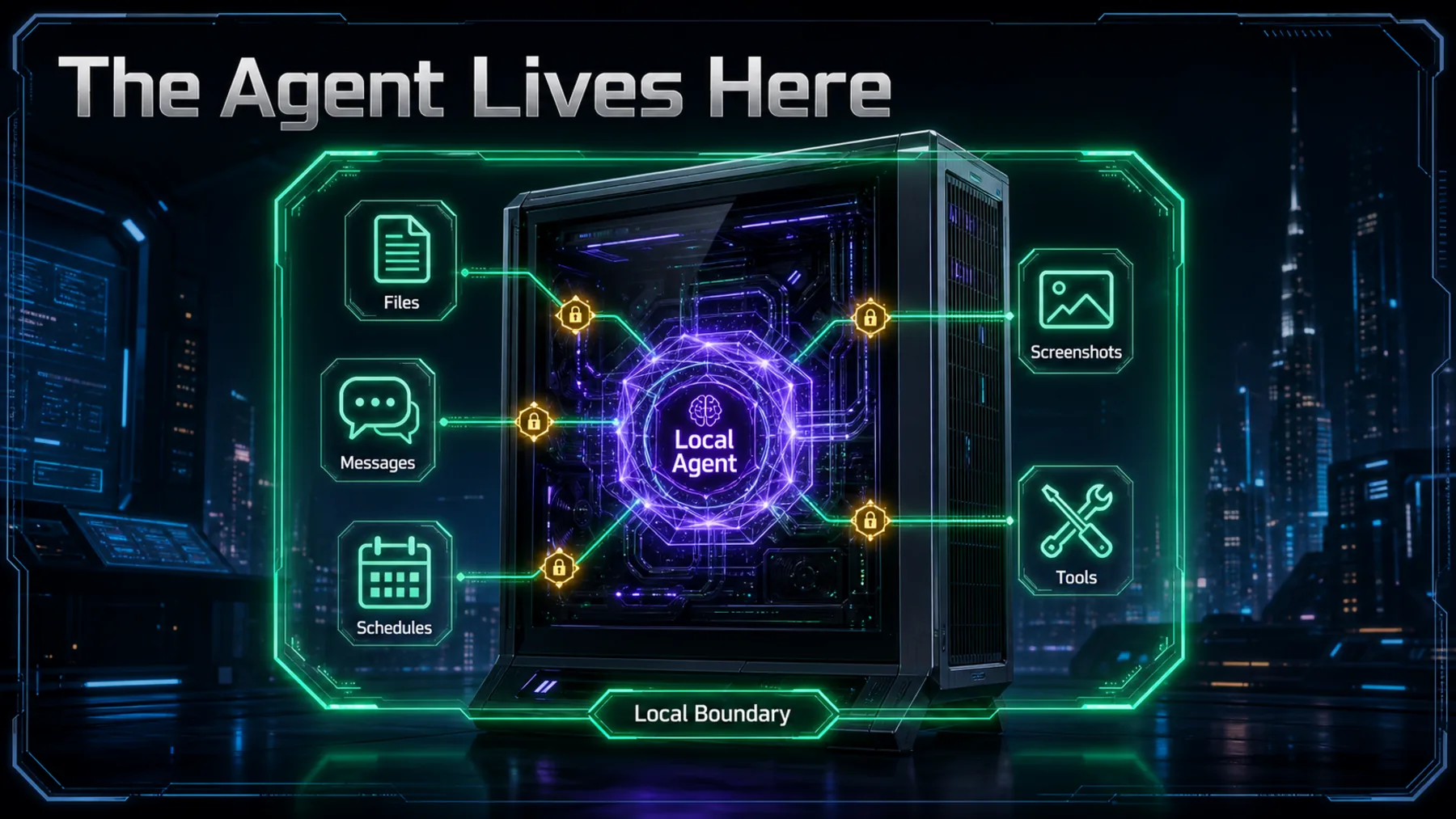
Meta describes Muse Glimmer as an open-weight 30B-parameter model for local, always-on agent workflows. The shift is less about putting another chatbot in a menu and more about moving an agent’s working context onto the machine beside us.
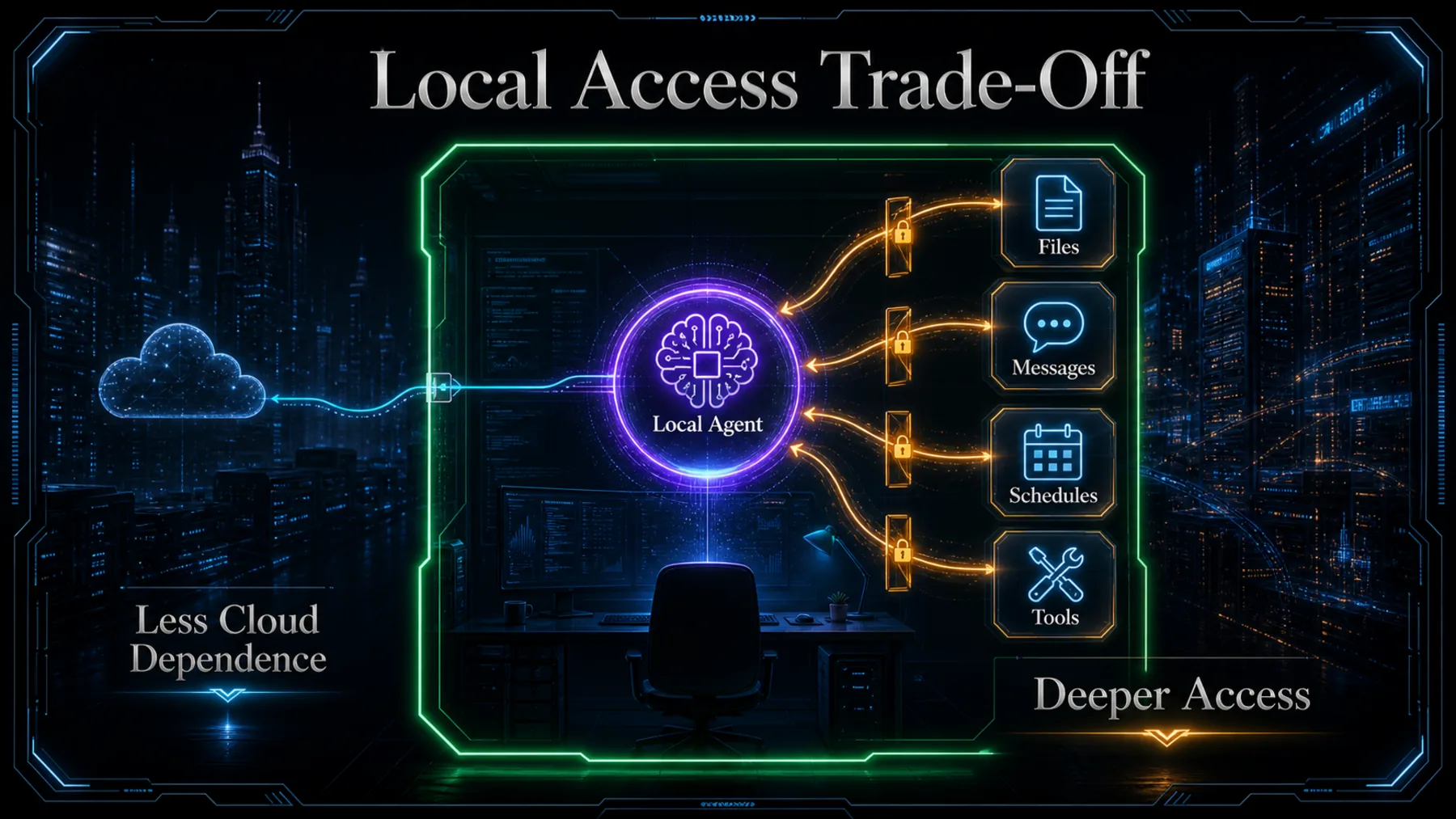
That changes the attraction, but not the trade-offs. A local agent may reduce cloud dependence; it also asks for substantial memory and meaningful access to the material that makes it useful.
Why local feels different
The draw is proximity: work can stay near the context that gives it meaning.
For an agent, locality is not just a technical detail. Schedules, messages, files, screenshots and tools are the raw material of useful work, and Meta’s release points towards keeping more of that activity on one capable machine.
The tension is equally practical. Deeper access can make an agent more useful, yet local execution alone does not establish privacy, security or safety. The question is not whether the machine is nearby; it is what we permit the agent to see and do.
Small enough is not the whole story
The compressed model is one part of the working setup, not the setup itself.
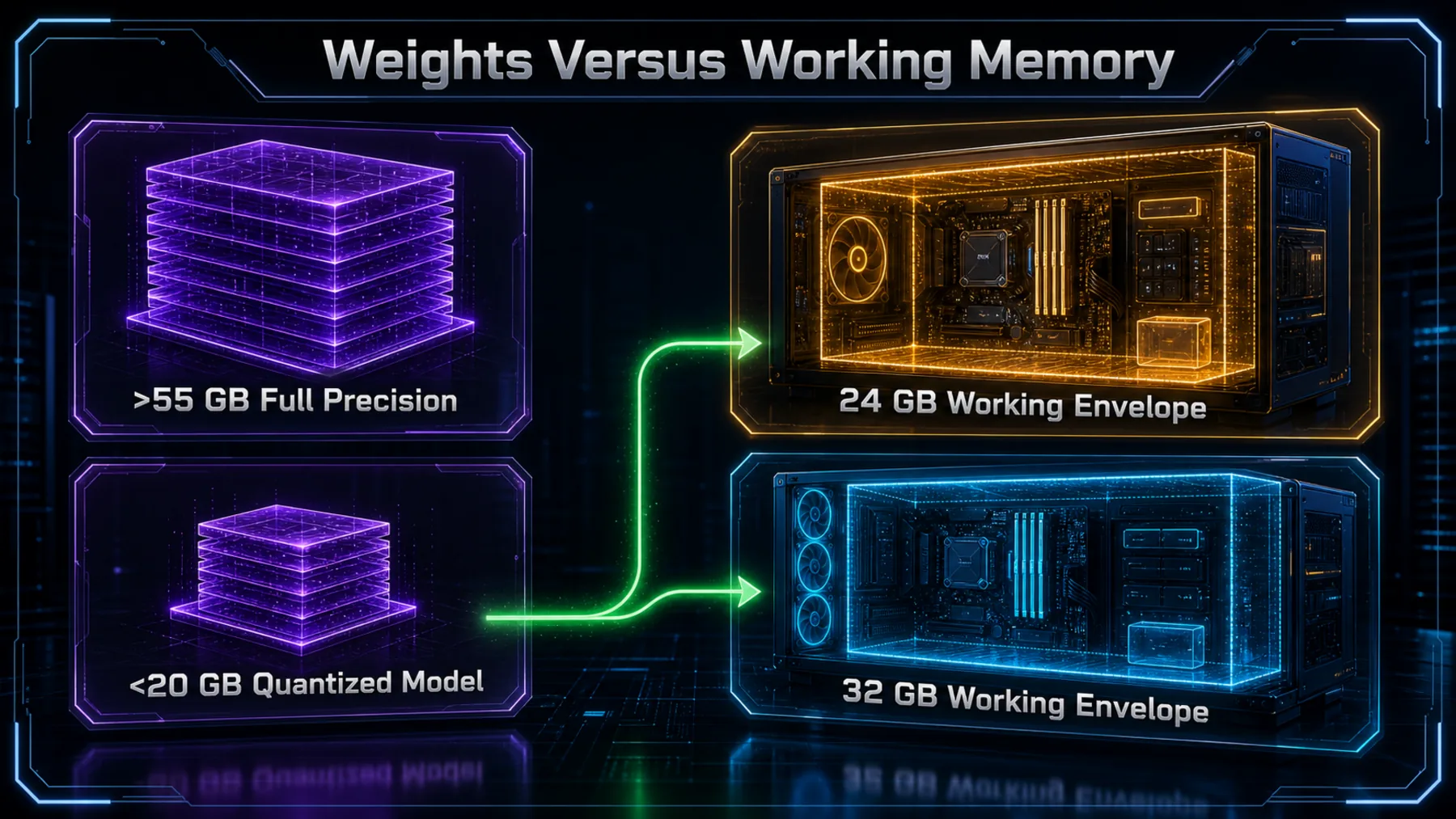
Meta says a full-precision 30B model would need more than 55 GB of memory. Its approximately four-bit quantisation brings the language-model weights under 20 GB, which is the number likely to catch the eye.
But those weights do not run alone. Meta describes cache, image understanding and a speculative-decoding drafter sharing a 24 GB or 32 GB working envelope. That is a useful configuration guide, not evidence that every machine with that much memory will be compatible or responsive.
The number needs context
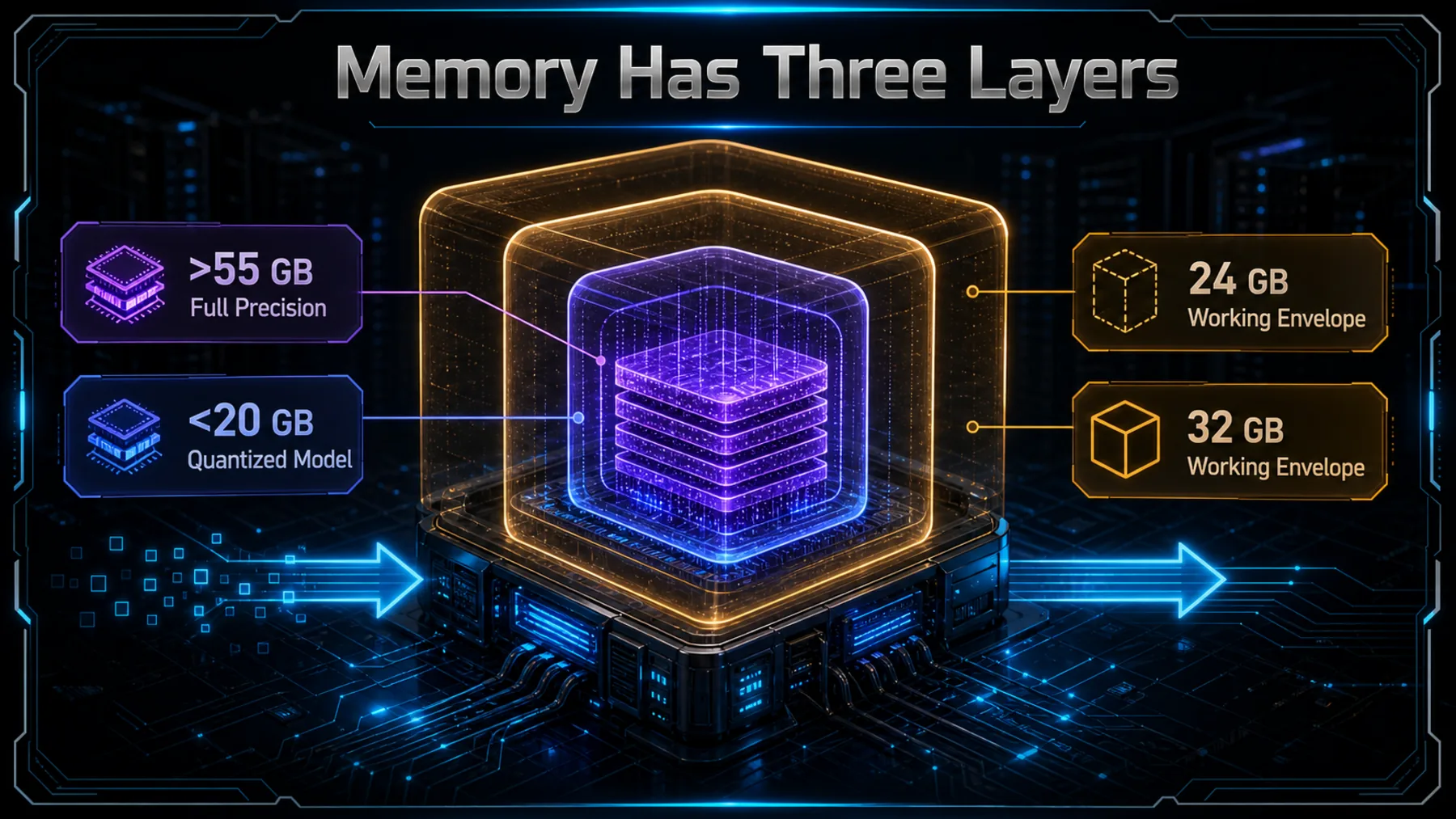
Under 20 GB describes compressed weights, not every component needed to run the agent.
The distinction matters because “under 20 GB” can sound like a complete hardware promise. Meta’s own explanation is narrower: it concerns the quantised language model after compression.
The remaining headroom is not decorative. Meta says the system still needs room for working memory, an image-understanding component and the drafter that supports faster generation.
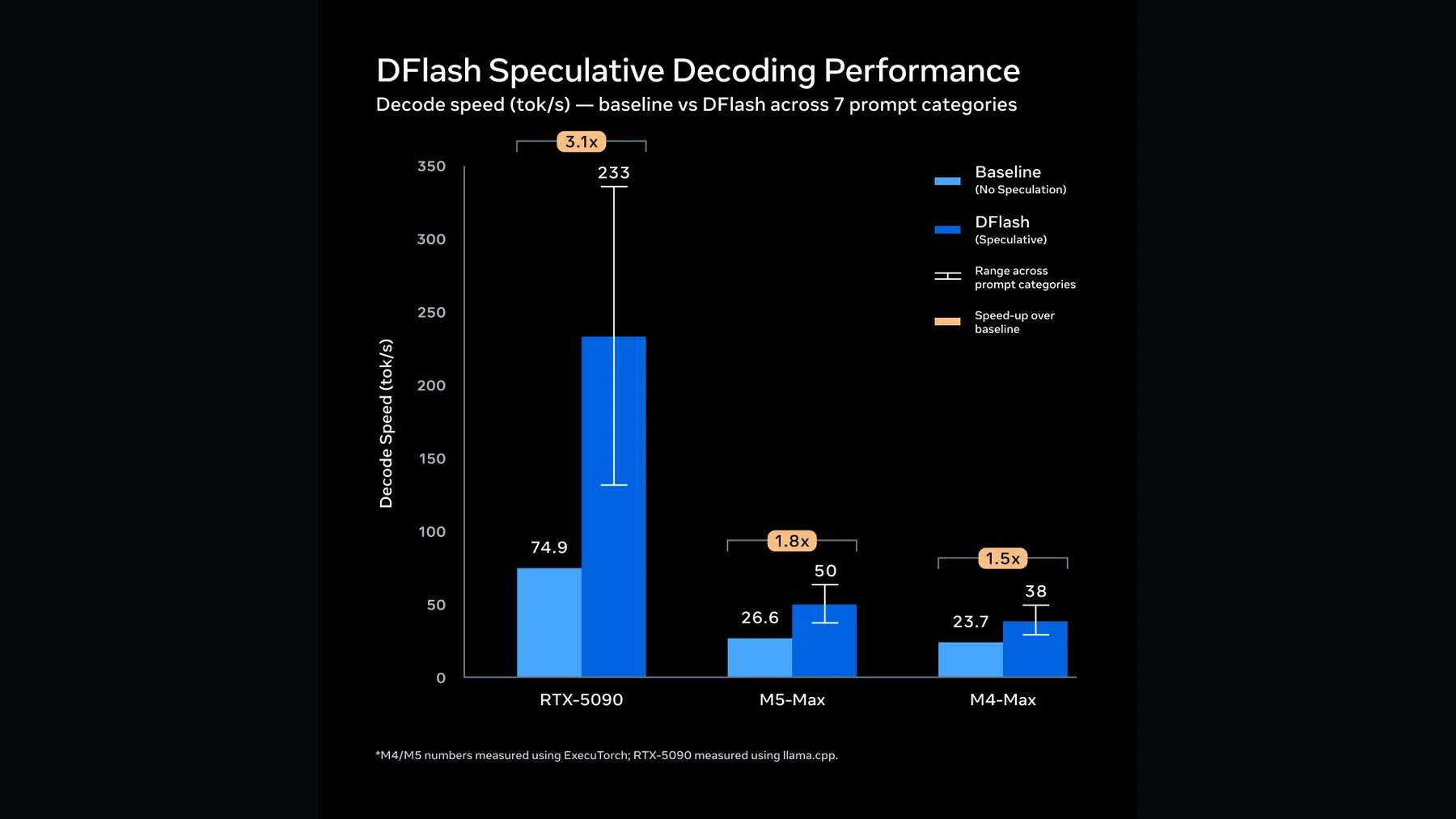
This leaves enough headroom for the model's working memory (its “KV cache”), the perception encoder for image understanding, and the speculative decoding drafter to run simultaneously within a 24 GB or 32 GB envelope.
Meta AI Research
Fast, according to Meta
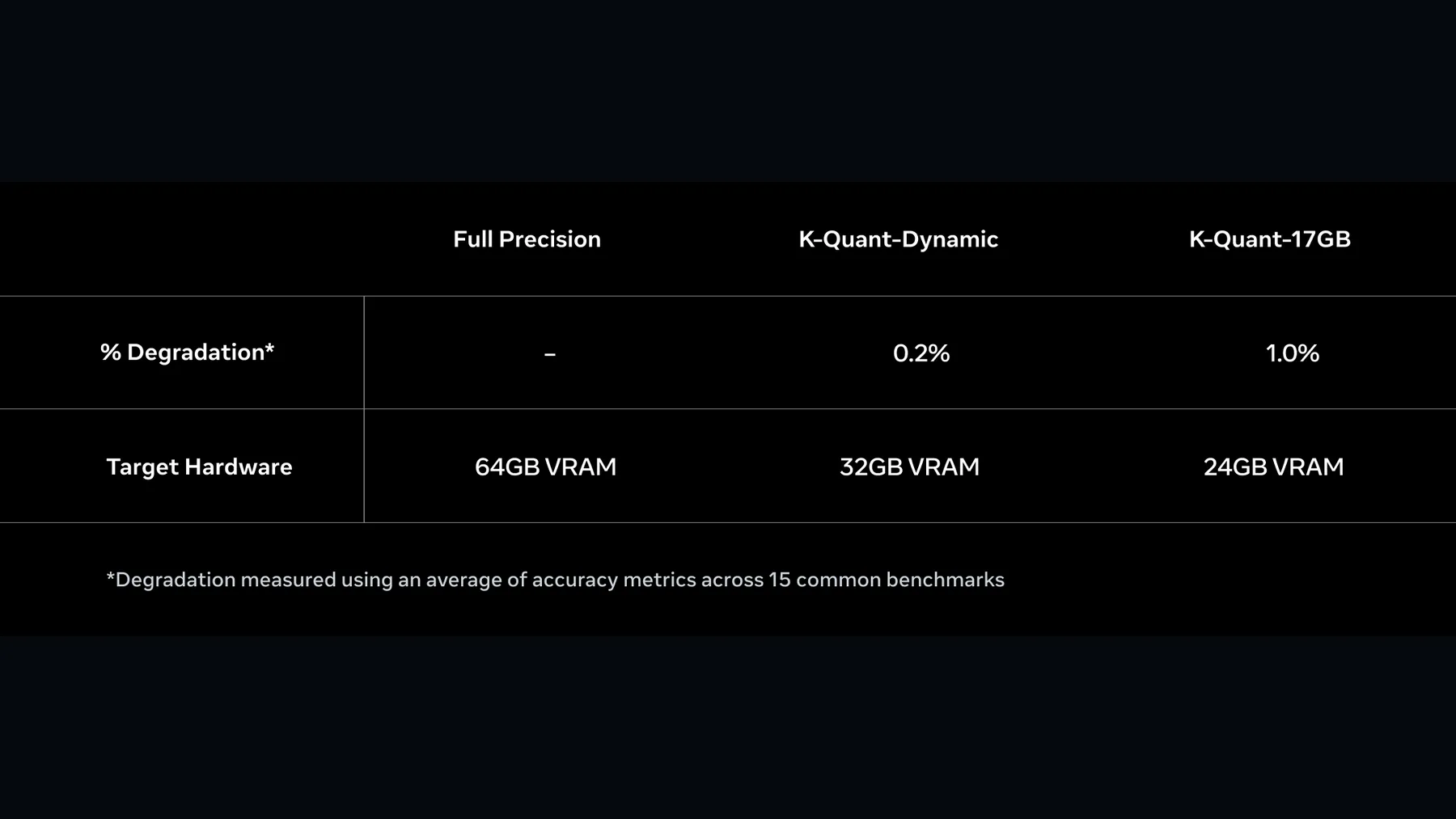
The reported speed gains are specific to named hardware and Meta’s own configuration.
Meta reports speculative-decoding speedups of 3.1× on an RTX 5090, 1.8× on an M5 Max and 1.5× on an M4 Max. Those figures concern Meta’s K-Quant-17GB model paired with its DFlash drafter, rather than a general promise for local machines.
The mechanism is credible enough to understand without treating the chart as independent validation. Creator Broadcast did not reproduce these results, so the useful claim is simply that Meta has published a measured speed comparison for a named setup.
A smaller model drafts ahead
The drafter proposes chunks; the main model checks them in parallel.
Meta’s DFlash drafter is a smaller companion model that proposes blocks of tokens before the main model has completed the response. The main model then checks those proposals in parallel, keeping the correct material and repairing what does not hold up.
It is a practical division of labour: draft quickly, verify centrally. That explains the release’s responsiveness story without turning Meta’s reported speed numbers into a guarantee for every workflow.
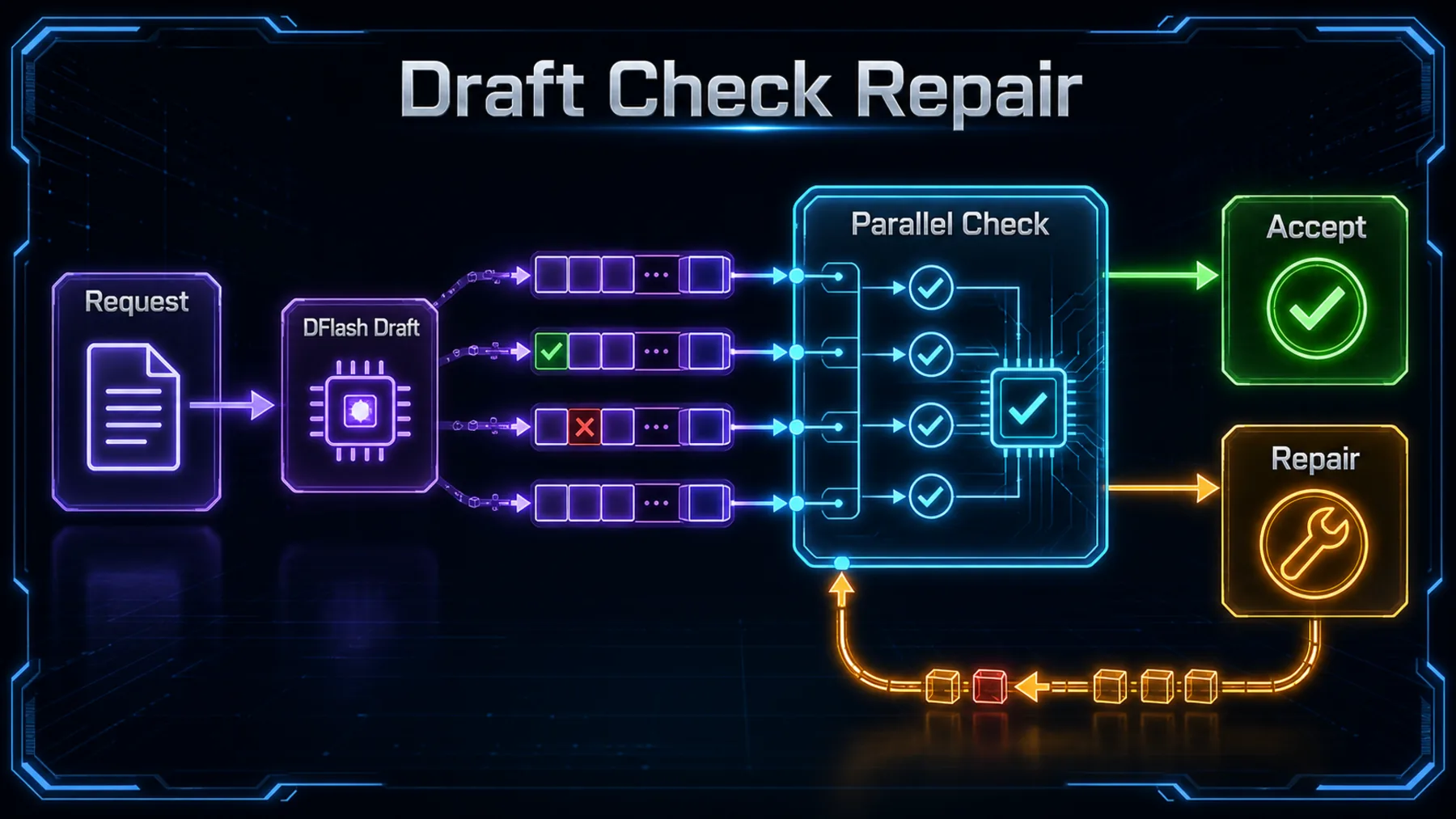
Propose
The smaller drafter suggests a block of text.
Verify
The main model checks the proposal in parallel.
Repair
Incorrect tokens are corrected before the response continues.
From weights to working agent
What is downloadable now is not the same as a finished local setup.
Meta says Muse Glimmer’s weights are available now on Hugging Face under Apache 2.0. That establishes a starting point, not an instant route to a complete agent working across our personal context.
The practical path still includes capable hardware, a local runtime, clear permissions and the tools we intend to connect. Meta described several optimised integrations as arriving in the coming days, so availability should be checked at the point of use rather than assumed from the announcement.
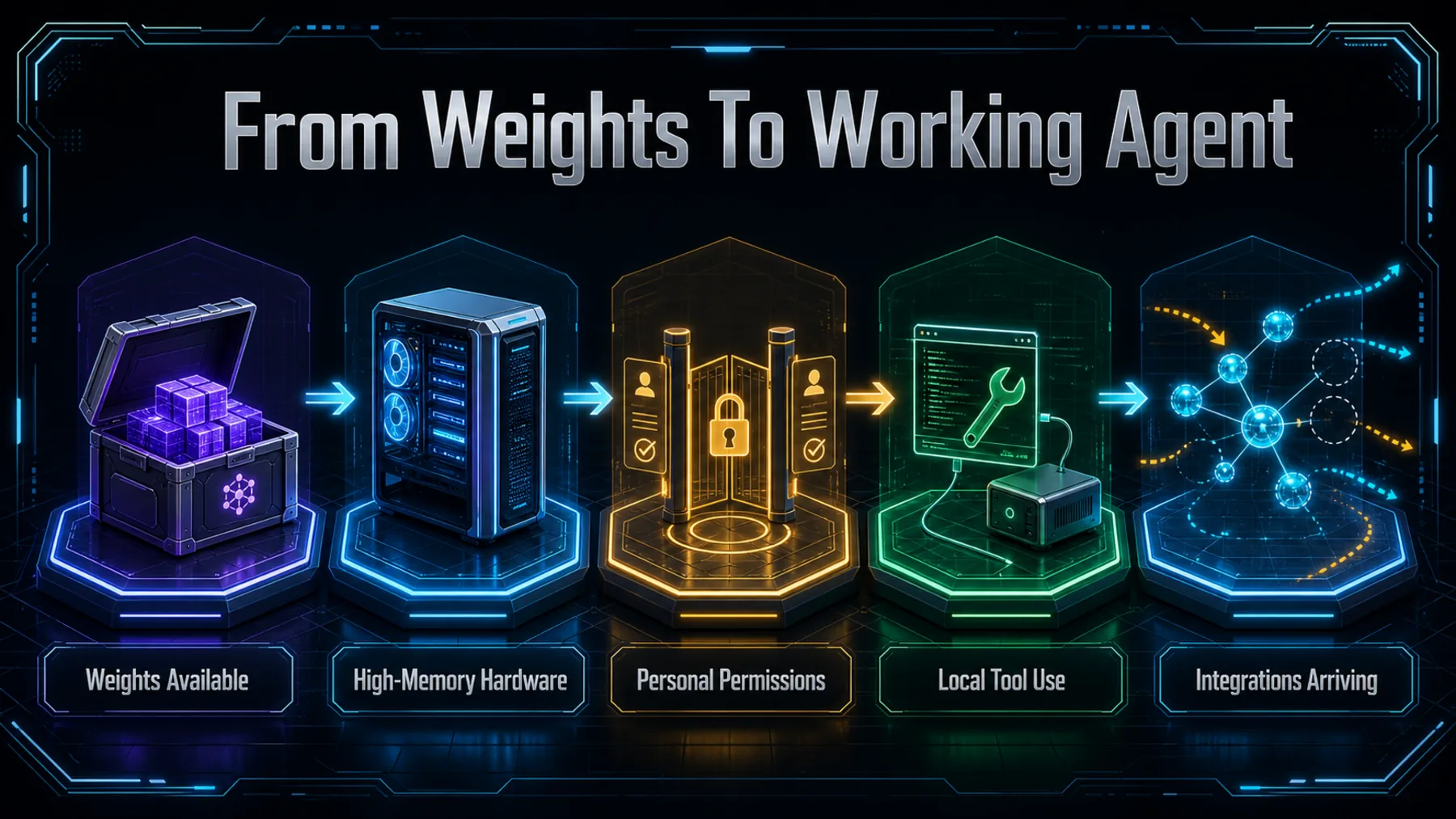
Hardware
Confirm the machine and memory configuration against the route we choose.
Permissions
Decide exactly which files, messages, schedules and tools can be reached.
Runtime
Verify which local integrations are actually available when we install.
An agent beside the work
Muse Glimmer’s significance is the move towards an agent that lives nearer to its context.
Meta’s bigger proposition is not merely that a 30B model can be compressed. It is that an agent trained for tool use, longer tasks, recovery and mixed text-image context can sit closer to the work it is asked to do.
That is an important direction, provided we keep the evidence in proportion. The weights are available; the hardware envelope is demanding; the speed claims remain Meta’s; and the integration picture was still developing at capture.
The local-agent future is not a lighter chatbot. It is a more capable machine-side assistant—and a stricter test of what we are willing to give it access to.
Creator Broadcast synthesis of Meta’s published release
Map a local-agent readiness check
Act as a cautious local-agent deployment adviser. Using only the machine specifications, operating system, available memory, intended files and tools, and permission boundaries I provide, produce: (1) a compatibility-unknowns list, (2) a minimum permission plan, (3) three practical test tasks using files and screenshots, and (4) a stop/go decision that clearly separates verified facts from assumptions. Do not claim privacy, security, offline reliability or performance unless my inputs establish it.Ready to copy
Test the local promise
Muse Glimmer makes the local-agent case more concrete, but the important evidence now is how it behaves on real machines, with real permissions and outside Meta’s own measurements.
Try the promptSignals worth checking next
- Integration availability
- Machine compatibility
- Independent testing
- Permission controls