The engine is open. The whole machine is not.
MiniMax says H3 can turn mixed-media context into stereo-audio video up to 2K, but the public release opens its central engine rather than the complete three-stage system.
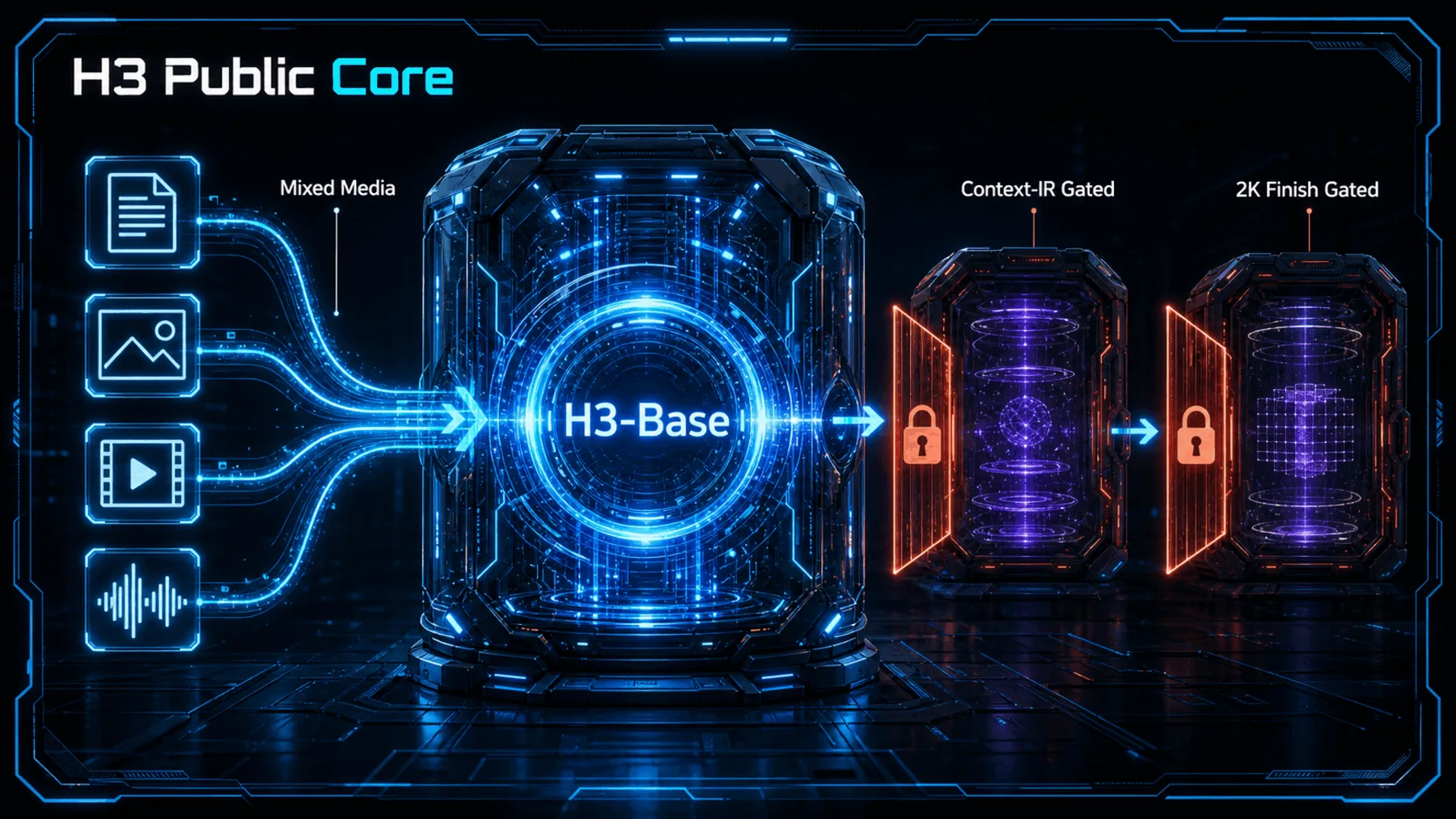
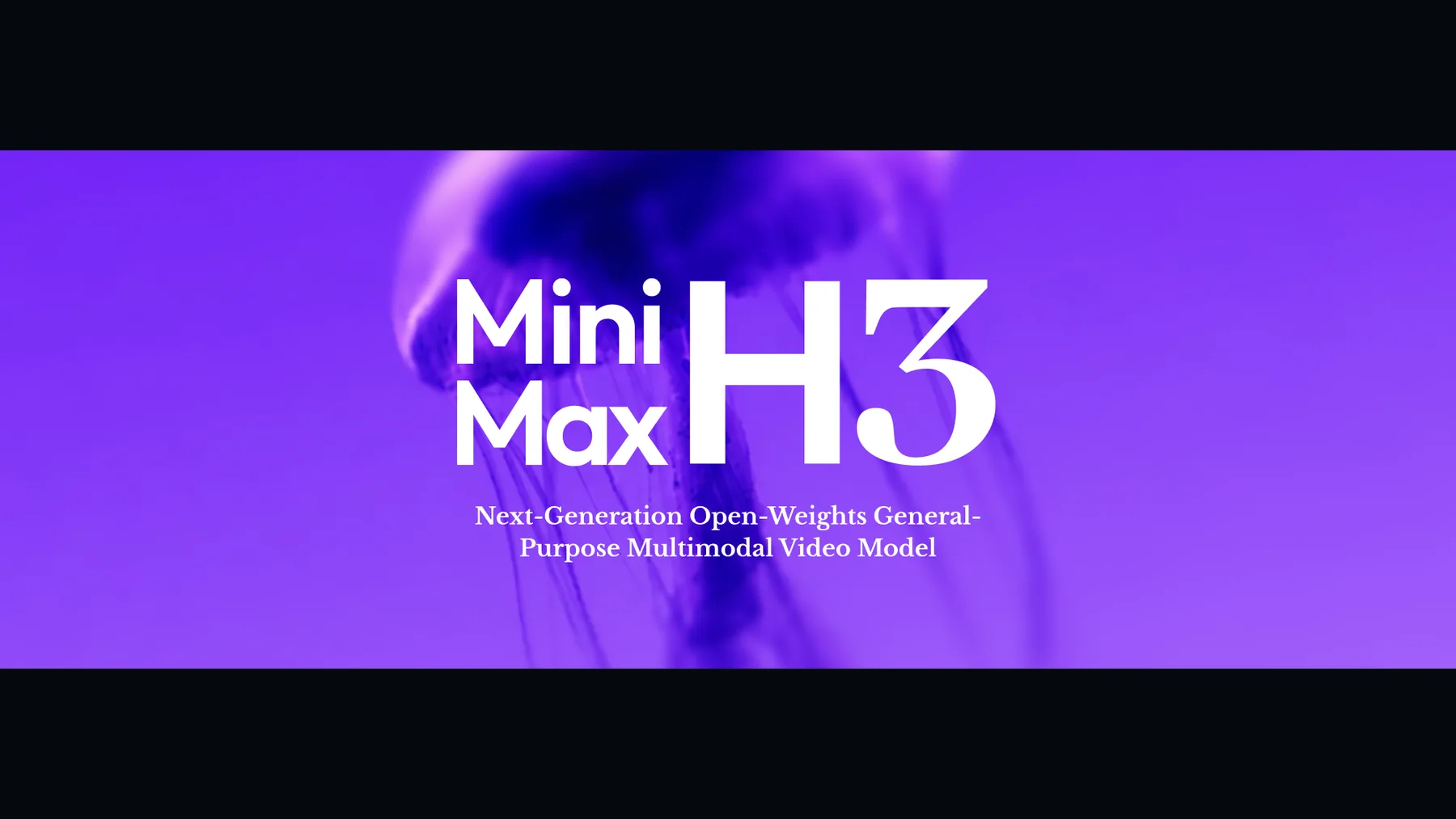
MiniMax has made H3 publicly available, with a model card describing an omni-modal system that can interpret text, images, video and audio before generating video with native stereo audio. That is a substantial proposition, and MiniMax’s published ceiling reaches 2K and 15 seconds.
But the public repository is not the entire production line. H3-Base is the released centre; the planning layer depends on hosted services, while the 2K finishing module remains outside the open package.
Public does not mean complete
The launch claim is real; the boundary around it matters just as much.
“Publicly available” accurately describes MiniMax’s announcement. It does not establish that every component behind the headline experience is available to run from the repository.
MiniMax’s own model card separates the system into planning, generation and finishing. The initial release gives us the generation engine, not a self-contained route through all three stages.
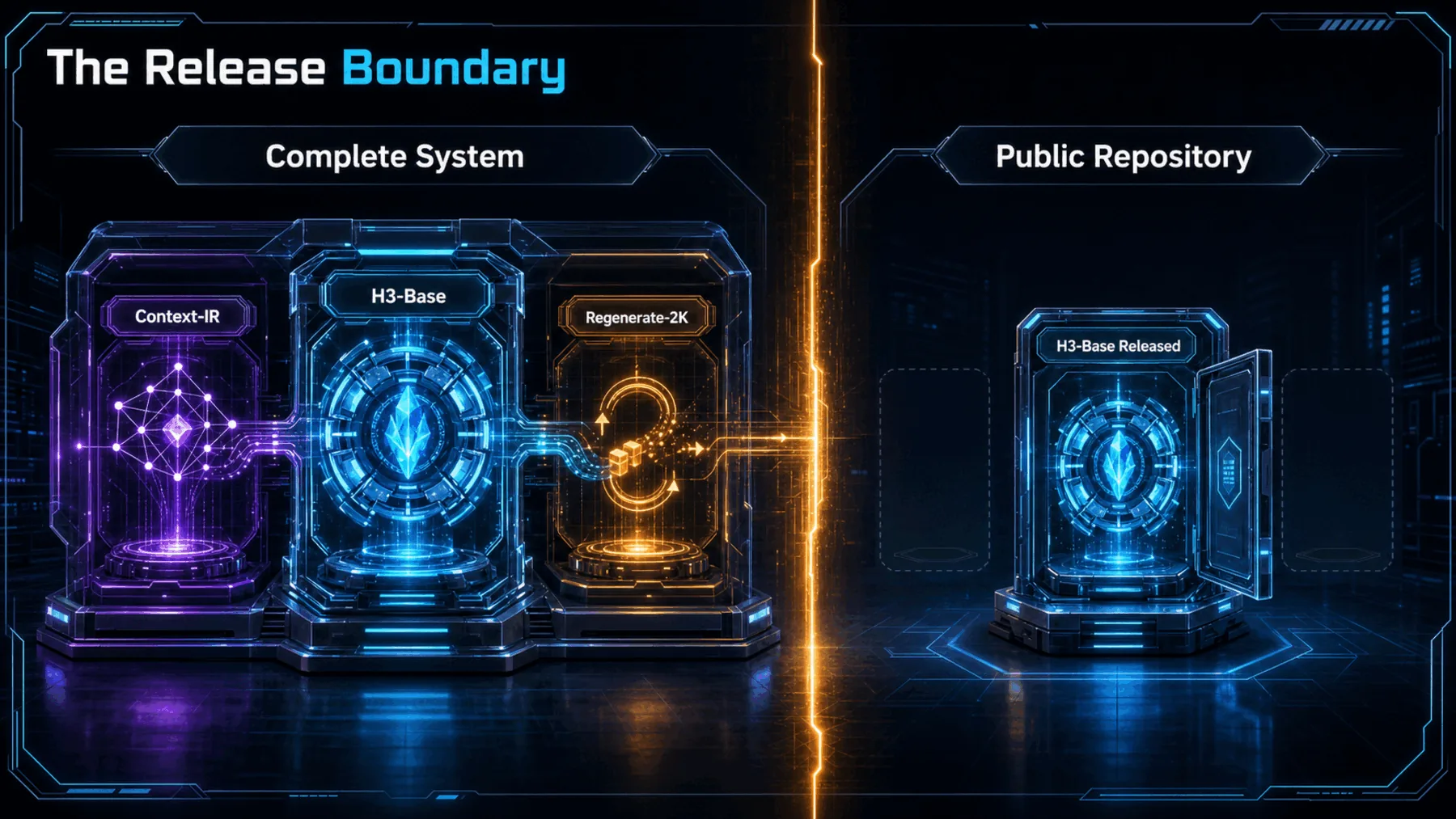
A strong centre, with edges missing
The released base carries meaningful capability, but not every component MiniMax describes.
The initial package centres on H3-Base and full-attention inference. MiniMax describes supported generation variants including first-and-last-frame and omni-reference modes, with video durations from four to 15 seconds, 24 FPS and native stereo audio.
The base release defaults to a 768-pixel shorter side. MiniMax’s 2K claim belongs to the wider system, where Regenerate-2K supplies the finishing stage; it should not be read as a promise from the released weights alone.
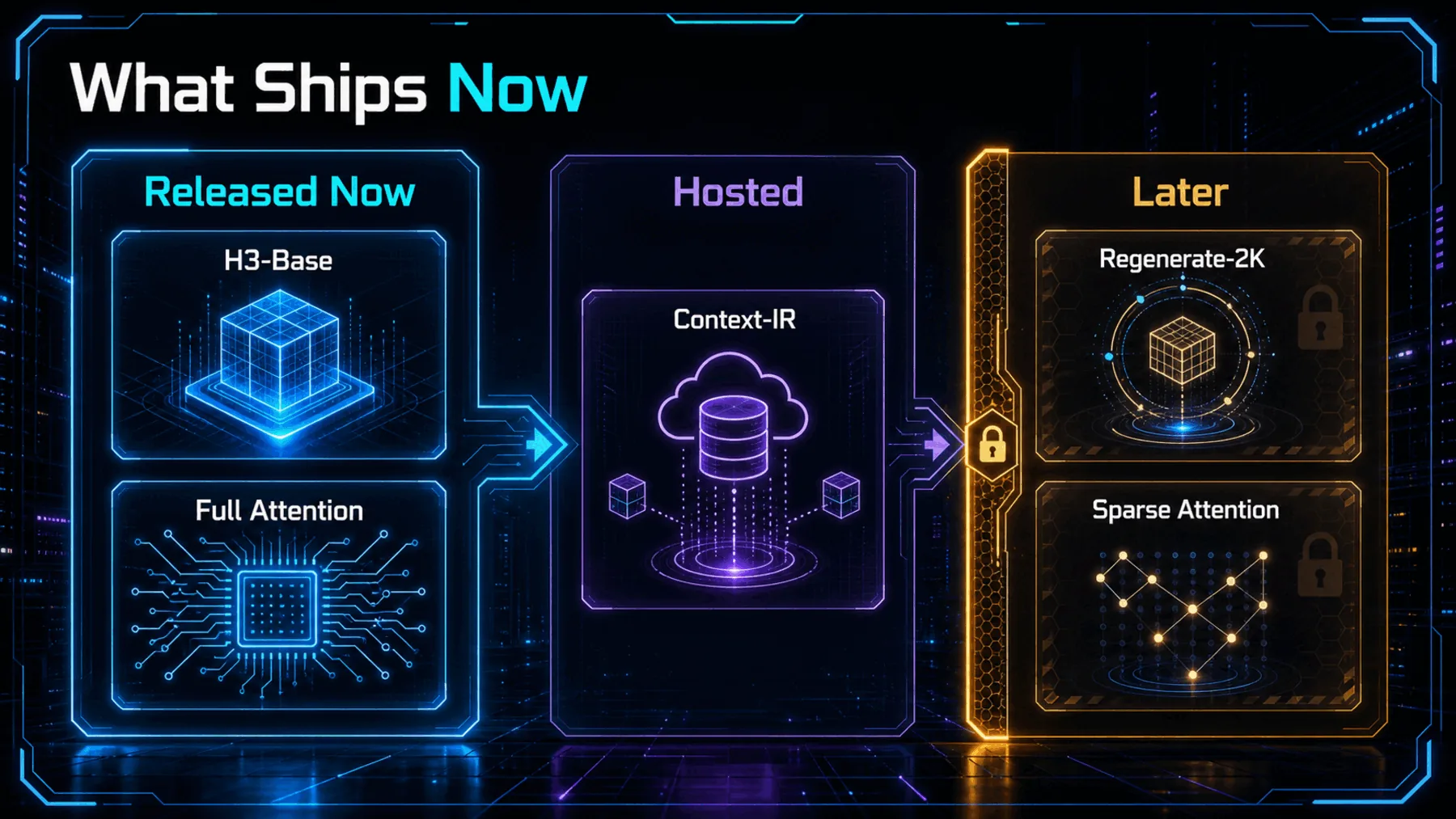
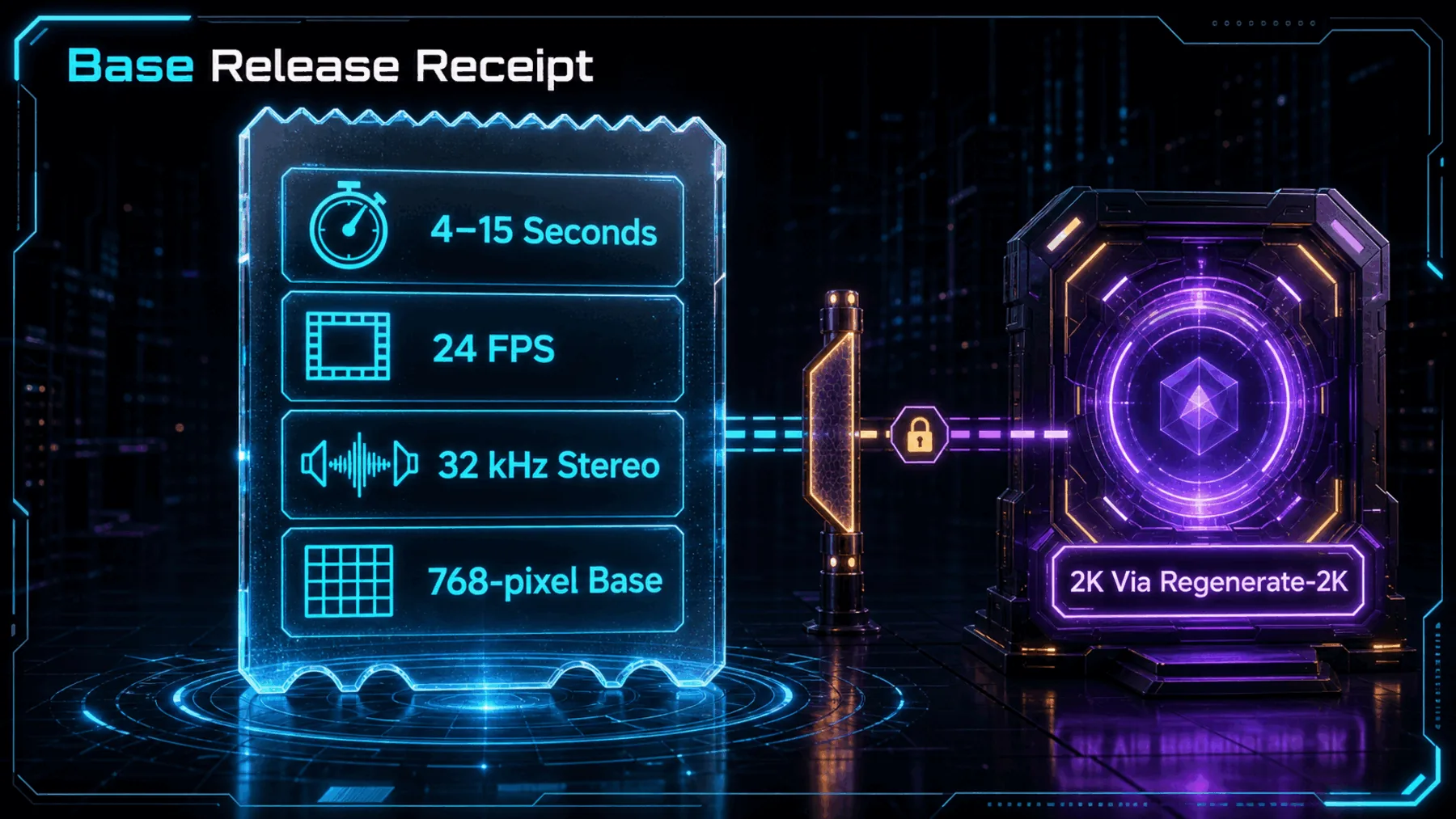
Three stages, one visible boundary
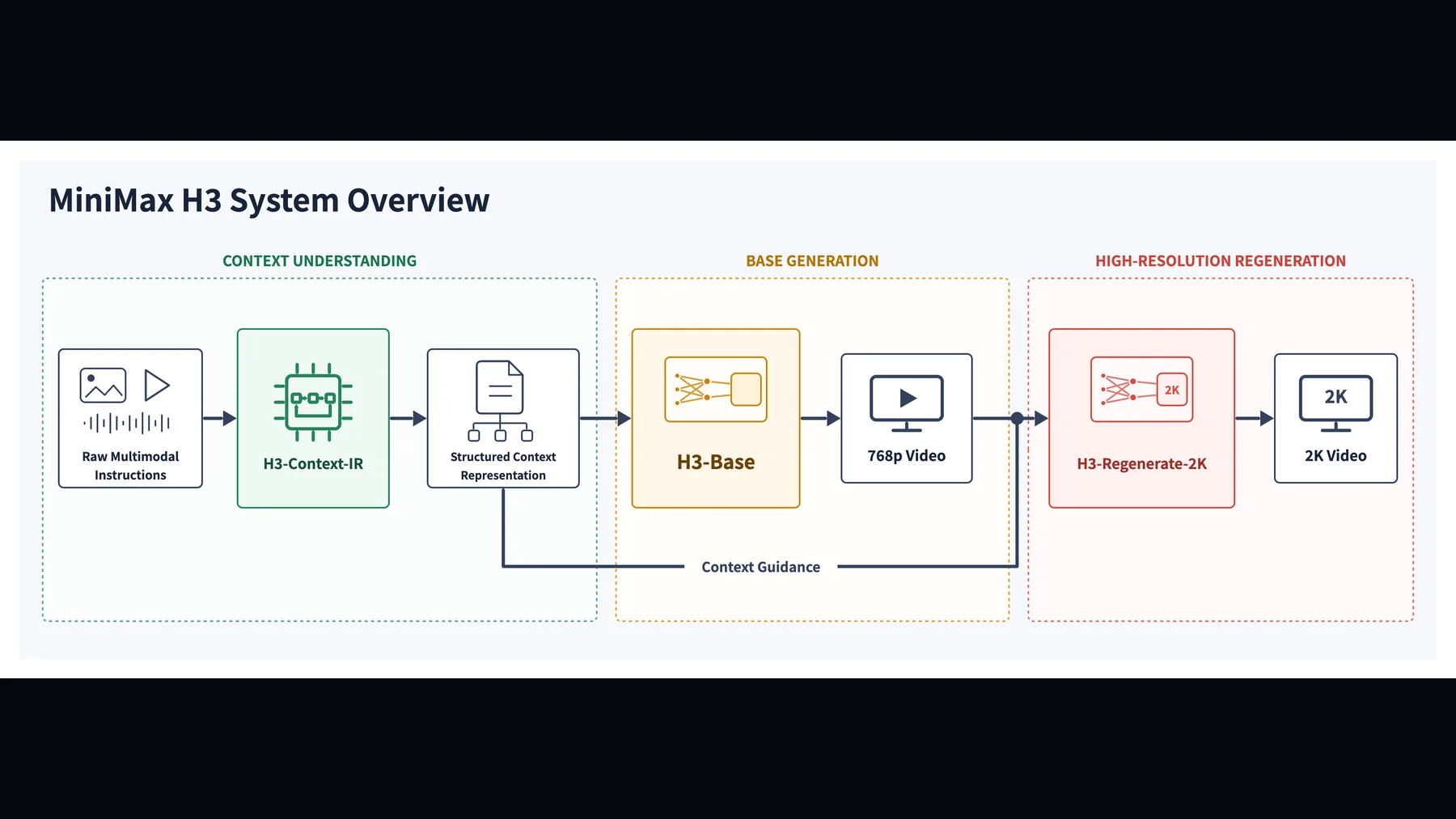
MiniMax’s diagram frames H3 as a connected system rather than a single model file.
MiniMax presents H3 as three linked modules. Context-IR prepares the mixed-media context, H3-Base generates the video, and Regenerate-2K applies the final high-resolution finish.
That structure sharpens the release story. Opening the middle stage is meaningful, but it is not equivalent to opening every stage required for the complete advertised pipeline.
Because H3-Context-IR relies on a multi-stage workflow and multiple hosted models and services, it is not included in this open-source release.
MiniMax H3 model card
The public package is H3-Base
The available component is the central generator, with clear limits around the wider pipeline.
The released H3-Base is not a token gesture. It is the system’s generative core, and MiniMax positions it for mixed-media input alongside video output with stereo audio.
The important caveat is architectural rather than rhetorical: the released base does not include the hosted Context-IR stage or the not-yet-open-sourced Regenerate-2K stage.
Plan, generate, then finish
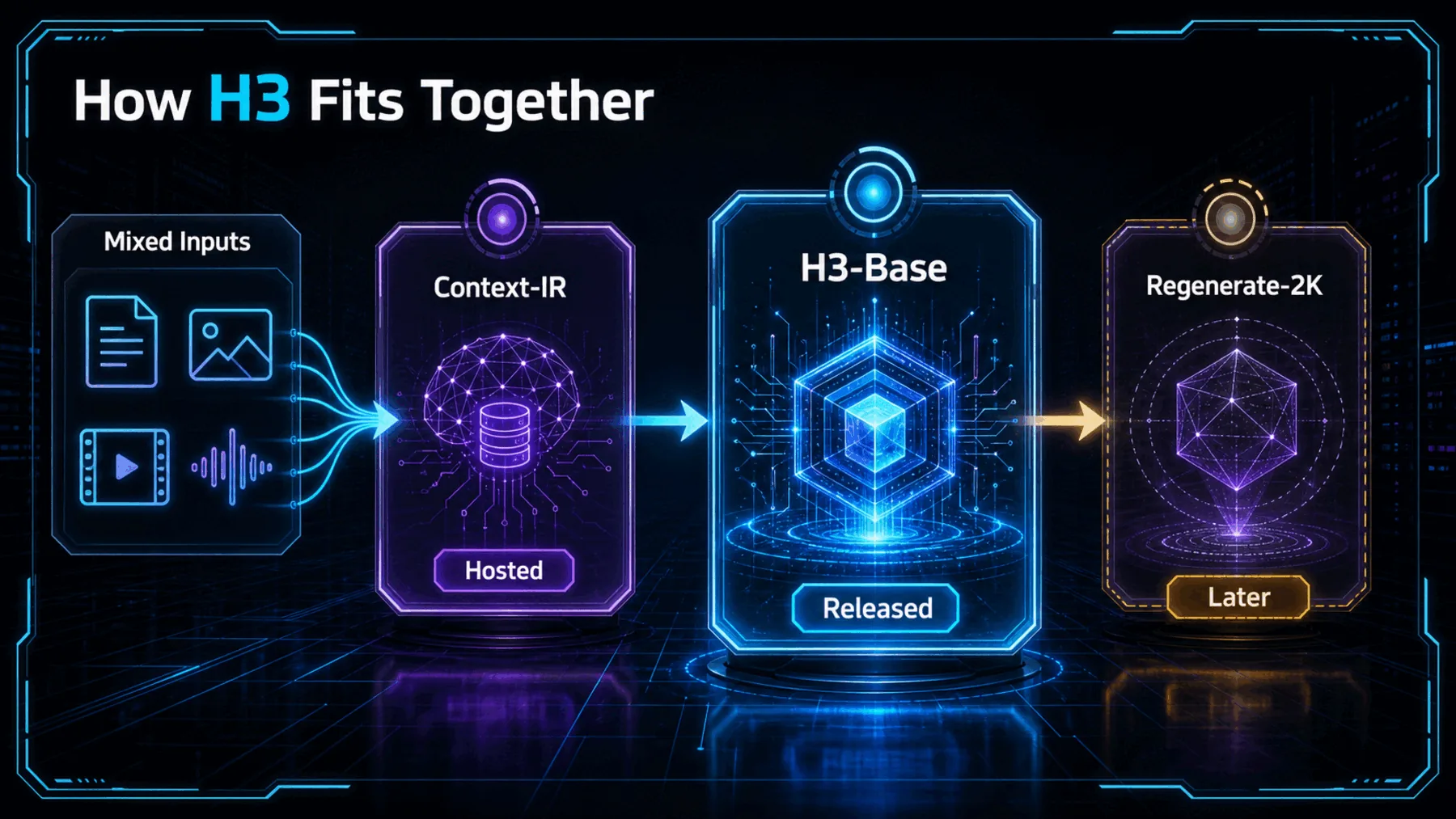
The system’s promise comes from the hand-off between three stages, not from one stage alone.
The first stage, Context-IR, turns text, images, video and audio into the context that guides the result. H3-Base then performs the generation work. Regenerate-2K is the finishing layer MiniMax associates with the higher-resolution output.
This is a useful way to read the release: the public base lets us inspect and explore the generator, while the full planning-and-finishing chain remains incomplete outside MiniMax’s hosted and future components.
What we can explore now
Treat the release as an opportunity to examine the base engine on its own terms.
We can start with the H3-Base release, select a supported generation variant and keep the default 768-pixel shorter-side boundary in view. That is enough to explore the core of MiniMax’s public package without overstating what has shipped.
We cannot treat that route as a complete open 2K workflow. Context-IR remains dependent on hosted services, and Regenerate-2K remains outside the open-source release.
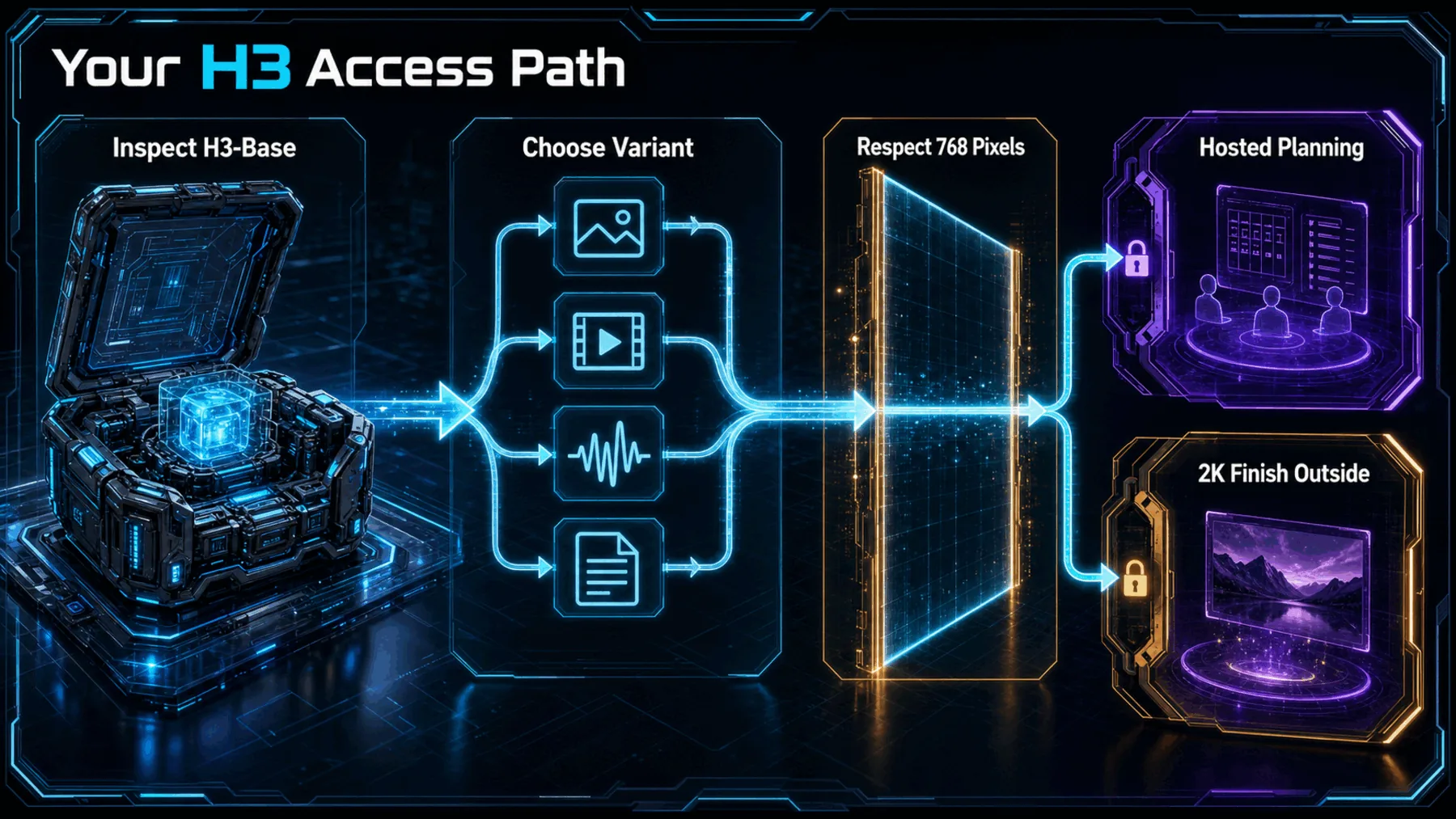
Inspect
Work within
Separate
A foundation release, not the whole stack
H3-Base is substantial precisely because we do not need to pretend it is everything.
MiniMax has released a meaningful foundation: a public H3-Base engine with mixed-media context support, stereo-audio video and a documented set of generation capabilities. That is more useful than a launch note that simply repeats the headline.
The stronger reading is also the more accurate one. The full H3 proposition still depends on a hosted planning stage and a finishing module that MiniMax has not yet open-sourced.
H3-Base is a meaningful public foundation, but the complete three-stage H3 machine is not yet a self-contained open release.
Altior synthesis from MiniMax’s published announcement and model card
Test the released H3-Base boundary
Act as a careful video-generation researcher. Using only the MiniMax H3 model card, produce a two-column table: ‘Available in the initial open-source release’ and ‘Hosted, future, or not yet open-sourced’. Include H3-Base, full-attention inference, Context-IR, Regenerate-2K and sparse attention. End with a 75-word practical summary that distinguishes the released engine from the complete three-stage system. Do not infer pricing, speed, hardware needs, commercial rights or independent performance.Ready to copy
Track the missing pieces
The next meaningful change is not another headline claim; it is evidence that the hosted, future and licensing boundaries have moved.
Try the promptSignals worth tracking
- Context-IR availability
- Regenerate-2K release
- Sparse-attention support
- Licence clarity and independent testing