One task. A supervised AI team.
Meta says Muse Code turns a coding request into parallel work, background review and an inspectable result—while beta status and evidence limits remain part of the story.
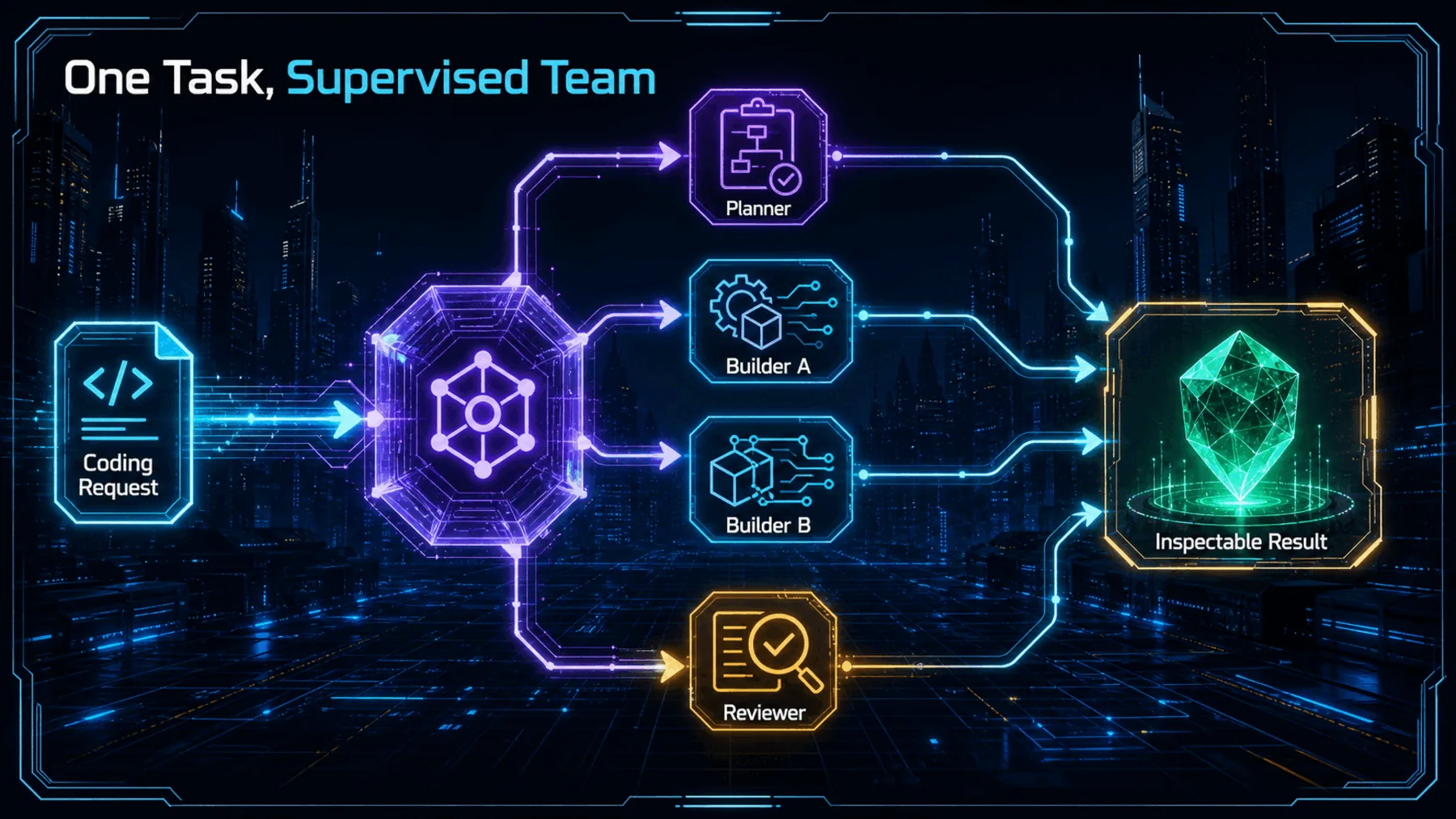
A repository-scale change is rarely difficult because code must be written once. The harder part is deciding what should change, checking what it touches and retaining enough of the route taken to trust the result.
Meta says Muse Code is built around that problem. Muse Code is the coding agent, powered by Muse Spark, and Meta describes a group of agents planning, writing and refining across repositories. It is now in beta, so the product design is clearer than any proven outcome.
Why one assistant can feel too small
The useful question is whether work can be split, checked and inspected before it is accepted.
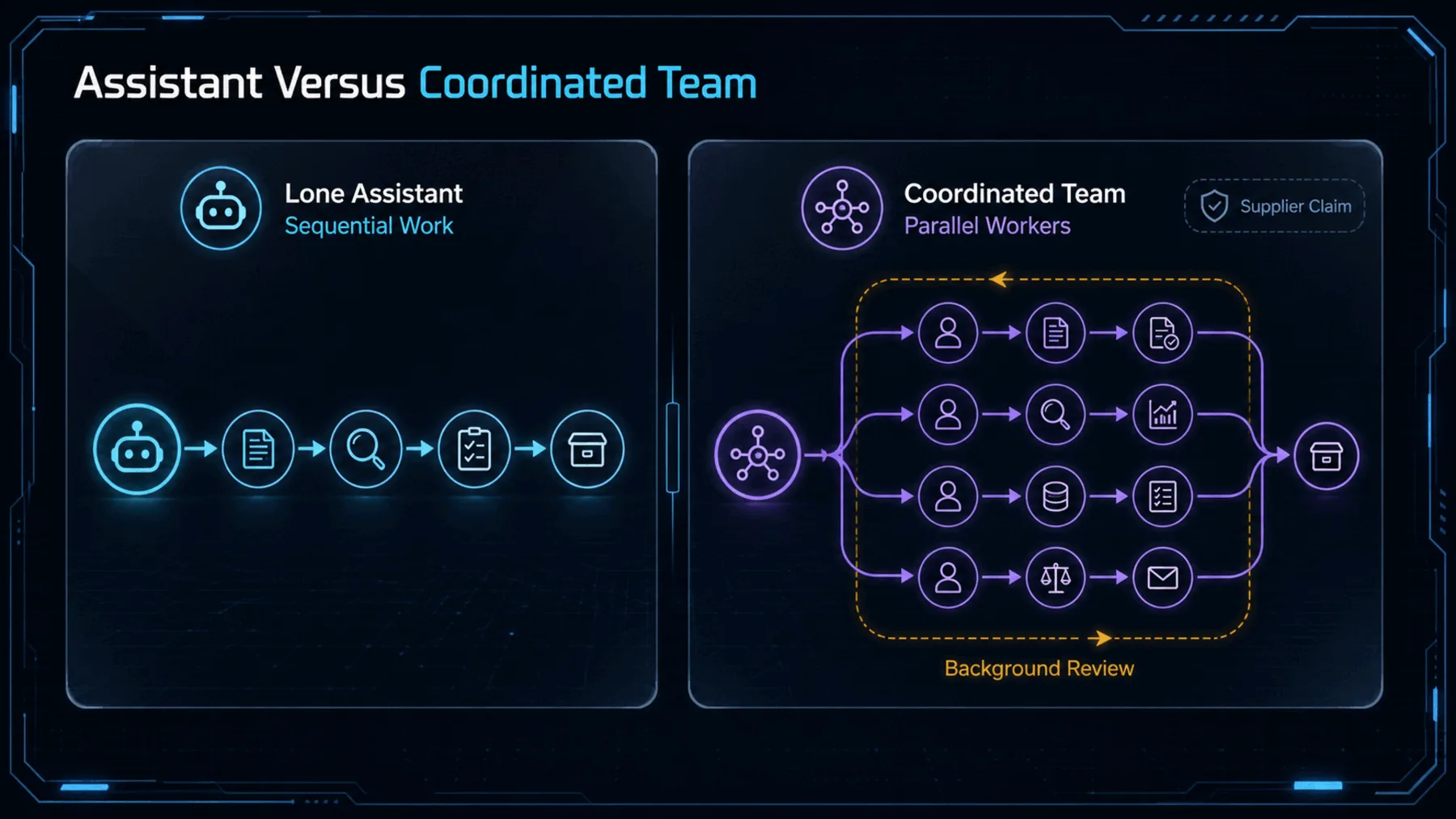
A single assistant can produce a plausible answer quickly, but a complex change has several jobs hiding inside it: understand the request, locate the relevant code, make an edit and challenge the result. Meta’s pitch is to make those jobs visible as separate pieces of work.
Meta describes workers operating in parallel while reviewers work in the background. If that pattern holds up in practice, the value is not speed alone. It is a clearer record of how a change was reached and where it still needs judgement.
The offer has two routes
Both listed tiers share a 1M context window, but price and Meta’s data-use wording differ sharply.
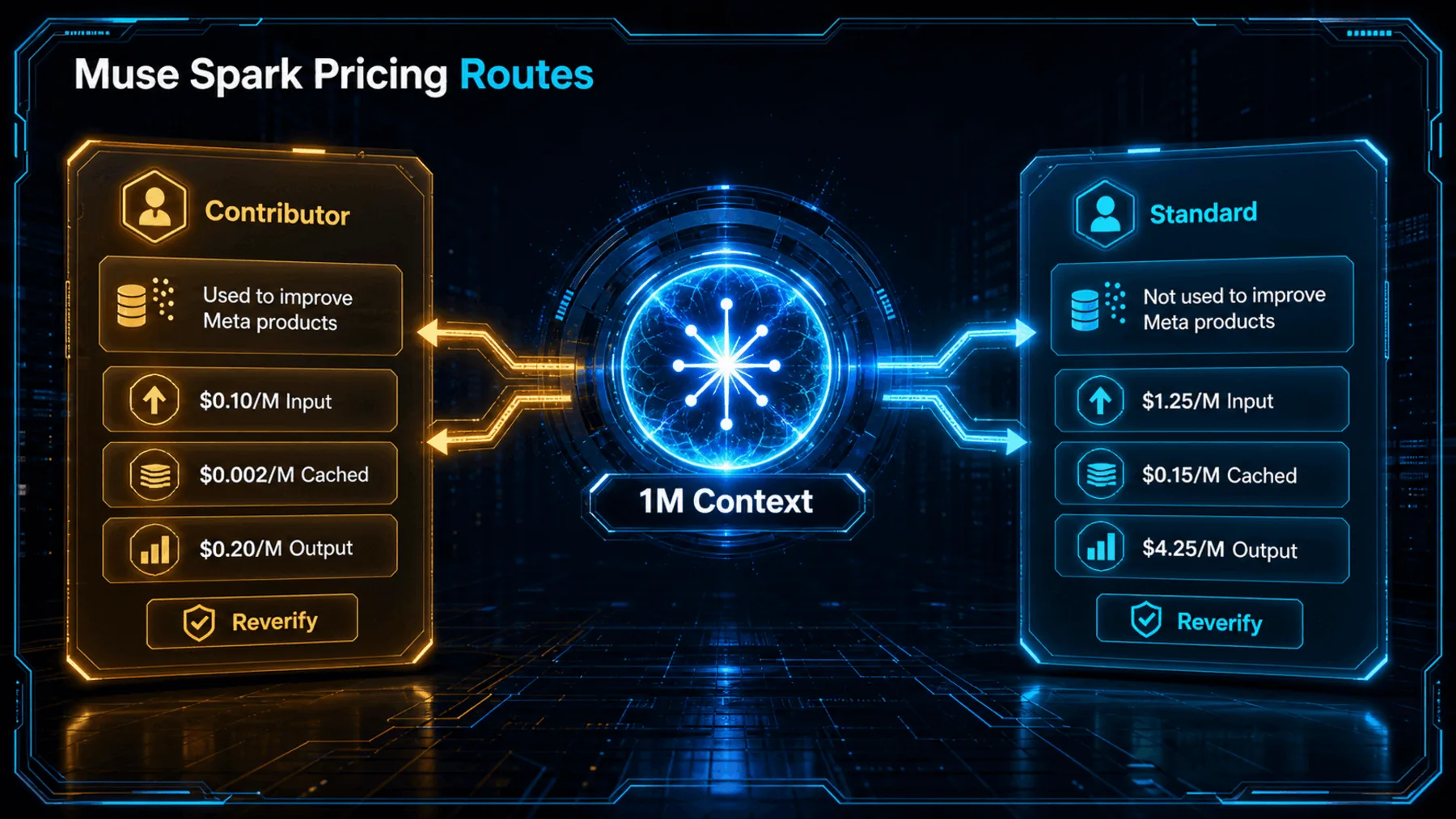
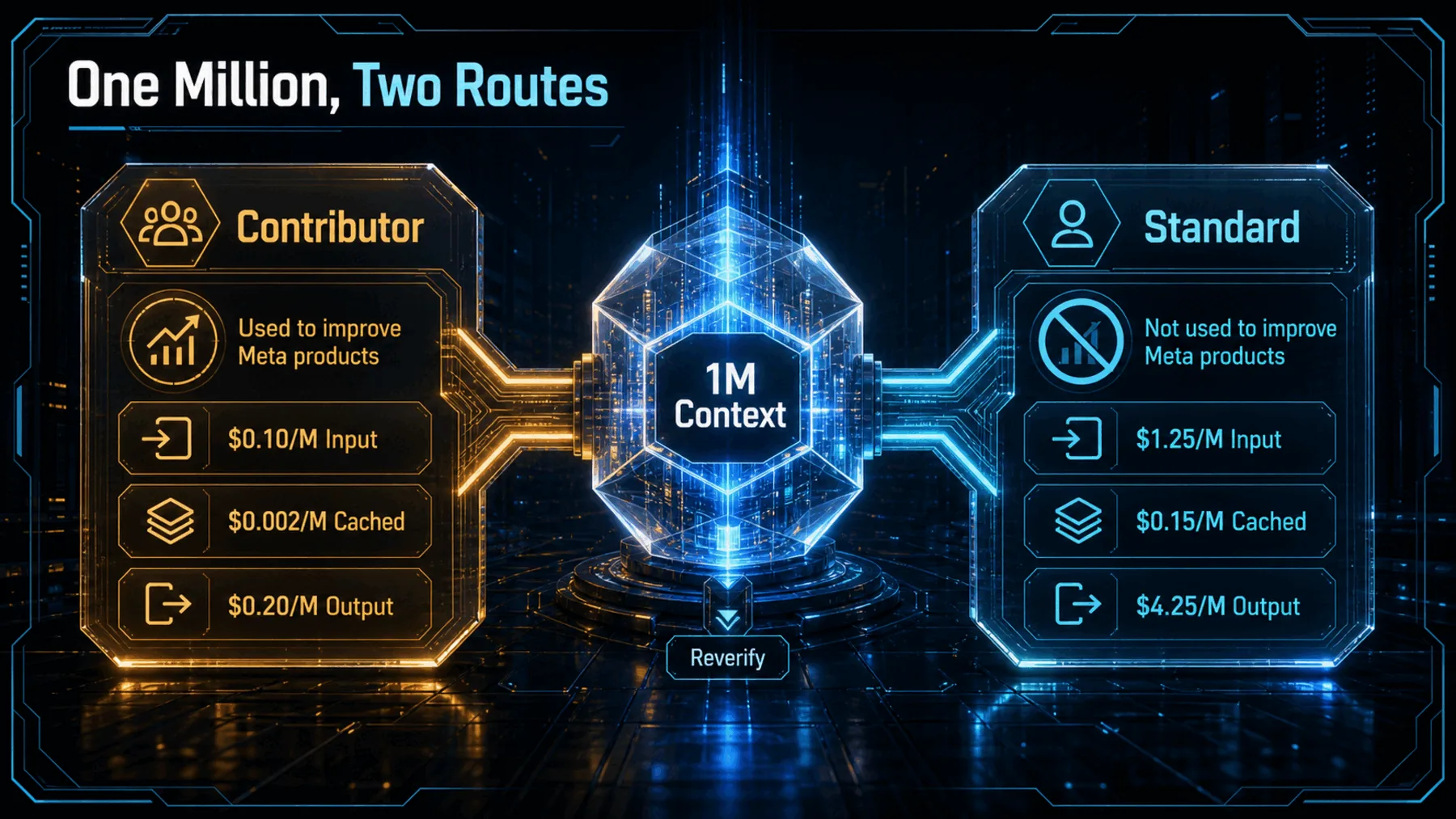
The lower-priced contributor tier is listed at $0.10 per million input tokens, $0.002 per million cached input tokens and $0.20 per million output tokens. Meta says that tier is used to improve Meta products.
The standard tier is listed at $1.25 per million input tokens, $0.15 per million cached input tokens and $4.25 per million output tokens. Meta says it is not used to improve Meta products. Those are published product details, not a broader privacy or confidentiality guarantee, and the prices and specifications need a fresh check before publication.
Meta’s multi-agent promise
The product page frames coordinated work and review as the default shape of a coding task.
Meta’s central claim is unusually specific: multiple agents coordinate on every task. Rather than treating a coding request as one uninterrupted exchange, Muse Code is presented as a system that can separate planning, execution and review.
Meta also says every action is transparent and traceable. We should read that as a product description of visibility into generated work, not proof that the resulting code is correct, secure or suitable for every production setting.
“Every action is transparent and traceable.”
Meta for Developers, Muse Code
What Meta’s evidence shows—and cannot show
The available evidence establishes a beta product and Meta’s stated design; it does not establish independent outcomes.
Meta’s launch post and product page give a coherent account of the intended system: Muse Code is powered by Muse Spark, coordinates several agents and keeps actions available for inspection. They also contain Meta’s claims about faster shipping, fewer retries and higher-quality output.
Those performance statements are supplier claims. The material here does not independently establish speed, quality, reliability or production readiness. A beta product can make a meaningful design bet without proving that bet across real repositories.
How the team is meant to work
Meta describes a request moving through division of work, parallel activity, review and inspection.
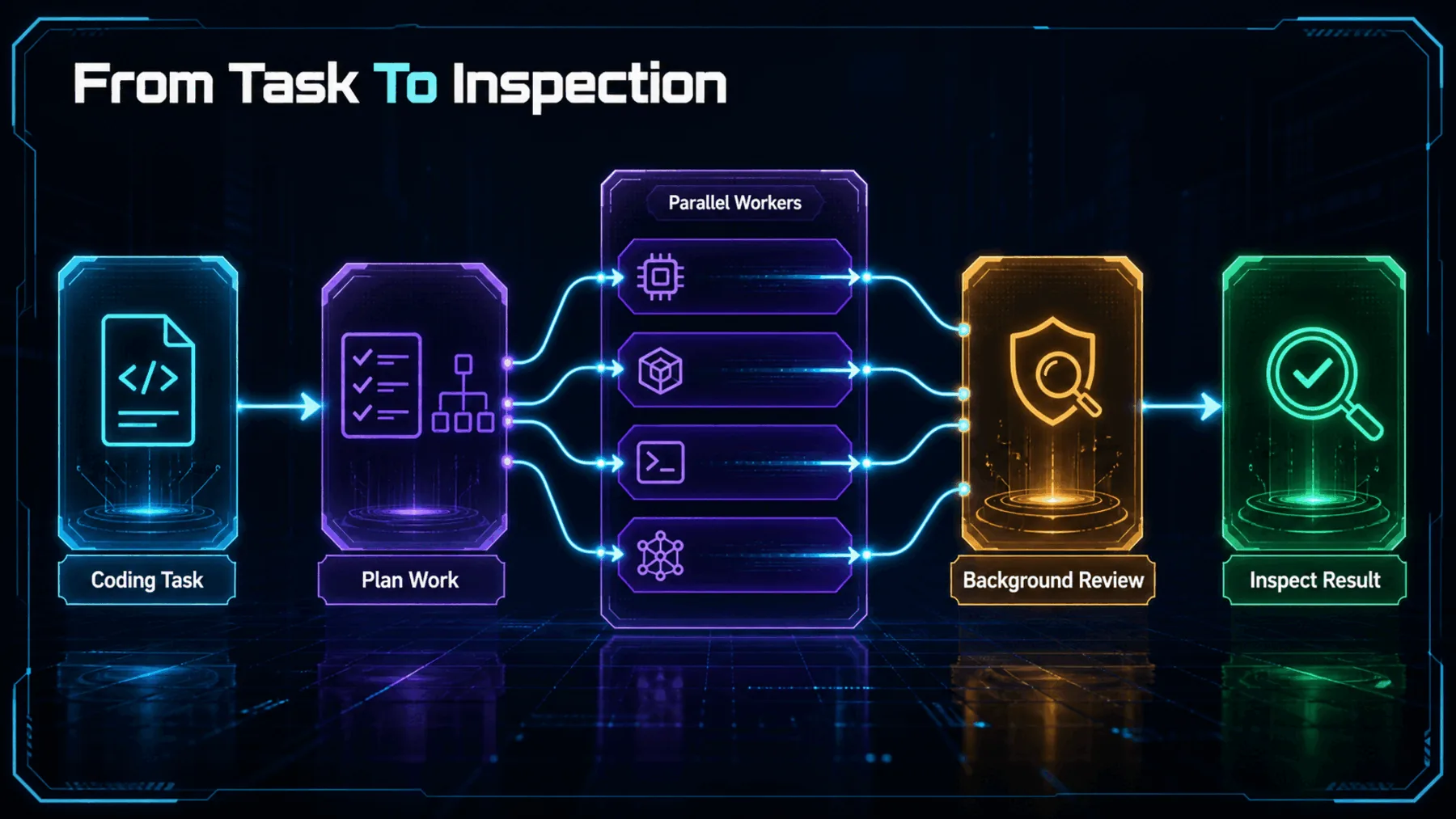
The practical model is straightforward. A coding request is first broken into smaller pieces of work. Some agents can take those pieces at the same time, while other agents review what is emerging rather than waiting until the end.
The developer’s role does not disappear in this picture. Meta says generated code and AI decisions can be reviewed, which makes the result something to inspect before acceptance rather than a black-box hand-off.
Divide
Break the coding request into focused pieces of work.
Work
Run workers in parallel where the task permits it.
Inspect
Review actions and generated code before accepting a result.
What we would actually encounter
The first decision is a beta test with a visible model-tier and data-use choice, followed by inspection of the work.
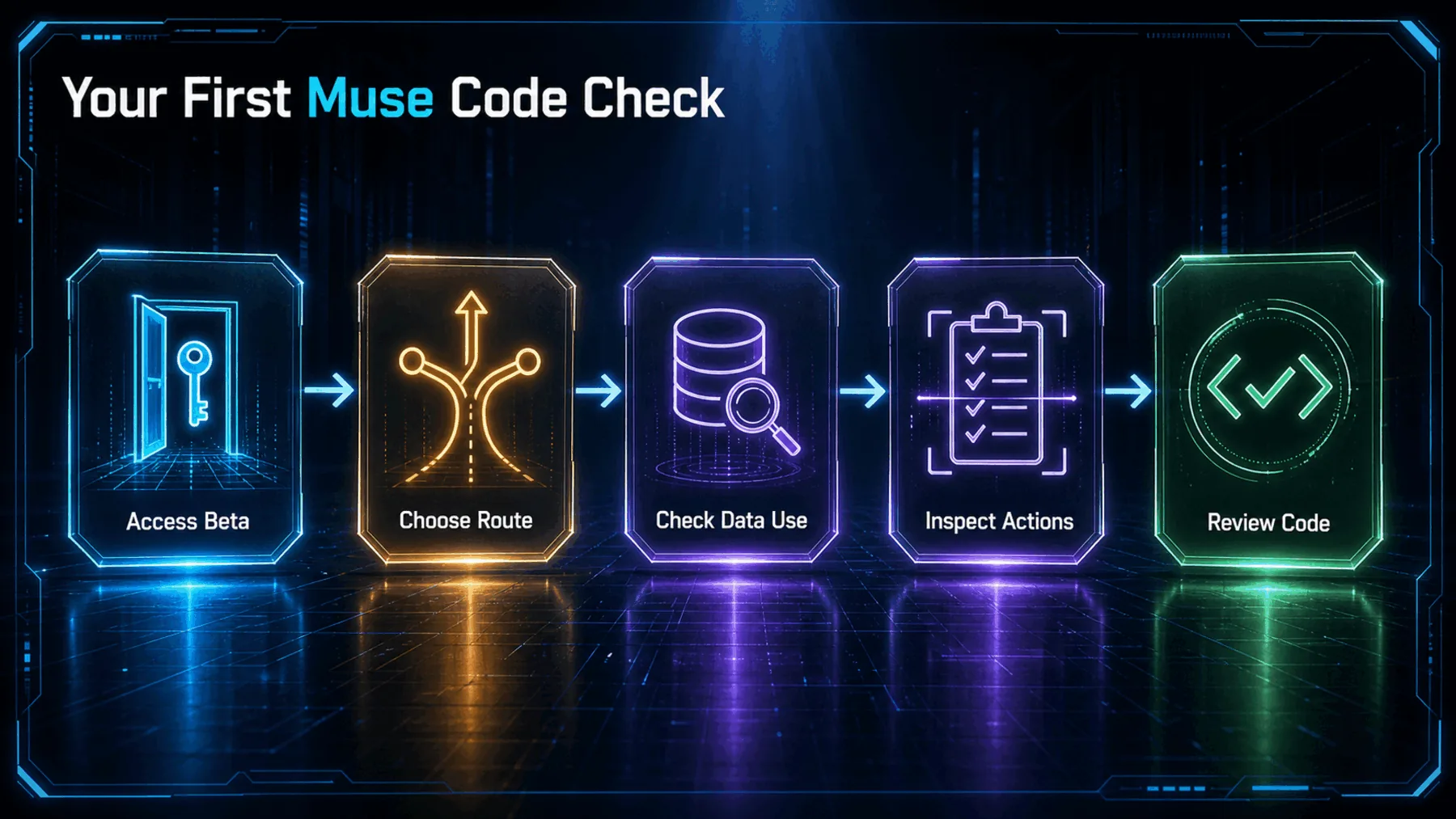
For us, the first encounter is not a promise of an autonomous engineering team. It is a beta coding agent powered by Muse Spark, with two listed model routes and a reason to make the data-use choice deliberately.
A sensible first task is bounded enough to inspect. We can compare the plan, the proposed edits and the review trail against our own understanding of the repository, then decide whether the process earns a wider trial.
Tier
Confirm the current price and data-use wording for the selected model.
Scope
Start with work small enough for our team to inspect closely.
Evidence
Separate Meta’s product claims from results we have observed ourselves.
Agents supervising agents
Meta’s bet is that coding work becomes more useful when its parts can be coordinated and inspected.
The interesting change is not more code on demand. It is a claim that the path to that code can be divided, reviewed and made visible.
Altior AI News synthesis from Meta’s published descriptions
Muse Code makes a larger product argument than a terminal command or a cheaper token rate. Meta is packaging planning, parallel work, review and traceability as the default operating model for complex coding tasks.
Whether that model delivers better outcomes remains open. The evidence supplied here supports the shape of Meta’s beta product and the trade-offs around its listed tiers; it does not settle how well the system performs when the work gets difficult.
Inspect a change before you accept it
Act as a supervised coding team working in this repository. Inspect the current validation and error-handling paths, identify one duplicated or inconsistent rule, then divide the work between a planner, an implementer and a reviewer. Propose the smallest safe fix, show the files and tests affected, apply no change until the reviewer has checked the plan, and finish with a traceable summary of the evidence, edits and remaining risks.Ready to copy
Test the process, then decide
Use a bounded task, inspect the plan and review trail, and recheck the current tier details before treating Meta’s beta claims as operating evidence.
Try the promptWhat could change the picture
- Beta progression Whether Meta changes the product’s beta status or access conditions.
- Independent results Whether repeatable third-party task evidence emerges.
- Tier wording Whether current prices, context specifications or data-use terms change.