The server stops remembering
Claude Developers says MCP no longer requires remote servers to retain protocol-session state, opening a different set of deployment shapes.
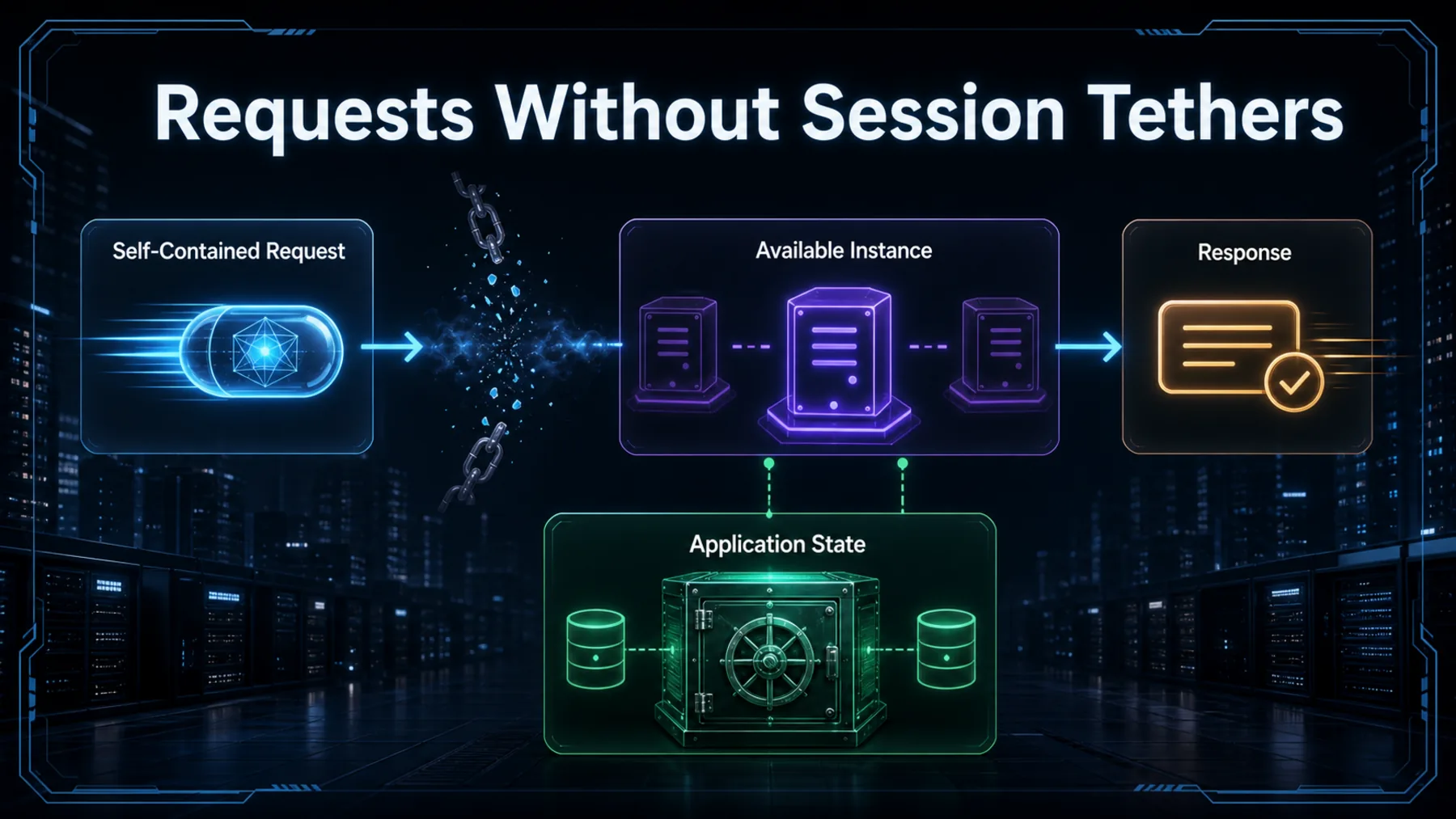
For a remote MCP server, remembering an ongoing protocol session shaped the deployment around it. Later requests needed to find the same running instance, or the session needed to be managed elsewhere.
Claude Developers says MCP is now stateless at that protocol layer. That does not erase application state; it removes the need for the server to remember the protocol session between requests.
Deployment opens up
When the protocol request can stand on its own, the server no longer has to be the place that remembers the conversation.
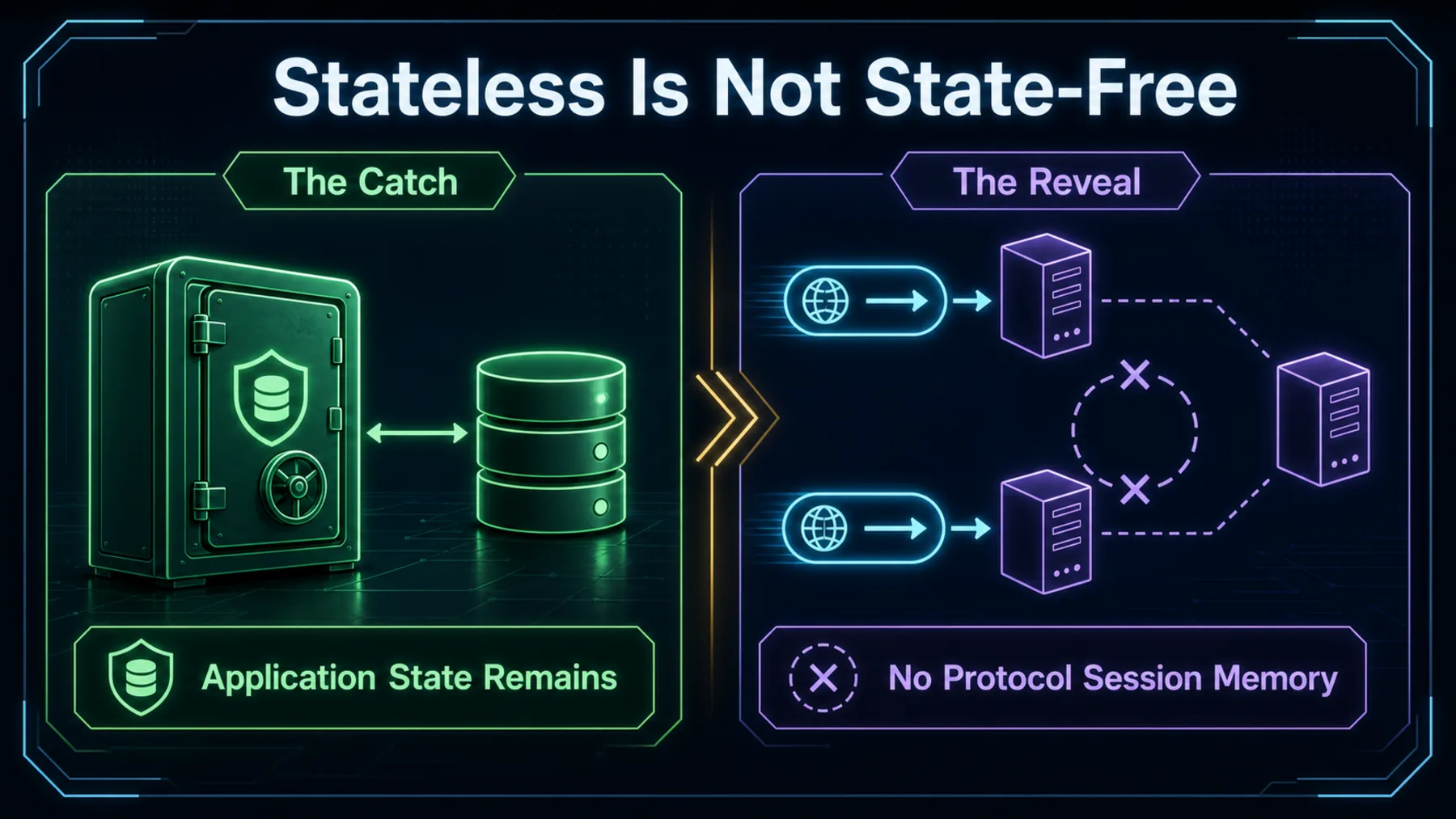
That distinction is easy to flatten and important to keep. A product may still need databases, accounts, job records and other application state. The release changes the protocol-session burden, not every stateful part of the system.
Claude Developers says that shift makes remote servers easier to deploy and scale. The practical consequence is more freedom to choose infrastructure without treating the same server instance as the keeper of a client session.
A lighter protocol core
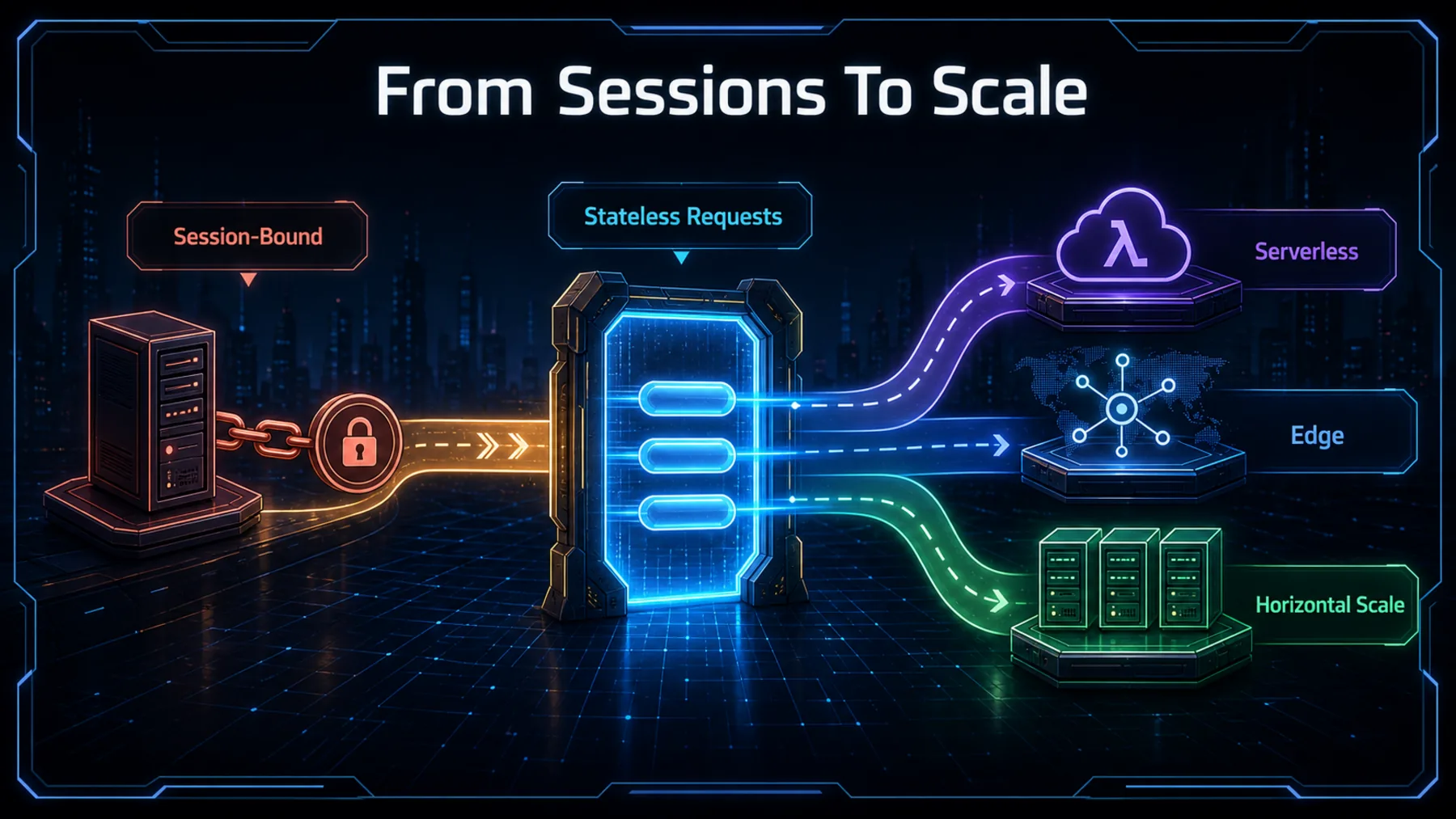
Claude Developers frames the update as a move from session-bound remote servers towards self-contained protocol requests.

Claude Developers calls MCP 2026-07-28 its largest update since launch. That is its release claim, not an independently established comparison.
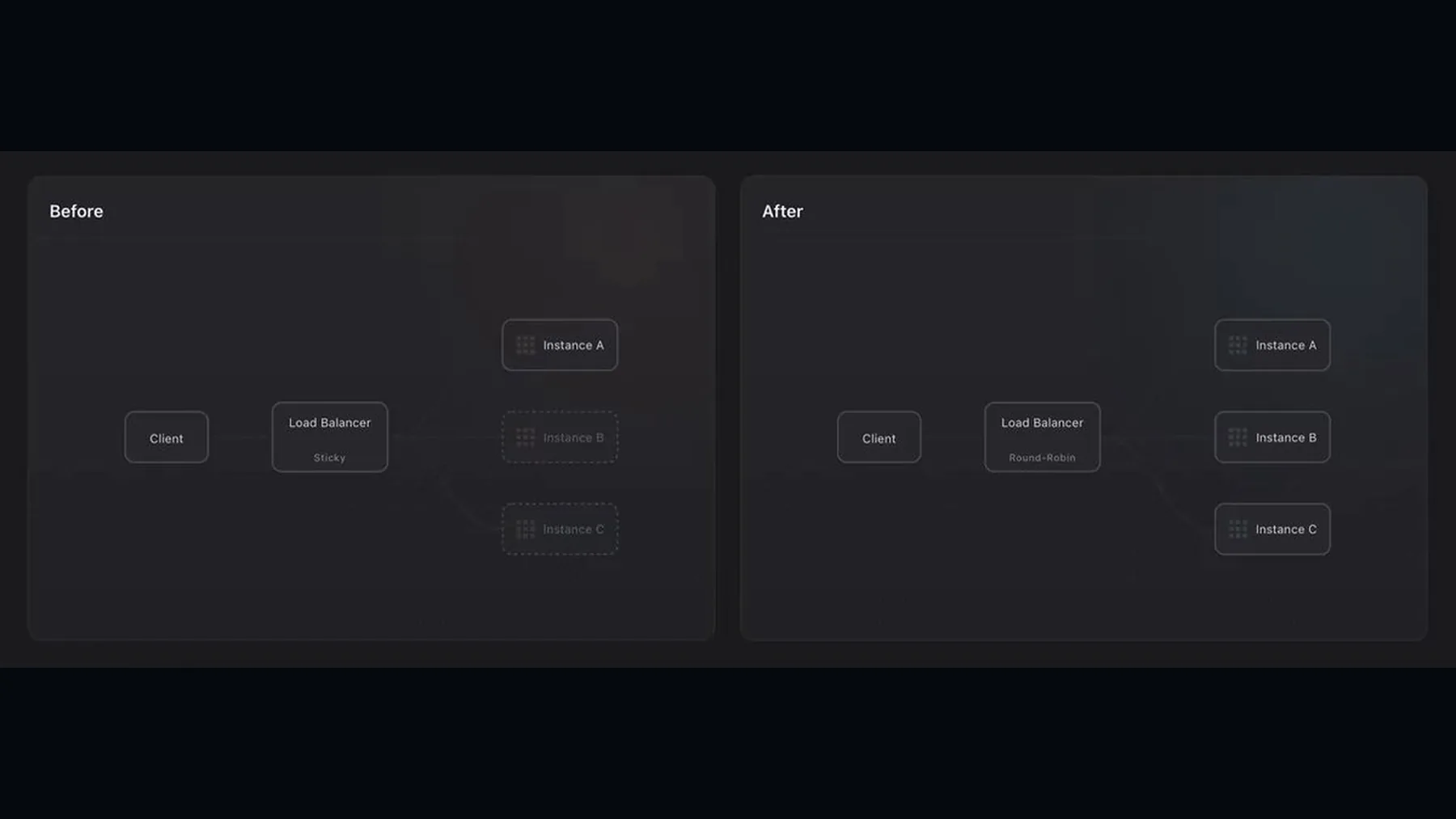
The more concrete announcement is the deployment change: serverless and edge infrastructure, plus horizontal scaling behind a load balancer, are now options Claude Developers explicitly names for remote servers. The thread does not establish measured gains in cost, latency or scale.
Claude Developers’ exact claim
The release wording is clear about the old session burden and the new deployment options, while its limits remain visible.
“Now that MCP is stateless, you can deploy on serverless and edge infrastructure, or scale horizontally behind any load balancer.”
Claude Developers on X, post 2082164250496348268
The source is one official Claude Developers thread. It is direct evidence of what Claude Developers announced, rather than an independent test of every implementation.
Its language supports a narrower conclusion: the protocol-session constraint has changed, and Claude Developers names several deployment routes that may now fit remote MCP servers. It does not guarantee a migration path, universal compatibility or a production outcome.
What the source shows
The approved material supports the release framing and its stated mechanism, not a full review of every linked asset.
The release thread’s wording is useful because it describes the change at the protocol level. It does not demonstrate performance in a particular environment, or establish that every MCP client and server behaves identically after the update.
A supplier video poster is available as visual provenance, but the video itself was not reviewed. The bounded evidence remains the verified release wording and the approved source assets.
A request can travel
The request carries what the protocol needs, so an available instance can handle it without recalling a prior protocol session.
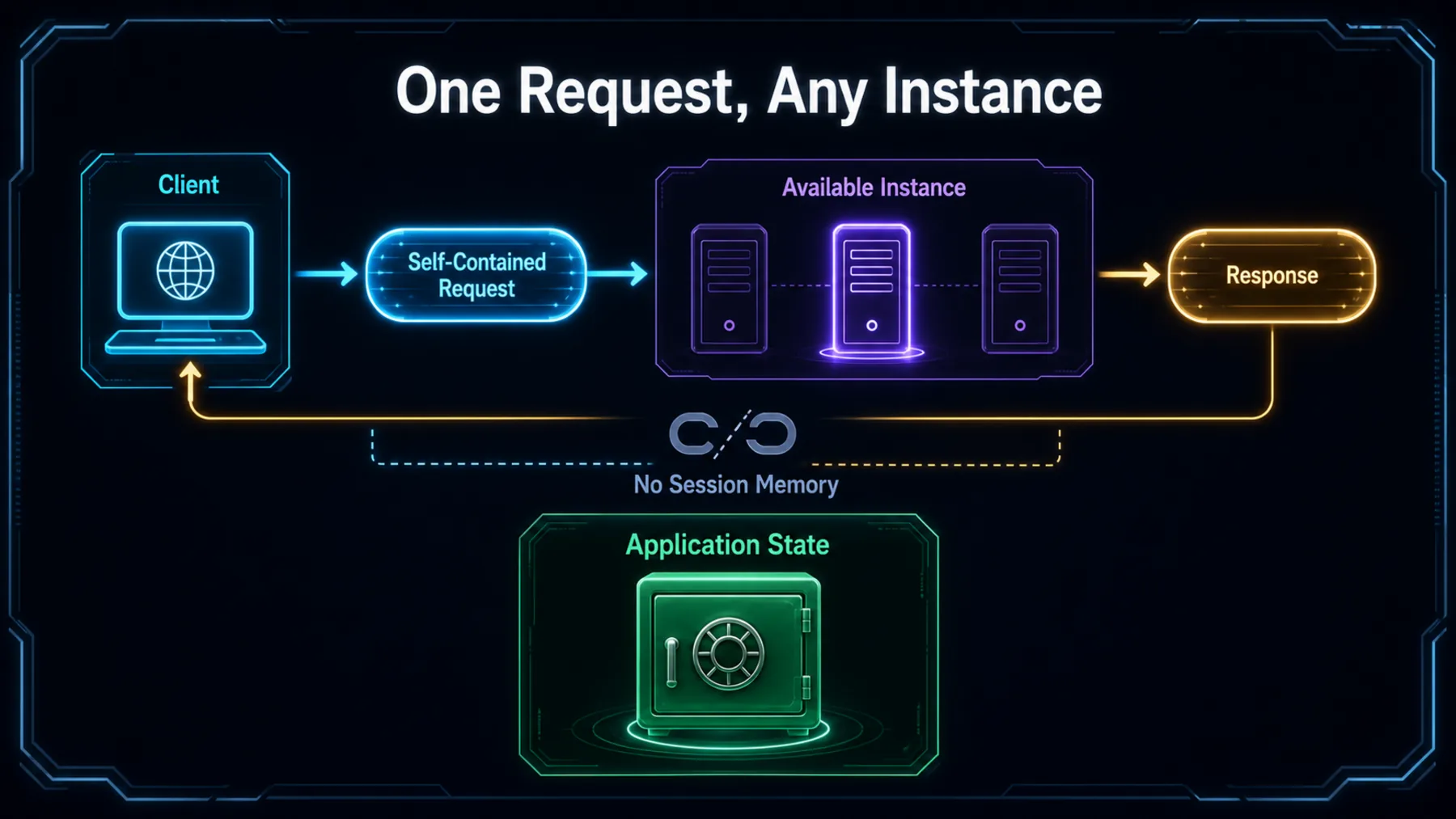
Previously, a remote server had to remember the protocol conversation with a client. That memory made continuity part of the deployment problem: the next request had to reach the right place, or the session had to be preserved.
With a stateless protocol request, the next request does not depend on that remembered server-side session. Claude Developers says that is why remote servers can fit serverless, edge and horizontally scaled deployment patterns.
Protocol session
Application state
Deployment choice
Choose the right layer
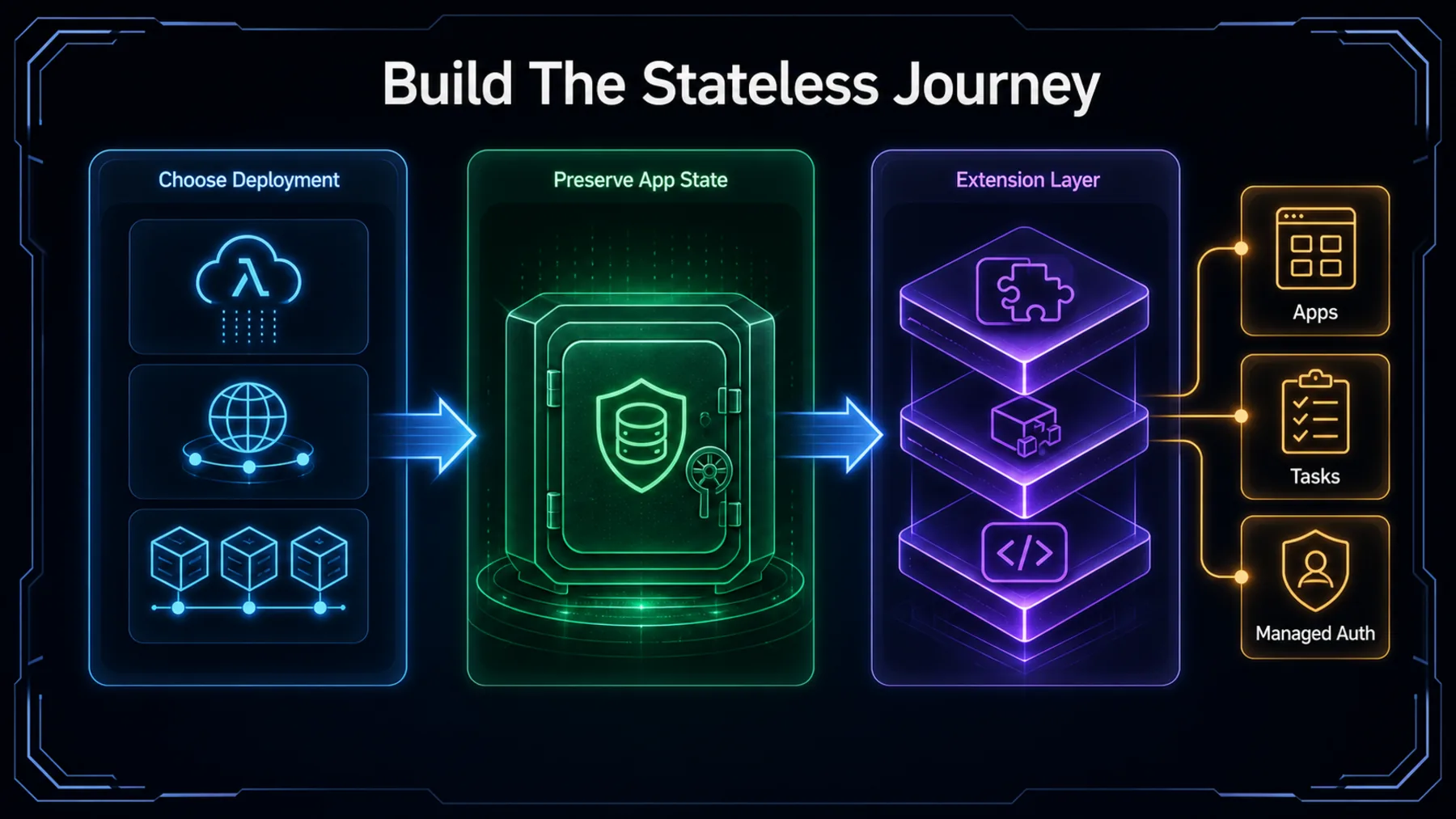
The release separates a lighter protocol core from the richer capabilities that belong on an extension path.
Choose shape
Keep state
Use extensions
The release is not an instruction to remove state from an application. It is an opportunity to decide which state belongs to the application and which was only there because the remote protocol session required it.
Claude Developers also points to MCP Apps, Tasks and Enterprise Managed Auth as extension examples. Their presence signals a formal route for richer capabilities, not a claim that each one is available in every environment or ready for every use case.
The protocol gets lighter
MCP’s core no longer needs to carry the session memory that shaped deployment, while richer capabilities gain a formal route around it.
The useful change is not that state disappears. It is that protocol-session memory stops dictating where a remote MCP server must live.
Altior AI News analysis based on the Claude Developers release thread
Claude Developers’ announcement points to a cleaner split: a stable, stateless protocol core for requests, with extensions providing a formal lane for capabilities that do not belong in that core.
That split is promising because it makes the deployment question more honest. We can choose an infrastructure shape for the service in front of us, preserve the application state it genuinely needs, and keep stronger claims about outcomes until evidence supports them.
Map an MCP deployment boundary
Act as a production architect. For a remote MCP service, write a concise deployment note with exactly three headings: Protocol session, Application state, and Deployment choice. Explain how a self-contained protocol request can be handled by an available server instance while identifying which application data still requires explicit storage. Compare serverless, edge, and load-balanced deployments without claiming cost, latency, compatibility, or security benefits. End with three implementation questions.Ready to copy
Test the state boundary
Map one remote MCP service into protocol-session state, application state and deployment choice, then test the release against that map before treating the new model as settled infrastructure.
Try the promptWhat could change the takeaway
- Implementation support
- Extension availability
- Deployment evidence