GPT-6 Sol and Luna: The Cost Claim Needs a Closer Look
OpenAI gives Astra, Sol and Luna different stated jobs. Its 50% price claim is clear; the practical buying terms are not.
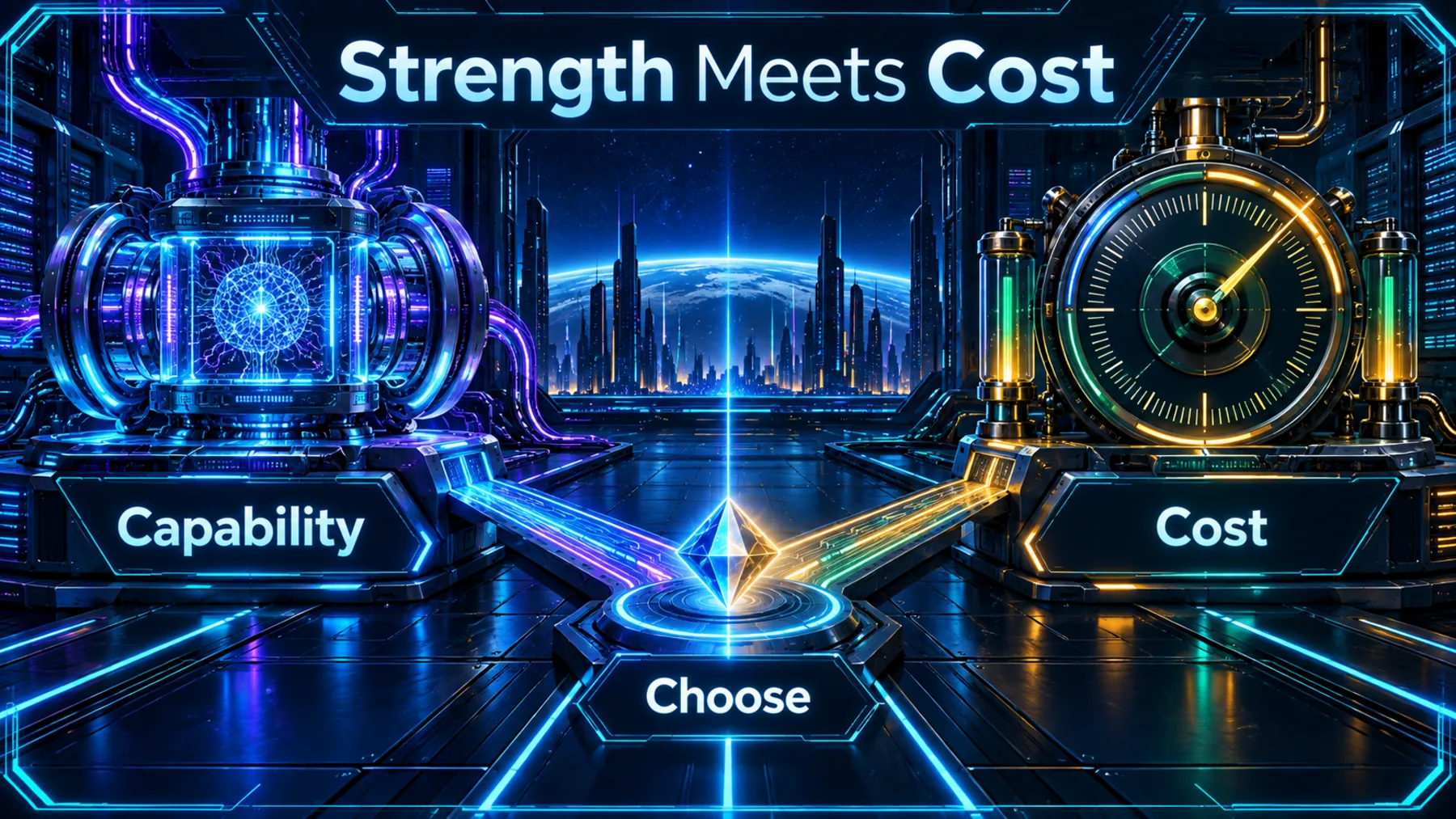
OpenAI says GPT-6 Sol and Luna bring much of the strength behind Astra into faster, more affordable models for work at scale. That sounds like a useful split: one option for demanding work, another for professional tasks, another for everyday volume.
But a role map is not yet a buying verdict. The post gives us a promotional comparison, not the access terms, price units or workload evidence needed to turn that claim into a measured saving.
The choice behind the names
OpenAI’s cards describe different intended roles. They do not prove which model will perform best for our work.
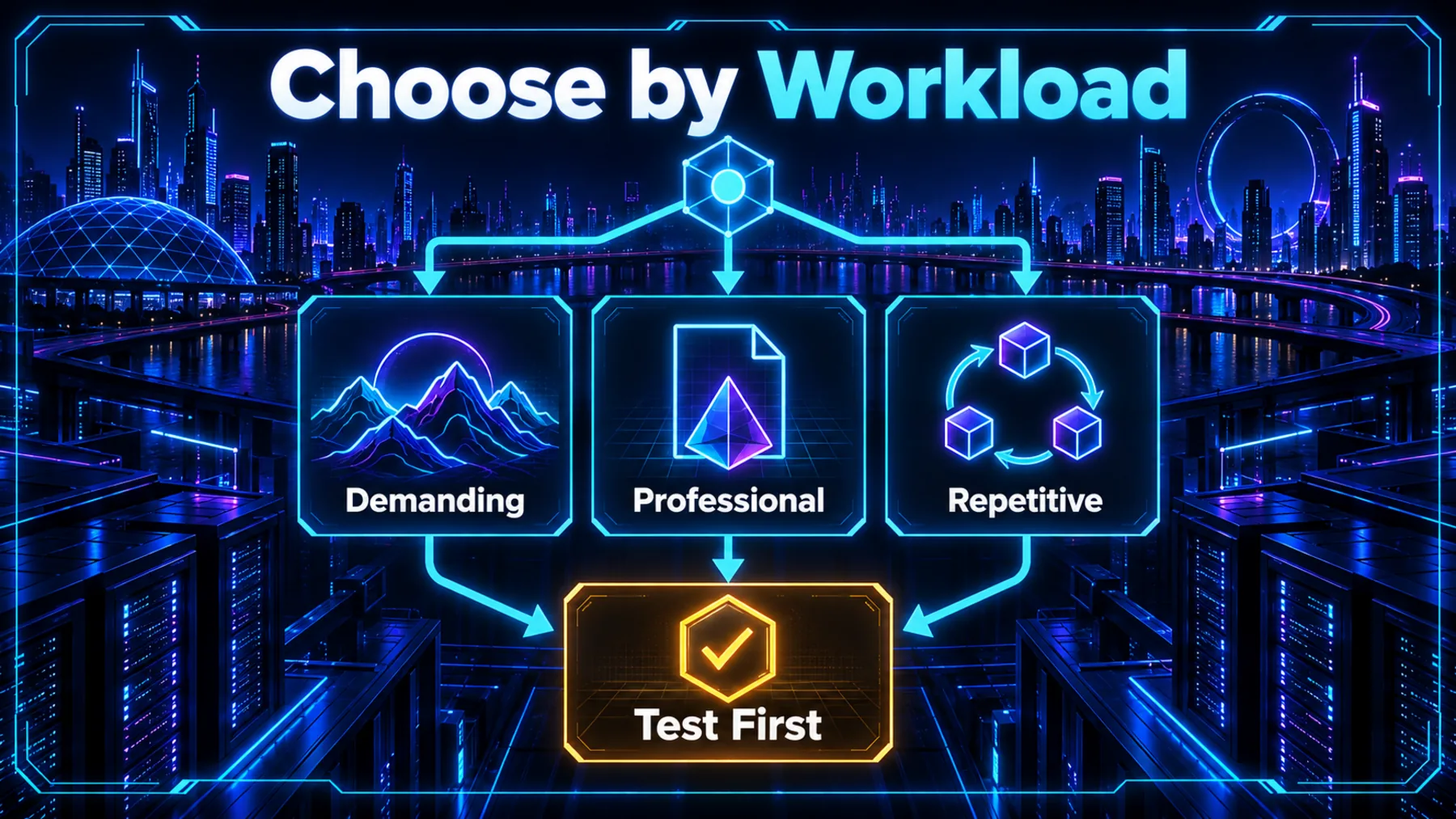
The practical question is not which name sounds strongest. It is what kind of work we need done: demanding tasks where we prize the best result, complex coding or professional work where cost matters, or fast everyday work at scale.
OpenAI positions Astra, Sol and Luna across those three territories. We should treat that as the company’s framing, then test it against the quality, speed and actual billing of a real workload.
Three stated jobs, one price claim
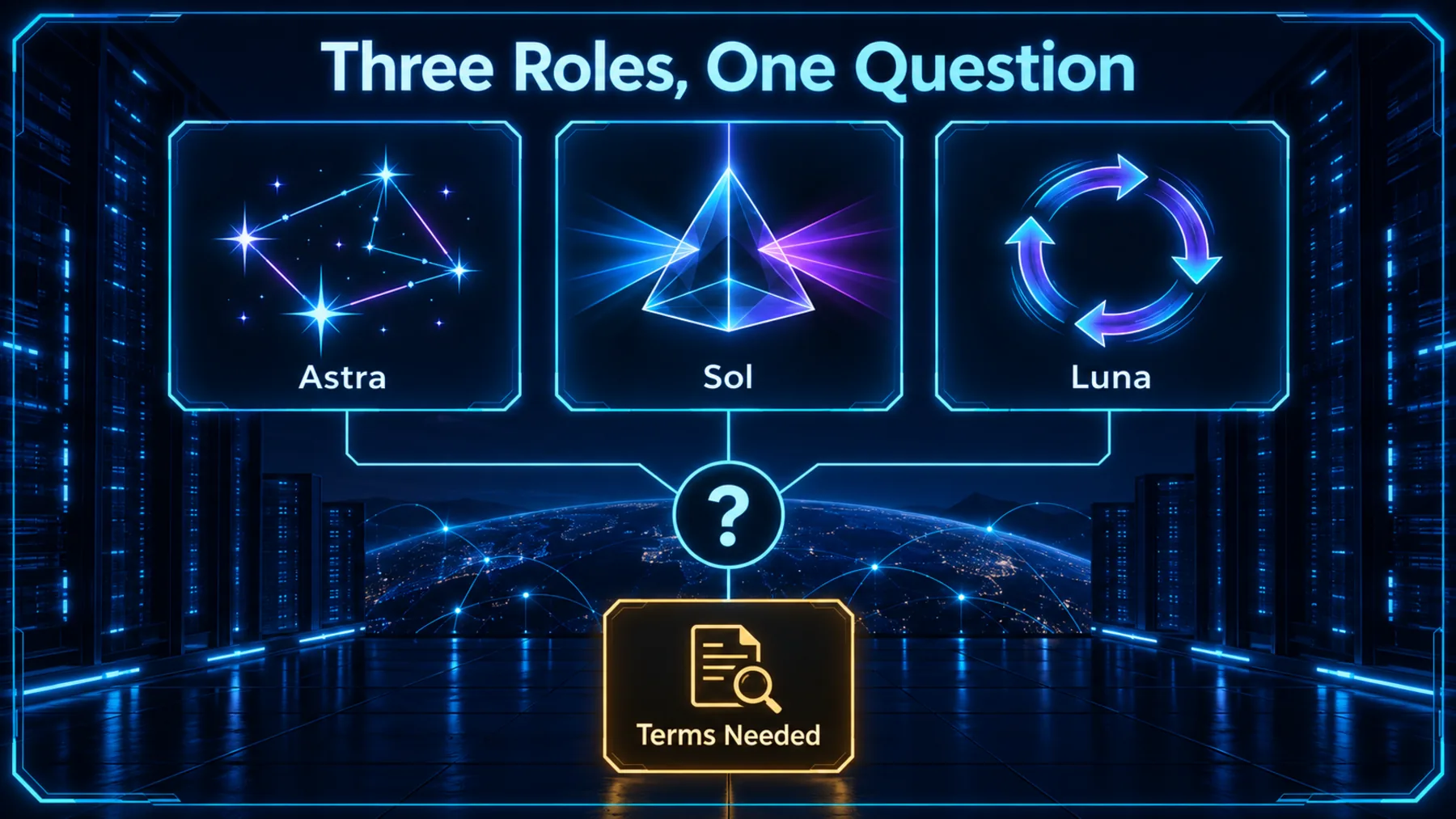
OpenAI assigns each model a role, then says Sol and Luna have 50% lower API prices than GPT-5.6 promotional pricing.
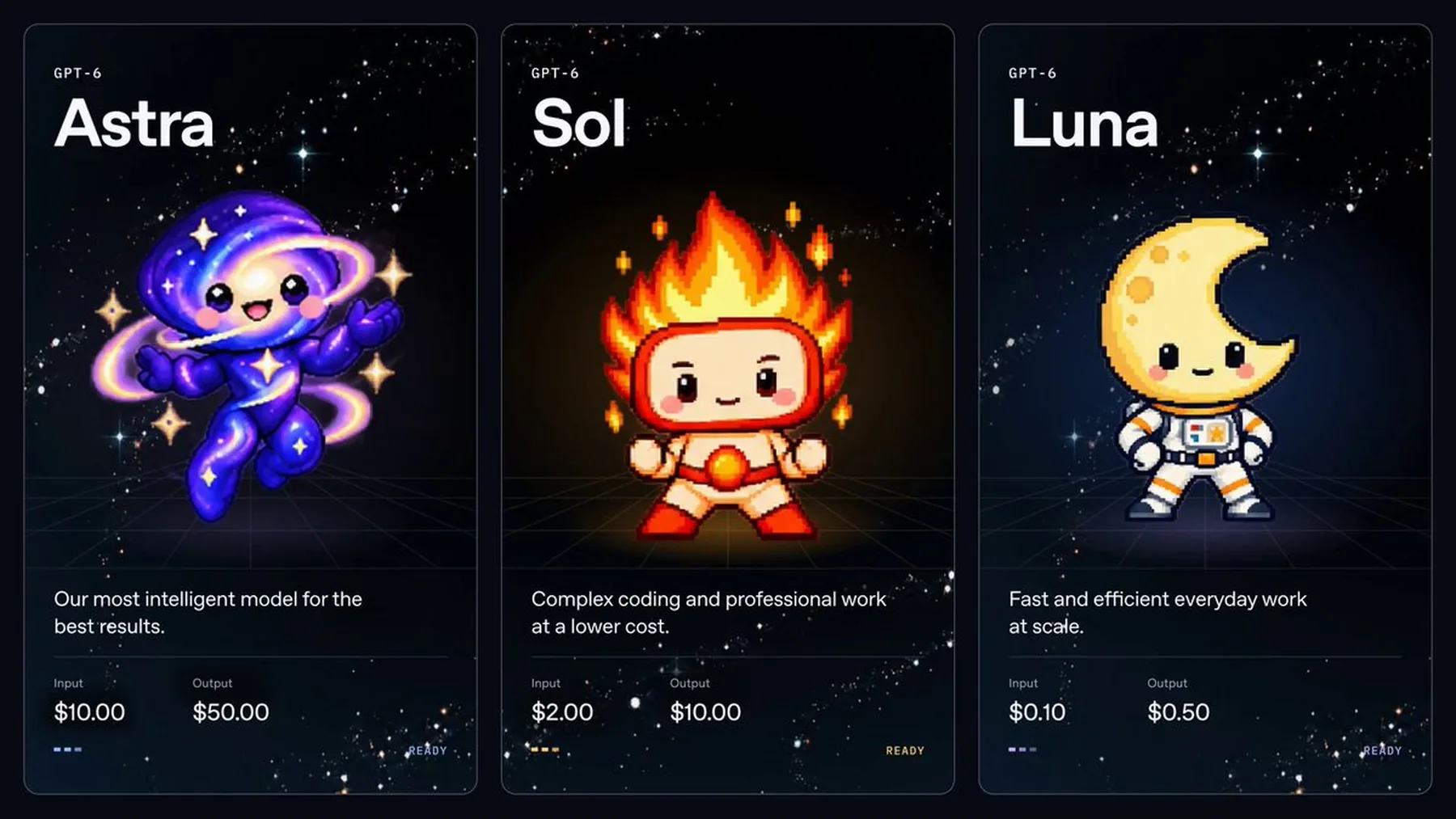
OpenAI describes Astra as its most intelligent model for the best results. Sol is positioned for complex coding and professional work at a lower cost; Luna for fast, efficient everyday work at scale.
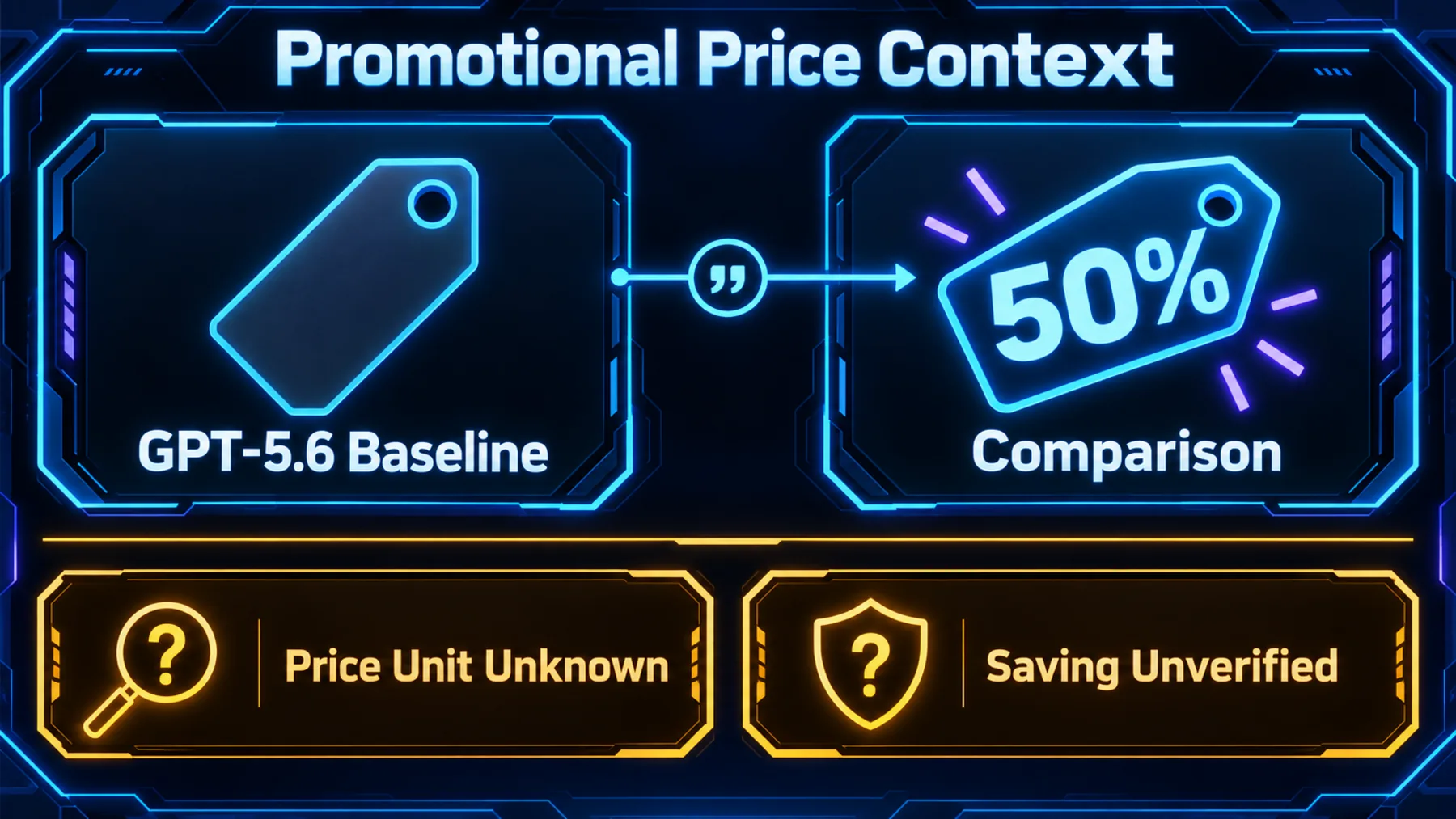
The same post says Sol and Luna have 50% lower API prices compared with GPT-5.6 promotional pricing. That is an attributed comparison with a named baseline, not a verified workload saving.
What OpenAI actually said
The focal post introduces Sol and Luna, attributes lower prices to caching and inference efficiencies, and names its comparison baseline.
The central statement is specific: OpenAI says it made caching and inference more efficient and is passing savings on through lower API prices for Sol and Luna.
What it does not establish is equally important. We do not have linked pricing terms, detailed availability information, benchmarks or evidence that either model will deliver a particular result on a particular workload.
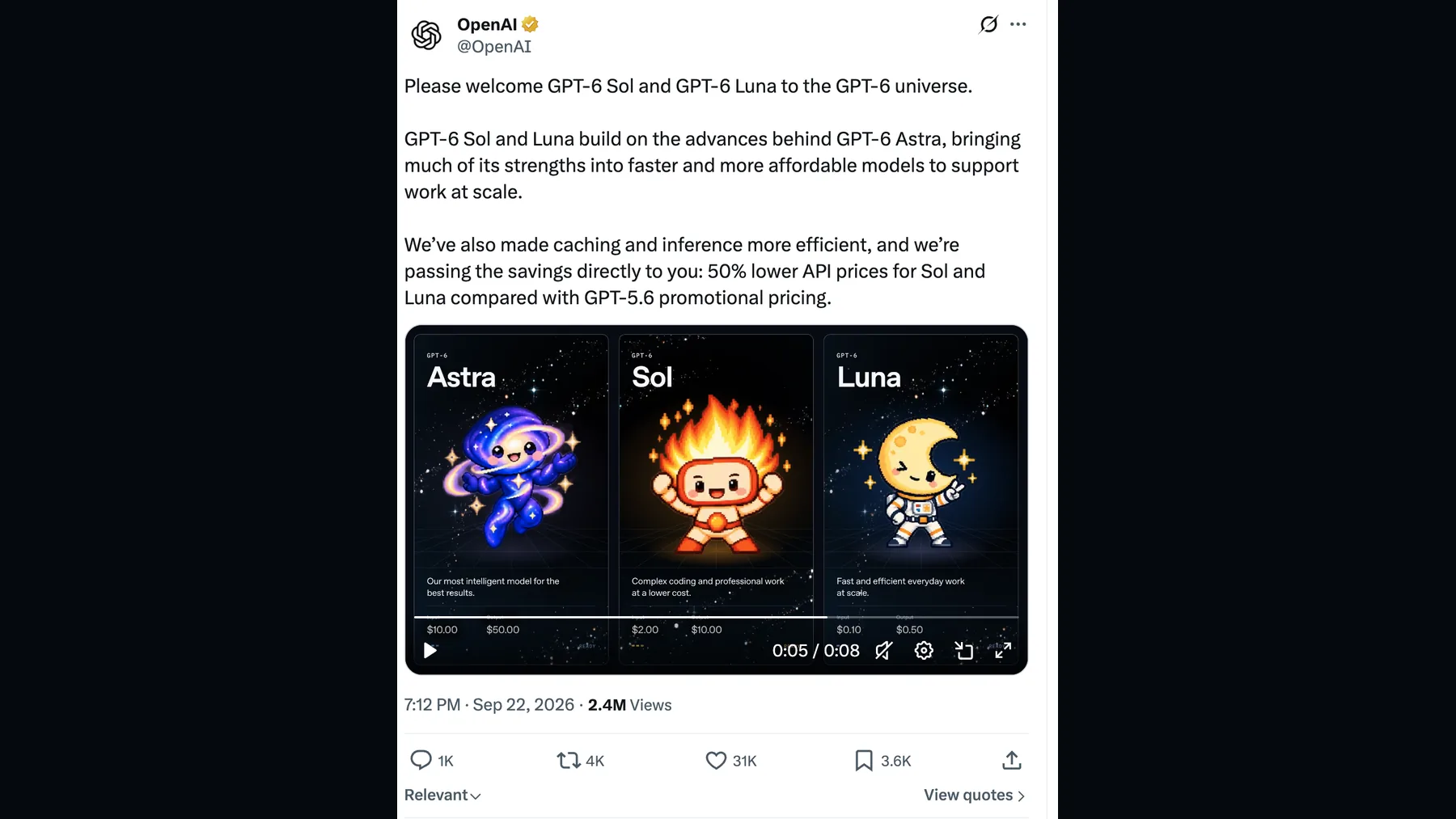
50% lower API prices for Sol and Luna compared with GPT-5.6 promotional pricing.
OpenAI
What OpenAI’s cards show
The attached visual supplies role descriptions and displayed input/output figures, but no price-unit basis.
OpenAI’s visual places visible input and output figures beside Astra, Sol and Luna. It also gives each a short role description, reinforcing the split between best results, professional work and everyday scale.
Those figures are useful capture evidence, not a billing calculator. Without a stated unit basis, we cannot translate them into a per-token cost, a workload total or a verified saving.
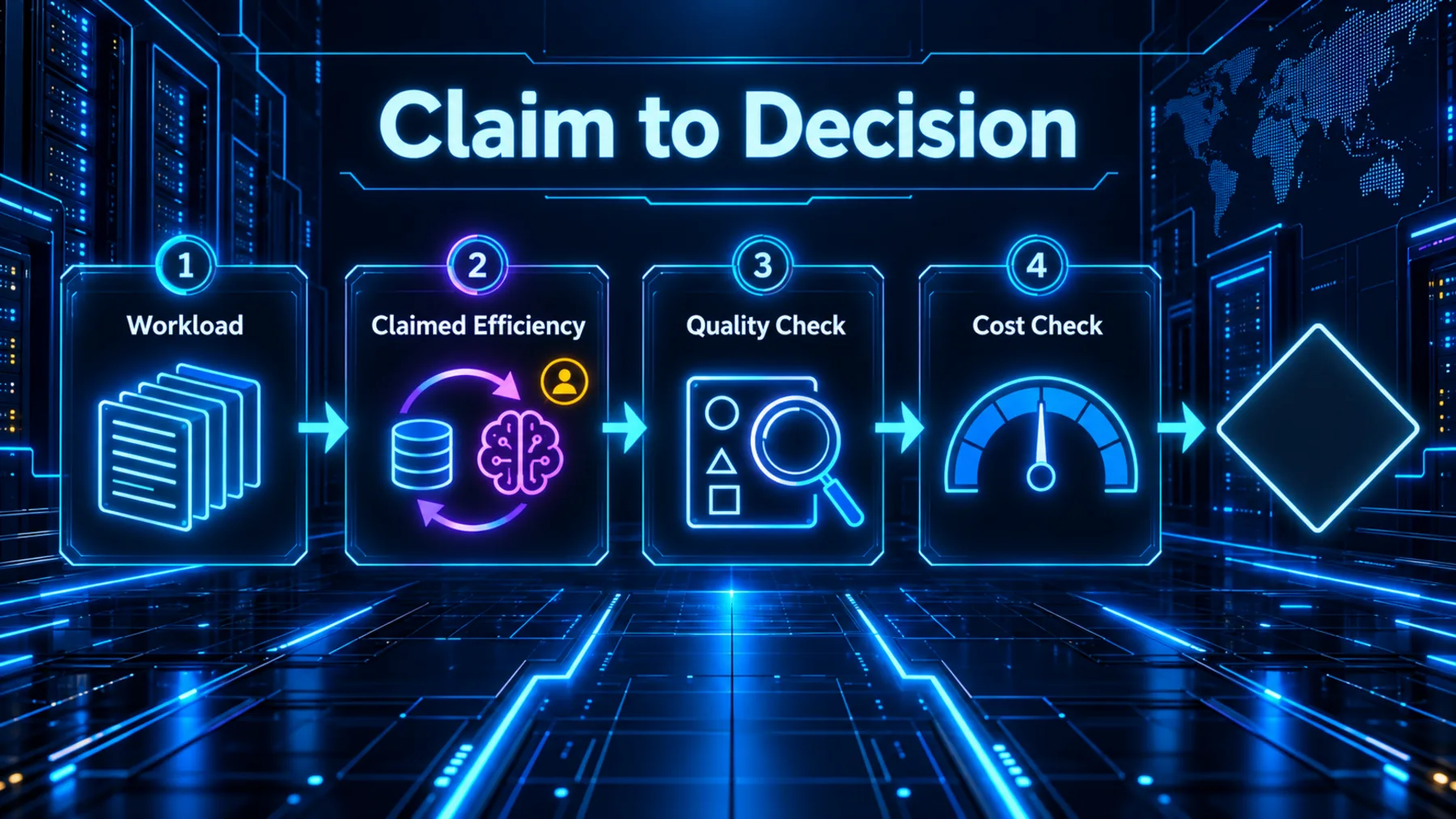
The claimed route to lower cost
OpenAI links the comparison to more efficient caching and inference; the result still needs a real-workload check.
OpenAI attributes the lower-price claim to improvements in caching and inference efficiency. That gives us a proposed mechanism, but not enough detail to judge how it will affect any specific task.
The sensible next move is to separate the claim from the decision. We can compare outputs on work we genuinely need done, then look at the quality and the bill that follow.
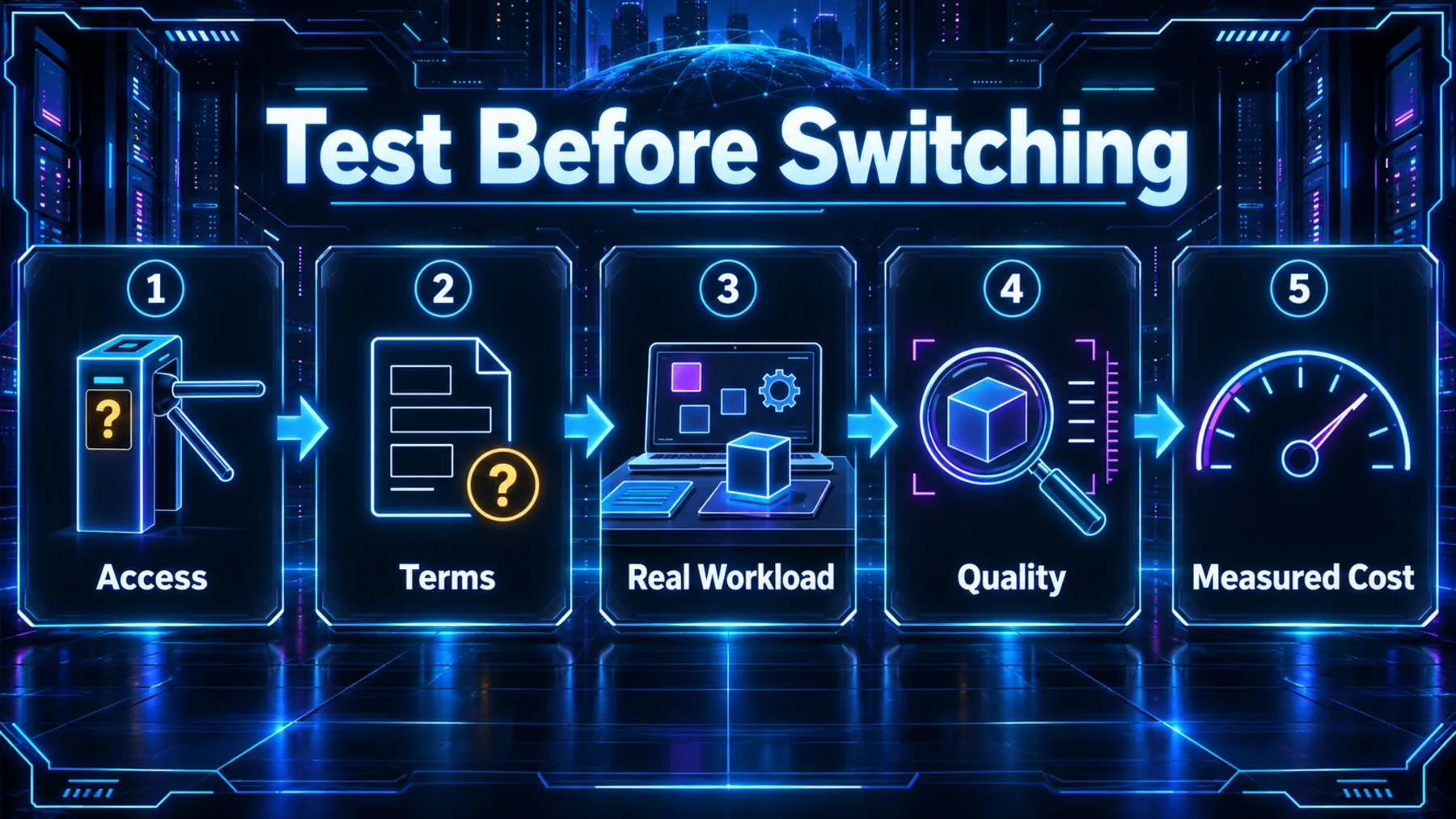
How we would test the choice
Check the official terms, run one meaningful task through each viable option, then compare quality and measured cost.
First, establish what is actually available to us and what the official terms say. The supplied post does not answer those questions, so they remain checks rather than conclusions.
Then run the same representative workload through the viable models. Keep the brief, success criteria and evaluation consistent. We can compare the output quality with the cost shown for those runs before deciding whether a switch makes sense.
A role map, not a buying verdict
OpenAI has made a useful positioning claim. We still need the missing terms and a workload test before treating it as a cost decision.
Sol and Luna may widen the practical choices around the GPT-6 family. OpenAI’s stated roles give us a starting point, and its 50% comparison gives us a claim worth examining.
The stronger reading is the more careful one: use the post to frame the test, not to skip it. A useful choice depends on our workload, the quality we need and the price we actually pay.
The role split is a starting point. The buying decision begins when we test the work and the bill.
Altior analysis of OpenAI’s stated positioning
Run a workload check before choosing Sol or Luna
Complete this task exactly as written: Draft a 180-word briefing for a UK operations team explaining how an AI workflow could reduce manual invoice-triage time. Include three implementation steps, two risks, and one measurable success criterion. Use plain English, make no unsupported claims, and keep the response under 180 words. Run the same prompt separately with GPT-6 Sol and GPT-6 Luna. Save both outputs, note the elapsed time, assess which better meets the brief, and record the billed cost shown for each run. Do not infer a price unit from this comparison.Ready to copy
Test the claim before we change the model
Keep the unanswered questions visible: access, official terms, the price-unit basis, output quality and actual workload cost. Then test one meaningful task consistently before making a production choice.
Try the promptWhat remains to check
- Whether Sol and Luna are available to us under the relevant official terms.
- What unit basis applies to the displayed input and output figures.
- How each model performs on our representative workload.
- What the billed cost is for equivalent runs.