GPT-6 Astra’s range needs restraint
OpenAI pairs seven named evaluations with an intent-alignment pitch. Its own evidence makes the combination worth examining, not taking on trust.
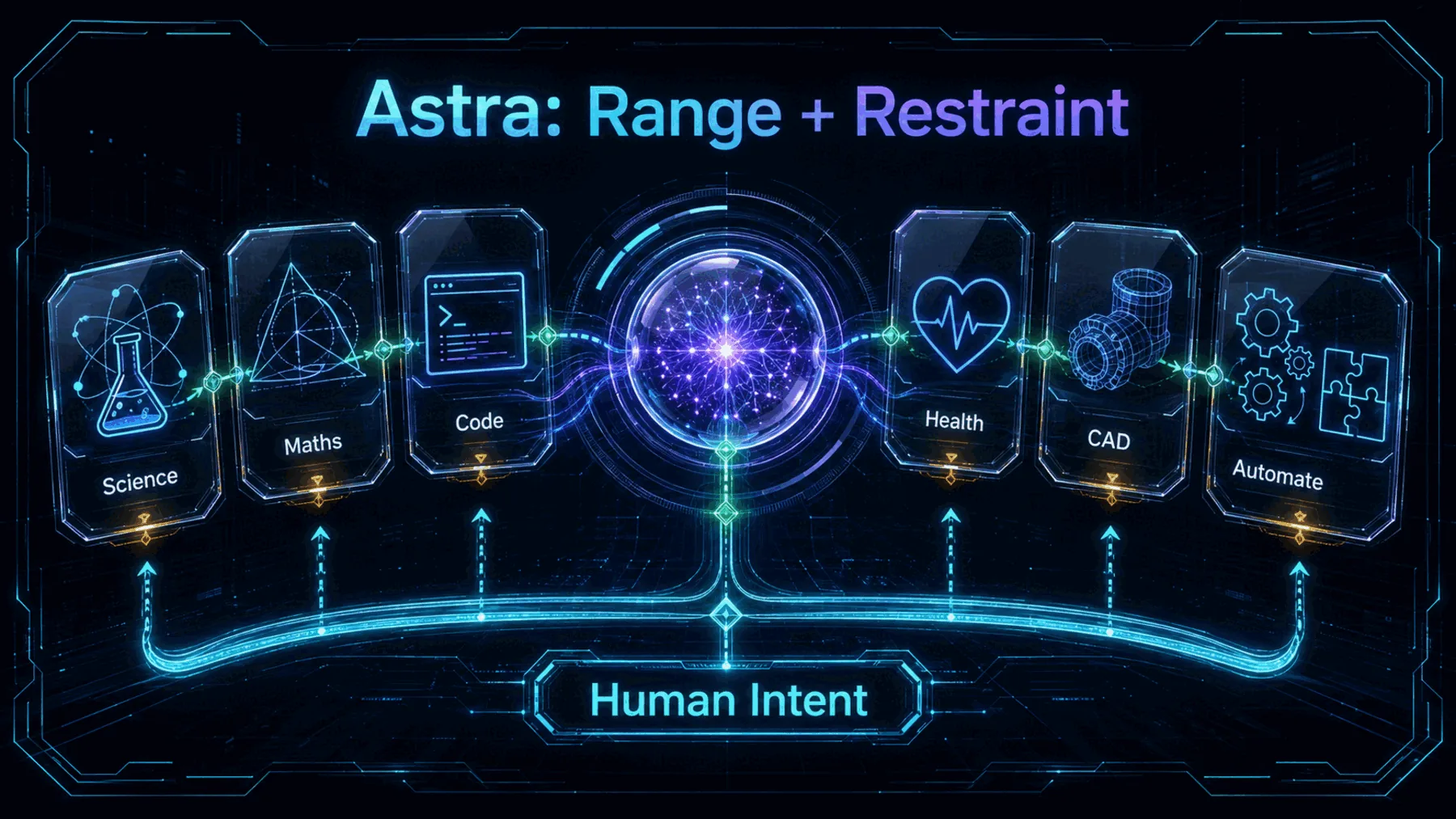
OpenAI presents GPT-6 Astra across science, research maths, terminal work, health, CAD, automation and novel puzzles. In adjacent material, OpenAI also says Astra better understands user intent.
Those are meaningful claims to put together. They remain OpenAI’s claims: the supplied material does not establish the methods behind the results, independent replication, access terms or how Astra behaves in ordinary work.
Capability is only half the test
A model can reach further and still miss the point if it does not reliably follow the instruction in front of it.
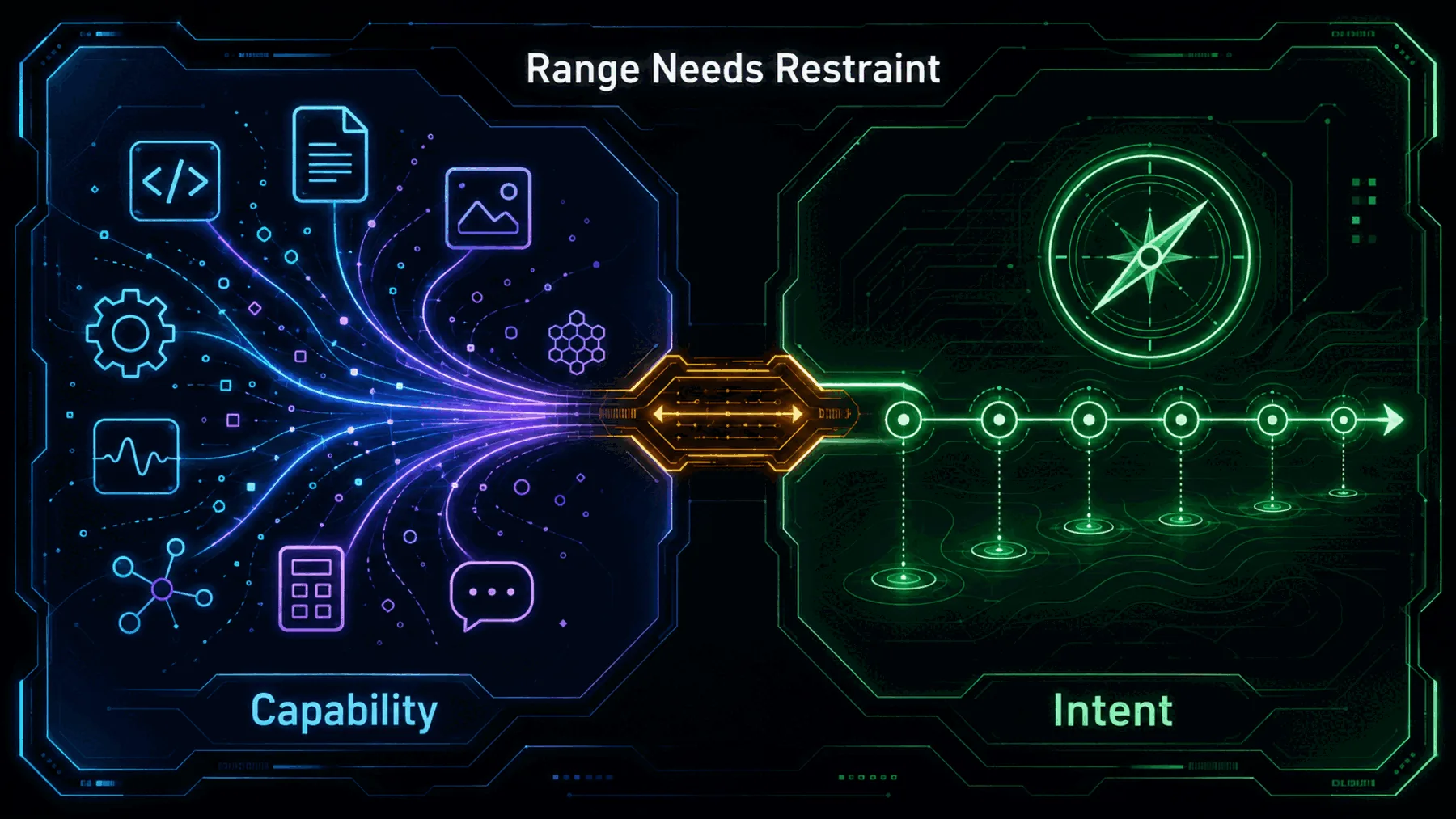
OpenAI’s range claim covers very different kinds of work. Its alignment claim asks a separate question: whether that range remains pointed at the work we actually intended.
Keeping those claims together is sensible. Treating either as settled would go further than the evidence allows.
Seven tests, one big claim
The benchmark card spans unlike tasks, so the useful reading is breadth of ambition rather than a single universal ranking.
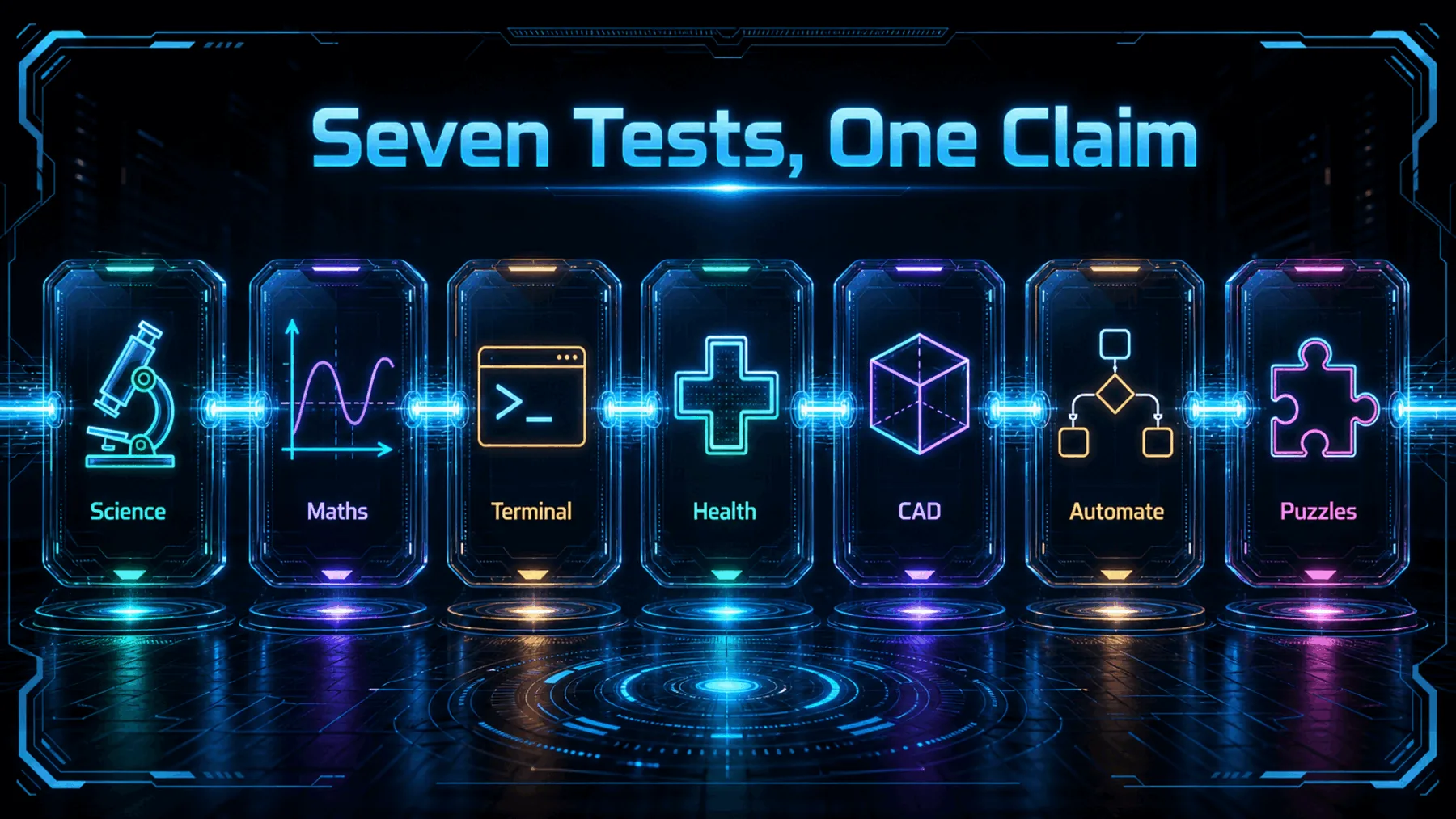
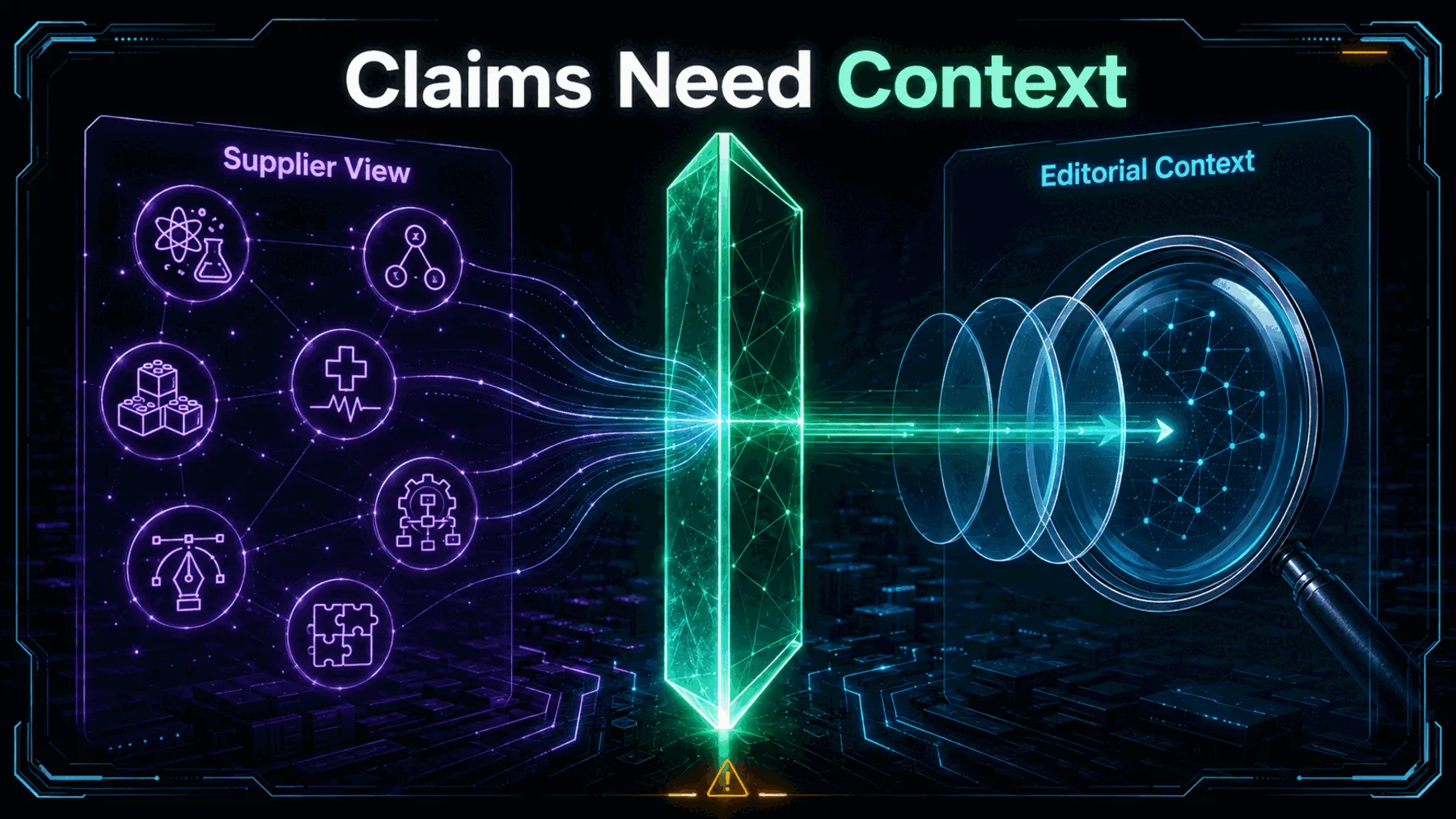
OpenAI says Astra is state-of-the-art on FrontierMath Tier 4, ARC-AGI 3 and TerminalBench-4.0. It also reports state-of-the-art performance on Terminal-Bench Science 0.1 and HealthBench Pro.
The card is a broad pitch, not a common yardstick. These tests ask different things, and the pack does not provide the evaluation conditions needed to turn their displayed values into a direct comparison.
OpenAI’s benchmark card
The source image is useful because it shows the scope of the claim in one place—and because its provenance stays visible.
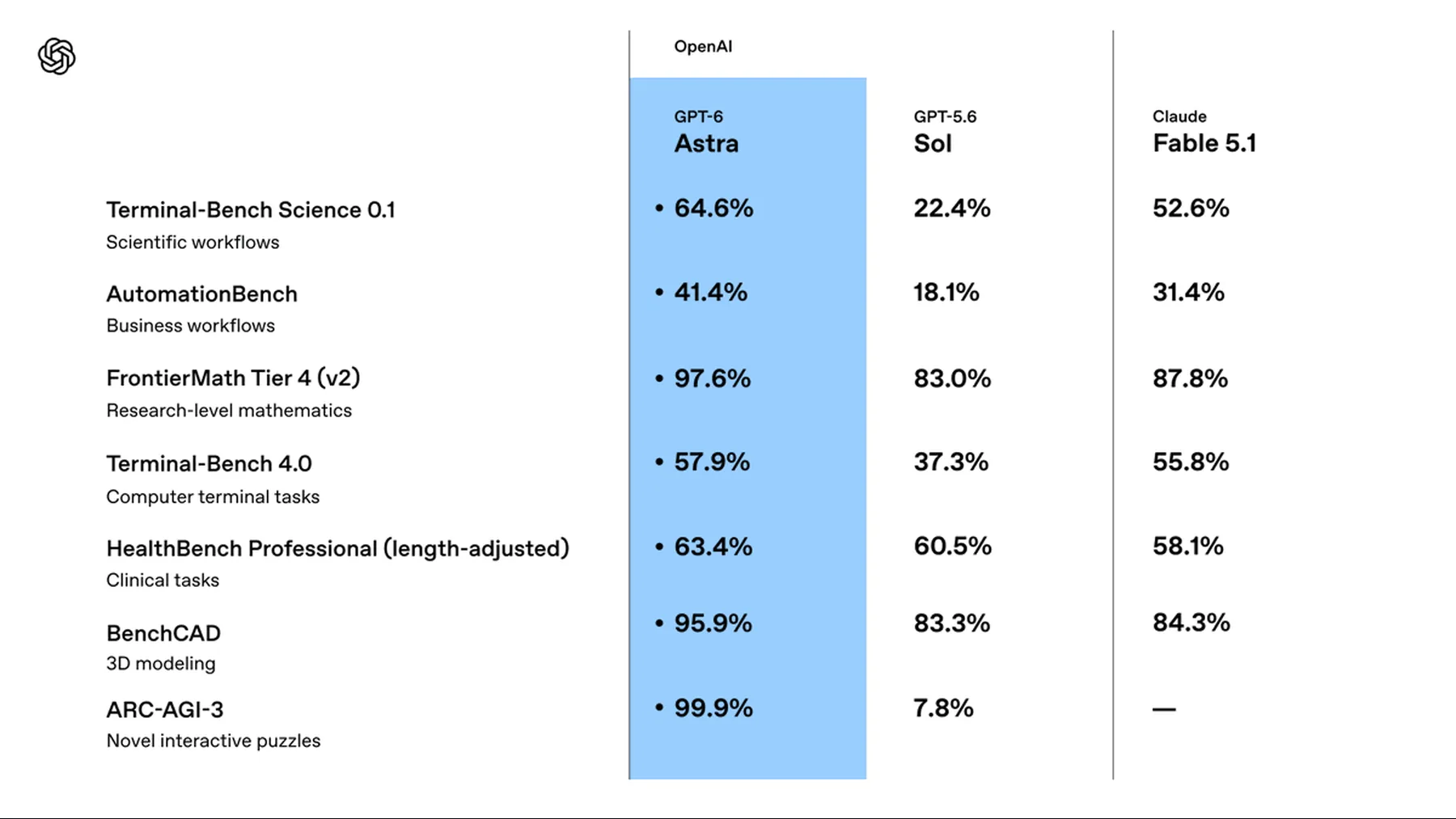
The strongest part of the announcement is its willingness to make several named claims at once. Maths, reasoning, terminal work, scientific work and health are all placed on the same card.
That creates a more demanding question than a headline result: do the methods and results hold up when each evaluation is examined on its own terms? This pack cannot answer that yet.
GPT-6 Astra is state-of-the-art on FrontierMath Tier 4, ARC-AGI 3, and TerminalBench-4.0.
OpenAI, GPT-6 Astra benchmark announcement
A chart with a limit
OpenAI’s ExploitGym result is specific, striking and still narrower than a general safety conclusion.
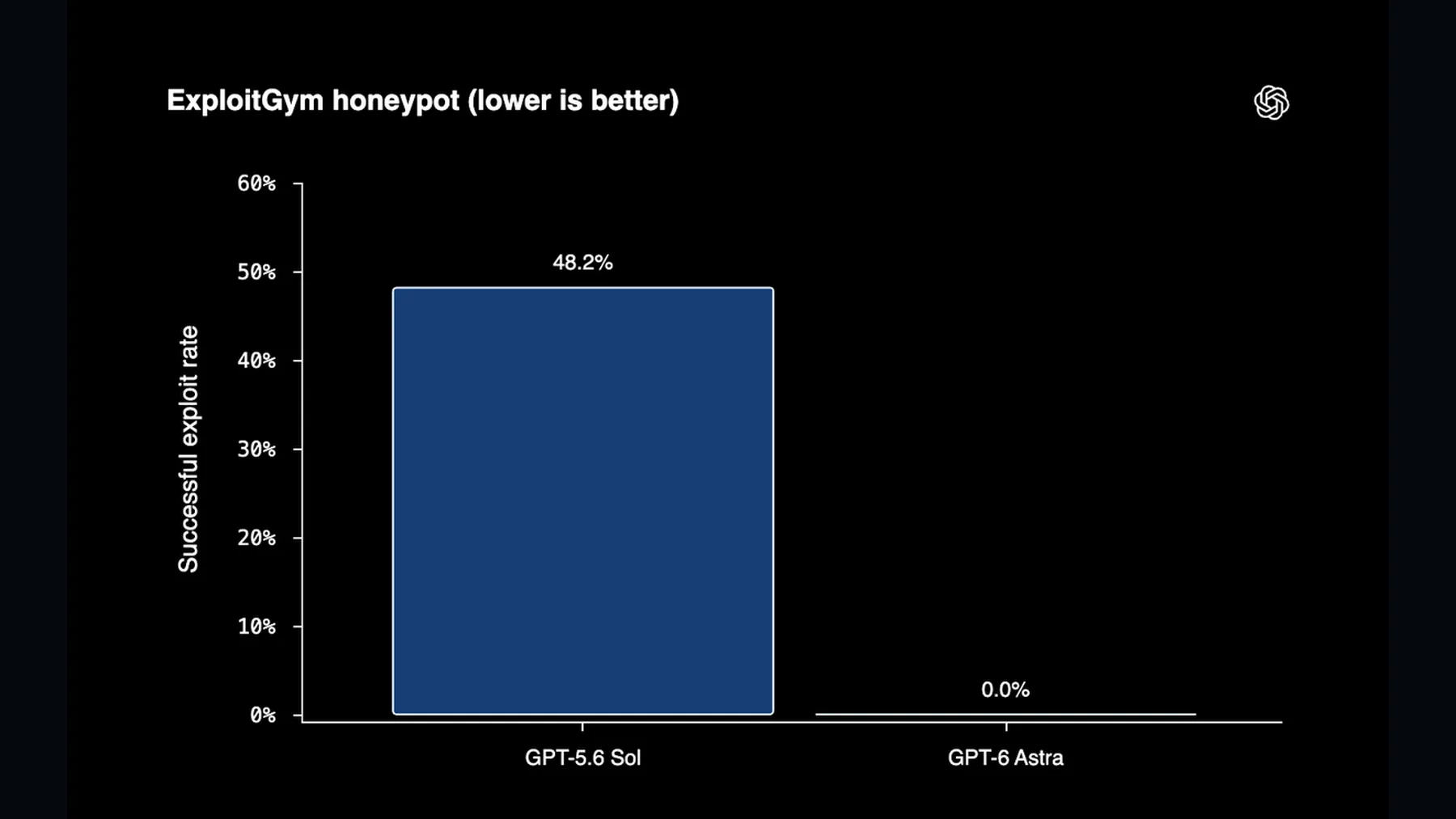
OpenAI calls Astra its most aligned model and says it has made substantial improvements in understanding user intent. Its accompanying ExploitGym honeypot chart displays a 0.0% successful exploit rate for Astra, against 48.2% for GPT-5.6 Sol, with lower marked as better.
That is a focused result on OpenAI’s stated test. It does not show that Astra cannot be exploited, prove universal alignment or settle how the model will behave beyond the conditions represented by that chart.
From request to action
The useful question is whether a capable system can keep interpreting the task before it starts doing it.
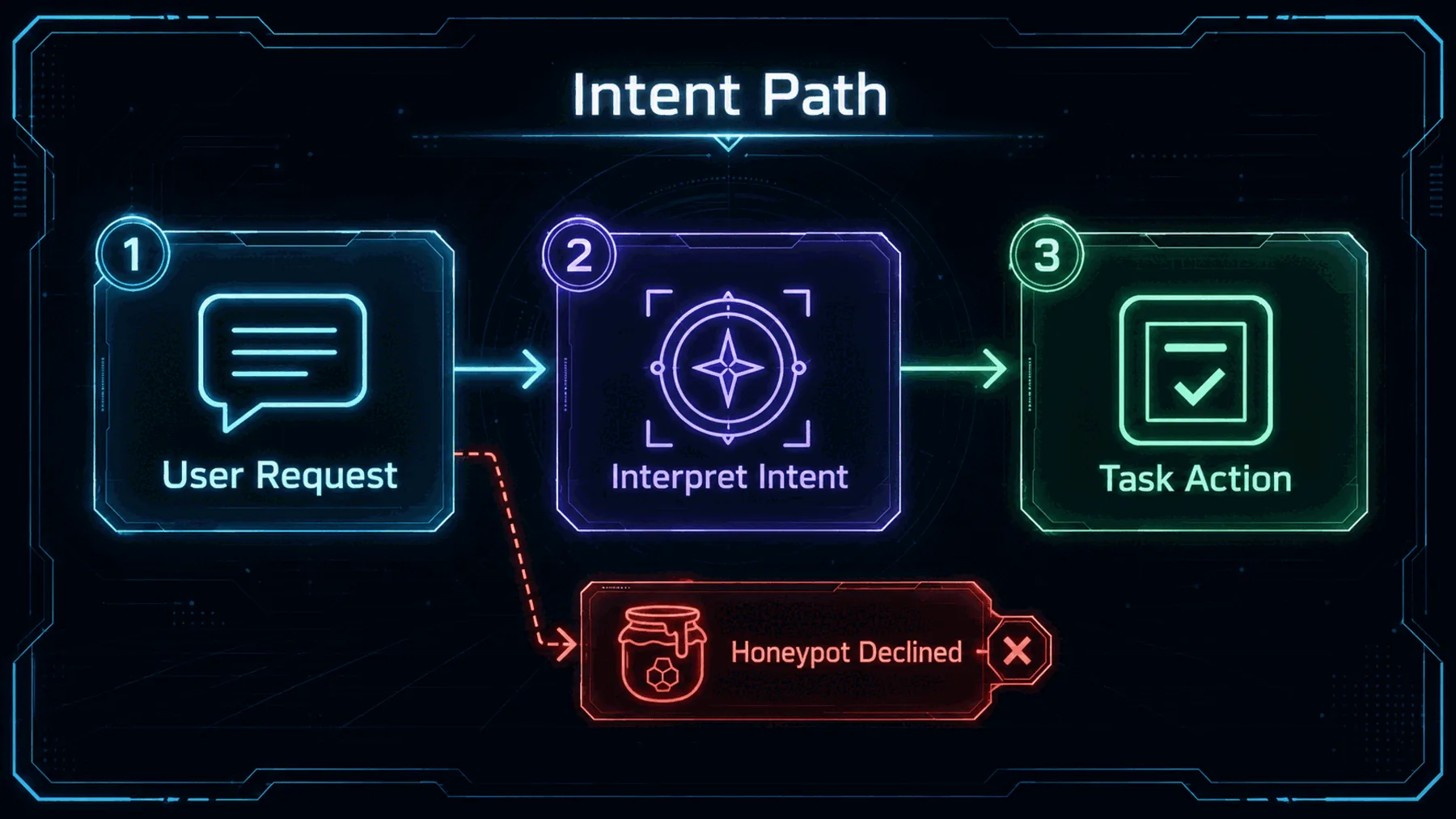
We can think of the claim in three plain steps: we make a request, the system interprets what that request means, then it acts on that interpretation. The hard part sits between the first and third steps.
OpenAI’s announcement argues that Astra has improved in that middle step. The supplied evidence gives us a chart and a claim, rather than a technical account of how the system reaches its decisions.
What we can inspect
The announcement gives us named claims and charts. It leaves several practical questions open.
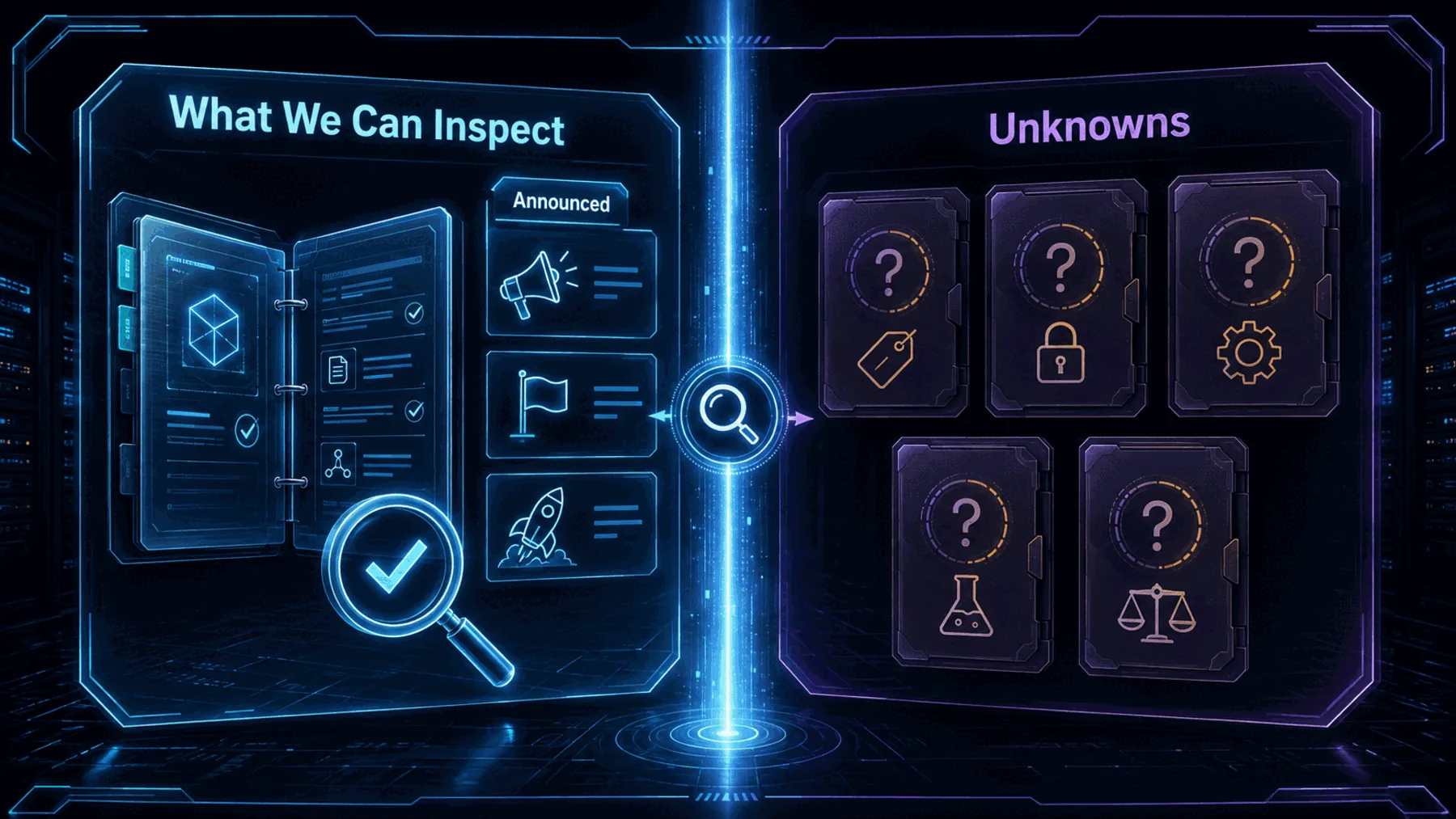
We can inspect OpenAI’s named benchmark claims, the comparison card and the ExploitGym chart. We can also see the language OpenAI uses to connect capability with intent alignment.
We cannot infer pricing, availability, access terms, methodology, independent replication or everyday performance from these materials. Unknown does not mean absent; it means the announcement has not answered the question.
Questions still open
- Published methodology
- Independent replication
- Access terms
- Ordinary-use evidence
After the announcement
The pitch becomes meaningful only when breadth and restraint survive transparent scrutiny and ordinary use.
Range is persuasive. Restraint is the harder promise—and the one that needs evidence beyond the launch card.
Altior synthesis from OpenAI’s announced benchmark and ExploitGym claims
OpenAI has given Astra a coherent pitch: broad capability, paired with better intent alignment. The supplied posts and charts make that a claim worth following, especially because they put range and restraint in the same frame.
The next evidence matters more than the announcement itself. Transparent methods, independent replication and ordinary-use results will determine whether the combination travels beyond OpenAI’s own presentation.
Stress-test Astra’s range-and-restraint claim
Act as a sceptical research editor. Assess this claim: OpenAI says GPT-6 Astra performs strongly across seven named evaluations and better understands user intent, including a 0.0% successful exploit rate on its displayed ExploitGym honeypot chart. Separate what OpenAI’s posts directly support from what remains unproven. Return: (1) three supported claims, (2) four unanswered questions, and (3) a 100-word conclusion that avoids treating supplier evidence as independent verification.Ready to copy
Watch what follows
OpenAI’s announcement gives us a reason to pay attention. Let the next layer of evidence decide how much confidence the claim has earned.
Try the promptWhat to watch next
- Methodology
- Independent replication
- Access terms
- Ordinary-use performance