When AI work buys time
OpenAI says lower-cost models and a paid fast lane turn a model choice into a workflow decision.
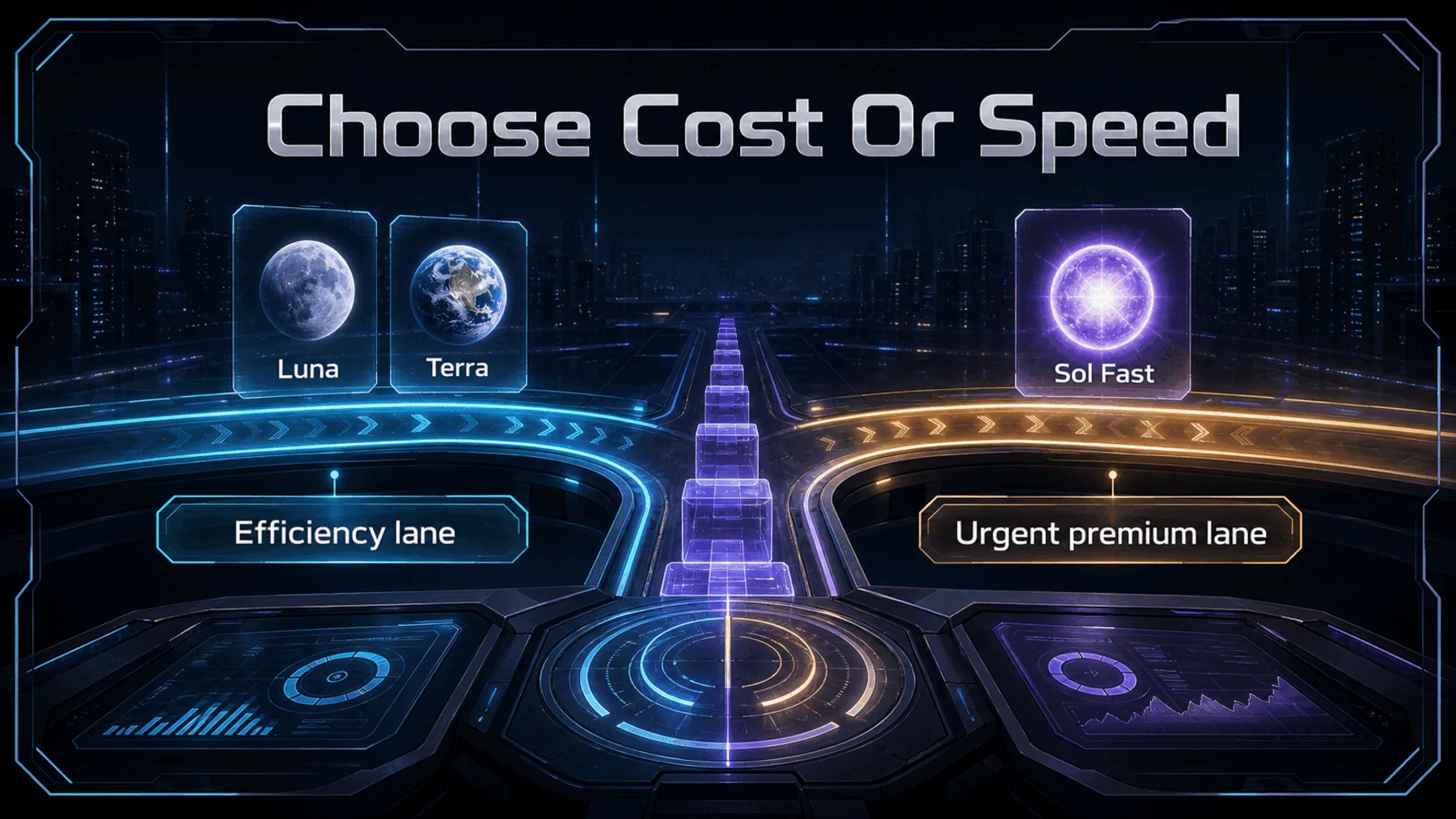
OpenAI says GPT-5.6 Luna is 80% cheaper and GPT-5.6 Terra is 20% cheaper. In the same announcement, it offers GPT-5.6 Sol Fast mode in the API at up to 2.5 times Standard processing speed for twice the Standard price.
That puts a practical choice in front of us. A long run of routine checks may reward lower processing cost; an urgent API task may justify paying more to wait less. The approved evidence gives relative changes, not a complete bill.
The constraint sets the lane
Cost and speed become useful only when we know which one the job cannot afford to lose.
A model price cut does not settle the value of a workflow. Repeated review, classification and checking work can make a lower unit cost matter quickly. A blocked urgent task has a different cost: time.
OpenAI frames Sol Fast as an API option for that second case. Its up-to-2.5-times-speed claim and twice-Standard-price trade-off are supplier statements, so they describe the offer rather than a measured outcome for our workflow.
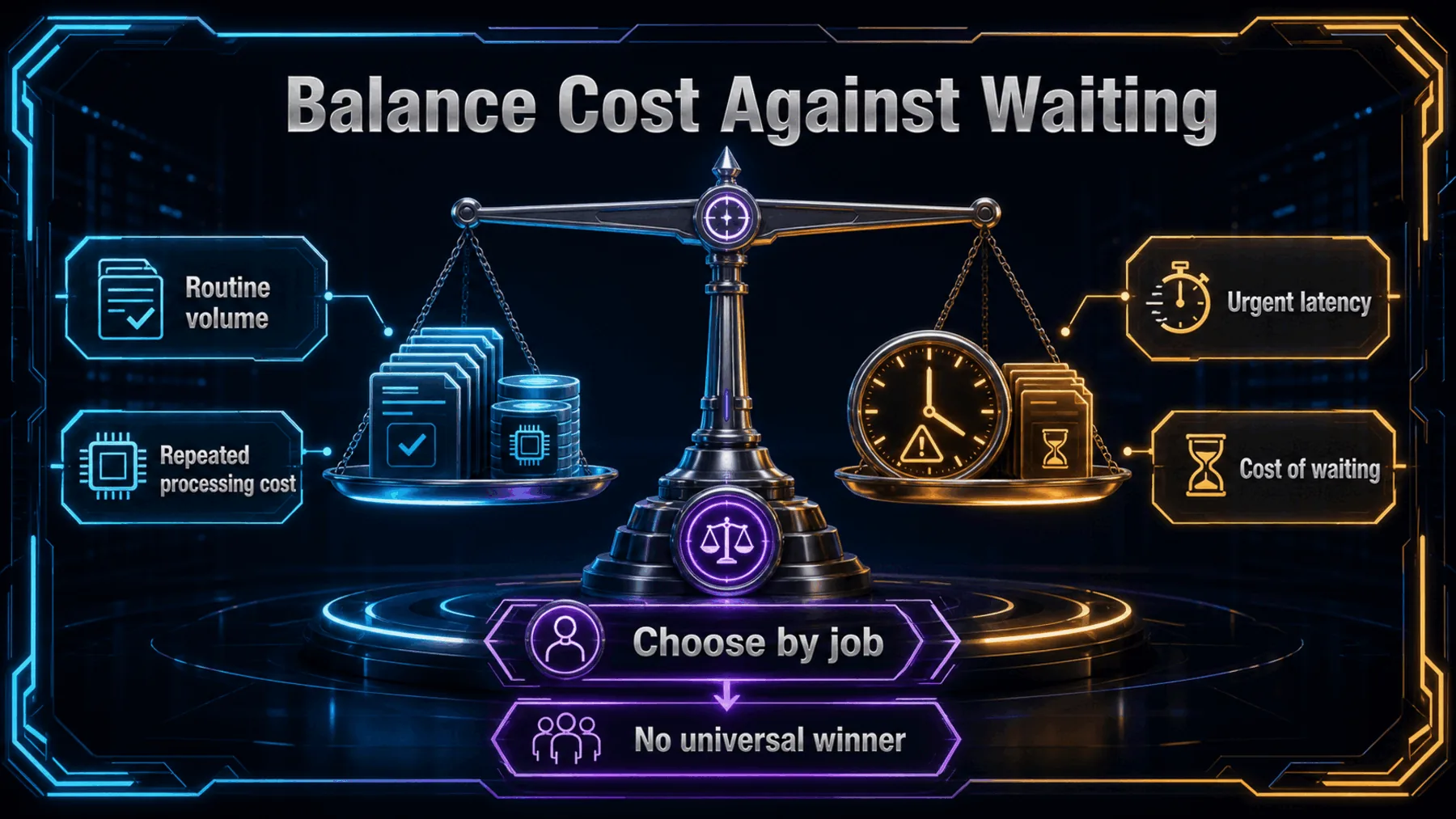
Four figures frame the choice
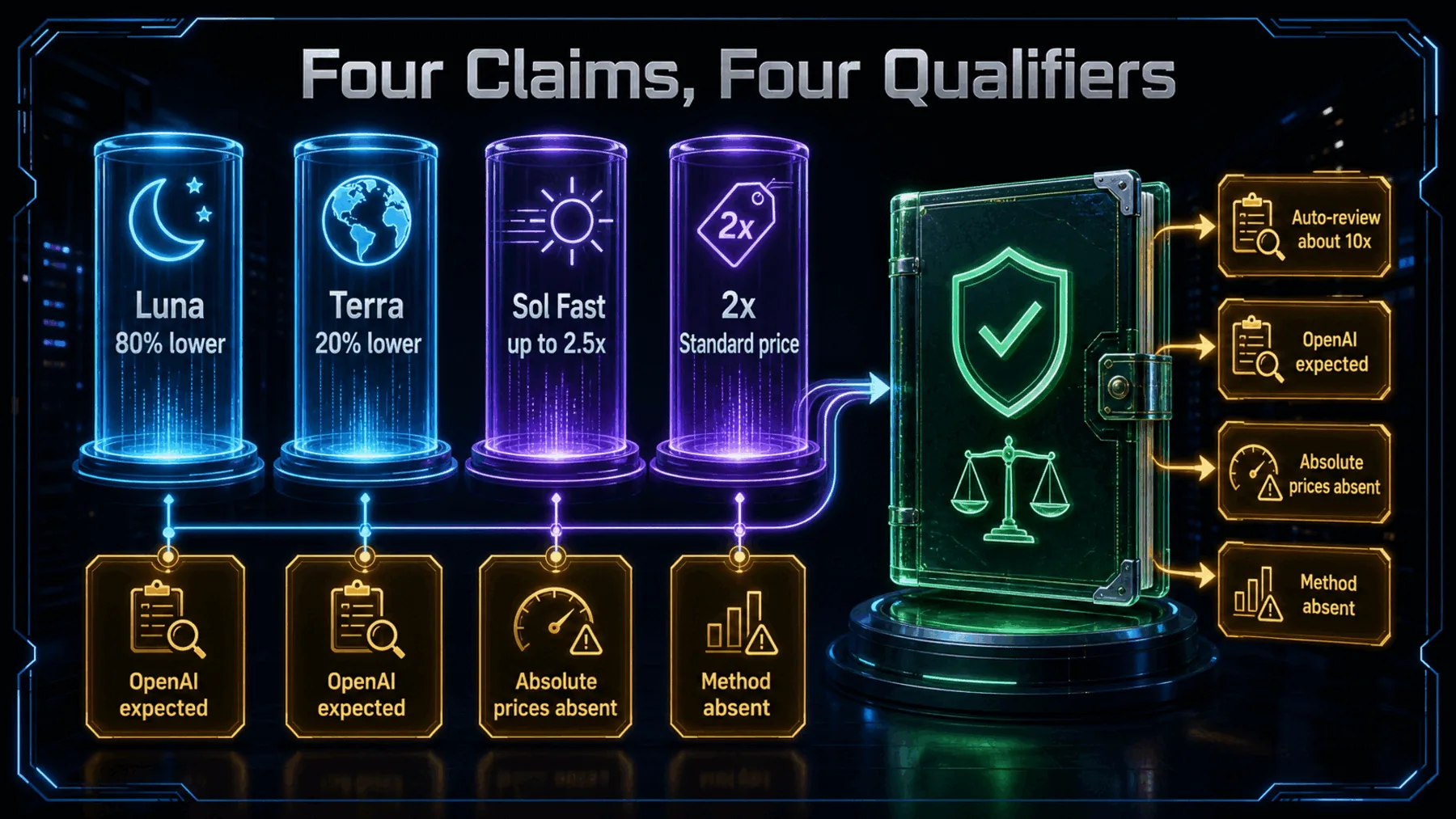
OpenAI’s thread offers relative signals, not a full cost model.
OpenAI says Luna’s price falls by 80% and Terra’s by 20%. It also says lower Luna and Terra prices are reflected in how usage is counted in Codex and ChatGPT Work, without giving the underlying prices, quotas or billing mechanics in the approved pack.
For Sol, OpenAI says Fast mode offers up to 2.5 times the speed of Standard processing at twice the Standard price in the API. The comparison is useful as a trade-off, but the pack does not provide workload definitions, measured latency or benchmark method.
A stated frontier, not proof
OpenAI’s linked article card names a price-performance frontier; the captured thread supplies the evidence boundary.
The approved OpenAI thread links to an official article titled “Advancing the price-performance frontier with GPT-5.6”. That title explains the company’s framing: lower prices and faster processing are being presented as related choices.
The linked article itself was not captured as an approved source. We can use the visible title and the thread’s words, but we cannot import its uncaptured body, pricing tables or additional claims.
Starting today, we are reducing prices for GPT-5.6 Luna by 80% and GPT-5.6 Terra by 20%, and offering a faster option for GPT-5.6 Sol in the API.
OpenAI, X thread
The chart has a boundary
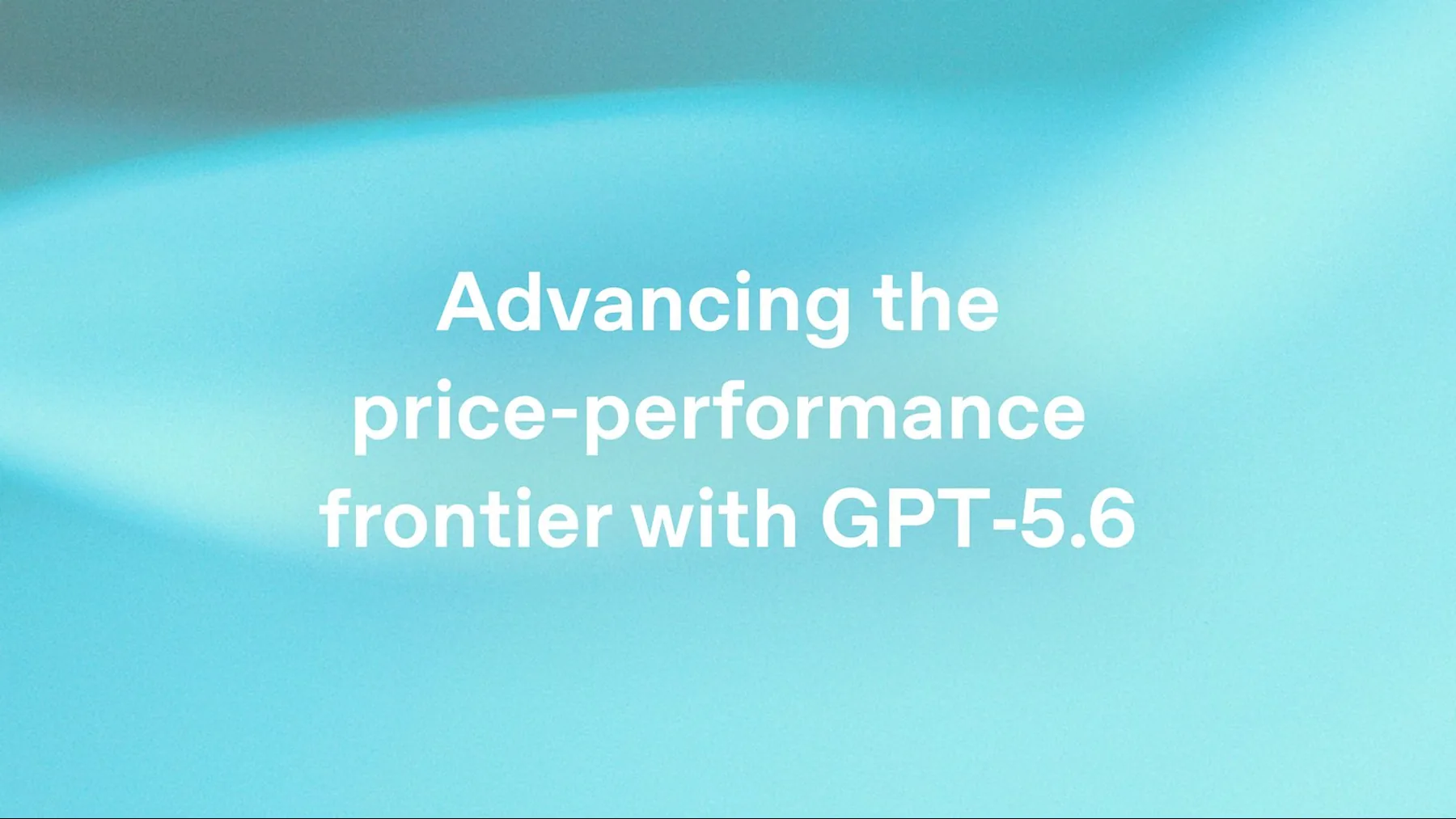
A supplier-published chart can show how OpenAI presents the release without settling the comparison for us.
OpenAI published an Artificial Analysis Intelligence Index v4.1 chart in the captured thread. It is relevant because it shows the evidence surface OpenAI chose to support its price-performance framing.
Publication is not independent validation. The approved pack does not establish the chart’s methodology, values or comparisons, so the visual remains OpenAI’s supporting material rather than a benchmark we can treat as settled.
Route the job, then decide
The useful split is between work we repeat and work we cannot leave waiting.
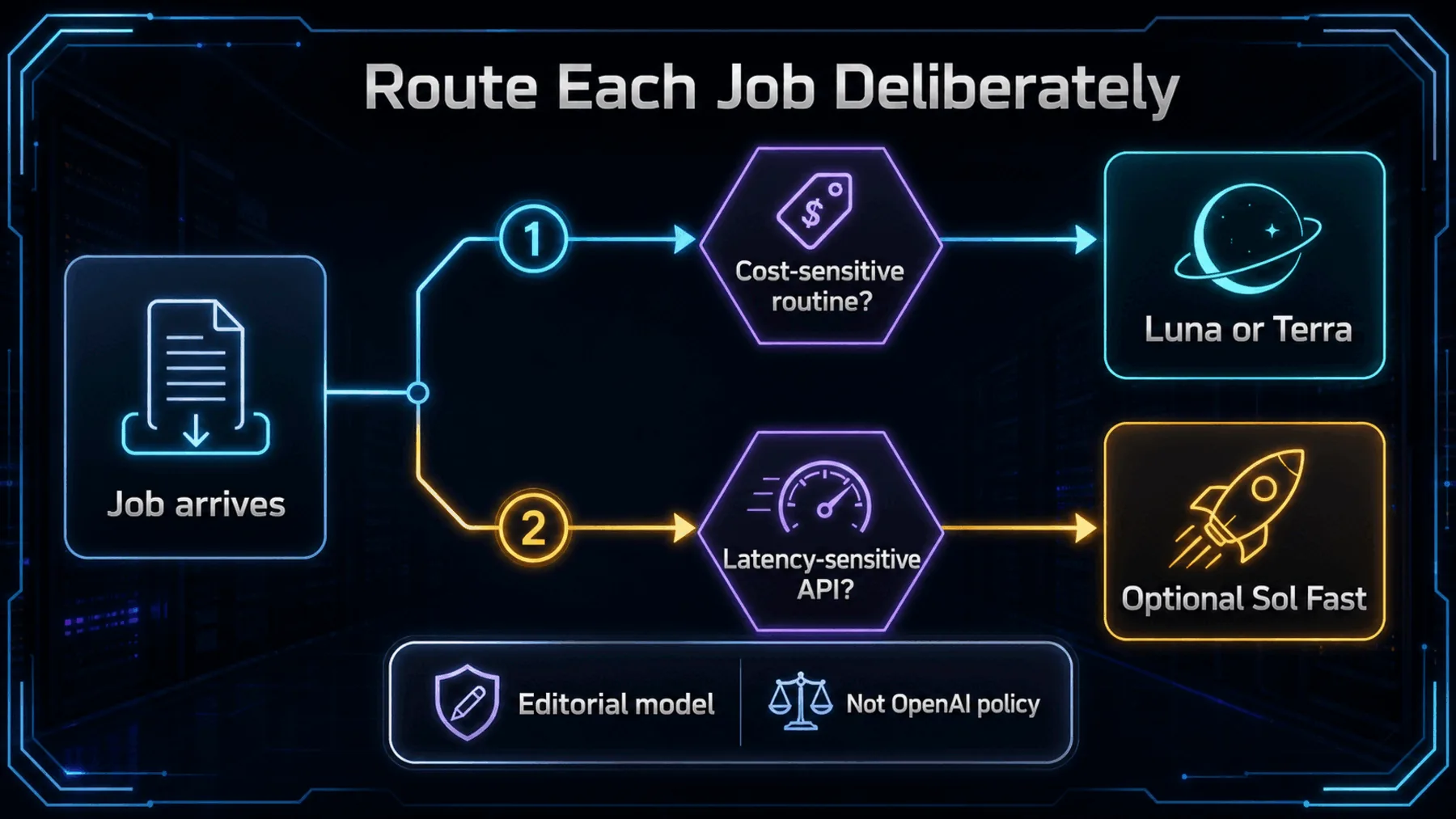
We can begin with the job rather than the product name. If the task is routine, high-volume and tolerant of delay, lower processing cost is the sensible question. If it is an urgent API task, the value of a faster response may outweigh the premium.
This is an editorial decision model, not OpenAI’s disclosed routing policy. The point is to make the cost–time trade-off explicit before treating any headline percentage as a recommendation.
Volume
Will we repeat this task enough for processing cost to compound?
Urgency
Would waiting for the result create a larger operational cost?
Evidence
Do we have our own prices, usage and latency data to make the call?
What changes in our queue
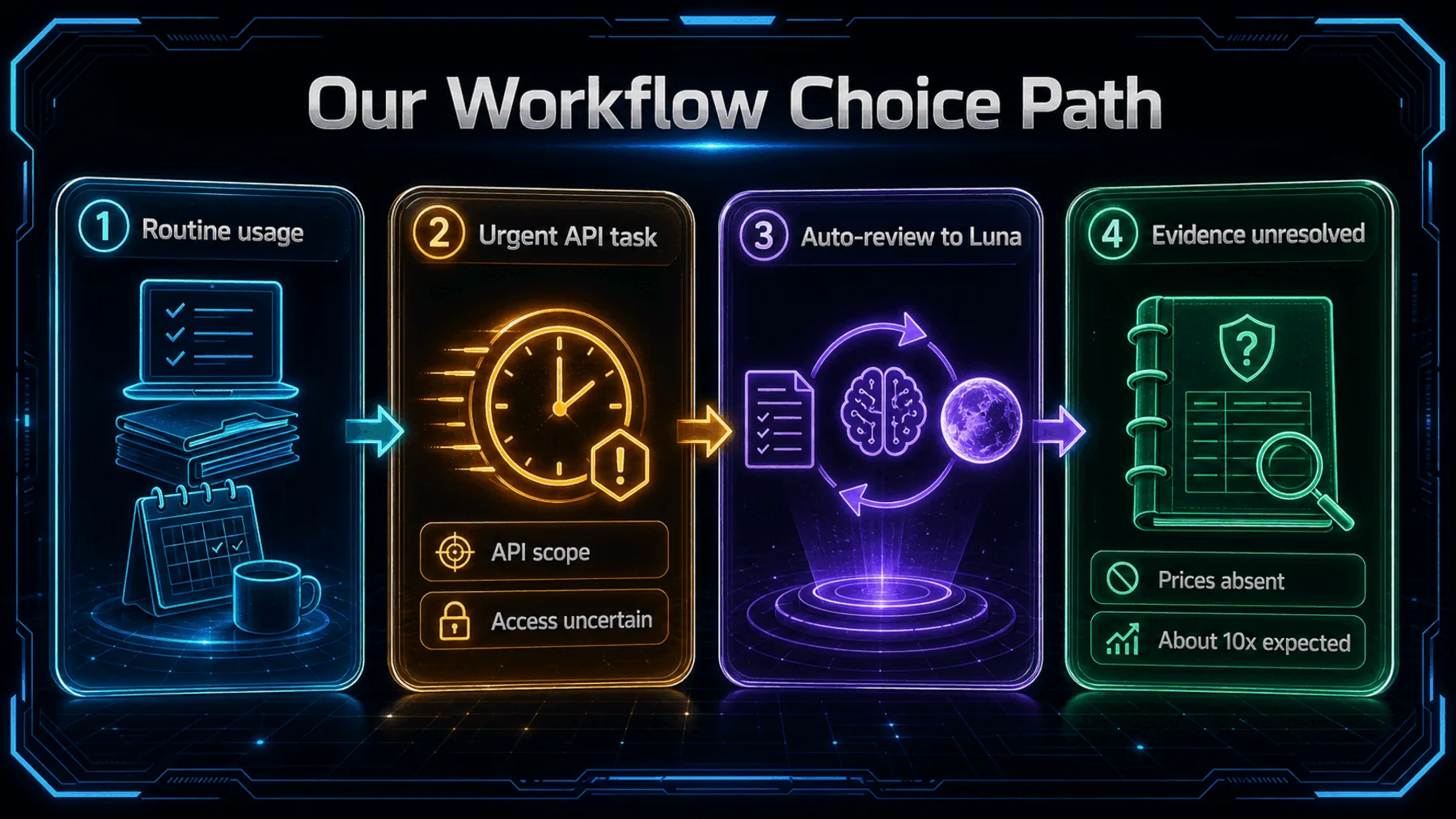
The announcement becomes useful when we separate routine work, urgent work and an expected workflow saving.
For routine work, OpenAI says Luna and Terra’s lower prices change how usage is counted in Codex and ChatGPT Work. We still need the relevant plan, usage and price details before turning that statement into a forecast.
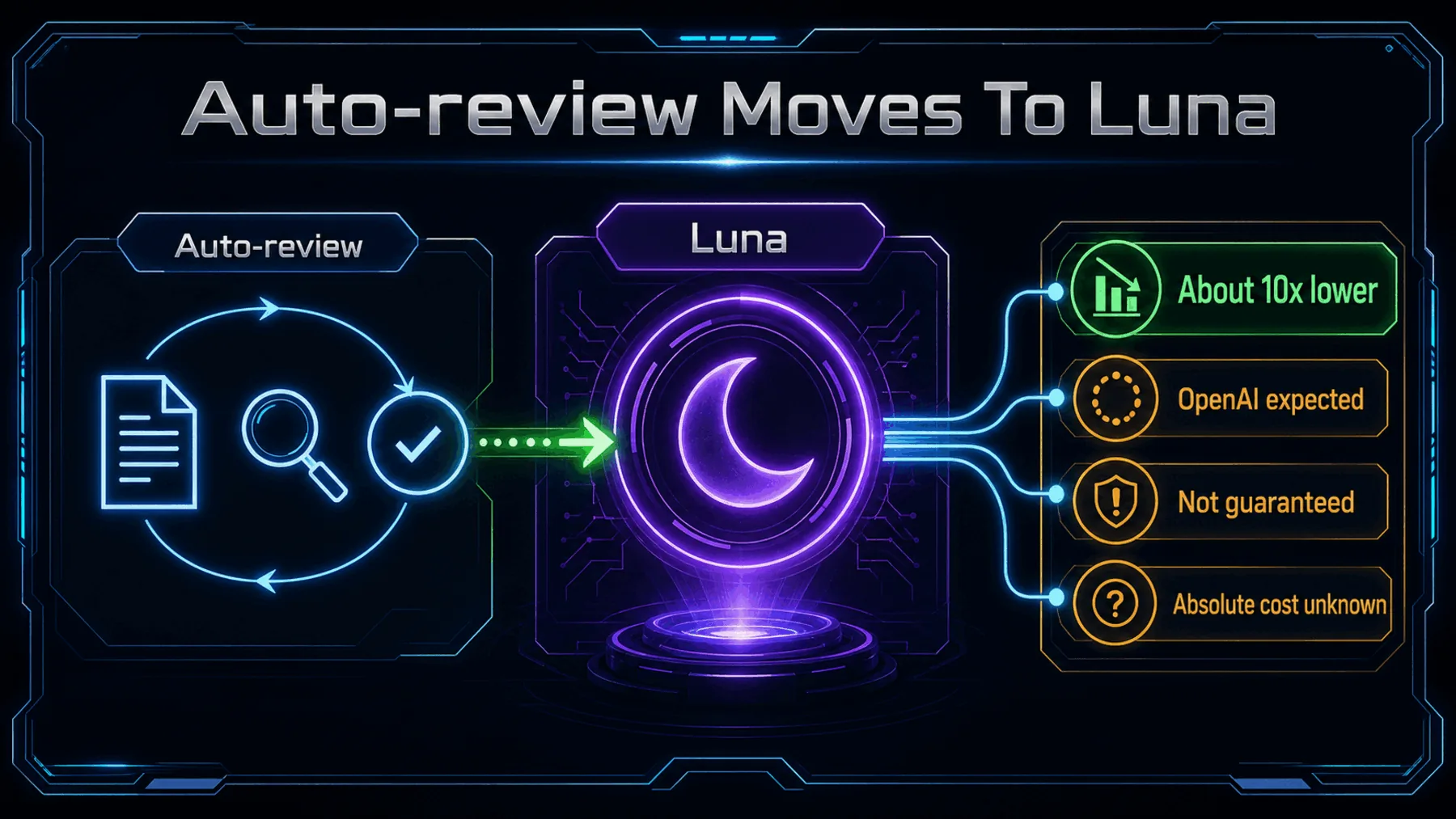
For urgent API work, Sol Fast is a paid option with a stated speed trade-off. Then there is Auto-review: OpenAI says it is moving to Luna and expects the combination to cost about 10 times less. “Expect” and “about” matter; neither substitutes for realised savings in our own workflow.
Routine
Use lower-cost claims as a prompt to inspect repeated usage.
Urgent
Treat Fast mode as a paid API trade-off for time-sensitive work.
Auto-review
Measure realised savings after the move to Luna rather than assuming the headline result.
Efficiency becomes a choice
The release matters because cost and waiting time can now be weighed job by job.
OpenAI’s announcement is more useful than a simple price-cut story. It presents lower-cost options for repeated work and a premium fast lane for time-sensitive API tasks, then points to Auto-review as a possible workflow-level saving.
The stronger reading is still cautious. Relative price changes, a supplier-posted chart and an expected cost reduction do not complete a workflow calculation. We need our own usage, timing and price evidence before deciding which lane earns the work.
Efficiency is becoming selectable: save on the work we repeat, or pay to move the work that cannot wait.
Synthesis from OpenAI’s announcement, SRC-001
Choose the lane before the model
We have a queue of 2,000 routine review items and one urgent API task that must return within 15 minutes. Create a two-column decision note: routine work and urgent work. For each, state whether to prioritise lower processing cost or lower waiting time, name the evidence we would need before choosing a model, and list assumptions separately. Do not invent prices, latency measurements, quotas, or quality results. End with three checks we should run against our own usage data.Ready to copy
Measure the constraint first
Before changing a workflow, map routine volume, urgent response requirements and the price or usage evidence the announcement does not provide. Then test the claimed saving against what we actually run.
Try the promptWhat to verify next
- Absolute prices
- Workload definition
- Latency evidence
- Auto-review outcome