GPT-5.6 in Kiro: the structure behind the 82% claim
OpenAI and AWS report a narrow cost result for GPT-5.6 Terra in Kiro. The more useful question is what the model sees before it starts coding.
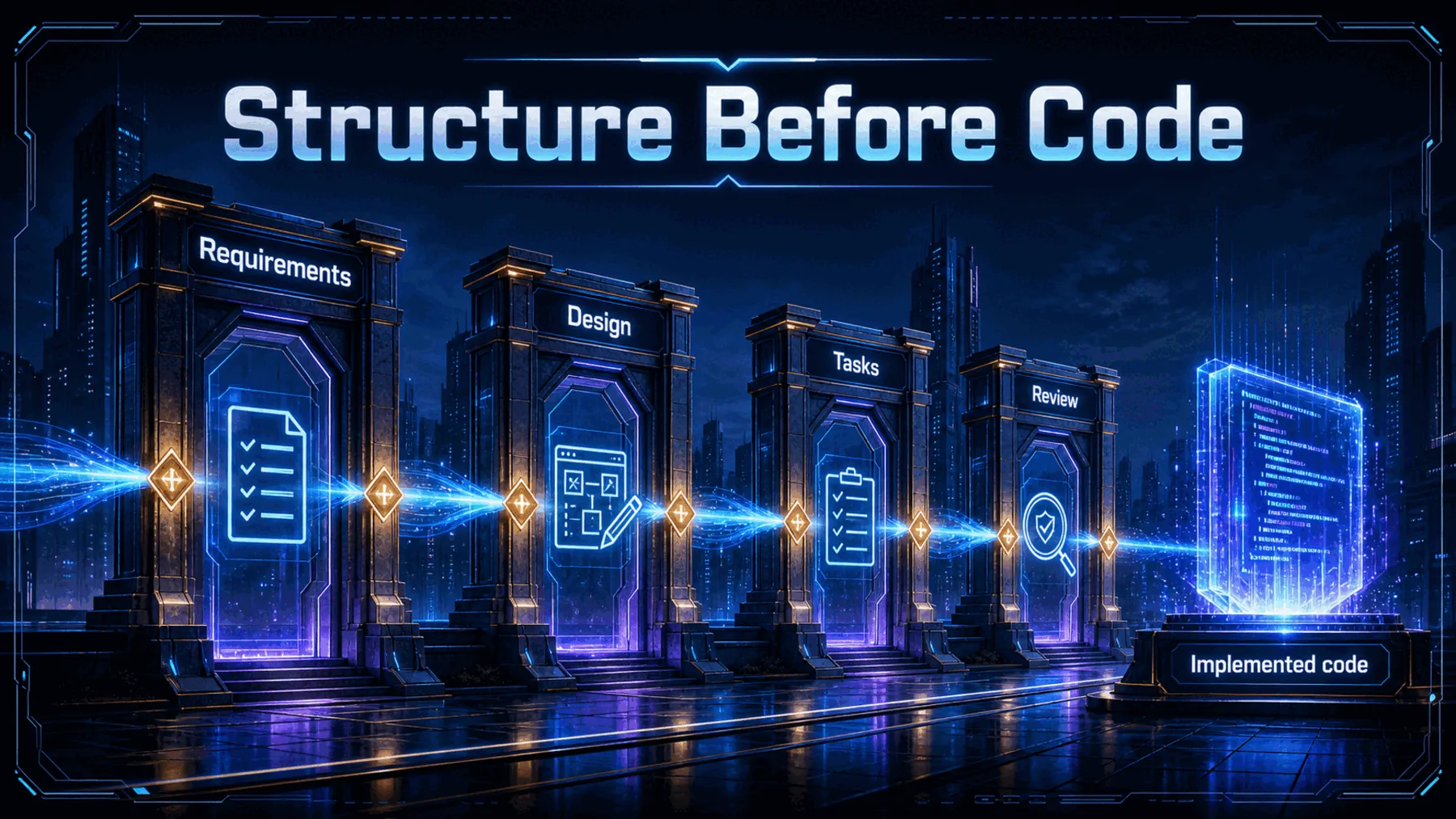
OpenAI says the GPT-5.6 family is now available in Kiro, bringing Sol, Terra and Luna into a development environment built around planning, building, review and testing. Its reported result belongs to Terra, successful tasks in Kiro and Terminal-Bench 2.1; it is not a general saving claim for everyday coding.
That boundary matters. A model can only act on the job it is given, and Kiro’s proposition is to define that job before implementation begins.
Context before code
Kiro’s stated approach starts by turning an idea into a workable brief for the model.
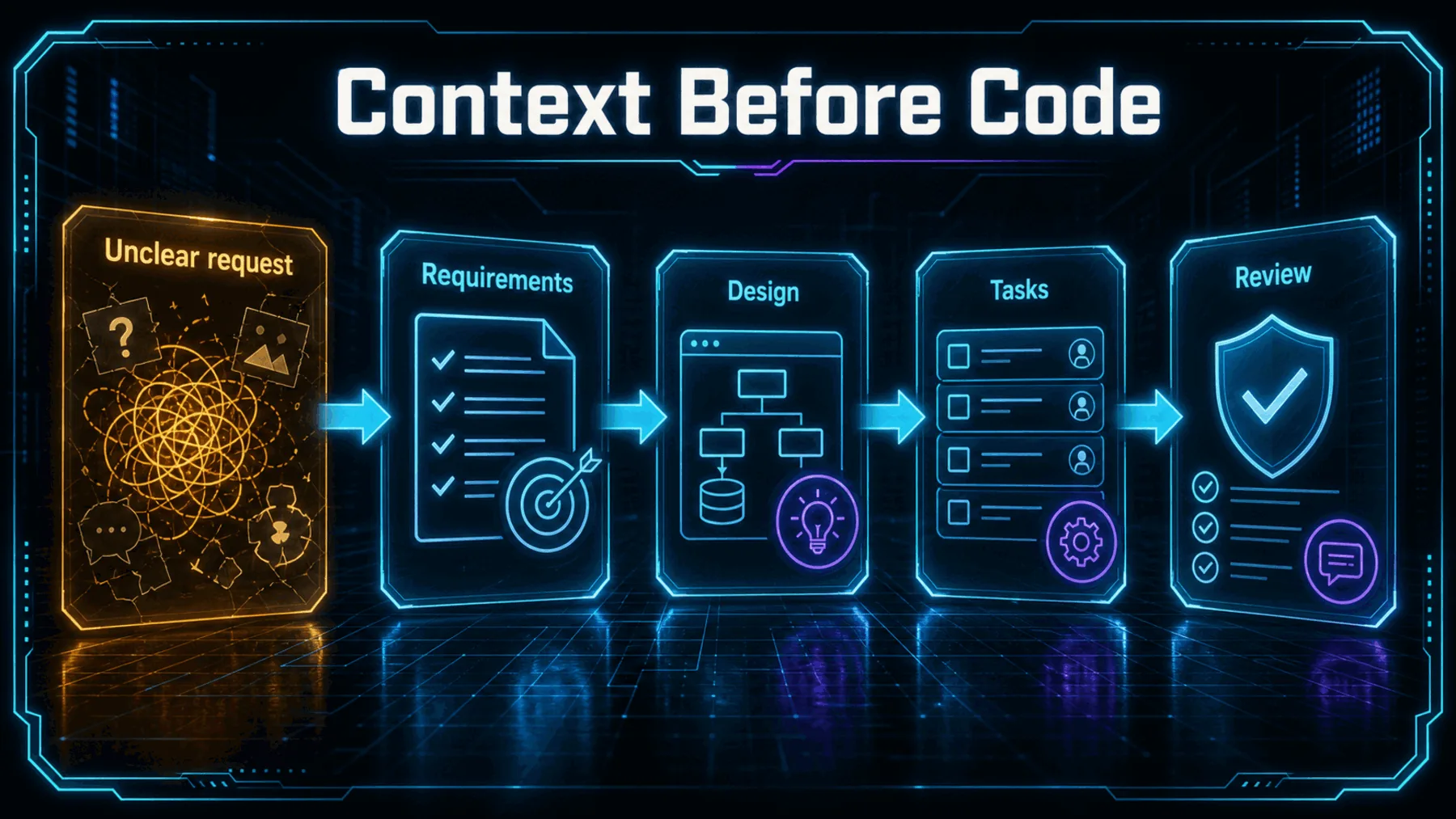
A vague request leaves too much judgement implicit. OpenAI says Kiro turns high-level intent into clear requirements, technical designs and executable tasks, giving GPT-5.6 context about the system and the intended implementation.
The practical value is less mystical than the headline suggests. We get a clearer place to examine scope, constraints and trade-offs before code changes start to accumulate.
What is on the table
Three GPT-5.6 names, one qualified benchmark result and no published ranking between them.
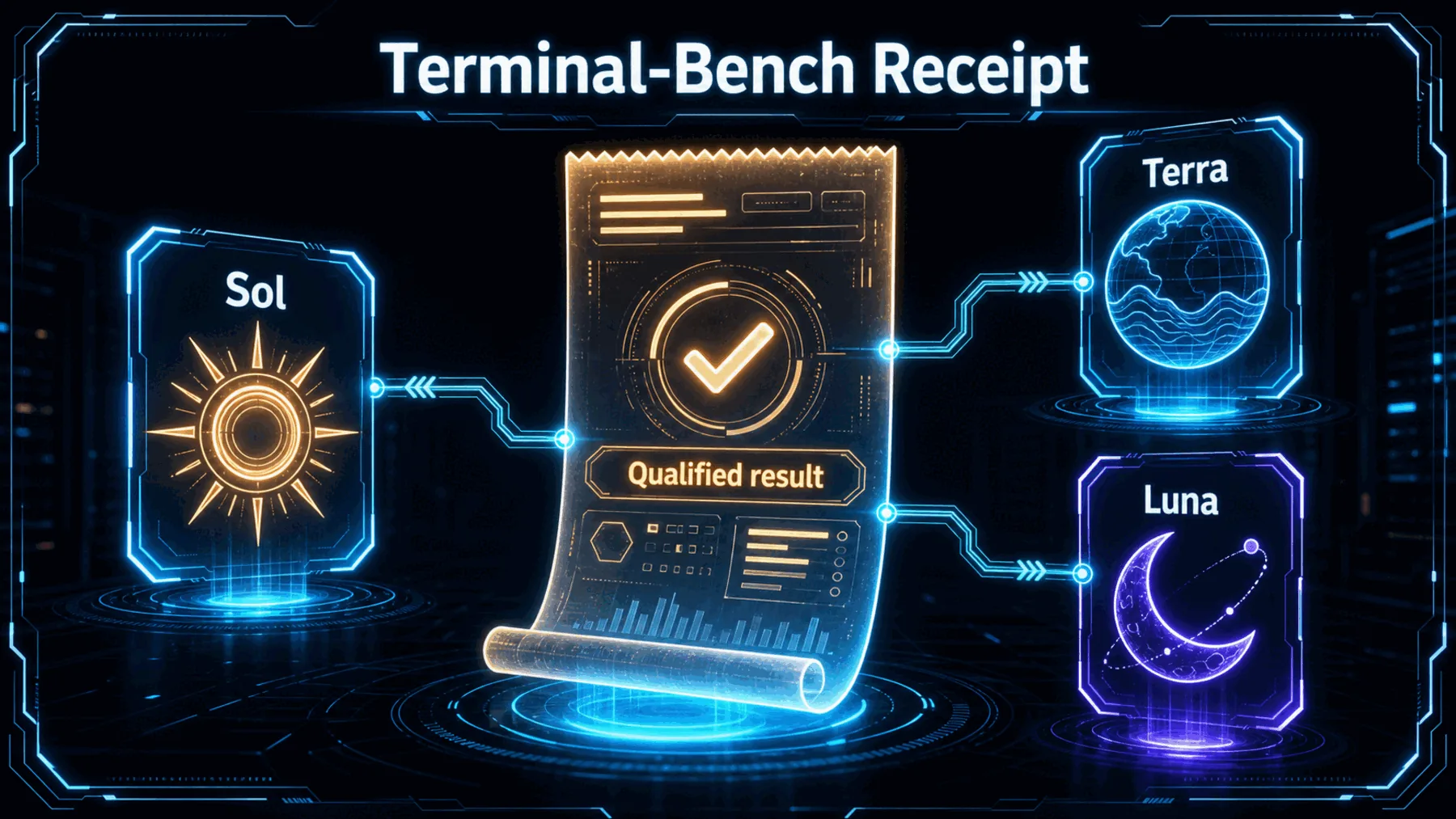
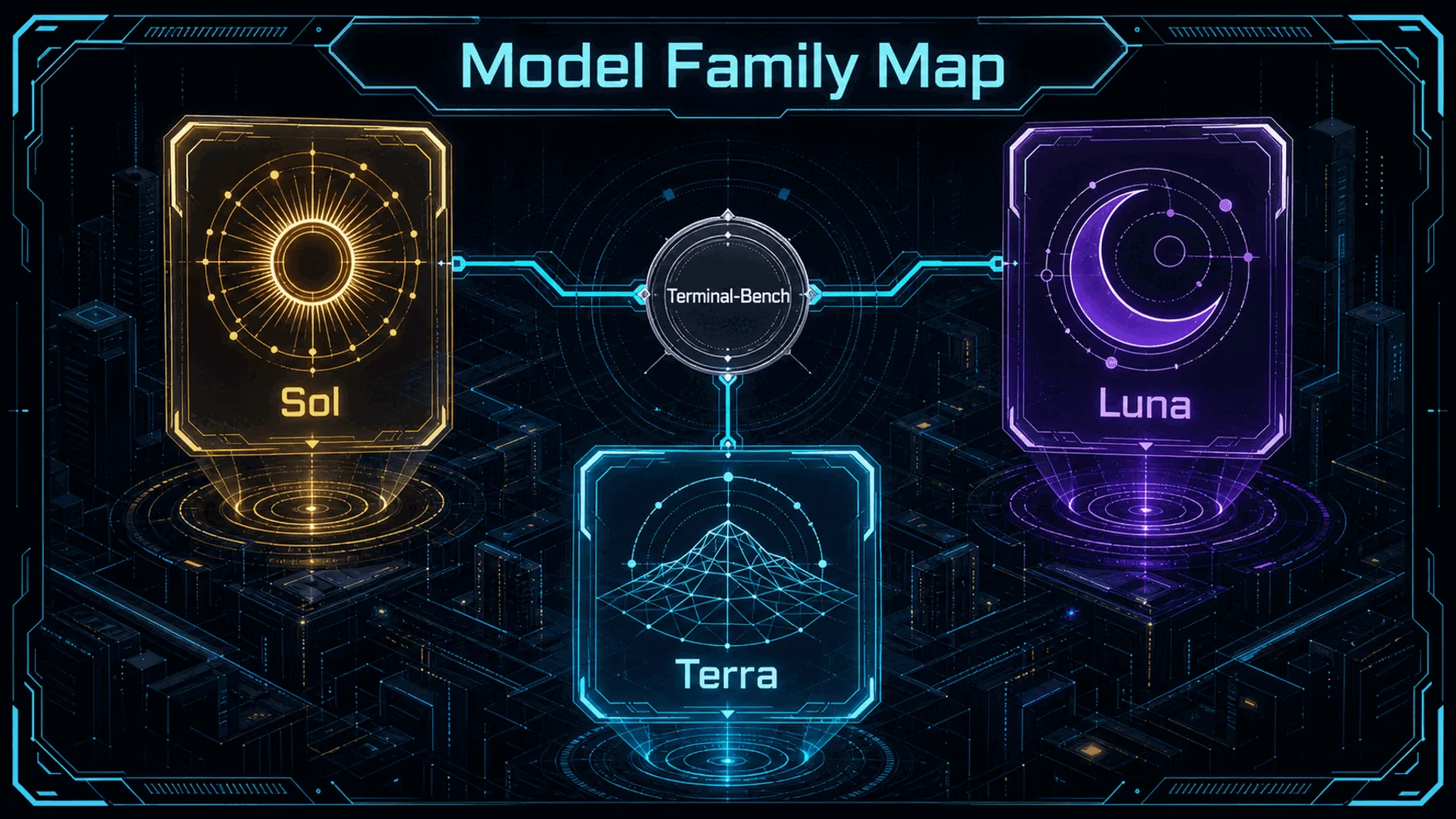
OpenAI presents Sol, Terra and Luna as a family that lets teams weigh intelligence, speed and cost across software development work. The source does not assign rankings, prescribe jobs for each model or publish a price table.
Its strongest numerical claim is narrower: OpenAI and AWS say testing found roughly 82% cost reduction when GPT-5.6 Terra completed successful tasks in Kiro on Terminal-Bench 2.1. Keeping those qualifiers visible is the difference between a receipt and a slogan.
The 82% claim
A supplier-reported test result with a specific model, environment, benchmark and task condition.
The number is meaningful only with its full label attached: roughly 82% cost reduction, GPT-5.6 Terra, successful tasks, Kiro and Terminal-Bench 2.1. Remove any part of that sentence and the claim becomes broader than the published evidence.
OpenAI and AWS describe the surrounding setup as an optimisation of the Kiro environment and OpenAI models. That is a reported result from the named test, not independent proof of what any separate codebase will cost us to ship.
Testing found that on Terminal-Bench 2.1, GPT-5.6 Terra completed successful tasks in Kiro at roughly 82% cost reduction.
OpenAI, “GPT-5.6 in Kiro”
What the evidence cannot prove
The source names the test context but does not publish the detail needed to extend its result beyond it.
We cannot calculate the underlying spend from the published article, compare the result with another model or tell how the benchmark was constructed. Those omissions do not erase the claim; they set its proper reach.
The most defensible reading is straightforward: OpenAI and AWS report a promising result in a named setting. Whether it travels to a different repository, team practice or production constraint remains unanswered by this source.
How Kiro frames the work
The source describes a chain from an initial idea to reviewed and tested implementation.
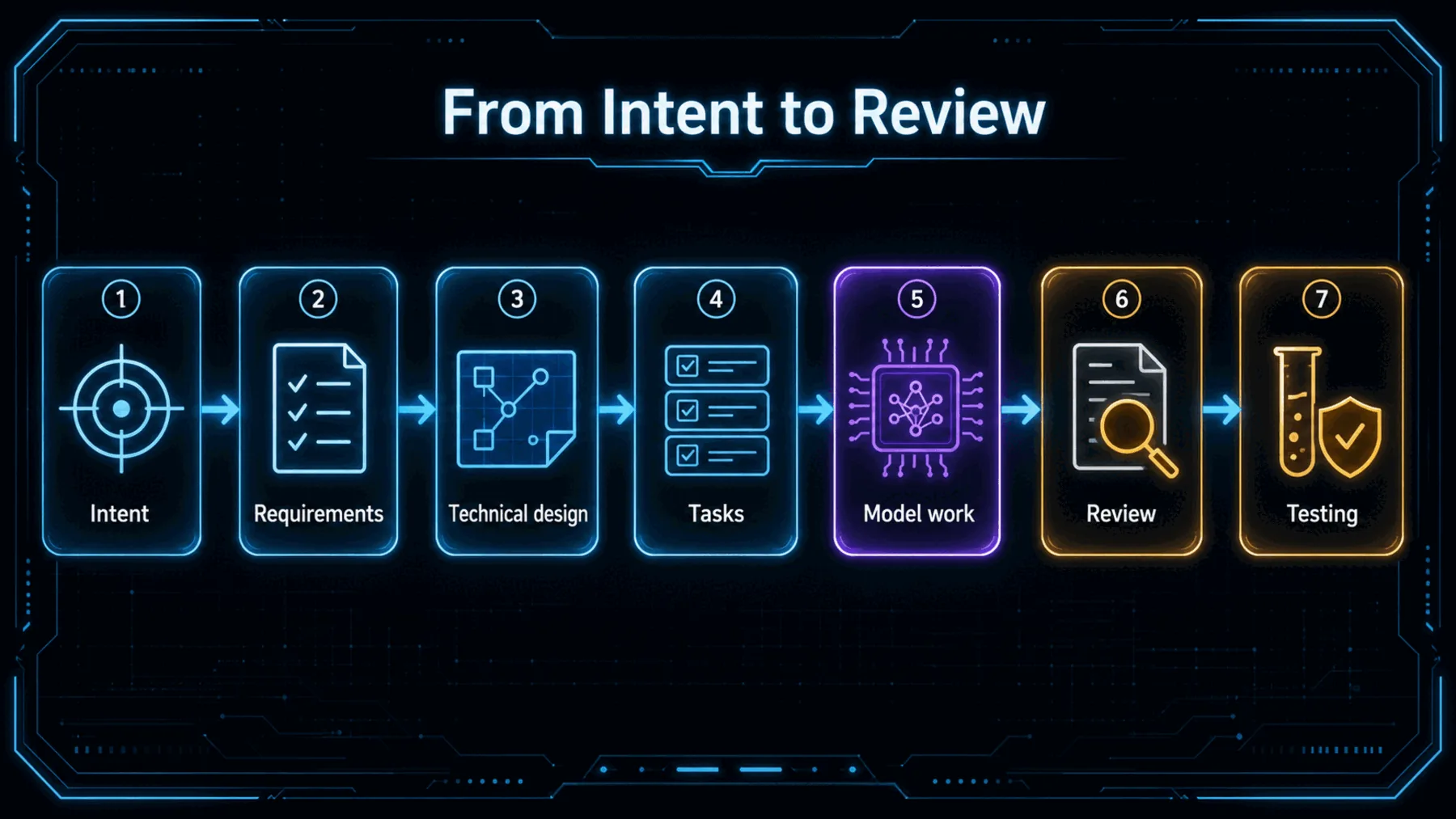
OpenAI’s account of the workflow is deliberately structured. Kiro converts high-level intent into requirements, technical design and tasks; GPT-5.6 then works with that context, alongside the codebase and team standards OpenAI says can ground longer-running work.
Review is part of the path, not an afterthought. The source says developers can refine the model’s work at key checkpoints before changes are implemented and check correctness using property-based testing.
The experience is a process
The release makes a case for clearer work boundaries, while key commercial and access details remain unstated.
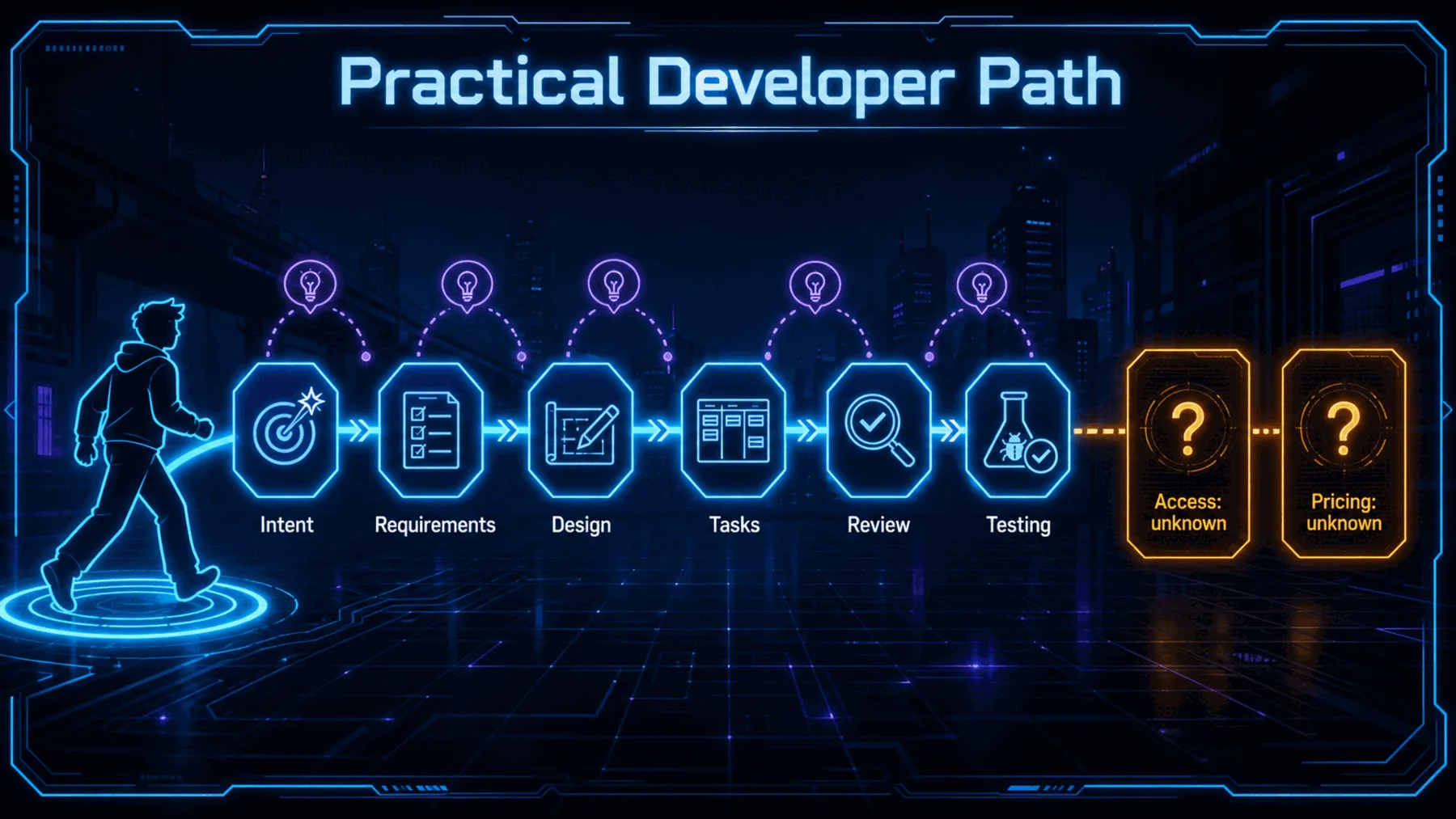
For us, the appeal is not a promise that code becomes effortless. It is a workflow that asks for a proper brief, makes the route to implementation visible and keeps a review point before changes land.
OpenAI says the family offers choice across intelligence, speed and cost. The article does not state pricing, regional availability, quotas, access conditions or how each model should be assigned within a team.
Access
The article confirms availability in Kiro but does not set out access conditions.
Pricing
No absolute prices or cost baseline are published.
Method
No sample size, footnotes or formal benchmark methodology are provided.
Choose the model, define the job
The release argues that better context and review structure may matter as much as the model selected.
The useful lesson is not that a model can write more code. It is that defined work, visible review and explicit checks give its output somewhere solid to land.
Based on OpenAI’s published description of GPT-5.6 in Kiro
OpenAI’s release joins model choice to work definition. Sol, Terra and Luna matter within Kiro’s stated frame of requirements, technical design, tasks, review and testing; that frame is what turns a capability claim into a working method.
The value test is therefore practical. Before we compare a new model, we should ask whether the task is clear enough to review, test and improve without turning every correction into a fresh prompt.
Test the brief before the code
Act as a senior engineer planning a password-reset endpoint for a web application. First write concise requirements, including expiry, single-use tokens, rate limits and privacy constraints. Then provide a technical design, an ordered list of executable implementation tasks, a review checklist for security and failure cases, and five property-based test cases. Do not write production code; make every decision explicit and flag assumptions.Ready to copy
Test the structure first
Use a small, bounded coding task to test whether a clearer brief, review point and correctness checks improve the work before drawing conclusions from a benchmark claim.
Try the promptWhat could change the view
- Published methodology
- Pricing and access detail
- Independent production evidence