GPT-5.6 Makes Compute A Choice
OpenAI frames GPT-5.6 as more useful intelligence per token, with higher-compute modes for work where the result matters enough to spend more.
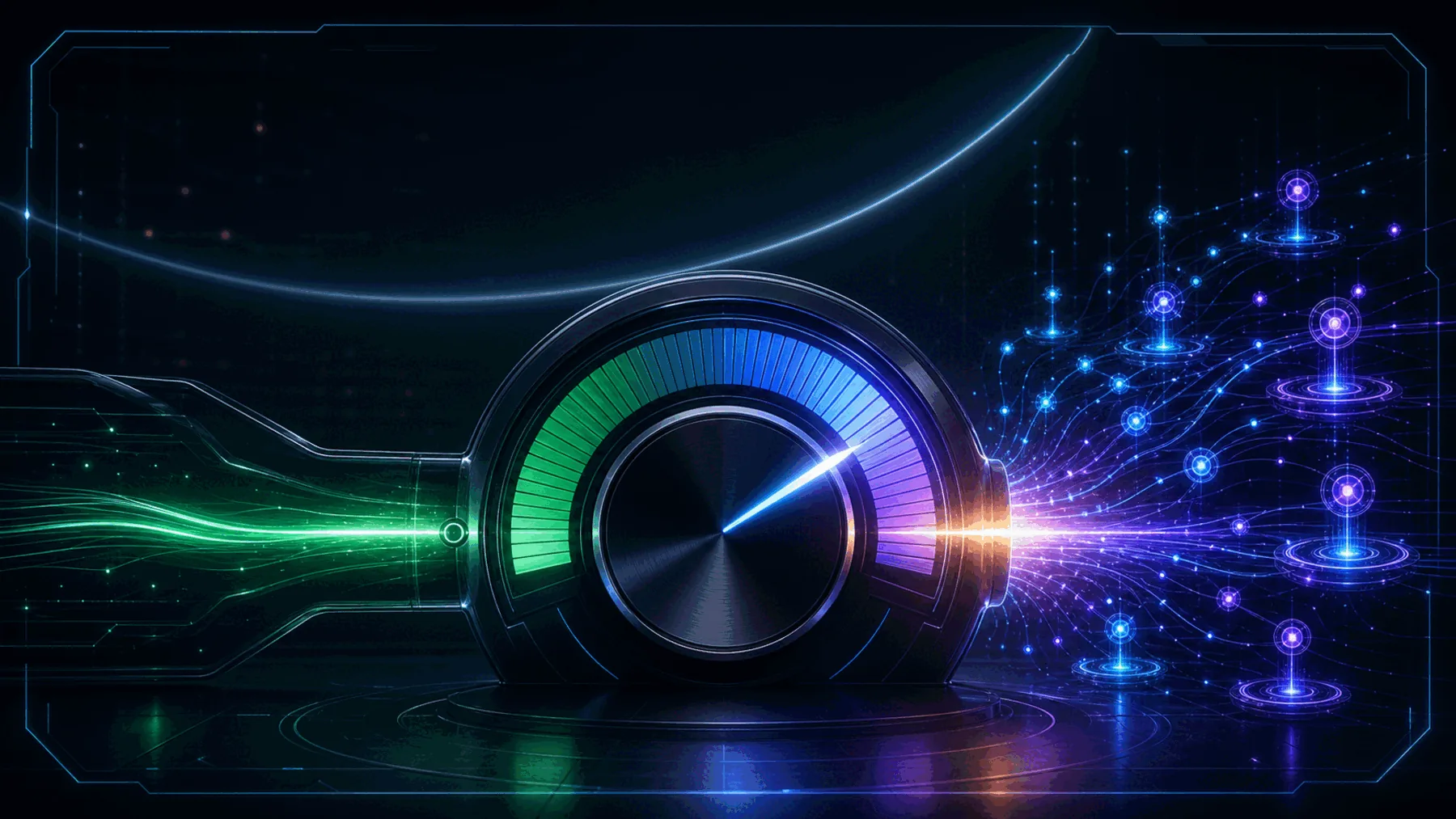
OpenAI's GPT-5.6 announcement points to a practical shift in how we choose frontier models. The promise is not simply more capability at the top end; it is a ladder from efficient everyday work to heavier max and ultra modes for harder jobs.
That matters because the buying decision becomes more granular. We are no longer just picking a model. We are deciding how much thinking a task deserves, and where the extra compute can plausibly change the answer.
The Choice Moves To Compute
The useful question is not whether GPT-5.6 is bigger, but when the extra reasoning budget is worth spending.
OpenAI says GPT-5.6 is designed to deliver stronger work per token and better performance per dollar. That is positioning, not independent validation, but it changes the shape of the offer: routine work can stay efficient while difficult work gets a route to more compute.
For us, the practical test is simple. If the job is ordinary drafting, basic coding, or light analysis, efficiency matters. If the job is a complex build, security review, research synthesis, or decision memo where errors are expensive, the higher-compute path becomes part of the workflow rather than a luxury.

OpenAI Put A Ladder On The Table
The announcement names a family of modes and frames them around efficiency, cost-performance, and higher-compute work.
The launch puts Sol, Terra, Luna, max, and ultra into one story: a range of compute choices rather than a single flat release. OpenAI's claim is that the system can serve efficient default intelligence and then scale up when the task deserves more work.
The exact public takeaway should stay bounded. We can report OpenAI's framing around more intelligence from every token, stronger performance per dollar, and higher-compute modes. We should not turn that into a complete independent benchmark story or infer pricing terms that the approved capture does not support.


The Claim Starts With OpenAI
The central claim is useful, but it should remain clearly attributed to the launch source.
OpenAI's most important line is the promise of more intelligence from every token. It is a strong commercial frame because it joins capability and efficiency instead of making us choose between them.
The caveat is just as important. OpenAI-published evidence can tell us what the company is claiming and how it wants the release understood. It cannot, by itself, prove how GPT-5.6 will perform across our own coding, research, or security workloads.
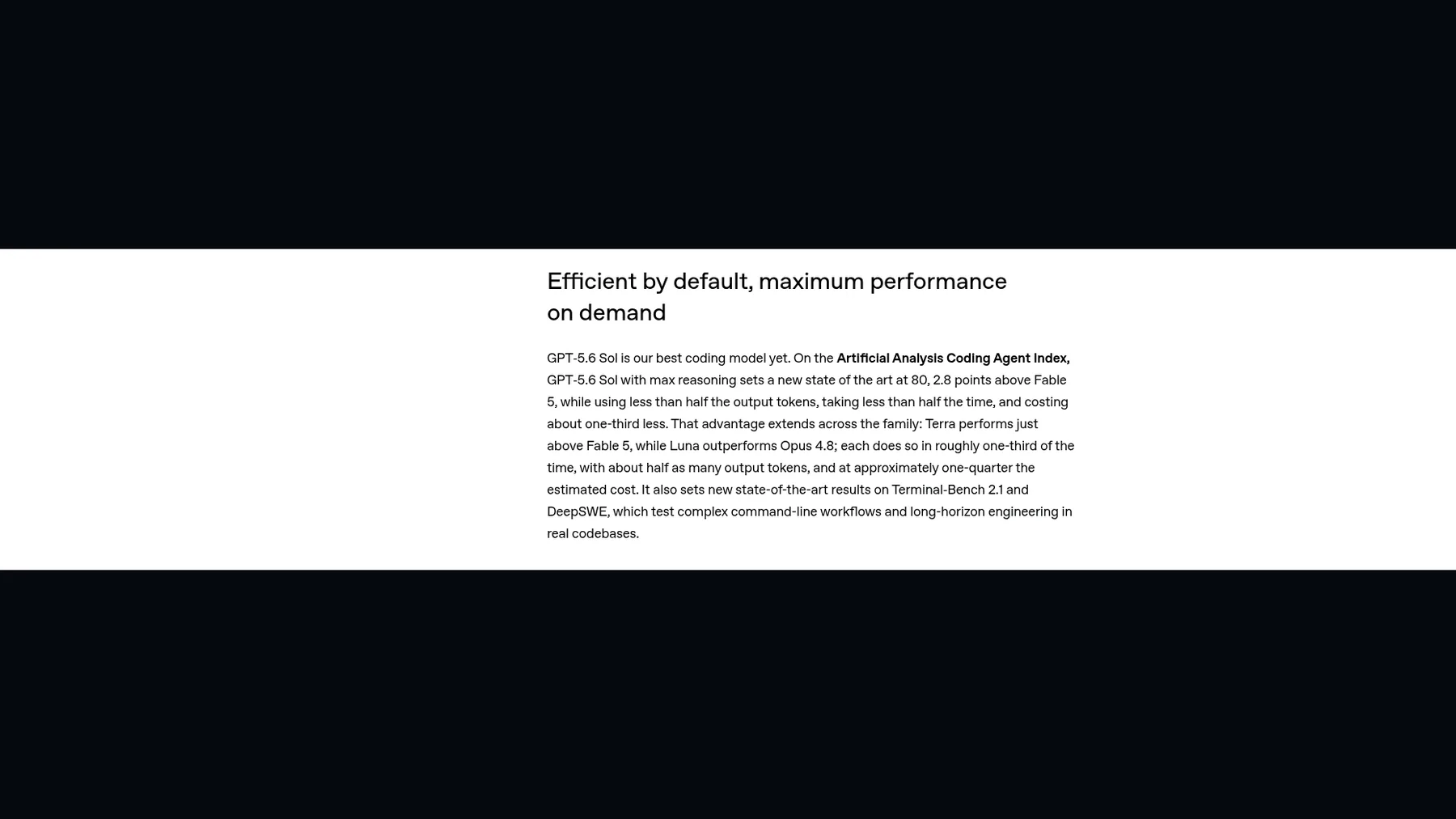
more intelligence from every token
OpenAI, GPT-5.6 launch page
The Proof Has Boundaries
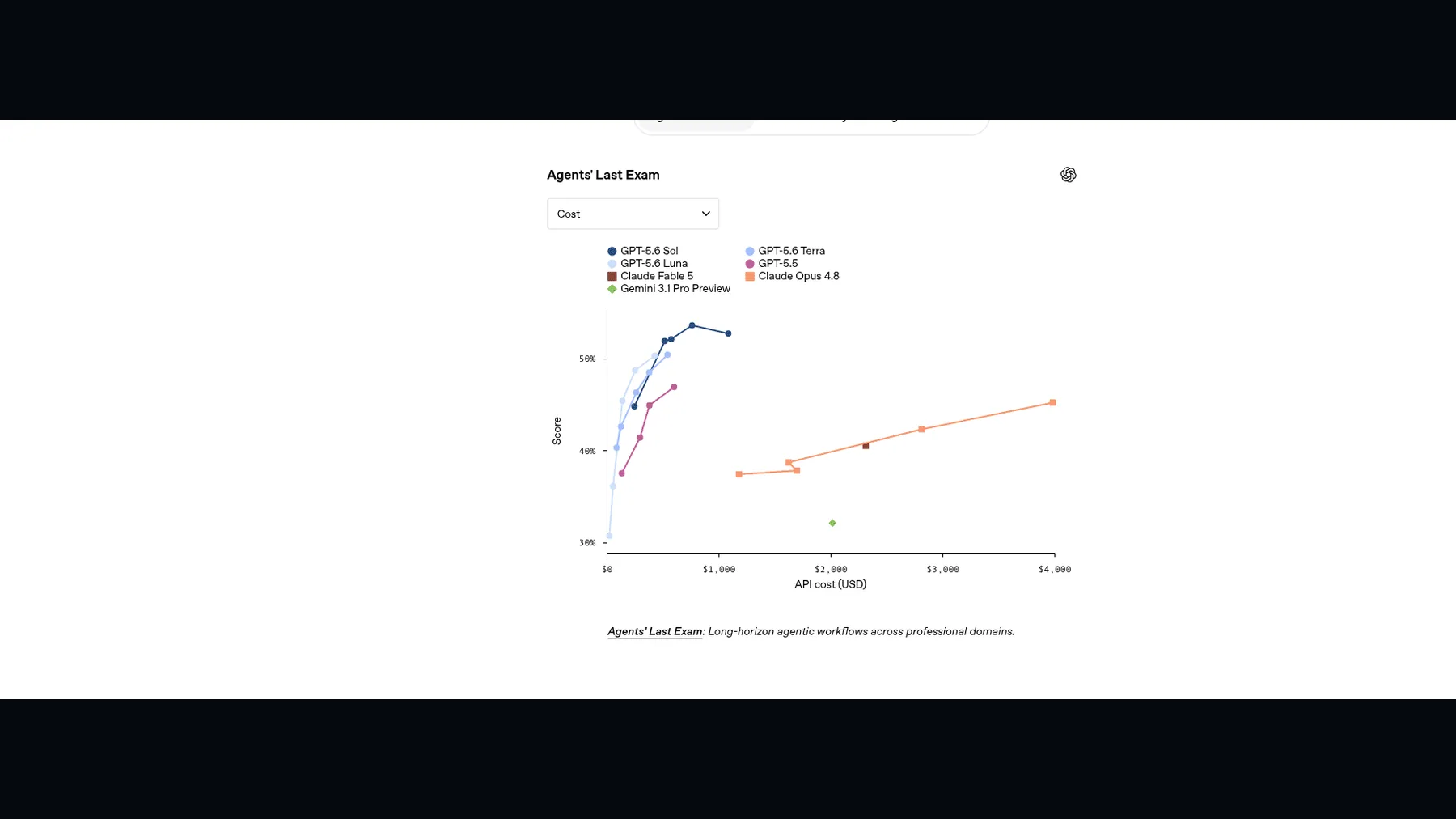
The approved scatter can support the frontier story, but it does not make every surrounding claim independently settled.
The Boss-approved frontier scatter is useful because it gives the article a visible, source-tethered proof point for the cost-versus-score framing. It helps us show the shape of the claim rather than asking the copy to carry it alone.
We should still keep the limits visible. A chart placement supports what is shown in that chart; it does not give us permission to claim complete official visual coverage, exact pricing availability, or universal workload performance beyond the captured source material.
Ultra Turns Hard Work Into Parallel Work
The interesting promise of ultra is not a flashier button, but a way to spend more compute on jobs that can be split, checked, and recombined.
OpenAI's ultra framing points towards a different kind of model session. Instead of asking one pass to solve everything, a hard task can be broken into workstreams, intermediate data can be handled through tool calls, and the final answer can be consolidated from more than one line of reasoning.
That should be described carefully. The diagram can show a practical mechanism, but it should not imply a specific interface or reveal exact internal OpenAI architecture. The public point is narrower: higher-compute modes make the most sense when coordination itself improves the result.

Where We Would Spend It
The launch becomes useful when we map it to the work where better reasoning beats cheaper guessing.
We would not reach for the heaviest mode by default. For everyday drafting, straightforward code edits, and quick analysis, the efficient end of the ladder is the sensible starting point.
We would escalate when the task has more surface area: a multi-file build, a security-sensitive review, a market or research synthesis, or a decision where the cost of a shallow answer is higher than the cost of more compute. That is where GPT-5.6's ladder framing becomes operational rather than decorative.

The Model Is Now A Budget Decision
GPT-5.6 makes the model picker feel more like a compute allocation decision than a simple upgrade ritual.
The stronger reading of GPT-5.6 is also the more cautious one. OpenAI is not just saying the model is smarter; it is saying intelligence can be bought in different quantities for different jobs.
That is a useful mental model for teams. We start cheap, escalate when evidence or risk demands it, and judge the result by whether the added compute produced a materially better answer. The launch matters if it helps us make that choice more deliberately.
GPT-5.6 is best understood as a compute ladder: efficient enough for routine work, heavier when the answer has to earn the extra spend.
Altior analysis of OpenAI's GPT-5.6 launch framing
Test the compute ladder
You are evaluating whether to spend extra model compute on one hard work item. Using only OpenAI's GPT-5.6 launch framing as context, compare three options: efficient default work, higher-compute max work, and ultra-style parallel agent work. Choose one concrete task from coding, research, or security analysis, explain which mode you would try first, what evidence would justify escalating compute, and what result would prove the extra spend was worthwhile. Return a short decision memo with: task, starting mode, escalation trigger, expected output, and stop condition.Ready to copy
Watch The Evidence Catch Up
The next question is whether independent use cases confirm the cost-performance story OpenAI has put forward.
What changes the takeaway
- Independent workload tests
- Clear availability and pricing terms
- Real team workflows