The Cost of a Useful Result
OpenAI says GPT-5.6 cuts the waste between a request and useful work; the practical question is whether that changes what we pay for.
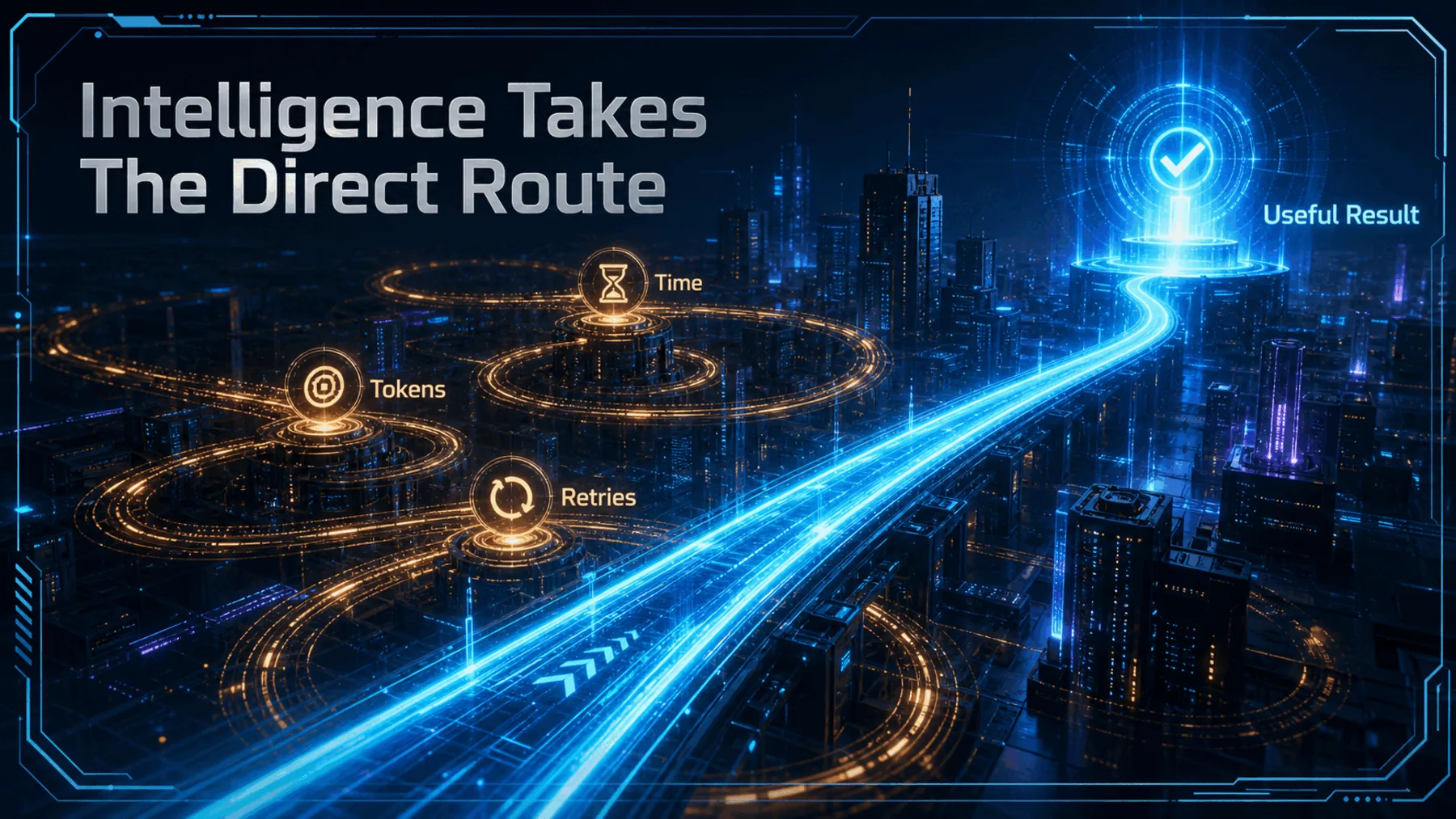
OpenAI’s GPT-5.6 announcement makes a narrow but useful argument: task economics are shaped by the route to an answer, not simply the price attached to each token. If a job takes extra turns, retries and waiting, the cheaper-looking option can still cost us more.
That is a claim from OpenAI, not independent testing. But it points us towards a better buying question: what does it take to reach a result we can actually use?
Route Length Changes Cost
Every extra turn can add tokens, time and another chance to start again.
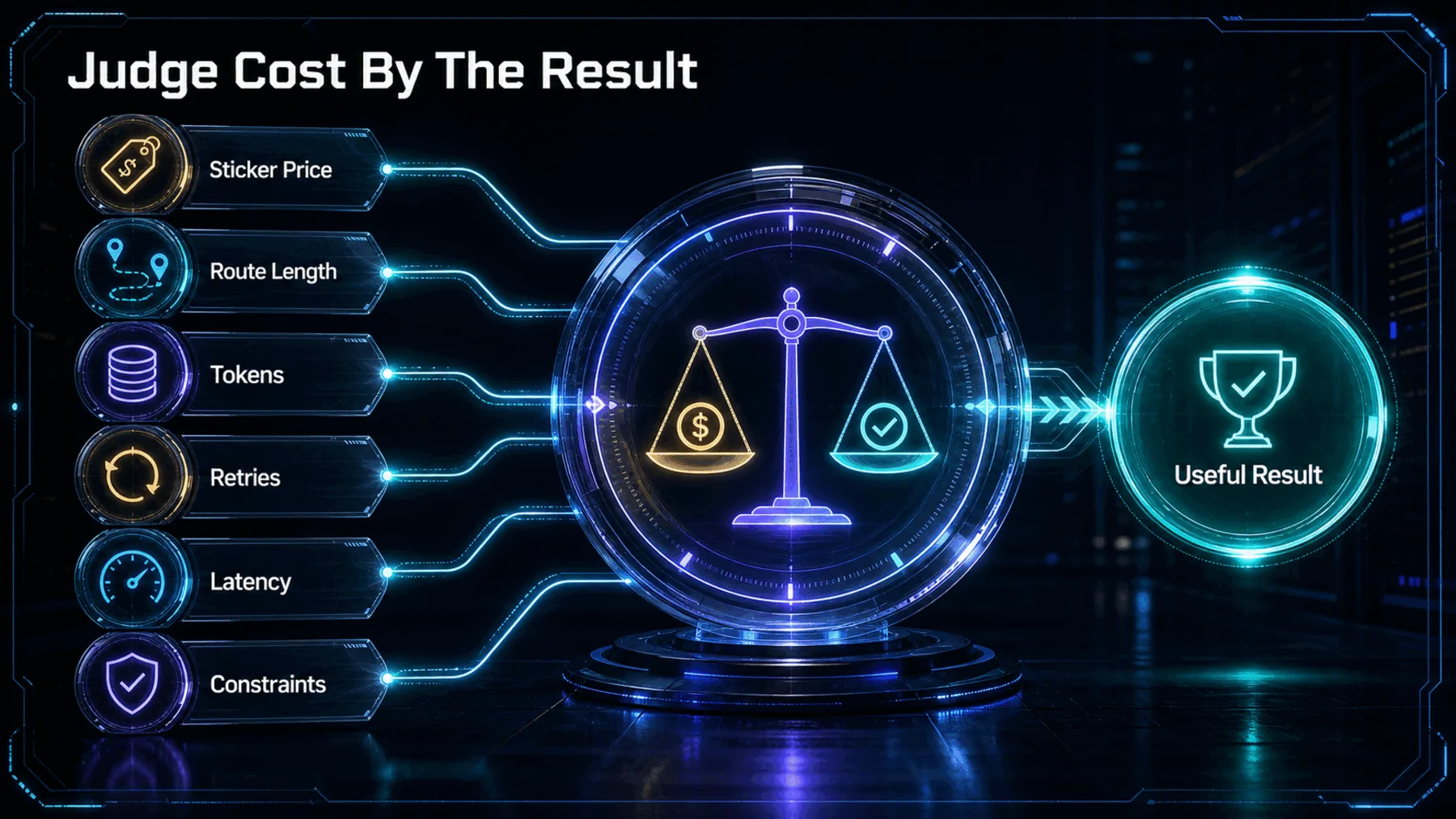
A token price tells us something, but not enough. We also need to see how much work a model creates around the task: the clarification turns, the failed attempts, the delay before a usable answer and the quality of what finally arrives.
OpenAI says GPT-5.6 takes a more direct path through work. The useful implication is not that every task will become cheaper. It is that the route itself belongs in the calculation.
What OpenAI Actually Changed
Two published price reductions and one faster API option shift the input side of the equation.
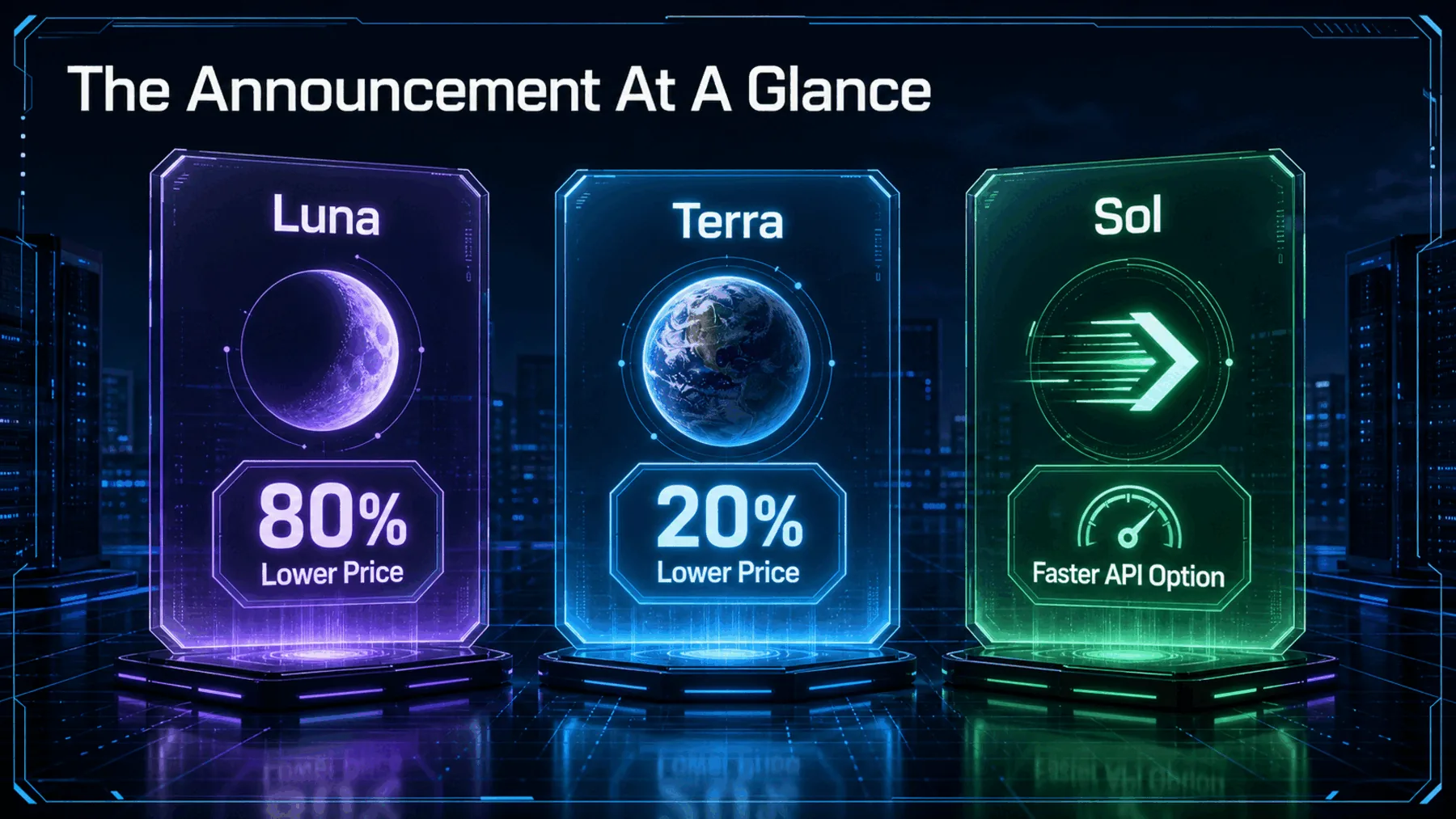
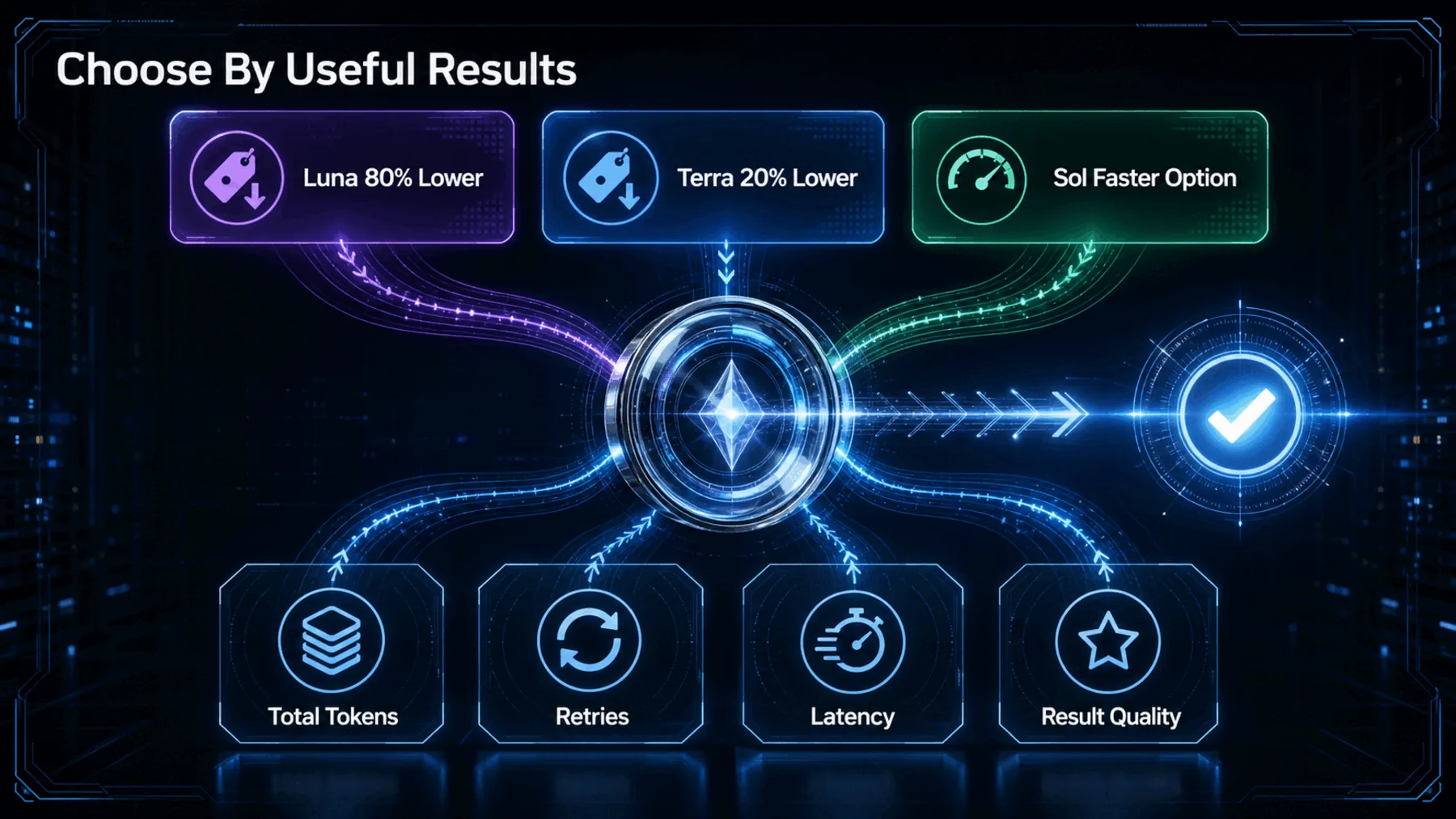
The details matter. OpenAI attributes the 80% reduction to GPT-5.6 Luna and the 20% reduction to GPT-5.6 Terra. GPT-5.6 Sol is described as a faster API option, not as a price reduction.
That distinction keeps the announcement useful. Lower price, faster delivery and a more direct task route may each matter, but they are different levers and should be tested as such.
OpenAI’s Receipt
The company frames GPT-5.6 as a move towards more intelligence per dollar in the API.
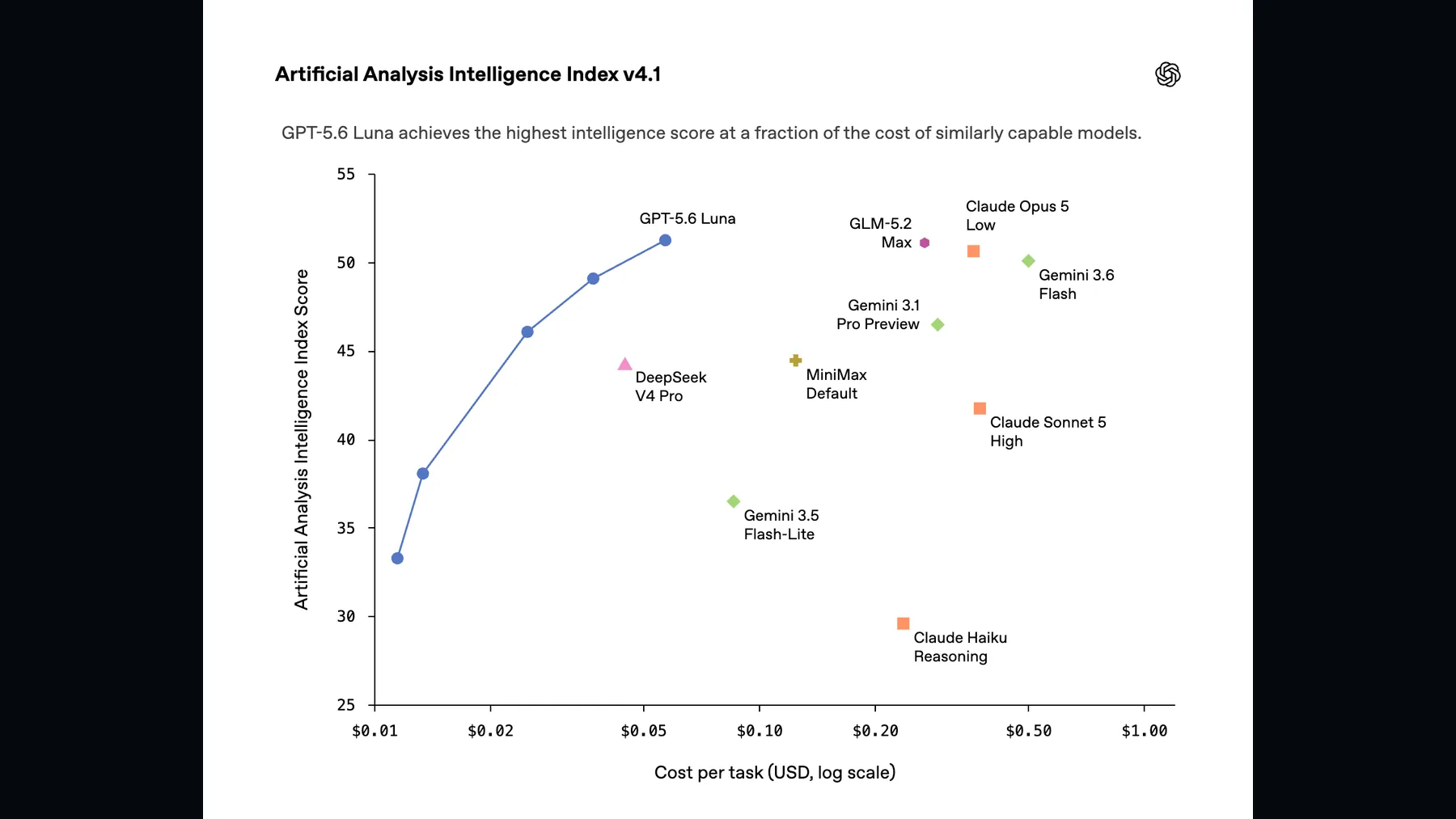
The chart is worth inspecting for what it is: evidence of how OpenAI presents the release. It does not independently settle the benchmark methodology, model settings or plotted values.
The stronger reading is narrower. OpenAI is making an efficiency case, and the chart gives that case a visible form. We should separate that from a conclusion that the claim has been independently proved.
GPT-5.6 models take a more direct path through work, reducing the time, tokens, and cost required for each result.
OpenAI Developers
What the Chart Can Prove
It can show OpenAI’s framing; it cannot substitute for an independent evaluation.
The supplied image is attributed to the Artificial Analysis Intelligence Index v4.1 and appears in OpenAI Developers’ post. That makes it relevant evidence of the announcement, not a blank cheque for every conclusion we might draw from it.
Before we treat a chart as a buying decision, we need the workload, constraints and output standard that matter to us. Without those, a plotted position remains context rather than an answer.
A Shorter Path to Work
The claim is simple: less wandering can mean less spent getting to a usable result.
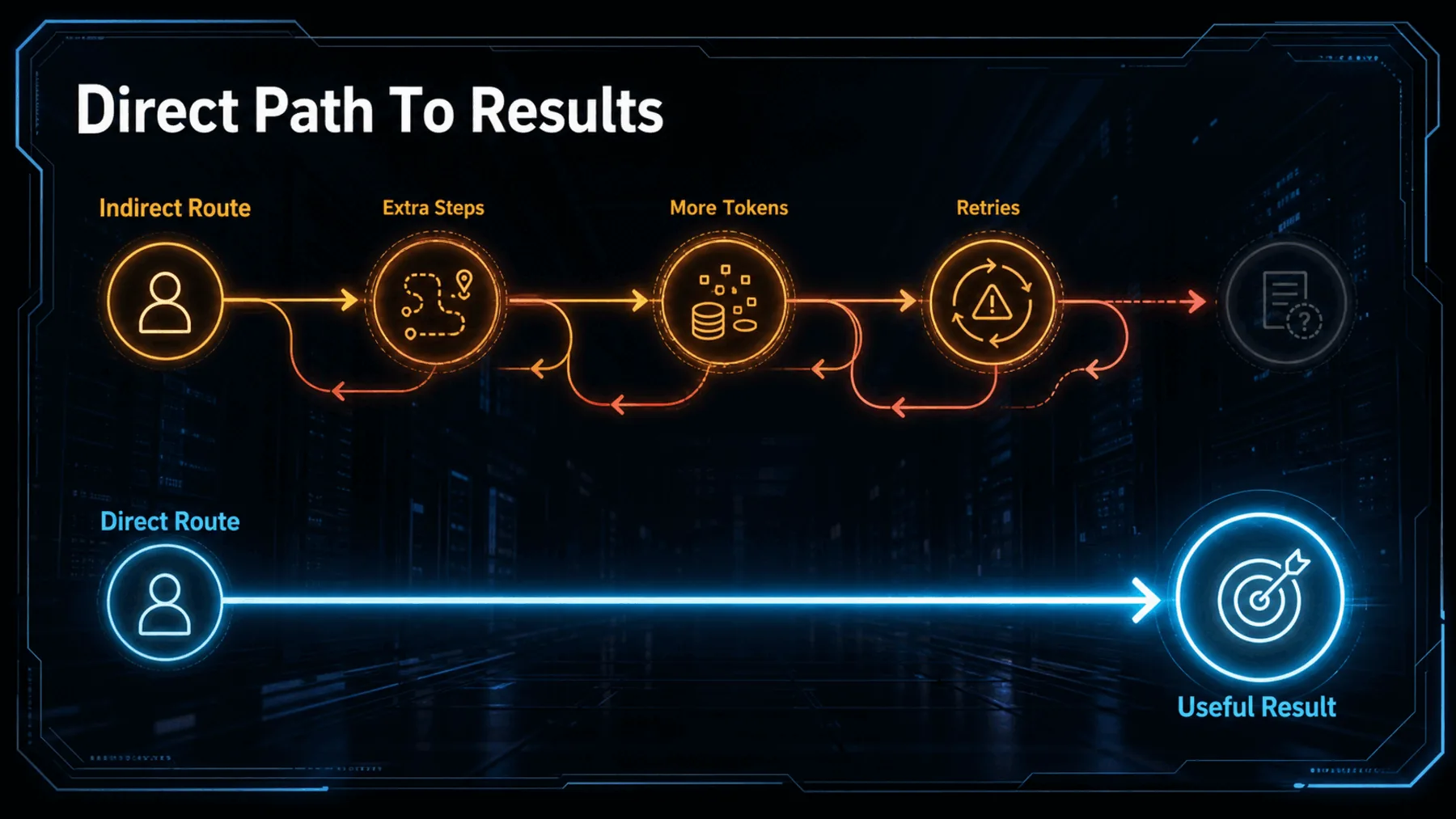
A task route can become expensive without looking expensive at first. One extra clarification invites another; a weak draft creates a repair cycle; a slow response leaves work waiting. The bill is not just the request. It is the path around it.
OpenAI says GPT-5.6 reduces that path. We should treat the statement as a testable proposition for our own work, rather than a measured conclusion already earned for every workload.
Task
Route
Result
Choose by Completed Work
A fair comparison follows the job from access and price through to the result we can use.
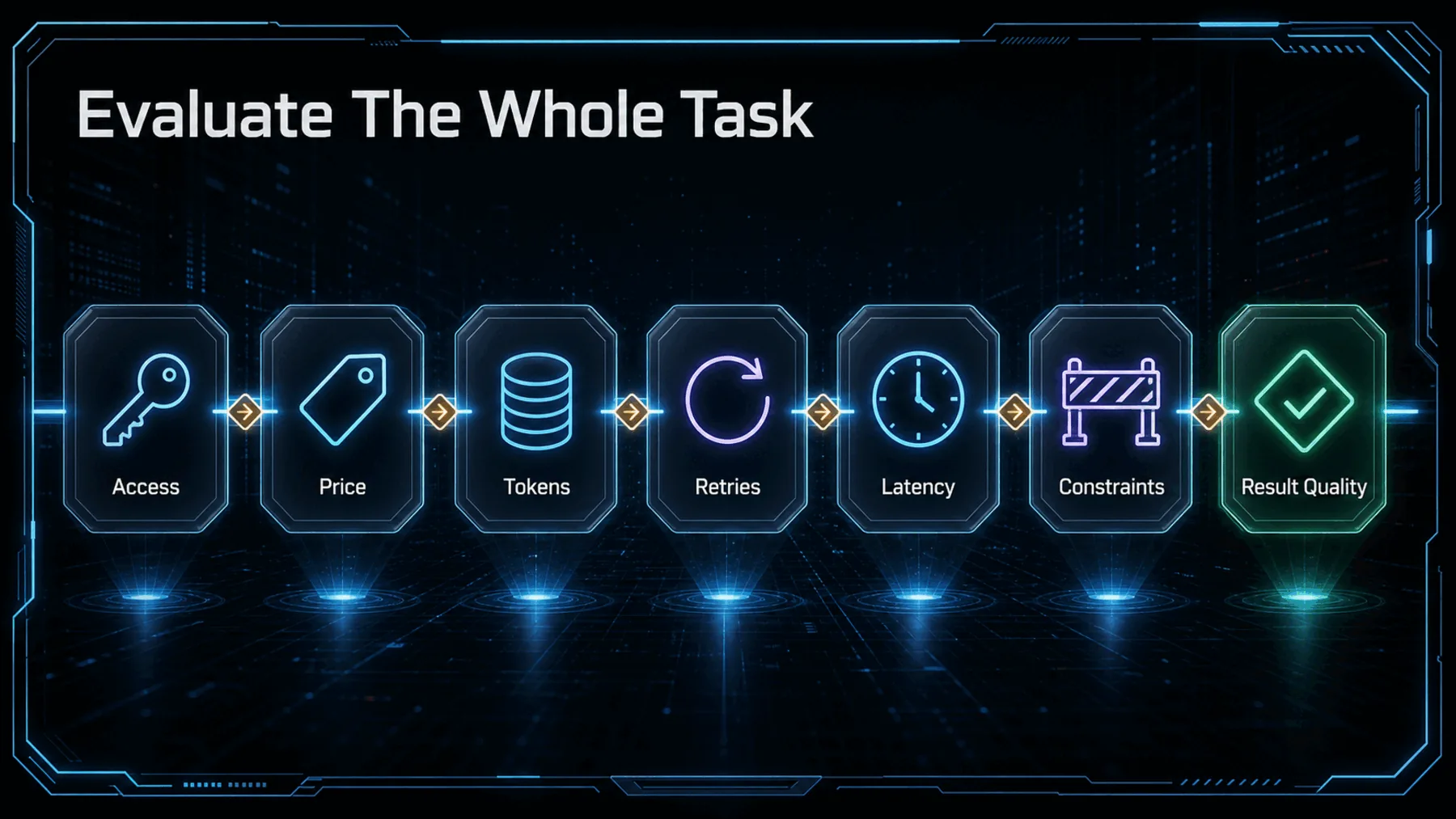
If we are choosing a model for serious work, start with the task rather than the model name. Define the output, the constraints and the point at which the work is useful. Then run comparable attempts and record where the route expands.
Published pricing matters, as do OpenAI’s announced changes. But the better decision comes from the whole task record: what we spent, how long it took, how often we had to intervene and whether the result held up.
Access
Effort
Outcome
Value Lives in the Route
The relevant cost is the cost of reaching work we can use, not the number on a token-price table.
A lower token price matters. A shorter route to useful work may matter more.
Creator Broadcast analysis of OpenAI’s published announcement
OpenAI’s announcement gives us a reason to look beyond the headline price. Its claims about direct task routes sit alongside its published Luna and Terra reductions, but neither removes the need for workload-specific testing.
That is the value test: compare the complete cost of getting to a result we can use, while keeping OpenAI’s own performance framing distinct from independent proof.
Test Cost Per Useful Result
Act as a rigorous API evaluation partner. Take one realistic coding task: diagnose and fix a failing payment-validation function from a short error report and code snippet. Produce a complete patch, explain the root cause in no more than five bullets, list any assumptions, and finish with a verification checklist. Then assess the response on task completion, total steps, likely retries, latency tolerance and output quality; do not estimate token prices or claim benchmark results.Ready to copy
Test the Whole Route
Choose one recurring task, define a useful result, and compare the complete route before deciding what represents better value.
Try the promptWhat to Watch
- Total tokens
- Retries
- Latency
- Output quality