Google Search names nine exams for test prep
Google says Search can help with test prep across nine major exams; the announcement leaves the experience behind that claim unexplained.

Sundar Pichai says Google Search can now help with test prep for SAT, ACT, AP, ENEM, GRE, JEE, LSAT, MCAT and NEET. That is a broad list, spanning school, admissions, law, medicine and national testing systems.
The announcement establishes the breadth of the claim. It does not show what help looks like, who can access it, what it costs, or whether the experience is consistent across those nine exams.
One doorway, many stakes
Preparation is often fragmented; a single starting point could matter without telling us how far it goes.
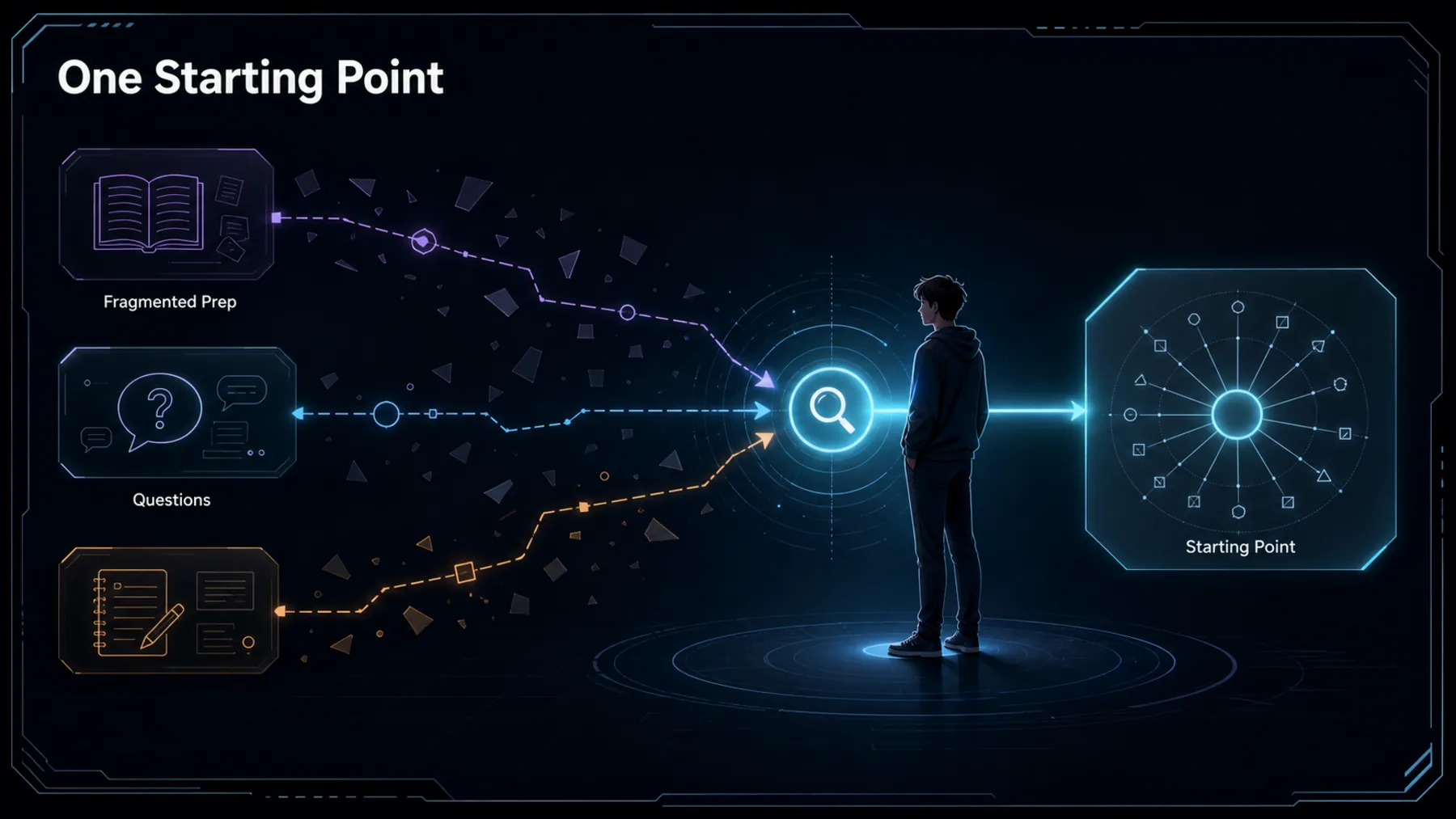
Exam preparation rarely begins with one settled plan. We move between subjects, sources, deadlines and the practical question of what to tackle next.
That is why a Search-based starting point is notable. The post names the destination exams, not the route through them, so the promise should be read as an opening rather than a finished picture.
Nine exams, one claim
The full list is specific. The level of support behind each named exam is not.
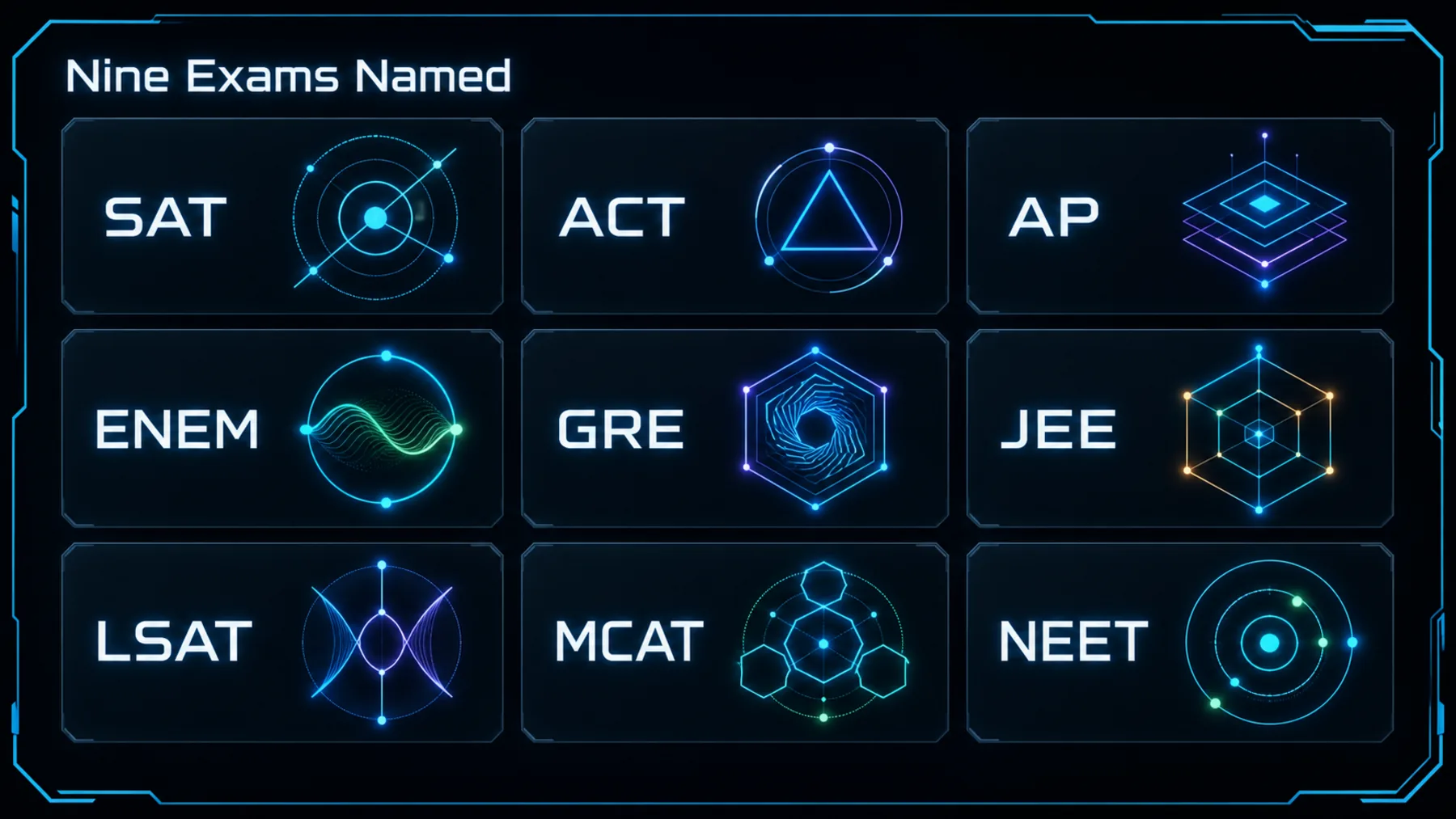
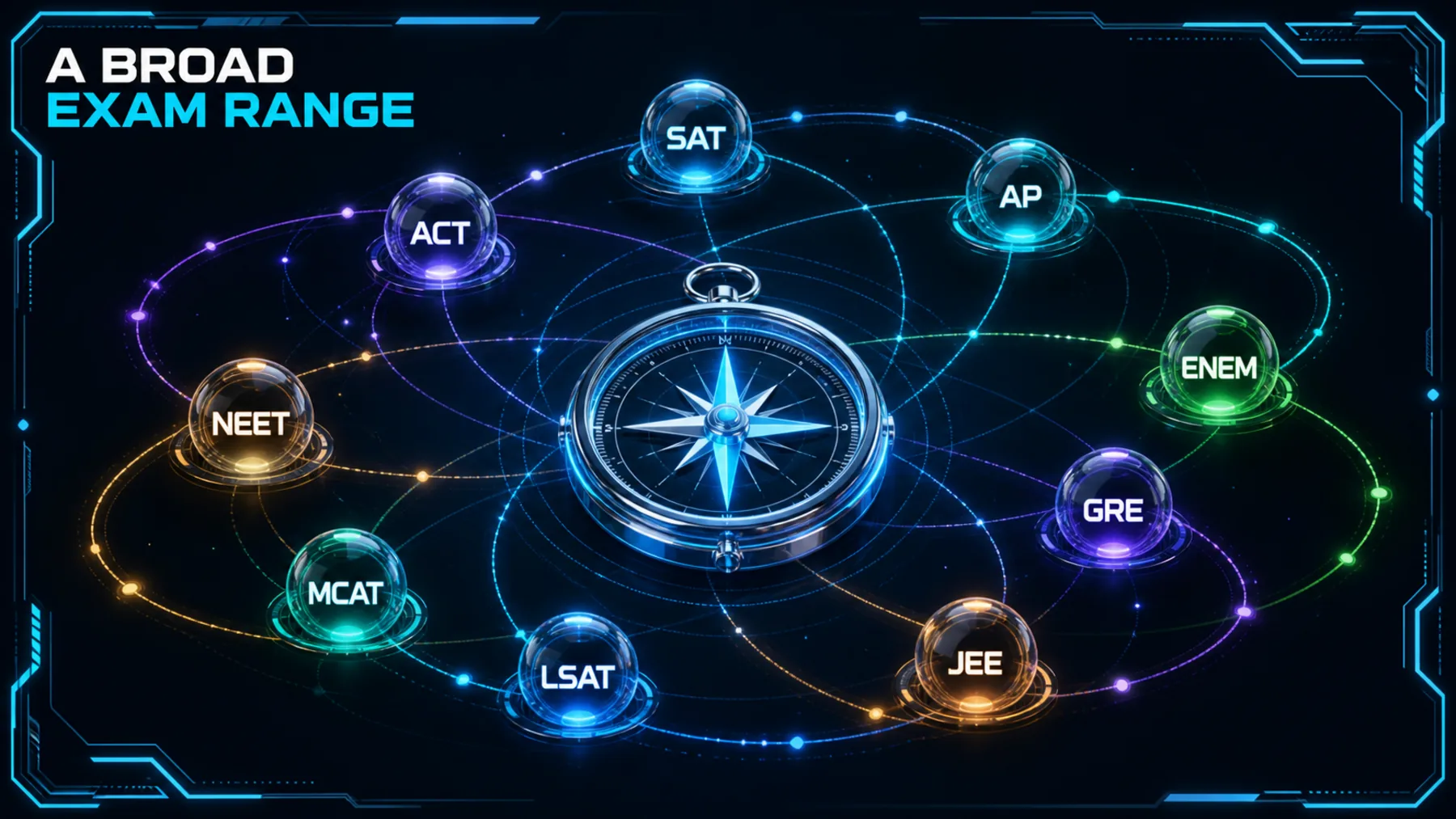
The list is the strongest part of the announcement because it is the part we can verify directly. Pichai names all nine exams in the post.
What the list cannot tell us is whether the help is identical, equally detailed or available in the same way for every exam. Those are separate questions, and the announcement does not answer them.
What Google actually announced
The source supports a narrow, clear claim: Search can help with preparation for nine named exams.
The direct X page was not available through the managed browser, but X’s official embed confirms the post text. That gives us a reliable record of the announcement itself.
It does not turn the post into documentation. There is no linked support page, product page or feature explanation attached to the source.
“Fill in the blank: Search can now help with test prep for _________. … J. All of the above!”
Sundar Pichai, Google, on X
What the evidence does not show
The post makes the test-prep claim, but leaves the practical experience unpictured and undescribed.
We do not know what appears in Search, how preparation is structured, whether it changes by exam, or what constraints shape access. We also do not know whether there is a cost, a location limit or a distinct first step.
Those absences are not a reason to dismiss the announcement. They are a reason to keep the conclusion proportionate: Google has named an ambition, not yet documented the full experience.
Announced versus unexplained
The claim is public. The mechanics, conditions and evidence of usefulness are not.
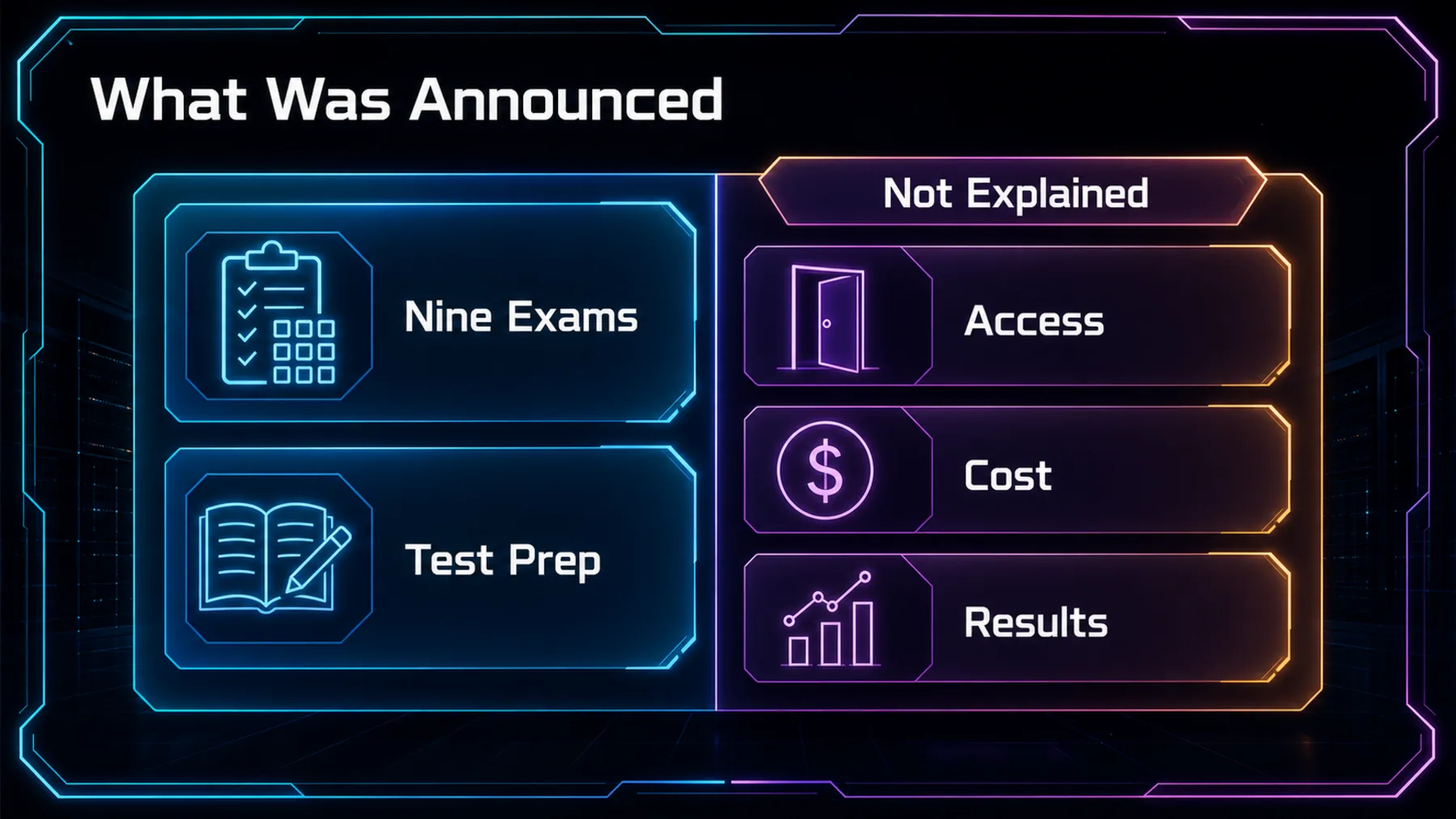
This distinction matters because breadth can easily be mistaken for depth. A long list of exams tells us where Google intends the claim to reach, not what each preparation journey contains.
Until Google provides more detail, the most accurate reading is deliberately narrow. The announcement is a starting signal, not a complete account of the product.
Access
Where does the experience appear, and for whom?
Coverage
How much support does each exam actually receive?
Value
What evidence shows the help is useful in practice?
Verify the first step
A new starting point is useful only when we can see its limits, terms and practical value.
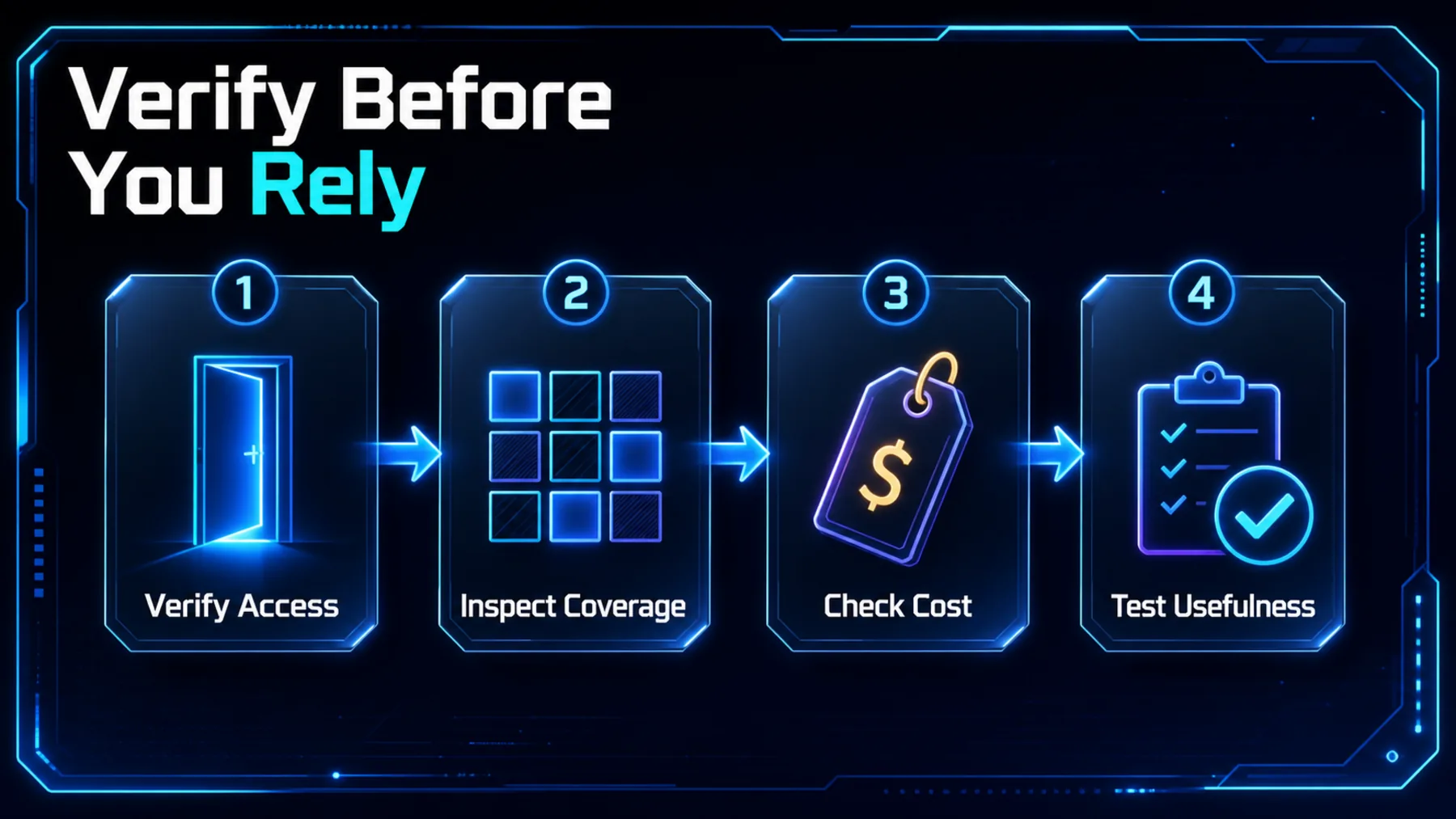
Find it
Confirm where the test-prep option appears for the exam in question.
Inspect it
Check what topics, formats and limits are actually present.
Test it
Use one small study task before making it part of a wider plan.
The sensible next move is not to assume a complete prep service exists behind the announcement. It is to look for the experience, see what is available and judge one concrete result on its own terms.
That keeps the claim useful without asking it to carry more than the evidence allows. We can treat Search as a possible starting point while retaining the study resources and guidance we already trust.
Breadth is not depth
Nine exam names make the announcement consequential; the missing detail keeps the conclusion cautious.
“All of the above” shows the breadth of Google’s ambition. It does not yet show the depth of the experience.
Altior synthesis from Google’s announcement
Google’s announcement is worth noticing because it places Search at the front of a wide range of high-stakes preparation journeys. That is a meaningful direction of travel.
But the post documents only the direction. The next useful evidence will be a clearer account of what we can do, under what conditions, and how the experience holds up when preparation becomes more than a first search.
Test the announced starting point
I am preparing for the SAT. Help me turn the next seven days into a focused revision plan. First ask me three questions about the topics I find hardest, the time I have each day, and the exam date. Then give me a day-by-day plan with one measurable task per day, three practice-question themes, and a short self-check at the end of each day. Do not invent official SAT rules or scores; flag anything that needs checking against an official source.Ready to copy
Watch the detail next
Treat the announcement as a signal to investigate, then look for the practical information that turns a broad claim into something we can assess.
Try the promptWhat could change the picture
- Feature detail
- Access terms
- Coverage evidence
- Quality evidence