SL2T turns sign language into phone input
Google DeepMind says its SL2T system brings ASL-to-English input to Pixel 11 first, treating signing as a language to translate rather than a gesture to match.
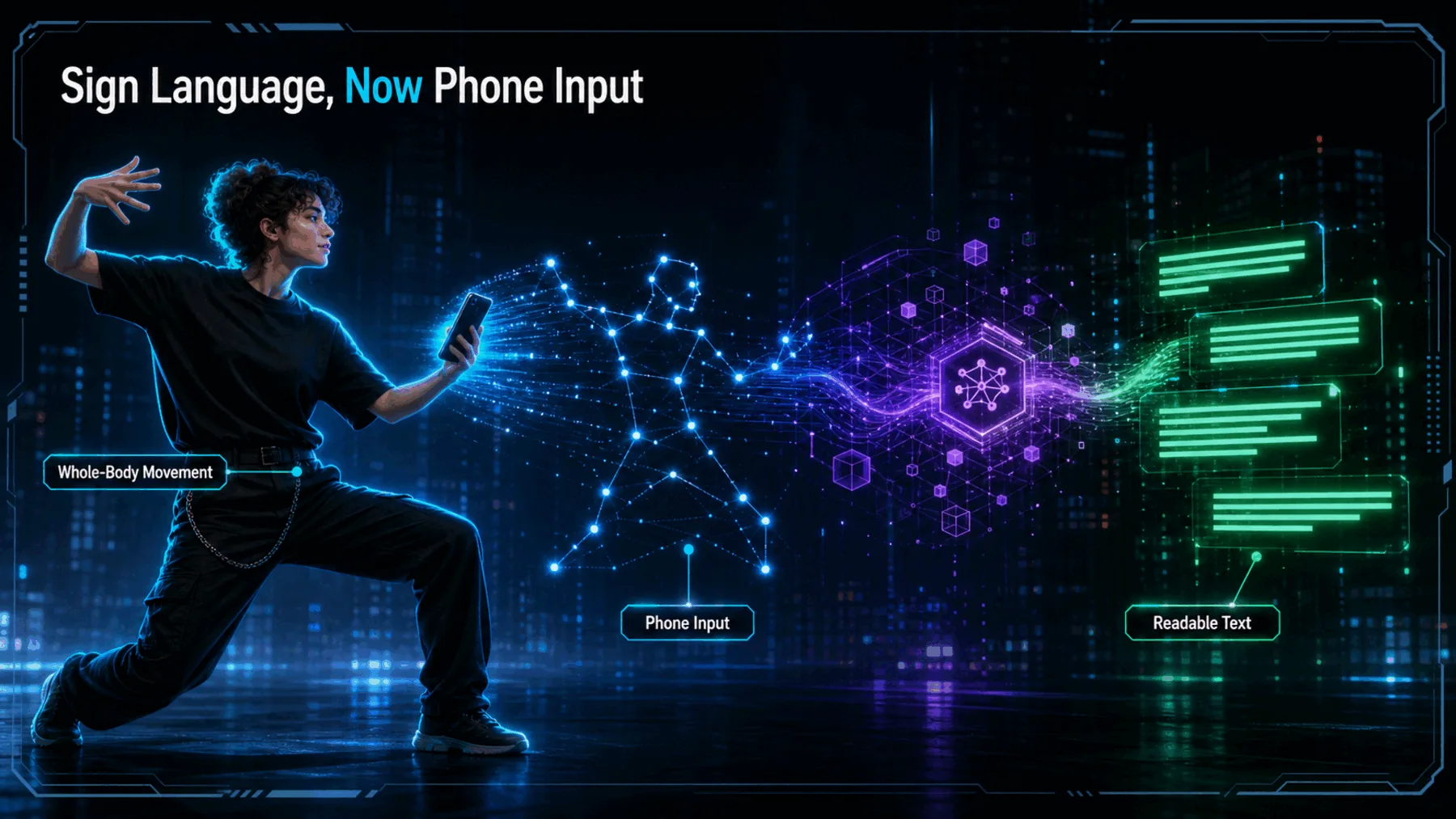
Google DeepMind’s announcement describes a shift from lab demonstration to consumer product: signing into a phone where we might otherwise dictate or type. The company says SL2T will power ASL-to-English input in Gboard and Live Transcribe on Pixel 11 first, with more devices and languages planned.
That promise deserves both attention and care. A sign language is not English performed with hands; it carries grammar, space, timing, face and body together. The useful question is whether the system respects that complexity while becoming dependable enough to use in ordinary moments.
This is translation, not matching
Google DeepMind frames SL2T as a system for interpreting a moving, spatial language over time.
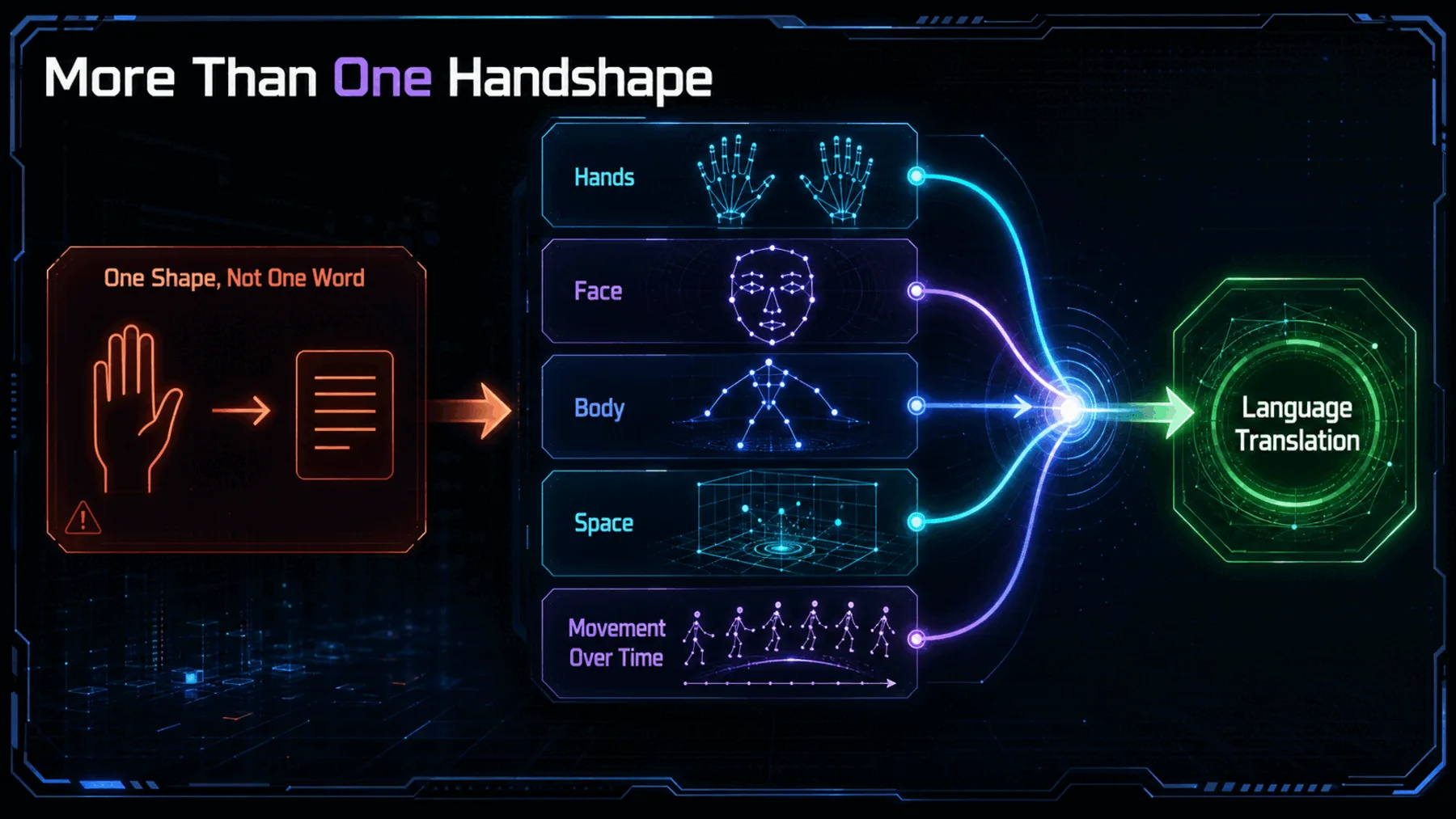
A single hand shape cannot carry the whole sentence. Meaning can arrive through simultaneous movement, facial expression, direction, pace and the space around the signer. Reducing that to a one-sign, one-word lookup would miss the thing the technology is meant to understand.
Google DeepMind says SL2T translates directly rather than passing through an intermediate sign gloss. That is a meaningful design choice, but it does not remove the difficulty of translating language with context, variation and detail.
Big training scale, narrow start
Google reports broad training data and a single first product path: ASL-to-English on Pixel 11.
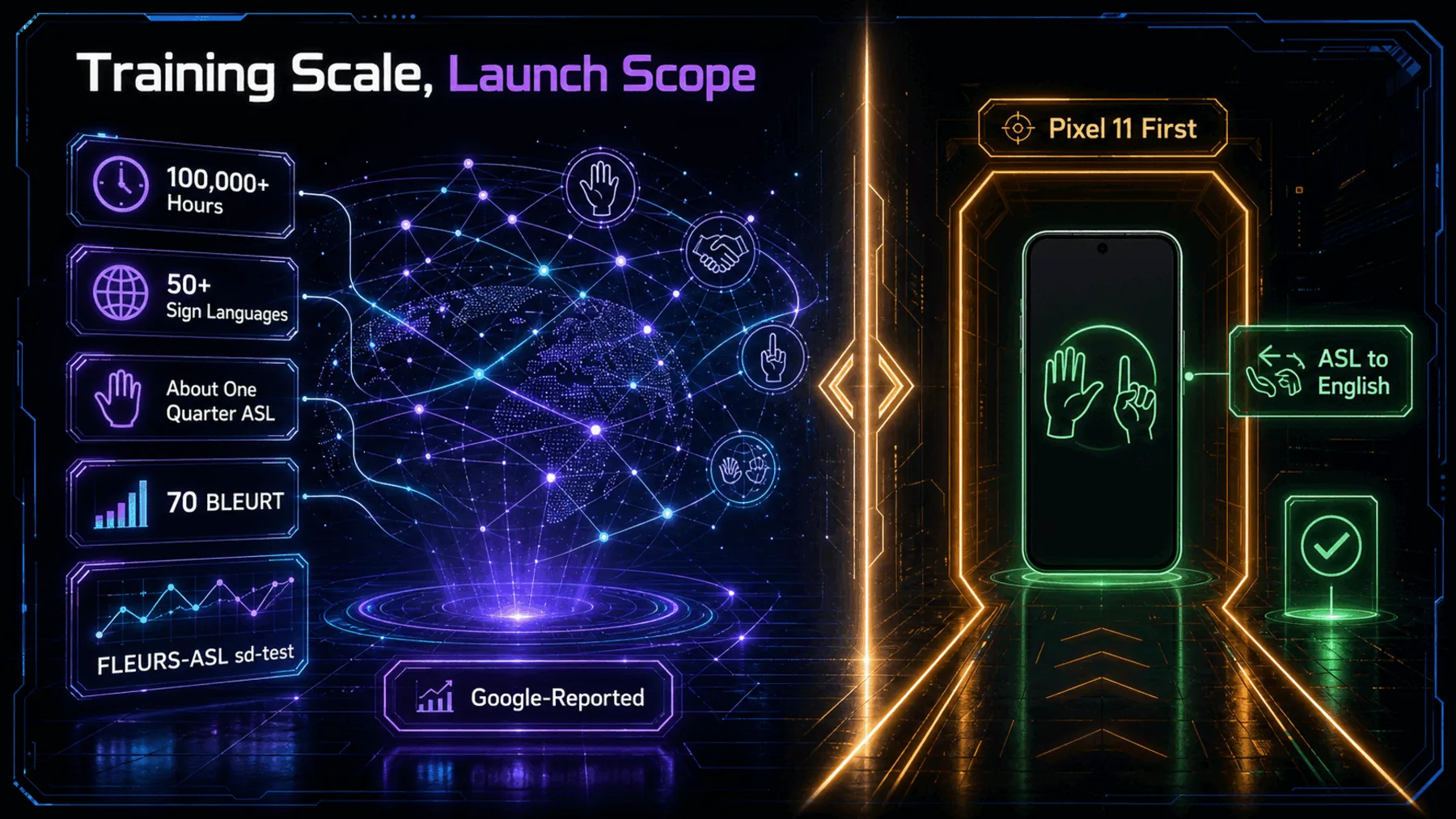
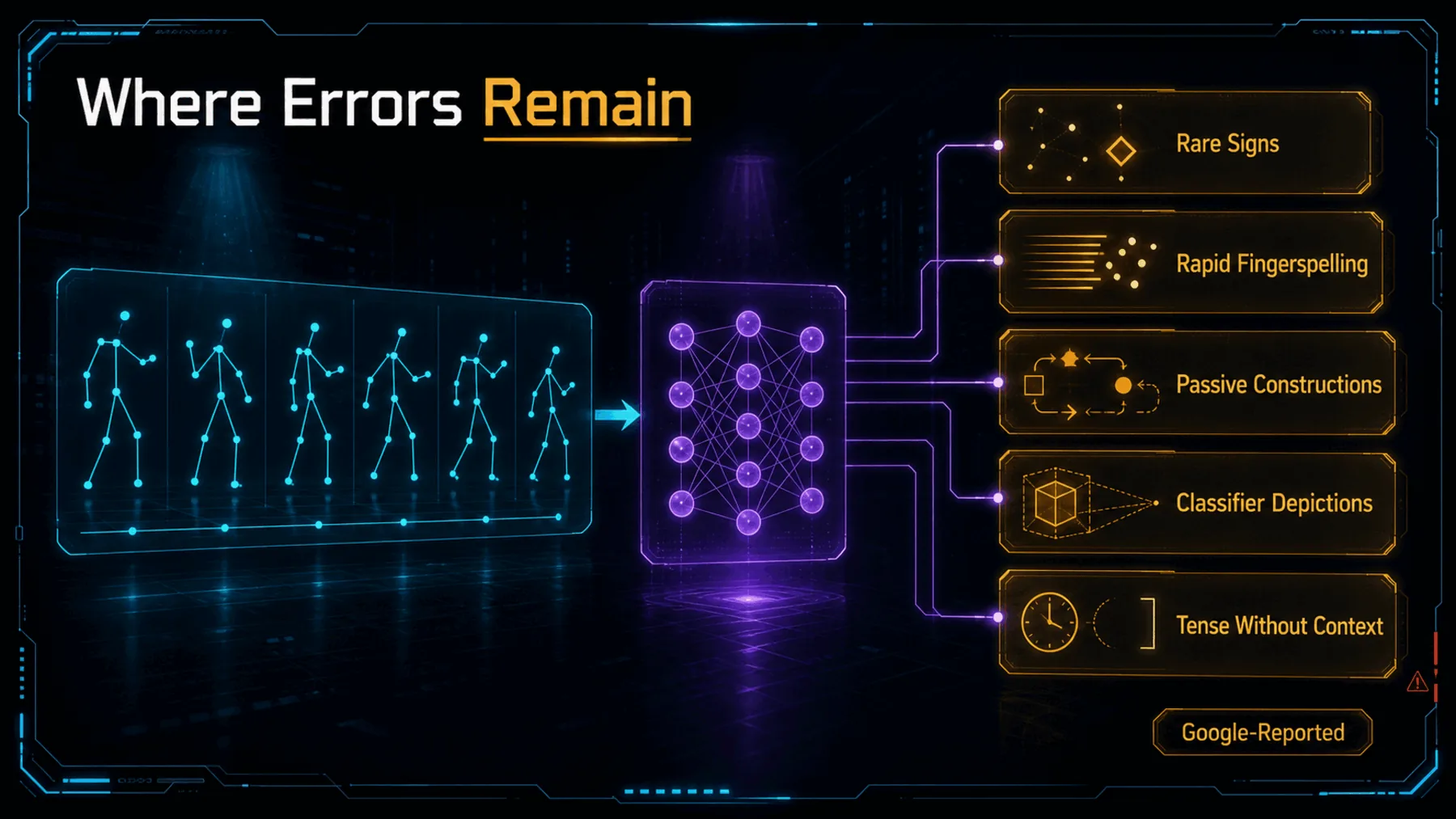
The scale is substantial, but scale is not the same as general availability. Google DeepMind says the first release is ASL-to-English in Gboard and Live Transcribe on Pixel 11, at no additional cost; it does not establish that every sign language, device or use case is covered.
Its reported 70 BLEURT result is a benchmark score, not an accuracy percentage and not a guarantee of real-world reliability. The documented error categories are more useful than a headline number because they show where meaning can still be lost.
A lab claim enters the phone
Google DeepMind presents SL2T as an attempt to move sign-language translation into consumer products.
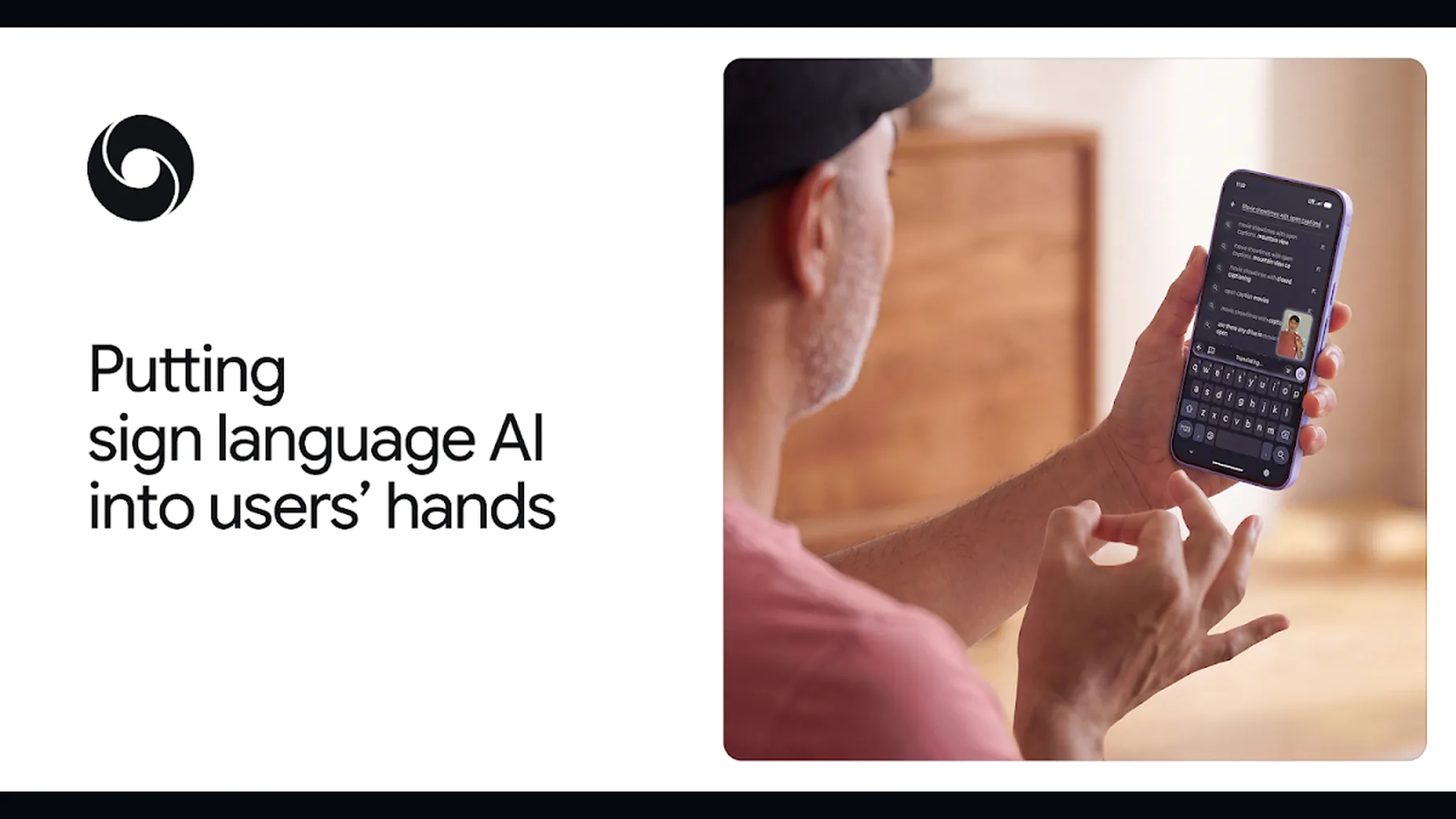
Google DeepMind says it built the work with Deaf community participation across conception, data collection, user studies and expert assessment. That matters because a launch framed around access cannot be separated from who shaped the system and how it is evaluated.
The company’s own account is not independent validation. Still, its lab-to-product claim is specific: a translation system is being placed in two everyday phone surfaces rather than held at the level of research demonstration.
“bringing sign language AI out of the lab and into consumer products for the first time.”
Google DeepMind
A pose map, not a verdict
Google’s demonstration shows how video becomes landmarks; it does not settle every question about use in the world.
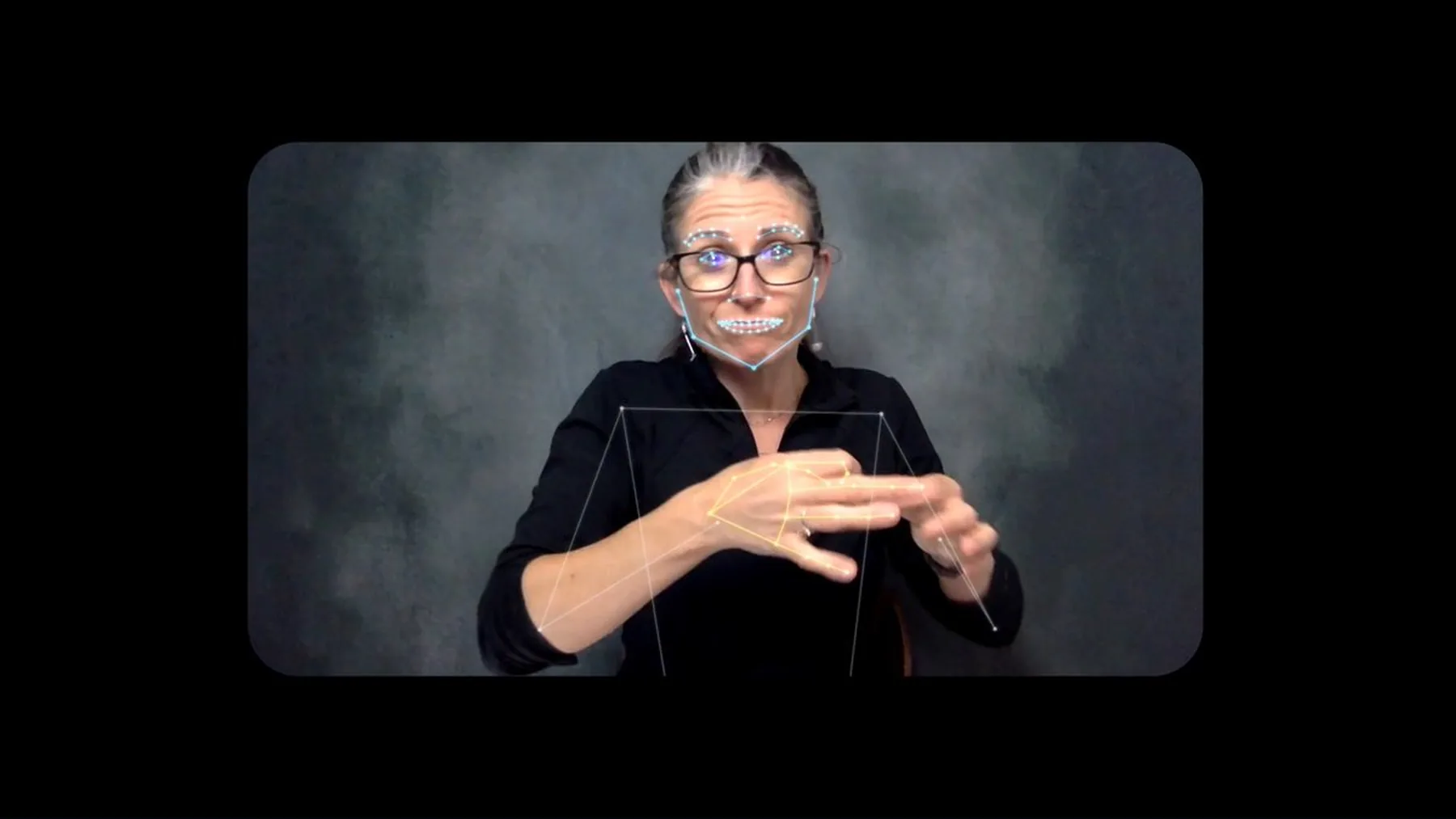
The pose visual makes one part of the pipeline easier to see: the phone tracks a signer’s movement as landmarks rather than treating a frame of video as the final input to translation. Google DeepMind says those coordinates, not the original video, are sent to its servers.
A demonstration image cannot independently establish accuracy, latency, security or reliability across lighting, signing styles and everyday contexts. It is evidence of the announced mechanism, not a complete measure of the experience.
How movement becomes text
Google DeepMind describes a split pipeline: landmarks on the phone, translation on its servers.
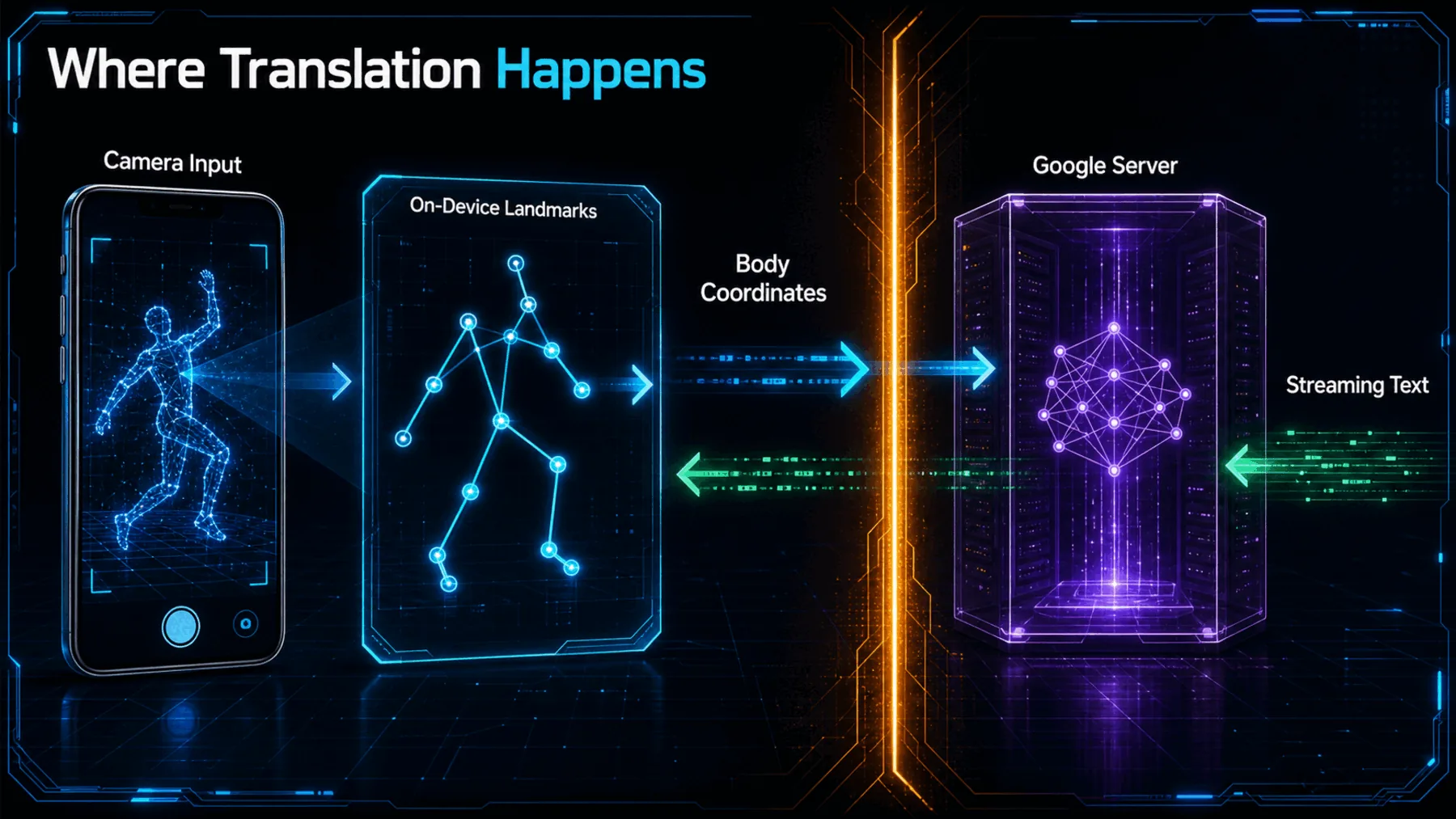
The distinction matters. Google DeepMind says MediaPipe Holistic extracts landmarks from the camera feed on-device; the original video is then discarded, while the geometric coordinates travel to a server for translation. That is not the same as a fully on-device system.
For us, the practical consequence is a feature that depends on both the phone’s capture of movement and a server-side translation step. Google’s privacy description explains the intended boundary, but it is still Google’s account of how the system operates.
Camera
The phone observes whole-body movement rather than looking for isolated hand gestures.
Landmarks
Google DeepMind says pose coordinates are created on-device and the original video is discarded.
Translation
Those coordinates go to Google’s server, which returns streaming text.
Where signing could fit
The first announced uses place ASL-to-English input inside familiar phone tasks, with important limits on where it begins.
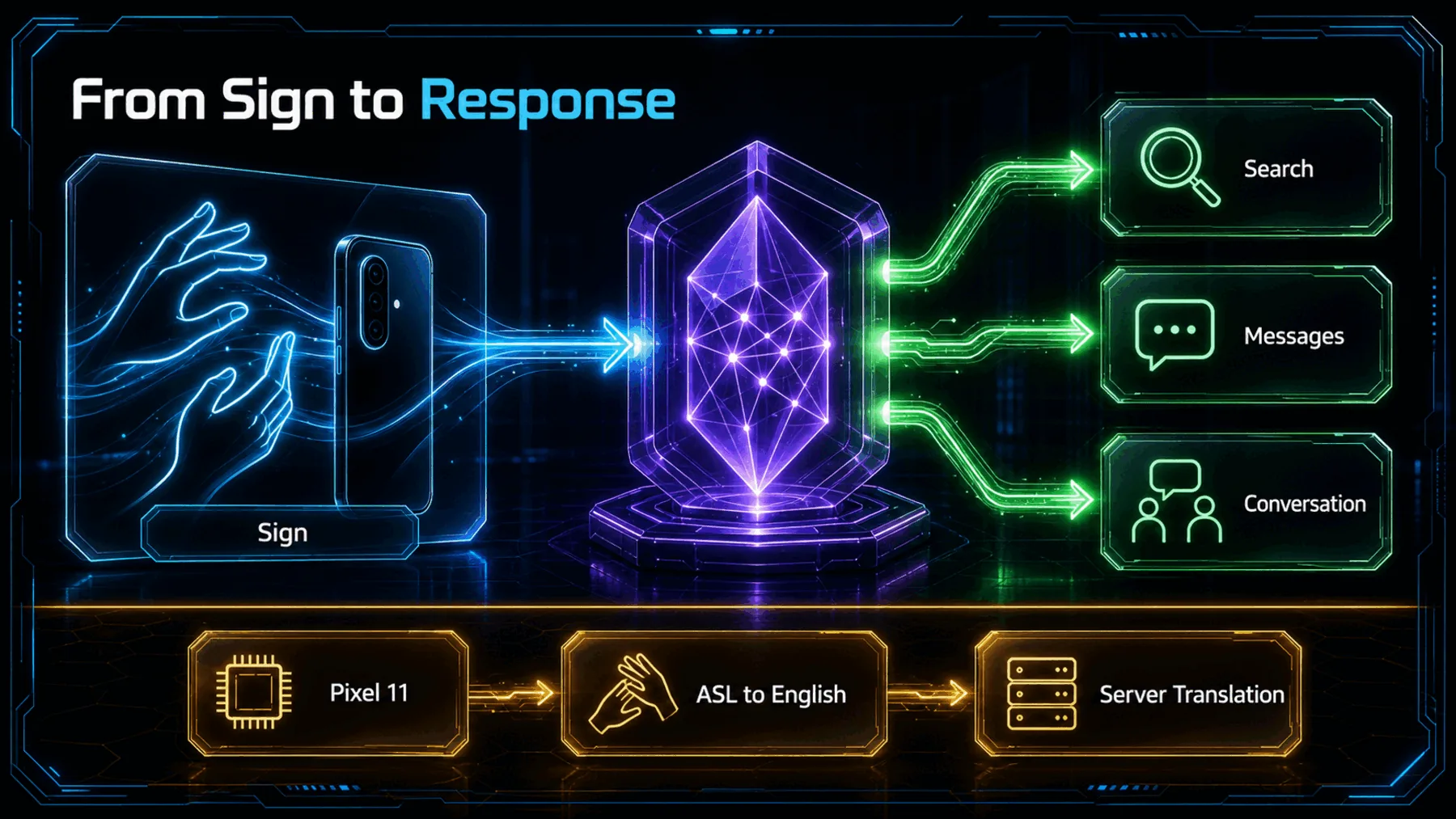
Input
Google DeepMind says signing can become ASL-to-English text in Gboard and Live Transcribe.
First device
The announced starting point is Pixel 11, not every Android phone.
Next evidence
More devices and languages are planned, but their timing and scope remain to be shown.
If it works as Google DeepMind describes, signing could become part of the same phone routines where we already search, compose and respond. That is the accessibility promise: less pressure to abandon a primary language simply to operate a familiar device.
But the first experience is deliberately bounded. ASL-to-English on Pixel 11 is not a claim of universal sign-language support, nor does it replace the need for reliable human interpretation where the stakes demand it.
Dependable access is the test
The announcement matters most if translation remains useful when language is fast, detailed and lived.
The achievement is not that a phone can see a signer. It is whether signing can become a dependable way for us to act through the phone without flattening a language into a gesture.
Creator Broadcast analysis of Google DeepMind’s published announcement
Google DeepMind has supplied a concrete mechanism, a substantial reported training story and a narrow first release. It has also published limitations that keep the conclusion honest: the system can still miss precisely the features that make language rich and specific.
That makes the next phase more interesting than the launch note. Dependable access will be shown through wider language coverage, clearer evidence about real-world reliability and continued participation by the communities whose language the system is attempting to translate.
Pressure-test a sign-language input rollout
Act as an accessibility product reviewer. Assess this proposed launch: ASL-to-English input arrives first in a phone keyboard and live-transcription feature; the phone converts camera video into whole-body pose coordinates on-device, then a server returns streaming text. Write a 180-word launch-readiness note with three sections: what the feature enables, what must be tested with Deaf signers before wider release, and which claims should remain qualified. Do not assume universal availability, error-free translation, or that the entire system runs on-device.Ready to copy
Watch the evidence build
Google DeepMind’s first release is a meaningful opening, but the value will be decided by how carefully access, language coverage and documented limitations develop from here.
Try the promptWhat could change the picture
- Device expansion
- Language coverage
- Reliability evidence
- Community participation