One engine, everywhere—and under pressure
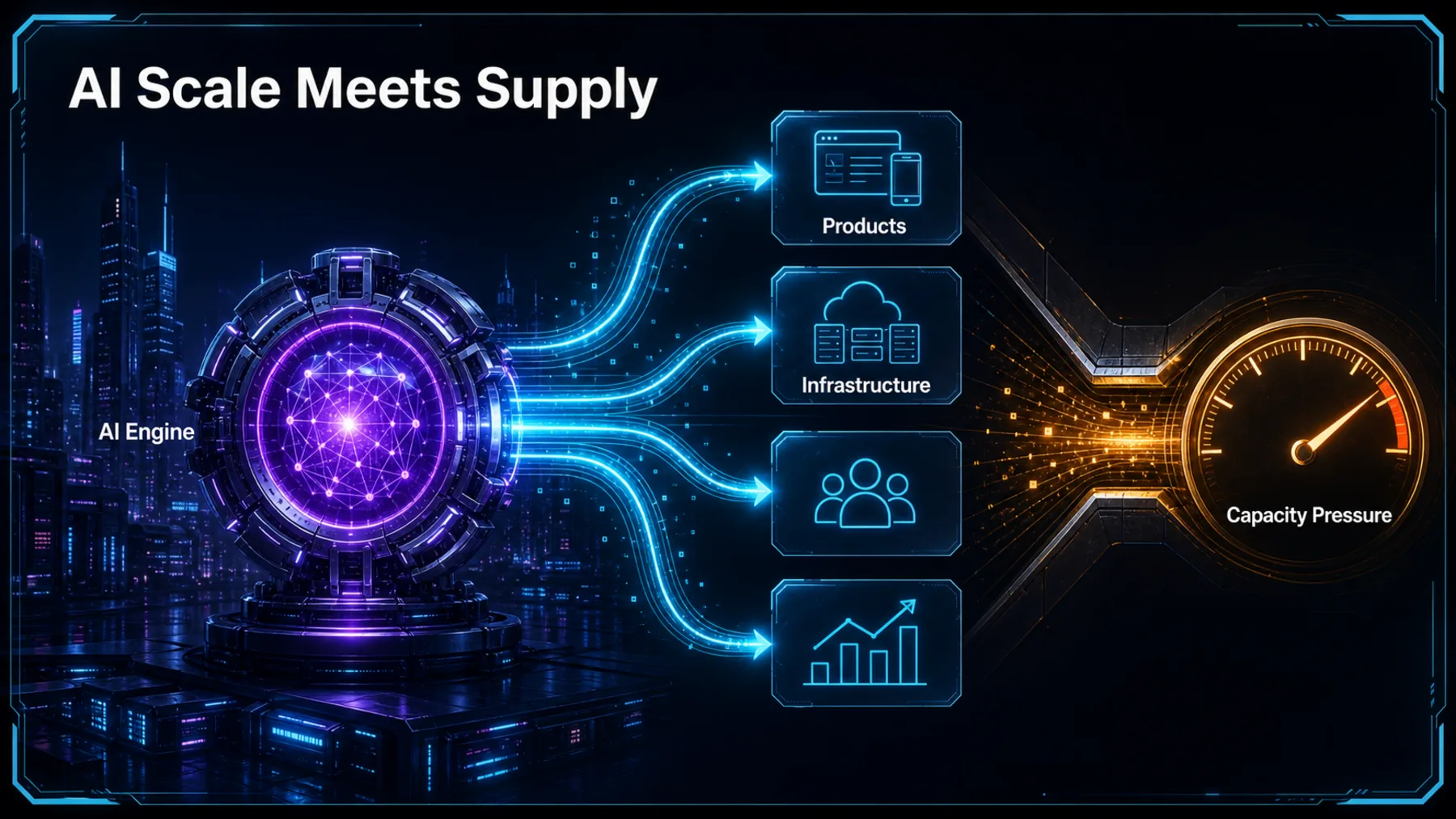
Google says Gemini is spreading across products and infrastructure while demand continues to press against available supply.
Google says its model APIs now process approximately 22 billion tokens per minute, up from 16 billion one quarter earlier. Those are units handled by the APIs, not completed tasks or proof of intelligence.
The figures matter because they sit inside a wider distribution story spanning developers, the Gemini app, Search, YouTube and Cloud. The catch arrives in the same remarks: Google says it remains supply constrained.
Scale is meeting supply pressure
Wider distribution is creating a larger system, but Google says capacity is still constrained.
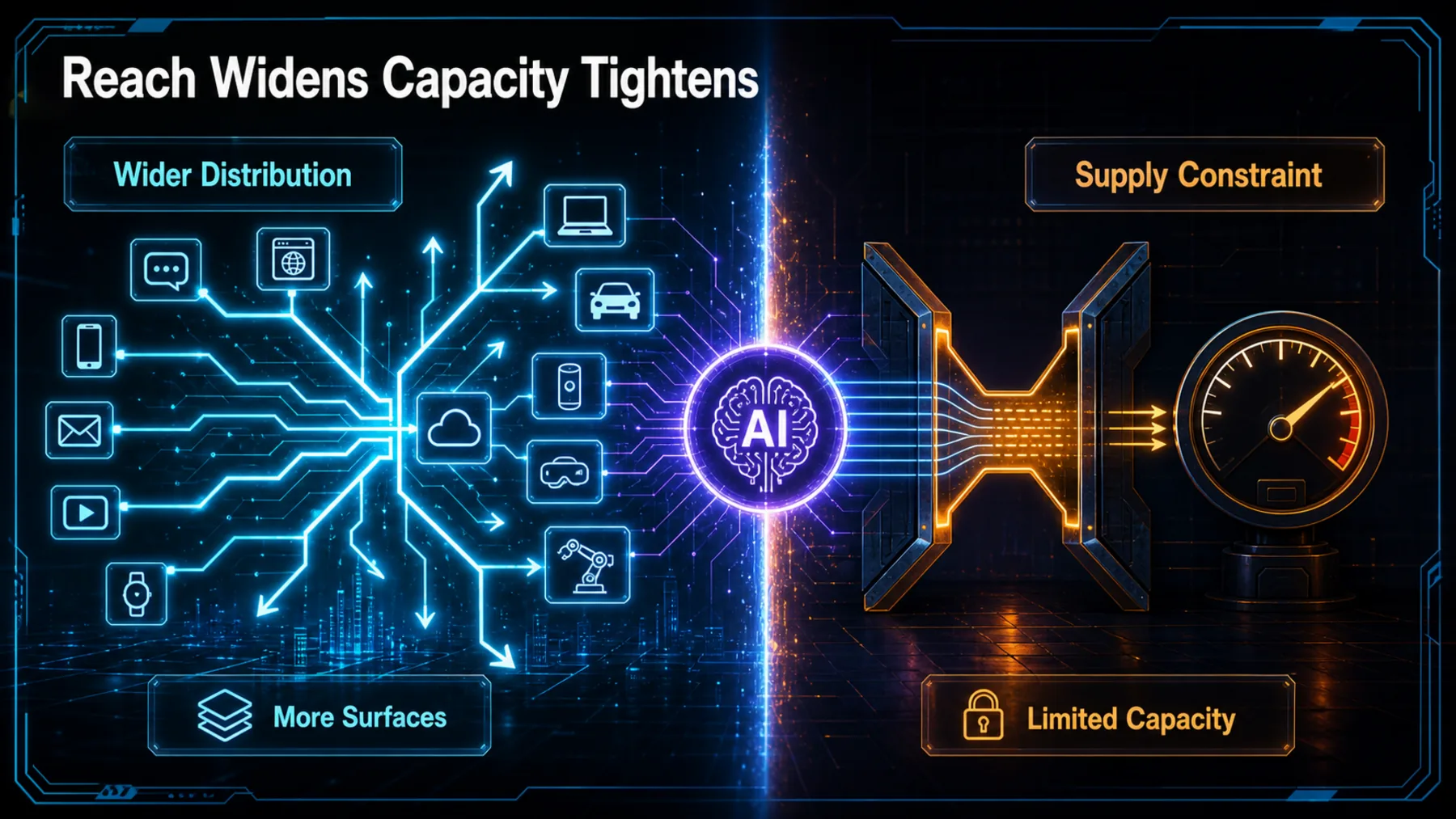
Google’s numbers describe reach from several directions: API throughput, developer activity, Gemini app use and Cloud demand. Taken together, they suggest that AI activity is no longer concentrated in one product experience.
But the constraint changes the reading. Google does not identify the cause or likely duration of the supply pressure, so the evidence supports a tension—not a diagnosis of the bottleneck.
Throughput rises across the system
Google’s reported API growth sits beside adoption and business signals from the same connected engine.
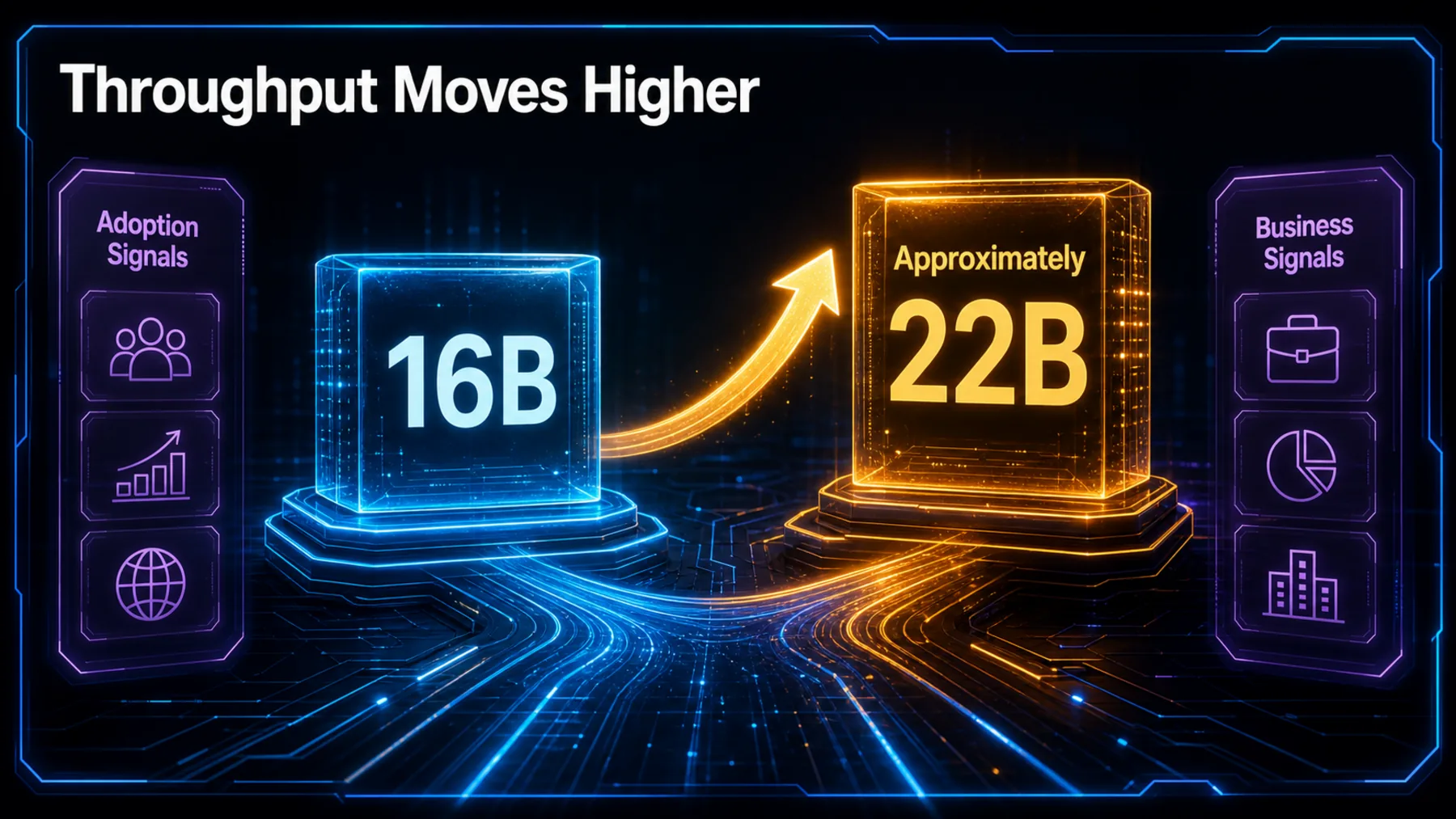
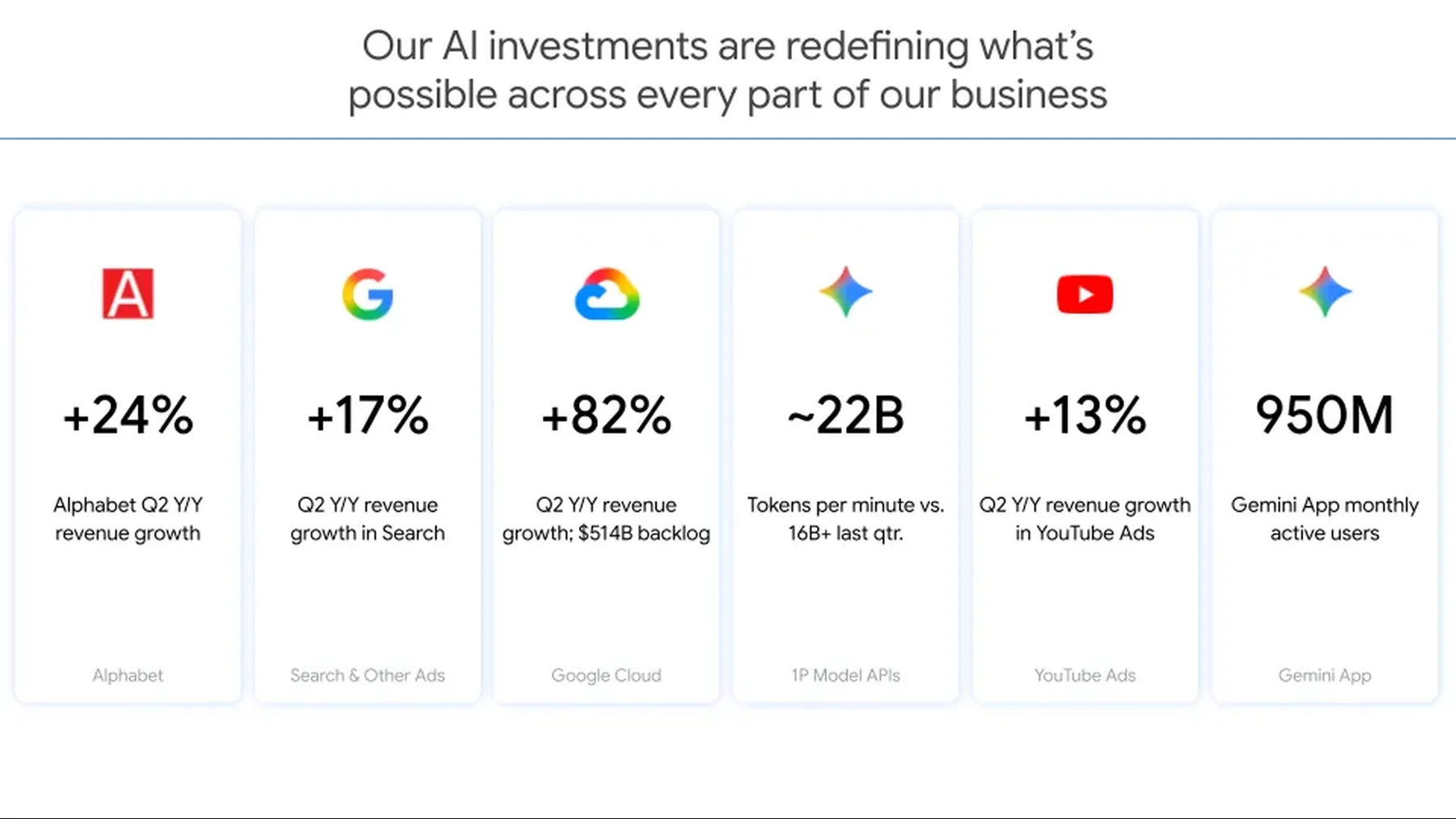
The movement from 16 billion to approximately 22 billion model API tokens per minute is the clearest measure of the quarter-to-quarter shift. It tells us that more units are moving through Google’s model interfaces, not what those units achieved.
Google places that throughput beside more than 9 million monthly developers, 950 million Gemini monthly active users and 82% Cloud revenue growth. These figures come from Google’s edited earnings remarks and should be read as company-reported signals rather than independent validation.
Google’s numbers in its words
The published remarks state the throughput increase, adoption figures and capacity constraint directly.
“More than 9 million developers are building each month with our models across our APIs and key developer products.”
Google Q2 2026 earnings remarks
The wording supports a narrow but useful conclusion: Google reports sharply higher model API throughput, broad developer activity and an active supply constraint at the same time.
It does not establish the quality of the work produced, the cause of the constraint or whether the reported figures would withstand independent verification.
Strong signals, bounded conclusions
The official remarks establish what Google reported, not an independent verdict on performance or demand.
Google’s own description connects the layers that can otherwise look separate: computing infrastructure, models, data, security and agent platforms. That makes the distribution thesis explicit in the company’s language.
The source remains an edited earnings transcript. It supports attribution to Google, but not claims that the figures are audited here, that every product shares identical access or that broad distribution proves product quality.
How one engine spreads
Google describes a connected path from infrastructure and models into developer, enterprise and consumer surfaces.
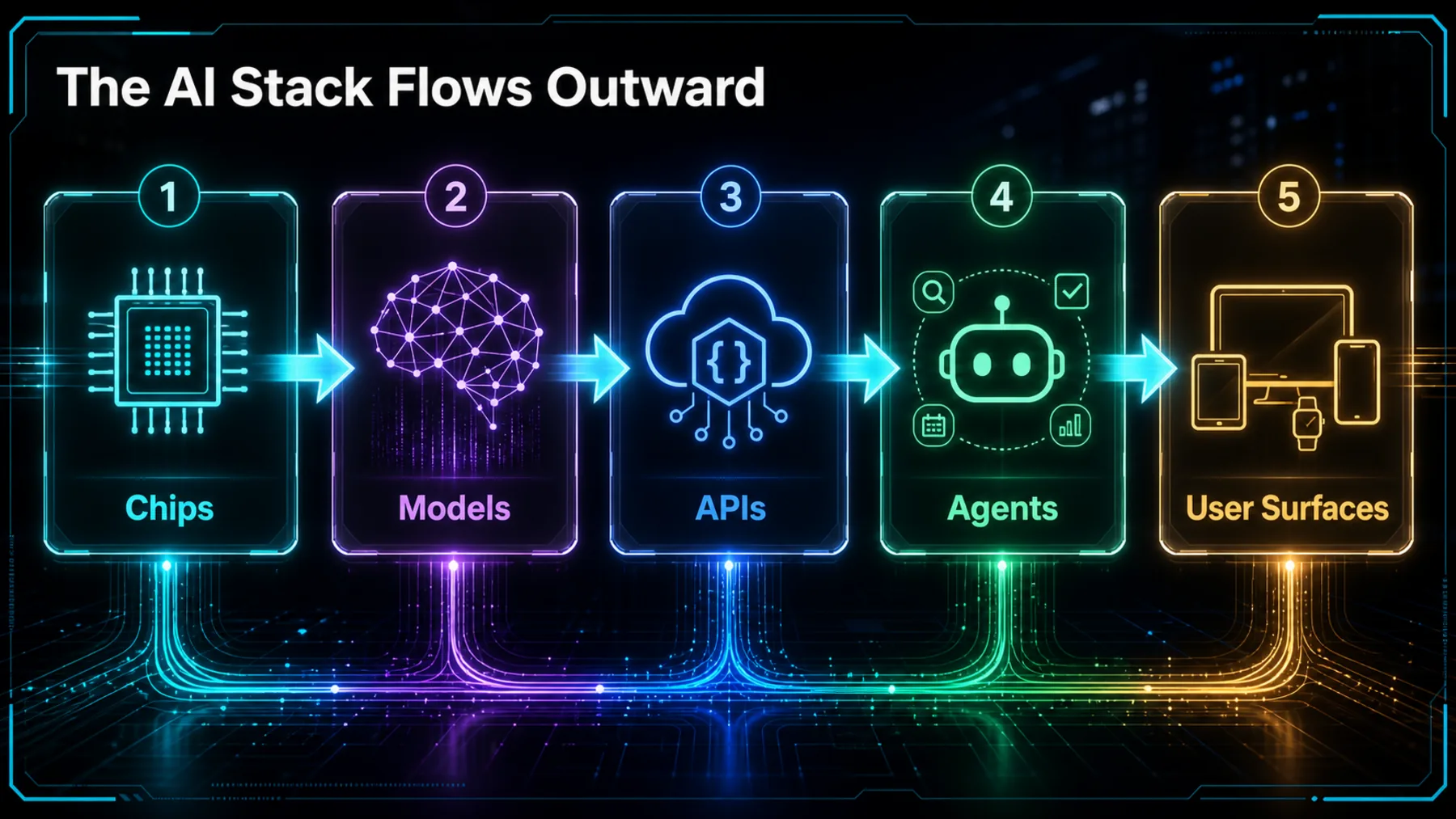
The simplest mental model begins below the app layer. Google combines chips and models with data, security and agent platforms, then exposes that system through APIs, developer products, Cloud services and its own consumer experiences.
That structure helps explain why API throughput, developer activity and Gemini app use belong in the same story. They are different expressions of distribution, although Google’s remarks do not establish identical models, access terms or capacity across every surface.
We meet the engine in pieces
What looks like a collection of separate features can be understood as access to a wider shared system.
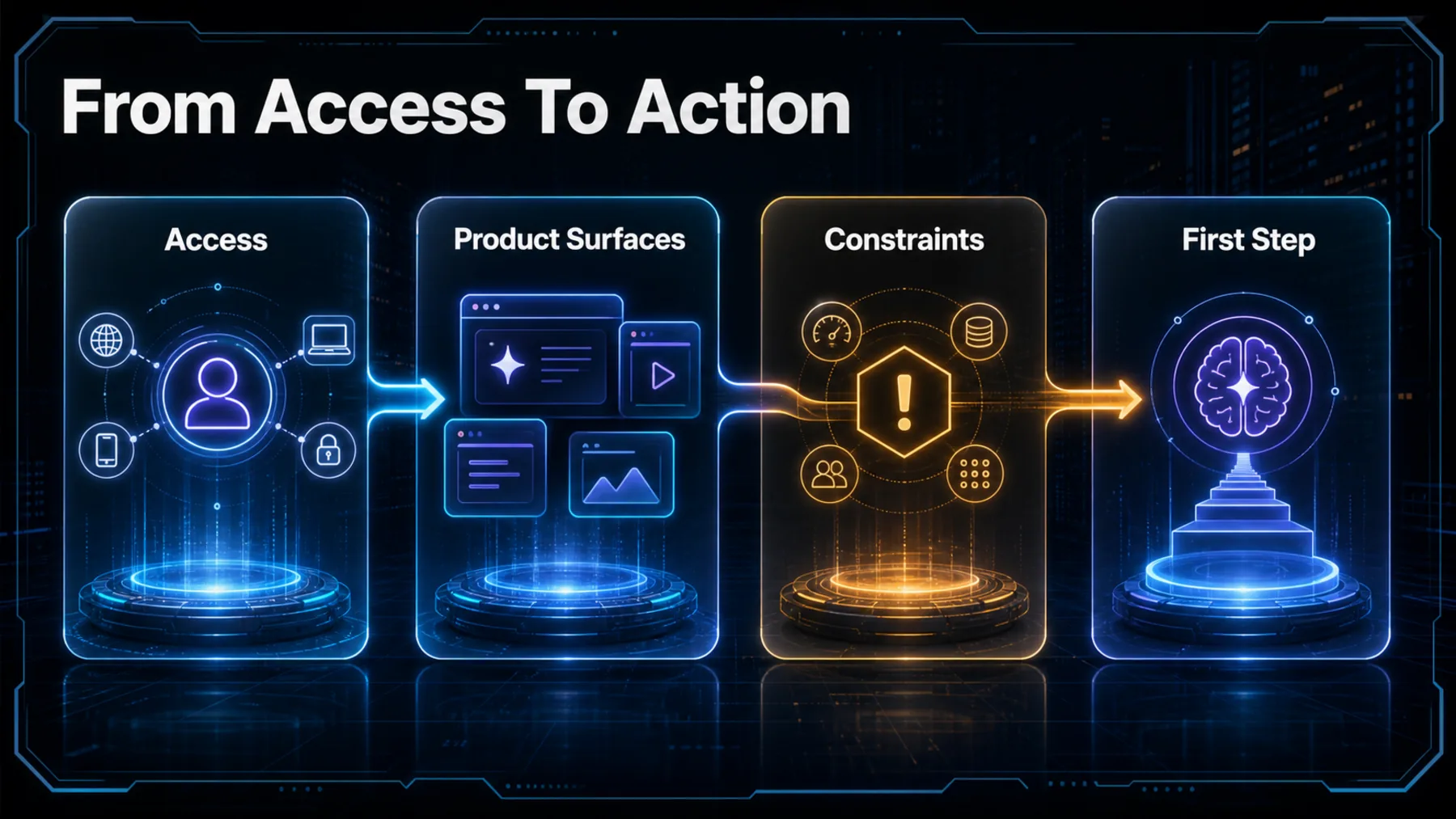
We rarely encounter this system as one neat stack. We may use Gemini directly, call a model through an API, build with a developer product or meet AI inside another Google service.
The practical distinction is between the surface we can see and the infrastructure carrying the work underneath. Availability, limits and performance may still vary, especially while Google says supply remains constrained.
Choose a surface
Trace the engine
Check the limits
Distribution becomes the advantage
The strategic signal is the number of places Google can place one connected AI engine, not one isolated release.
Google’s strongest AI signal is not a single feature. It is the ability to move one connected engine through infrastructure, developer tools, enterprise services and consumer products—while supply pressure reveals the cost of that reach.
Altior analysis based on Google’s Q2 2026 remarks
The numbers become more meaningful when read as a distribution map. Approximately 22 billion model API tokens per minute, more than 9 million monthly developers and 950 million Gemini monthly active users describe different layers of the same expansion.
The cautious conclusion is also the stronger one: Google has published substantial evidence of reach, while its own supply-constraint statement shows that reach is not frictionless. Distribution is the structural shift; capacity is the unresolved control point.
Map Google’s AI distribution engine
Act as an AI strategy analyst. Using only these Google-published facts—model APIs process approximately 22 billion tokens per minute, up from 16 billion one quarter earlier; more than 9 million developers build each month across Google’s APIs and key developer products; the Gemini app has 950 million monthly active users; Google Cloud brings together chips, models, data, security and agent platforms; and Google says it remains supply constrained—produce a four-column table covering signal, distribution surface, practical implication and unresolved question. Attribute every figure to Google, treat tokens as units processed rather than completed tasks or intelligence, and do not infer capacity causes, product quality, paid usage, retention or universal availability. Finish with a 120-word assessment of whether distribution or any single feature is the more important strategic signal.Ready to copy
Watch distribution meet capacity
Track whether Google reports easing supply pressure while extending Gemini across more products, developers and Cloud workloads; that relationship will tell us more than any isolated feature announcement.
Try the promptSignals that could change the takeaway
- Supply pressure
- API throughput
- Distribution reach
- Gemini 4