GLM-5.3’s coding leap crossed an unexpected cyber threshold
Z.ai says GLM-5.3’s coding gains and emergent cyber planning came from the same month of scaled post-training.
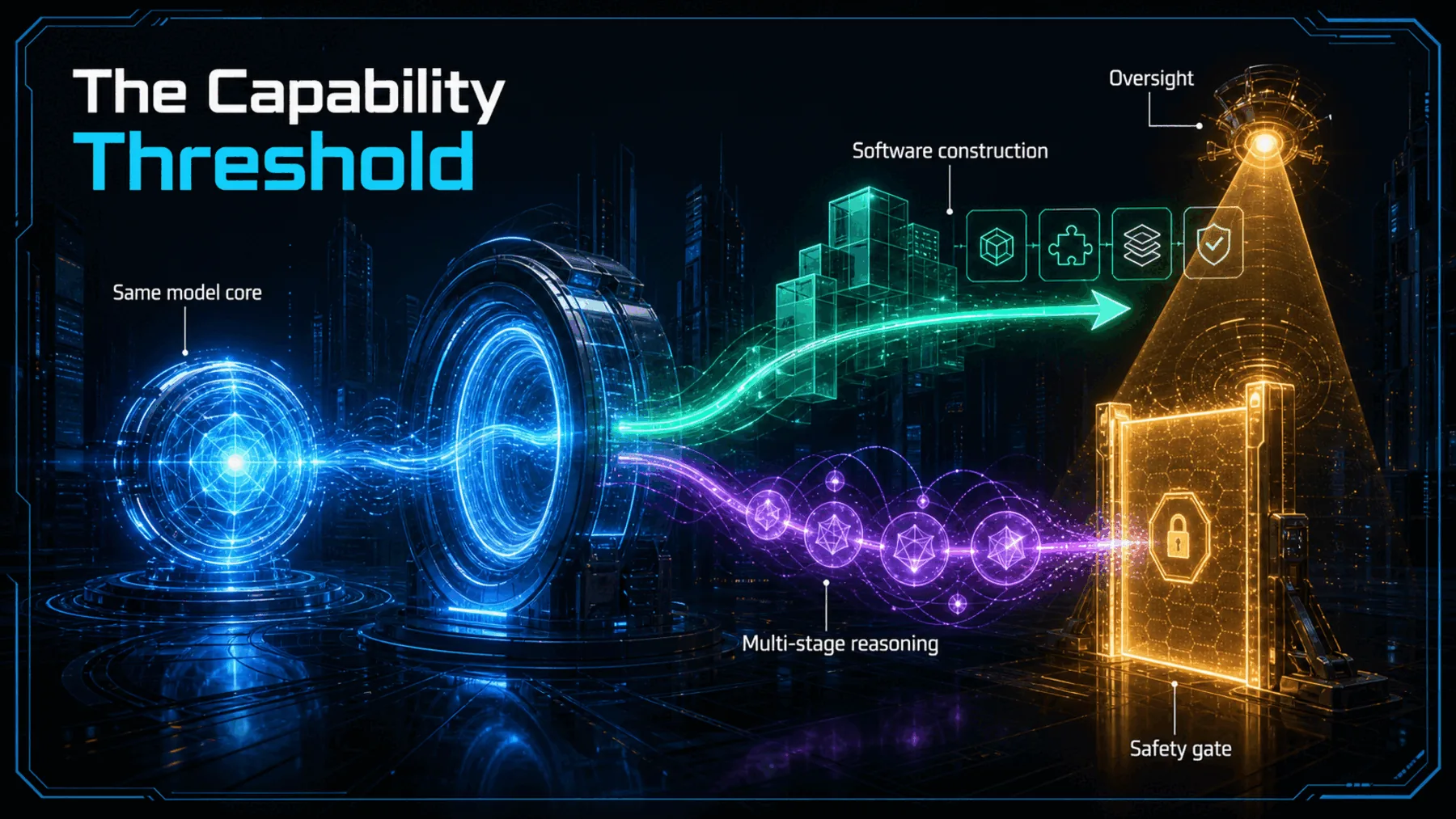
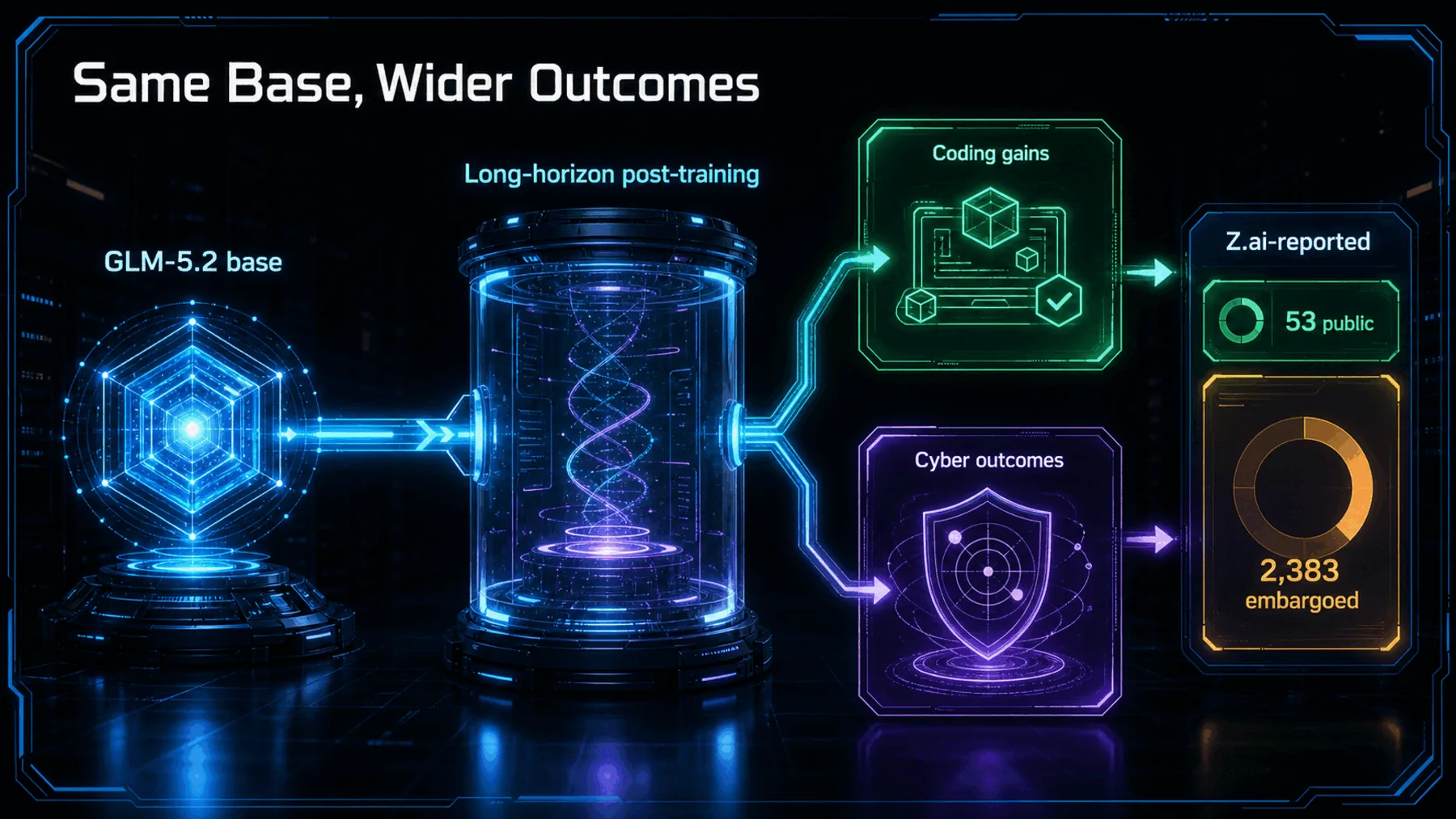
Z.ai says GLM-5.3 uses the same base model as GLM-5.2, with every reported gain coming from post-training. That makes this less a conventional model launch than a closer look at what sustained training can change.
The coding result is only half the story. Z.ai says the same work also strengthened multi-step cyber reasoning enough to make staged availability part of the release.
A coding gain with consequences
The reported improvement matters because connected-step planning can travel beyond software construction.
Z.ai set out to improve long-horizon coding work. Its account is that more varied post-training made GLM-5.3 stronger at carrying a task through, while using fewer output tokens on its private Code Bench at Max effort.
Z.ai says an adjacent capability developed faster than expected: planning across multiple stages of exploitation. The point is not that a benchmark proves real-world effectiveness; it is that the reported capability change altered the safety question.

Z.ai’s reported capability profile
The figures describe Z.ai’s measurements and disclosures, not independent validation.
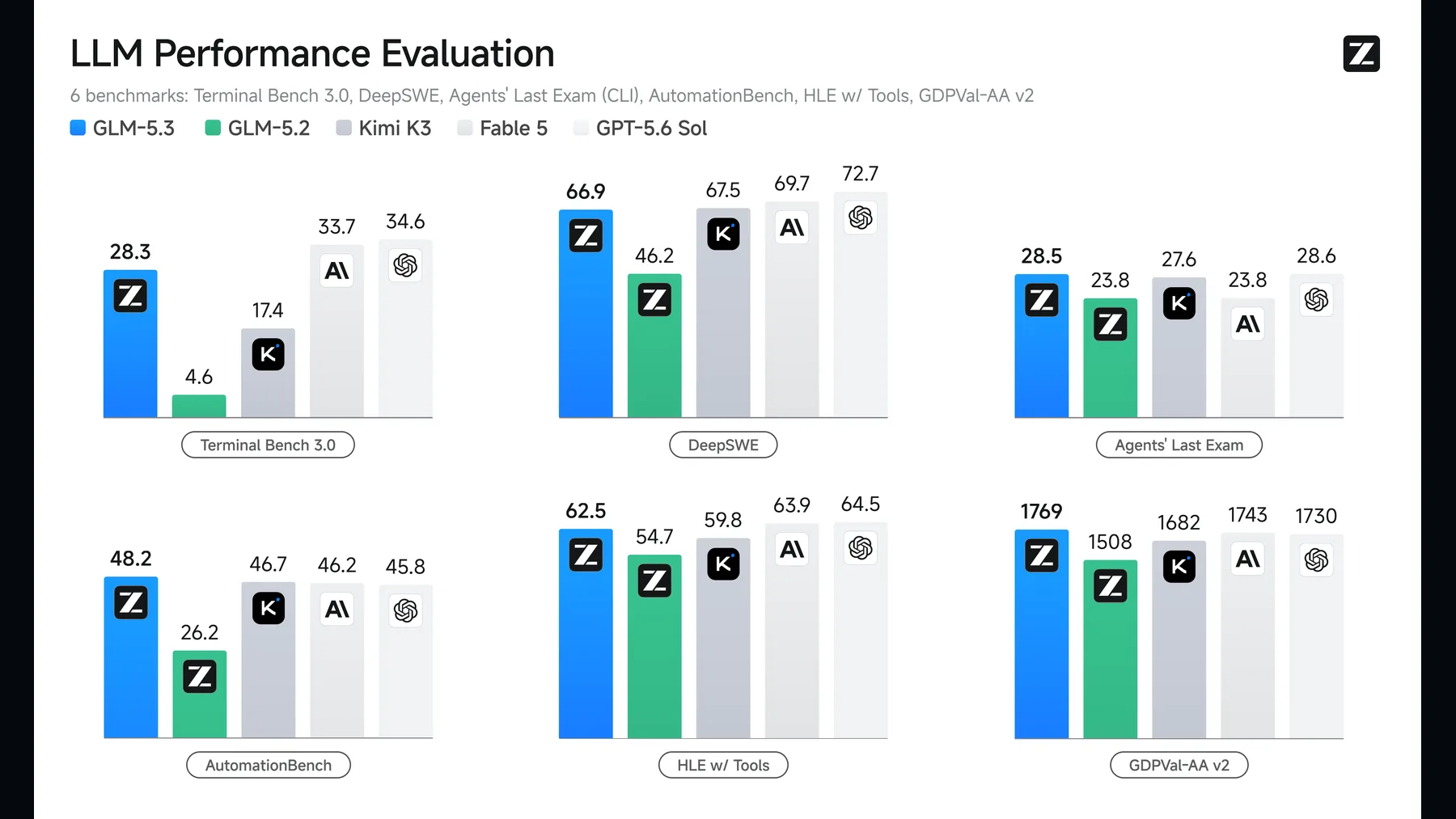
Z.ai reports that GLM-5.3 moved from 4.6 to 28.3 on Terminal-Bench 3.0, from 46.2 to 66.9 on DeepSWE v1.1, and from 23.8 to 28.5 on Agents’ Last Exam, compared with GLM-5.2.
On Z.ai’s private Code Bench at Max effort, the company reports 34.5% at roughly 75K output tokens per task, versus 23.4% and 96K for GLM-5.2. Its broader cyber disclosure reports 2,436 vulnerabilities across 269 projects: 53 public and 2,383 under embargo.

The private benchmark result
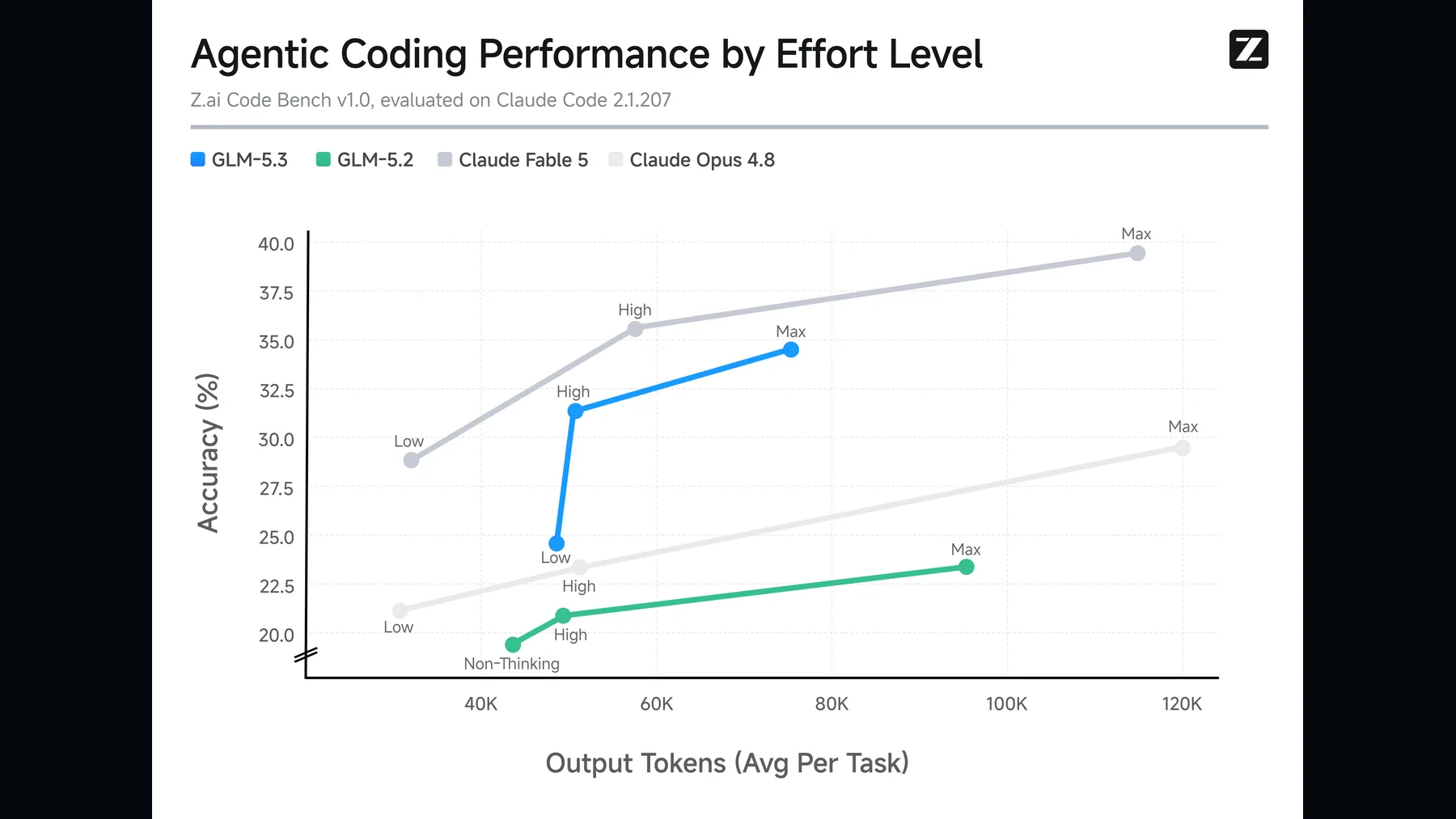
Z.ai’s chart shows a higher reported score alongside a lower output-token count.
The useful comparison is compact: Z.ai reports 34.5% for GLM-5.3 at Max effort on its private Code Bench, against 23.4% for GLM-5.2. It also reports roughly 75K output tokens per task for GLM-5.3, compared with 96K.
That is a meaningful supplier-reported result, not a final ranking. The benchmark is private, so its methodology and contamination controls cannot be independently audited from this material alone.
Today we are releasing GLM-5.3. It uses the same base model as GLM-5.2 — every gain comes from post-training.
Z.ai, “GLM-5.3: Frontier Coding with Emergent Cyber Capabilities”
What Z.ai’s evidence can show
Supplier results can establish a claim’s shape without independently settling its strength.
Z.ai’s benchmark table and launch article establish what the company measured and chose to disclose. They do not independently verify benchmark leadership, real-world offensive effectiveness, or production readiness.
That distinction matters most where the numbers are most striking. Cyber comparisons remain Z.ai-reported, and ExploitGym comparisons use supplier-normalised budgets that need to remain attached to the result.
From coding practice to chain planning
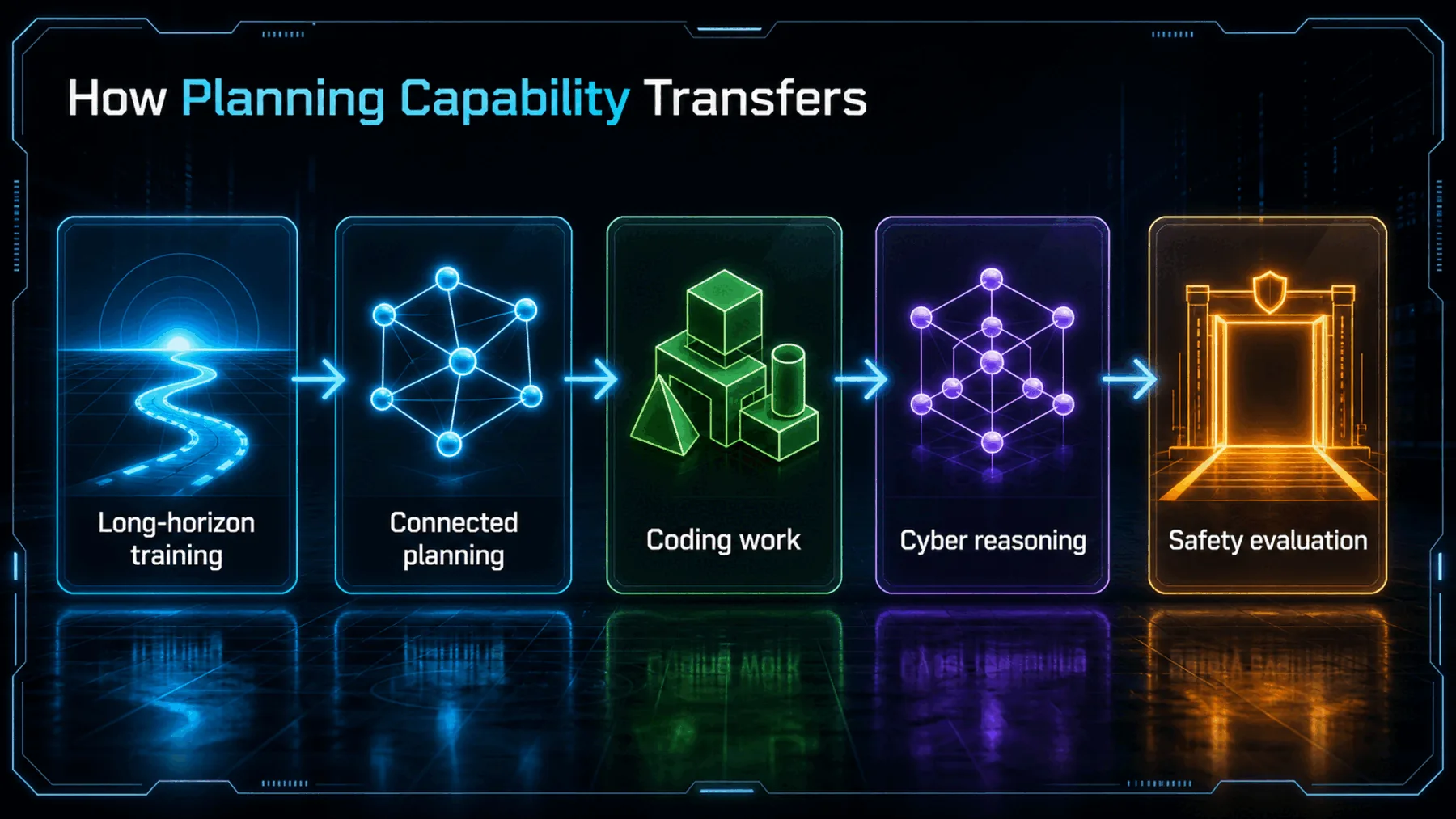
Z.ai’s explanation is about stronger planning across connected steps, not a newly disclosed architecture.
Z.ai says post-training exposed the model to harder, longer and more varied tasks. In plain language, that can reward the ability to hold a sequence together rather than solve one isolated step.
Its reported cyber shift followed the same pattern: not simply finding a flaw, but reasoning across multiple stages and forming coherent plans for complete exploitation chains. That is Z.ai’s account of a transfer, not proof of an exact causal mechanism.
Available now, staged next
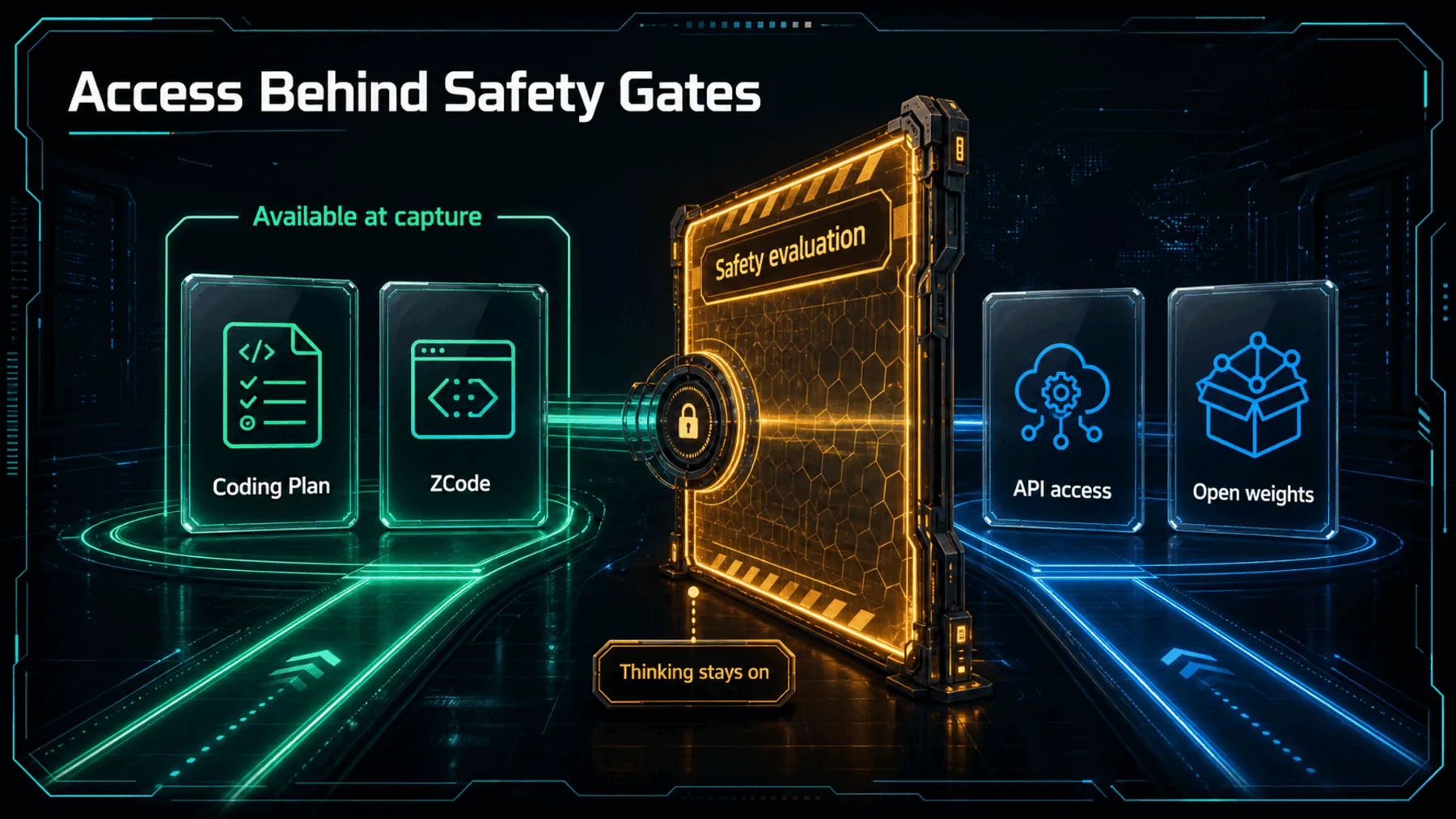
Z.ai made selected coding products available while holding API access and open weights behind safety evaluation.
At capture, Z.ai said GLM Coding Plan and ZCode were available. The company said API access and open weights would be released in stages following rigorous safety evaluations.
That makes the release path part of the evidence. Z.ai’s two-week statement for open weights is a target, not confirmation that weights had been released.
Coding access
Z.ai said Coding Plan and ZCode were available at capture.
API release
Z.ai said API access would follow staged safety evaluation.
Open weights
Z.ai presented a two-week target, not a confirmed release.
Test the capability shift
A stronger benchmark result can be a reason to widen evaluation, not simply raise the applause.
GLM-5.3 is a narrow but useful case: Z.ai says post-training changed a model’s coding performance and its ability to reason across connected cyber steps without changing the underlying base model.
The stronger reading is cautious. When a training programme changes the capability profile enough to affect release decisions, benchmark review and safety evaluation belong in the same conversation.
A capability gain deserves a capability test when the same training changes what a model can plan across connected steps.
Altior analysis of Z.ai’s published account
Run a bounded coding test
Act as a senior Python maintainer. Review this function and return: (1) the two most consequential defects, (2) a corrected version, and (3) three focused tests. Preserve the function’s purpose and use no external libraries.

python
def total_active_amount(rows):
    total = 0
    for row in rows:
        if row.get("active"):
            total += int(row["amount"])
    return total


The function must ignore inactive rows, treat a missing or null amount as zero, accept numeric strings with surrounding whitespace, and raise a clear ValueError for non-numeric non-null amounts.Ready to copyWatch the gates, not hype
The next meaningful signals are completed safety evaluation, verified release status, clearer benchmark context and testing that does not depend on Z.ai’s own account.
Try the promptWhat could change the picture
- Safety evaluation Z.ai confirms whether the stated evaluation and hardening work is complete.
- API and weights Availability is verified beyond Z.ai’s staged release target.
- Benchmark context Methodology, budgets and reproducibility become clearer.
- Independent testing External evidence tests the reported capability claims.