A local assistant meets its evidence test
Google Gemma presents Gemma 4 26B as the engine for an OpenClaw assistant, but its 90% workload claim still needs a real trial.
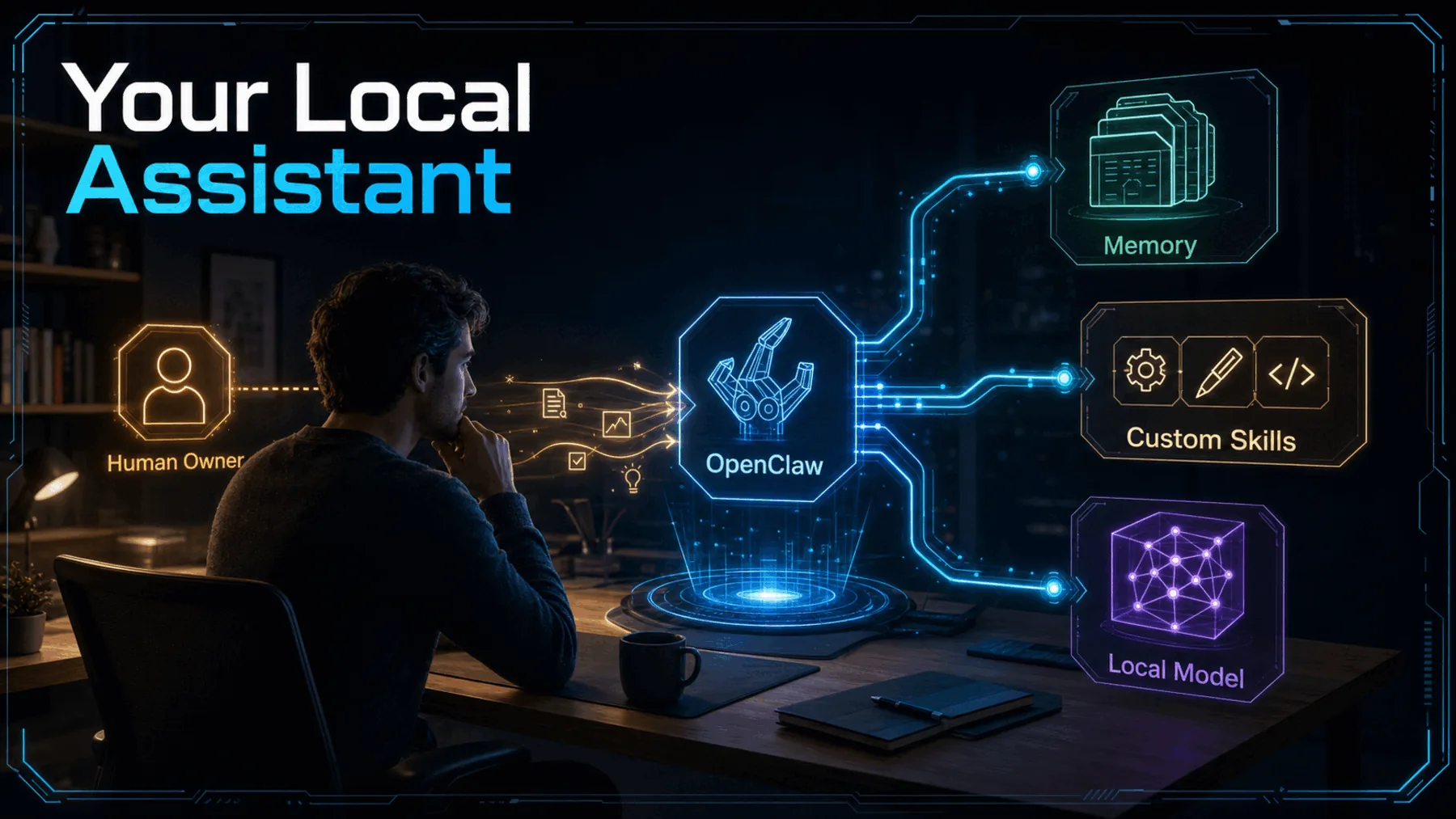
Google Gemma is pitching a familiar ambition in a more practical shape: a personal assistant that can help with everyday work rather than simply answer a chat prompt. Its post presents Gemma 4 26B as the local language model behind that idea, with OpenClaw as the assistant and workflow layer.
The pattern is easy to understand. Memory can retain useful context, custom skills can shape repeatable actions, and we still define the job and check the result. What remains open is whether that pattern performs as broadly as the promotion suggests.
From chat to recurring work
The promise becomes more useful when a model is placed inside a workflow we can inspect and correct.
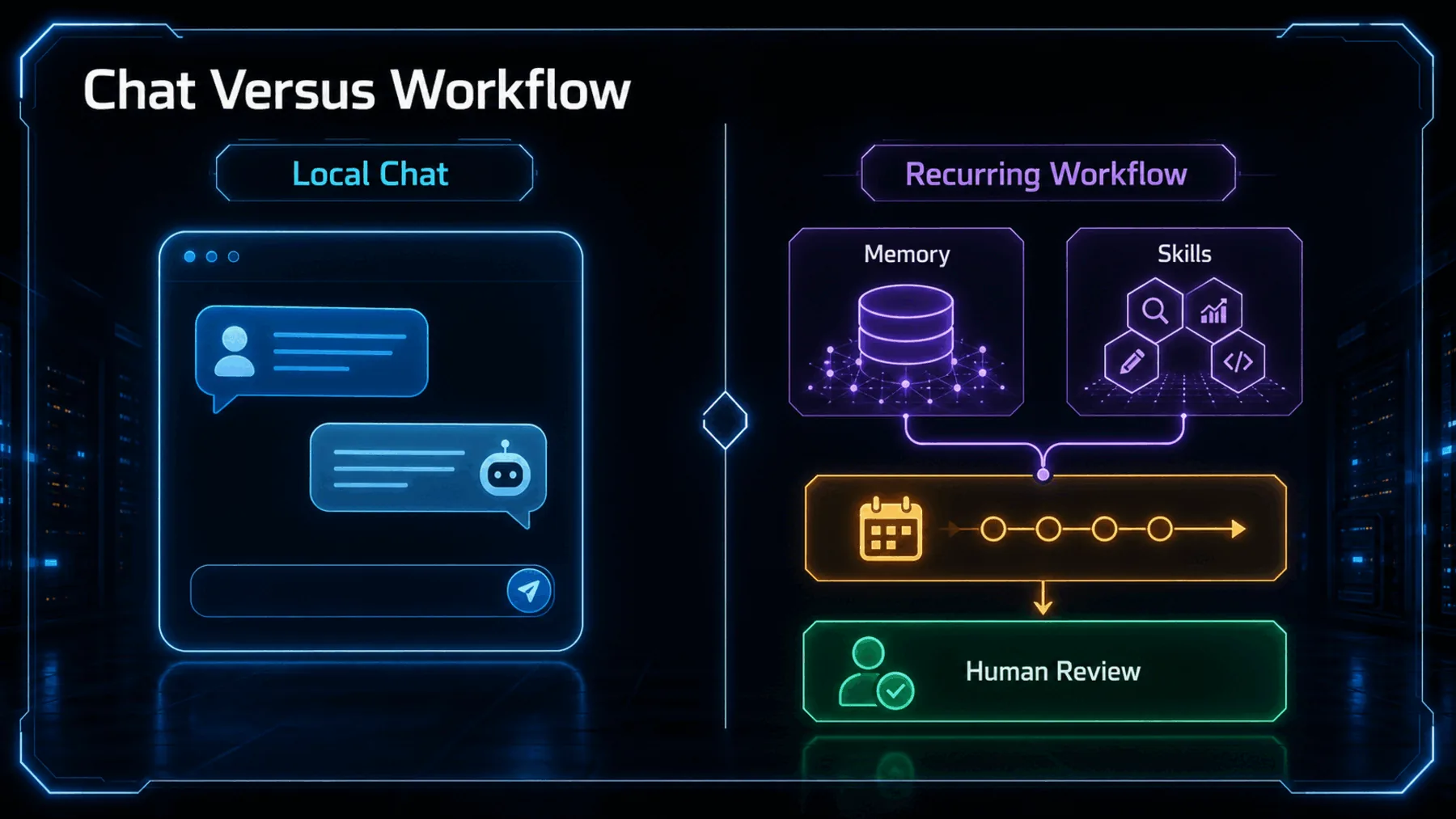
A local chat session starts and ends with a prompt. An assistant workflow has more moving parts: a task to carry forward, context worth retaining, a repeatable action, and a person responsible for the final call.
That distinction matters because a convincing interface is not the same as a proven working system. The useful question is whether the arrangement helps with our actual work while leaving its limits visible.
Three parts, one bigger claim
Google Gemma points to configuration, memory and custom skills as the route towards a local agent.
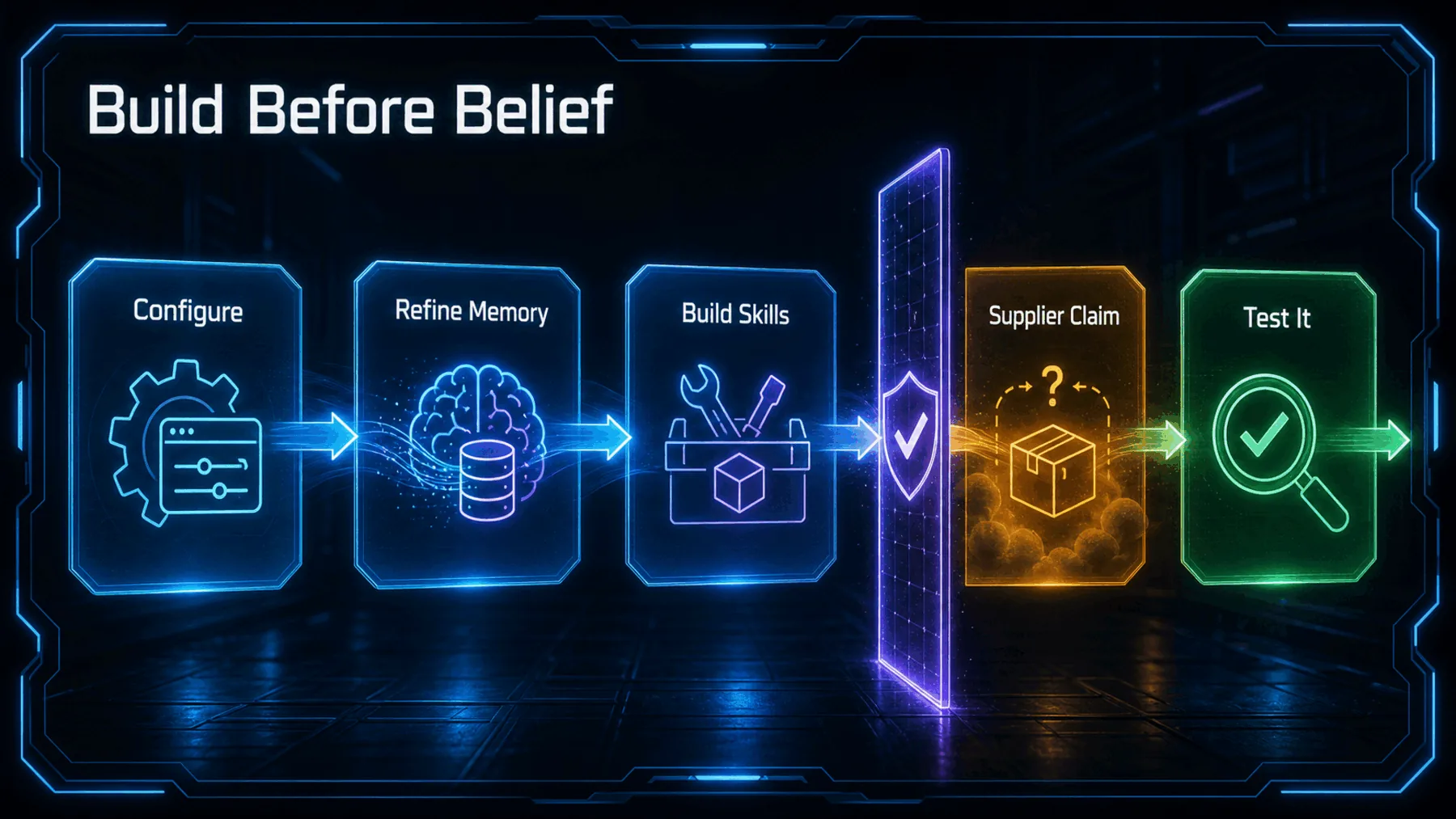
Google Gemma’s follow-up post points to configuring OpenClaw, optimising memory and building custom skills for a local agent. Taken plainly, that is a workable description of how a general model can become part of a more specific routine.
The post then adds the sharper proposition: that a local Gemma model can take on 90% of daily task load. Google Gemma says this in connection with the linked walkthrough, but the approved source does not provide the task list, conditions, hardware or results needed to treat the figure as established performance.

The claim in Google Gemma’s words
The official post makes the proposition clearly enough; it also sets the boundary on what has been evidenced.
Google Gemma opens with the prospect of running a personal AI assistant, then says Gemma 4 26B is stepping in to power everyday workflows. That is the central proposition: a local model placed within an assistant pattern for recurring work.
Its 90% statement deserves equal visibility because it changes the weight of the pitch. The source shows that Google Gemma made the claim. It does not show how the percentage was measured or whether it transfers beyond the promoted setup.
A screenshot has limits
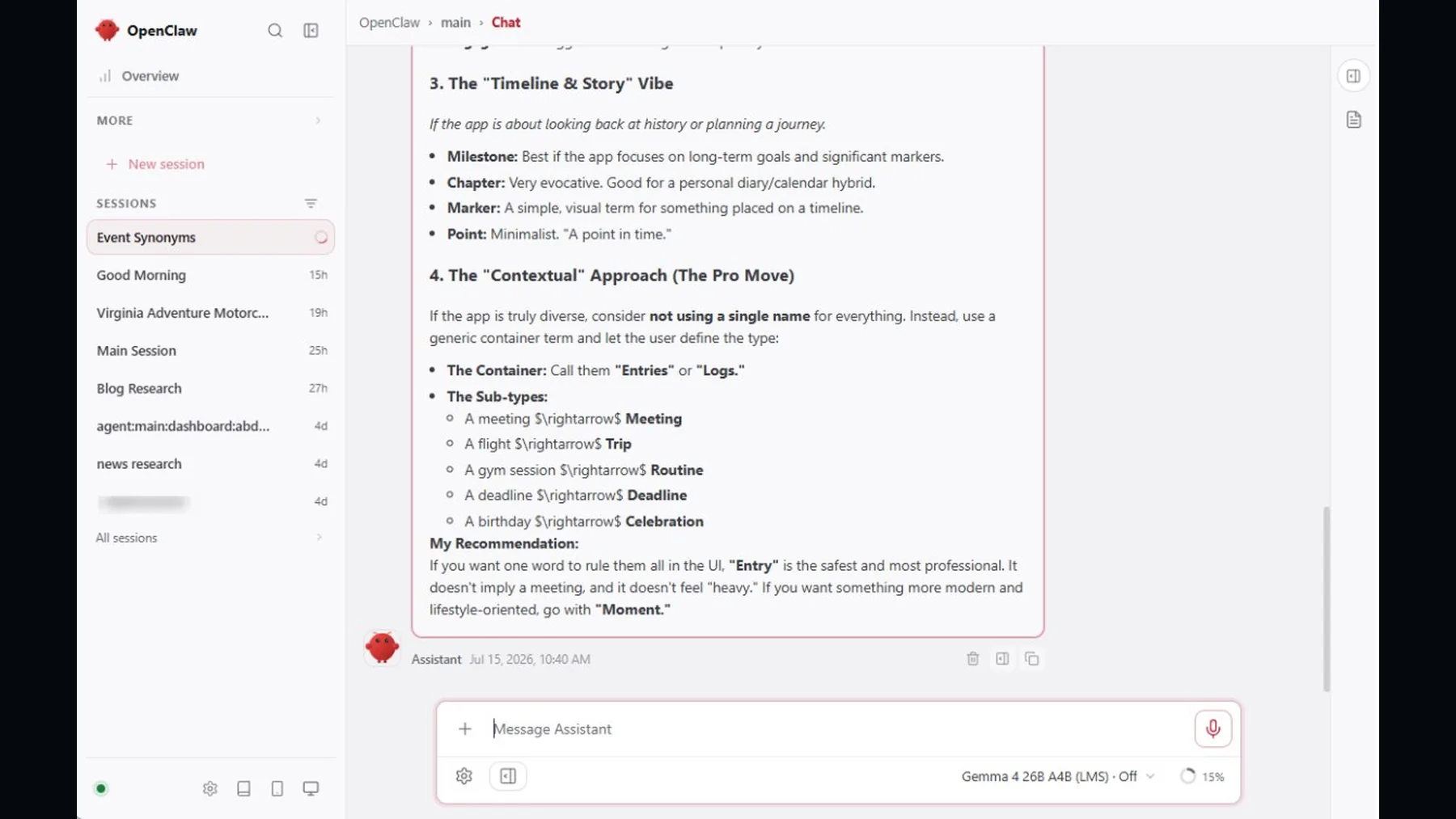
The supplied image makes the depicted setup tangible, while leaving performance questions unanswered.
Google Gemma’s image visibly depicts an OpenClaw interface, session history, an assistant response and a Gemma 4 26B model label. It is useful proof of what the post chose to show.
It is not proof of speed, accuracy, task coverage, privacy, security or reliability. A product image can make a pattern easier to picture; it cannot settle the practical questions on its own.
Where the work actually happens
The local model is one part of a chain that still begins and ends with human judgement.
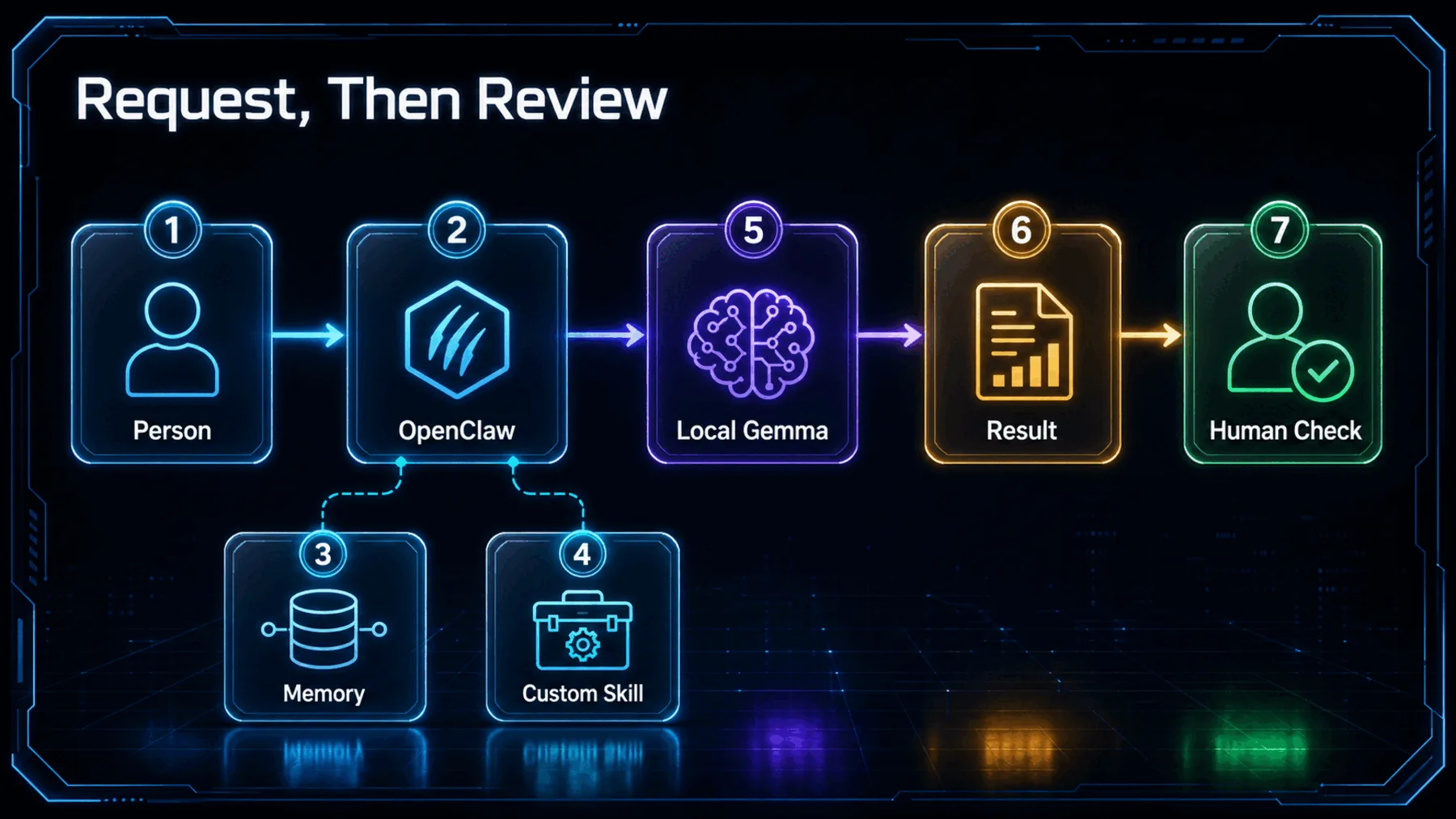
In this conceptual pattern, we make a request through OpenClaw. Useful context can be retained in memory, a custom skill can shape the repeatable part of the job, and Gemma is presented as the local model handling the language work.
The result returns to us for checking. That final step is not a concession; it is the point of an assistant workflow that can be examined, corrected and improved over time. This is an explanation of the proposed pattern, not a claim about an exact architecture.
Put the promise under pressure
A serious evaluation asks where the assistant helps, where it fails and how much correction remains.
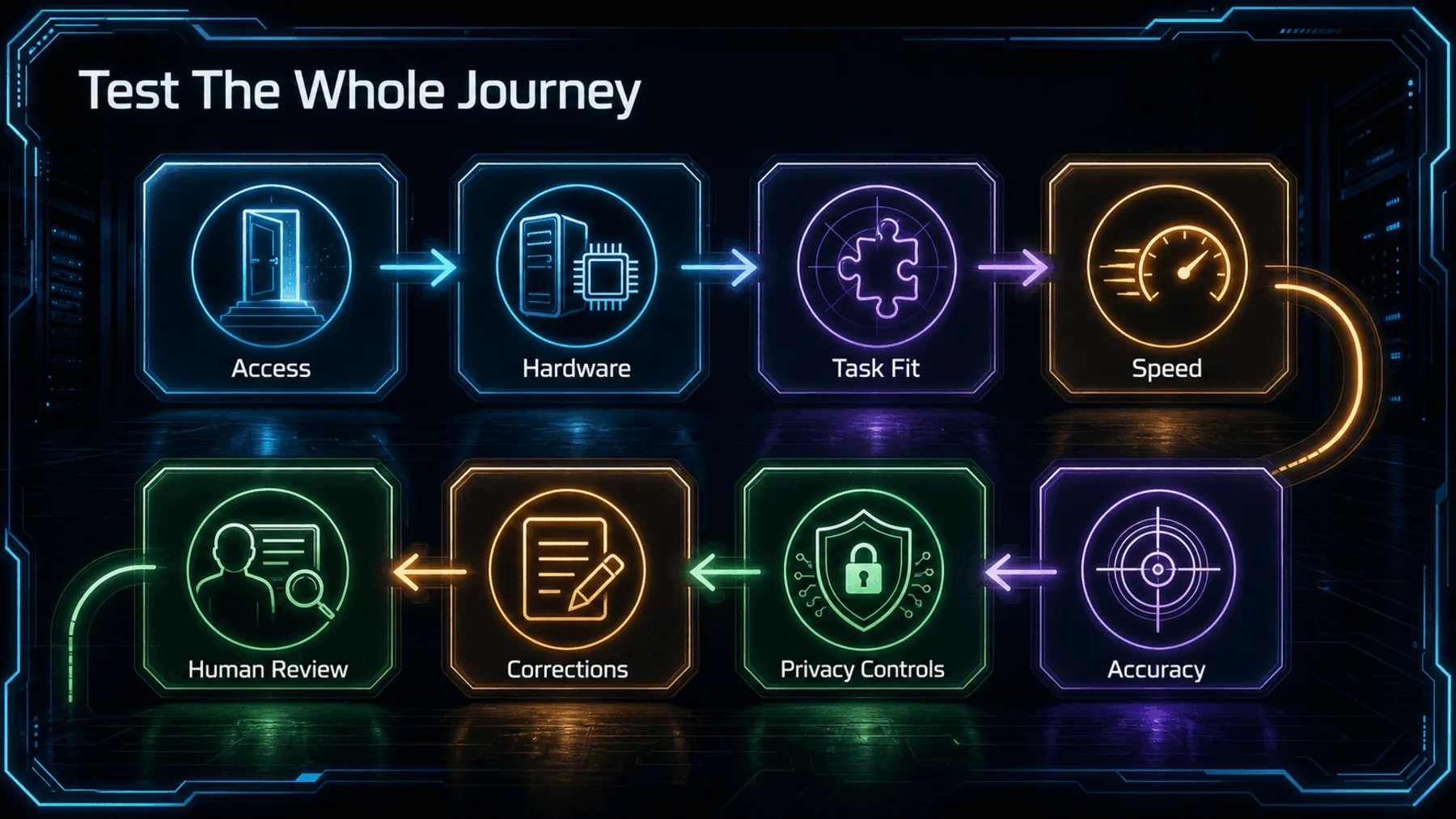
The first trial should begin with a defined task, not a broad productivity claim. We need to see what the assistant can handle, what hardware is involved, how quickly it responds, how accurate the output is and where corrections begin.
Privacy controls and human review also belong in the test. Local operation alone does not answer either question. The result worth keeping is a record of what worked, what did not and what it took to make the output usable.
Keep the pattern, test the claim
A local assistant can be a credible direction without making every promoted result credible.
Google Gemma’s post offers a useful model for thinking about local AI: pair a local language model with an assistant layer, useful memory, custom skills and human checking. The structure is more interesting than another chatbot demo because it is aimed at work that repeats.
But the structure and the outcome are different claims. The approved evidence supports the promotion and the depicted setup. It does not substantiate that a local Gemma model handles 90% of daily task load. Keeping that line clear is how we give the idea a fair test.
The local-agent pattern is plausible. The 90% result is still a claim that needs conditions, tasks and evidence.
Google Gemma post; Altior synthesis
Run a local-workflow evidence test
Act as a local workflow assistant for a small team. Take this recurring request: turn a meeting note into a concise action list, flag any missing owner or deadline, and produce a draft follow-up message. Show your reasoning as a short checklist, identify any uncertainty, and end with the exact points a human should review before sending.Ready to copy
Test the useful pattern
Run a bounded task through the proposed workflow, record the corrections it needs, and judge the result before treating a supplier claim as a working standard.
Try the promptWhat to watch next
- Tested tasks
- Hardware and speed
- Accuracy and correction
- Privacy controls