Gemma 4: running and tuning differ
Colab brings substantial Gemma work into the browser, but running a 31B model and adapting it have different model ceilings.
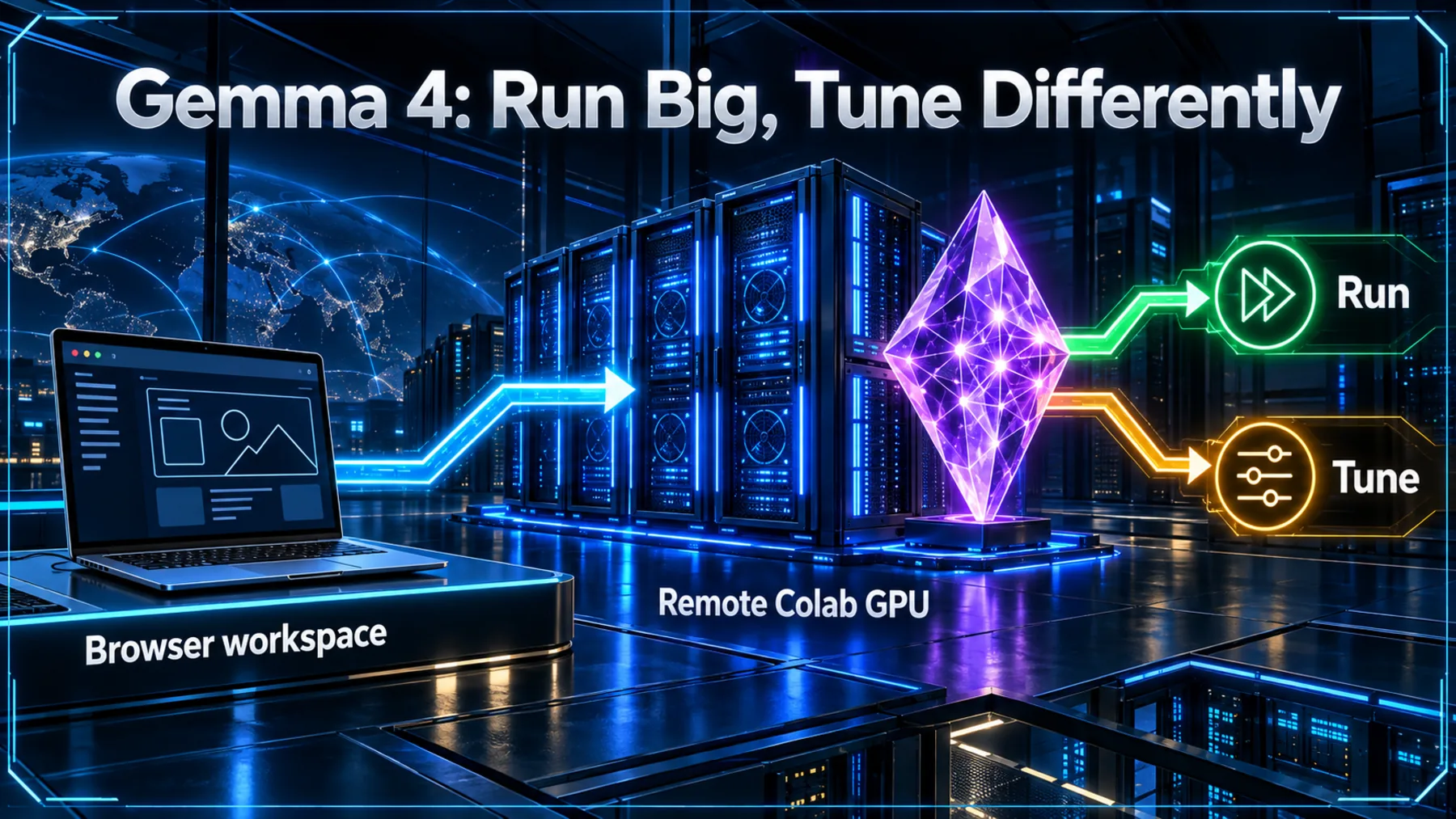
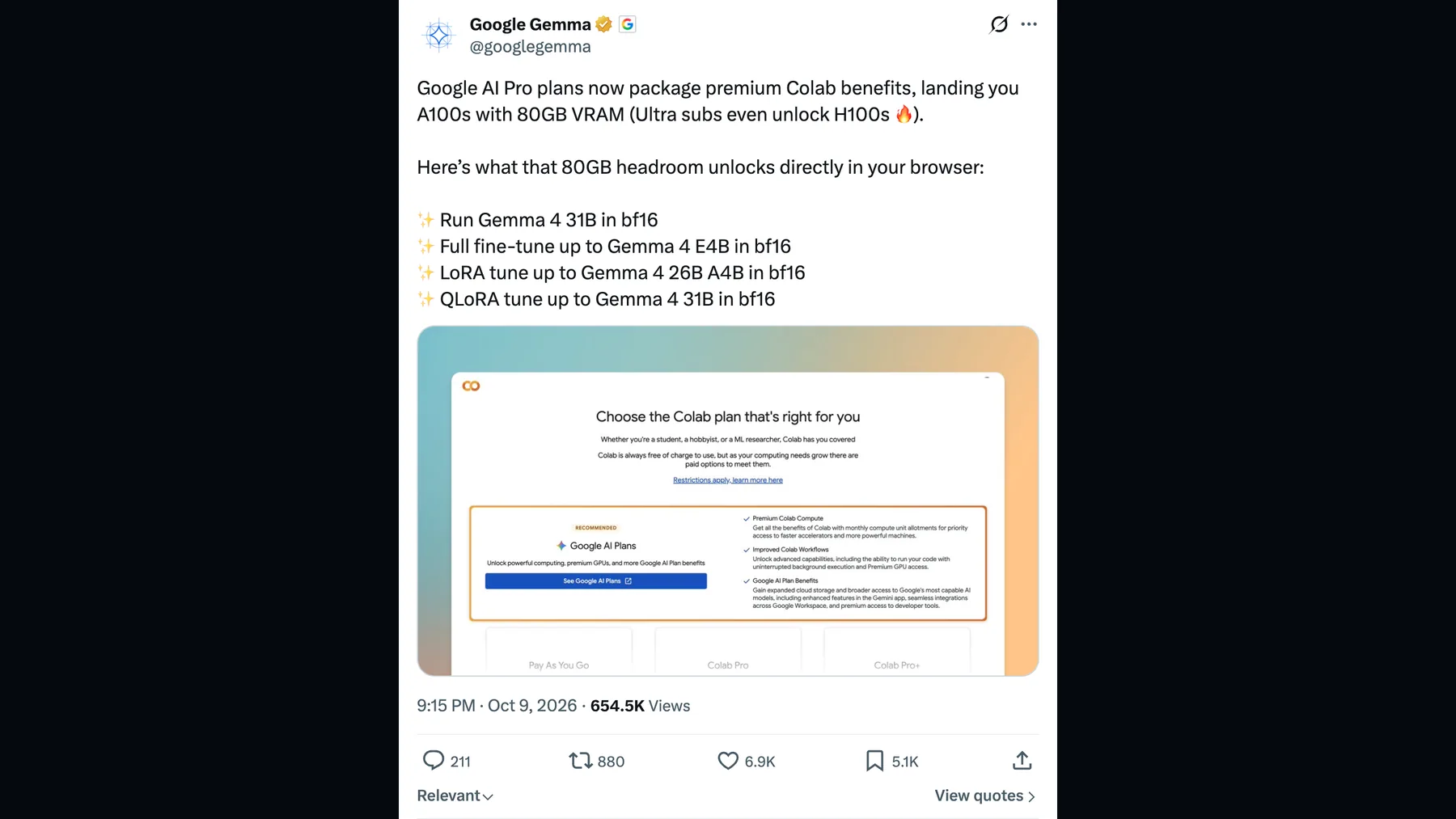
Gemma 4 31B can run in bf16 through a browser-based Colab workspace. The tuning options reach different models: full fine-tuning up to Gemma 4 E4B, LoRA up to Gemma 4 26B A4B and QLoRA up to Gemma 4 31B, each with bf16 wording in the announcement.
Google’s premium Colab benefits put remote GPU compute behind that workspace. The laptop gives us a way in; the workflow determines which model we can work with. [Google Gemma’s announcement](https://x.com/googlegemma/status/2108652628590944540)
Running is not tuning
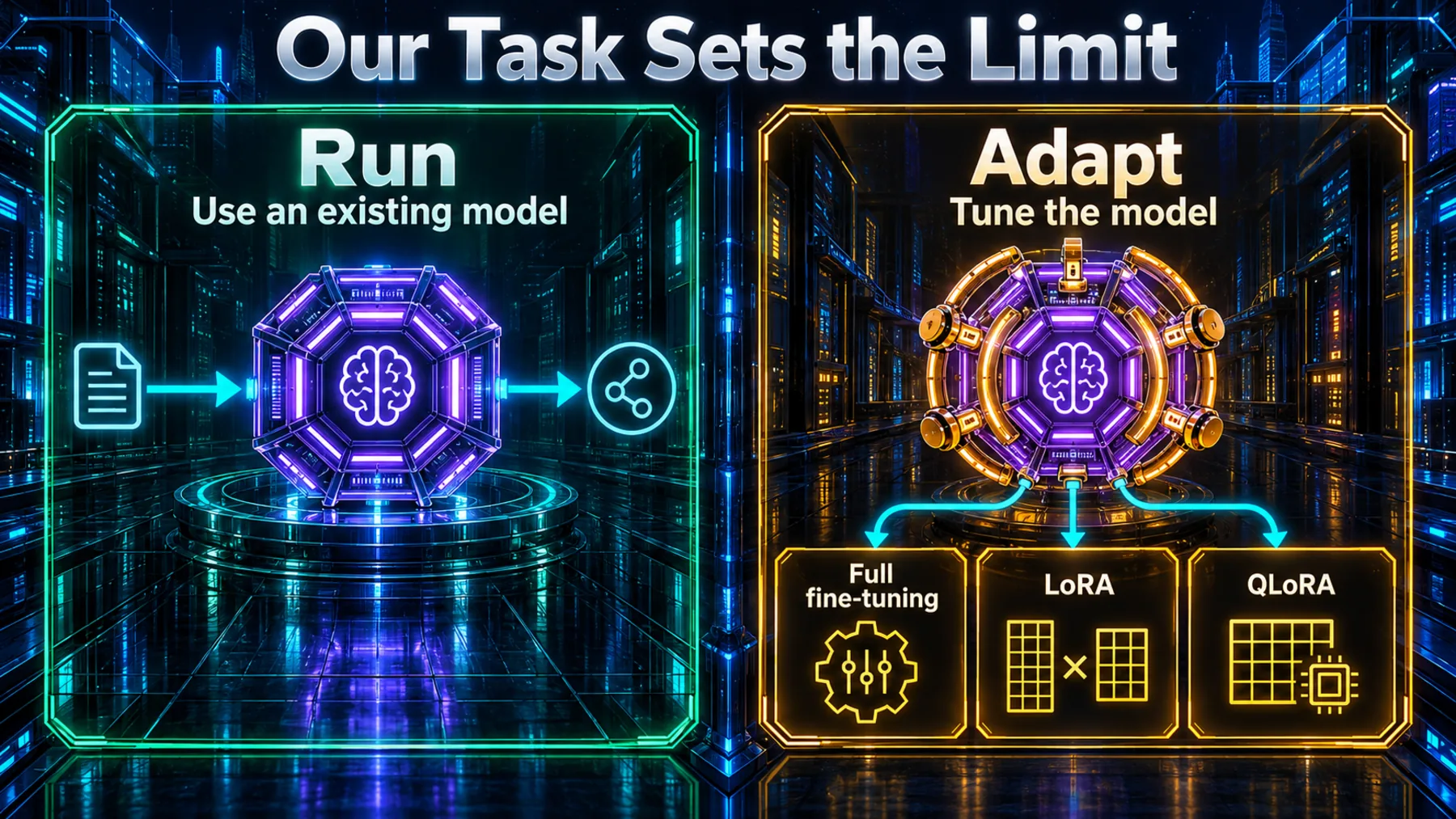
Using an existing model and adapting it are different jobs, with different ceilings.
If we want to use an existing model, we start with the running option. If we want to adapt it, we need to choose a tuning method. That changes the model limit before any work begins.
The 31B running capability does not carry across to full fine-tuning. Google lists full fine-tuning, LoRA and QLoRA separately, so we need to keep those names attached to their respective model ceilings. [See the four workflows](https://x.com/googlegemma/status/2108652628590944540).
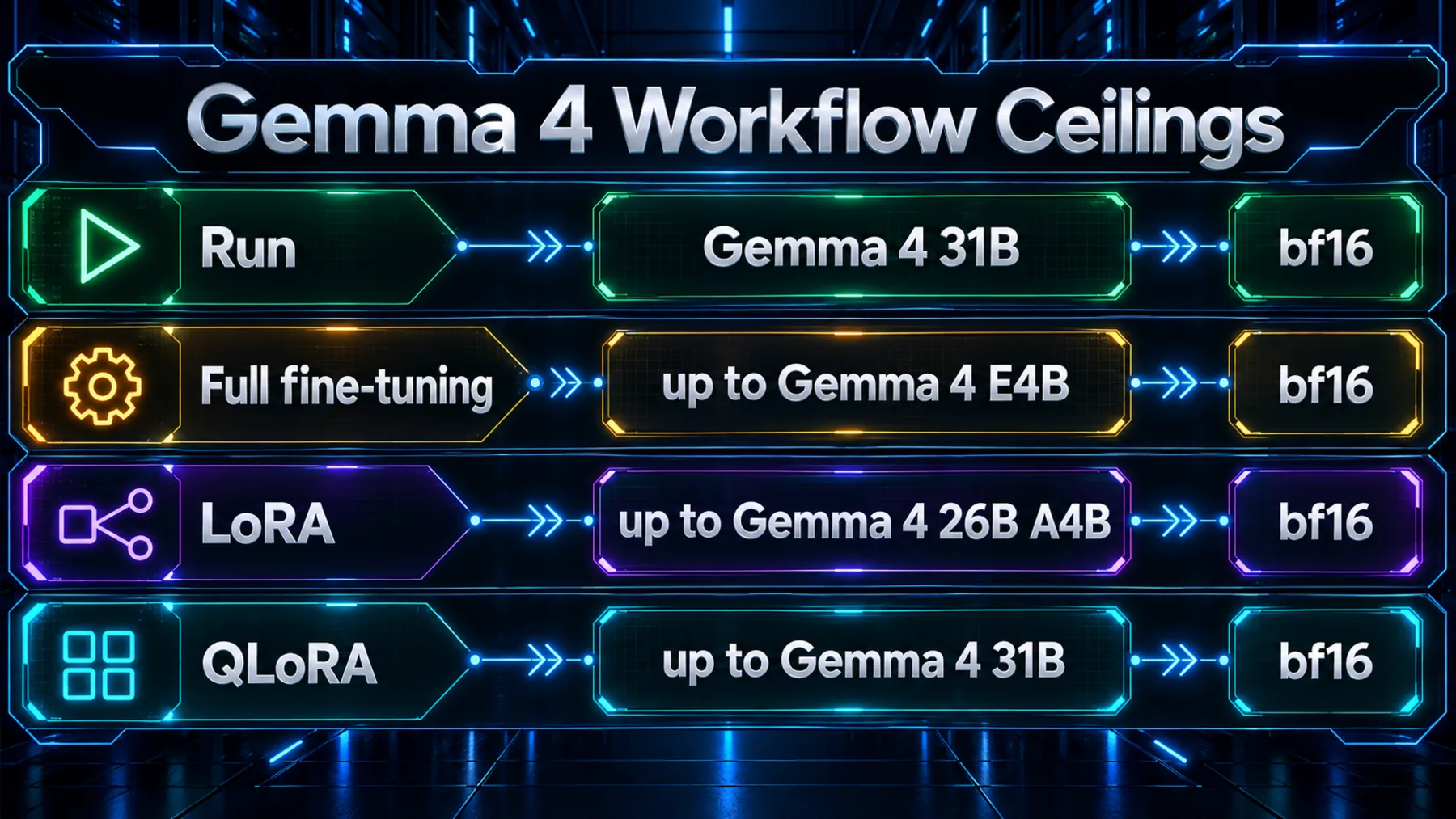
Four workflows, different model ceilings
Keep the method, model identifier and bf16 wording together.
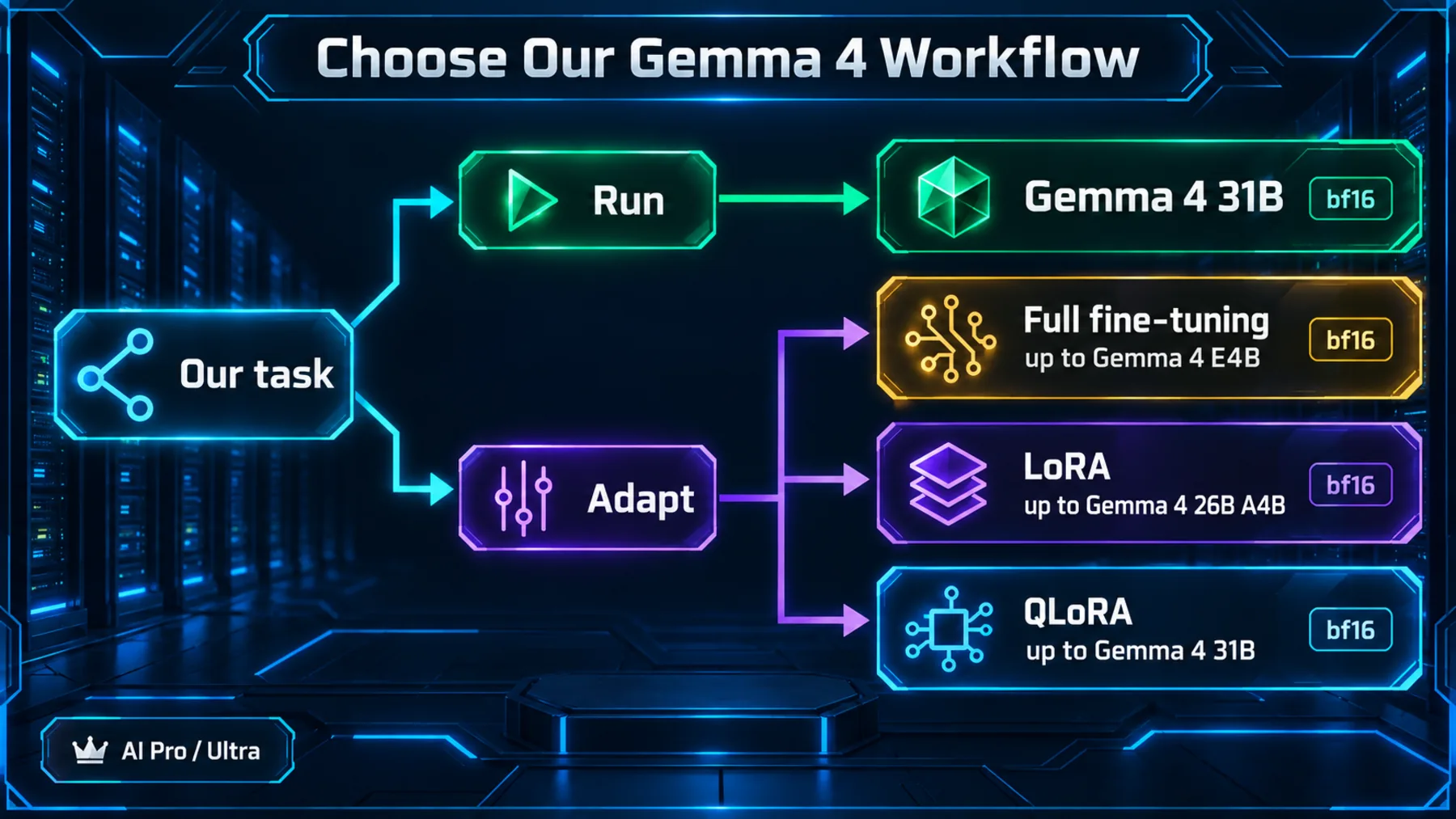
The running option is Gemma 4 31B in bf16. For adaptation, the choices are full fine-tuning up to Gemma 4 E4B in bf16, LoRA tuning up to Gemma 4 26B A4B in bf16 and QLoRA tuning up to Gemma 4 31B in bf16.
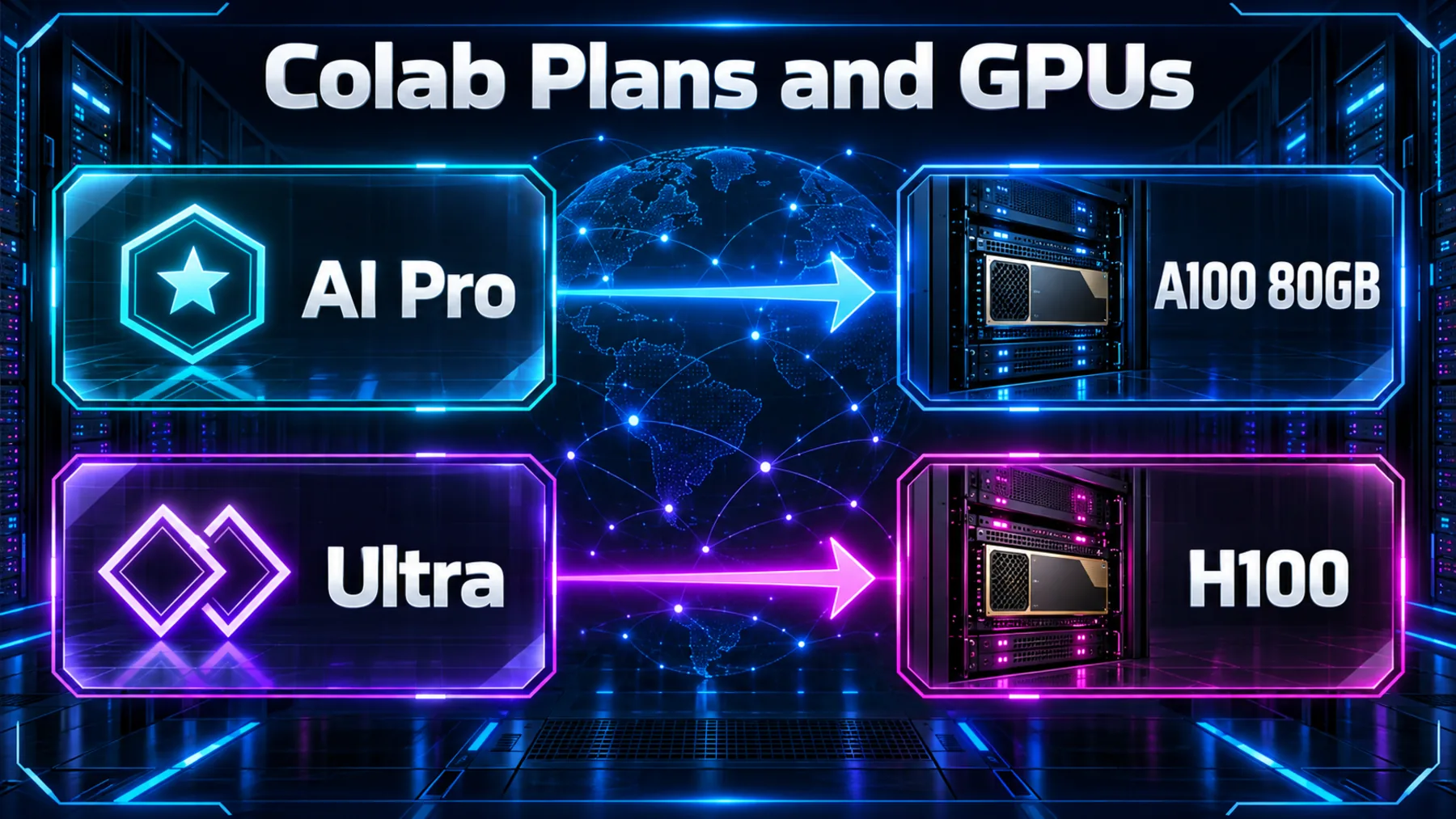
Access sits alongside that workflow map. Google AI Pro plans include premium Colab benefits with A100s offering 80GB VRAM; Ultra subscriptions provide access to H100s. These plan and GPU relationships are separate from the four model ceilings. [Google Gemma’s announcement](https://x.com/googlegemma/status/2108652628590944540)
Google’s exact words
The plan statement and workflow lines, published on 9 October 2026.
The wording makes the distinction easy to check. Running has its own line, and each tuning method names its own model ceiling. The extract below keeps those lines intact rather than combining them into one broad 31B claim.
Run Gemma 4 31B in bf16
[Google Gemma · 9 October 2026](https://x.com/googlegemma/status/2108652628590944540)
See the options together
The full announcement connects the Colab benefits to browser-based Gemma work.
In the complete post, the plan and GPU statement comes first. The browser capability follows, then the four workflow lines. Read together, they show how the access context connects to the work we can choose, without making every tuning method equivalent.
The browser is the doorway
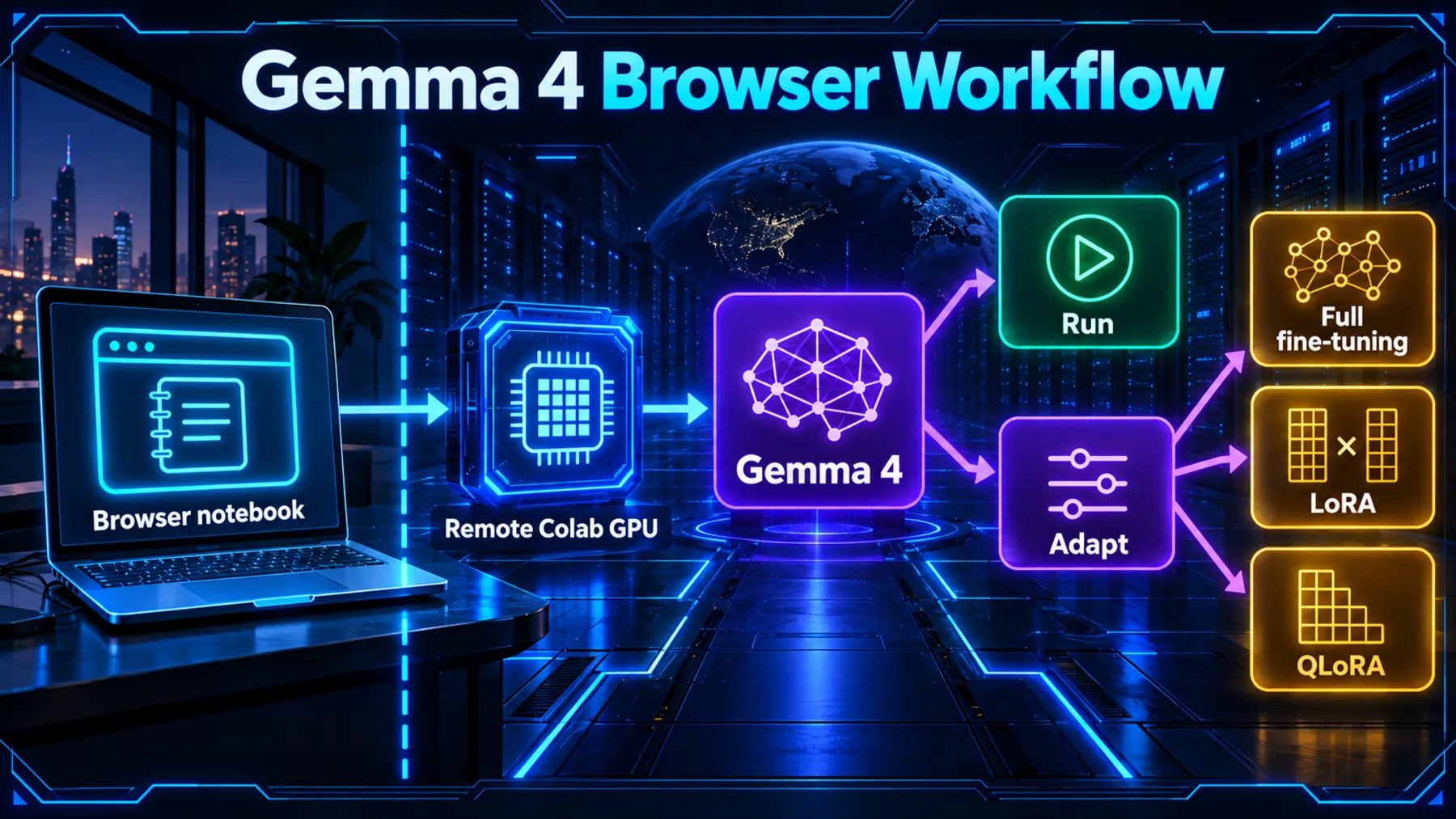
Our notebook is the workspace; remote Colab GPU compute does the heavy work.
We open a Colab notebook in the browser and work with remote GPU compute. The browser is not where the GPU sits. From that workspace, the choice branches into running an existing Gemma model or adapting one through a named tuning method.
The announcement uses bf16 for all four workflows. It is a numerical format; keeping that wording attached to each option avoids changing the published specification. The model identifiers remain exactly as listed. [Source: Google Gemma](https://x.com/googlegemma/status/2108652628590944540)
Choose the job first
Decide whether we want to run or adapt a model before choosing its size.
For running an existing model, we follow the Gemma 4 31B in bf16 option. For adaptation, we first choose full fine-tuning, LoRA or QLoRA, then match that method to its published ceiling. Starting with 31B alone leaves out the choice that matters.
The subscription context comes after that distinction: AI Pro and Ultra connect to the GPU access described in the announcement. Neither plan name replaces the need to select the right workflow. [See the announced options](https://x.com/googlegemma/status/2108652628590944540).
Remember the workflow alongside the model
Browser access brings the work within reach without removing the differences between tuning methods.
The useful way to remember this update is as a set of workflow-and-model pairs. Gemma 4 31B appears under running and QLoRA; full fine-tuning and LoRA have their own named ceilings. A model size on its own cannot tell us which job it supports.
The prompt below turns the four published lines into a selection note. It keeps the comparison tied to the announcement, with no setup steps or performance predictions added.
Running Gemma 4 31B does not mean full fine-tuning Gemma 4 31B.
[Based on Google Gemma’s announcement](https://x.com/googlegemma/status/2108652628590944540)
Choose the right Gemma 4 workflow
Use only the four Google Gemma announcement lines below to write a short workflow-selection note. Preserve every model identifier, every ‘up to’ qualifier and the bf16 wording exactly. Do not add setup instructions, hardware requirements, prices, availability details or performance claims. Run Gemma 4 31B in bf16 Full fine-tune up to Gemma 4 E4B in bf16 LoRA tune up to Gemma 4 26B A4B in bf16 QLoRA tune up to Gemma 4 31B in bf16 Match each of these goals to the relevant announcement line: 1. Run an existing Gemma 4 31B model. 2. Use full fine-tuning within its published model ceiling. 3. Use LoRA within its published model ceiling. 4. Use QLoRA within its published model ceiling. Return a table with columns for goal, workflow and exact announcement line. Then answer this question in two sentences: Does support for running Gemma 4 31B establish support for full fine-tuning Gemma 4 31B? Finish with one sentence explaining why choosing the workflow comes before choosing the model. Treat this as a comparison of the announcement’s options, not an execution report.Ready to copy
Match the model to the work
Keep the method beside the model: running, full fine-tuning, LoRA or QLoRA.
[Consult Google Gemma’s announcement](https://x.com/googlegemma/status/2108652628590944540) for the exact workflow wording and plan context.
Try the promptWhat to watch next
- Official Colab access documentation updates for the named plans and GPUs.
- Official Gemma workflow documentation updates for running, full fine-tuning, LoRA and QLoRA.