Gemma 4 brings local agent-mode coding to Android Studio
Google Gemma says Gemma 4 can make agent-mode code changes in Android Studio while keeping the work local, offline and outside token quotas.

Cloud coding agents can be powerful, but the working arrangement comes with dependencies: a connection, an allowance and a decision about where code travels. Google Gemma says Gemma 4 changes that arrangement inside Android Studio.
Its announcement brings three claims together: agent-mode code changes can happen completely offline, the local route has zero token quotas, and code never leaves the machine. That combination is the story; it is also why the boundaries matter.
Why local changes the equation
Google Gemma’s announcement shifts the focus from a model picker to the conditions around everyday coding work.

A local model is AI running on the developer’s own computer. If Google Gemma’s description holds in practice, that changes the immediate dependency: the coding agent can continue without a connection rather than waiting for a cloud service to respond.
But local code handling is not a complete privacy or security verdict. The post does not explain setup, telemetry, surrounding services or the conditions under which the claimed offline path applies.
Three claims, one local path
Google Gemma’s message is strongest when its recommendation, offline use, quota position and code-location claim are read together.

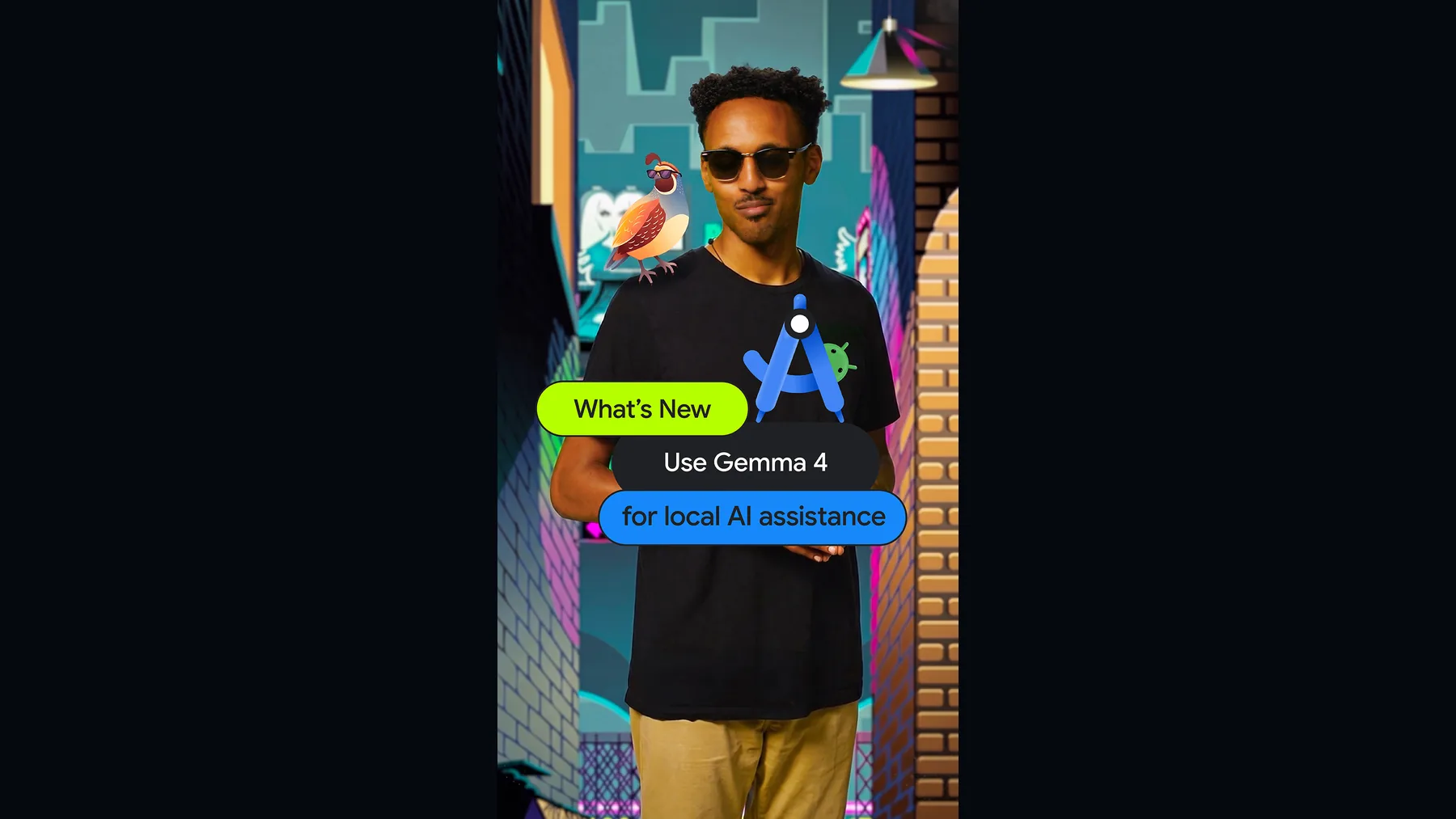
Google Gemma says Gemma 4 is now the recommended local model provider in Android Studio. It then makes a more practical promise: “Make code changes completely offline in agent mode with zero token quotas.”
That is a supplier claim, not independent validation. We should not turn zero token quotas into unlimited compute, zero cost or universal support, and the post gives no hardware, context or performance detail to close those gaps.
What Google actually said
The source is brief, but its language is specific enough to define the claim boundary.
Google Gemma frames the release around coding on the go, then names Gemma 4 as Android Studio’s recommended local model provider. The central operational claim is not merely that the model is available locally; it is that agent mode can make code changes without a connection.
The wording matters because it bundles capability and constraint. Google Gemma says this route avoids token quotas, but it does not say how a machine must be configured, which versions are supported or how the result performs on real repositories.
“With a local AI coding agent, your code never leaves your machine!”
Google Gemma announcement on X
The proof—and its limits
The announcement establishes what Google Gemma is claiming, not how broadly those claims hold.
The available evidence is a Google Gemma post and its supplier-hosted media. It identifies the brand, timestamp, full post text and canonical source, but it is still Google Gemma describing its own release.
That is enough to report the announcement accurately. It is not enough to claim independent verification, fully offline surrounding services, zero telemetry, universal compatibility or a performance advantage over cloud-based tools.
How the local loop is meant to work
Google Gemma describes a path from request to agent-mode change that remains on the machine; the operational detail is still open.
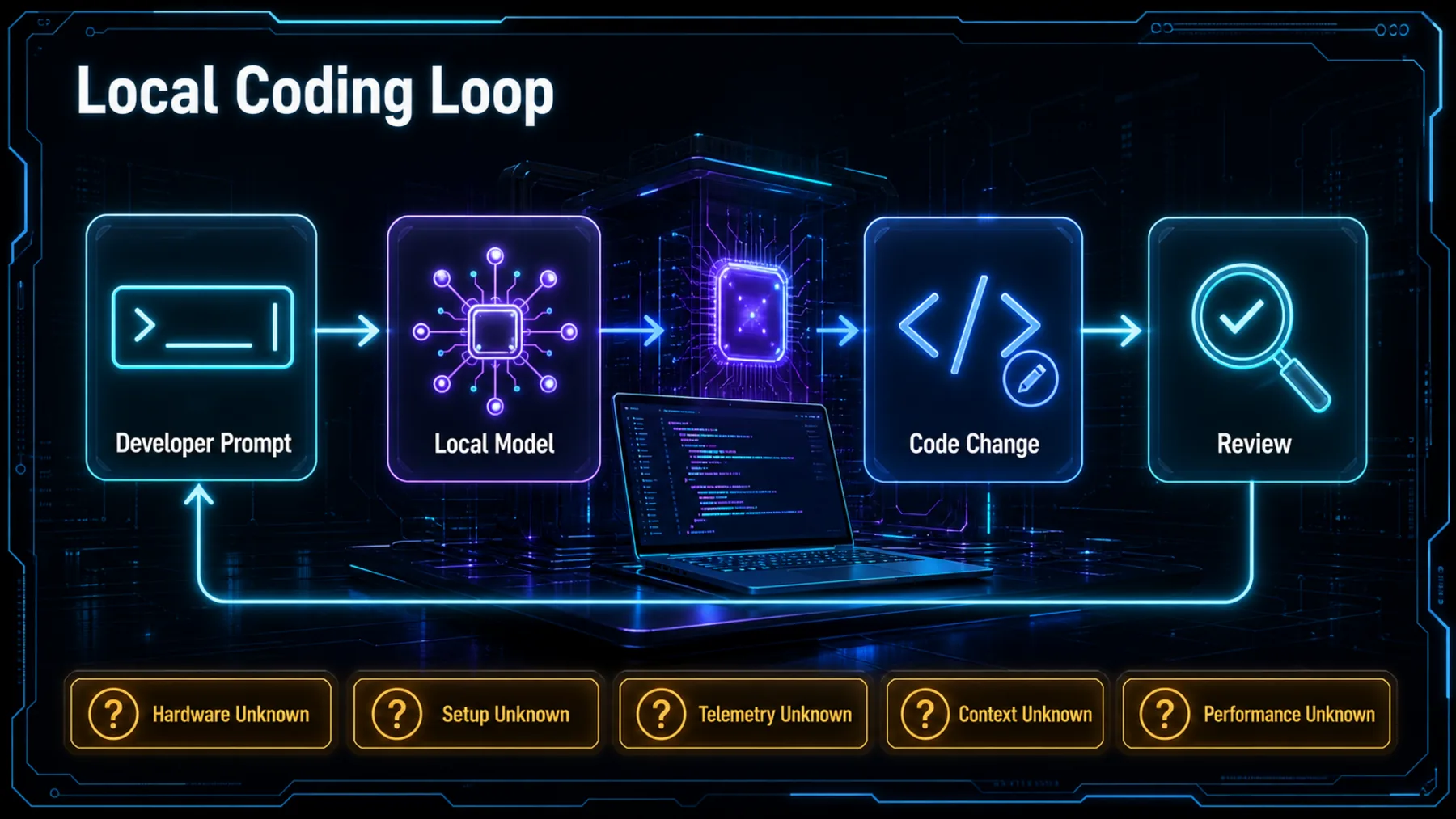
The intended mechanism is simple at a high level: we ask for a change, a local model works through the task in agent mode, and the code change is made on the machine. Google Gemma says that loop can operate completely offline.
The missing detail is consequential. The announcement does not describe permissions, hardware requirements, repository size, context limits, setup steps or the services around Android Studio. Those unknowns belong in the evaluation, not in the claim.
Hardware
The announcement gives no machine requirements or resource profile.
Setup
The required Android Studio versions, configuration and supported environments are not specified.
Operation
Context limits, telemetry, performance and surrounding services remain unaddressed.
What using it could change
The attraction is a coding workflow with fewer live-service dependencies, provided the local path works for the work in front of us.

If we choose to test the release, the first question is access: whether Gemma 4 is available in the Android Studio environment we use and what local setup it needs. Only then can we test the narrower promise of agent-mode changes without a connection.
The second question is fit. A local path may alter where the code is handled and how quotas apply, but the post does not answer whether it suits a particular repository, machine, workload or delivery constraint.
Access
Confirm the relevant Android Studio environment and local model path are available.
Offline
Test the stated agent-mode behaviour with the connection removed.
Boundaries
Record machine demands, code handling and any surrounding service dependencies observed.
The bigger shift to test
The announcement is less about replacing every cloud tool than testing whether local execution changes the shape of coding work.
The consequential promise is not simply a local model. It is an agent-mode coding loop Google Gemma says can work offline, without token quotas and without code leaving the machine.
Google Gemma announcement on X
The stronger reading is also the more cautious one. Google Gemma is putting a local coding workflow on the table, where connectivity, quotas and code location may be configured differently from a cloud-dependent route.
That merits a focused trial, not a leap from announcement to assurance. The practical value will depend on the details the post leaves unanswered: setup, compatibility, hardware, performance, telemetry and the actual conditions around use.
Map a local coding-agent trial
Act as a technical evaluator planning a small Android Studio coding trial. Define a test that separates Google Gemma’s claims about local agent-mode changes, token quotas and code location from what must still be verified. Produce a table with the claim, test step, observed evidence, unresolved dependency and decision rule. Do not assume performance, privacy, telemetry, compatibility or cost outcomes.Ready to copy
Test the claimed boundaries
Treat Google Gemma’s post as a useful starting point: verify the local path in the environment we actually use, then record what happens when connectivity, machine limits and repository demands become real.
Try the promptWhat to watch next
- Hardware requirements
- Compatibility
- Telemetry and services
- Performance and rollout