One Brain, Three Models, Many Questions
Google DeepMind says Gemini Robotics 2 links whole-body control, planning and local adaptation. Its announcement leaves the harder proof questions open.
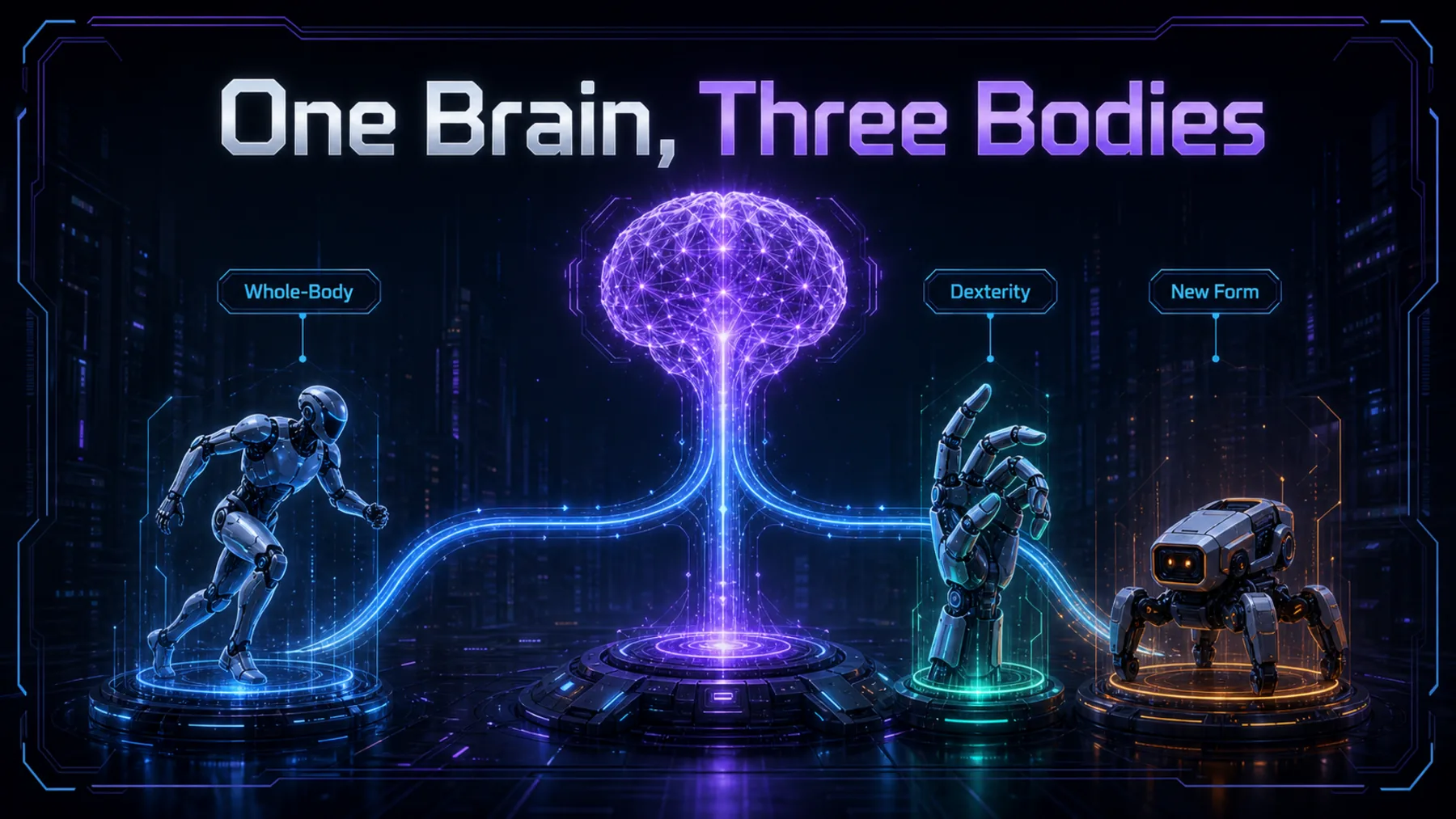
Google DeepMind opens with a bold line: “One brain. For any robot.” The more useful claim sits beneath it. The company is describing a three-model system intended to help robots see, understand, plan, move and adapt across different bodies.
That is a bigger ambition than a single tabletop demonstration. It is not, on the evidence published here, proof of broad real-world readiness.
Beyond the Tabletop
The announcement reaches for whole-body intelligence; the evidence remains a supplier-led introduction.
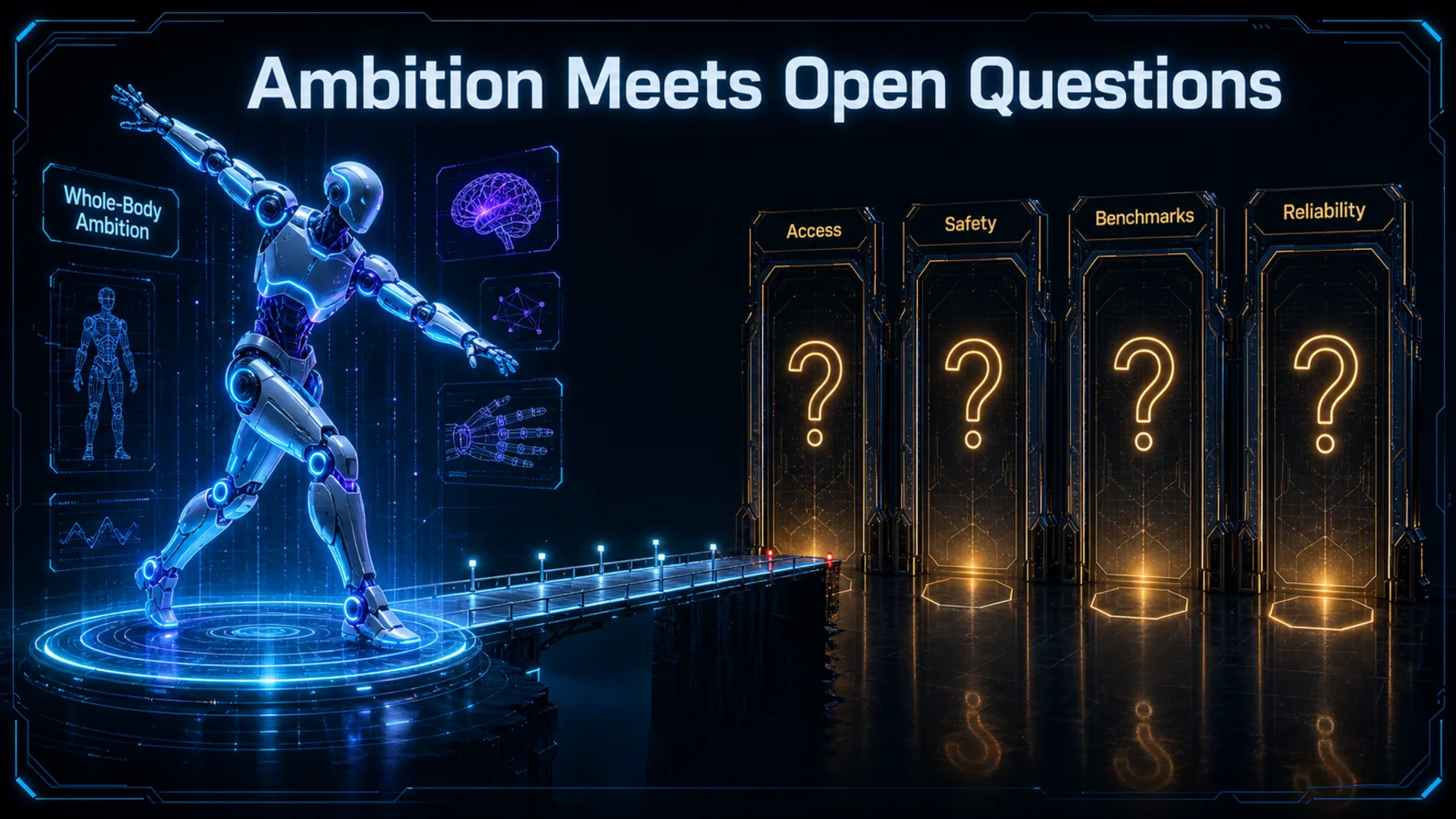
Google DeepMind says Apollo 2 can take one prompt to reach, bend and pick up a watering can. That makes the aspiration easy to picture: a robot coordinating more of its body around a practical instruction.
But the thread does not provide a benchmark method, failure rate, safety assessment or independent test. The official media supports the announcement as media; it does not settle those unanswered questions.
Act. Plan. Adapt.
Google DeepMind divides the proposal into three roles, each carrying a different part of the job.
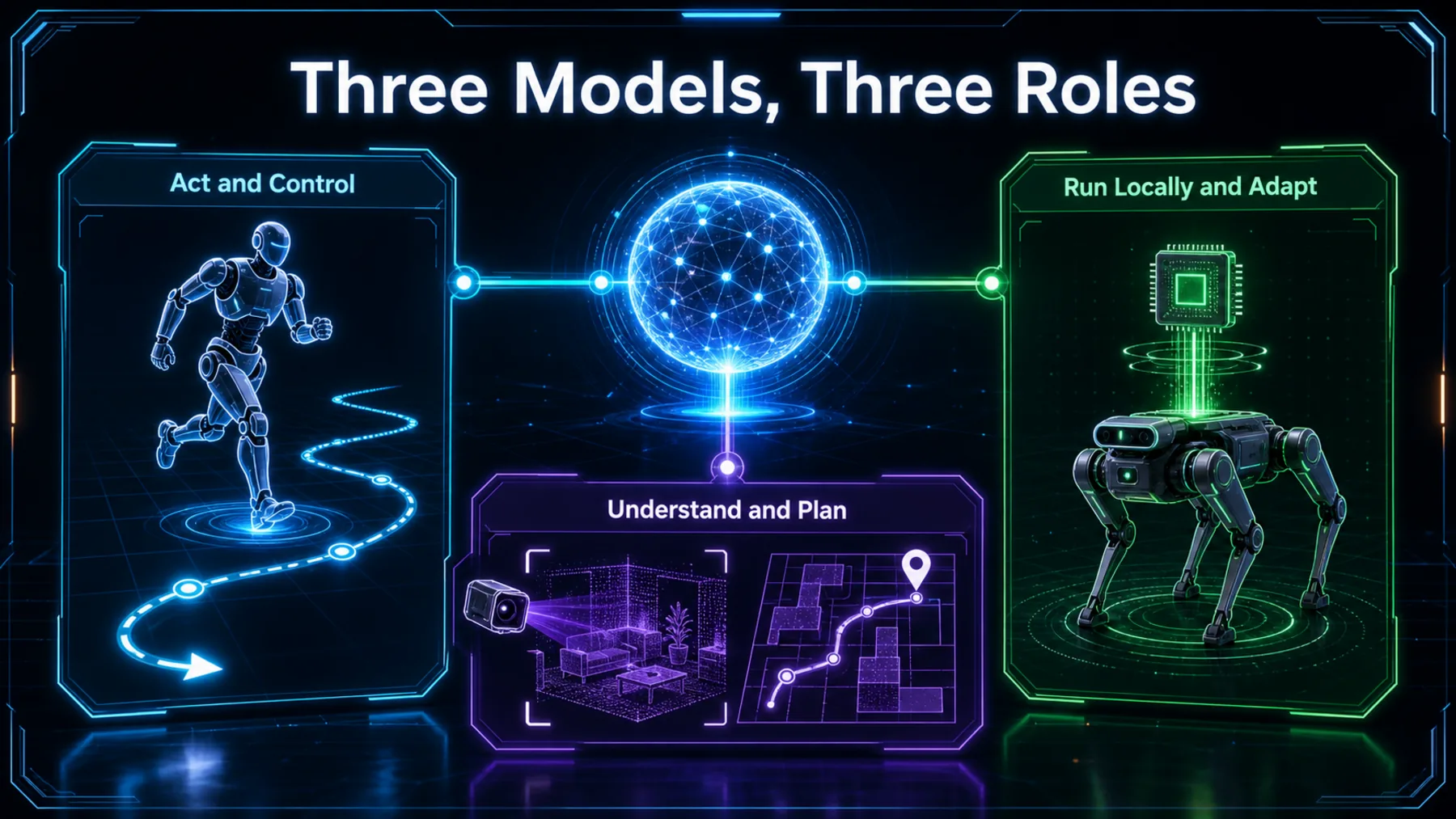
The first model is presented as the movement layer: Gemini Robotics 2 controls humanoids from feet to fingertips. Gemini Robotics ER 2 is positioned as the layer that understands real-world video and handles multi-step planning.
On-Device 2 is the adaptation claim. Google DeepMind says it runs locally and can adapt to new robot bodies in a few hours. That timescale comes from Google DeepMind’s announcement, not a published guarantee.
Three Models, Clearly Stated
The strongest factual anchor in the thread is Google DeepMind’s own breakdown of the proposed system.
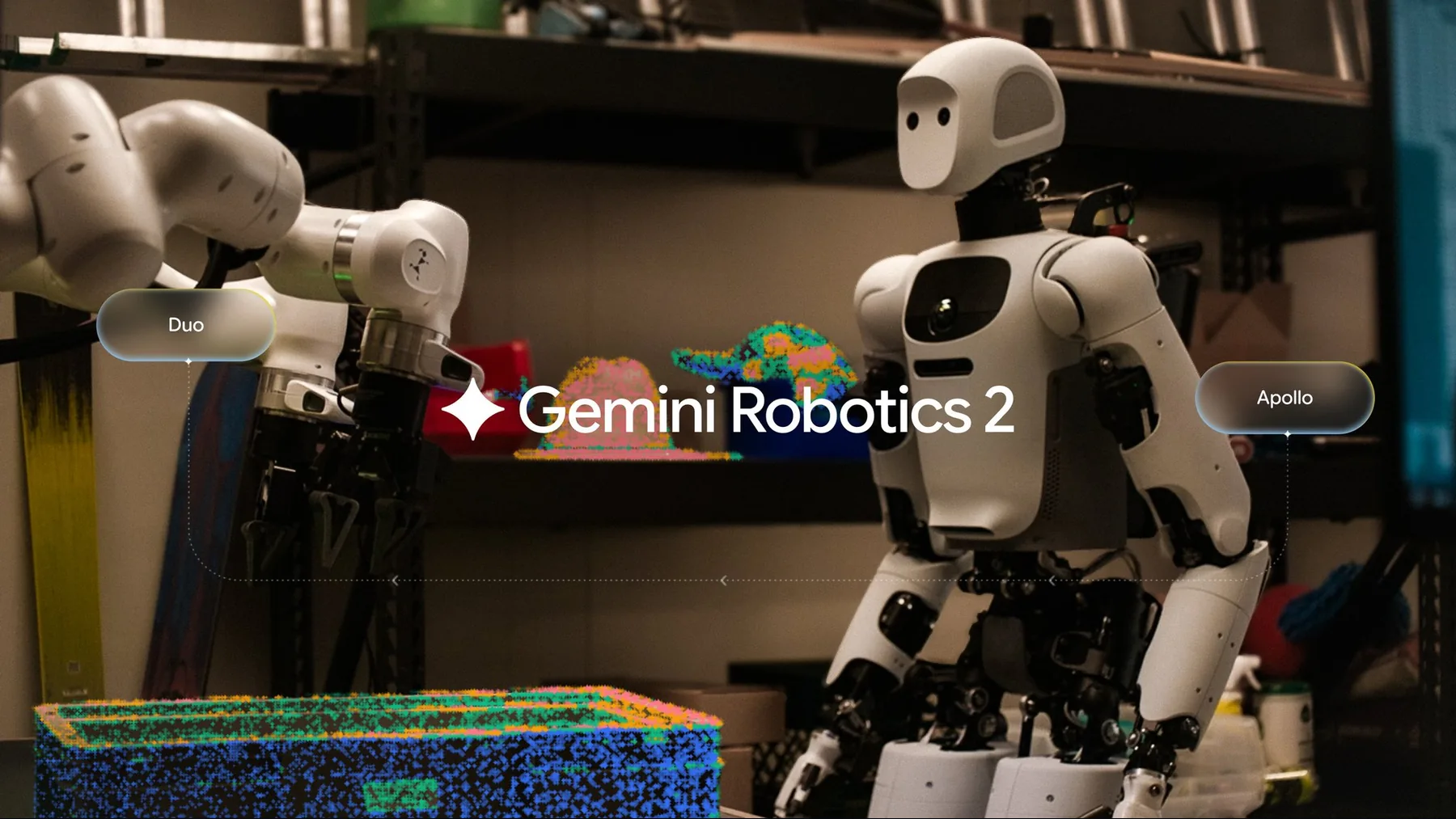
Google DeepMind is not presenting one undifferentiated robot brain. Its announcement separates physical control, planning and body-specific adaptation into three named models.
That division gives us a useful mental model. It also means the announcement should be read as an architectural proposal, rather than evidence that every part of the system has been proven together in deployment.
Three new models power this breakthrough:
Google DeepMind
What the Evidence Shows
The captured thread shows Google DeepMind’s selected announcement claims, not an independent evaluation.
The announcement’s central phrase is intentionally expansive. Google DeepMind says the system brings whole-body intelligence to humanoids, advanced dexterity and multi-robot teamwork.
The narrow reading is more useful: these are the capabilities Google DeepMind is introducing in its thread. The material supplied does not establish public access, pricing, safety performance, reliability or deployment outcomes.
How the Pieces Work Together
Instruction and camera understanding feed planning, movement and local adaptation in the supplier’s description.
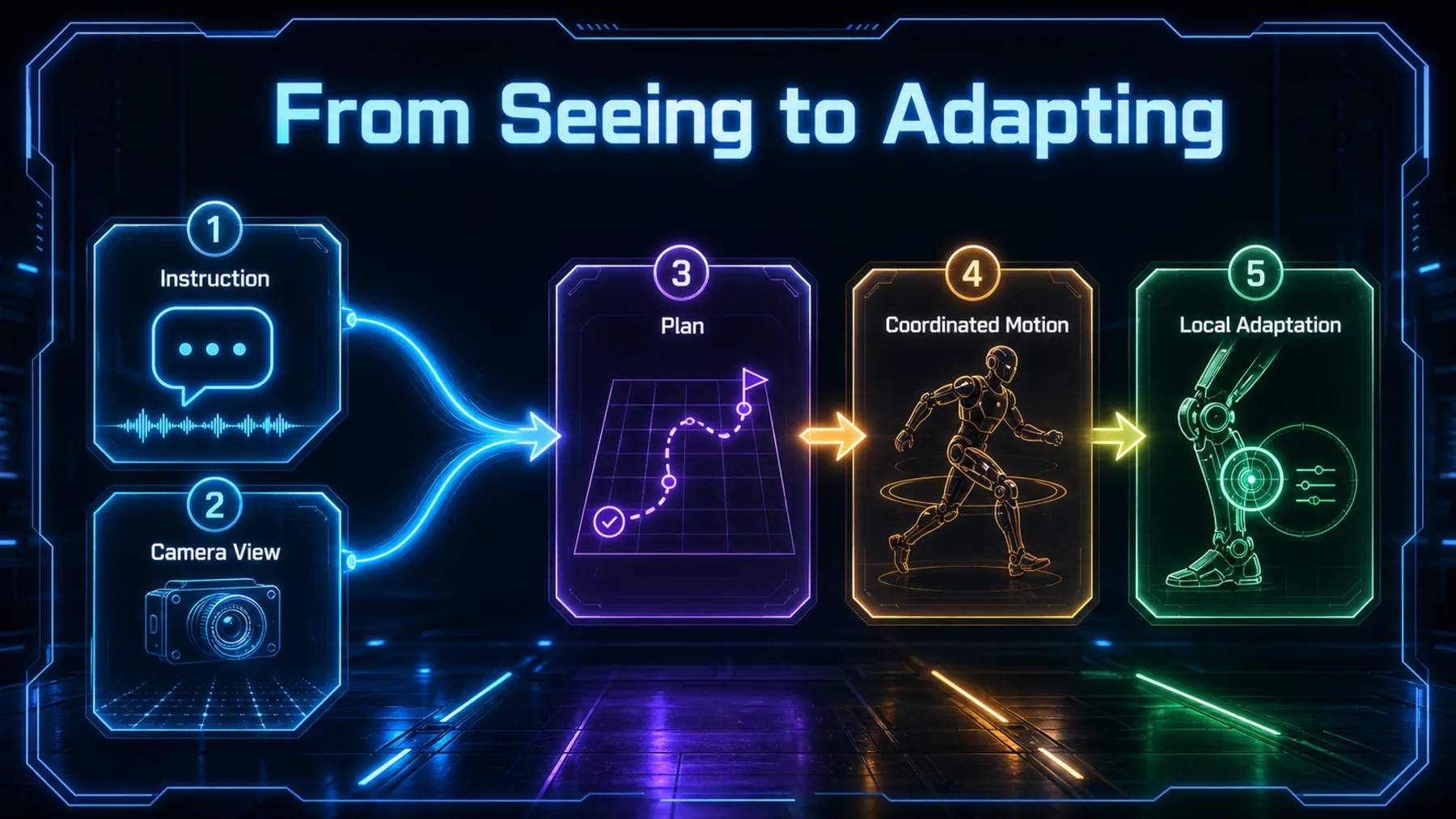
In practical terms, the announcement describes a chain. A robot needs to make sense of what it sees, work through a multi-step instruction, move its body in coordination and adjust to the particular hardware carrying out the task.
Google DeepMind positions its three models across that chain. The thread does not disclose the internal mechanics or show how the hand-offs perform under varied conditions, so the diagram should remain a high-level guide, not a technical blueprint.
From Feet to Fingertips
Whole-body movement, dexterity and collaboration are the moments where the announcement’s ambition becomes concrete.
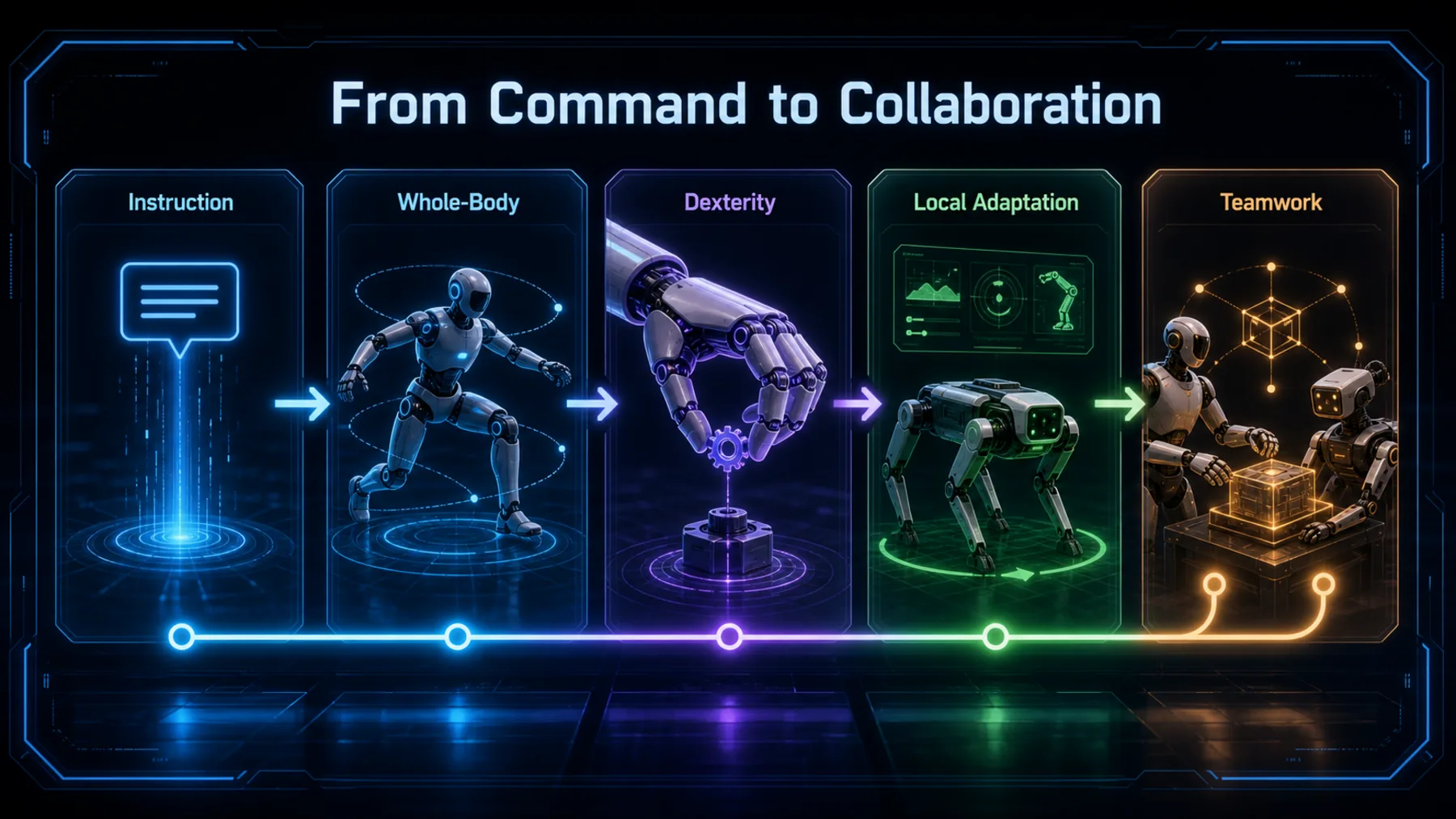
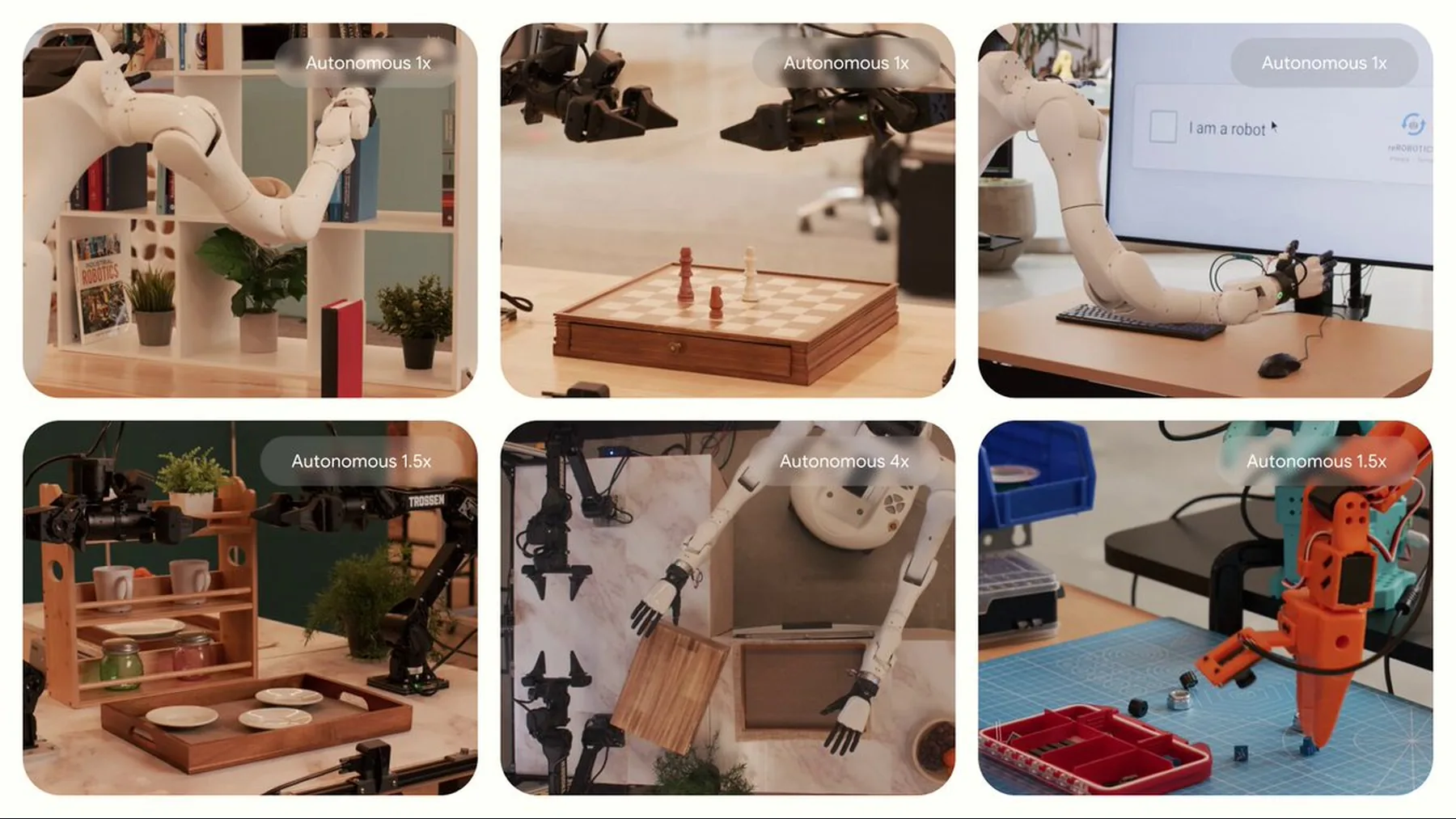
Google DeepMind says useful robots need finesse. Its examples range from tying a knot and screwing in a lightbulb to managing parallel grippers for complex packing tasks.
It also says different robot types can communicate and work together on a problem one could not solve alone. Those examples show the destination: not just movement, but coordinated physical work. They remain announcement claims without independent testing in the supplied material.
Understand
Coordinate
Adapt
Ambition Is Not Readiness
The architecture may matter; the published thread does not yet establish the conditions for judging it in the field.
Google DeepMind has made the announcement legible by splitting its ambition into act, plan and adapt. The Apollo 2 example gives that framing a physical shape, while the dexterity and teamwork claims widen the possible use cases.
The stronger conclusion is cautious. A compelling architecture is not the same thing as evidence of reliable deployment. Before we can judge the practical leap, we need the missing details around access, pricing, evaluation, safety, failure modes and independent testing.
The announcement makes the ambition tangible. The unanswered evidence questions determine whether it travels.
Altior synthesis, based on Google DeepMind’s announcement thread
Test the announcement’s evidence boundary
Assess this Google DeepMind announcement using only these stated claims: Gemini Robotics 2 controls humanoids from feet to fingertips; Gemini Robotics ER 2 handles real-world video understanding and multi-step planning; On-Device 2 runs locally and adapts to new robot bodies in a few hours. Produce a two-column table: announced capability, evidence still needed before we could judge deployment readiness. Include access, pricing, benchmarks, safety, failure rates and independent testing.Ready to copy
Follow the Missing Proof
Google DeepMind has set out a broad physical-AI ambition. The next meaningful signals are the evidence that shows how that ambition holds up beyond a launch thread.
Try the promptSix signals that change the story
- Access
- Pricing
- Benchmarks
- Safety evidence
- Failure rates
- Independent testing