Gemini 4 Hydrogen opens free API access
Google’s new coding and workflow model has a free API tier, published paid token rates and a default-model role for the Antigravity agent in Gemini Managed Agents.
Gemini 4 Hydrogen is generally available, with a free API entry point for coding and agentic workflows. That free tier sits alongside paid API usage and separate agent-product access.
Start with a small coding problem
A repository bug or web feature gives us a concrete place to begin.
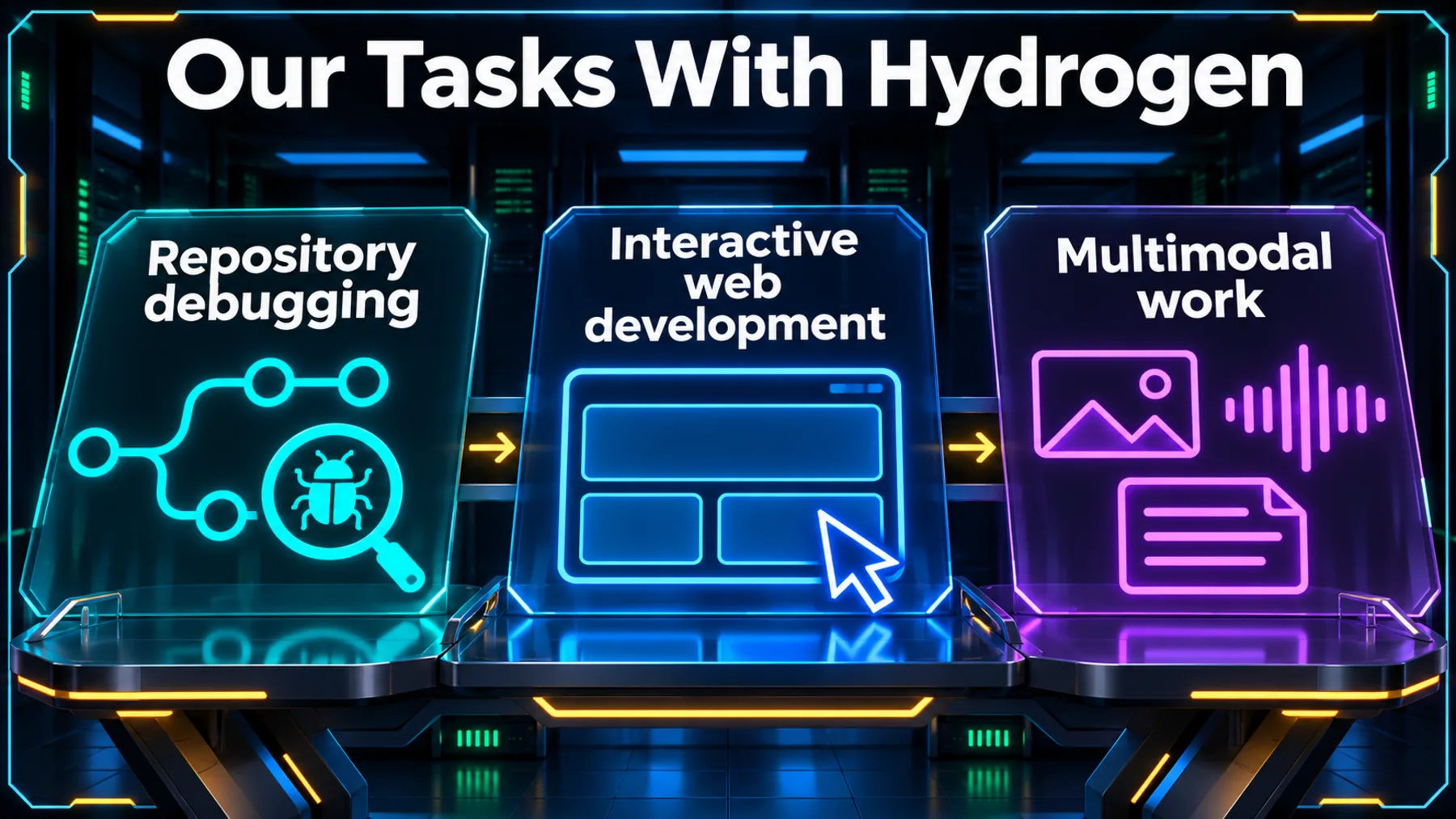
We have a bug to understand, a web feature to build or a task that combines different kinds of media. Hydrogen handles repository coding and debugging, interactive web development and multimodal workflows, giving us a model to bring to that work.
The free API tier gives us an entry point. Before choosing it, we need to separate that route from the agent products carrying the Antigravity name. [Google’s developer announcement](https://blog.google/innovation-and-ai/technology/developers-tools/build-with-gemini-4-hydrogen) sets out the supported tasks and access options.
Free entry, separate paid usage
The API tier, token rates and agent-model change each answer a different question.
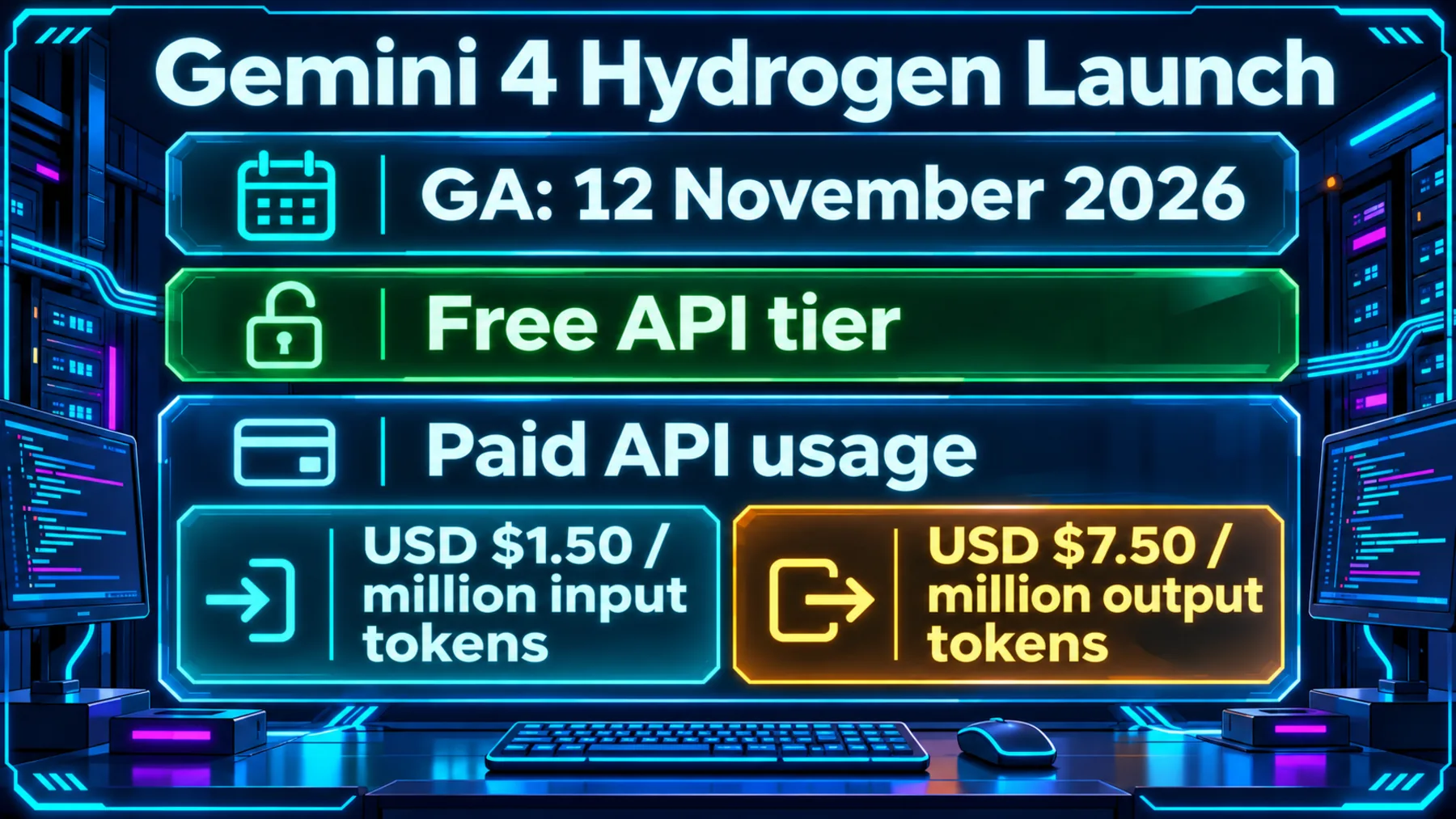
Gemini 4 Hydrogen became generally available on 12 November 2026. It is available on the free API tier; paid-tier usage costs USD $1.50 per million input tokens and USD $7.50 per million output tokens. Those are separate rates for what we send and what the model returns, rather than a monthly subscription or a total price for a task.
Hydrogen is also now the default model for the Antigravity agent in Gemini Managed Agents. That change does not make Managed Agents part of the free API tier. The date, rates and default-model change appear together in the [Gemini API release notes](https://aistudio.google.com/docs/changelog).
Google Antigravity is a separate access route: paid Google AI Pro or Ultra subscribers can try Hydrogen there. [Google’s developer announcement](https://blog.google/innovation-and-ai/technology/developers-tools/build-with-gemini-4-hydrogen) describes that subscription access separately from building with the Gemini API.
The free tier and rates, in writing
Google’s dated API entry puts the pricing beside the exact Managed Agents change.
The [12 November 2026 release entry](https://aistudio.google.com/docs/changelog) names the model as gemini-4-hydrogen. Its full wording also introduces xhigh alongside low, medium and the default high thinking level, before naming the Antigravity agent in Gemini Managed Agents.
Coding, web development and multimodal work
Hydrogen’s supported tasks extend from repository debugging to work across media.
Repository work gives us a focused starting point: we can bring a bug or proposed code change to Hydrogen. Interactive web development and multimodal workflows are also within its supported scope.
Hydrogen can run standalone across four configurable thinking levels or alongside Gemini 4 Carbon and Gemini 4 Argon. The opening paragraph of [Google’s developer announcement](https://blog.google/innovation-and-ai/technology/developers-tools/build-with-gemini-4-hydrogen) describes those capabilities together.
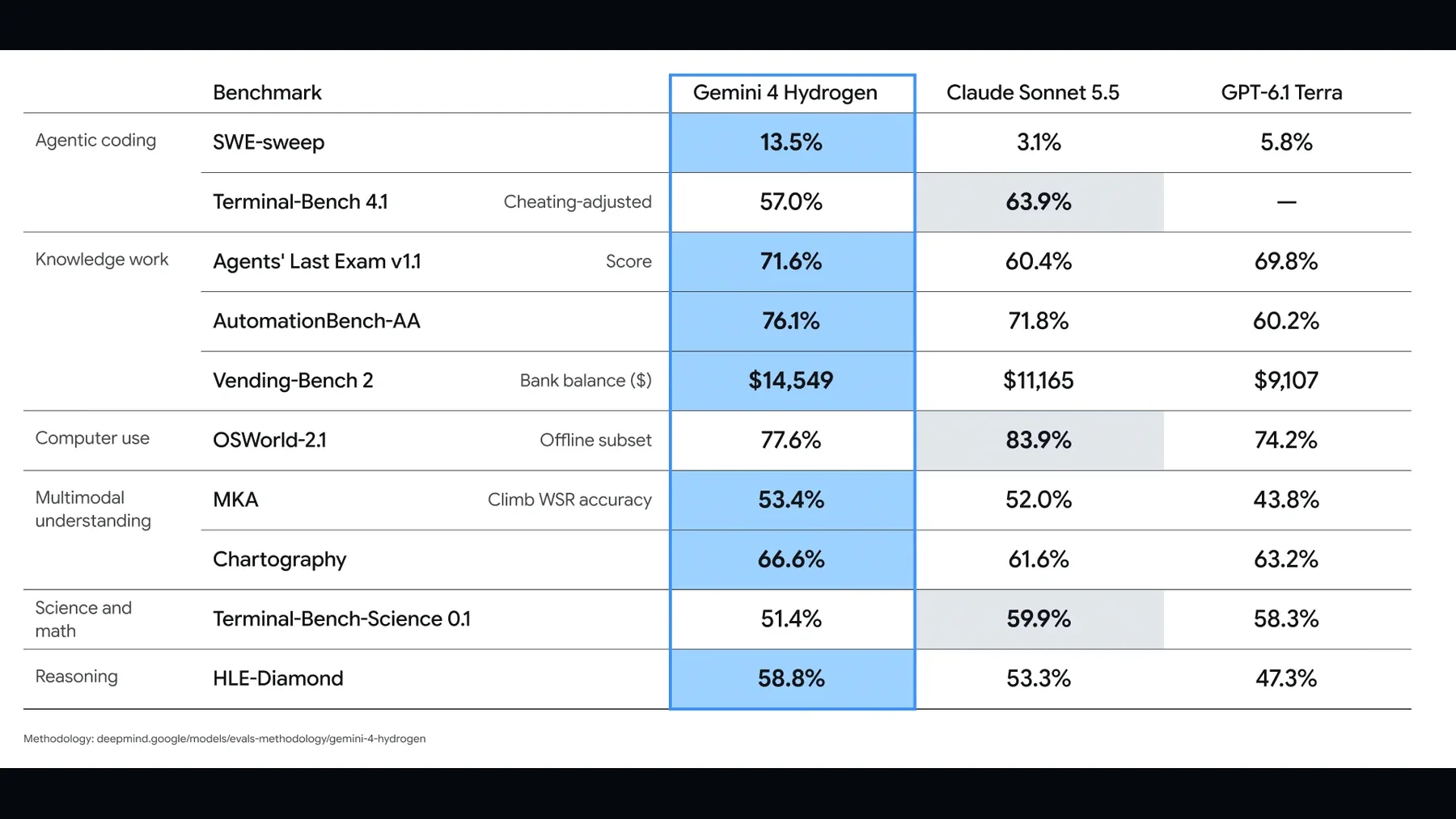
Built for rapid iteration, Hydrogen handles repository coding and debugging, interactive web development, and multimodal workflows
Google · [Gemini 4 Hydrogen for developers](https://blog.google/innovation-and-ai/technology/developers-tools/build-with-gemini-4-hydrogen)
One model, different ways in
The model name stays the same; the product and access conditions do not.
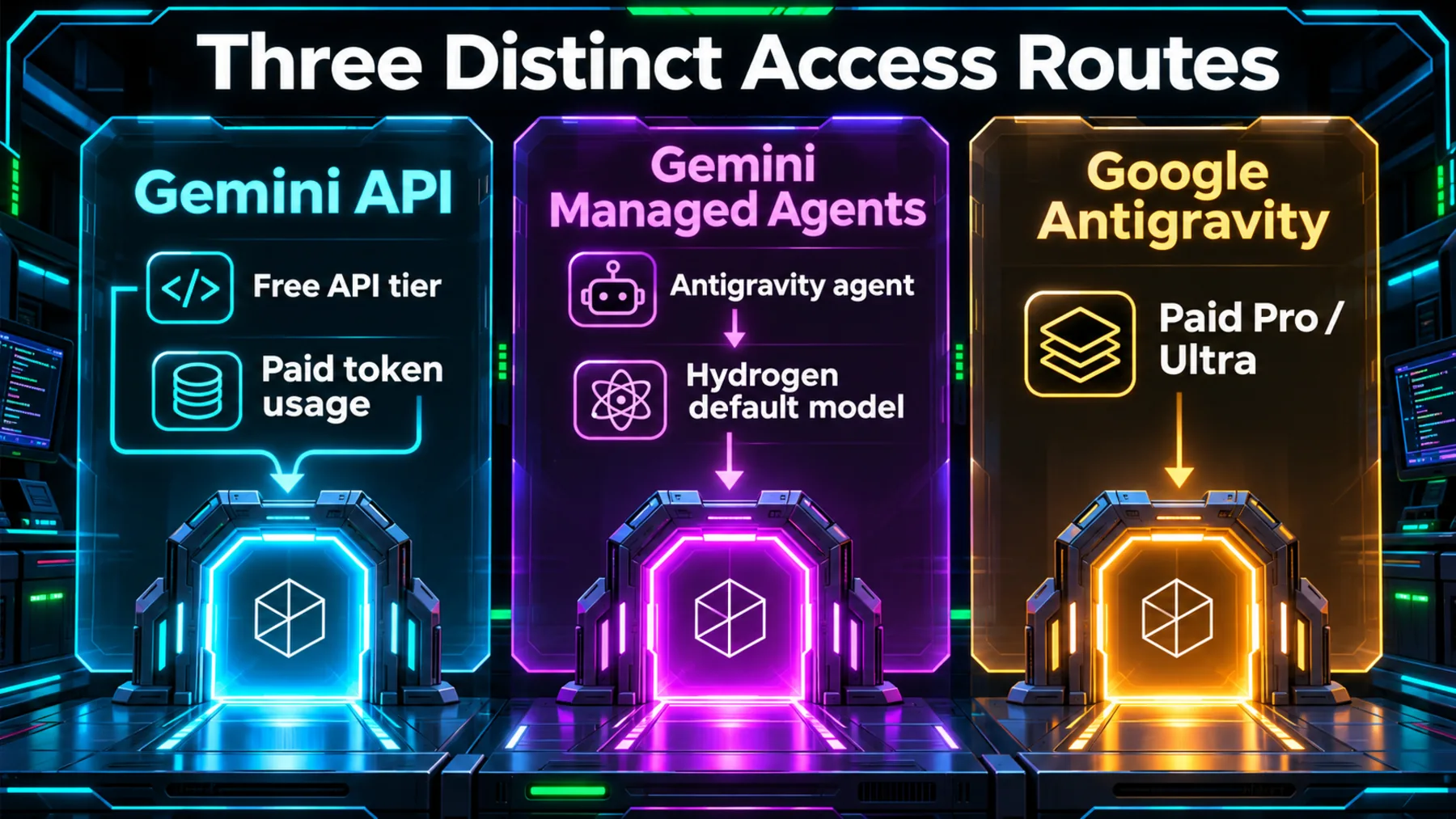
For a direct model task, we can build with Hydrogen through the Gemini API in AI Studio. We supply the task and relevant context, then review the response. This is the route with the free API tier and separate paid token rates.
Gemini Managed Agents has a different relationship to the model: its Antigravity agent now uses Hydrogen by default. Google Antigravity is another product route, where Hydrogen is available to paid Google AI Pro or Ultra subscribers. Sharing the Antigravity name does not make those access terms interchangeable.
The [API release notes](https://aistudio.google.com/docs/changelog) establish the Managed Agents default; [Google’s developer announcement](https://blog.google/innovation-and-ai/technology/developers-tools/build-with-gemini-4-hydrogen) sets out the API, AI Studio and Google Antigravity entry points.
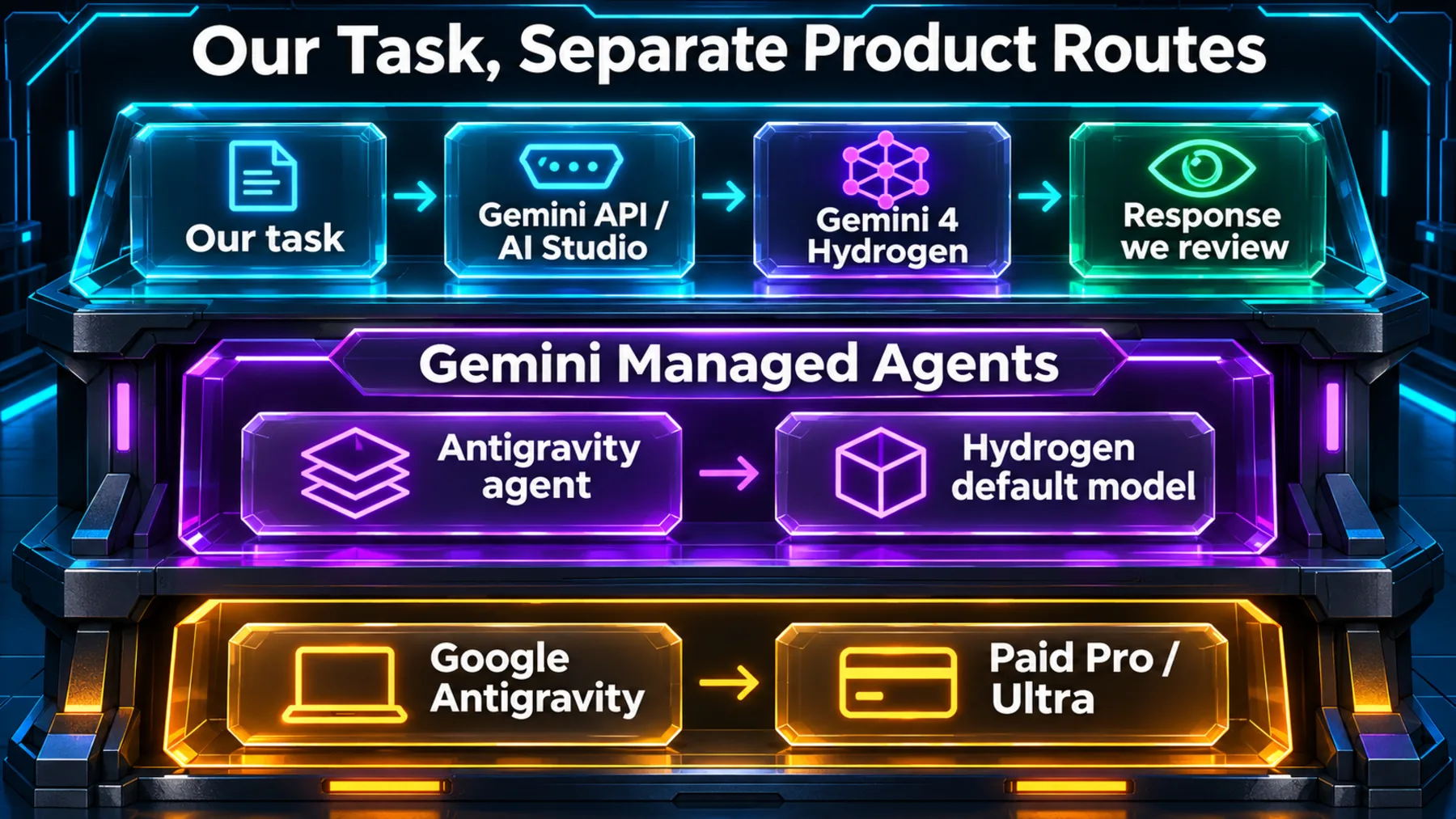
Choose a route, then review the result
Keep the first task small enough to inspect the proposed change and its checks.
We can begin with one repository bug or a contained web feature. Gather the relevant code, describe what should happen and identify the behaviour we need to change. That gives us a clearer task than asking for a broad rewrite.
Next, choose the route that fits. For direct model work, distinguish the free API tier from paid token usage. For agent work, keep the Antigravity agent in Gemini Managed Agents separate from Google Antigravity access through a paid Google AI Pro or Ultra subscription.
Once we have a response, review the proposed changes and the checks needed to assess them. A suggested patch is something for us to inspect and test before applying; the planning prompt below helps us ask for that work in a focused way.
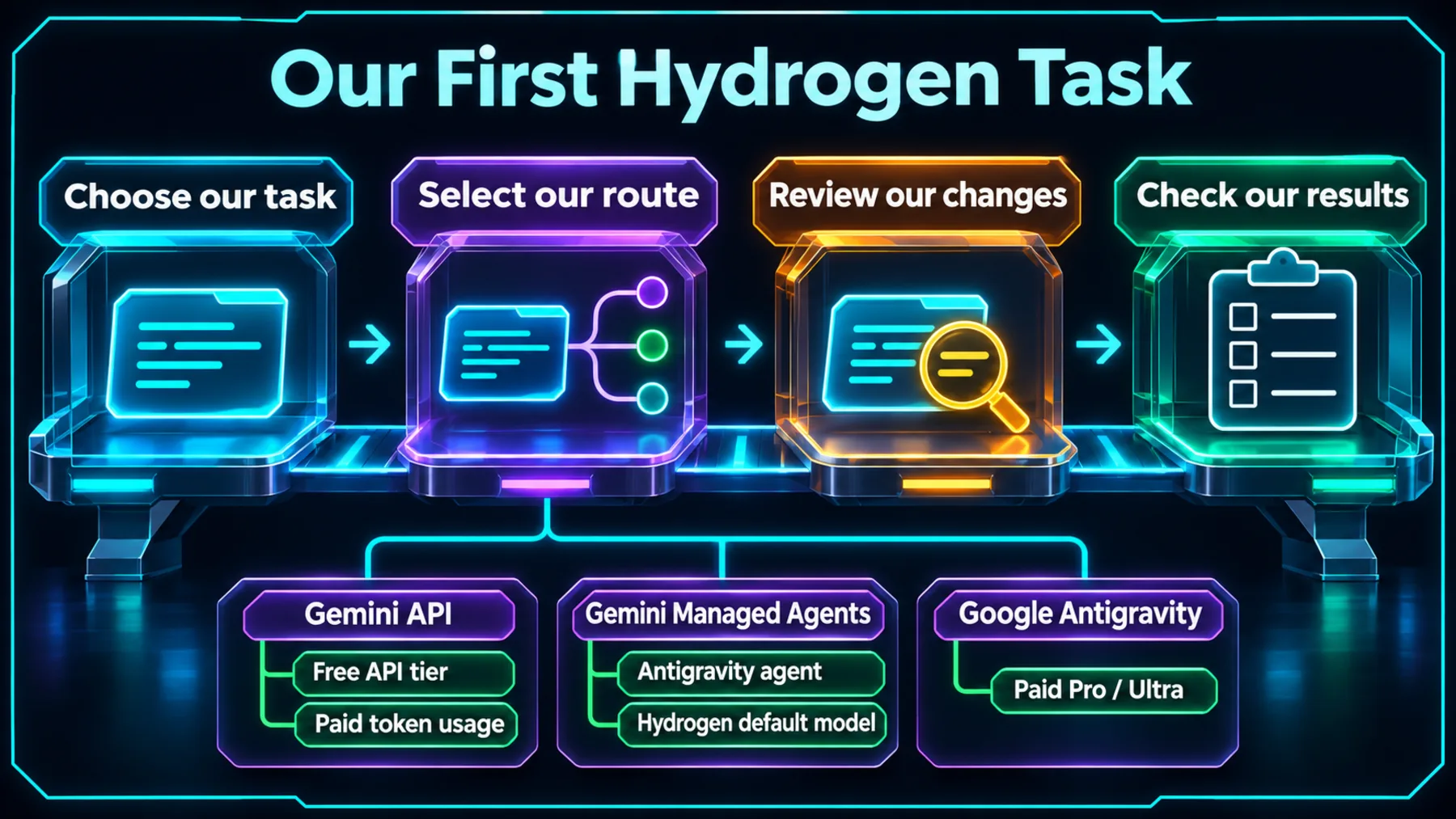
Easier entry, clearer choices
The free API tier gives us a starting point; the product route determines how we proceed.
Hydrogen brings a free API entry point to supported coding and workflow tasks. Paid token usage remains separate, and its new default-model role belongs specifically to the Antigravity agent in Gemini Managed Agents.
For our first coding task, a useful next step is a bounded plan: supply the context, ask for the smallest proposed change and make the checks explicit. We can use the prompt below with Hydrogen to start that conversation without asking it to act before the problem is clear.
Free API access is a starting route. It is not a shared entitlement across the Antigravity products.
AI News · editorial takeaway
Plan a small repository bug fix with Hydrogen
Help us plan a small repository bug fix. Do not edit files, run commands or claim to have tested anything. First ask us for the observed behaviour, expected behaviour, relevant code, language and framework, and any existing tests or error messages. Remind us to remove credentials and private data before sharing material. Wait for our answers before proposing a fix. Then use only the material we supply to explain the likely cause, identify the smallest proposed change and show a suggested patch if there is enough context. Separate confirmed details from assumptions. Give us focused checks for the original bug, likely regressions and edge cases, including expected results. If a command depends on an unknown project configuration, ask rather than invent it. Finish with unresolved questions and what we should inspect before applying the change. Keep the scope to the bug we describe; do not suggest unrelated refactoring or deployment.Ready to copy
Remember the route, not just the model
Keep three launch facts together: a free API tier, paid rates of USD $1.50 per million input tokens and USD $7.50 per million output tokens, and Hydrogen as the default model for the Antigravity agent in Gemini Managed Agents.
For our next step, [open the Gemini API release notes](https://aistudio.google.com/docs/changelog) and check the Hydrogen entry before choosing our route.
Try the promptWhat to check as we proceed
- Our chosen route’s current access conditions.
- Whether our API usage is on the free tier or paid tier, and how much we send and receive.
- Which Antigravity product we are using: the Antigravity agent in Gemini Managed Agents or Google Antigravity.
- The proposed code changes, relevant checks and unresolved questions before we apply a result.