Gemini 4 Carbon pushes beyond quick answers
Carbon improves on Argon in long-task and cybersecurity benchmarks. The more revealing detail is where those gains stop: other models still lead specific software and desktop tests.
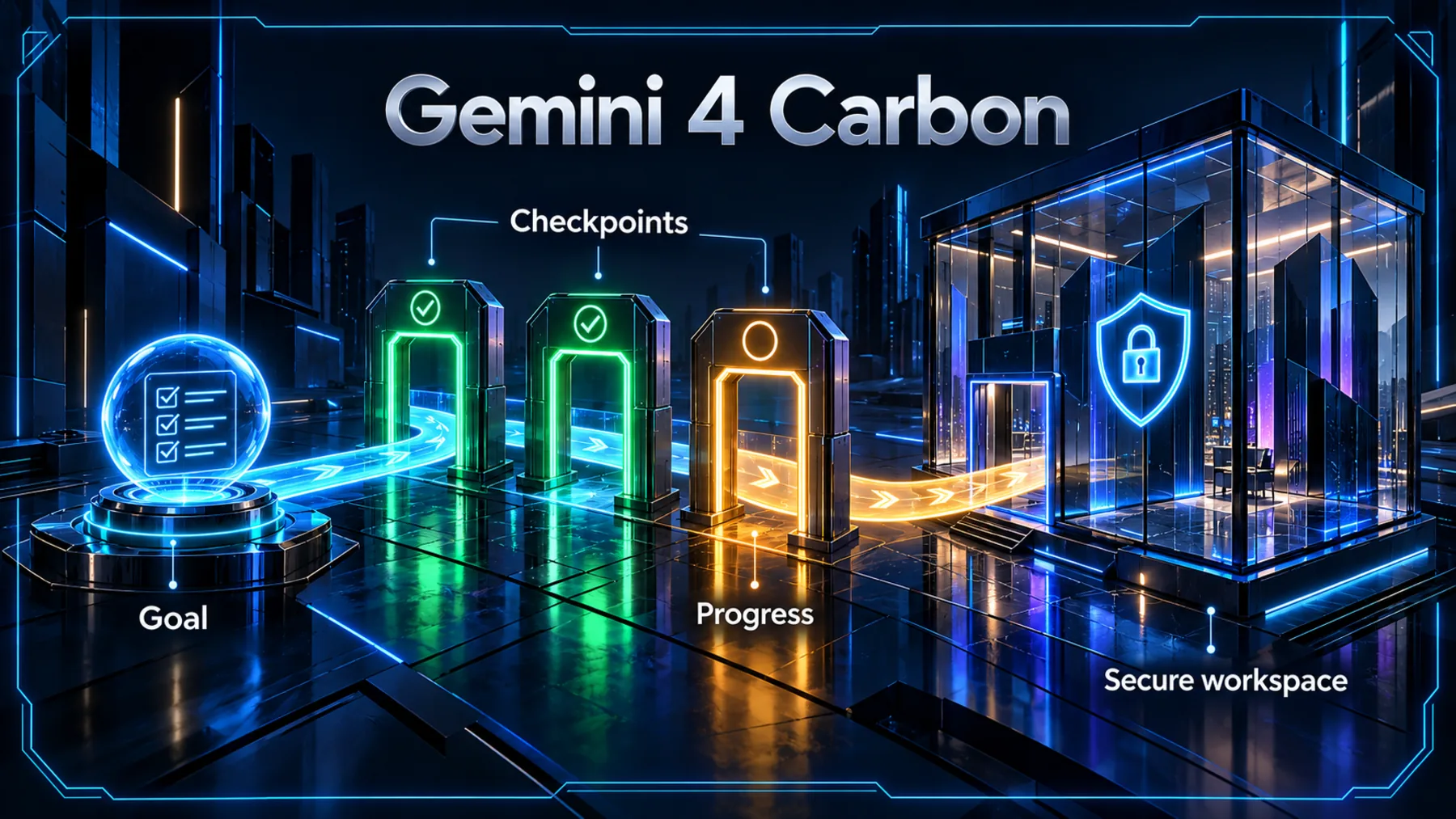
Google DeepMind has announced Gemini 4 Carbon, its next frontier model, with a focus on cybersecurity and long-horizon capability. In ordinary language, that second ambition is about staying with a task beyond the first answer.
The benchmark results give that ambition some shape. Carbon moves ahead of Argon on AutomationBench (Zapier), Agents’ Last Exam v1.1 and ExploitGym. But the table also contains a useful counterweight to the launch headline: Carbon does not lead every comparison.
We need progress after the first reply
A multi-step job leaves work to do after an AI has said something useful.
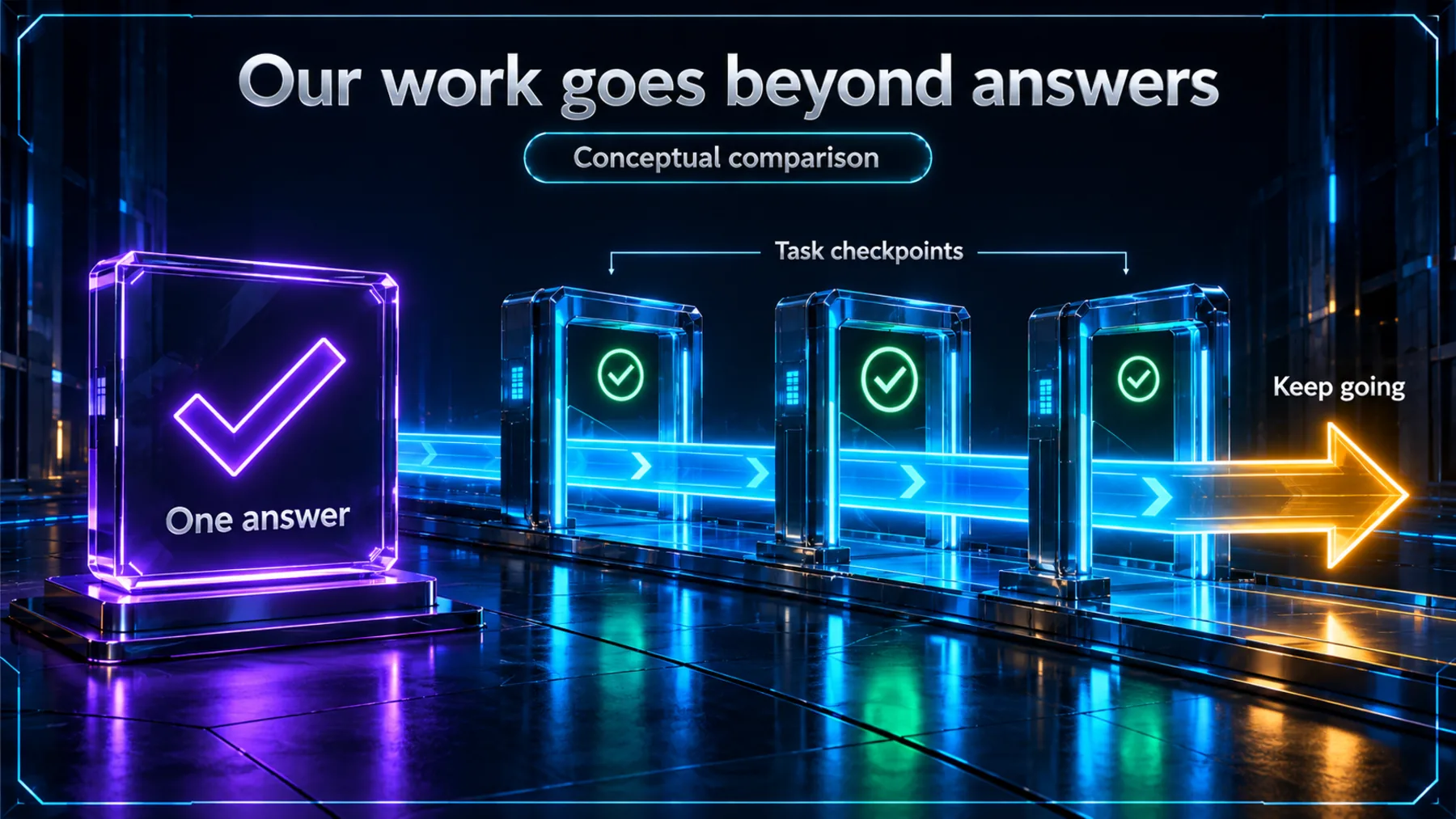
When we give an AI a job with several steps, a strong opening answer only takes us so far. We still need the later steps to follow the goal, account for what has already happened and move towards a finished result.
That is the practical idea behind long-horizon work. It describes the challenge of continuing through a task, rather than a particular number of minutes or hours. Carbon’s results let us examine progress on named tests without inventing a duration for how long it can work.
Three gains over Argon, with different margins
Carbon’s advantage varies across the selected task and cybersecurity benchmarks.
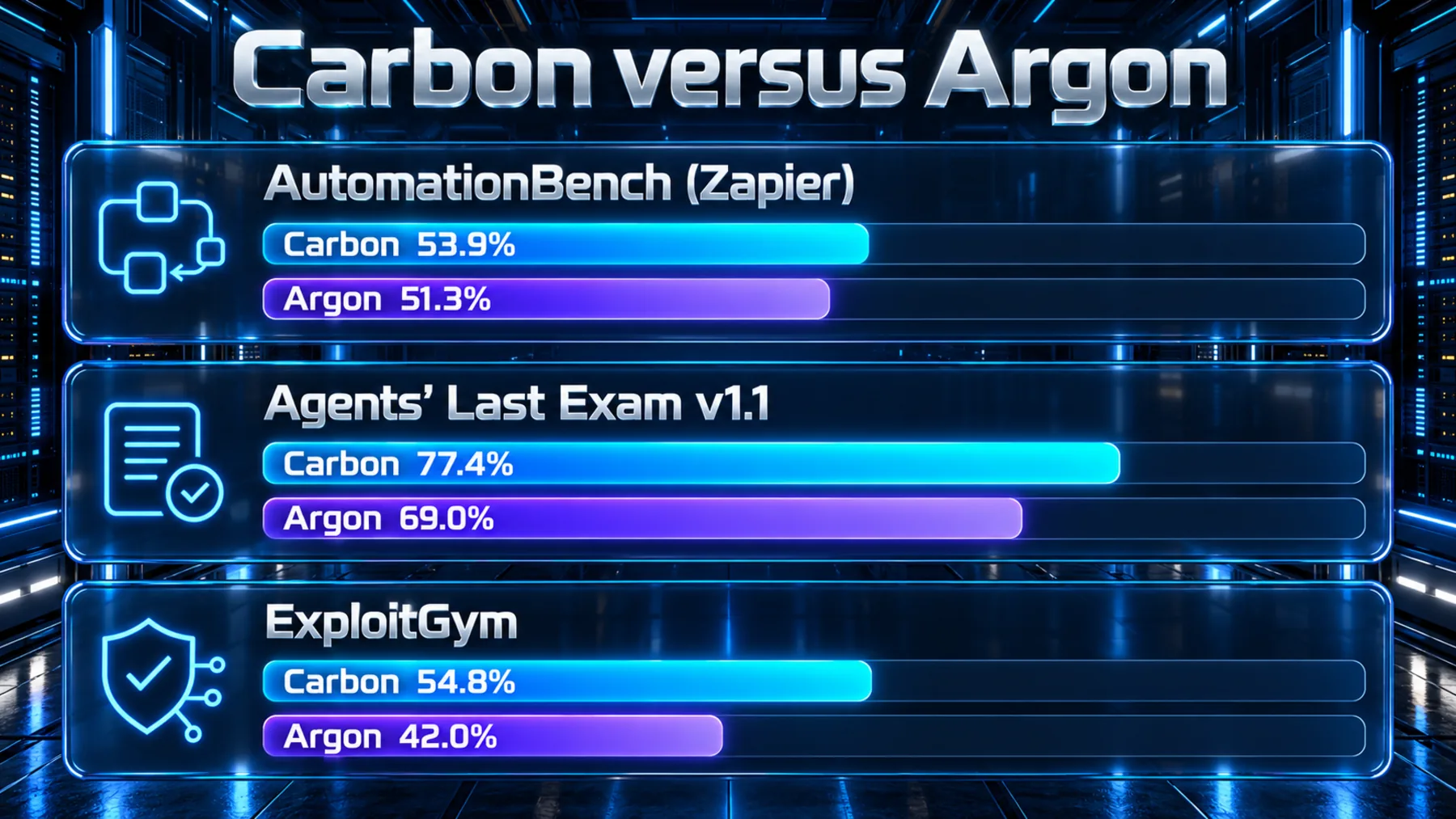
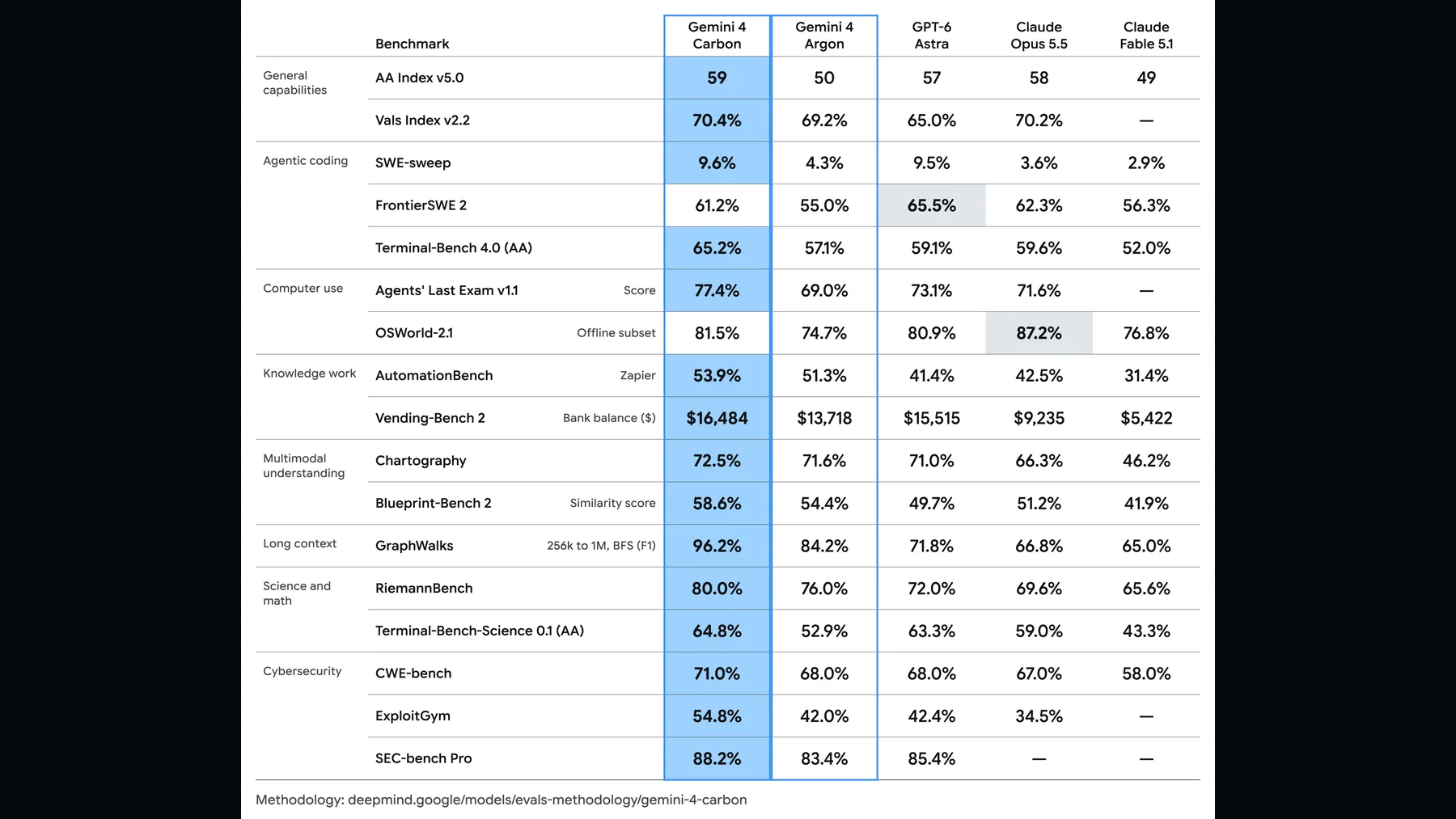
On AutomationBench (Zapier), Carbon scores 53.9% against Argon’s 51.3%. Agents’ Last Exam v1.1 shows a wider separation: 77.4% for Carbon and 69.0% for Argon. On ExploitGym, Carbon reaches 54.8%, compared with Argon’s 42.0%.
Those are three distinct comparisons, not ingredients for a combined score. They make the improvement over Argon concrete, while leaving room for a different result when the test changes.
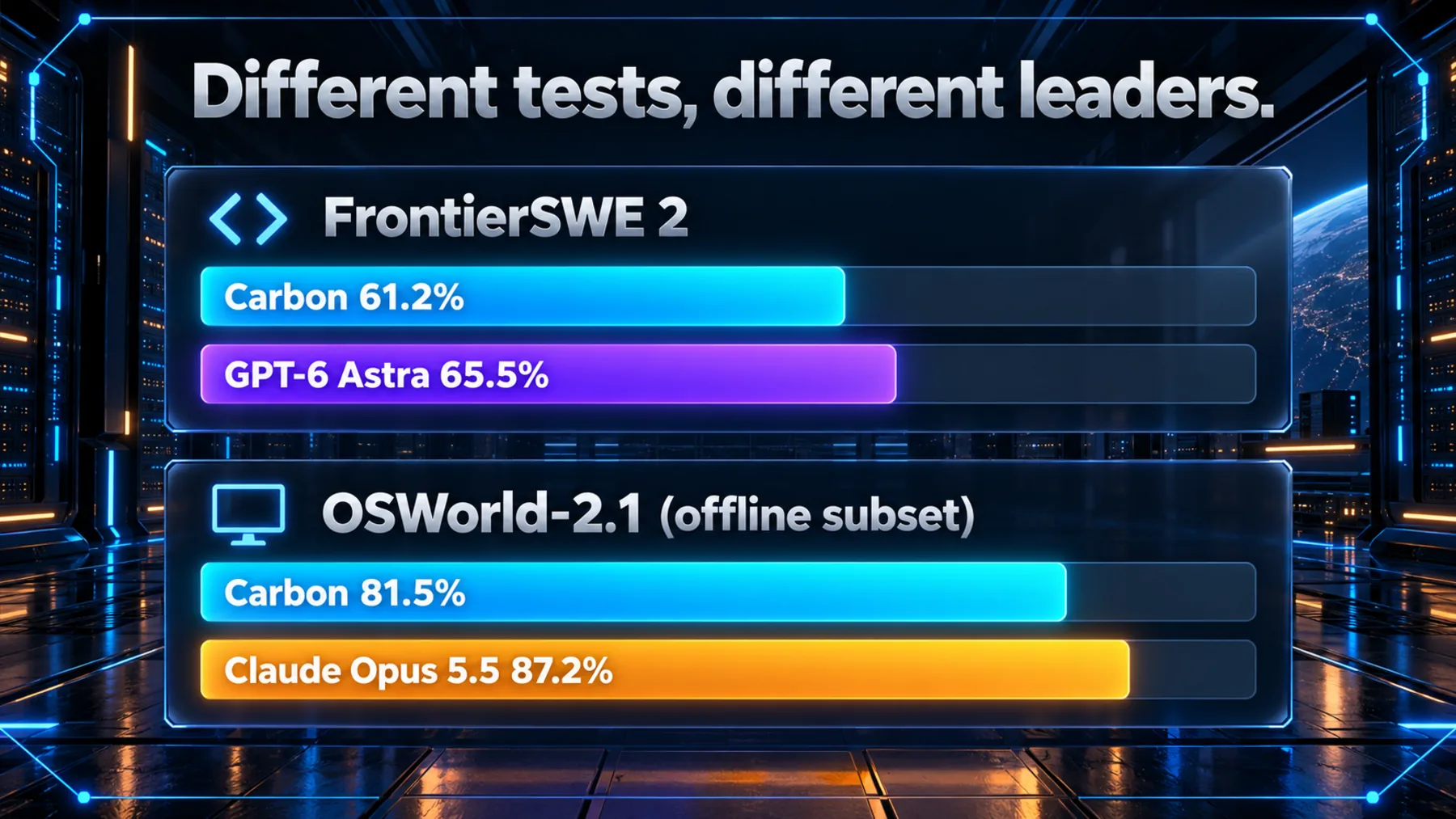
That change arrives on FrontierSWE 2, where Carbon’s 61.2% trails GPT-6 Astra’s 65.5%. On OSWorld-2.1 (offline subset), Carbon records 81.5%, while Claude Opus 5.5 reaches 87.2%. The exceptions belong alongside the gains.
Google DeepMind puts sustained work in focus
The launch pairs Carbon’s frontier-model introduction with cybersecurity and long-horizon capability.
Google DeepMind introduces Carbon directly: “Gemini 4 Carbon is our next frontier model.” The following paragraph sets out its emphasis on cybersecurity and long-horizon capabilities.
That emphasis explains why the announcement matters beyond another model name. The interesting question is how capability holds up across a job. The accompanying benchmark table gives us specific comparisons to examine.
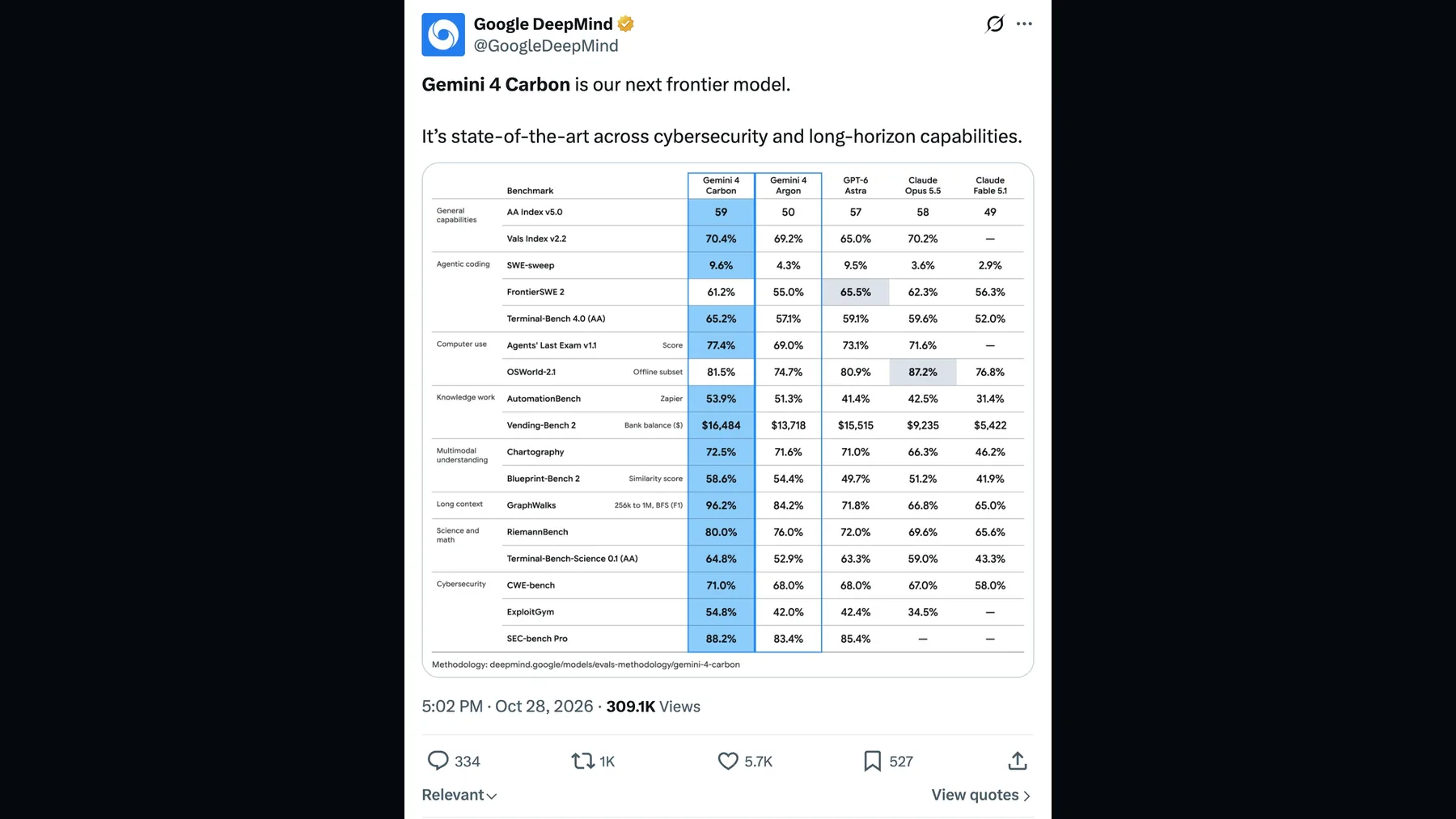
Gemini 4 Carbon is our next frontier model.
Google DeepMind
Different tests, different winners
The original table brings the gains and the exceptions into the same view.
The table is more useful than a single winner label. Carbon leads the reported model scores on AutomationBench (Zapier), Agents’ Last Exam v1.1 and ExploitGym. Its strengths in these rows sit alongside lower scores than GPT-6 Astra on FrontierSWE 2 and Claude Opus 5.5 on OSWorld-2.1 (offline subset).
The labels matter as much as the numbers. The desktop comparison covers an offline subset, and each percentage belongs to its own benchmark. We should keep those boundaries when comparing models rather than turn the chart into a promise about every job we might give them.
Keep the goal through the next step
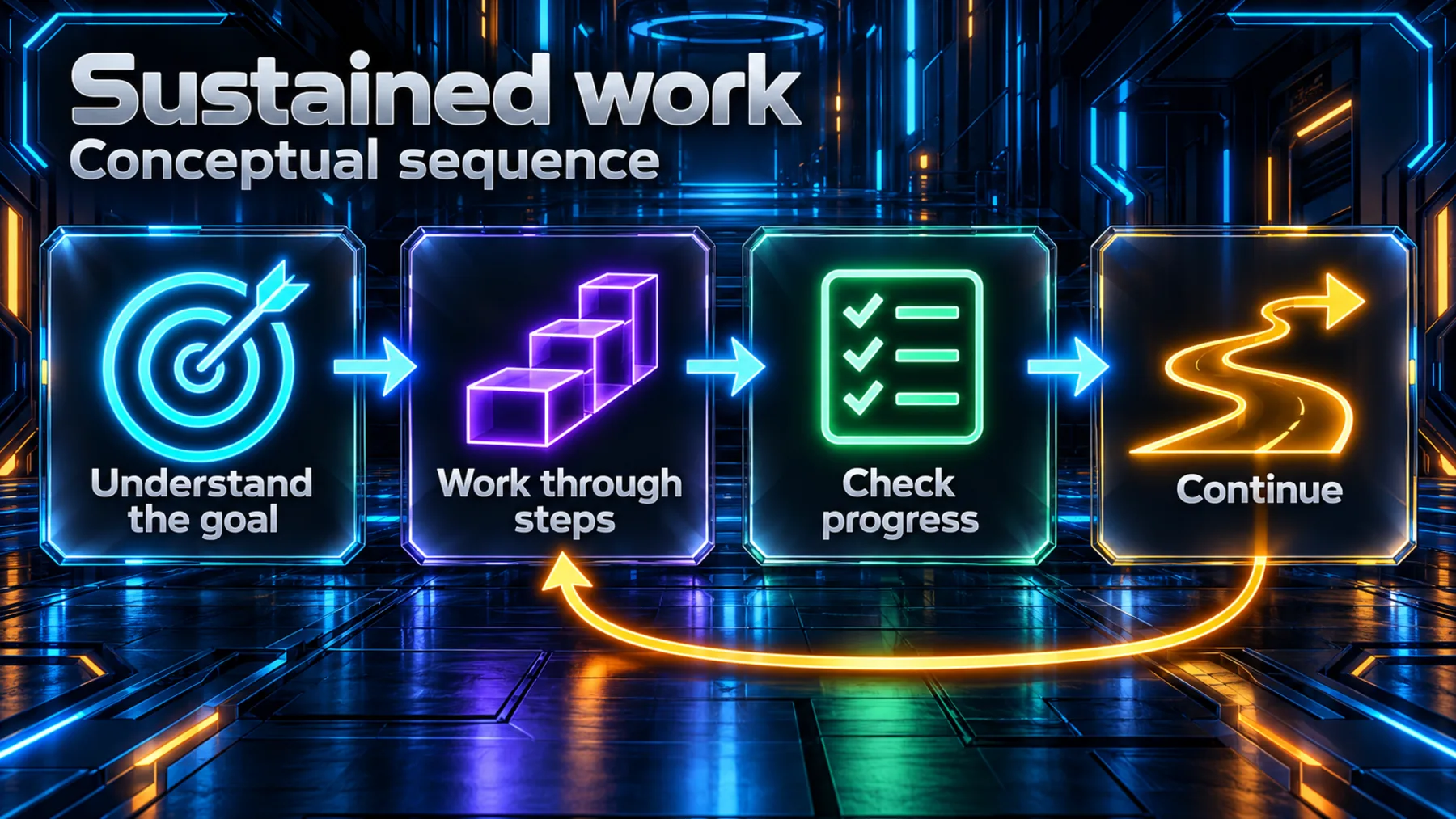
A simple sequence helps explain sustained work without guessing at Carbon’s internal design.
We can picture a longer job as a sequence: understand the goal, work through a step, check progress and continue. Each stage leaves a question for the next. Has the work moved us closer to the result, and what remains?
This is a way to understand the task, not a description of Carbon’s architecture. The distinction keeps the explanation useful: we can see why sustained progress is demanding without inventing tools, training methods or an autonomous security workflow.
Start with the job we need done
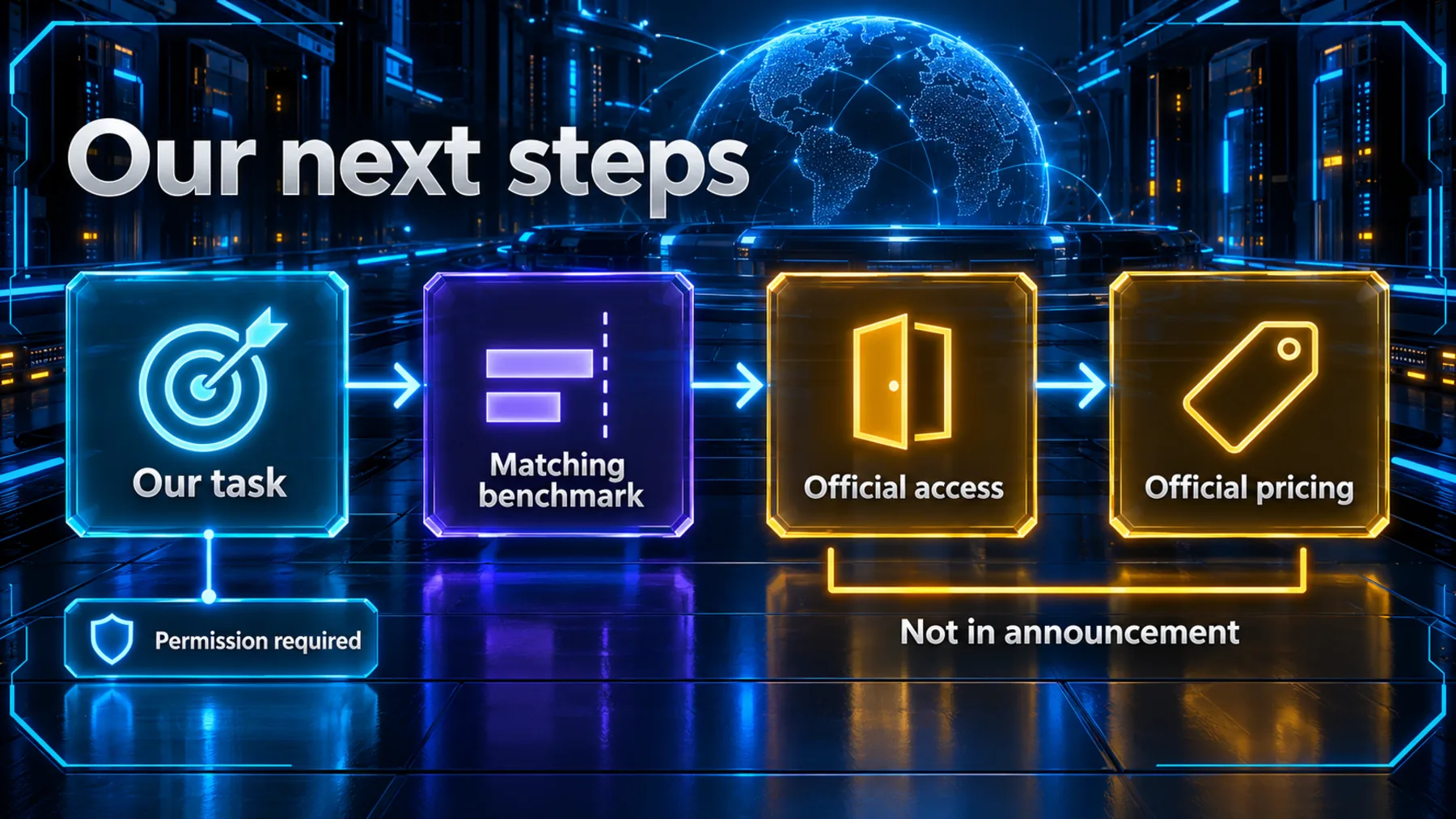
The relevant benchmark comes first. Access, constraints and cost need their own answers.
We can start by identifying the work we care about, then inspect the closest benchmark in the table. A software task and a desktop task already point to different comparisons; the broad launch claim cannot make that choice for us.
The announcement supplies no access or pricing details. Before planning a first session, we need official information on how to access Carbon, the conditions of use and the cost. That gap does not mean the model is unavailable everywhere.
For cybersecurity work, permission remains a separate requirement. Any testing must stay within systems and environments we are explicitly authorised to assess.
Progress without a clean sweep
Carbon’s improvement over Argon is clear in the selected results. Its position against rivals still depends on the test.
Carbon’s story is strongest when we keep it specific. The selected long-task and cybersecurity results improve on Argon, while the software and desktop comparisons preserve clear exceptions.
For us, that makes the task the useful starting point. We can recognise the gains without treating the model as a universal winner, then keep access and cost as questions to resolve before use.
Carbon moves ahead of Argon on the selected task and security tests. Change the test, and the leader can change too.
AI News · Based on Google DeepMind’s announcement and benchmark table: https://x.com/GoogleDeepMind/status/2115489356437651654
Make sense of Carbon’s benchmark gains
Explain the following Gemini 4 Carbon benchmark results in plain English, using only the information below. Produce a short briefing with three parts: where Carbon improves on Argon, where another named model leads Carbon, and what we still need to know before considering access or use. Google DeepMind announcement: https://x.com/GoogleDeepMind/status/2115489356437651654 Benchmark table: https://pbs.twimg.com/media/HVu5JfhXkAAHYVr?format=jpg&name=orig Selected results: - AutomationBench (Zapier): Carbon 53.9%; Argon 51.3%. - Agents’ Last Exam v1.1: Carbon 77.4%; Argon 69.0%. - ExploitGym: Carbon 54.8%; Argon 42.0%. - FrontierSWE 2: Carbon 61.2%; GPT-6 Astra 65.5%. - OSWorld-2.1 (offline subset): Carbon 81.5%; Claude Opus 5.5 87.2%. Preserve every benchmark name, percentage, comparator and the offline-subset qualifier. Calculate each gap in percentage points, naming the model ahead; do not describe the gaps as percentage increases. Explain why these rows do not establish an overall winner or everyday task success rates. The announcement supplies no access or pricing details; no methodology details are supplied here. Identify these as unanswered questions without inventing answers or claiming global unavailability. Do not infer operating duration, architecture, production reliability, savings or permission to conduct security testing. Include the source links in the briefing.Ready to copy
Remember the task, not the trophy
Carbon’s gains matter most when we keep the benchmark and comparator attached. Follow AI News for further coverage.
Try the promptWhat to watch next
- Official access details and conditions of use.
- Pricing and any applicable usage limits.
- Methodology details behind the benchmark comparisons.