Gemini 3.8 Live splits live AI into two modes
Google has introduced one live dialogue model positioned for fluid, scale-minded conversation and another for harder, multi-step work.
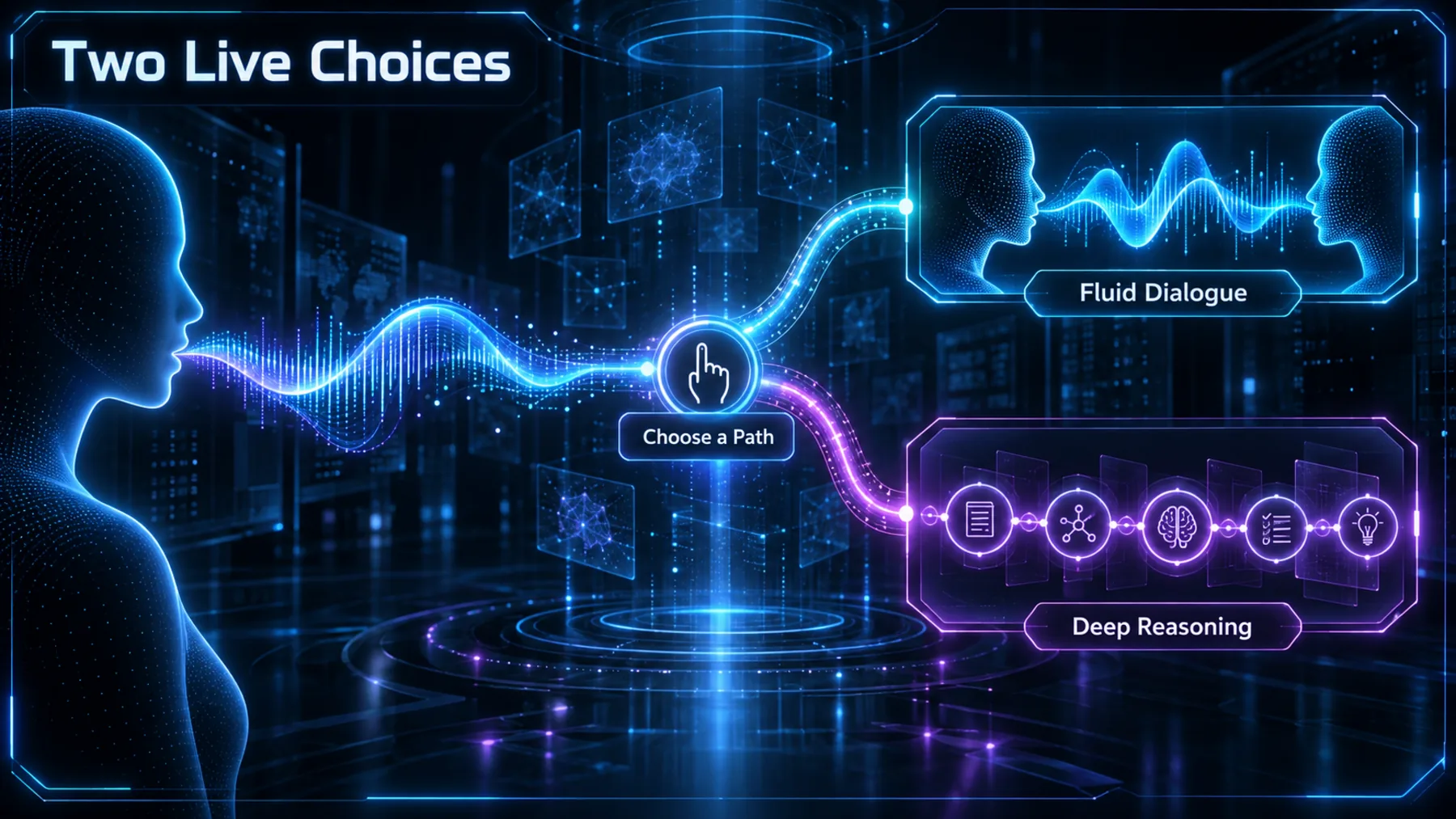
The important detail is not simply that Google has added another live model. It is presenting a choice: keep a live exchange fluid and visually grounded, or give more space to requests that need deeper reasoning.
Google says both Gemini 3.8 Live models are available to build with in AI Studio and via the Gemini API. What the announcement does not establish is how they compare on price, latency, quality or real-world workload outcomes.
Why one mode is not enough
Live AI has to feel immediate, yet not every request inside a conversation asks for the same depth of reasoning.
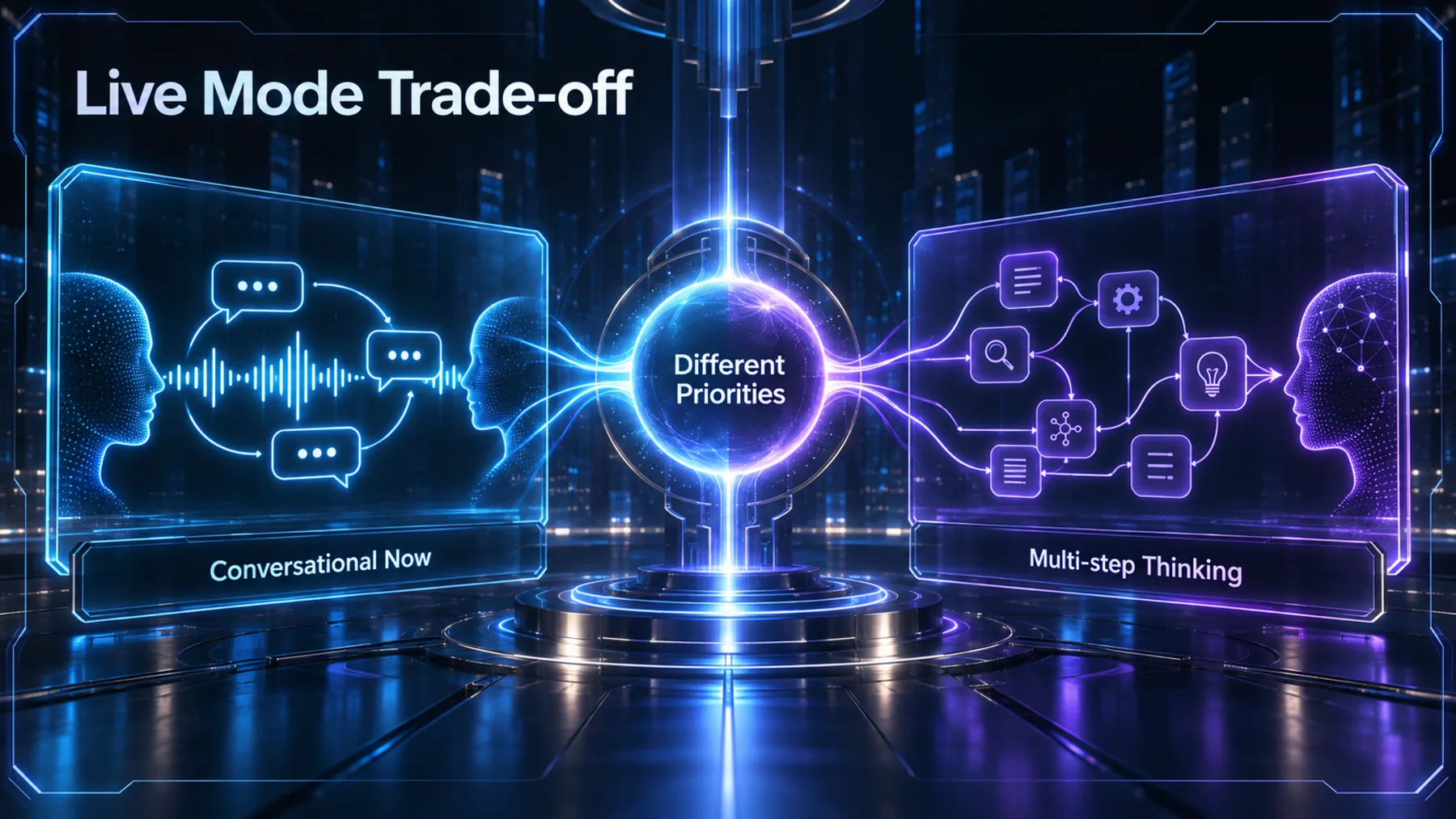
A live interaction can move quickly from a simple spoken exchange to a request that needs several connected steps. Treating those workloads as identical can make the choice of model feel invisible until the experience starts to strain.
Google’s split makes that choice explicit. The practical question is not which label sounds stronger, but whether the work in front of us needs conversational immediacy, more deliberate reasoning, or evidence from testing before we decide.
Google announced two live dialogue models
The first is positioned around fluid dialogue at scale; the second around higher-complexity, multi-step reasoning.
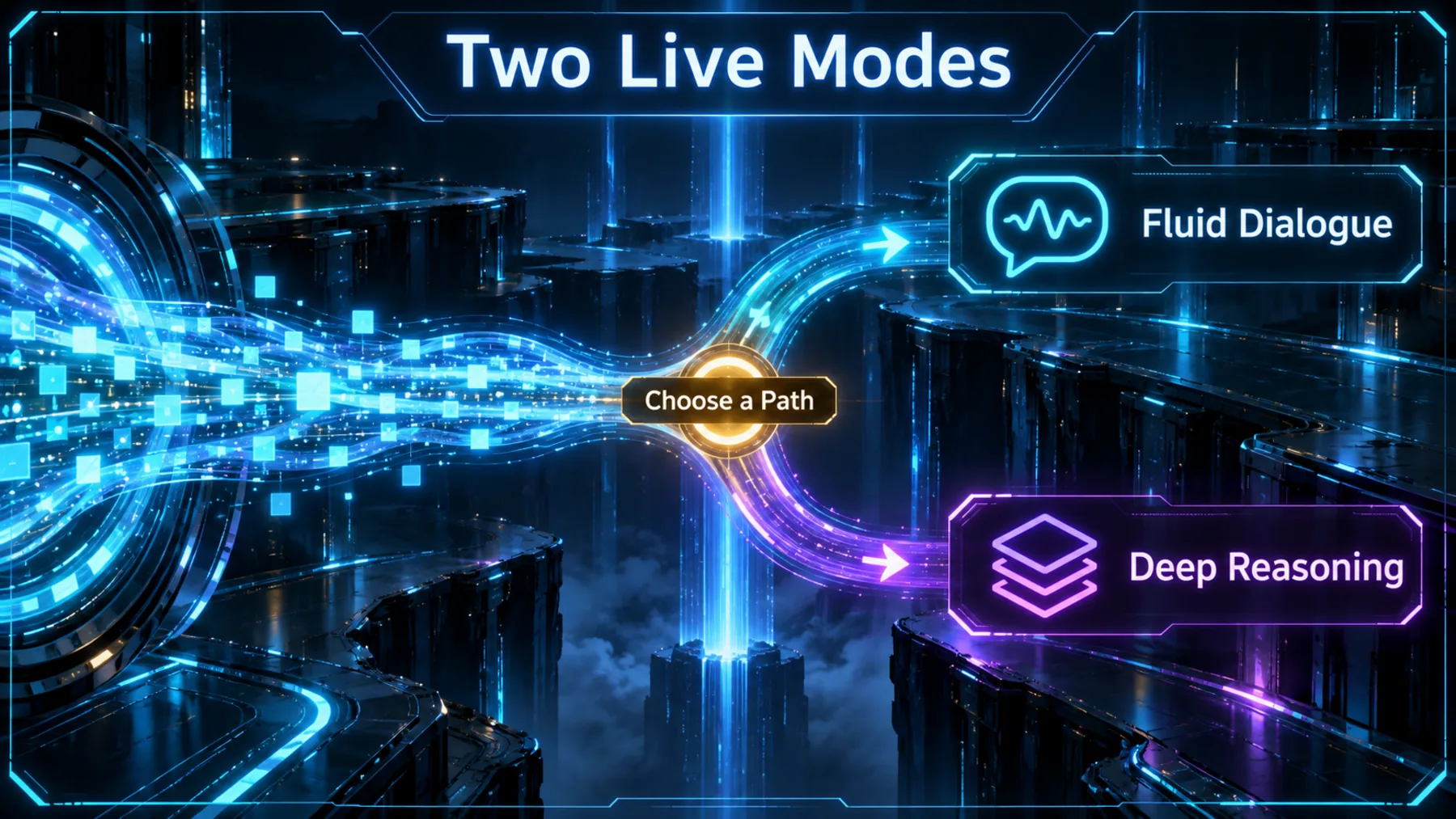
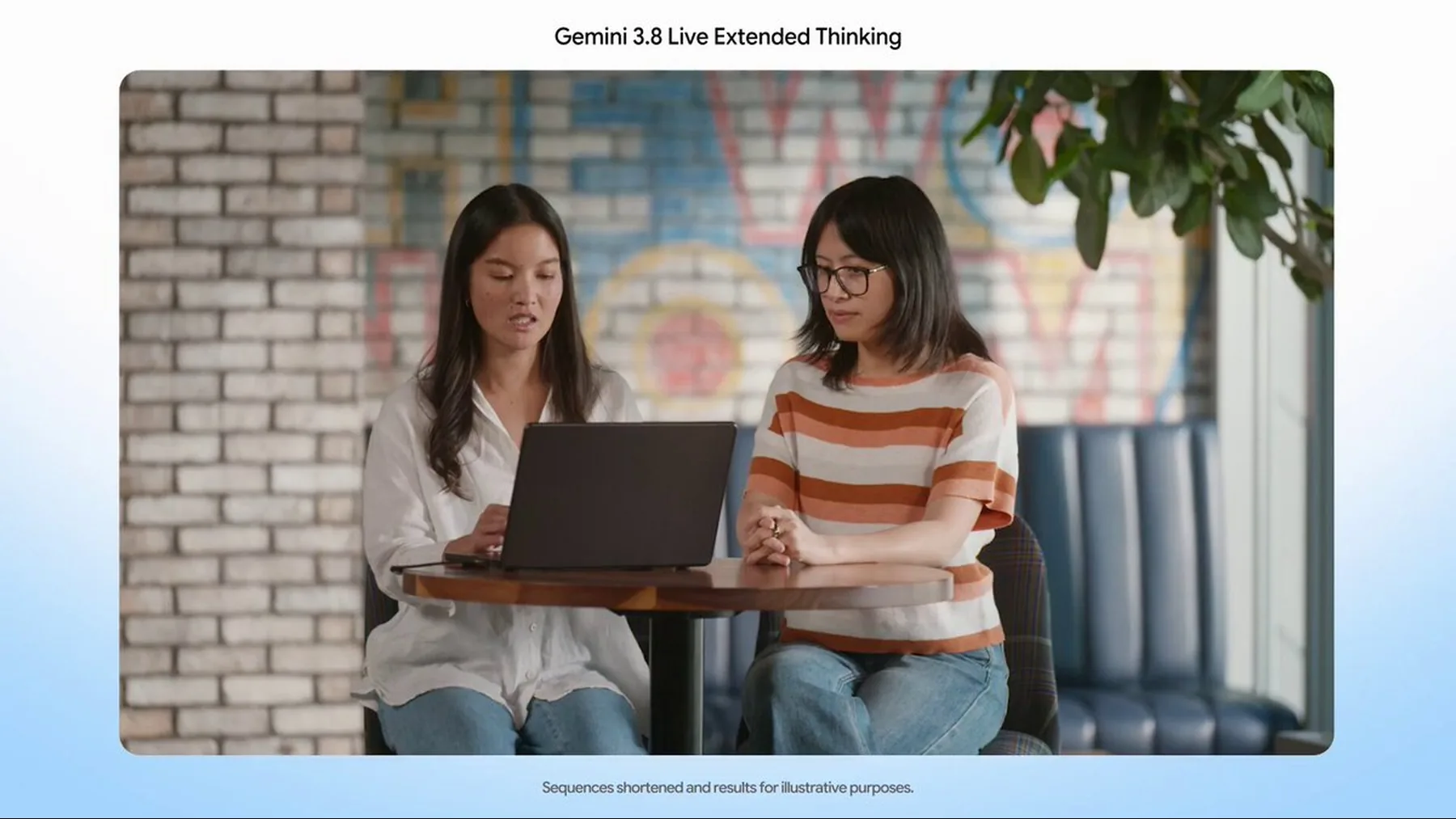
Google describes Gemini 3.8 Live as built for scale and cost efficiency, combining conversational intelligence with fluid dialogue and visual grounding. That is positioning from Google, not an independent measurement of speed, cost or quality.
Its Extended Thinking counterpart is described as built for high-complexity tasks, with increased intelligence and multi-step reasoning. The useful distinction is workload fit: one lane for a responsive live exchange, another for work Google says benefits from more reasoning.
The launch in Google’s words
The official post establishes a paired launch and the intended distinction between the two model positions.
“Gemini 3.8 Live: built for scale and cost efficiency, combining conversational intelligence with fluid dialogue and visual grounding.”
Google AI Studio
The wording matters because it gives the launch its boundaries. Google is not describing one universal live model with a proven edge in every situation; it is naming two positions inside the same product moment.
That leaves important questions open. The announcement supplies no published benchmark comparison, latency figure, price, or evidence that a system automatically chooses between the two modes for us.
Official proof, limited claims
The source proves Google’s announcement and stated positioning; it does not independently verify the outcomes those positions may produce.
The official post is enough to establish what Google announced and how it frames each model. It is not enough to turn those frames into measured claims about performance, reliability, cost or comparative quality.
That distinction keeps the story useful. We can use the announcement to define a testable choice, while reserving judgment on the results until there is evidence from the work we actually run.
How the two lanes differ
Google presents two announced choices for live work, not a documented system that routes requests between them automatically.
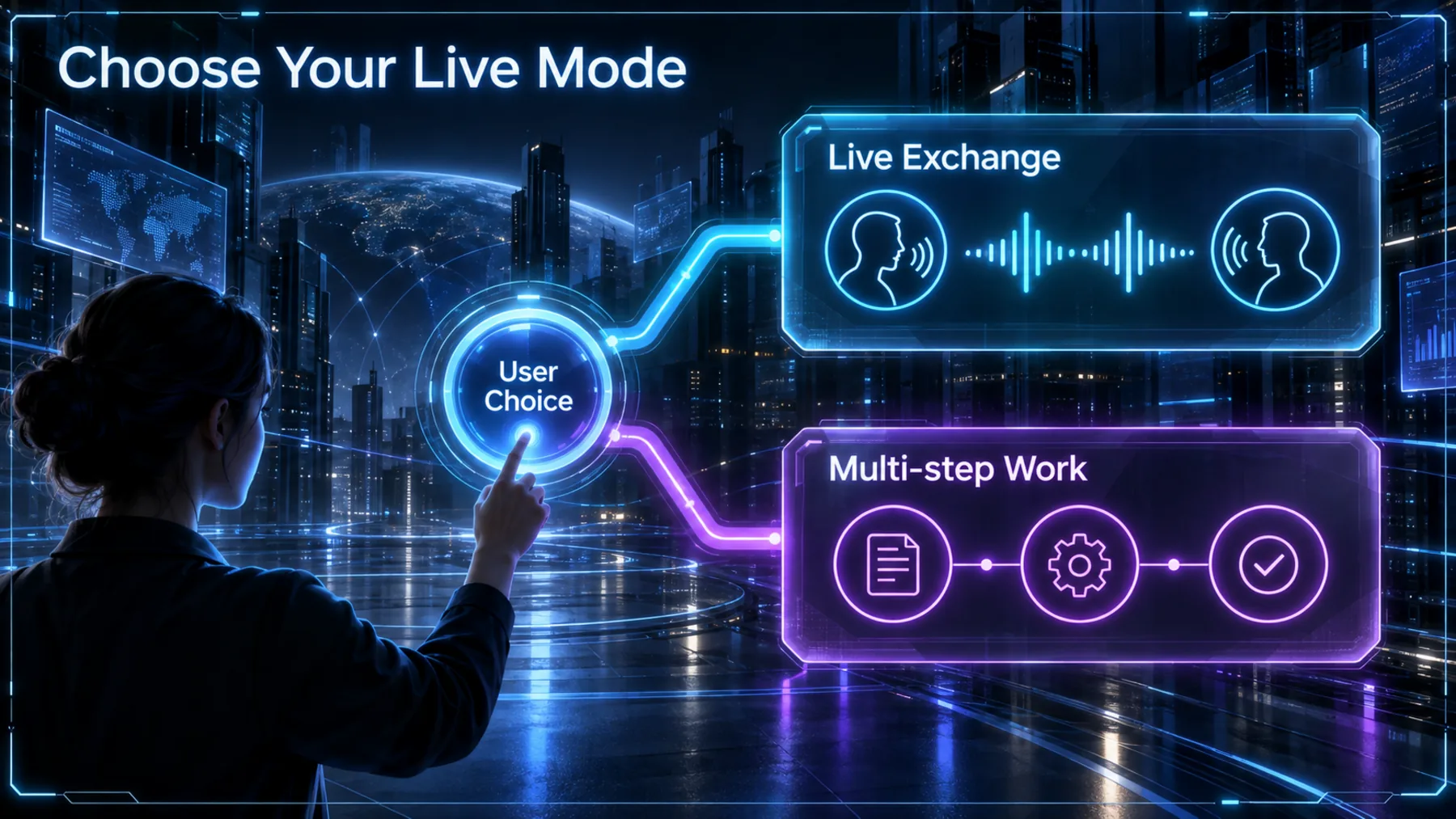
For a conversational exchange where responsiveness and visual grounding matter, Google positions Gemini 3.8 Live as the relevant option. For a request with more steps and higher complexity, it positions Extended Thinking as the alternative.
That is a choice we still need to make deliberately. The source does not say that a live system detects complexity and switches models on its own, nor does it show how either option performs in a particular workflow.
What builders should test
Use the announcement to shape a workload-fit test, then let observed results—not labels—decide where each model belongs.
Conversation flow
Test natural spoken exchanges where continuity, responsiveness and visual context matter.
Task complexity
Test requests that require several connected steps, checks or decisions before an answer is useful.
Operational fit
Test access, failure handling and the evidence we need before making a workload choice.
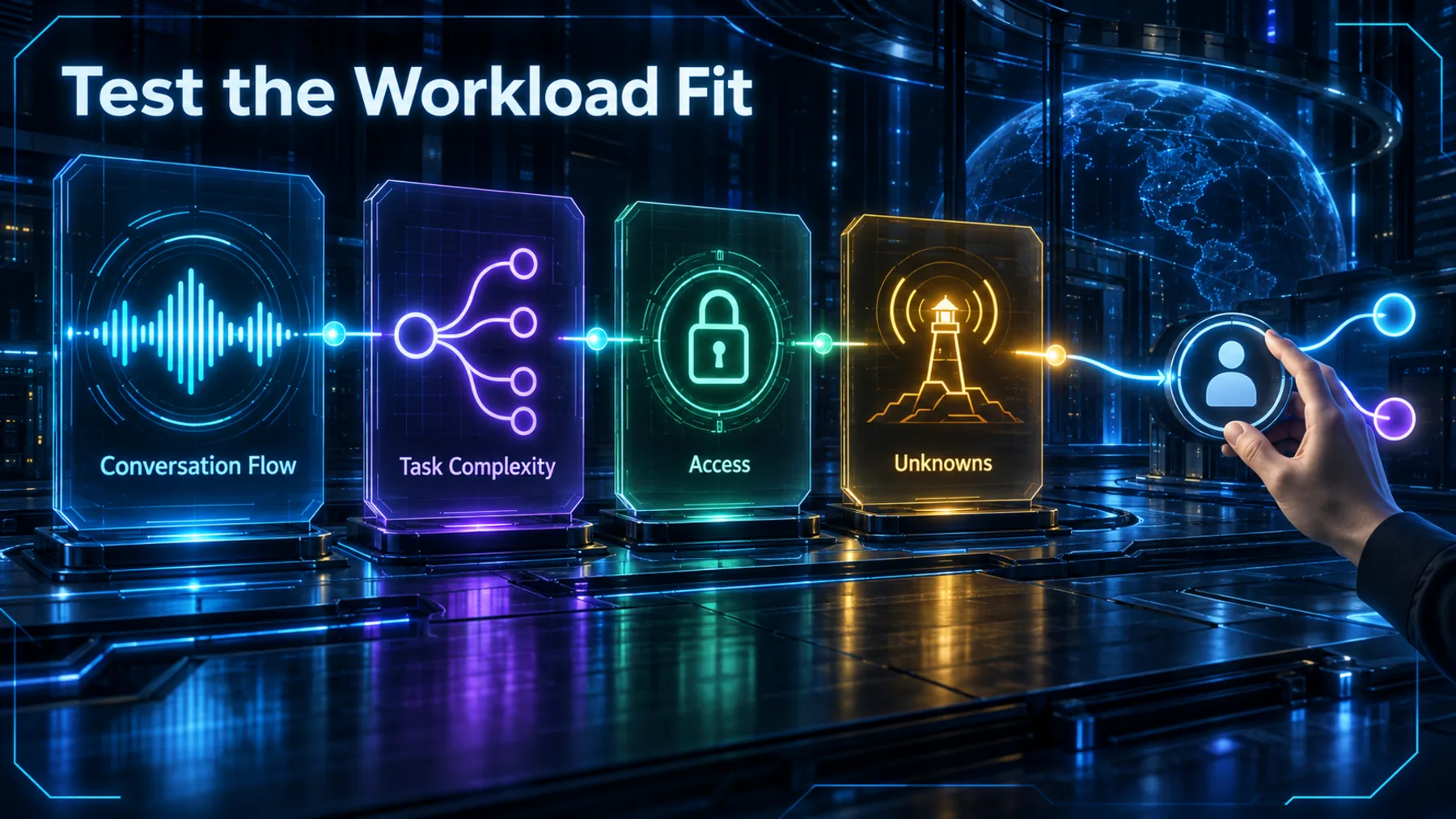
A sensible first test uses the same real workflow across both positions where that is appropriate: straightforward conversational turns, visually grounded exchanges, and tasks that require several steps of reasoning. Record what happens rather than predicting a winner from the announcement.
We should also separate what is available from what is proven. Google says the models can be built with in AI Studio and through the Gemini API; the source does not supply the pricing, latency, benchmark or rollout detail needed to make broader operational claims.
The real shift is the choice
Live AI design is moving towards explicit workload fit, while the comparative outcomes remain to be demonstrated.
The meaningful change is not a universal upgrade. It is a clearer decision about how much reasoning a live interaction needs.
Altior analysis of Google’s announcement
Google’s paired launch makes a practical design question visible: when should a live experience prioritise a fluid exchange, and when should it be set up for work that asks more of the model?
That is a stronger question than asking which model is best in the abstract. The answer will depend on our workload, our tolerance for trade-offs, and test evidence the announcement itself does not provide.
Choose a live-model test plan
We are assessing Google’s two announced live dialogue models: Gemini 3.8 Live, positioned for fluid dialogue, visual grounding, scale and cost efficiency; and Gemini 3.8 Live Extended Thinking, positioned for high-complexity tasks and multi-step reasoning. Create a concise test plan for our own live AI workflow. Define three representative tasks, the expected interaction quality for each, what we should measure, and what result would make us prefer one model over the other. Do not assume automatic routing, published pricing, latency, benchmark results, or superiority. Flag any decision that cannot be made until we have our own test evidence.Ready to copy
Remember the split, then watch and test
Google has announced two live dialogue model positions, not evidence that one is universally better. Keep the distinction between conversational flow and complex, multi-step work clear.
Use real workloads to test fit, and keep the unresolved evidence visible before making a broader operational decision.
Try the promptWhat still needs evidence
- Pricing Published pricing and any practical cost differences between the two models.
- Latency Observed responsiveness in representative live workloads.
- Benchmarks and quality Comparable evidence for accuracy, reliability and task outcomes.
- Availability limits Any constraints beyond Google’s stated build access in AI Studio and via the Gemini API.
- Real workload results Whether either model produces better outcomes in the workflows we actually run.