Gemini 3.7 Flash compresses the coding-model cycle
Google AI Studio says Gemini 3.7 Flash follows 3.6 by three weeks, with claimed workflow gains and an introductory relative price cut.
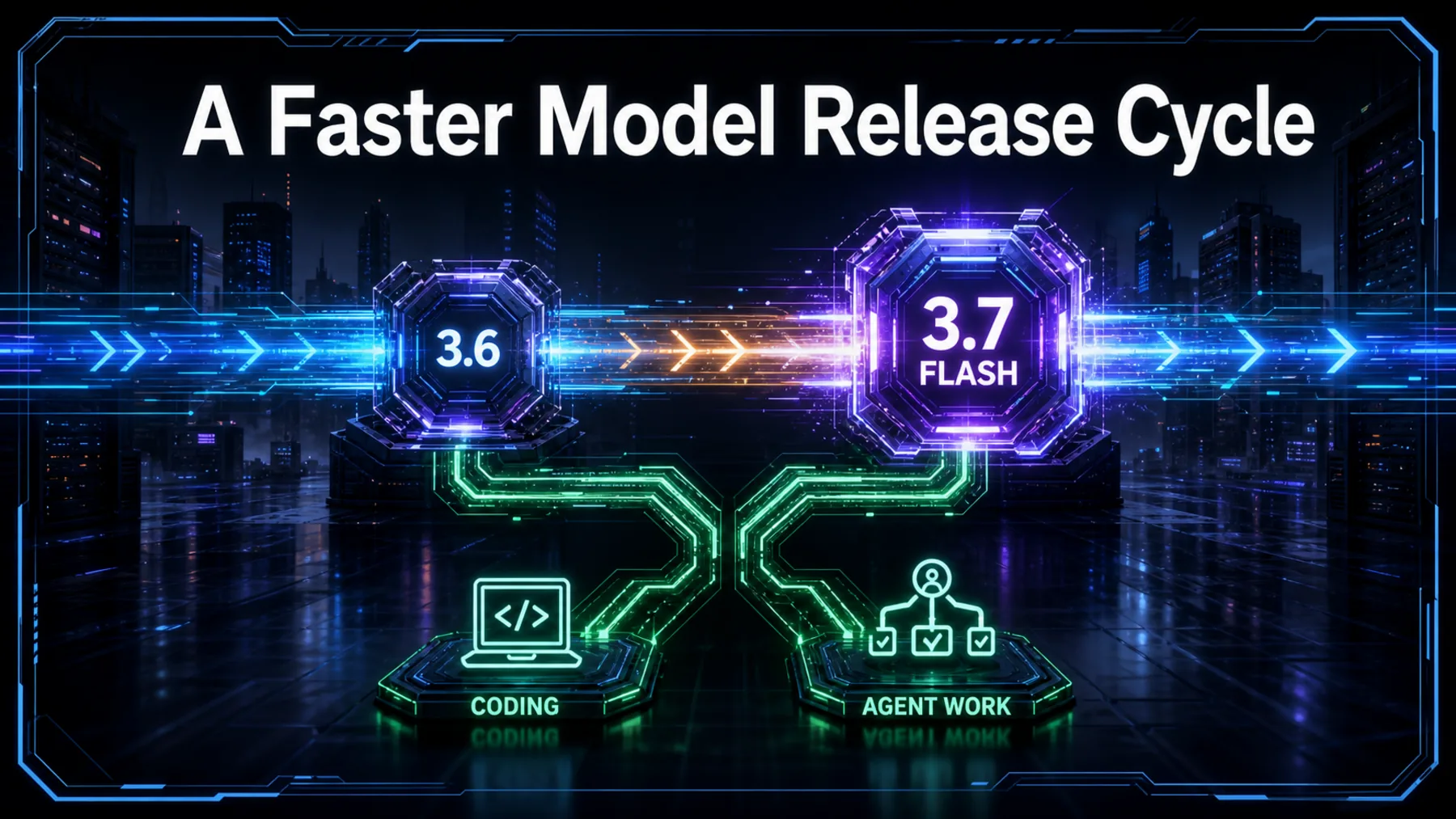
Google AI Studio calls Gemini 3.7 Flash its most intelligent workhorse model yet for coding and agents. In plain terms, that is a claim about a model intended to be called repeatedly inside practical work, rather than admired from a benchmark table.
The timing is the immediate signal: Google says 3.7 arrives three weeks after 3.6. But this announcement is not the evidence needed to decide whether the newer model earns a place in our workflow.
The Cycle Has Compressed
A faster release can matter, but only when the evidence behind it catches up.
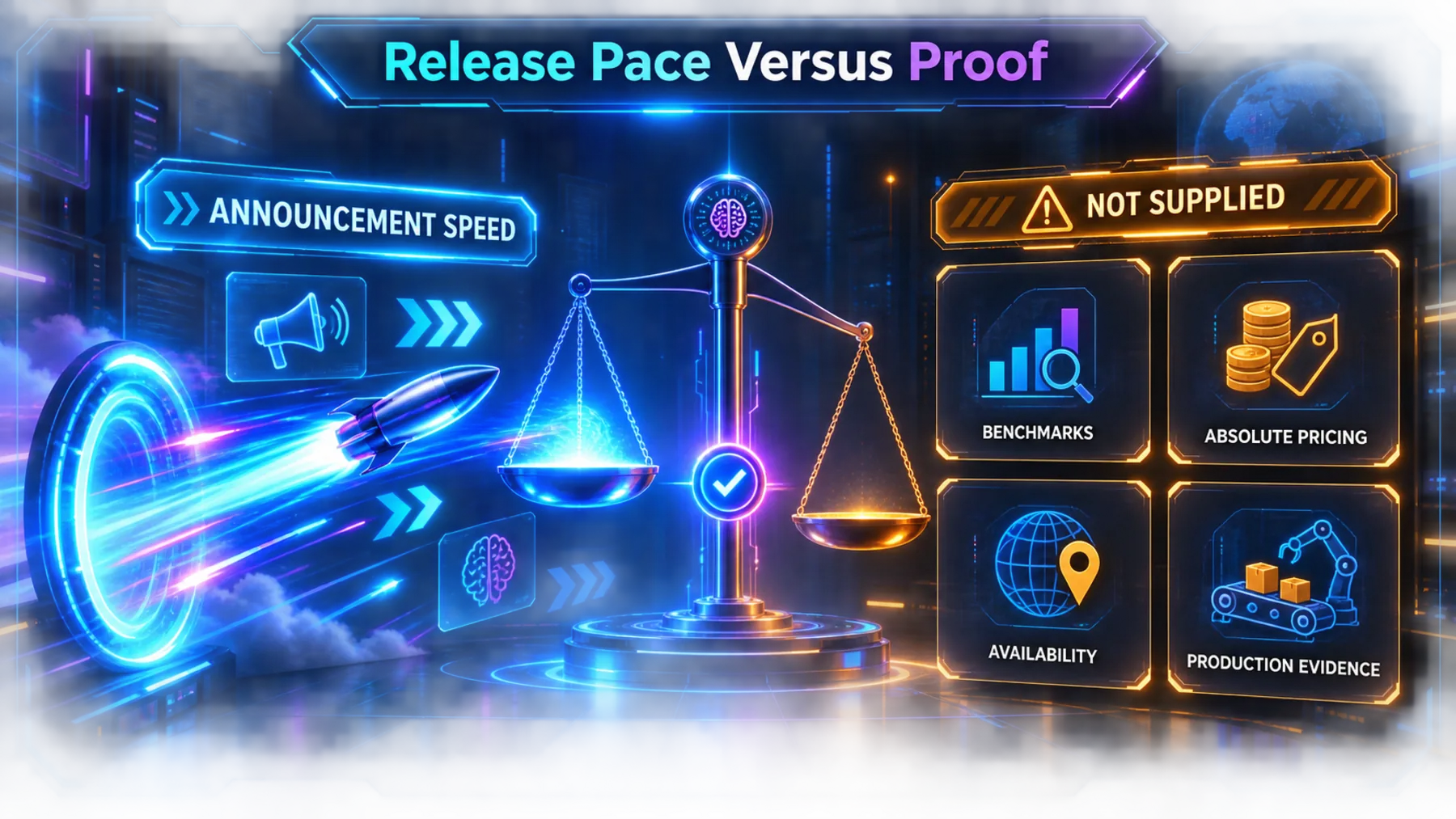
Fast iteration changes the practical question. We are not simply comparing model names; we are deciding whether the capability, access and cost assumptions beneath an existing workflow have shifted again.
Google’s announcement makes that possibility worth examining. It does not show a benchmark result, an absolute token price, or the conditions under which 3.7 Flash can be used.
What Google Has Put On Record
Two comparisons are specific. The rest remains outside the supplied evidence.
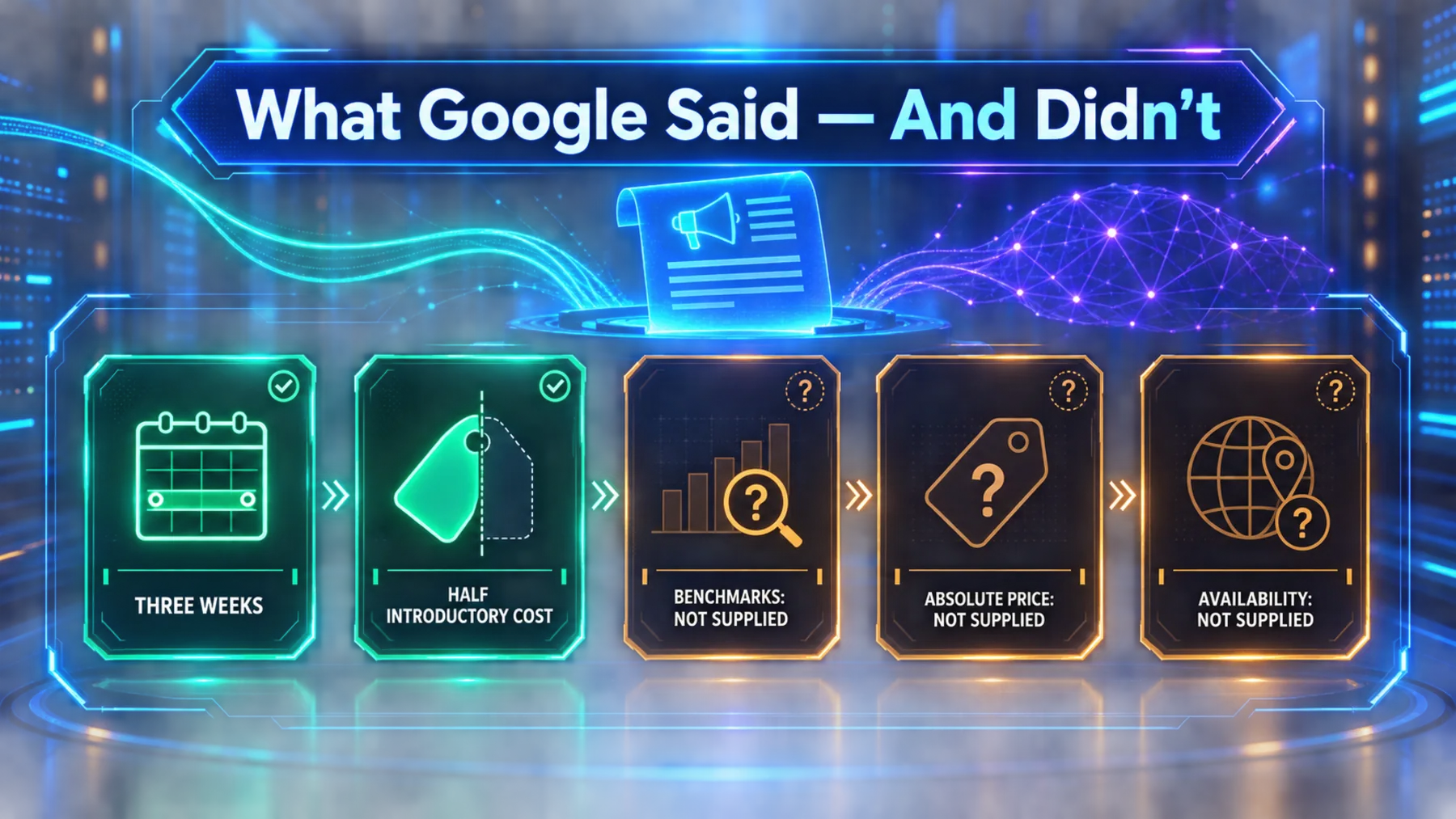
Google says 3.7 Flash brings substantial improvements across software engineering, knowledge work and web-development workflows. It also says the introductory price is half the original 3.6 Flash cost per million tokens.
Those are meaningful claims to preserve accurately. They are still Google AI Studio’s claims: no benchmark, absolute input or output price, or real-workload saving is included in the source.
The Claim In Full
The announcement is short, direct and bounded by what it actually says.
The useful discipline here is to keep the announcement intact. Google AI Studio positions 3.7 Flash as a coding-and-agents workhorse, links the release to developer feedback and algorithmic innovations, and makes a relative pricing claim.
None of that requires us to turn a launch post into a verdict. The source establishes what Google is saying; it does not independently establish how the model performs in production.
this release comes just three weeks after Gemini 3.6 Flash
Google AI Studio, X post
A Release Is Not A Result
The post gives us positioning and a price comparison, not an evaluation record.
The distinction matters because model announcements can arrive with enough specificity to change our shortlist, yet still leave the decision-critical details unanswered. Google’s language points to coding, knowledge work and web development; it does not quantify an uplift in any of them.
We would still need independent task testing, usable access details and an absolute price before treating the announcement as a production recommendation.
Repeated Calls Change The Maths
A practical model earns its place through the work it can support repeatedly.
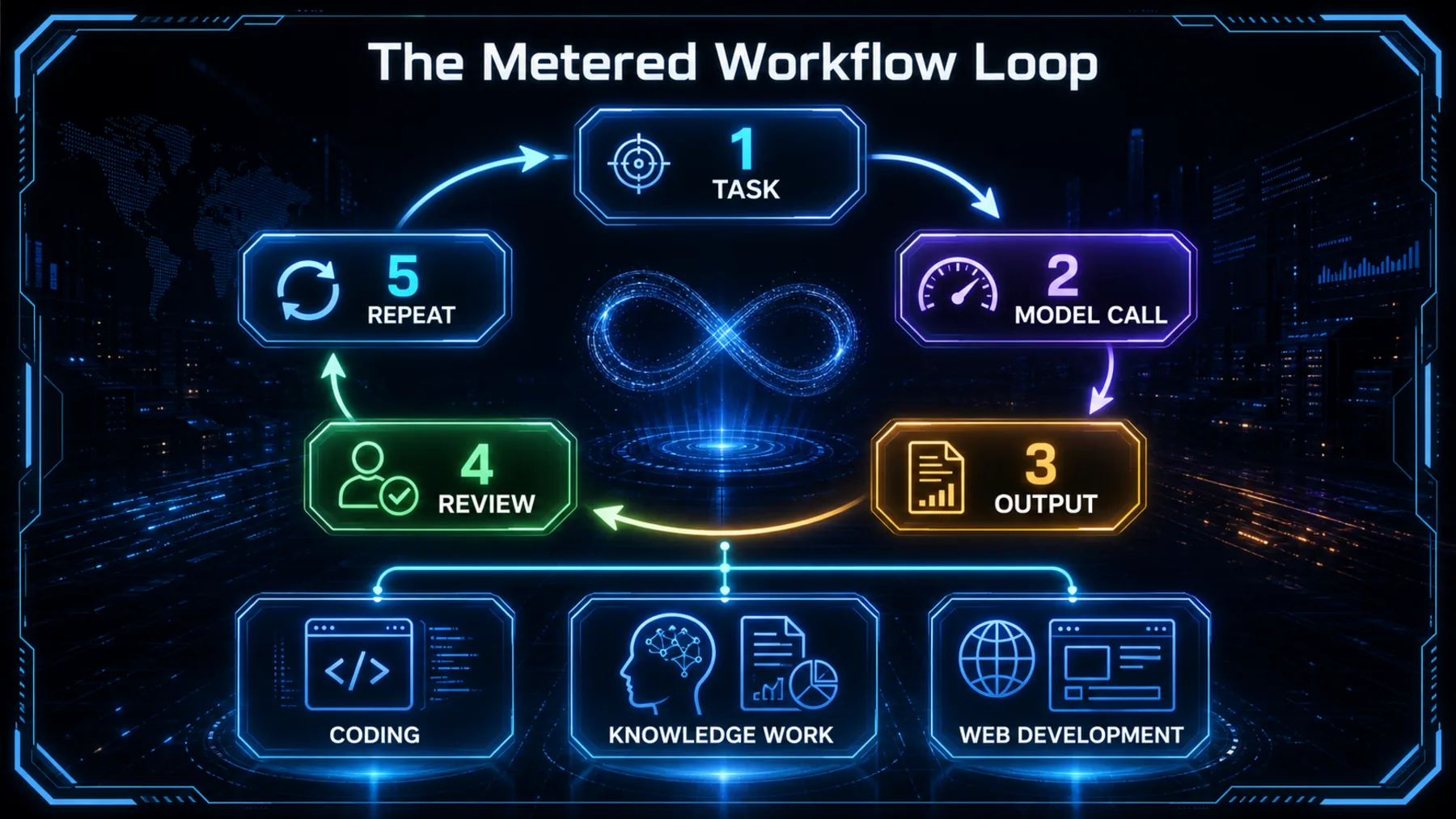
A workhorse model is less about a trophy claim than the rhythm of use. Coding tools, agents and web-development workflows can call a model again and again, so a change in capability or token economics can alter the shape of everyday work.
Google says developer feedback and algorithmic innovations informed this release. The announcement does not describe an internal architecture or prove how those changes behave under a real workload.
Coding
Google names software engineering as a target workflow.
Knowledge work
Google includes knowledge work in its stated improvement claim.
Web development
Google also names web-development workflows.
Test The Claim Before The Switch
A faster model cycle makes disciplined evaluation more valuable, not less.

Read
Separate Google’s claims from independently established facts.
Check
Confirm access and pricing details that the post does not provide.
Test
Run a limited workload before changing a production choice.
For us, the release is a reason to reopen a question, not to close one. If a model line changes within three weeks, an earlier choice may deserve another look—especially where repeated calls make token economics material.
The next move is modest: test the work we actually need done, then compare the observed result with the access and cost terms available at the time.
Speed Is Not Proof
Google’s announcement may be consequential; the evidence needed for a verdict is still missing.
Gemini 3.7 Flash compresses the story into one sharp tension. Google says the model is smarter for coding and agents, arrives three weeks after 3.6, and starts at half the original introductory token cost. That combination could matter for high-volume work.
But pace and positioning are not a benchmark, an invoice or an access guarantee. The strongest reading keeps both halves in view: the announcement is worth testing, while the missing evidence remains decisive.
A rapid release can change the question without answering it.
Altior analysis of Google AI Studio’s announcement
Separate the announcement from the evidence
Act as a technical evaluation lead. Using only the announcement text below, produce: (1) a three-row table with the stated change, exact supporting wording, and whether it is independently verified here; (2) four questions we must answer before production adoption; and (3) a 100-word recommendation for a limited evaluation. Do not invent benchmarks, availability, absolute prices, rate limits, context windows, modalities, or savings. Announcement text: “introducing Gemini 3.7 Flash: our most intelligent workhorse model yet for coding and agents” “this release comes just three weeks after Gemini 3.6 Flash, and is a direct result of developer feedback and algorithmic innovations that we look forward to bringing to future models” “3.7 Flash delivers substantial improvements across software engineering, knowledge work, and web development workflows — with an introductory price of half the original 3.6 Flash cost per million tokens”Ready to copy
Keep The Evidence Separate
Use the announcement as a prompt to evaluate, then require observable workload results, usable access terms and absolute pricing before we change a production decision.
Try the promptWhat could change the conclusion
- Benchmark evidence
- Absolute pricing
- Availability detail
- Production constraints