Fable 5.1 A better long-task handoff
Anthropic says Fable 5.1 can continue further before it needs input, then signal more clearly when a human decision is genuinely required.
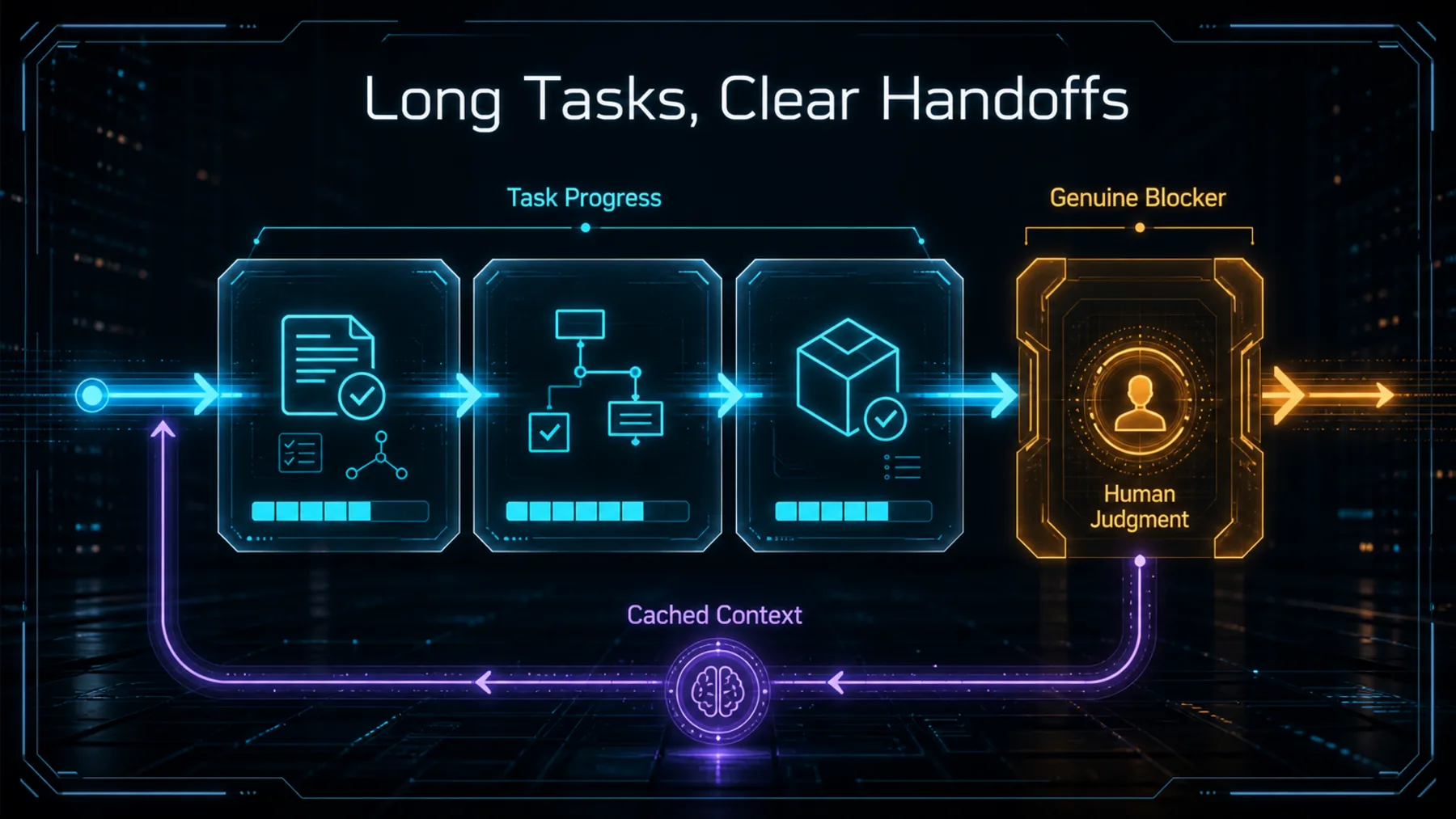
Long tasks rarely fail at the first instruction. They gather context, branch into decisions and eventually meet something that cannot be settled by confident-looking text alone. Anthropic says Fable 5.1 is designed to go further into that work before asking for input, while doing a better job of saying when it is stuck.
That is a meaningful promise if it holds. Fewer premature interruptions can keep a coding or knowledge task moving; a clear handoff can stop us mistaking stalled work for progress. The posts do not provide benchmarks, task definitions or independent validation, so the claim remains Anthropic’s.
Progress needs an honest stop
Going further matters only if the moment for human judgment becomes easier to recognise.
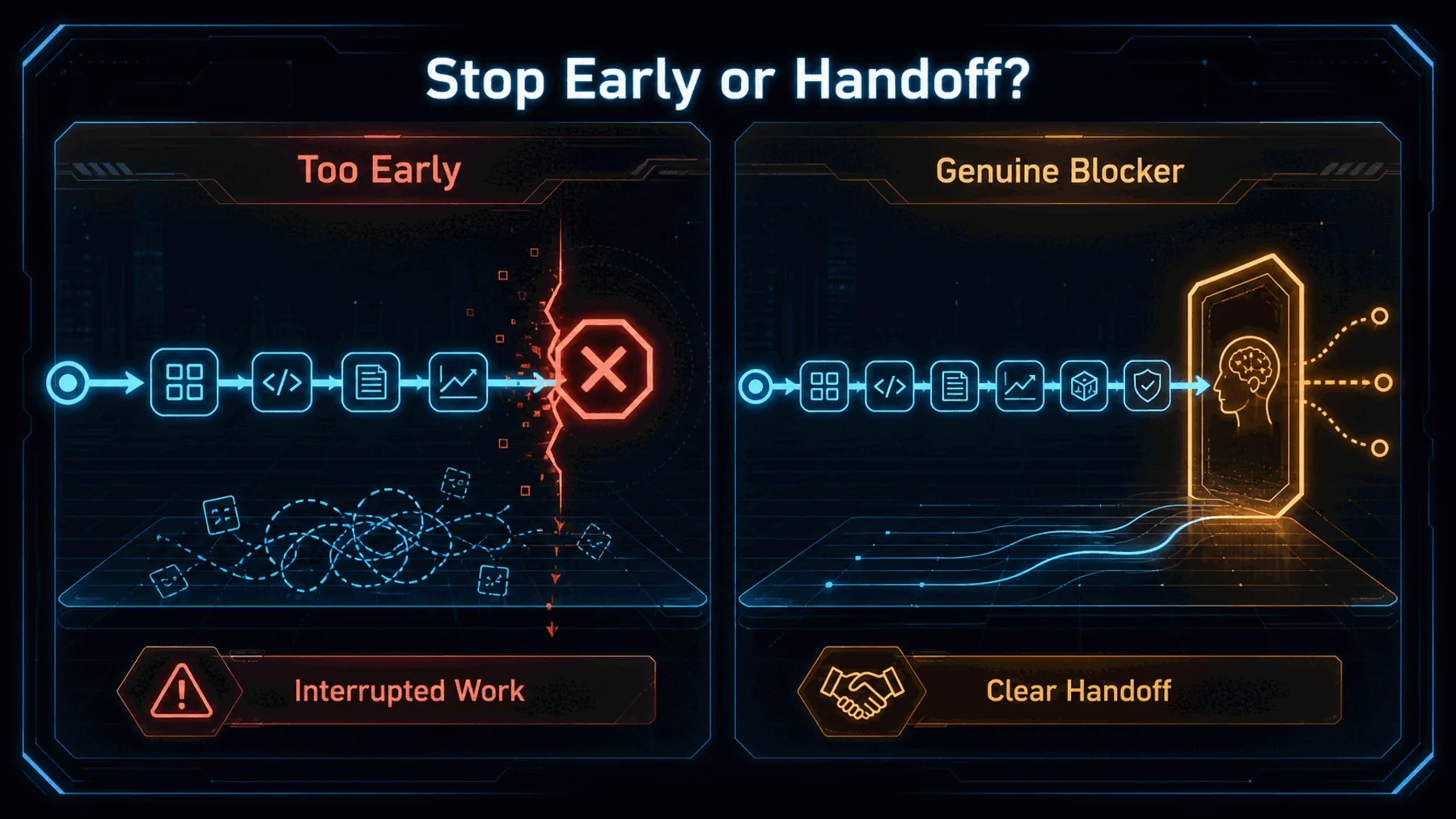
An early handoff can turn a capable system into another queue for small decisions. The opposite failure is quieter: work continues after it has lost the information or authority needed to make a sound choice.
Anthropic’s claim sits between those two problems. Fable 5.1 is said to need input later in a long task and to report a stuck state better. That is not a completion guarantee, nor evidence that every task will reach the right stopping point. It is the part of the release worth testing.
Four claims, one boundary
Availability, price and working behaviour are all announced together, but they do not carry the same level of proof.

The price statement is straightforward: Anthropic says Fable 5.1 is priced the same as Fable 5. The cache statement needs more care. Anthropic says API cache reads are 75% cheaper; it does not say every API call, every token, or an entire bill is 75% cheaper.
Cached context is earlier material reused on a later API turn rather than processed again from scratch. That may matter in long-running workflows, but the posts provide no token prices, cache rules or example bills.
What ClaudeDevs actually said
The detailed Fable 5.1 claims come from a short developer announcement, not a benchmark release.
ClaudeDevs makes the availability, pricing, cache-read and long-task claims in one post. Claude’s accompanying launch post introduces Fable 5.1 alongside Mythos 5.1, but the detailed operating claims here are about Fable 5.1.
That distinction matters. The launch pair supplies context; it does not extend the evidence for Fable 5.1 into undocumented access, performance or rollout details.
“It gets a lot further into a long task before it needs your input, is better at telling you when it's stuck, and its writing style is more natural.”
ClaudeDevs
A promise, not a benchmark
The announcement makes a useful claim about behaviour, but it does not show the conditions under which that behaviour was measured.
Anthropic’s published posts are evidence of what Anthropic announced. They are not independent validation of how far Fable 5.1 progresses, how reliably it identifies a blocker, or how natural its writing feels in a real workload.
There are no benchmarks, examples, context limits, model IDs, rate limits or rollout details in the source pack. We can assess the release promise, but not yet turn it into a measured performance conclusion.
Work, stop, decide, continue
The practical change is a sequence: continue through the work, surface the blocker, let human judgment resolve it, then reuse relevant context where the API allows.
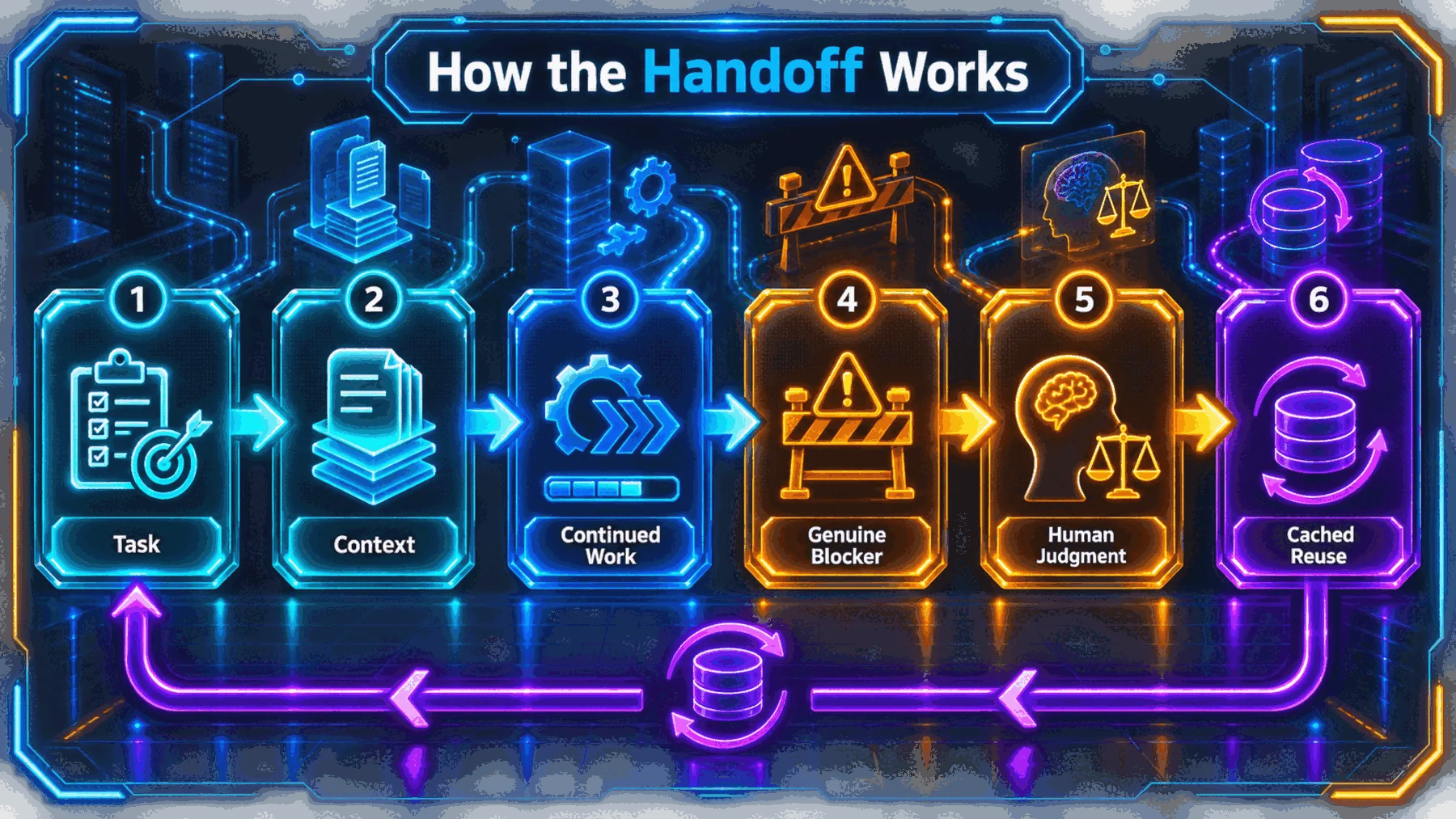
A useful handoff is not a vague request for help. It identifies the point at which the work cannot safely proceed and returns the decision to us. Once that decision is made, the task can continue with the relevant context intact.
Anthropic’s cache-read claim belongs at the reuse stage, not across the whole workflow. Reusing earlier context may lower the cost of those reads by 75%, Anthropic says; it does not establish a total-workflow saving.
Where we would test it
The announcement points to a practical trial: give the model work with enough steps to expose whether its handoff is genuinely better.
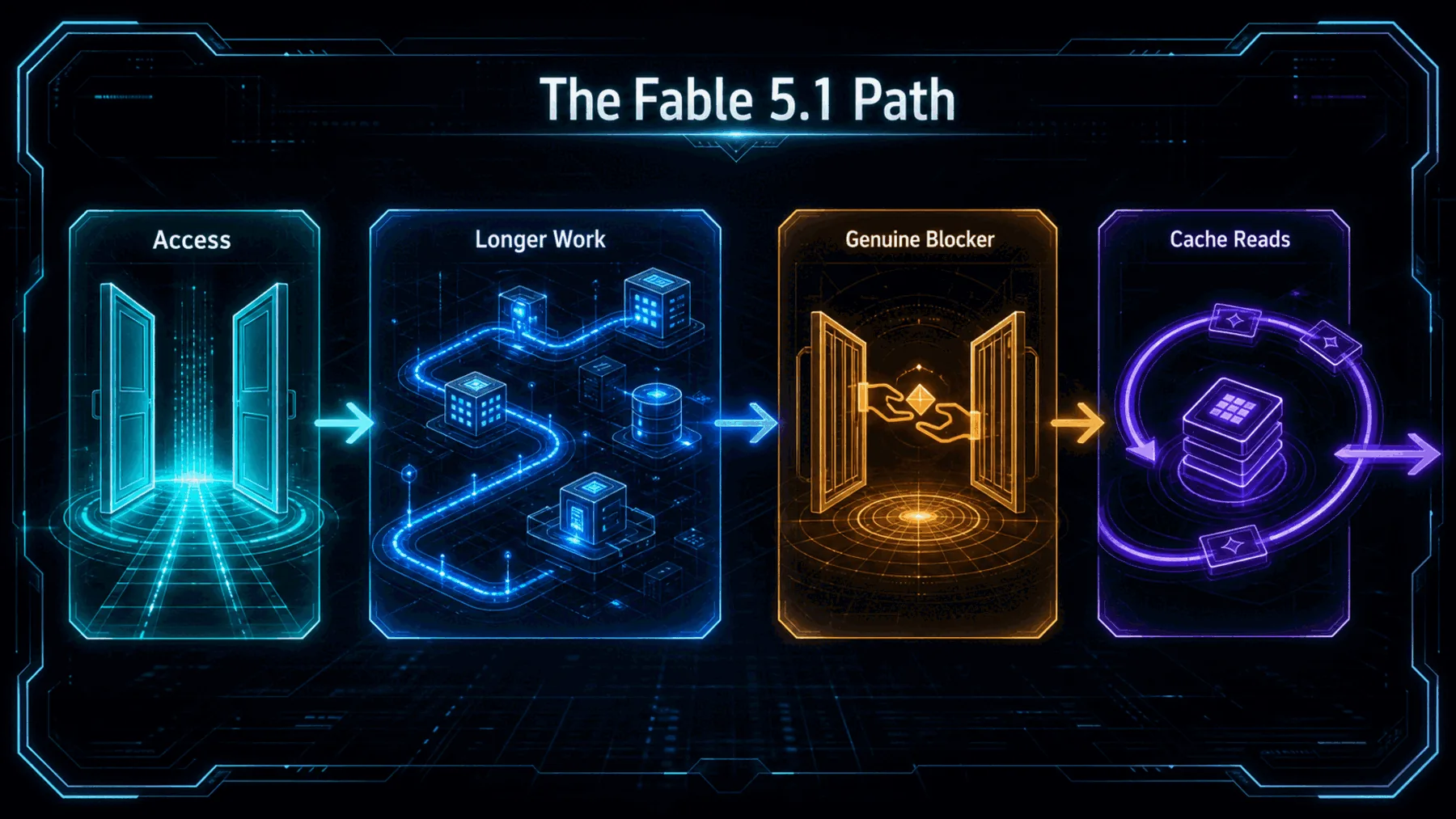
We would begin with a task that has real dependencies: a feature change, a research synthesis or an analysis that needs a decision midway through. The point is not to see whether it can produce a fast first answer. It is to see whether the work remains coherent as it develops.
If a blocker appears, the useful test is whether we can tell what judgment is needed and why. Anthropic also says Fable 5.1 has a more natural writing style, but without examples that remains a claim to examine in use.
Access
Confirm the work is happening in Claude Code or the Claude Platform, where Anthropic says Fable 5.1 is live.
Handoff
Check whether a stuck state names the decision that requires human judgment.
Cost
Keep the 75% claim attached only to API cache reads, not the whole bill.
Progress is only useful with honesty
A model that continues further earns more trust only when it makes the boundary of its own judgment visible.
The promise is not that Fable 5.1 will finish every long task. It is that it may take us further before making a clearer case for human judgment.
Synthesis of Anthropic’s Fable 5.1 announcement
That is the right standard for this release. More persistence without a clear blocker signal can create the appearance of momentum after the useful work has ended. A better handoff gives us a point to inspect, decide and move forward from.
Anthropic has made a specific set of claims about Fable 5.1. The next useful evidence is not more launch language; it is careful testing of the conditions under which those claims hold.
Test the long-task handoff
Act as a senior software engineer reviewing a feature request for an internal approval workflow. Produce: 1) a concise implementation plan, 2) the first two code changes with explanations, 3) a list of assumptions, and 4) a clear STOP section naming any decision you cannot safely make without human input. Do not invent requirements or credentials; continue only where the brief is sufficient.Ready to copy
Test the handoff, not the headline
Use a multi-step task with a genuine decision point and inspect whether the model’s stopping signal is clearer than the interruption it replaces.
Try the promptWhat could change the reading
- Independent benchmarks
- Exact pricing
- Cache rules
- Rollout detail