Eleven v4 in ElevenReader: Our Reading Gets a Voice—But How Good?
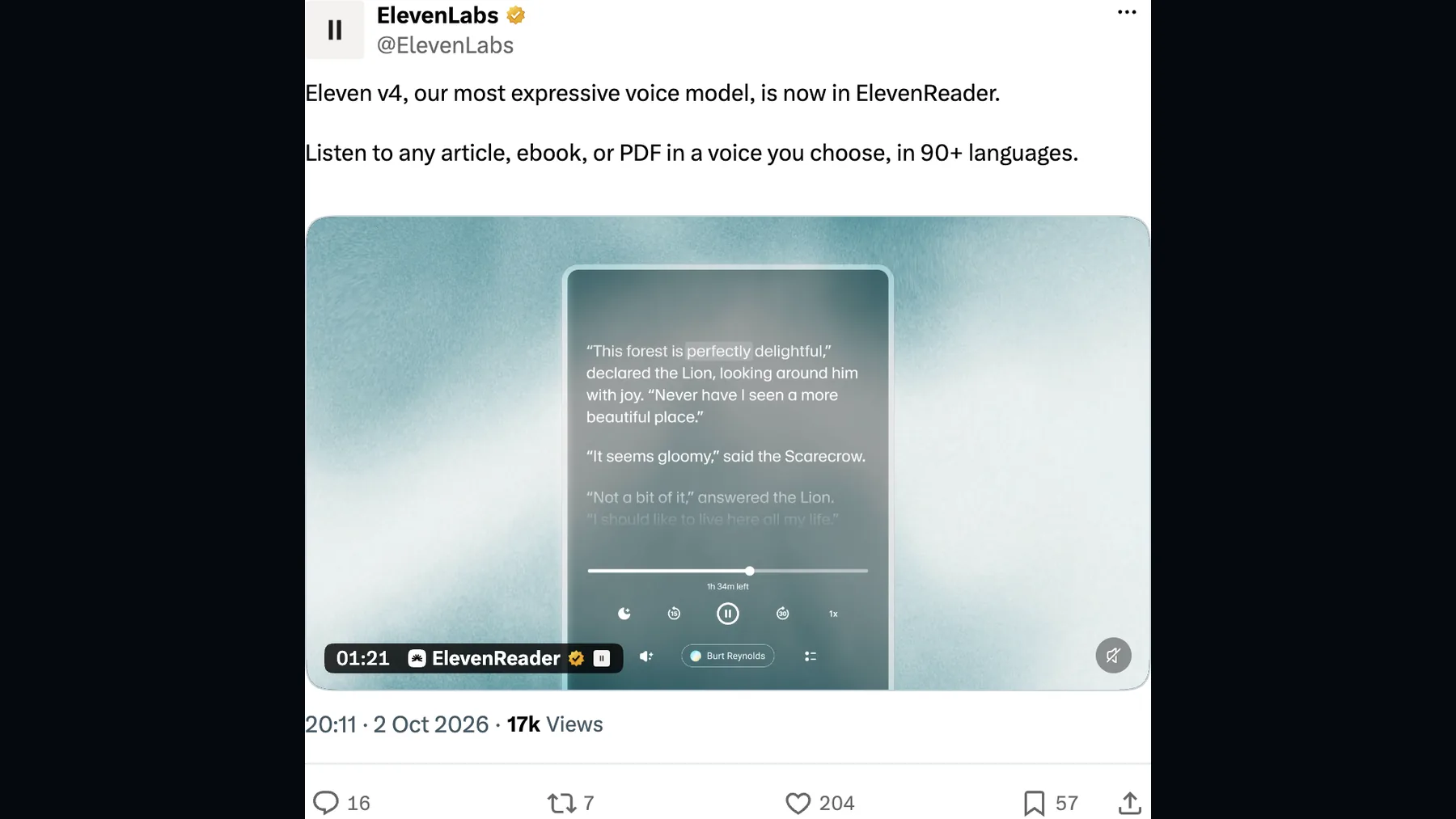
ElevenLabs says Eleven v4 is now in ElevenReader, bringing chosen-voice listening to articles, ebooks and PDFs. How that narration sounds to us remains an open question.
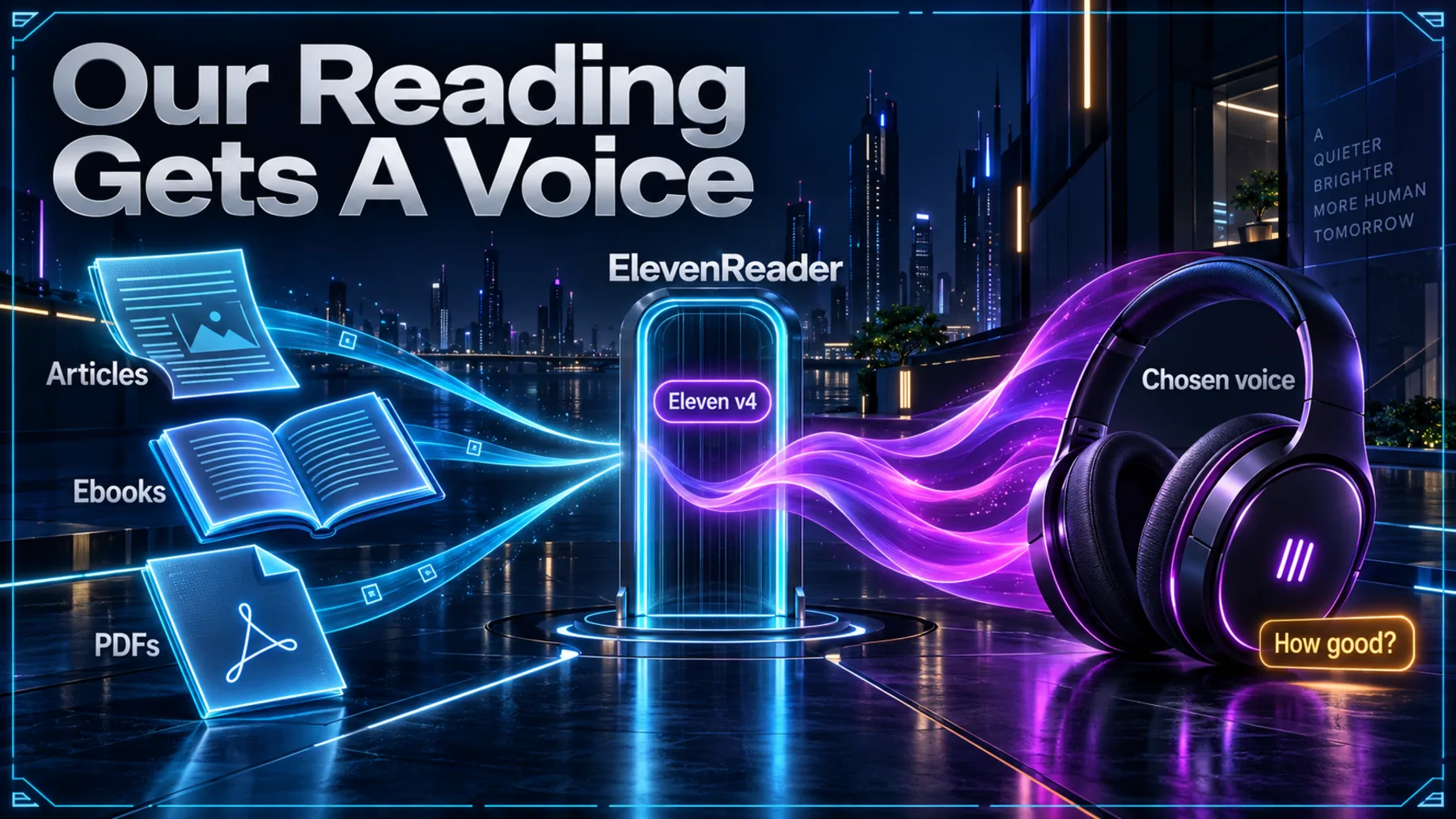
ElevenLabs calls v4 its most expressive voice model. Bringing it into ElevenReader gives that claim a practical setting: the written material we might choose to hear aloud.
A passage we want to finish
Imagine an unfinished article and a moment when our eyes are occupied elsewhere. A chosen voice could offer another way through it.
We might have an article saved for later, an ebook on the go or a PDF waiting for attention. ElevenLabs says ElevenReader lets us listen to those kinds of material in a voice we choose. The appeal is easy to picture without pretending we have tried it.
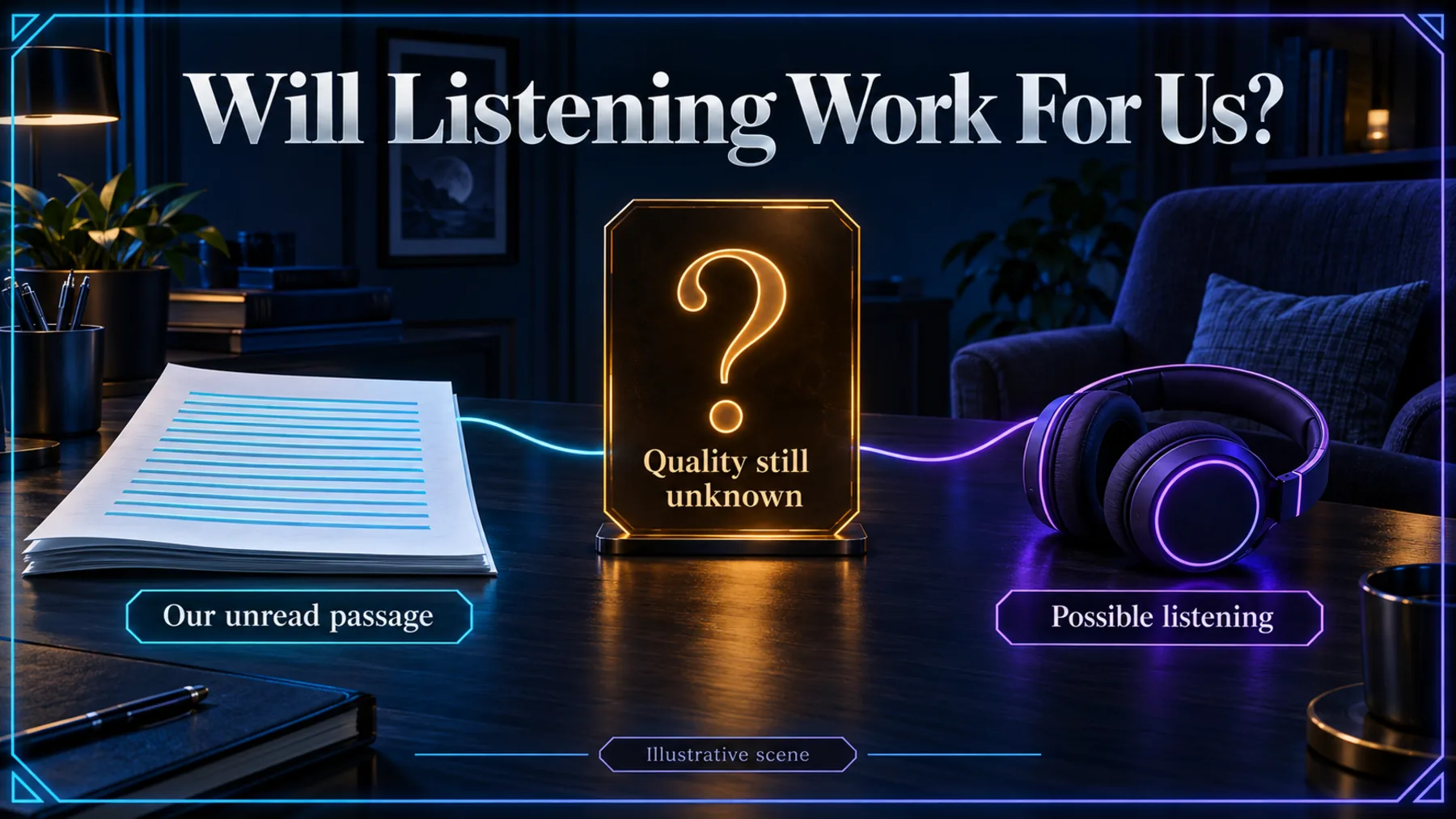
Whether we want to keep listening depends on the narration itself. A voice can read the words aloud and still leave us dissatisfied with their pacing or pronunciation. The announcement gives us a reason to try a familiar passage; it supplies no result for that test.
What ElevenLabs puts on the table
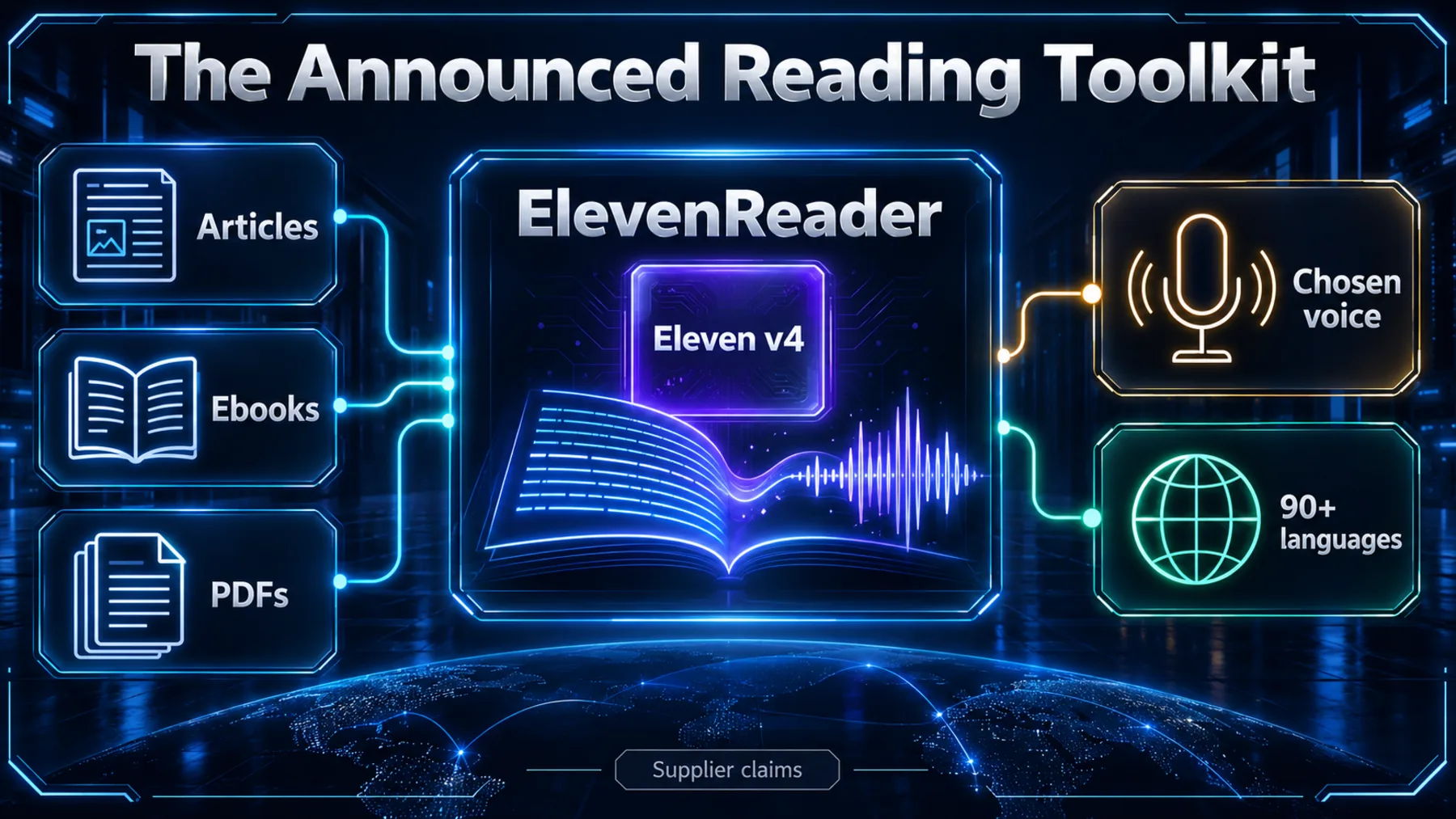
Eleven v4 inside ElevenReader, three named kinds of written material, a chosen voice and a claim of 90+ languages.
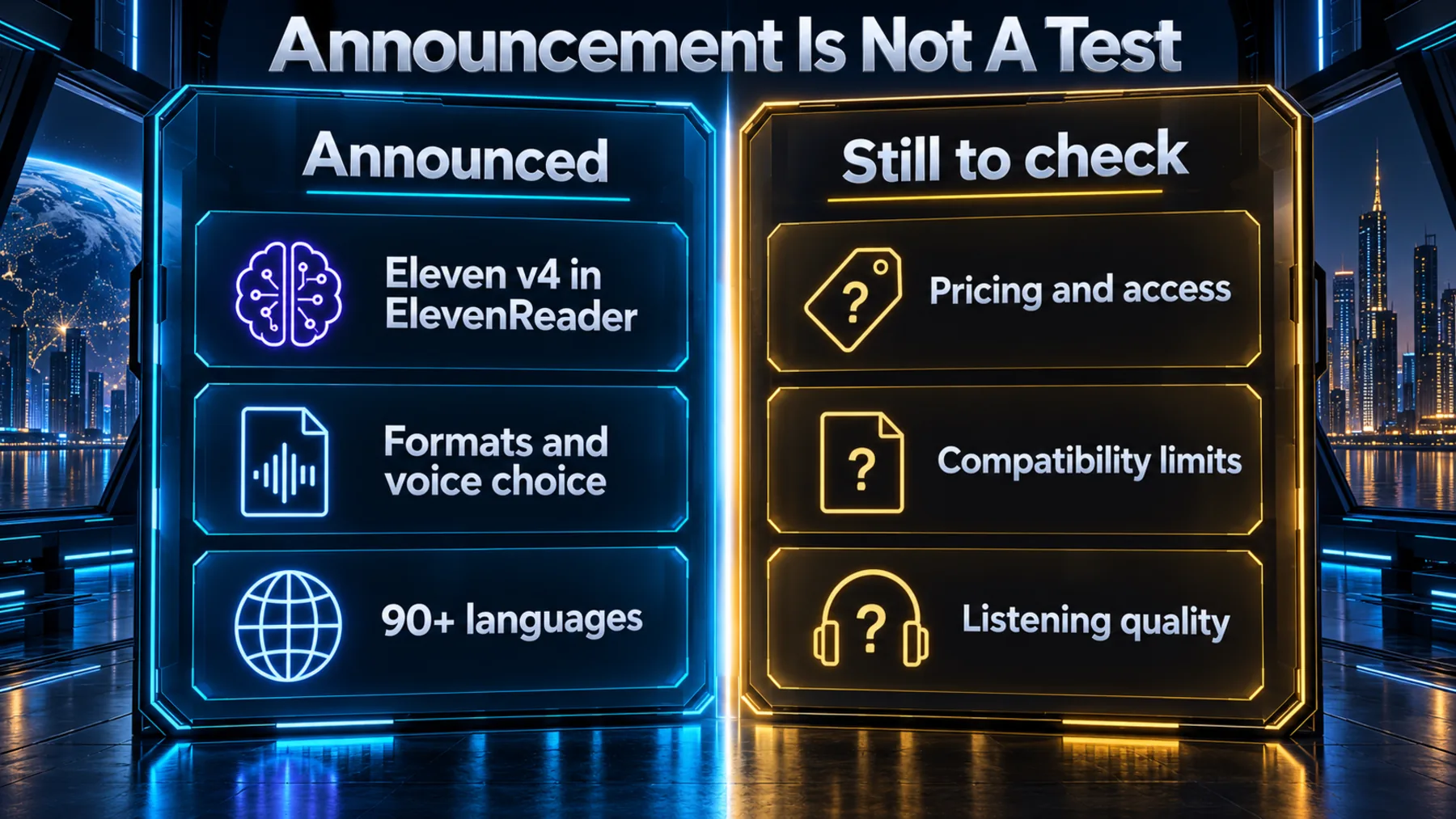
The post makes two statements. First, Eleven v4 is now in ElevenReader. Second, ElevenLabs says we can listen to articles, ebooks and PDFs in a voice we choose, in 90+ languages. Those are the published capabilities around which the announcement is built.
The word “any” appears in ElevenLabs’ description of the material we can listen to. It is broad wording, not evidence that every document will work. The post gives no detailed compatibility limits, account access conditions or prices.
The language count also needs to keep its meaning. It does not establish automatic translation, a full language list or the same listening quality and voice choice across all languages. Those questions remain unanswered here.
“Most expressive” is ElevenLabs’ claim
The first sentence establishes what ElevenLabs announced and how it describes the model.
“Our most expressive voice model” is ElevenLabs’ own comparison. It tells us how the company positions v4, but the sentence offers no audio comparison or independent ranking. We can report the integration without adopting that description as our listening verdict.
A capture cannot tell us how it sounds
The post shows ElevenLabs’ stated promise. A still image cannot demonstrate narration quality.
The captured post brings the two sentences together: the model is in ElevenReader, and ElevenLabs promises chosen-voice listening across the named formats and 90+ languages. That is useful evidence of the announcement.
The visible video frame does not let us hear a passage. No audio transcript or listening comparison accompanies the evidence here, so the capture cannot settle expressiveness, pronunciation or real-world document compatibility.
From written words to a chosen voice
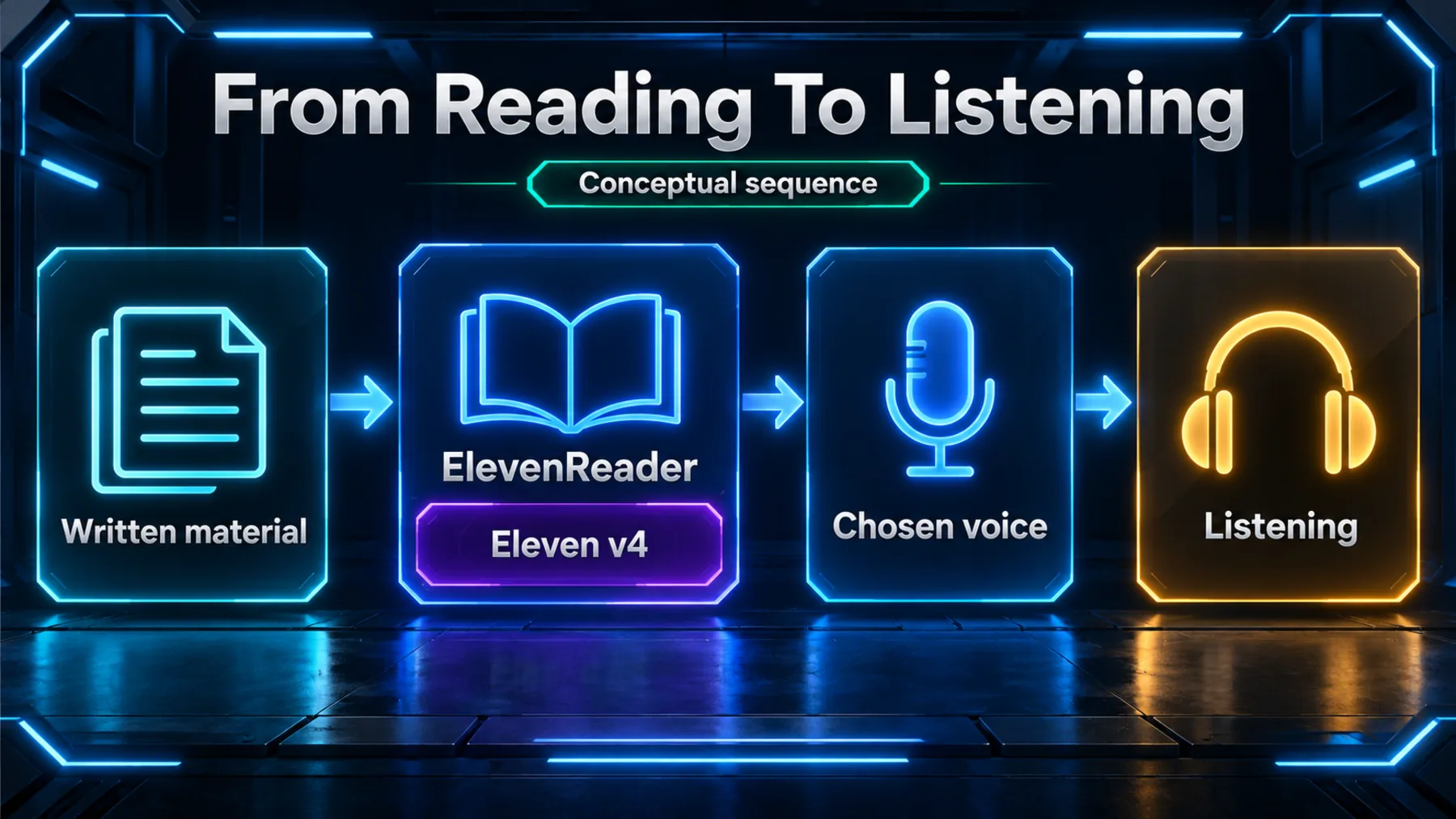
The announced sequence is simple enough to explain without guessing how the app works.
Start with written material: an article, ebook or PDF. ElevenLabs places Eleven v4 inside ElevenReader and says we can hear that material in a voice we choose. That gives us a conceptual route from a passage on the page to listening.
It is not a set of verified app instructions. The announcement does not explain importing, handling protected files or recognising text in scanned documents. Adding those steps would make the explanation look more complete while taking it beyond the evidence.
Start with words we already know
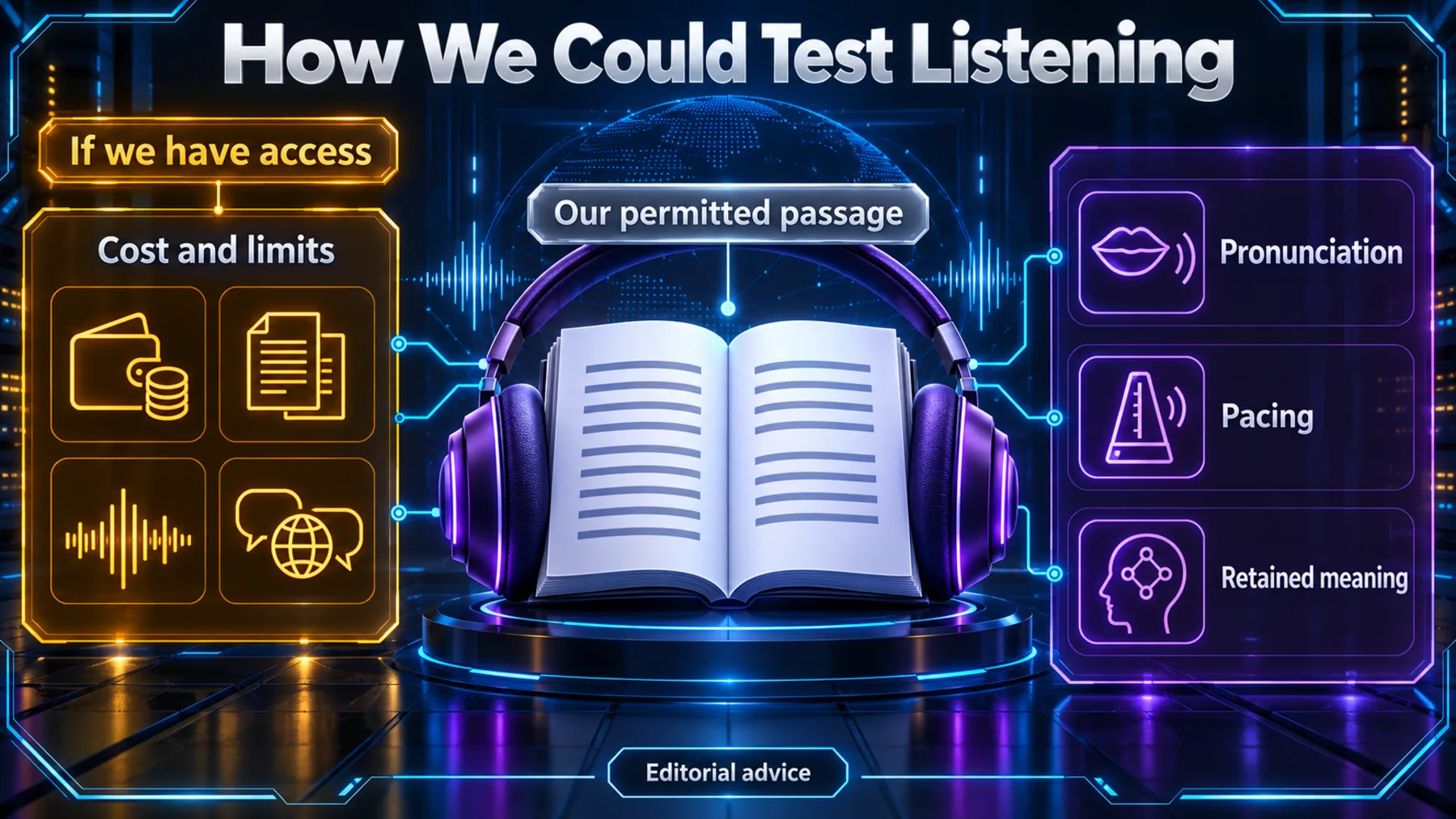
A short, familiar passage gives us something concrete to listen for, if we have access.
Before trying it, we should check the actual account cost and access conditions, along with the document, voice and language limits that apply to us. The post does not supply those details. Then we can choose a short passage we know and are entitled to use.
Familiarity gives us a reference. We can listen for names or numbers pronounced unexpectedly, pauses that interrupt a sentence, and emphasis that changes how a qualification lands. After listening, we can ask whether we retained the passage’s meaning or needed to replay it.
These are proposed evaluation criteria, not a test we have performed. They help us describe what we hear without turning one passage into a verdict on every voice, language or document.
The promise needs a passage
ElevenLabs has announced the integration. Its value to us still depends on what happens when we listen.
The announcement gives us a clear proposition: use a chosen voice to hear written material in ElevenReader, now with Eleven v4. It does not answer the personal question of whether we like that narration enough to keep using it.
We can prepare a passage and listening notes before we try. A preparation prompt can help us notice what matters in the text; it cannot hear on our behalf or supply a result before we have listened.
We need to hear a familiar passage before calling the narration better for us.
Altior editorial view
Prepare a passage we can judge
Help us prepare a listening test for ElevenReader with Eleven v4. This is preparation, not a request to operate ElevenReader or judge audio you have not received. Use this original practice passage: “On Thursday, we moved the meeting from 10:15 to 11:30. The revised proposal costs £1,250, excluding delivery. We agreed to explore the proposal, not to approve it. Before the next meeting, we need to compare the two options and confirm which costs are included.” Return the passage unchanged, then a compact listening worksheet tailored to its actual wording. Identify words, numbers and sentence boundaries worth hearing closely. Explain where pacing or emphasis could obscure the distinction between exploring and approving the proposal. Write three meaning-check questions with answers drawn only from the passage, and leave space for our observations. Finish with a short template for recording what sounded clear, what needed replaying and what we would try next. Do not predict a result or assign a quality score. ElevenLabs announces chosen-voice listening for articles, ebooks and PDFs in 90+ languages. That does not establish translation, universal document compatibility or equal quality across languages. Remind us to check our actual account access, cost and document, voice and language limits before attempting the test. Do not invent app controls or import instructions.Ready to copy
Give one familiar passage a listen
If we have access and the cost and limits suit us, try one short passage we are entitled to use. Record what sounded clear, what interrupted the meaning and what needed replaying. Until then, we have ElevenLabs’ announcement rather than our own listening verdict.
Try the promptWhat we watch next
- Actual pricing and account access.
- Document compatibility, voice choice and language limits.
- Independent audio comparisons or observations from our own listening test.