DeepSeek’s faster agent has an API-only catch
DeepSeek says V4-Flash improves agent work and repeated-context economics, but the upgrade remains confined to its API and the benchmark case is its own.
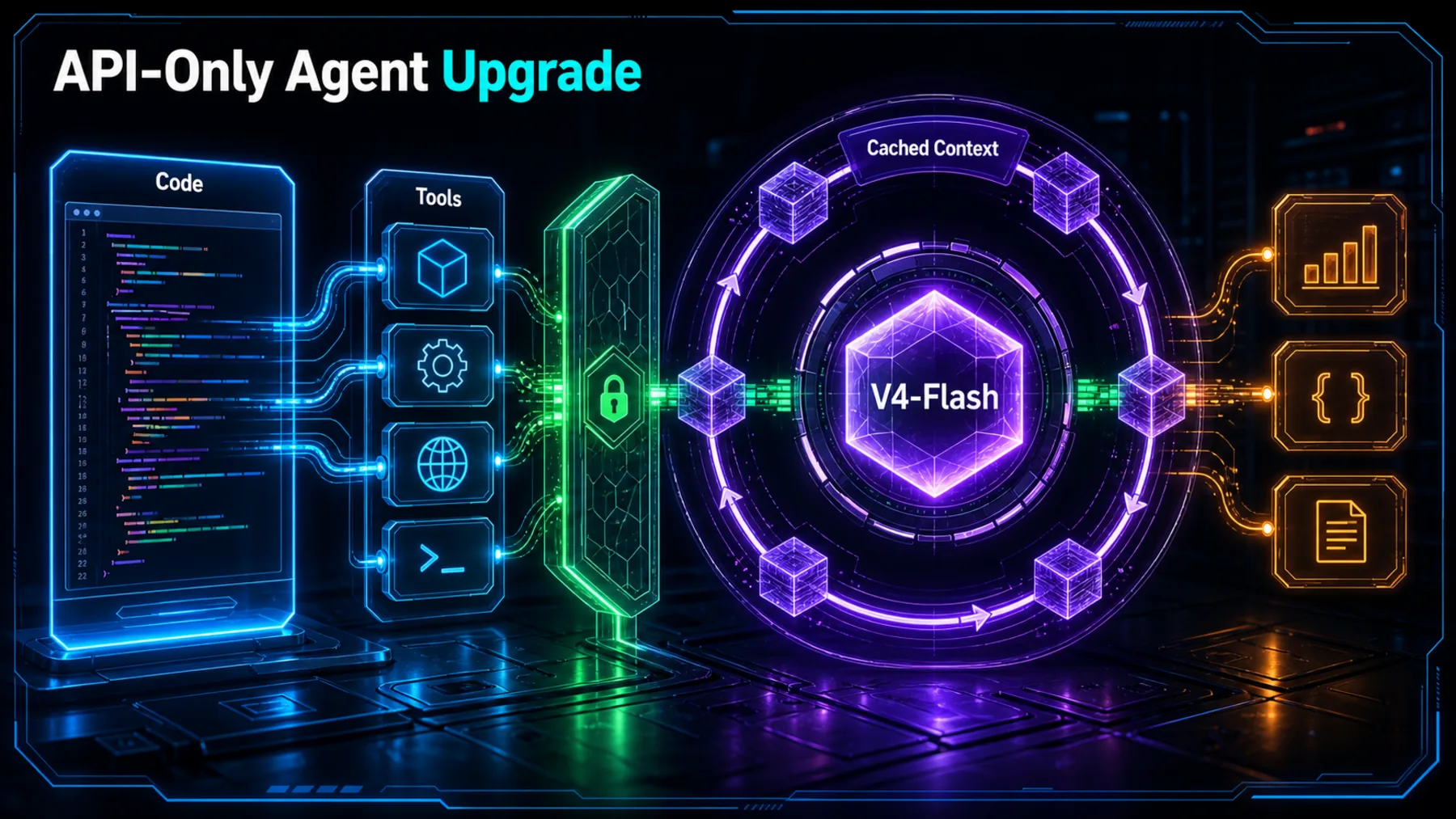
The apparent twist is that DeepSeek’s Flash model is now carrying the agent-upgrade message. Its public-beta announcement pairs stronger tool-use claims with lower-cost repeated context, then adds Responses API support and Codex adaptation.
That is enough to make the release worth examining. It is not enough to treat a supplier chart as a verdict, or to confuse an API beta with a broader rollout.
Why agent economics could shift
Repeated instructions and tool context can become a meaningful cost line when an agent keeps working.
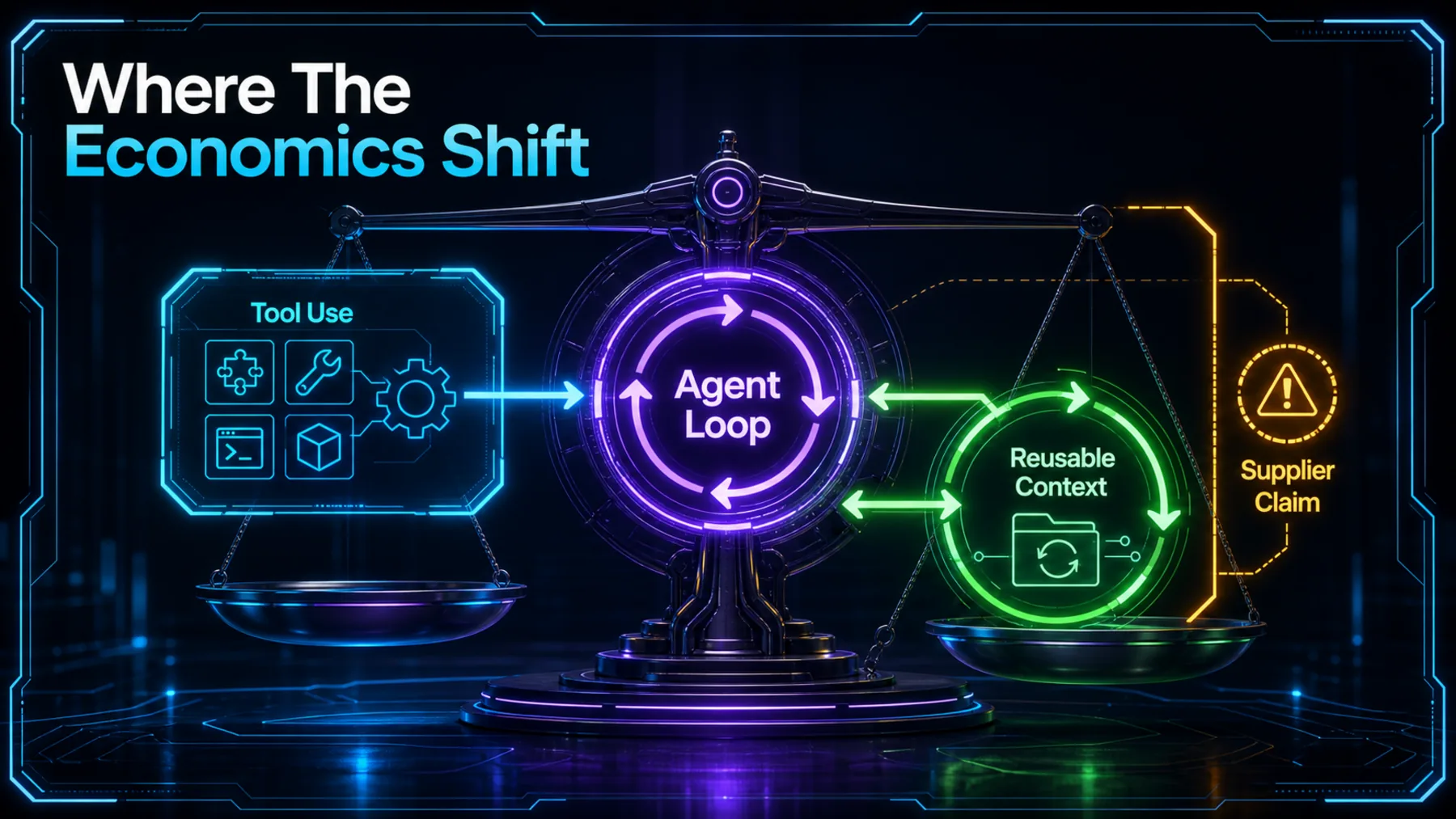
An agent does not make one clean request and disappear. It carries instructions, source material and tool results forward as work unfolds. When that context repeats, the difference between fresh input and a cache hit can matter more than a headline model price.
DeepSeek lists V4-Flash cache-hit input at $0.0028 per million tokens, alongside $0.14 for cache-miss input and $0.28 for output. Those are published prices, not a promise of savings: cache eligibility and real task behaviour still need testing.
What DeepSeek actually announced
The details are more useful than the launch line: public beta, API scope, compatibility claims and a specific price row.
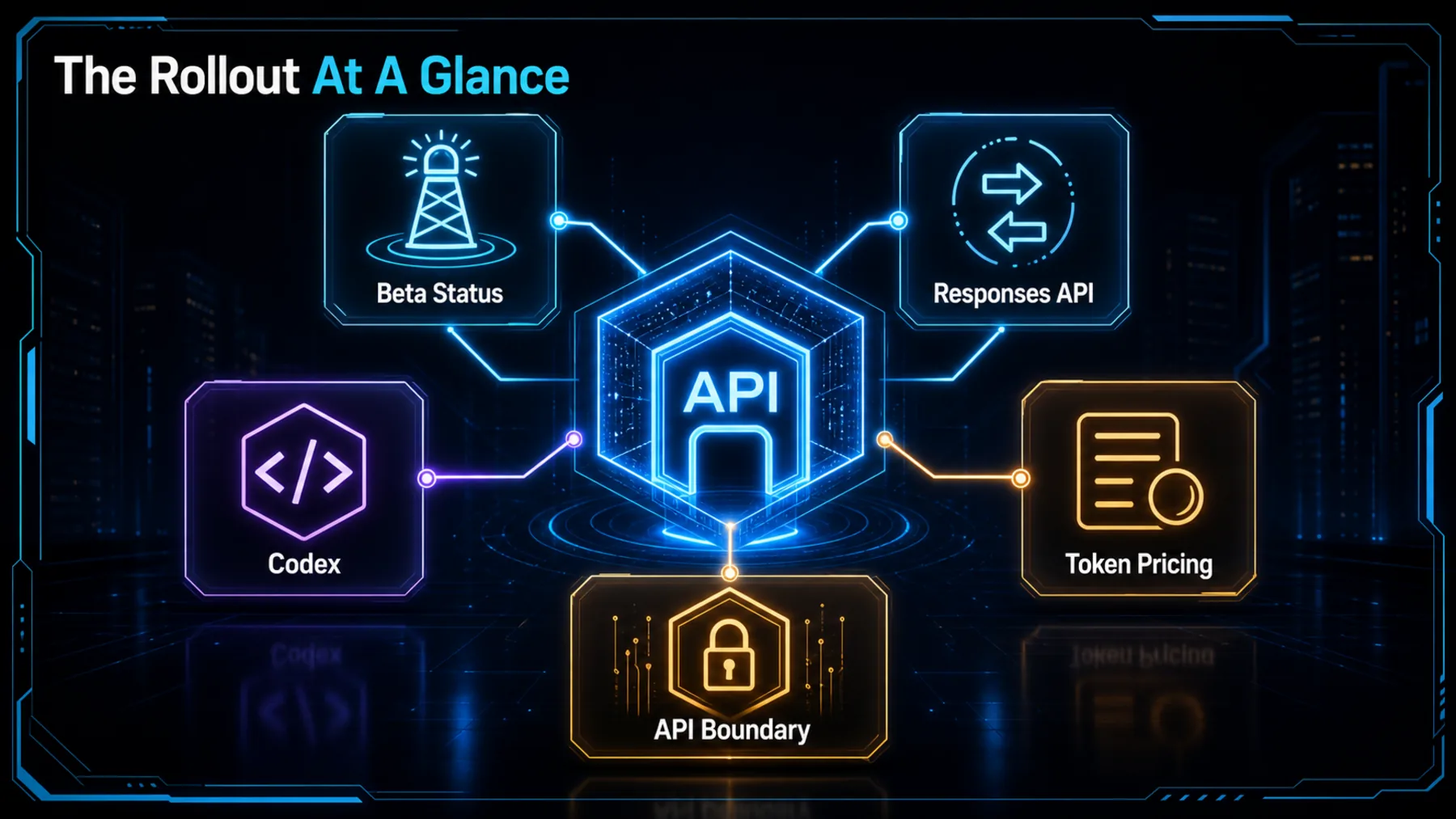
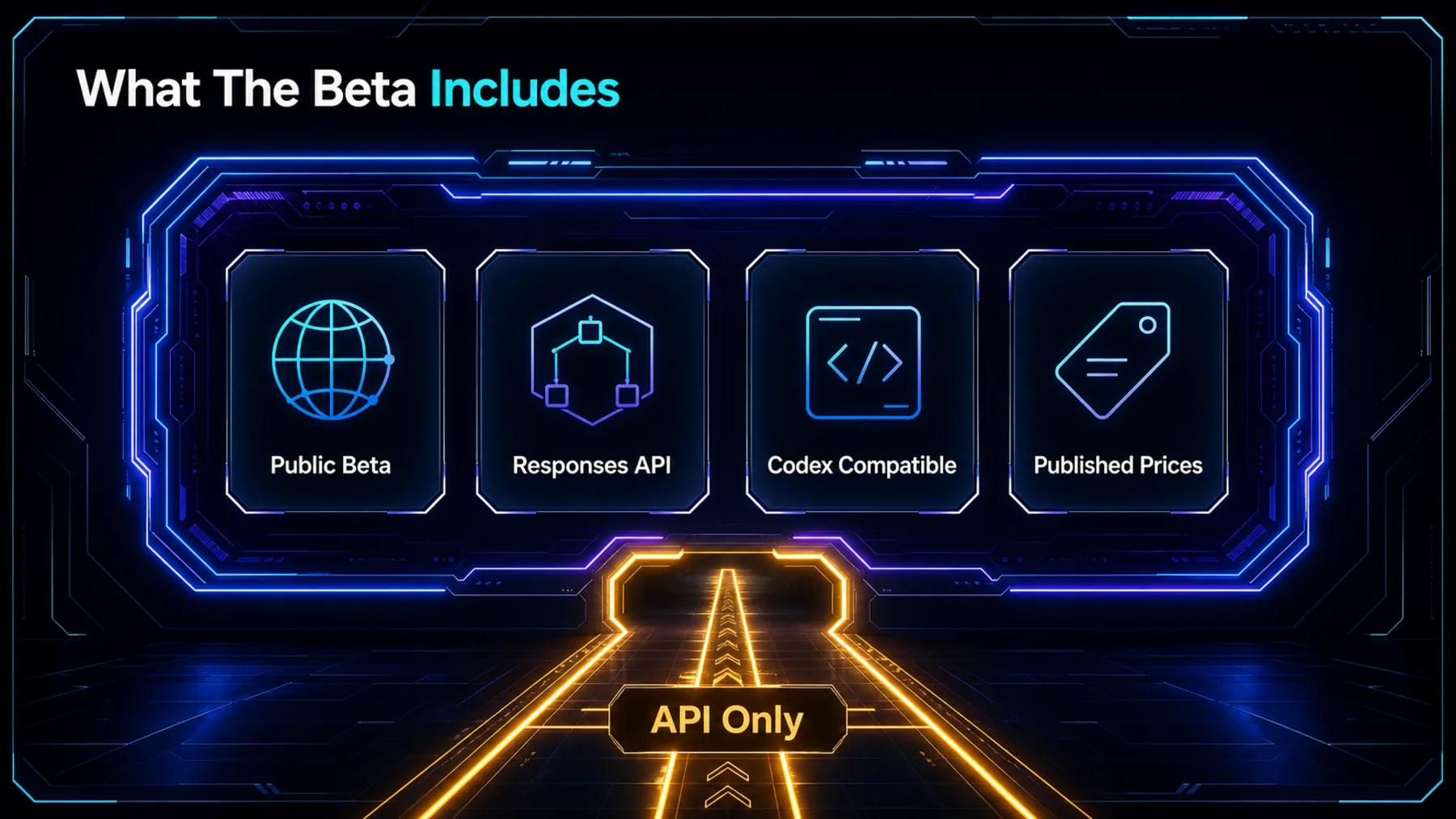
DeepSeek’s announcement is specific in a way that matters. V4-Flash is live in public beta through the API, and DeepSeek says it now natively supports the Responses API format and is fully adapted for Codex.
The clarification narrows the excitement. DeepSeek says V4-Flash-0731 retains the same architecture and size as the preview version, while the day’s upgrade applies only to the V4-Flash API. App and web access did not change.
DeepSeek’s own benchmark receipt
The chart may justify a test, but it remains DeepSeek-reported evidence rather than independent validation.
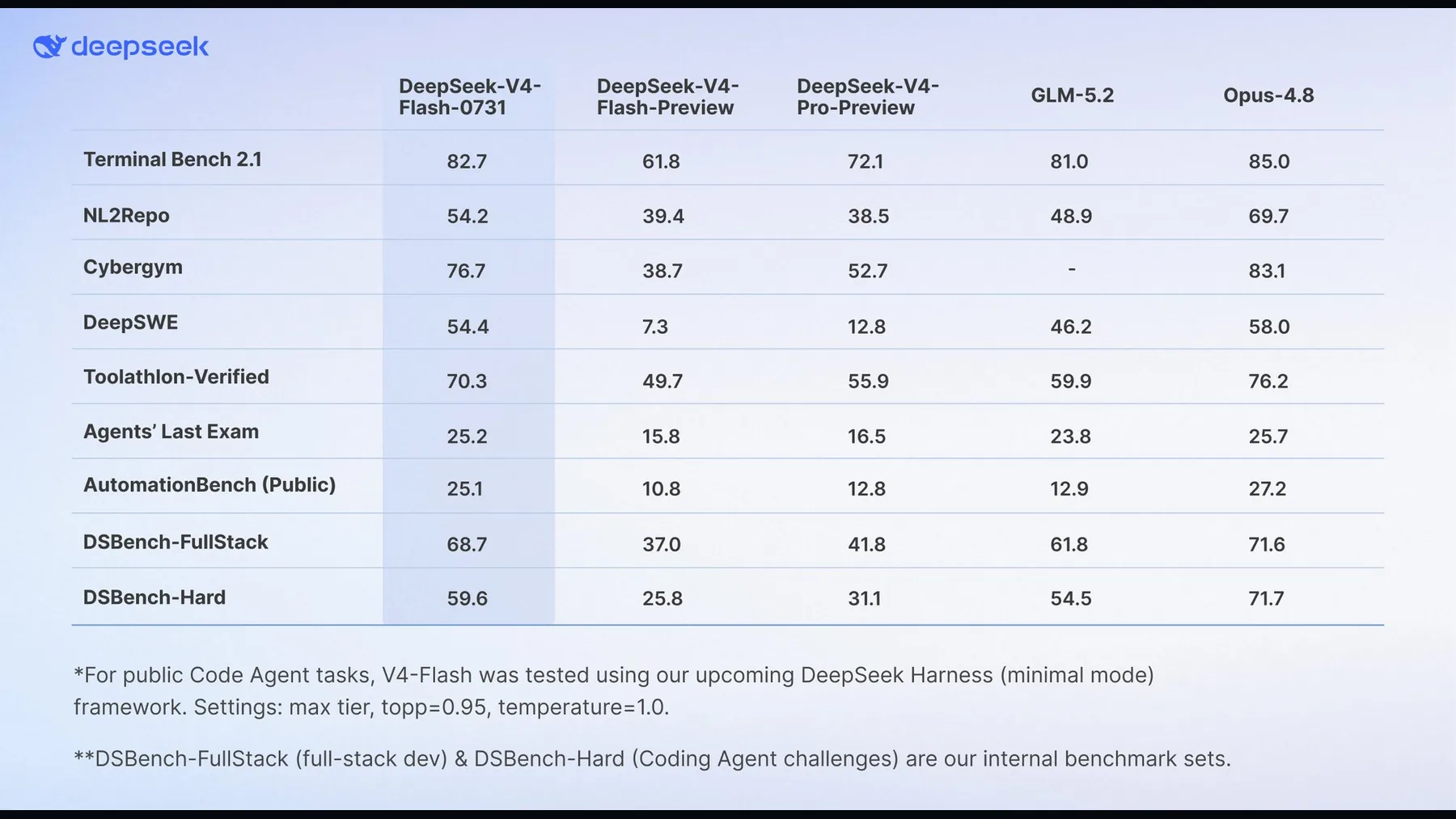
DeepSeek says it has “massively upgraded” V4-Flash agent capabilities and that its benchmark scores now surpass V4-Pro-Preview. The supplied table is the evidence behind that framing, so the claim should stay attached to the named benchmarks and to DeepSeek.
That distinction changes the job of the chart. We can use it to choose what to test; we cannot use it to claim V4-Flash is generally better than V4-Pro or another model.
“We’ve massively upgraded its Agent capabilities—benchmark scores are now far surpassing the V4-Pro-Preview.”
DeepSeek
The proof has limits
The upgrade is real, but the boundary and the evidence standard are part of the story.
The strongest reading is also the more cautious one. DeepSeek has announced a V4-Flash API upgrade and published a benchmark comparison, but neither point establishes a broader App/Web release, an architecture change or independently reproduced performance.
DeepSeek’s own clarification makes the scope plain: the model architecture and size remain the same as the preview version, and the upgrade does not extend to V4-Pro, App or Web.
How cached context changes the request
The mechanism is simple: repeat useful context, then measure whether the API prices it as a cache hit.
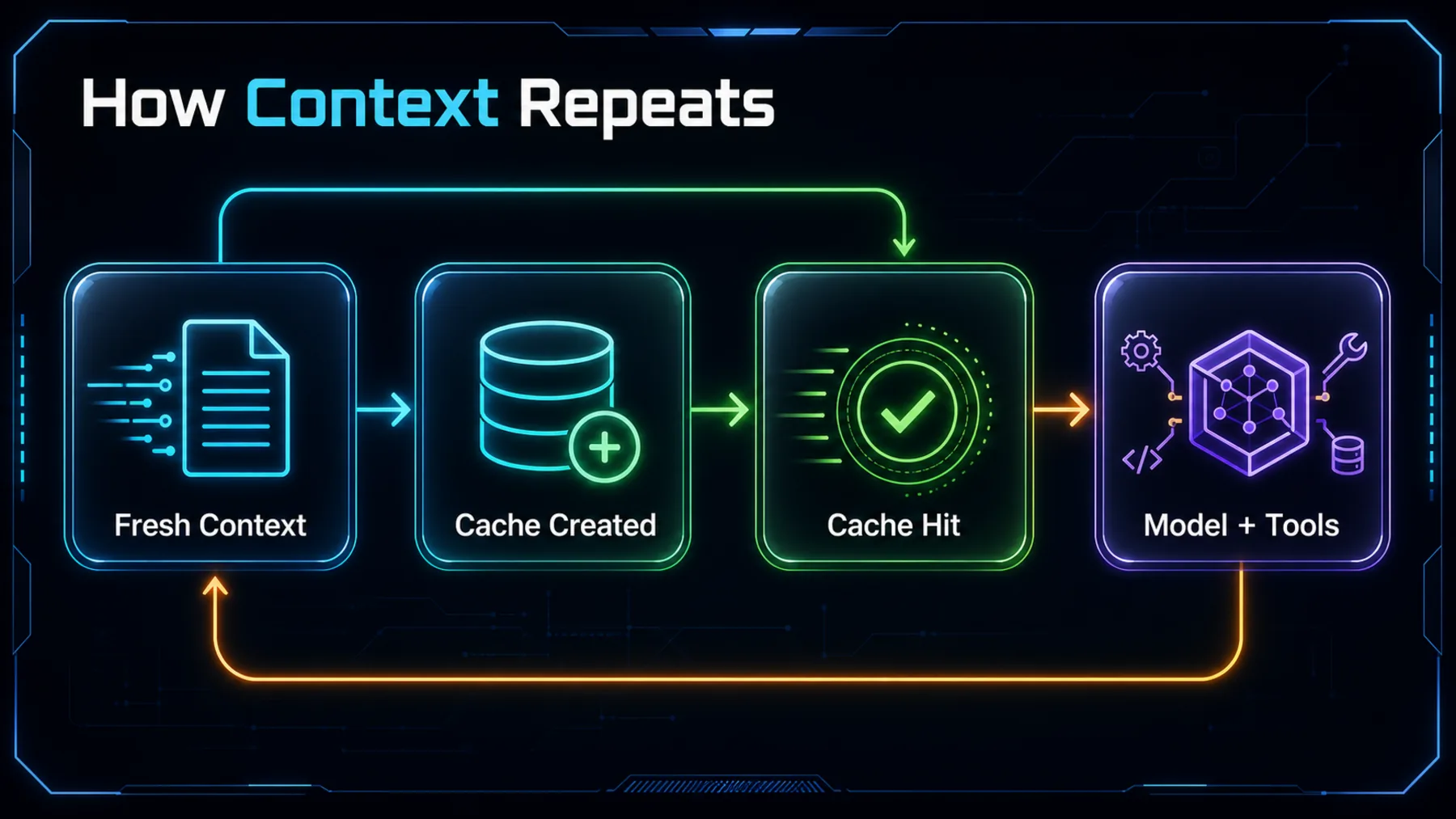
A practical agent loop begins with instructions, task context and a request. It may call a tool, collect the result and send another request with much of the same surrounding material still present.
DeepSeek’s pricing makes that repeated material the part to inspect. We should not assume how a cache is created or which requests qualify; we should hold the workflow steady and observe the billed token categories.
Send
Repeat
Check
What builders can test now
Treat the public beta as a controlled evaluation, not a production-ready conclusion.
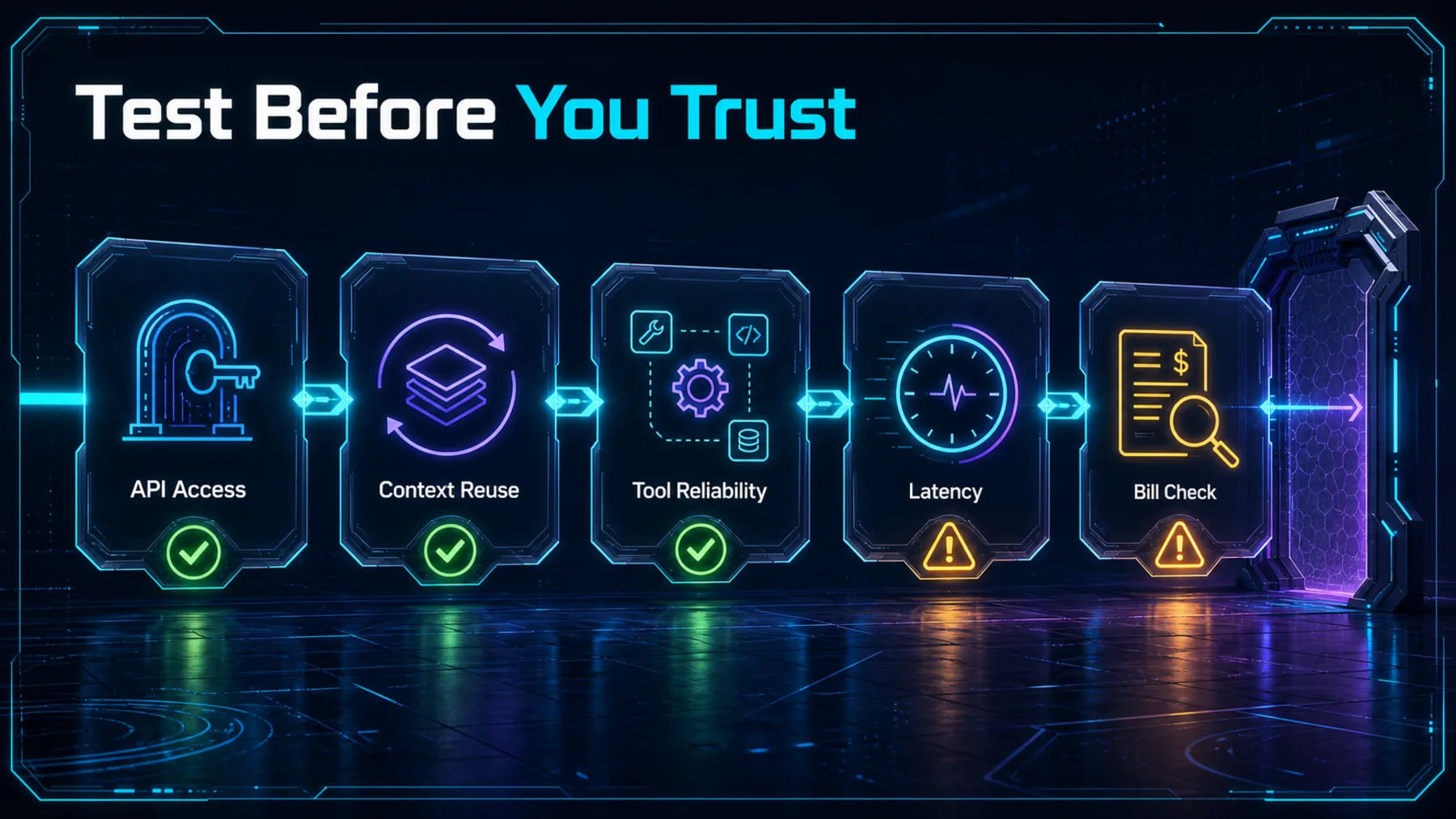
The right first test is small enough to explain. Choose one tool-using workflow, keep the instructions and source material stable, and run it repeatedly through the V4-Flash API.
Record what happens rather than filling gaps with inference: whether the tool calls complete, what token categories are billed, and how the task behaves across comparable runs. The outcome may support a broader trial, but it does not settle reliability or production readiness.
Access
Repeat
Audit
Treat the chart as a test invitation
DeepSeek has made a concrete claim. The next useful move is to see what survives a controlled workload.
V4-Flash has a clear proposition: DeepSeek says the API beta improves agent capability, supports the Responses API format, is adapted for Codex and offers low-priced cache-hit input. That combination is specific enough to test.
The boundary is just as clear. The evidence is DeepSeek’s, the benchmark comparison is limited to its named table, and the rollout is API-only. A good evaluation preserves all three facts.
A supplier chart can set the test. It cannot run it for us.
Altior AI News
Run a V4-Flash agent test
You are evaluating DeepSeek-V4-Flash through its public-beta API for one bounded, tool-using workflow. Design a repeatable test that sends the same system instructions and reference material across five runs, records fresh-input and cache-hit token billing where available, and checks whether tool calls complete correctly. Return: 1) the exact test steps; 2) one compact results table with run number, tool outcome, latency observed, fresh-input tokens, cache-hit tokens, output tokens and cost; 3) three failure conditions that stop the evaluation; and 4) a short conclusion that distinguishes observed results from DeepSeek’s published claims. Do not assume App/Web access, production readiness or benchmark superiority.Ready to copy
Watch the rollout, then test
Track any change to the API-only boundary, independent reproduction on comparable tool work, and what repeated-context billing looks like in a real, controlled workload.
Try the promptWhat could change the takeaway
- Rollout scope
- Independent tests
- Workload billing