DeepSeek-V4.1-Flash-1017: better results, shorter outputs
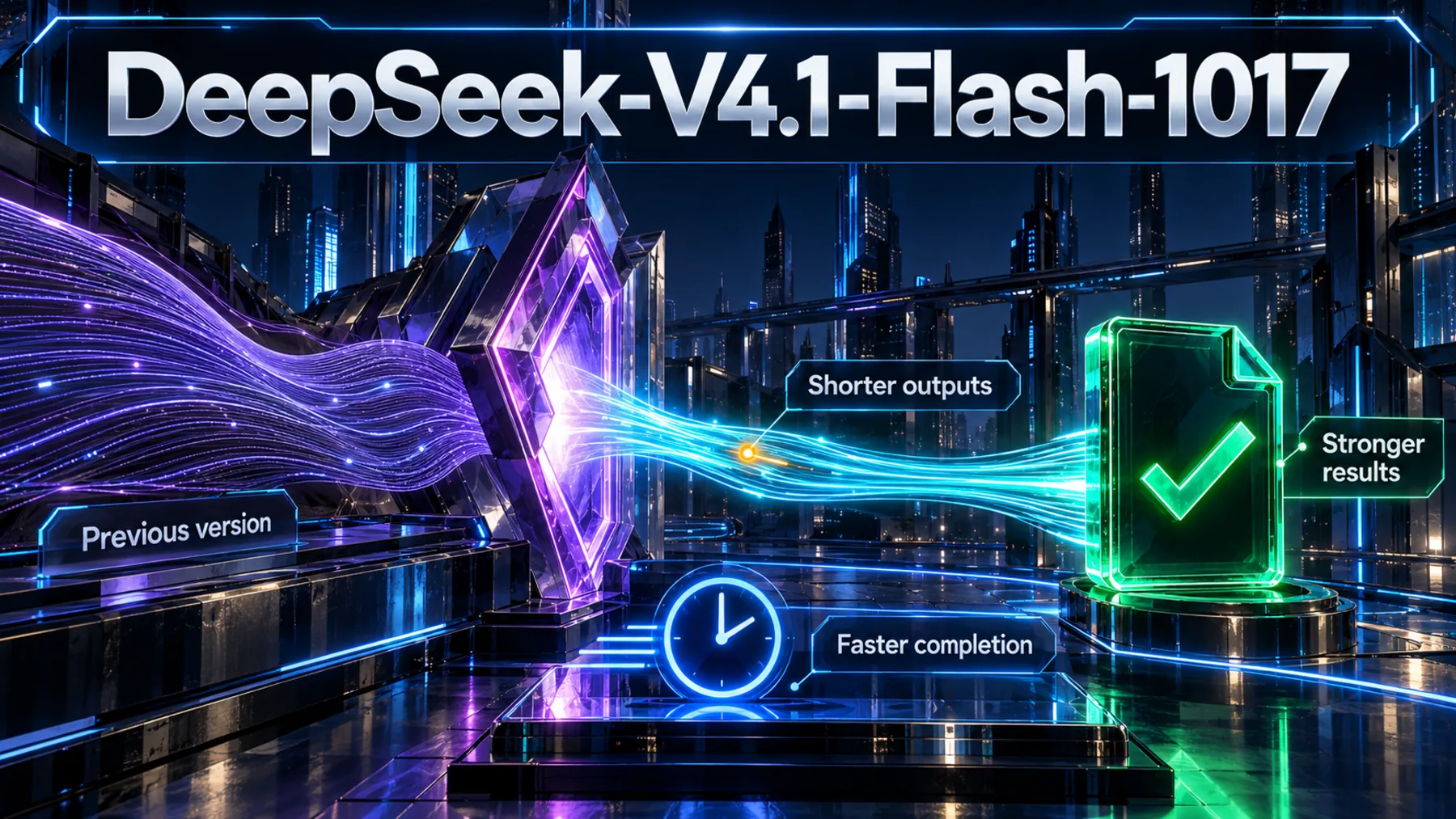
DeepSeek’s Flash update improves benchmark performance, completes tasks faster and produces shorter outputs than the previous version.
We want the job finished well, without a longer answer to work through.
We need the task done, not more text
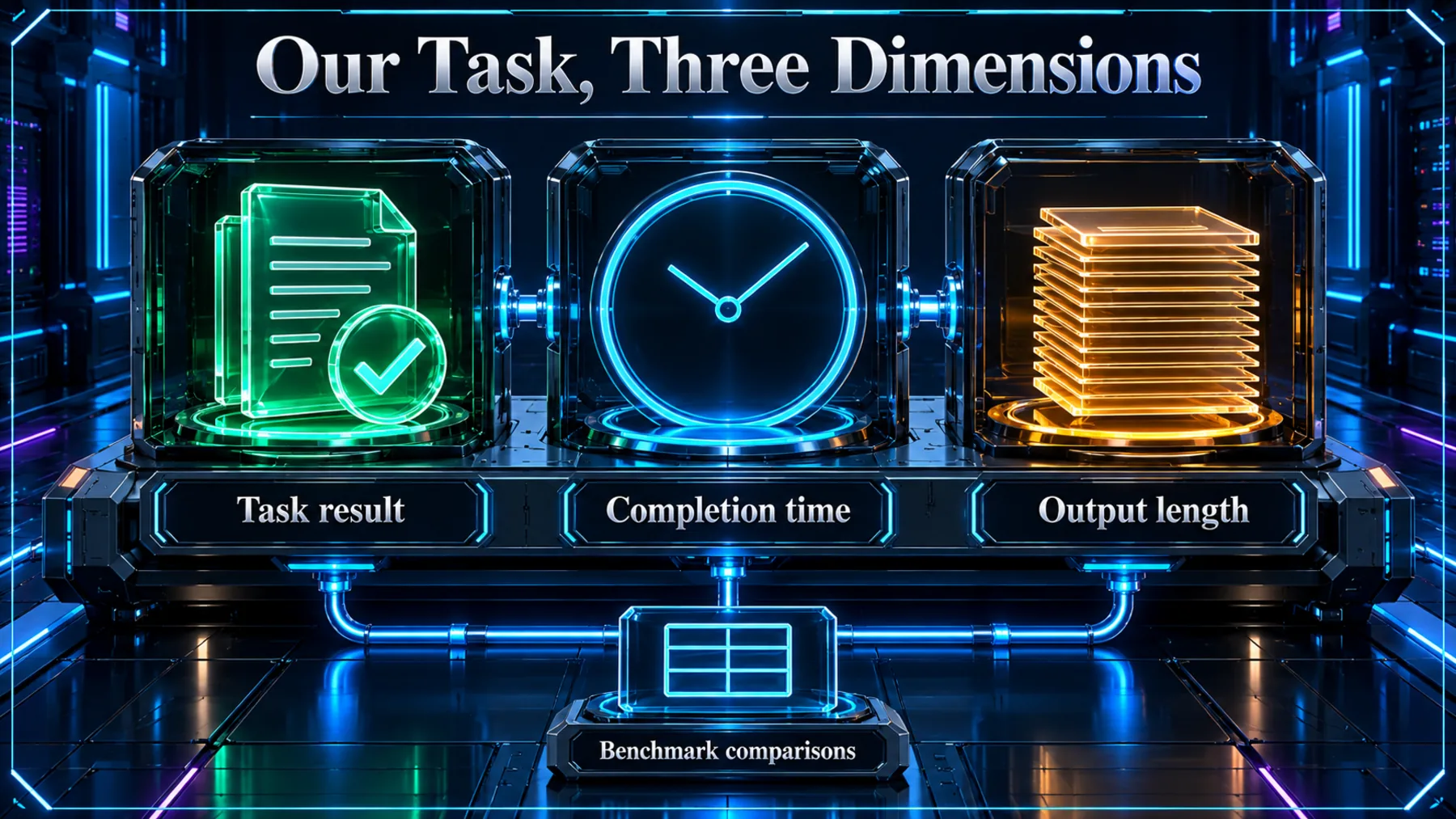
A useful result, the time it takes and the length of the answer are different measures.
When we hand an AI a coding task, a long response is no substitute for getting it right. We care about the completed work; the time spent waiting and the amount of output are separate parts of that experience.
DeepSeek-V4.1-Flash-1017 improves all three compared with the previous version: stronger benchmark performance, faster task completion and shorter outputs. The benchmark comparison puts concrete scores behind the performance gain.
Two benchmarks show the gains
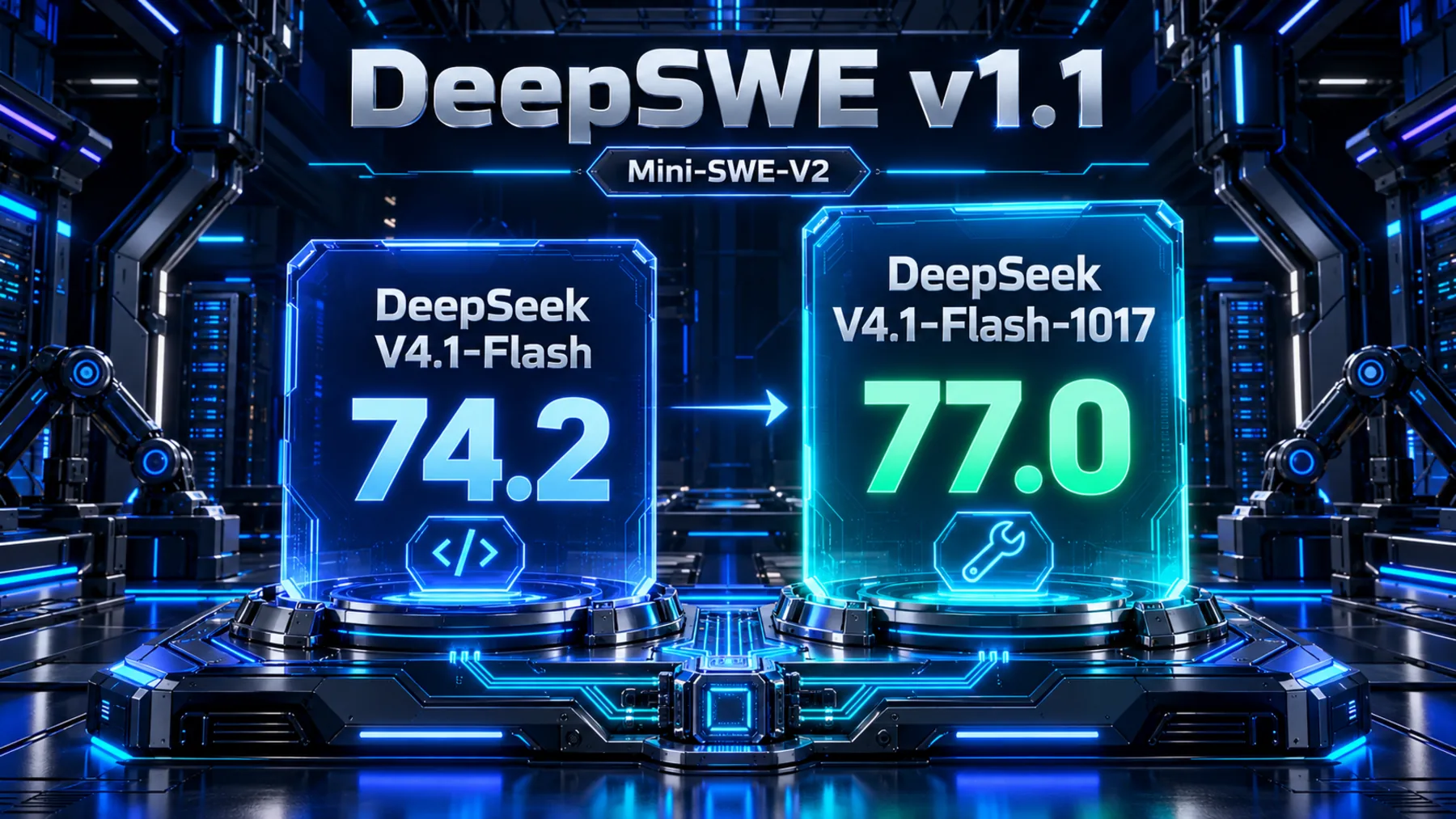
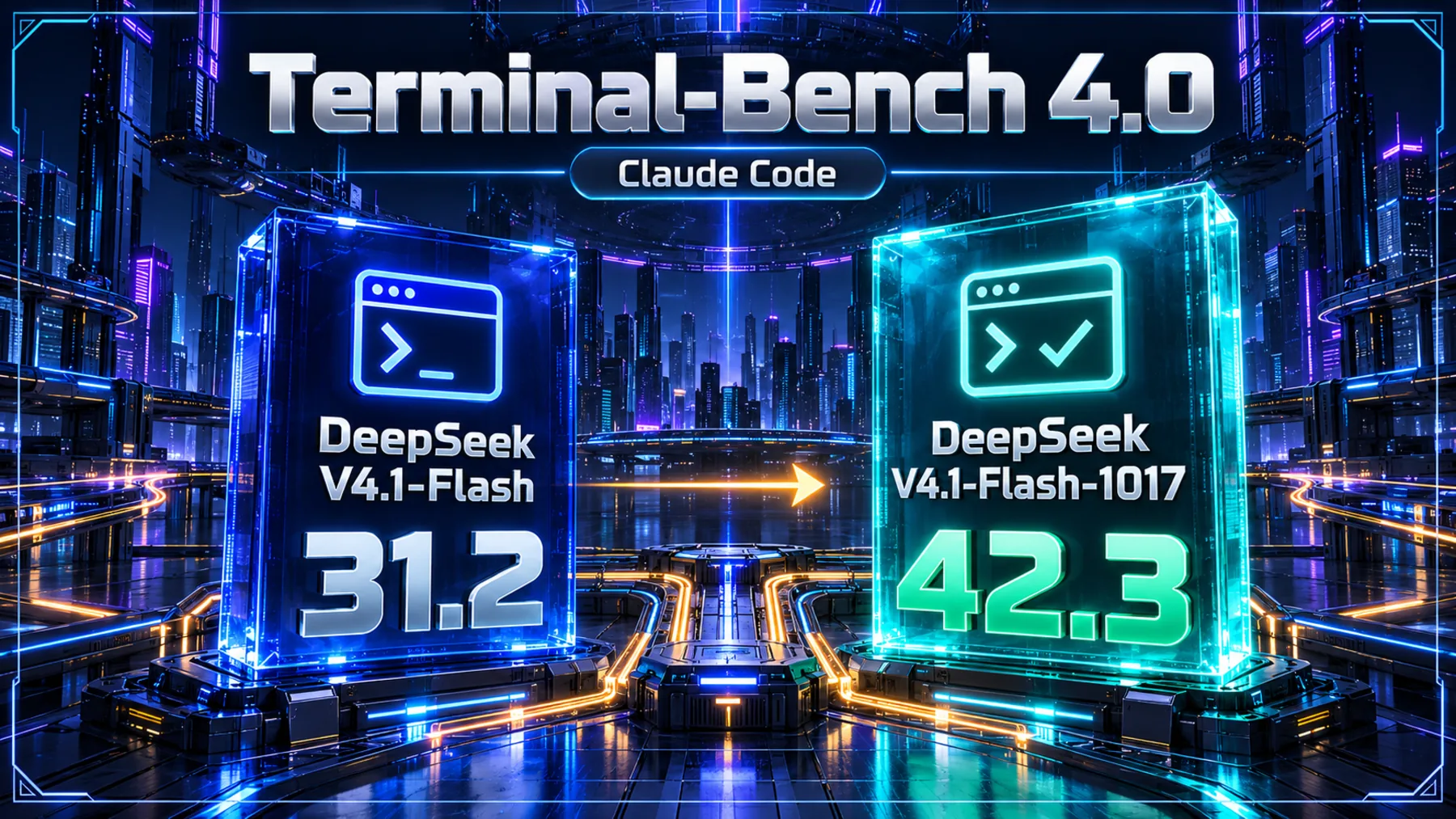
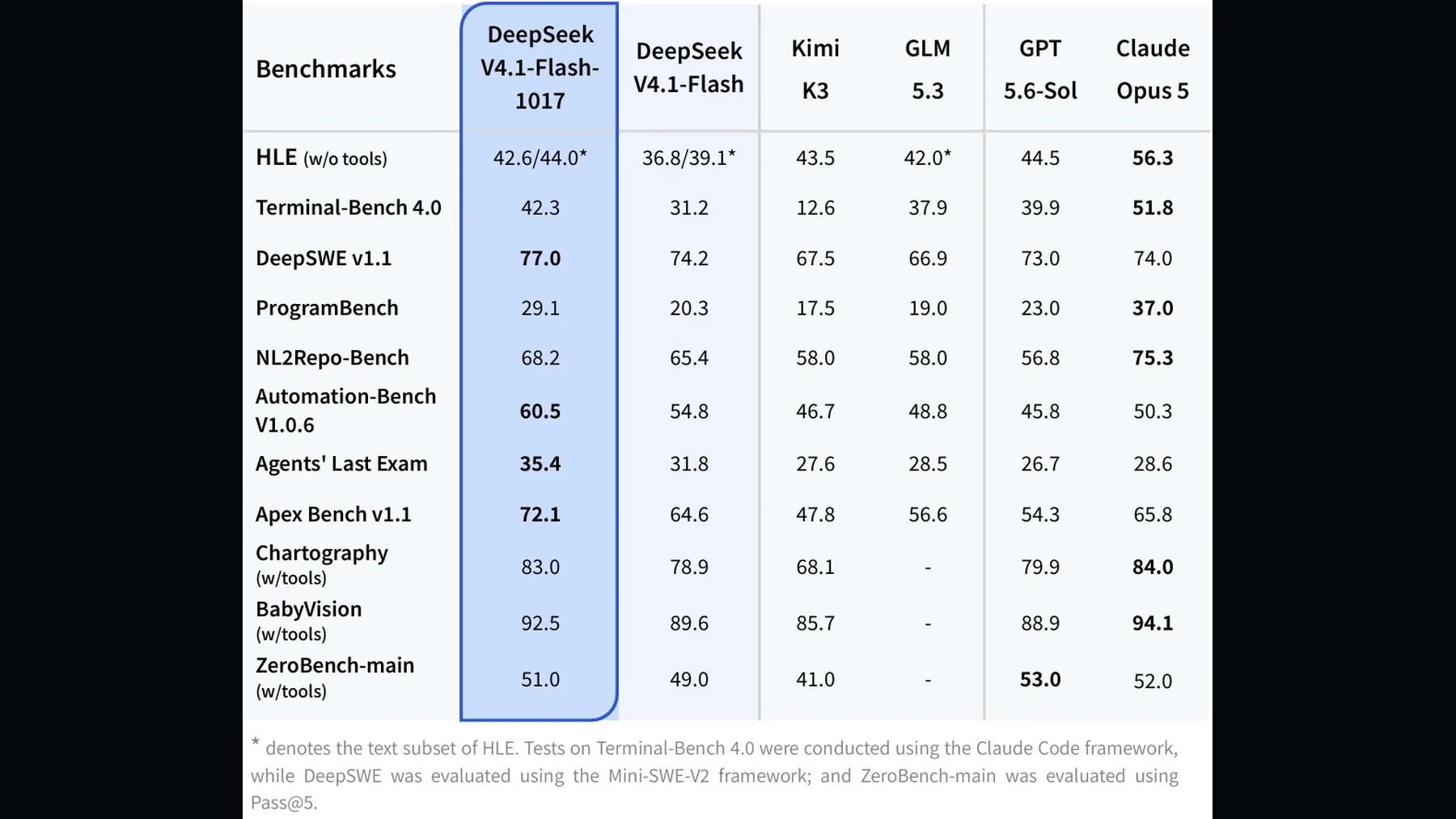
DeepSWE v1.1 rises from 74.2 to 77.0; Terminal-Bench 4.0 rises from 31.2 to 42.3.
On DeepSWE v1.1, DeepSeek V4.1-Flash scores 74.2 and DeepSeek V4.1-Flash-1017 scores 77.0. That evaluation uses Mini-SWE-V2.
Terminal-Bench 4.0, evaluated using Claude Code, moves from 31.2 for DeepSeek V4.1-Flash to 42.3 for DeepSeek V4.1-Flash-1017. Keeping the evaluations separate gives us two clear comparisons, rather than blending different tests into one score.
The original words and scores
DeepSeek’s announcement brings the performance, completion-time and output changes together.
DeepSeek describes the combination as a “Pareto improvement in performance and cost”. The original table below keeps the model headings, benchmark rows and evaluation footnotes together, so we can see the context behind the two comparisons.
Stronger benchmark performance, faster task completion, and shorter outputs than the previous version—a Pareto improvement in performance and cost.
DeepSeek · https://x.com/deepseek_ai/status/2111375640717033777
Task cost is a different measure
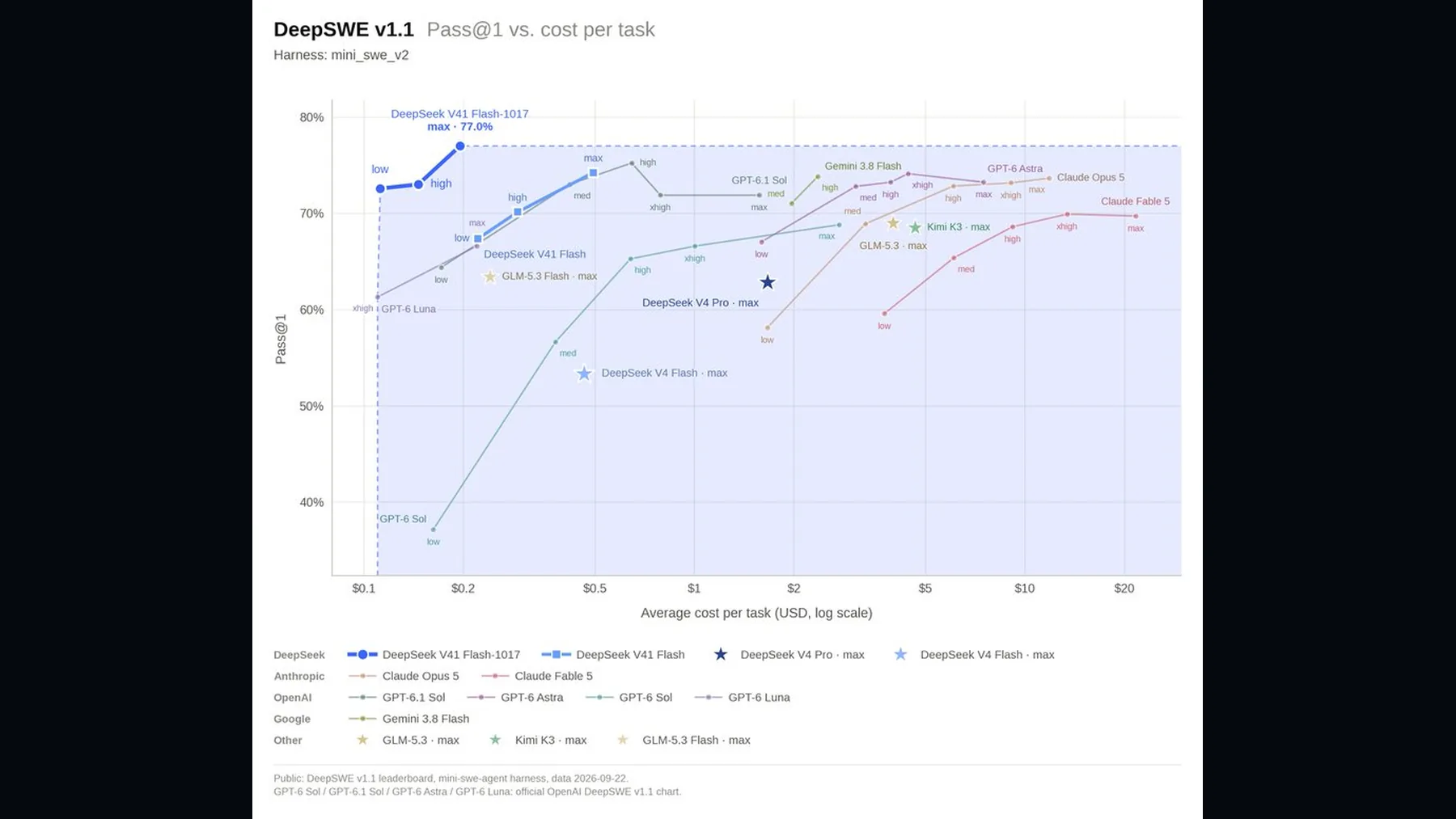
The chart pairs DeepSWE v1.1 first-attempt success with average cost per benchmark task.
The vertical axis measures DeepSWE v1.1 Pass@1: how often a task succeeds on the first attempt. The horizontal axis measures average cost per task in US dollars. It is logarithmic, so equal horizontal steps represent equal cost ratios rather than equal dollar increases.
The update’s maximum is labelled 77.0% in this chart. We are looking at benchmark task cost, not a schedule of API charges. The footnote dates the chart data to 22 September 2026, separately from the 17 October announcement.
One task, three distinct outcomes
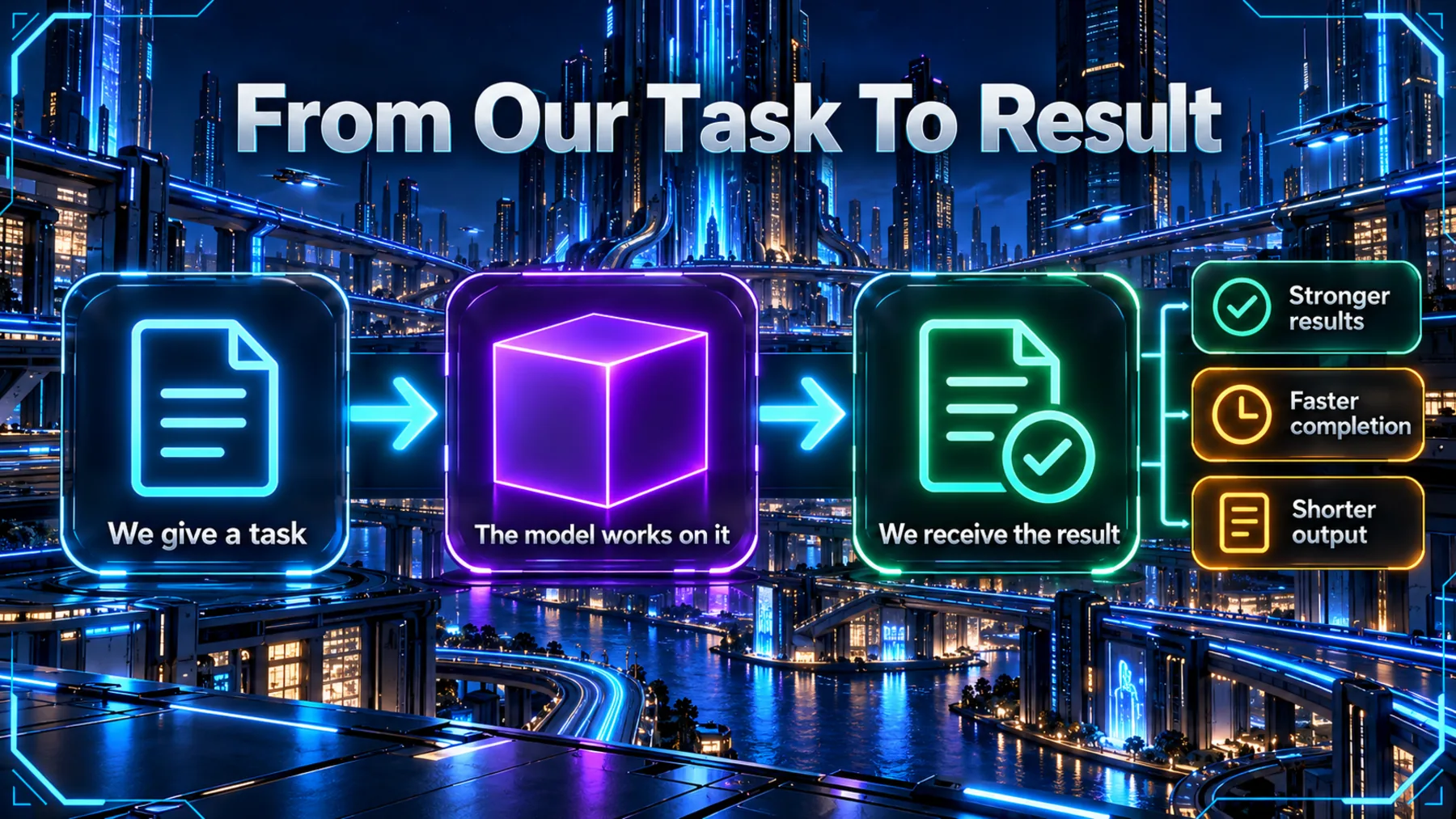
We give the model a task, it works on it, and we receive the result.
Think of a coding task moving from our request to the returned result. We can ask whether the result is right, how long completion takes and how much output comes back. An answer can be brief without being correct, so length alone tells us little.
The Flash update combines stronger benchmark results with faster completion and shorter output than its predecessor. These are changes in the outcome of the work, rather than an explanation of how the model operates internally.
Where we can use the update
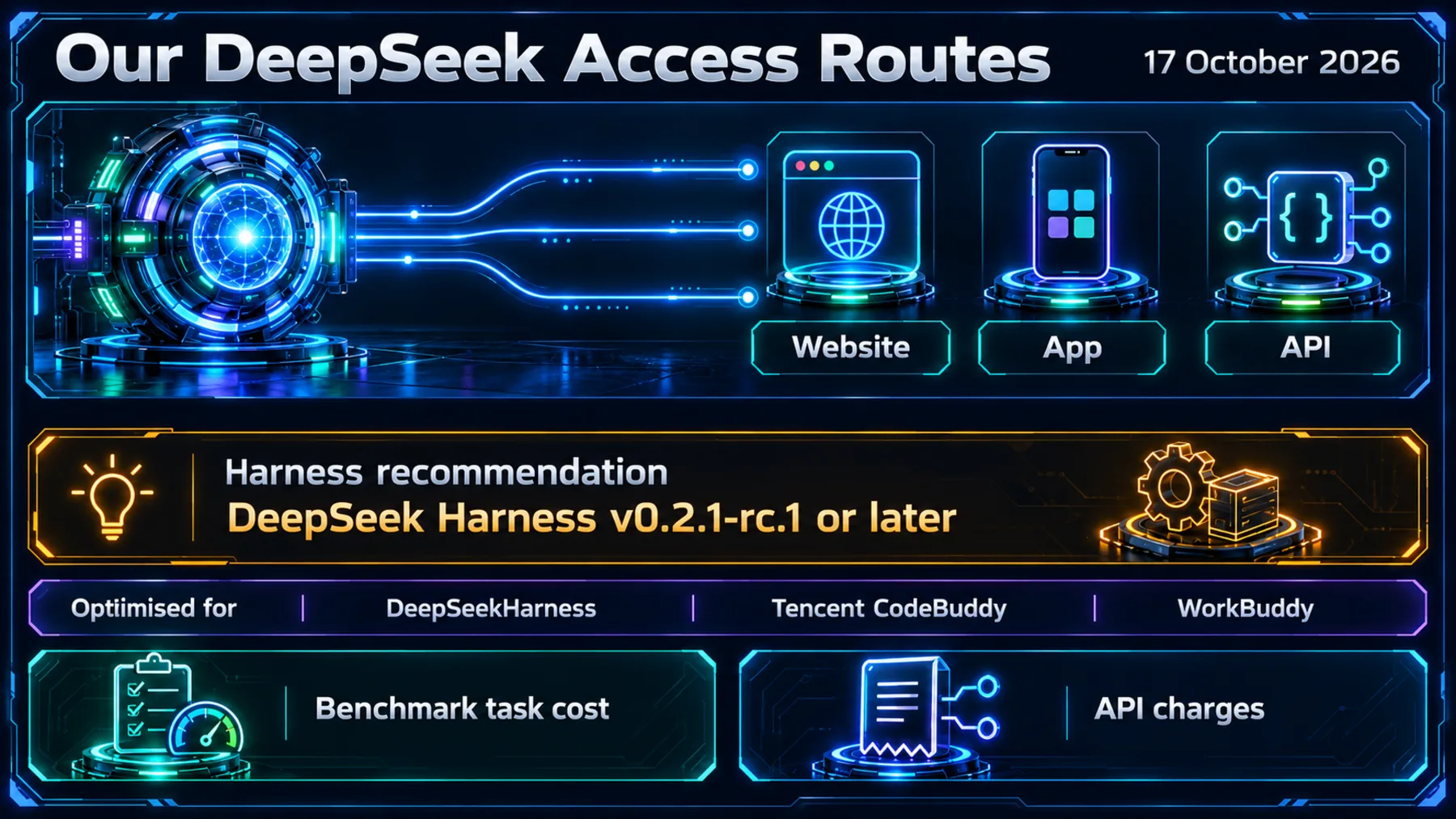
DeepSeek-V4.1-Flash-1017 is available on the website, app and API as of 17 October 2026.
We can access the update through DeepSeek’s website, app and API. It is also optimised for DeepSeekHarness, Tencent CodeBuddy and WorkBuddy.
If we use DeepSeek Harness, DeepSeek recommends upgrading to v0.2.1-rc.1 or later for the best experience with the new model. That recommendation is separate from website and app access.
For API use, keep billing separate from the benchmark chart: average cost per evaluated task is not an API rate.
Better results without a longer answer
The update makes the useful-work argument concrete: higher scores alongside faster completion and shorter output.
DeepSWE v1.1 and Terminal-Bench 4.0 both improve against the previous Flash version. Alongside those gains, the update completes tasks faster and produces shorter outputs. We have a clearer reason to care than answer length alone.
The cost chart adds a separate view of benchmark task economics. Keeping that distinct from API pricing lets us explain the update without turning it into a discount announcement. The prompt below turns the supplied figures into a concise comparison.
The improvement is in the completed work: higher benchmark scores, faster completion and less output than the previous version.
Altior analysis · https://x.com/deepseek_ai/status/2111375640717033777
Explain the Flash update without confusing cost and price
Explain DeepSeek-V4.1-Flash-1017 in plain British English using only the evidence below. Do not browse or run tests. Evidence: DeepSeek’s announcement of 17 October 2026 describes stronger benchmark performance, faster task completion and shorter outputs than the previous version. In the benchmark table, DeepSeek V4.1-Flash scores 74.2 on DeepSWE v1.1 and 31.2 on Terminal-Bench 4.0; DeepSeek V4.1-Flash-1017 scores 77.0 and 42.3 respectively. DeepSWE uses Mini-SWE-V2; Terminal-Bench uses Claude Code. A separate chart plots DeepSWE v1.1 Pass@1 against average cost per task in USD, using a logarithmic horizontal axis. It marks a 77.0% maximum for the update. Its footnote cites data dated 22 September 2026. No exact dollar costs or API prices are supplied here. Source: https://x.com/deepseek_ai/status/2111375640717033777 Produce a compact comparison table naming both models and both benchmarks, then calculate the absolute score change for each benchmark as new score minus old score. Label these as score-point changes, not percentage improvements, and do not average the benchmarks. Explain Pass@1 as success on the first attempt and a logarithmic cost axis as equal spacing representing equal cost ratios rather than equal dollar increments. Finish with a short paragraph explaining why average benchmark task cost is different from an API price list. Keep the faster-completion and shorter-output findings qualitative; do not invent timings, output reductions, dollar costs, discounts or results for our own work. Link to the source.Ready to copy
Remember the result, not the word count
DeepSeek-V4.1-Flash-1017 delivers stronger benchmark results with shorter outputs than the previous version. Follow Altior AI Advantage for more practical AI updates.
Try the promptWhat to keep in view
- Keep DeepSWE v1.1 and Terminal-Bench 4.0 scores tied to their own evaluations.
- Distinguish average benchmark task cost from API charges.
- For DeepSeek Harness, note the recommendation for v0.2.1-rc.1 or later.