DeepSeek Harness v0.1: The Stack Comes Apart
DeepSeek says Harness v0.1 turns the agent workbench into replaceable parts; the harder question is whether those parts hold together under real work.
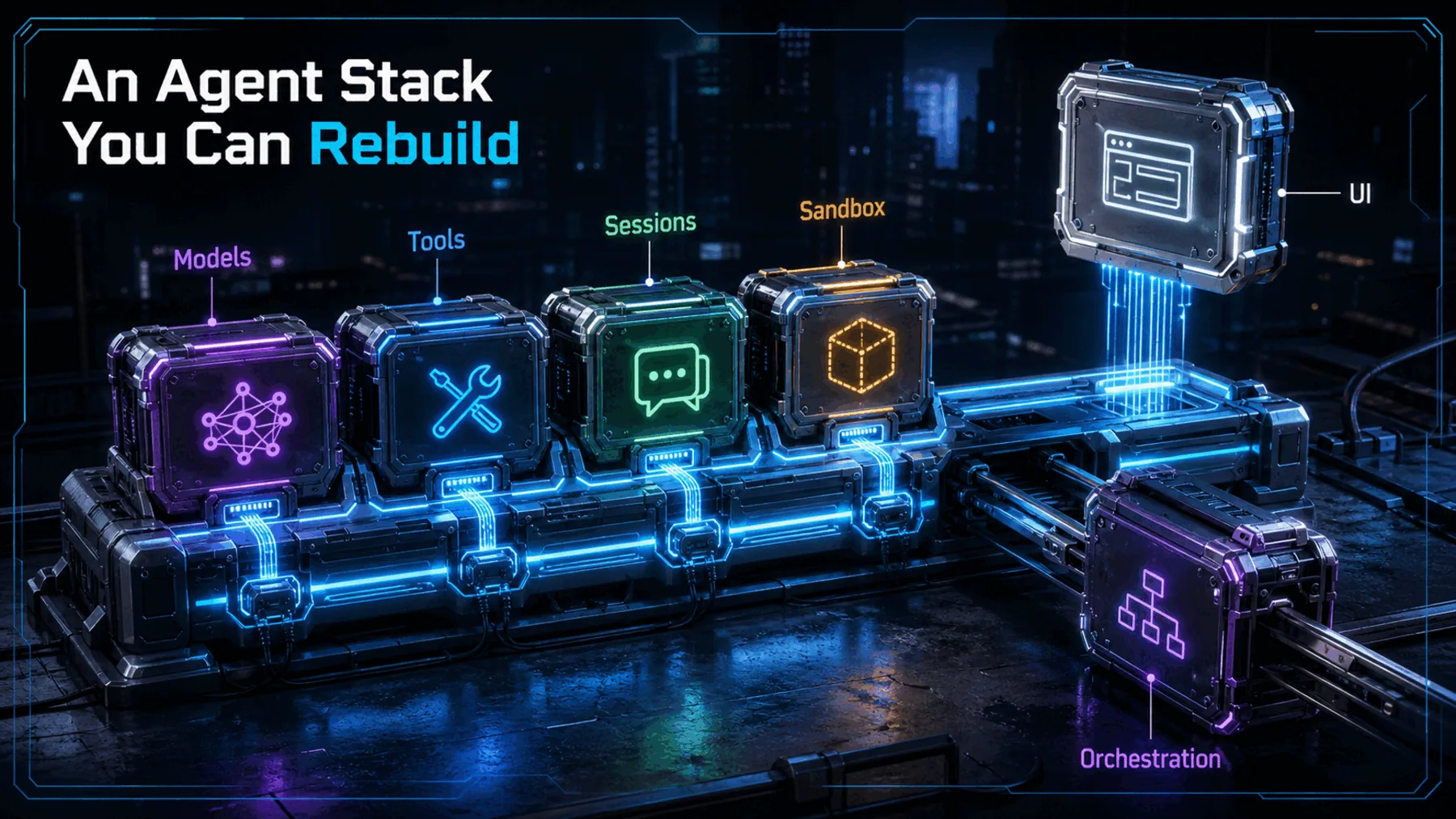
An agent is usually experienced as one thing, yet it is assembled from many: a model, tools, skills, sessions, files, a sandbox, control loops, orchestration and an interface. DeepSeek says its Developer Preview, Harness v0.1, makes each of those layers a plugin.
That is a striking proposition because it moves the boundary of choice beyond the model. But one official post establishes the proposition, not whether every replacement behaves cleanly once the pieces meet a real workload.
Choice Needs Boundaries
Replaceability matters only when the connections between parts can be understood, tested and trusted.
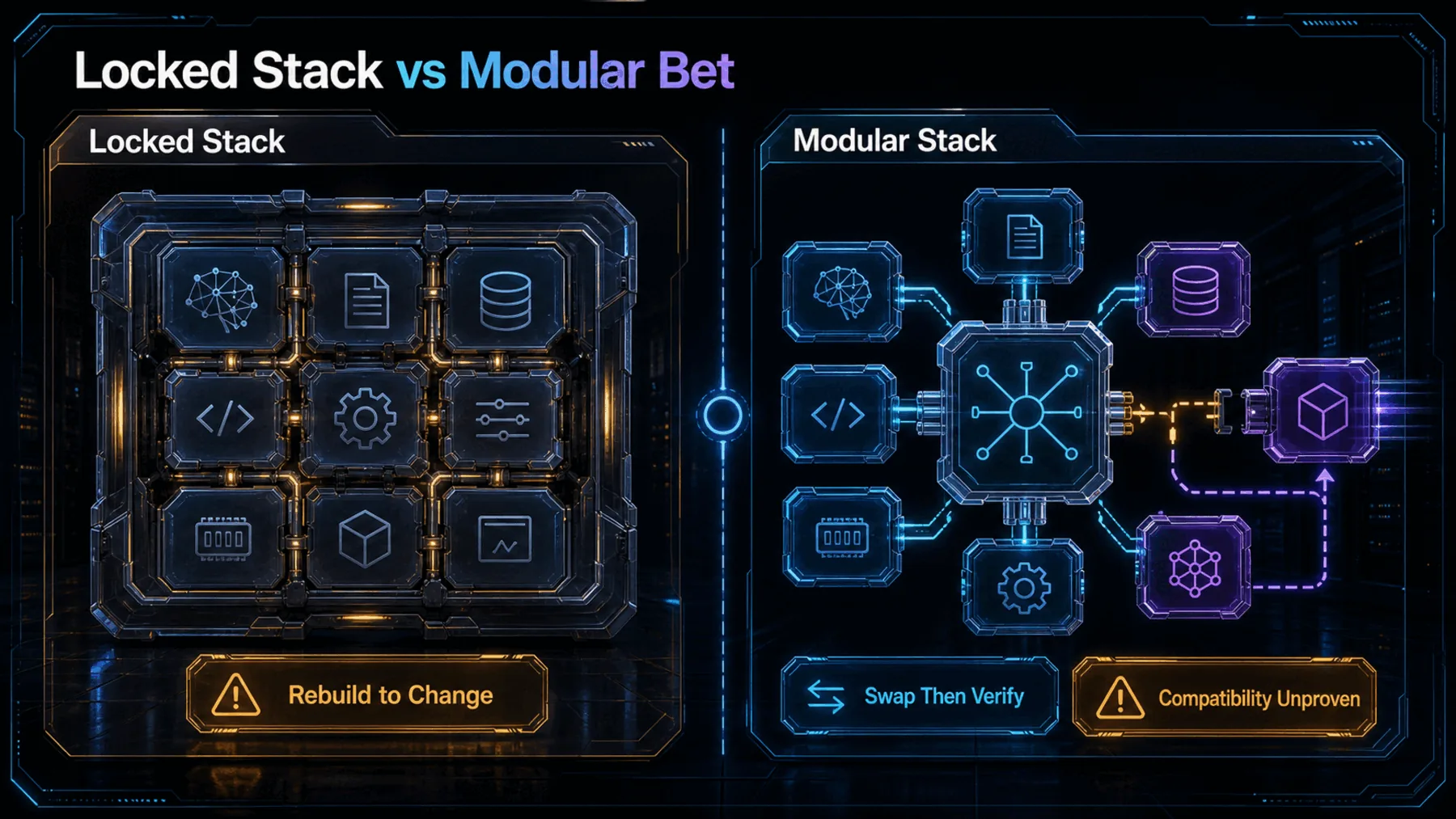
A locked stack can be convenient until one layer becomes the constraint: the model, the runtime, the toolchain or the interface. DeepSeek’s stated idea is that a harness should let us change more of those decisions without rebuilding the whole workbench.
That promise is valuable precisely because it is not automatic. Replaceability creates a new obligation to inspect contracts, state, permissions and failure modes at each seam.
What DeepSeek Announced
DeepSeek describes Harness v0.1 as an MIT-licensed Developer Preview powered by Cordis.
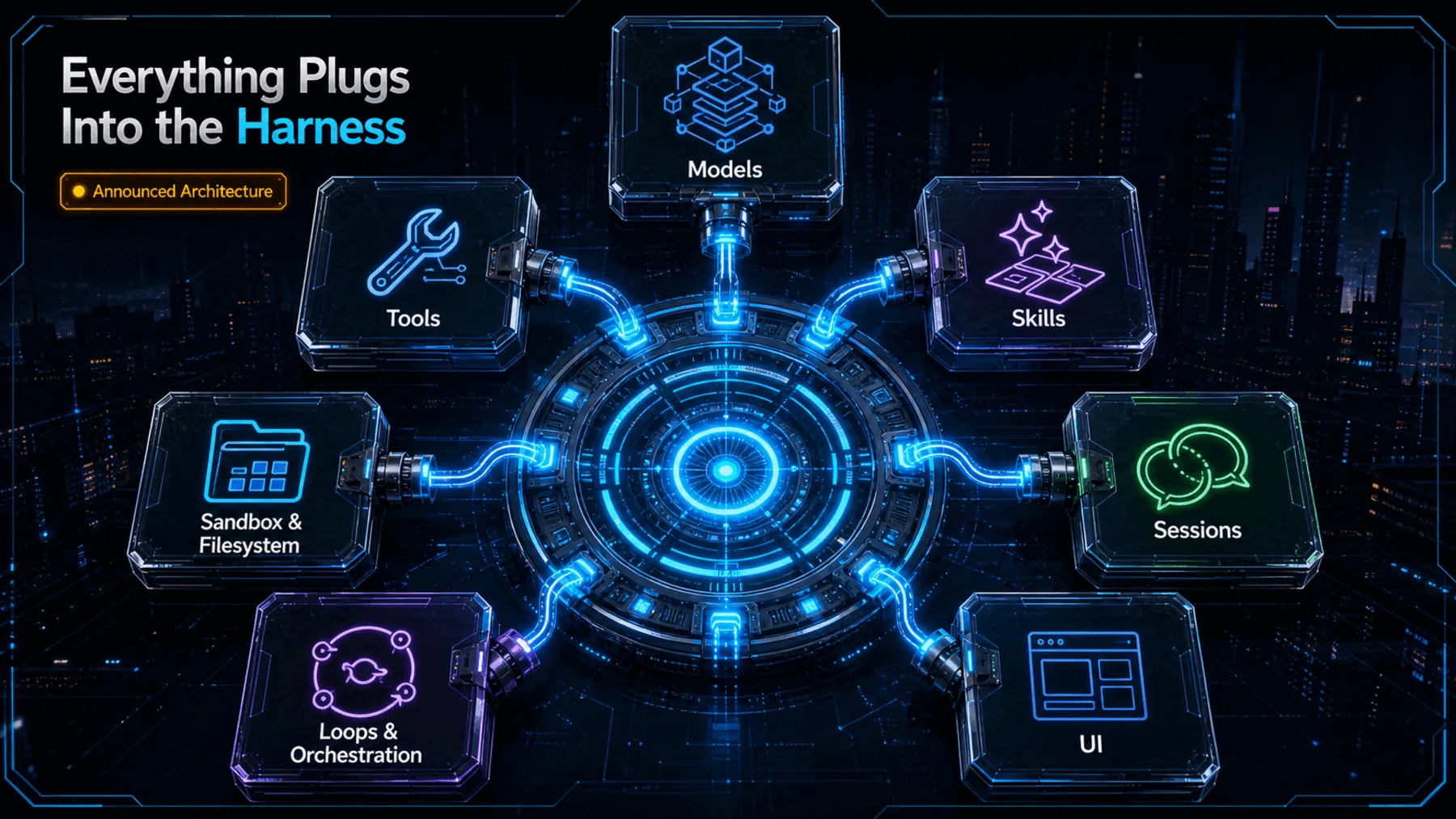
DeepSeek says Harness v0.1 is available in Developer Preview, with an MIT-licensed codebase and Cordis as its meta-framework. The scope of the claim is unusually broad: not just models and tools, but the layers that carry state, execution and interaction around them.
The announcement gives us the architectural direction. It does not yet provide the documentation, compatibility matrix, benchmarks, security evidence or production cases needed to turn that direction into a settled operational conclusion.
The Announcement Receipt
The available evidence is one DeepSeek post, so its wording sets both the story and its limits.
DeepSeek’s post is enough to report the release and its stated architecture. It is not independent validation, and it should not be stretched into evidence about reliability, security, performance or adoption.
That distinction keeps the useful part of the announcement intact. We can take the proposition seriously without pretending the post answers the questions a production team would need answered.
“Everything is a plugin.”
DeepSeek X post
Proof, With Limits
The source shows what DeepSeek announced; it does not show how broadly the proposition has held up.
The cleanest reading is narrow. DeepSeek has made an architectural claim and opened a Developer Preview; that is newsworthy on its own terms.
The unanswered work begins at the joins: whether state survives a swap, whether tools share expectations, whether sandboxes preserve the right boundaries, and how orchestration behaves when one part changes. None of that is resolved by the announcement alone.
Swap the Part, Test the Join
The intended flow is simple in outline: change one component, reconnect it, then verify what changes around it.
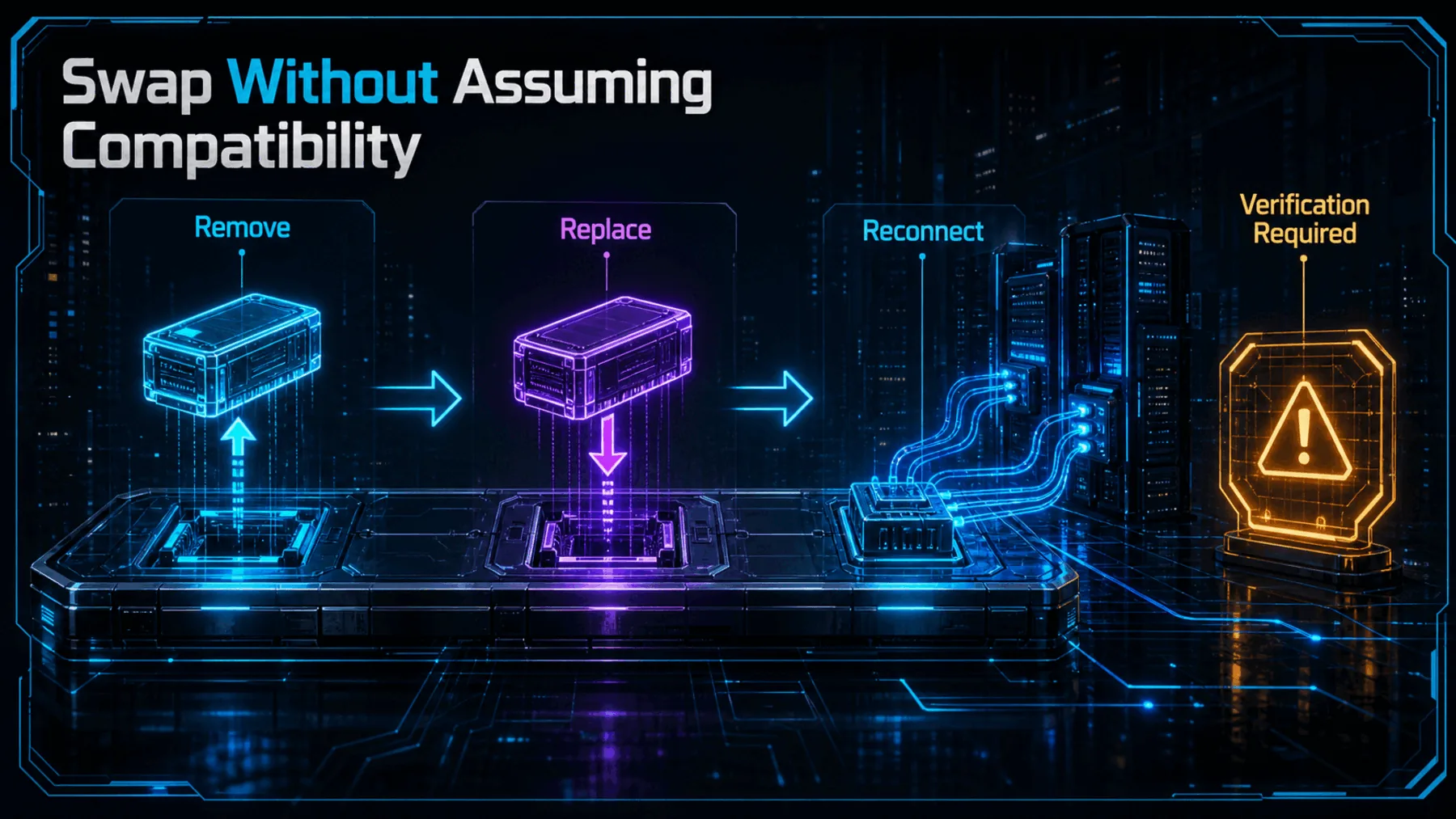
If a model, session layer or tool is genuinely replaceable, the swap is only the first move. The next question is whether its inputs, permissions, state and outputs remain intelligible to the rest of the workbench.
That is why the interesting measure is not how quickly a component can be removed. It is whether the surrounding system exposes enough of its assumptions for the replacement to be evaluated.
Start With the Unknowns
A Developer Preview is a place to inspect boundaries, not a shortcut past them.
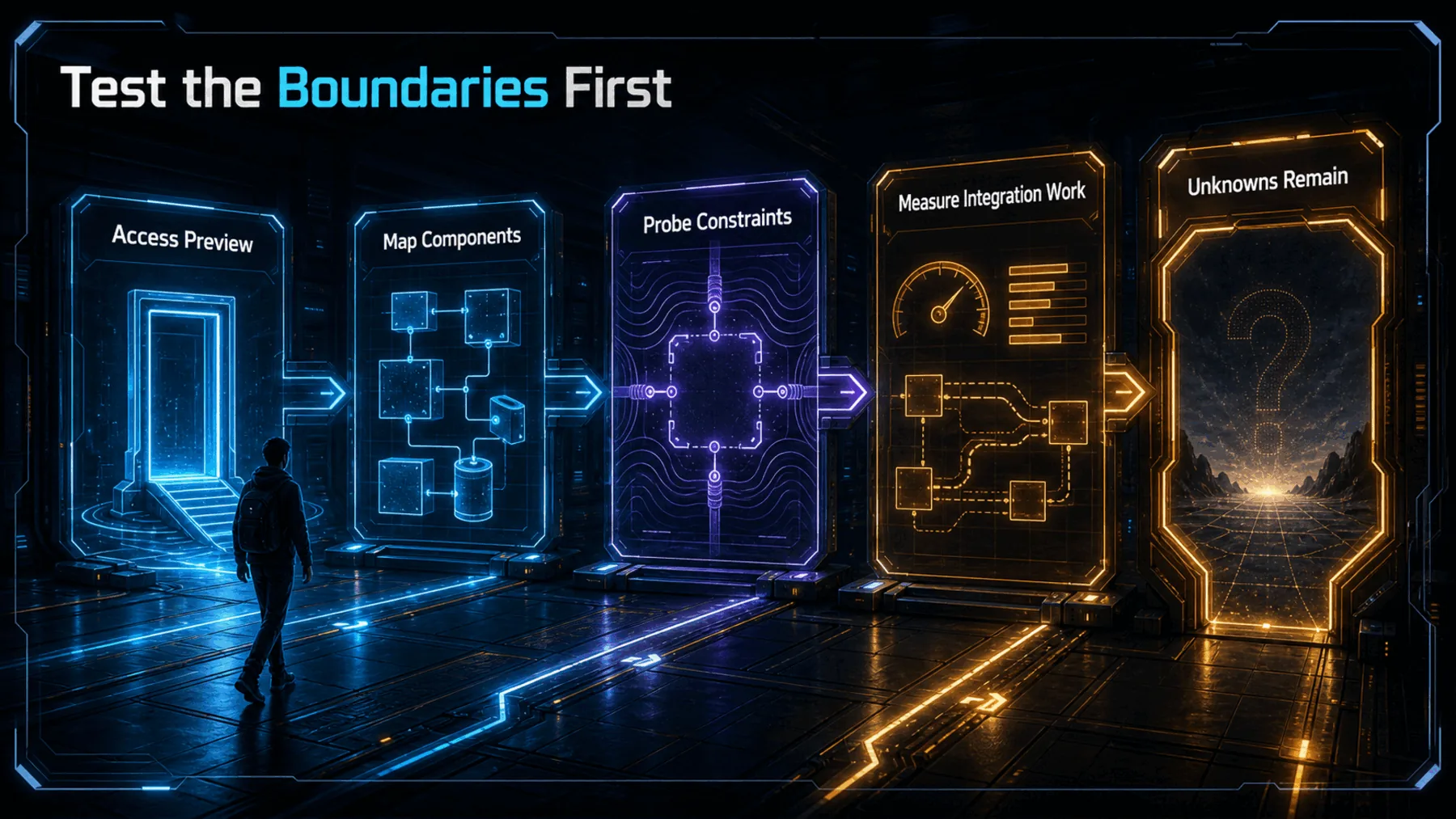
The sensible first pass is small: choose one component boundary, define what must remain true after a change, and observe the result. That is more useful than treating a broad architectural claim as a finished compatibility story.
We would want to see documentation that describes the contracts between layers, reproducible examples, security boundaries, and evidence from workloads that matter to the team making the choice. Until then, the preview is an invitation to investigate.
Replaceability Is the Point
DeepSeek’s most consequential claim is not that every layer already interoperates, but that every layer should be open to choice.
Harness v0.1 frames the agent stack as something we can compose rather than merely accept. DeepSeek’s named plugin layers make that ambition concrete: choice can reach beyond the model to the systems that carry work around it.
The stronger reading is also the more cautious one. Replaceability is the proposition; proven interoperability is still evidence to seek.
A modular workbench is a compelling direction. The proof is in the boundaries it can show, test and sustain.
Based on DeepSeek’s 13 August 2026 announcement
Map a replaceable agent workbench
You are evaluating an agent harness for a small research workflow. Separate the workbench into model, tools, skills, session memory, filesystem access, sandbox, control loop, orchestration and interface. For each layer, state one dependency to verify before replacement, one compatibility question, and one observable test. Return a three-column table followed by the three highest-risk unknowns.Ready to copy
Ask for the joins
The next useful evidence is not a louder claim of modularity, but clear proof of what happens when individual layers meet, change and fail.
Try the promptWhat would strengthen the case
- Documentation
- Compatibility evidence
- Security detail
- Workload results