DeepSeek Harness Arrives, With Questions
DeepSeek announces packaged Harness versions for macOS and Windows, but the captured announcement does not show what the software can do.
Before we picture Harness doing a job on our computer, there is a simpler question to settle: which route has DeepSeek announced for our operating system?
Our operating system changes the route
The announcement helps us identify where to look; deciding whether Harness suits our work comes later.
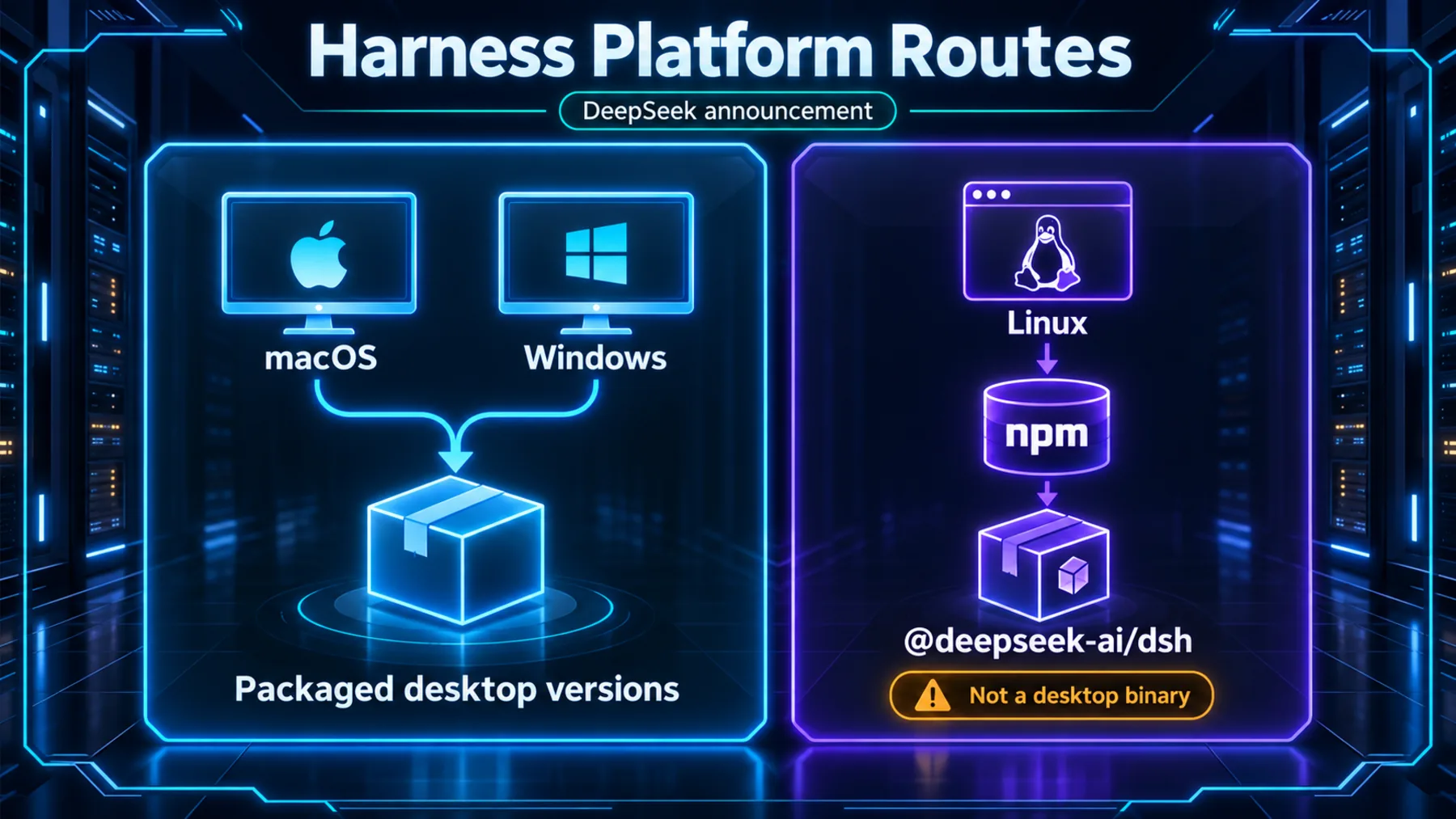
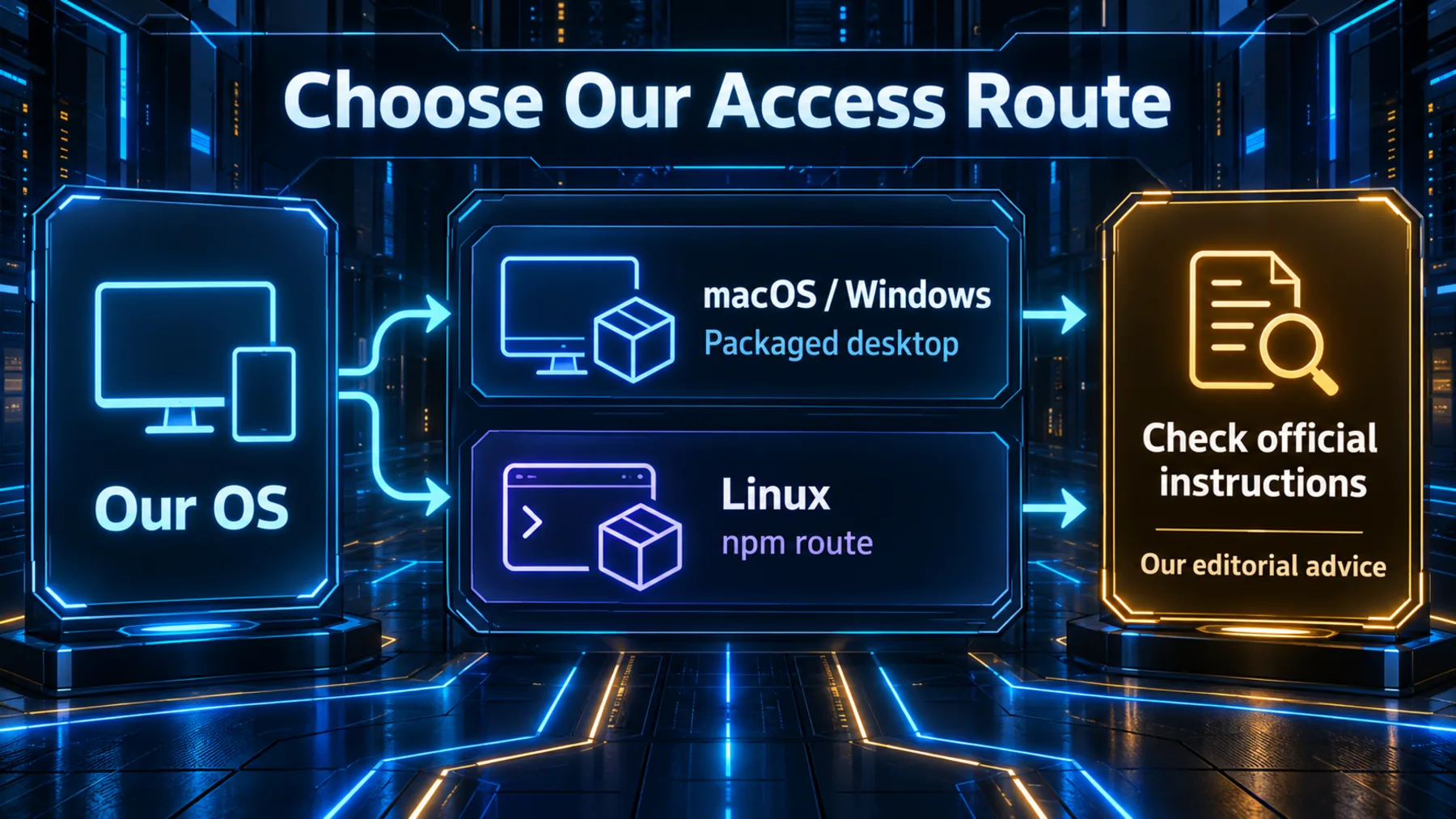
If we use macOS or Windows, DeepSeek points us towards packaged desktop versions. On Linux, it names an npm package instead. Those are different access routes, and we should keep the distinction when deciding what to check next.
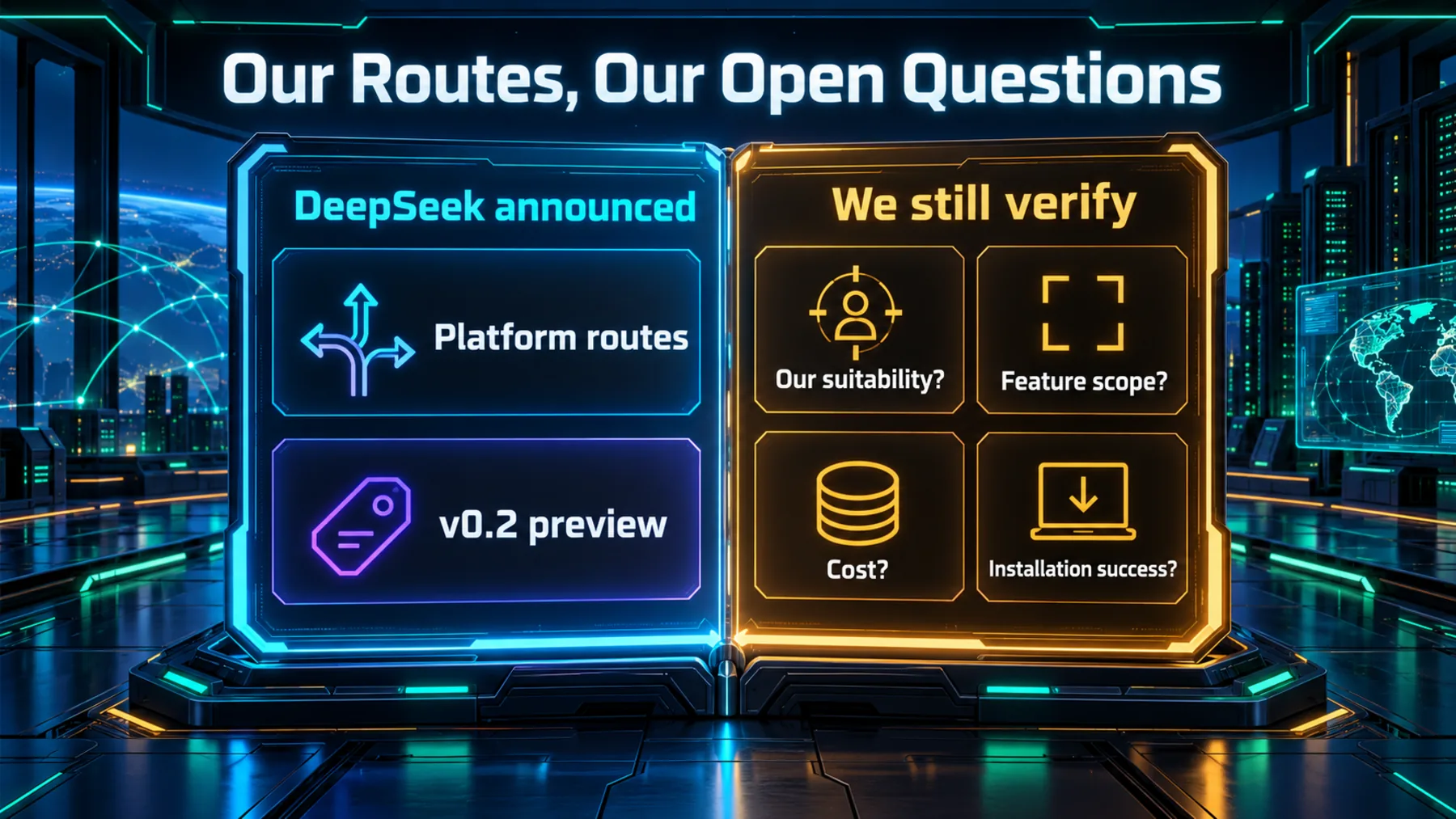
That gives us a useful starting point without settling the bigger questions. Feature scope, requirements and cost are not established by the captured announcement. Missing detail is a reason to check, not evidence that something is absent.
Desktop packages here, npm there
DeepSeek separates macOS and Windows from Linux; its visible article preview also names the release v0.2 preview.
DeepSeek says it has released packaged desktop versions for macOS and Windows. For Linux, the post directs us to @deepseek-ai/dsh on npm. It does not establish a packaged Linux desktop binary, and neither route has been installation-tested here.
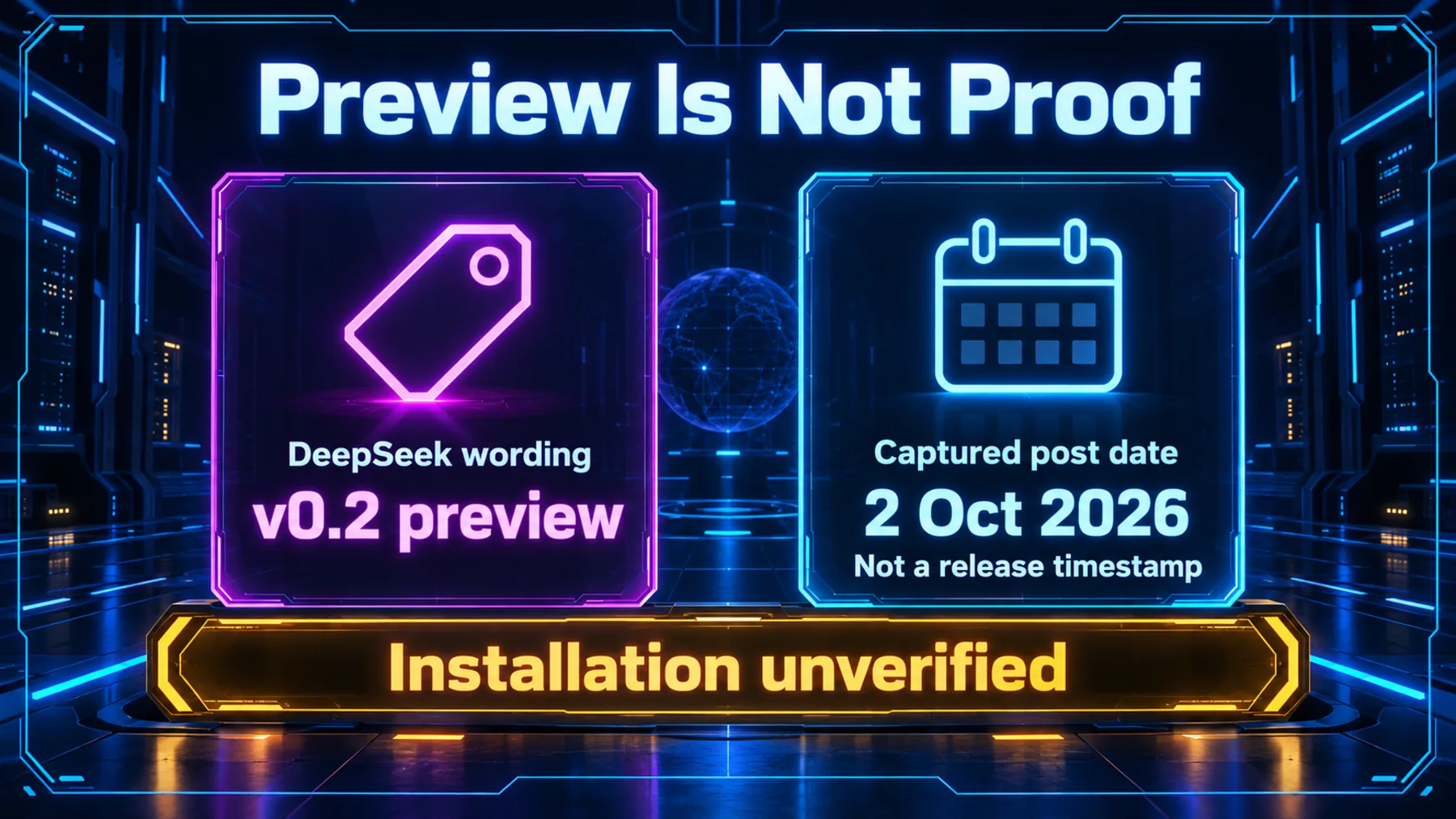
The visible article preview calls the release “DeepSeek Harness v0.2 preview”. The captured post displays 2 October 2026. That is the post's displayed date, not a separately verified release timestamp; its time zone is not established.
DeepSeek makes the distinction explicit
The platform split comes directly from DeepSeek's post, rather than our interpretation of a product image.
DeepSeek names the desktop platforms and Linux package in the same sentence. Keeping those words together makes the distinction clear: the npm route should not become a Linux desktop-app claim as we retell the announcement.
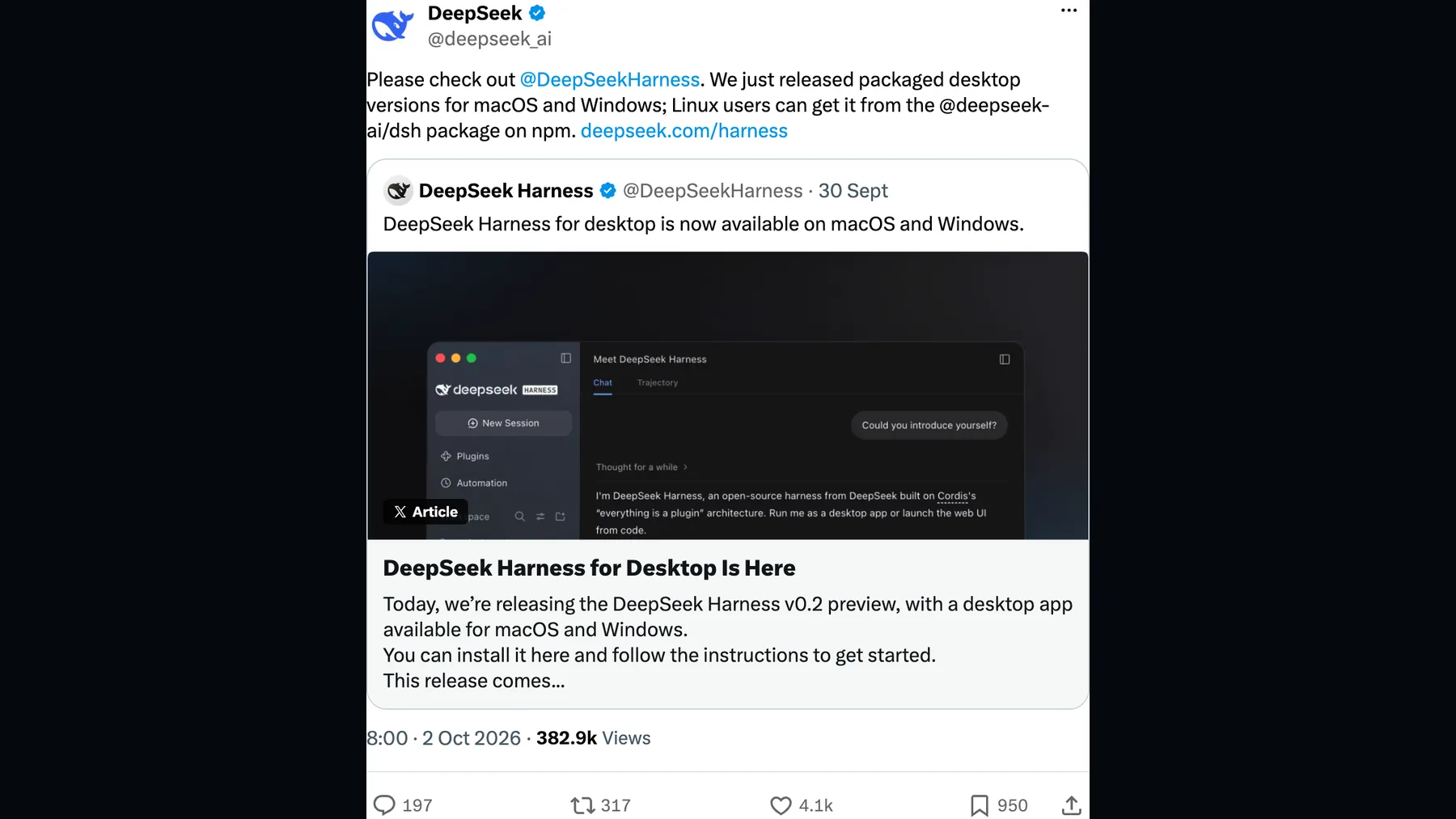
We just released packaged desktop versions for macOS and Windows; Linux users can get it from the @deepseek-ai/dsh package on npm.
DeepSeek says
A preview leaves the work unproven
The visible text identifies the release, but stops short of showing Harness completing a task.
Desktop arrival can sound like the start of a hands-on story. Here, we have a narrower account: an announcement and a visible article preview. Harness was not tested, and the full article was not retrieved.
The complete opening sentence names v0.2 preview and the desktop platforms. The rest of the preview is truncated, so we cannot use it to fill in features or turn announced availability into demonstrated functionality.
Start with the OS, then verify
We can identify the announced route without pretending to have an installation guide.
Our operating system determines the first branch: macOS or Windows leads to DeepSeek's packaged-desktop announcement; Linux leads to its named npm package. The next step we recommend is to consult official instructions before attempting either.
That is where this access map stops. Complete installation instructions were not retrieved, so it cannot tell us which commands to run or show a working installation.
Check what a trial would involve
Requirements, cost and relevant functionality remain open questions here.
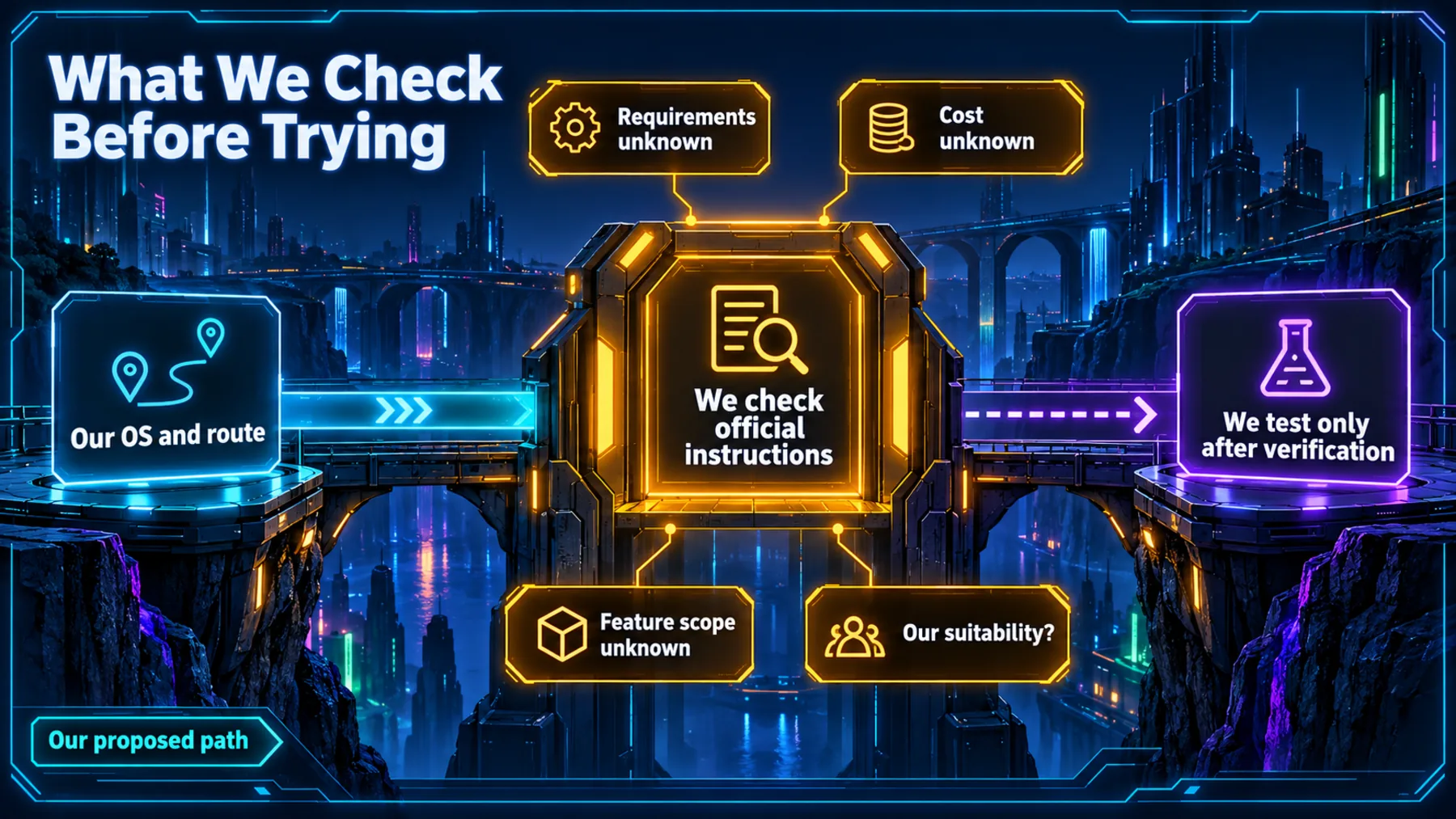
The post points to deepseek.com/harness, but that destination was not retrieved. We would start by consulting official information for our platform, checking what the software requires, what it costs and whether it supports a task we actually need.
Only then would we consider a small, bounded evaluation with a result we can observe. That is a proposed path, not a report of using Harness. The captured material establishes no successful installation, security assurance or task outcome.
Access is clearer. Usefulness is unresolved.
We know which routes DeepSeek announced; we still need evidence that Harness can help with our work.
The announcement answers a platform question more convincingly than a product-value question. We can distinguish the desktop packages from the Linux npm route, and recognise the preview wording, without inventing the rest of the product.
The prompt below turns that distinction into a short decision brief. It assesses the supplied announcement text in a conversational AI tool; it does not assume Harness accepts prompts or performs an undocumented task.
We can identify our announced route to Harness. Whether it earns a place in our work still needs a test.
Altior editorial assessment of DeepSeek's announcement
What does the Harness announcement actually establish?
Assess the following DeepSeek Harness announcement as an evidence brief, using only the supplied text. Do not browse, infer undocumented features or give installation commands. DeepSeek's post says: “We just released packaged desktop versions for macOS and Windows; Linux users can get it from the @deepseek-ai/dsh package on npm.” The visible DeepSeek Harness article preview says: “Today, we’re releasing the DeepSeek Harness v0.2 preview, with a desktop app available for macOS and Windows.” The remaining preview is truncated; the full article and linked landing page have not been retrieved. The captured post displays 2 October 2026, which is not an independently verified release date. Write a short decision brief for us as a team considering whether to try Harness. Start with the announced route for each operating system, keeping the Linux npm package distinct from the packaged macOS and Windows desktop versions. Attribute these claims to DeepSeek. Then explain what this evidence leaves unresolved about functionality, requirements, cost, security and successful installation. Do not interpret missing information as proof that a feature is absent. Finish by proposing one small evaluation that we could consider only after official documentation confirms a relevant capability and its requirements. Make that proposal conditional, define an observable result and a stopping condition, and do not imply that Harness has already performed the task. Conclude with what we can decide now and what we must defer. Keep the brief under 350 words.Ready to copy
Know the route. Check the rest.
DeepSeek announces desktop packages for macOS and Windows, and an npm route for Linux. Keep that distinction in mind while the practical questions remain open.
Follow Altior for more evidence-led AI coverage.
Try the promptWhat remains to be verified
- Documented feature scope and relevance to our tasks.
- Platform requirements and complete official installation instructions.
- Pricing and any access conditions.
- A successful installation and an observed result from a bounded test.