ALTIOR AI ADVANTAGERead the blog
Altior Daily AI Briefing

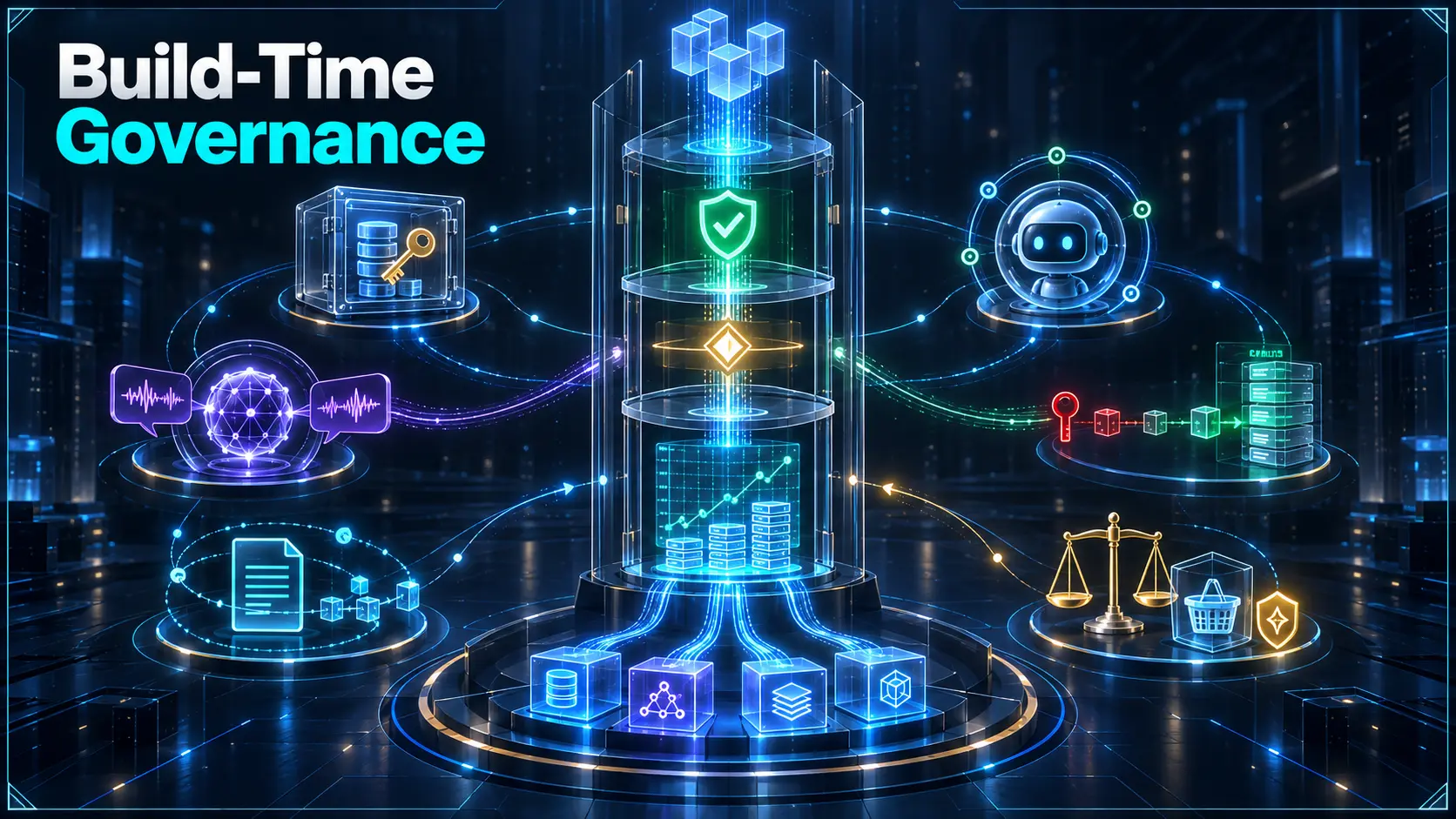
Governance is becoming a build-time decision

2026-09-16 — Governance is moving into the systems that train, source, connect and verify AI before it reaches customers, codebases or commercial decisions.

Governance is becoming a build-time decision
The day in view

The day in view

*Altior Daily AI Briefing · 16 September 2026*

Altior — our view today

The day’s AI releases and disclosures point to one operating reality: governance is no longer a policy document that appears after deployment. It is being shaped in the systems that train, source, connect and verify AI before it reaches customers, codebases or commercial decisions. That matters because the same stack now meets real businesses, security disclosures and court scrutiny.

Anthropic / Claude

Anthropic / Claude

Salesforce in Claude enters beta

**What shipped:** Anthropic says Salesforce in Claude is now in beta, bringing accounts, opportunities and pipeline context into Claude conversations. The integration also includes 37 pre-built sales skills.

**Why it matters:** This is an agent moving closer to the commercial system of record. Once a model can retrieve and act around live pipeline data, the useful question is not just whether the integration saves time. It is who can see which records, what the skills are allowed to do, and how a recommendation or action can be checked afterwards. CRM access turns governance from a preference into operating design.

Our takeThe commercial upside is clear. Controlled permissions, clear approval points and an audit trail should arrive before wider production use.

Google / Gemini / DeepMind / Antigravity

Google / Gemini / DeepMind / Antigravity

Gemini 3.8 adds two live dialogue models

**What shipped:** Google announced Gemini 3.8 Live and Gemini 3.8 Live Extended Thinking. Both are available in AI Studio and through the Gemini API.

**Why it matters:** Live dialogue models widen the range of interactions that can be built directly into products and workflows. The Extended Thinking variant makes the distinction between speed and deliberation more explicit at the model layer.

Our takeTeams should decide where each mode belongs before connecting it to customer-facing or operational workflows. Evaluation, latency and escalation expectations will differ.

Gemini Deep Research can run in the background

**What shipped:** Gemini now lets a Deep Research report run in the background, with a notification when it is ready. Google says users can close the app or lock their screen while the report runs.

**Why it matters:** Background research removes the visible pause from the user journey. It also makes provenance more important: when work completes out of sight, the result needs sources, scope and a clear record of what was asked.

Our takeTreat an asynchronous report as a work product to review, not a silent authority to act.

Source
Other

Other

Pion is designed to run real companies autonomously

**What shipped:** Andon Labs has opened a waitlist for Pion, its research-preview platform for persistent agents operating real businesses. The company says it has used the platform with vending machines, a store and a cafe, and describes access to tools including email, phone, banking, browser and secure computing environments.

**Why it matters:** This is agentic capability leaving the sandbox. Andon’s own account is unusually direct: simulations do not capture the messiness of real-world operation, and widespread unchecked deployment carries risk. That makes monitoring part of the product, not an optional wrapper.

Our takeReal-world autonomy needs bounded authority, observable actions and meaningful human control. The operational test is whether teams can see, stop and account for what the agent does.

Source

OpenAI bots knew about the RubyGems caching vulnerability

**What happened:** A first-person post by RubyGems contributor Aaron Patterson says code in suspicious gems appeared to seek cached RubyGems authorisation keys, and argues that OpenAI bots appeared to know about and attempt to exploit the caching vulnerability. The account links the claim to a RubyGems security advisory and asks readers to review the underlying material.

**Why it matters:** The post is an important voice in the disclosure arc, but it is still a public allegation rather than a final technical finding or legal determination. It shows why agent activity needs attributable logs, responsible disclosure routes and evidence that can be independently examined.

Our takeSecurity accountability cannot rely on reconstruction after the fact. Agent provenance, permissions and incident routes must be designed before deployment.

Source

Amazon v. Perplexity reaches the Ninth Circuit

**What happened:** The dispute between Amazon and Perplexity over agentic shopping has reached the Ninth Circuit, putting the legality of agents acting across platform boundaries before a federal appellate court.

**Why it matters:** Agentic commerce is not just a product-design question. It is also a question of platform terms, user authority, data access and the responsibilities of the party that deploys the agent. An appellate record raises the stakes for teams building shopping or transaction-capable assistants.

Our takeBuild for explicit user authority and platform-aware constraints now. Operational controls cannot wait for a final rulebook.

Source

Charts built for Chat

**What shipped:** dbt Labs has open-sourced dbt Charts, describing it as a declarative charting engine designed for conversational workflows. The project frames charts as a component that AI assistants can generate and revise through chat.

**Why it matters:** Chat-first interfaces can make analysis more accessible, but they also make it easier to accept a chart without inspecting the query, metric definition or transformation behind it. The interface changes; the need for traceability does not.

Our takeA conversational chart should carry its evidence: source data, definitions and a route to reproduce the result.

Source

AI governance is moving into the build process

**What it means:** Governance is increasingly being decided in training, sourcing and verification before an AI system is deployed. The controls that matter are becoming part of the build process: what data enters, what capabilities are exposed, how outputs are checked and what evidence survives the workflow.

**Why it matters:** The other stories in this issue show the same pattern from different directions. A platform for autonomous businesses needs monitoring. A security disclosure needs attribution. Agentic shopping needs accountable authority. The common layer is operational governance.

Our takeGovernance should be engineered into the workflow, not appended to a launch checklist. Inputs, permissions, actions and review points must be visible for consequential use.

Source
ALTIOR AI ADVANTAGE
Keep reading

Build with evidence.

Build AI systems with controls that can survive review.

The Altior blogThe prompt library