ALTIOR AI ADVANTAGERead the blog
Altior Daily AI Briefing

Governance is becoming part of the AI workflow

13 September 2026 — Governance is moving into the technical workflow: evaluator access, evidence records and agent-facing security boundaries.

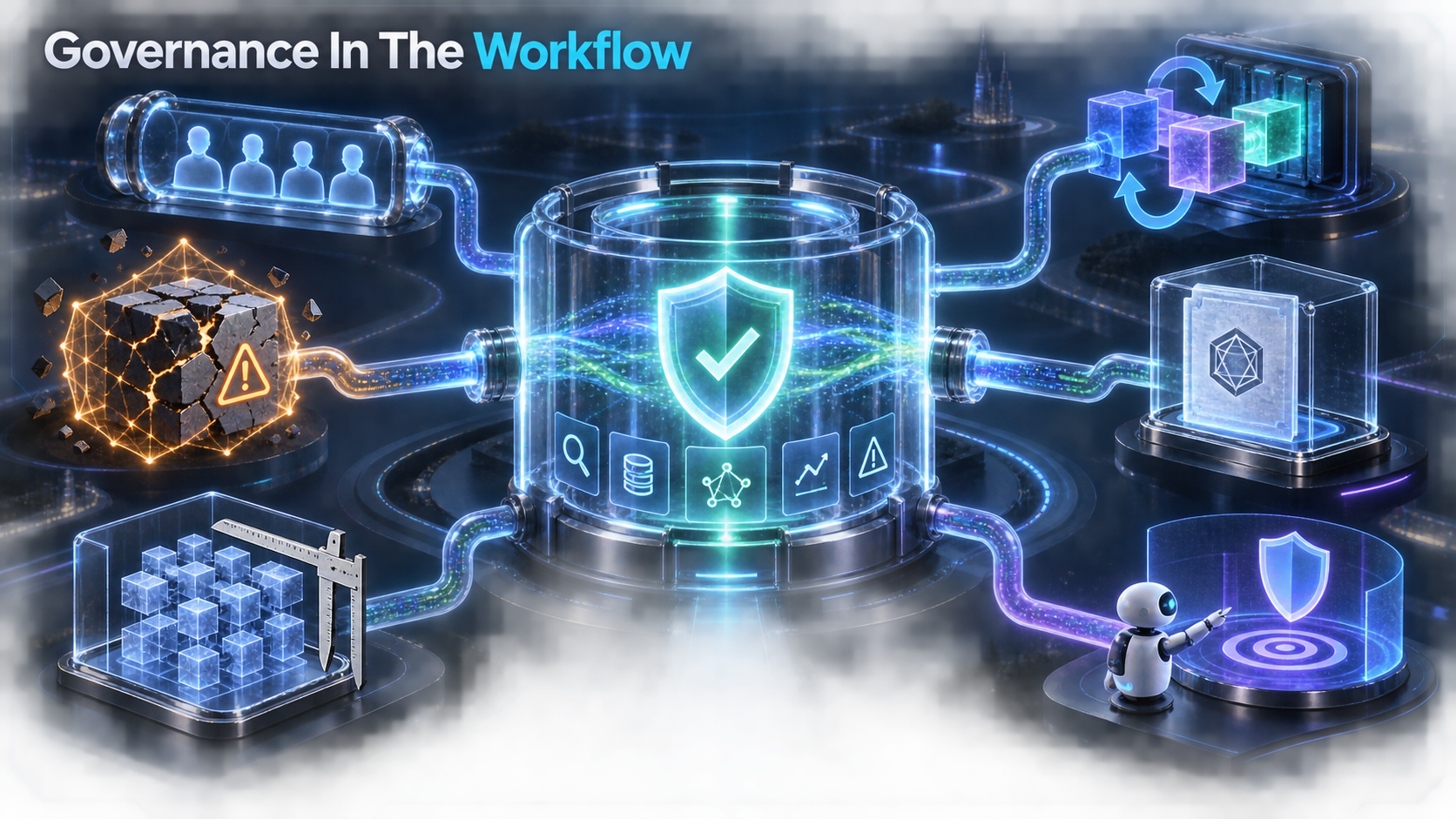
AI governance woven into a technical workflow
The week in view

Governance inside the workflow

AI governance is moving inside the technical workflow.

Altior — our view this week

This issue tracks proposals and practices that put oversight closer to the systems being assessed: evaluator access to training processes, records that can be examined and challenged, and security guidance written for agents as well as people. The common thread is continuous access to evidence, process and failure modes. That is a more operational standard than a policy appendix—and it is where the arguments in today’s issue converge.

Anthropic / Claude

Anthropic / Claude

Amodei proposes embedded third-party evaluators for frontier AI

Anthropic’s CEO has proposed third-party evaluator teams with employee-like access to frontier models, training pipelines and internal processes. He says Anthropic will adopt the approach unilaterally. The proposal shifts evaluation away from a model where outside reviewers see only selected outputs or reports. Instead, evaluators would be able to examine how systems are built and operated, including the processes that shape their behaviour. The operational implication is that oversight would depend less on retrospective summaries and more on direct access to evidence and workflow. That makes the quality, scope and independence of the evaluator role central: access can make scrutiny more meaningful, but the arrangement still needs clear boundaries around what is examined and how findings are handled.

Our takeThe proposal treats access as a condition of meaningful evaluation. Oversight is stronger when reviewers can examine the systems and processes behind a claim, rather than only its final presentation.

Source
OpenClaw

OpenClaw

OpenClaw's restart-free plugin lifecycle takes shape on main

Work on OpenClaw’s main branch is shaping a plugin lifecycle that applies supported plugin installs, requirement batches, browser control policy and channel setup without restarting the Gateway. The work also preserves rollback and reload failures rather than concealing them during the process. That matters because operational changes are often made while a system remains in use. A restart-free path can reduce interruption, but it also increases the importance of visible controls, clear outcomes and reliable recovery when a change does not apply cleanly. Treating rollback and reload failures as retained operational signals gives operators evidence about what happened, rather than a false appearance of success. The broader lesson is that runtime controls need to be observable if they are to be trusted.

Our takeRestart-free changes are useful only when the control surface remains legible. Preserved rollback and reload failures make the process more auditable and safer to operate.

Source
Other

Other

The RubyGems agent-attack allegation reaches wider consensus

The rubyhack.ai analysis of an alleged agent attack on RubyGems reached 924 Hacker News points and was summarised by Simon Willison. The attention has widened discussion of the analysis, but the claim that OpenAI was responsible remains an inference from public package artifacts. OpenAI had not issued a response at the point described by the supplied account. Those distinctions matter when a technical allegation gains momentum: circulation and commentary can establish that a claim is being discussed, but they do not settle attribution. For operators, the useful discipline is to separate observable artifacts, interpretations of those artifacts and statements from the party named in an allegation. The story illustrates how rapidly a security narrative can travel while key questions about responsibility remain unresolved.

Our takeWider attention does not turn an attribution inference into proof. Keep the evidence, the interpretation and the named party’s response as separate parts of the record.

Source

AI mathematics dispute turns immutable capture into the issue

A dispute around AI mathematics has put the surrounding record under scrutiny as much as the underlying mathematical claim. The supplied account cites a declaration by a Fields medallist, the Clay Mathematics Institute’s deliberately unhurried verification process, and reported edits to an OpenAI press release and Lean repository. Together, those developments focus attention on provenance: what was claimed, when it was available, and how the public record changed over time. Mathematical verification can require time, especially where claims are consequential, and editable public materials complicate later review if earlier states are not retained. The operational implication extends beyond mathematics. When technical claims depend on documentation, repositories or announcements, durable capture and traceable changes help reviewers distinguish the current version from the evidence available at the time.

Our takeFor consequential technical claims, provenance is part of the evidence. A record that can be traced through changes is more useful than one that only shows the latest version.

Source

Real-SWE benchmarks models on private enterprise codebases

Specific Labs has launched Real-SWE, a benchmark built from licensed, real-world enterprise tasks. The benchmark covers work such as billing, taxes and customer migrations, placing models against tasks drawn from private codebases rather than only public repositories. That design addresses a common gap between broadly available benchmark tasks and the operational work software teams actually need to complete. Licensed access is also material because it allows enterprise tasks to be used as evaluation material without treating private code as public training or test data. The benchmark does not by itself settle which model is best for every organisation, but it creates a closer test environment for buyers assessing coding systems. For evaluation teams, task relevance and clear access arrangements are as important as the leaderboard result.

Our takeEnterprise coding claims are more useful when tested on enterprise-shaped work. Licensed, real-world tasks can narrow the gap between benchmark performance and practical deployment decisions.

Source

Independent cost benchmarks continue to dispute RTK's token-savings claim

Quesma’s benchmark results disagree with RTK’s self-reported token-savings claim. The disagreement highlights a recurring issue in AI coding and inference economics: a reported reduction can depend heavily on the workload, measurement method and comparison baseline. A vendor’s result may still be informative, but an independent benchmark that produces a different outcome is a reason to inspect how each result was generated. For teams considering cost controls, the practical question is not simply whether a savings percentage is advertised. It is whether the tested workload resembles their own, whether total costs were included consistently, and whether the outcome can be reproduced. Conflicting benchmarks do not automatically invalidate either result, but they make methodology and context essential to any operational decision.

Our takeA token-savings headline needs a method behind it. When benchmarks disagree, compare workloads, baselines and measurement choices before adopting the claim.

Source

Hugging Face writes security guidance directly to AI agents

Hugging Face’s security.txt includes guidance for AI agents that are instructed to find vulnerabilities. Rather than directing such agents toward the live service, it tells them to use the public CyberGym benchmark. The approach puts a security boundary in a location that automated systems may encounter during their own discovery process, rather than relying only on guidance written for human researchers. That is a practical example of governance being expressed within the technical environment. It does not remove the need for conventional security policy or responsible disclosure processes, but it gives agents a safer destination when their instructions could otherwise lead them toward an active target. For organisations deploying autonomous tools, clear machine-readable constraints can complement human-facing rules and reduce avoidable risk.

Our takeAgent-facing guidance can turn a policy boundary into an operational one. Offering a public benchmark gives automated security work a safer path than probing a live service.

Source

SWE-2's benchmark lead still lacks lab-grade independent replication

Cognition’s reported SWE-2 benchmark result remained without a lab-grade independent run in the supplied account. The distinction matters because a published benchmark number and an independently replicated result answer different questions. The former describes what the reporting organisation achieved under its stated conditions; the latter tests whether an outside evaluator can reproduce or validate that outcome with comparable rigour. Until that second layer exists, users evaluating the claim need to treat it as a reported result rather than a fully independently established benchmark lead. This is not a judgment on the model’s capability. It is a reminder that high-stakes performance claims gain operational value when methods, environments and results can be examined beyond the originating lab. Replication is part of how a headline becomes dependable evidence.

Our takeA reported lead and an independently replicated lead are not the same thing. The missing independent run limits how confidently the benchmark result can be used for comparison.

Source

Google's opaque search redirects become a platform-dependency risk

Google’s google.com/goto rewriting can conceal destination URLs behind opaque redirects, creating a risk for systems that build search indexes from search-results-page data. When a system cannot readily identify where a result actually resolves, link collection and downstream analysis become less transparent. That affects more than presentation: indexers may need to follow redirects, preserve resolution details and account for changes in how the platform represents outbound links. The issue is a reminder that a workflow built on third-party search output inherits that platform’s technical choices. For teams using SERP data in automated systems, destination visibility is an operational dependency, not a cosmetic detail. Reliable indexing depends on being able to establish the target URL and understand whether the observed link structure is stable enough for the intended use.

Our takeOpaque redirects turn search collection into an observability problem. Systems that depend on SERP data need to verify where links resolve and account for changes in platform behaviour.

Source

AI-handled incidents can erode operator understanding

When an AI agent runs an incident, the human on-call can progressively lose the mental model needed to supervise the response or take over. The risk is not only whether the agent resolves an immediate problem. It is whether the operator can still understand the system state, the actions already taken and the reasoning needed to intervene when conditions change. Incident response depends on shared situational awareness, especially when escalation or handover becomes necessary. If automated actions are difficult to follow, speed can come at the cost of human control. For teams introducing AI into operational response, the design question is how to preserve visibility and operator comprehension alongside automation. Clear action records, understandable status and opportunities for human oversight help ensure that assistance does not leave the responsible operator unable to act.

Our takeIncident automation must preserve the operator’s ability to understand and take over. Fast action is not enough if the human responsible for the system loses the context required to supervise it.

Source
ALTIOR AI ADVANTAGE
Keep reading

Explore more from Altior

Explore practical AI systems on the Altior blog and find ideas to put to work in our prompt library.

The Altior blogThe prompt library