ALTIOR AI ADVANTAGERead the blog
Altior Daily AI Briefing

Measured Performance Is Rewriting the AI Operating Contract

7 September 2026 — Real-world robot evaluation, privacy-service disruption and browser patching point to an AI operating standard built on measured performance and resilience.

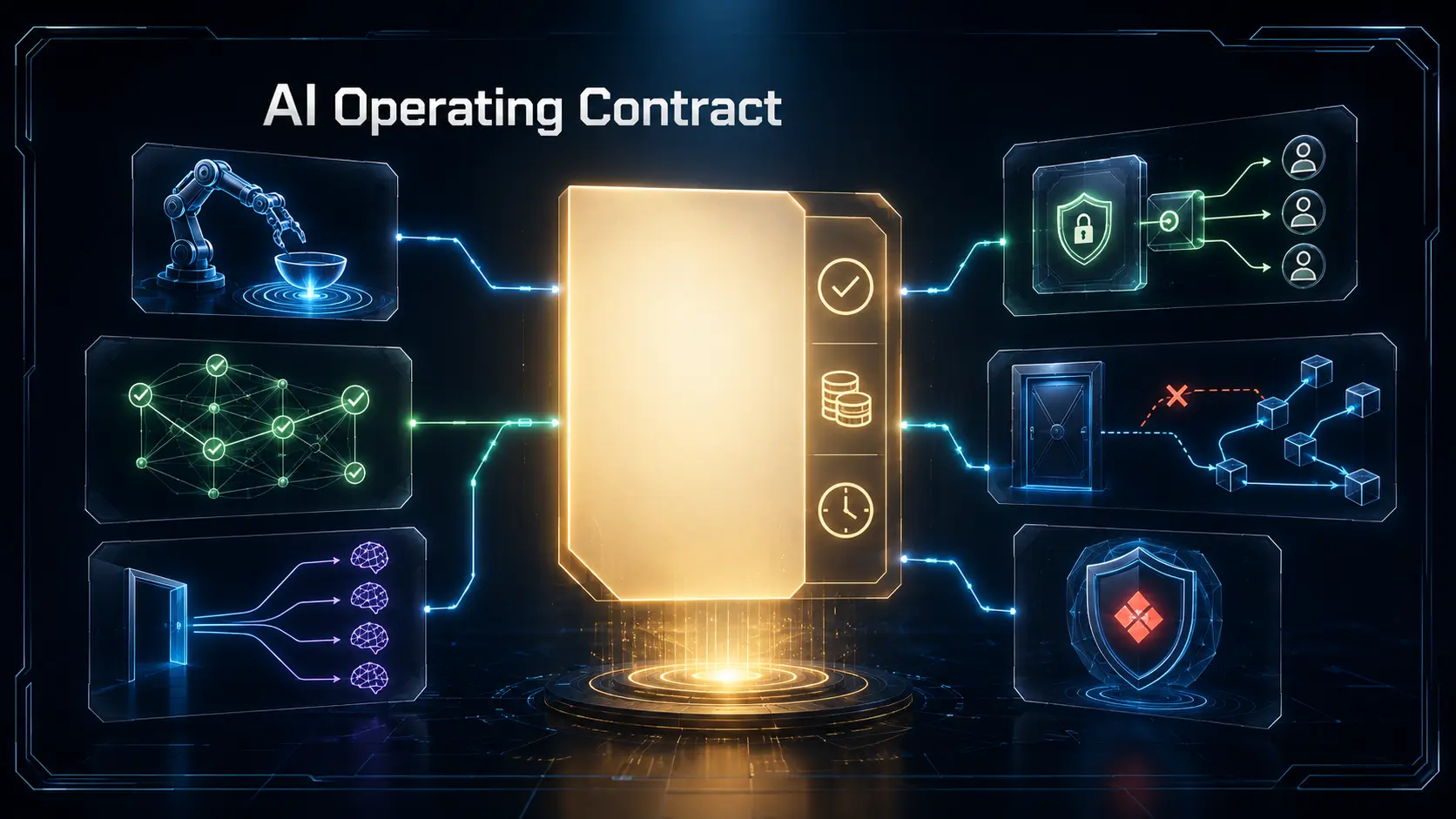
A robotic arm and resilient network routes representing measured AI performance and infrastructure continuity.
The week in view

The operating contract is getting real

Real-world pressure is rewriting the AI operating contract. Robot-arm evaluations are now measuring task completion, cost and wall-clock time. That is a more useful signal than benchmark claims alone, because it tells us whether a system can actually finish a job in the world.

Altior — our view this week

We should expect that standard to travel. The same issue applies to the infrastructure underneath: privacy services are facing legal pressure, and the outcomes this cycle are pointedly different. One operator has shut down every service. Nitter and XCancel have resumed after legal advice. Neither outcome is theoretical when a workflow depends on a source remaining reachable.

This issue makes the practical case. Measure performance where the work happens. Build redundant paths before they are needed. Have an explicit takedown plan rather than discovering one under pressure. That is the operating contract we want: measured performance and resilience, not benchmark claims alone.

OpenAI / ChatGPT / Codex

OpenAI / ChatGPT / Codex

OpenAI publishes “An Alien Mind”

OpenAI’s essay makes a sweeping claim about the direction of machine intelligence. The supplied monitoring found the reception hostile, while the first-party page was JavaScript-gated. That matters operationally because a capability position is not the same thing as a usable, inspectable account of what a system can do. If a claim is meant to shape how teams plan, govern or deploy, the supporting work needs to be accessible enough to interrogate. A framing document can set an ambition. It cannot replace concrete evidence from tasks, failures and operating conditions.

Our takeWe will judge capability claims by the work they survive, not by the size of the language around them.

Source

OpenAI publishes “Research acceleration: The view inside OpenAI”

OpenAI’s inside-the-lab account says an automated AI researcher could also be an automated safety or alignment researcher. The proposition is consequential because it puts research acceleration and safety work on the same automation path. That may increase the pace at which a lab can test ideas, but it does not make the supervisory problem disappear. In an operator setting, the relevant questions are what the system is allowed to investigate, how its output is checked, and whether a human can understand the basis for a safety-relevant conclusion. Faster research changes the tempo of governance as well as the tempo of discovery.

Our takeAutomating safety work does not excuse a weaker safety process. We want the evidence trail and review path to accelerate with the researcher.

Source

GPT-6 Astra’s real-robot comparison breaks out

Robocurve reported a real-robot bowl-placement comparison on two YAM arms: 19 successes from 20 for GPT-6 Astra, against 8 from 20 and 1 from 20 for the two comparison runs. It also reported approximately $0.94 per run versus $2.12, and 2.5-minute trials versus 6.8 minutes. These are reported results from one evaluation, not a general robotics verdict. But the frame is exactly the one operators need: task completion, cost and wall-clock time in the environment where the work happens. A fluent model answer is not enough when the system must make a physical task complete.

Our takeThis is the kind of evaluation we want more of: real task, comparable conditions, visible cost and time. Replication is the next test.

Source
Anthropic / Claude

Anthropic / Claude

Anthropic’s Fermat Lean repository keeps growing

Anthropic’s repository around a Lean formalisation of Fermat’s Last Theorem reached 854 GitHub stars. The number is a signal of attention, not proof of the work itself. The more useful point is the shape of the artefact: formal verification leaves a deliverable that can be checked against a formal system rather than accepted because it reads persuasively. That is a useful template for agent work with consequential outputs. Wherever a system makes a claim that matters, the handoff should make the reasoning, the evidence and the testable result available to inspection. Verification has to be part of the work product, not an optional presentation layer.

Our takeMachine-checked deliverables are a better direction than impressive demos. We want more agent workflows that make correctness inspectable.

Source
OpenClaw

OpenClaw

OpenClaw requires explicit AI-provider choice at onboarding

OpenClaw’s onboarding change makes a fresh user choose an AI provider rather than silently inheriting a default. It looks small, but it puts an important operational decision in the open. Provider choice affects capability, cost, data handling and the limits of the system a person is about to use. A default can be convenient, yet it can also hide a decision that should belong to the operator. Explicit selection makes the responsibility legible at the point it is created. It also provides a clean moment to explain the implications of the choice before work, credentials and habits accumulate around it.

Our takeWe prefer explicit choices where the provider materially shapes how an agent operates. Convenience should not conceal accountability.

Source

OpenClaw adds public read-only session sharing

OpenClaw has added generated public, read-only views for selected session content. The function creates a new outbound surface: material that was previously inside an operating environment can be deliberately made available outside it. Read-only is useful, but it does not reduce the importance of selection, review and revocation. The practical question is not merely whether someone can edit a shared session; it is whether the content is safe and appropriate to leave the estate, who can create a view, and how the exposure is tracked or withdrawn. Public sharing turns session handling into an information-boundary concern.

Our takeSharing should be explicit, reviewed and reversible. Public read-only does not mean risk-free.

Source
Other

Other

The deskilling discourse moves into mainstream engineer culture

Bryan Cantrill’s “your intellectual fly is open” resurfaced alongside new essays and the growing Large-Language Models as a Cognitive Virus preprint. The debate has moved into mainstream engineering culture because the concern is practical: when an assistant does more of the thinking, people can lose the context required to challenge or take over its work. That is not an argument for refusing automation. It is an argument for preserving an operator’s ability to inspect decisions, recover from failure and learn from the work being delegated. Systems that only output answers can make dependence easy to miss.

Our takeWe want automation that leaves people more capable of intervention, not less able to understand their own systems.

Source

Large-Language Models as a Cognitive Virus keeps climbing

The Large-Language Models as a Cognitive Virus preprint rose from 186 to roughly 380 Hacker News points. Its framing treats adoption and dependence through viral dynamics, which is deliberately provocative. Attention does not validate a model of harm, and a point total is not research evidence. But the question it puts in view is useful: what happens to individual and organisational competence when recurring cognitive work is consistently outsourced? In a serious operating model, humans need to retain the ability to examine outputs, contest decisions and step in when the automated path fails. That capacity has to be designed for, not assumed.

Our takeDependency is a design risk. We should build systems that preserve human supervision and recovery capability.

Source

Autistici/Inventati shuts down all services

Autistici/Inventati says it is shutting down all services after citing possible legal and financial consequences connected to a “global terrorist organization” designation. This is a stark operational outcome: a privacy and anonymity service can be forced into a full stop when legal pressure changes the risk profile around it. The issue is not limited to one collective. Any system that carries user data, supports sensitive communication or depends on a contested legal boundary needs to know what it will do if that boundary moves. Resilience is not only redundant infrastructure. It includes a clear decision path for when continuing to operate is no longer viable.

Our takeEvery privacy service needs an explicit takedown plan. Waiting for pressure to arrive is not a plan.

Source

Nitter and XCancel resume after legal advice

Nitter and XCancel resumed operation after legal advice, reversing their earlier course. Alongside Autistici/Inventati’s shutdown, the change gives the same news cycle two opposite privacy-infrastructure outcomes. That contrast is the operating lesson. Legal pressure does not produce a single technical answer; it changes the decisions a service can safely make, and those decisions depend on its specific exposure, advice and ability to continue. For teams relying on an external source or privacy route, availability cannot be treated as a permanent condition. Alternate paths, clear status signals and explicit exit decisions belong in the design before a disruption makes them urgent.

Our takeRedundancy needs to include the source itself. We want at least two independent paths for information we cannot afford to lose.

Chromium CVE-2026-85046 patch mandate continues

The Chromium CVE-2026-85046 story, described in the supplied material as an actively exploited V8 sandbox remote-code-execution issue, reached 794 points. Chromium 152.0.7977.82 or later remains the stated fix. Attention is not the operational control; version verification and patching are. Browser-based AI systems often sit close to logged-in sessions, credentials and external tools, which makes the browser runtime part of the agent security boundary. A response should establish what version is actually deployed, how the update reaches it and whether browser permissions are constrained. A vulnerability notice is a prompt to check the real estate, not an excuse for unsupported claims about exposure.

Our takeAgent capability does not outrun browser hygiene. Verify the deployed version and patch route before trusting a browser-operating system.

Source

OKF Agent Memory’s standards claim is verified

OKF Agent Memory’s standards claim has a firmer public basis: GoogleCloudPlatform’s knowledge catalog contains the Open Knowledge Format v0.2 specification. The okf-agent-memory project also rose from 86 to 366 stars in about 30 hours. Star growth is attention, not a maturity assessment. The standards connection is the more important signal because agent memory becomes harder to manage once it must move between tools, people and long-running workflows. A format can make information more portable and inspectable, but it does not automatically prove secure retention, correct retrieval or a sound access model. Those questions remain implementation work.

Our takeA standards claim is useful when it is verifiable. The next test is whether the implementation holds up in real operating conditions.

Source

WeChat Intelligence Hub crosses 1,000 stars

WeChat Intelligence Hub rose from 453 to 1,189 GitHub stars. The project presents a local-first, read-only route for communications intelligence. Its appeal is clear: useful knowledge work often begins with making existing conversations searchable without handing a new system the ability to change them. Read-only ingestion can provide a sensible boundary, especially where provenance and data handling matter. But a local-first label is not a complete operating answer. Teams still need to know what is indexed, who can query it, how sensitive material is retained and what audit record exists around access. The boundary has to be visible in practice.

Our takeRead-only and local-first are strong starting points. We still want explicit provenance, retention and access controls.

Source

Codenotch compounds as a budget-observability tool

Codenotch grew from 271 to 714 GitHub stars and remains actively developed. The multi-harness tool makes usage limits visible across coding environments, turning an easily missed constraint into an operating signal. This matters because a team’s available capacity can change how work is routed before anyone writes a line of code. A budget limit discovered halfway through a task is a delivery problem; one made visible at the start can inform a deliberate choice. Observability does not create a policy on its own, but it lets the people running the system see the condition they are managing. That is control-plane work, not cosmetic telemetry.

Our takeBudget visibility belongs in the control plane. We want constraints visible before they quietly shape delivery.

Source

Open-source short-video automation gains traction

The open-source YouTube-to-shorts pipeline rose from 260 to 932 GitHub stars. It is another signal that short-form video automation is becoming more accessible: ingestion, selection and transformation are increasingly available as public building blocks. That lowers the cost of experimentation, but it does not supply editorial judgement, rights clearance or quality control. The operational difference moves away from whether a team can run a pipeline and toward whether it has controls around source material, brand review and what is actually worth publishing. Commodity tooling can increase output quickly; it can also make poor decisions travel faster when governance is missing.

Our takeThe tooling is becoming commodity infrastructure. The value is in the governed workflow around it.

Source
ALTIOR AI ADVANTAGE
Keep reading

Build the system. Keep the evidence.

Follow the Altior blog for the operating signal, and explore the prompt library for practical starting points.

The Altior blogThe prompt library