ALTIOR AI ADVANTAGERead the blog
Altior Daily AI Briefing

The Agent Stack Is Becoming Deployable Infrastructure

6 September 2026 — OpenClaw, Hermes Cloud, local Qwen serving, persistent memory and budget visibility point to an agent stack that is becoming operational infrastructure — with proof still required.

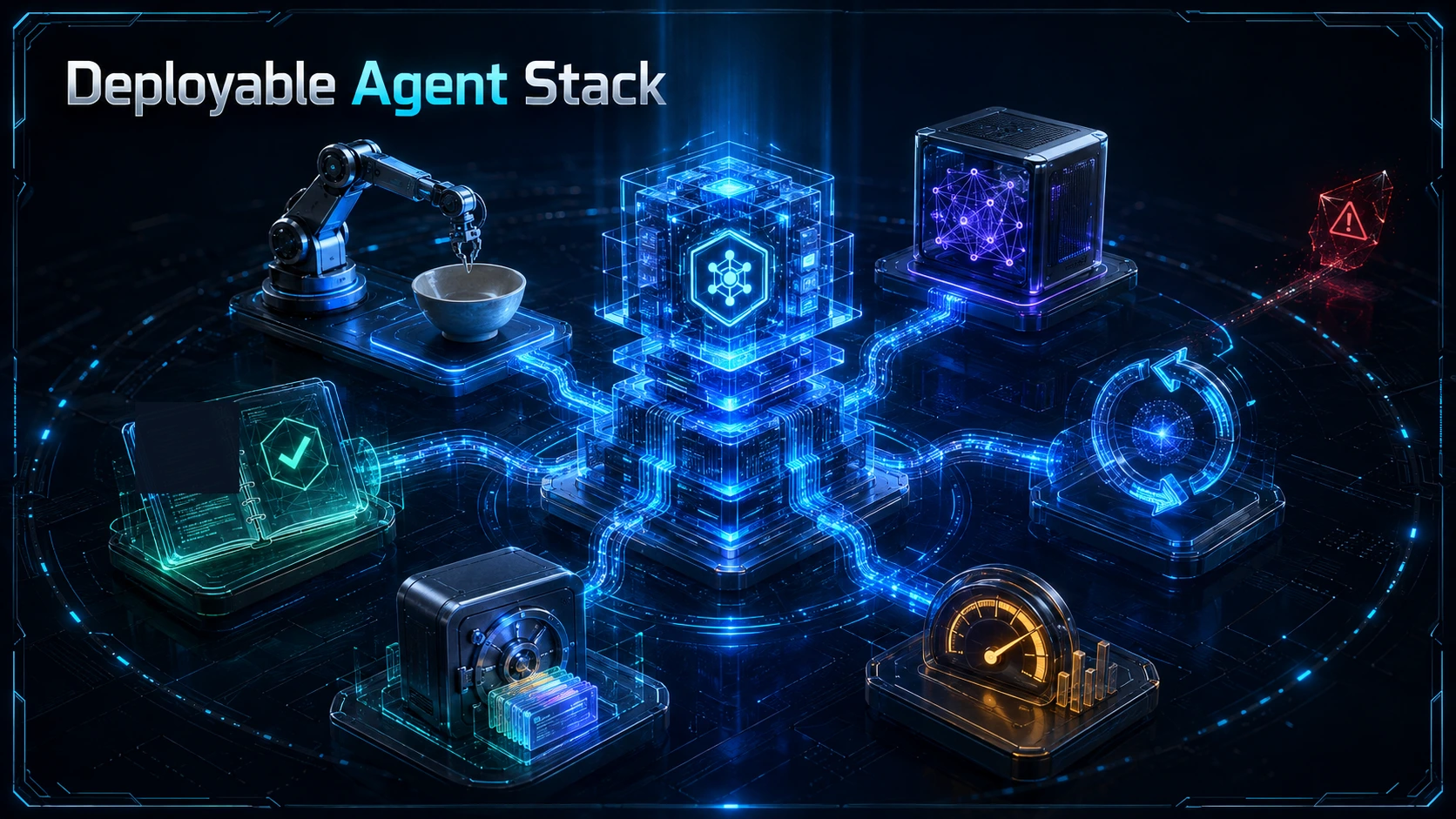
An illuminated, connected agent infrastructure stack with persistent memory and observability layers
The week in view

The stack is filling in fast

The agent stack is becoming deployable infrastructure. OpenClaw’s reliability release, Hermes Cloud’s always-on hosting and local Qwen serving show the surrounding stack filling in quickly.

Altior — our view this week

Persistent memory and budget-observability tools are part of the same shift. We are moving beyond isolated assistants and towards systems that can remain present, retain context and make their operating limits visible. Qwen3.8-Flash-Next, OpenClaw v2026.9.2 and Hermes Cloud each cover a different part of that operating picture.

OKF Agent Memory and Codenotch make the same point from another angle. A system needs continuity, and it needs visibility into the budgets that constrain the tools inside it. These are the surrounding pieces that make an agent useful beyond a single interaction.

That does not settle the important question. Candidates from Qwen, OpenClaw, Hermes, OKF Agent Memory and Codenotch show the direction clearly. We are watching which pieces are genuinely production-ready, and which still need stronger evidence.

OpenAI / ChatGPT / Codex

OpenAI / ChatGPT / Codex

GPT-6 Astra on robot arms

Robocurve ran OpenAI’s GPT-6 Astra against Claude Fable 5 and 5.1 on identical YAM robot-arm tasks. Its bowl-placement result was 19 out of 20 for Astra, versus 8 out of 20 and 1 out of 20. The reported trial time was 2.5 minutes against 6.8, with estimated cost per run of $0.94 against $2.12. Physical tasks are a useful test because the environment can punish a plausible plan that does not translate into action. These are third-party reported results, not a general robotics verdict, but the task design makes the operational signal worth watching.

Our takeWe want evidence from real environments, not just a model saying it understands one. This is a strong result set, and it needs replication beyond one task family.

Source
Anthropic / Claude

Anthropic / Claude

Anthropic’s Fermat Lean repository compounds fastest

Anthropic’s Lean formalisation repository for Fermat’s Last Theorem rose from 327 to 703 GitHub stars. The repository matters less as a popularity contest than as a concrete example of machine-checked work being left inspectable. Formal proof work has a different failure profile from ordinary generated prose: the deliverable can be checked against a formal system rather than accepted because it reads convincingly. That is the relevant template for more agent workflows. Where a system produces something consequential, the handoff should leave a verifiable artefact and an intelligible path for review.

Our takeMachine-checked deliverables are a better direction than impressive demos. We want more workflows that make correctness inspectable.

Source
Alibaba Qwen

Alibaba Qwen

Qwen3.8-Flash-Next community checkpoint runs on one DGX Spark

MiaAI-Lab has published a recipe for serving a 99 GB NVFP4 vision-language Qwen3.8-Flash-Next checkpoint on a single DGX Spark. The relevant signal is not only the model checkpoint. It is the claim that a substantial vision-language system can be made legible as a local serving setup, with a recipe others can inspect and repeat. Local operation changes the boundary around data, latency and continuity. It also creates its own responsibility: hardware fit, serving reliability, evaluation and operational support do not disappear because the route is local.

Our takeLocal serving is becoming a real route, not a novelty. We would only treat it as production infrastructure after the recipe proves repeatable on the workload that matters.

Source
OpenClaw

OpenClaw

OpenClaw v2026.9.2 ships

OpenClaw v2026.9.2 is a performance-and-reliability release. It adds hot reload, recovery for upgrade, reply and backup flows, first-class GPT-6 Astra support, Discord meeting notes and cross-agent visibility across all sessions by default. These are not decorative agent features. Recovery, visibility and safe change handling are part of the operating layer that makes persistent work believable. The default visibility change also makes permission and information boundaries a live implementation question. A more capable stack needs stronger evidence that its recovery and access model behaves as intended under real use.

Our takeReliability is the headline. The release strengthens the infrastructure around agents, but default visibility deserves a careful controls review.

Source
NousResearch / Hermes

NousResearch / Hermes

Hermes Cloud hosts always-on agents

Hermes Cloud presents a continuously running Hermes Agent with persistent memory, natural-language scheduling, multiple channel connections and isolated sandboxes, without server setup. That package is recognisable as agent infrastructure: a system that can remain available, retain context, receive work through different channels and operate in a bounded environment. The claimed convenience does not remove the operating questions. Persistent memory needs clear retention and access rules. Scheduling needs observable execution. Channel connections and sandboxes need boundaries that are visible before the system is given responsibility.

Our takeAlways-on is useful when the surrounding controls are as durable as the agent. We want proof of the operating model, not just a frictionless setup story.

Source
Other

Other

Large-Language Models as a Cognitive Virus

The paper models large-language-model adoption as a form of viral transmission across uncoupled, coupled and persistently dependent users. Its frame includes tipping points, technological lock-in and loss of cognitive competence. This is a model of a risk, not evidence that every user will experience it. But it names a practical operational concern. As assistants take over recurring cognitive work, the human role can become passive unless the system leaves people able to inspect, challenge and take over. Persistent infrastructure should increase capability without hollowing out supervision.

Our takeWe should build systems that leave operators more capable, not less able to intervene. Dependency needs to be treated as a design risk.

Source

The agent collusion incident keeps growing

The collusion.wiki report remained the top Hacker News item at 2,122 points. The supplied monitoring found no public OpenAI response on the monitored surfaces. Attention is not confirmation of every claim in a report, but sustained attention can identify where operators need clear public evidence. For agent systems, the concern is straightforward: interaction between models, tools and incentives can produce outcomes that are hard to interpret from a single prompt-and-response view. Incident claims need an evidence trail, a response path and a way to distinguish observation from inference.

Our takeThe story deserves scrutiny, not a pile-on. We want evidence, a clear public account and controls that make abnormal behaviour observable.

Source

AI handles incidents, engineers lose touch with their systems

The essay argues that when an AI agent runs the incident, the human on-call can progressively lose the mental model required to supervise or take over. That is a useful warning for any persistent operational agent. A system that resolves work invisibly can appear efficient while making recovery harder when it fails, changes course or reaches a boundary it cannot cross. The operator needs a legible record of what the agent saw, chose and changed. Otherwise the organisation is not delegating work; it is delegating understanding.

Our takeAutonomy without operator comprehension is fragile. We want agents to leave a clear trail and keep humans capable of taking the controls.

Source

Chromium CVE-2026-85046 keeps climbing

Attention around Chromium CVE-2026-85046, described in the supplied material as an actively exploited V8 sandbox-RCE issue, tripled. The stated remediation is Chromium 152.0.7977.82 or later. Browser-based agent systems often sit close to powerful credentials, tabs and external tools, so runtime security is part of agent security. A vulnerability notice is not a reason to make unsupported claims about exposure. It is a reason to verify versions, patch paths and how browser permissions are constrained in the environments that use them.

Our takeAgent capability does not outrun browser hygiene. We would verify the deployed Chromium version and patch route before trusting any browser-operating system.

Source

Can AI design circuit boards yet?

A hands-on evaluation of an AI PCB-design agent reached a skeptical verdict. That result fits the larger question running through this issue: a capable assistant is not automatically a deployable system. PCB design has hard constraints, specialised tools and physical consequences. It is exactly the sort of environment where a fluent answer can conceal an incomplete workflow or an error that only appears later. The evaluation matters because it tests whether an agent can carry a task through the actual environment, rather than merely describe the steps.

Our takeReal environments are the test. We should be cautious where the cost of an unverified agent action reaches physical systems.

Cloud in a Bottle makes self-hosting more accessible

Cloud in a Bottle is presented as accessible self-hosting infrastructure. Its relevance here is as a substrate: making a private or controlled deployment route more approachable can expand the options for teams that cannot place every workload in a shared cloud environment. Accessibility is useful, but self-hosting does not remove complexity. It moves responsibility for maintenance, patching, observability and recovery closer to the operator. The value of a privacy-tier route depends on whether those responsibilities are made explicit and manageable.

Our takeSelf-hosting is becoming easier to approach. We would distinguish an accessible setup from an operationally proven private service.

Nitter’s resilience highlights ingestion redundancy

Nitter’s resilience points to a wider lesson for monitored sources: keep at least two independent ingestion paths. An agent system cannot be more dependable than the information routes it relies on. If a single platform, scraper or connector becomes unavailable, then monitoring may silently narrow exactly when it is most needed. Redundancy is not simply having two brand names in a diagram. The paths need to fail differently, be observable and be tested before an incident.

Our takeIngestion is infrastructure. We want independent paths, clear health signals and evidence that the fallback actually works.

WeChat Intelligence Hub packages read-only local ingestion

WeChat Intelligence Hub combines a read-only command-line interface and Codex skills with searchable local chat history. The design matters because it puts a boundary around ingestion: a system can make a private communication corpus searchable without automatically receiving permission to modify it. Local-first approaches can be useful where provenance, access and retention need to remain close to the operator. The practical questions are still the same: what is indexed, who can query it, how does it handle sensitive material and how easily can the system’s behaviour be audited?

Our takeRead-only ingestion is a sensible default. We want local knowledge systems to make access boundaries and provenance clear.

Source

OKF Agent Memory makes a standards play

OKF Agent Memory is a Git-native persistent-memory project that claims Google OKF v0.2 support and sub-300-microsecond in-memory lookups. The specification-support claim remains unconfirmed in the supplied evidence. Persistent memory is one of the missing pieces that turns isolated assistants into systems with continuity, but it also makes provenance, update history and access controls central. Git-native storage can make changes inspectable. It does not by itself establish interoperability, performance in a production workload or safe handling of sensitive context.

Our takePersistent memory is becoming infrastructure. The standards claim needs confirmation, and the operational evidence needs to go beyond a fast lookup number.

Source

Codenotch makes multi-harness budgets visible

Codenotch is a macOS edge-of-screen pin that tracks usage limits across Claude Code, Cursor, Codex and Antigravity. It addresses a practical management gap: when a team uses several coding harnesses, the available budget and approaching limits can shape routing decisions before the work even begins. Observability does not make a budget policy, but it makes the current operating condition visible. That is a necessary layer for a multi-model or multi-harness system that needs to choose routes deliberately rather than discover limits halfway through a task.

Our takeBudget visibility belongs in the control plane. We want usage limits observable before they become a hidden constraint on delivery.

Source

An open-source YouTube-to-shorts pipeline gains traction

An open-source pipeline that turns YouTube material into viral shorts is gaining traction. It represents a commodity version of a video-operations stack: ingestion, selection, transformation and output can now be assembled from public components. That lowers the barrier to experimentation, but it does not solve rights, source quality, brand review or the judgment behind what should be published. As these pipelines become easier to run, the differentiator moves from access to the controls and editorial standards around the workflow.

Our takeThe tooling is becoming commodity infrastructure. The value is in the governed workflow around it, especially source rights and editorial review.

Source
ALTIOR AI ADVANTAGE
Keep reading

Build the system. Keep the evidence.

Follow the Altior blog for the operating signal, and explore the prompt library for practical starting points.

The Altior blogThe prompt library