Codex support for the people keeping shared software moving
OpenAI says eligible open-source maintainers can apply for three distinct forms of Codex support. The important distinction is that an invitation to apply is not a promise of access.
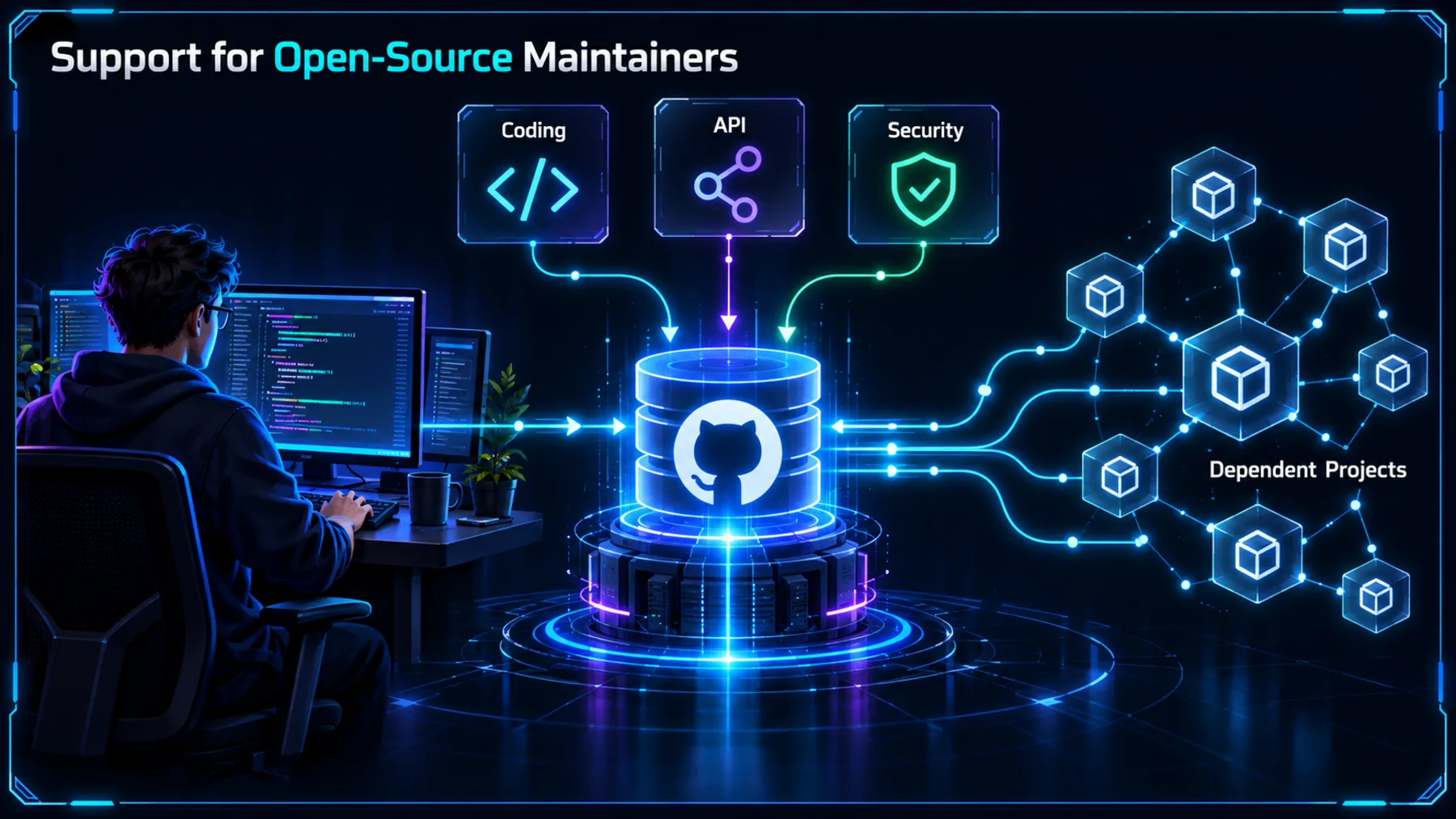
OpenAI’s Codex for Open Source programme puts that maintenance work at the centre. Its published offer names API credits, six months of ChatGPT Pro with Codex, and Codex Security—but the routes are not interchangeable, and access is not guaranteed.
The practical story starts with the maintainers doing critical work behind the scenes. Support may help with day-to-day coding and review, but the terms captured here do not establish a credit amount, acceptance rate, review timetable or regional availability.
Maintainers carry the work that rarely makes the release notes
Shared software depends on people who keep issues moving, changes reviewed and releases safe long after the original build is finished.
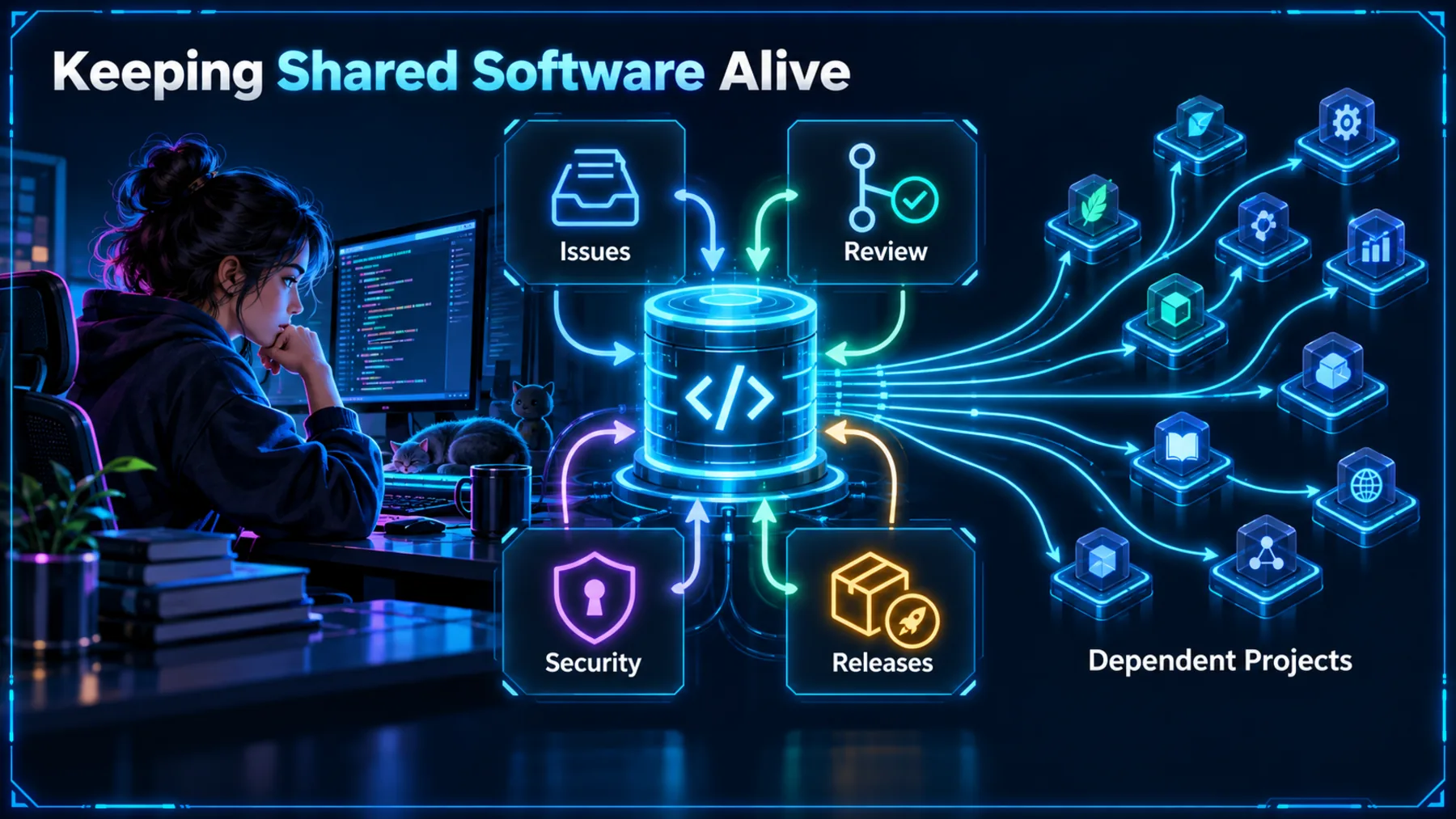
A maintained project is more than its next feature. Someone has to sort incoming issues, review contributions, prepare releases, keep automation dependable and respond when a repository needs closer attention.
OpenAI frames its offer around that continuing load. That is a useful focus, provided we do not turn a support programme into a claim that every maintainer receives the same help or achieves the same outcome.
This is a support offer with three different layers
OpenAI names a time-bounded Codex subscription, API credits and conditional security access. Each needs to be read on its own terms.
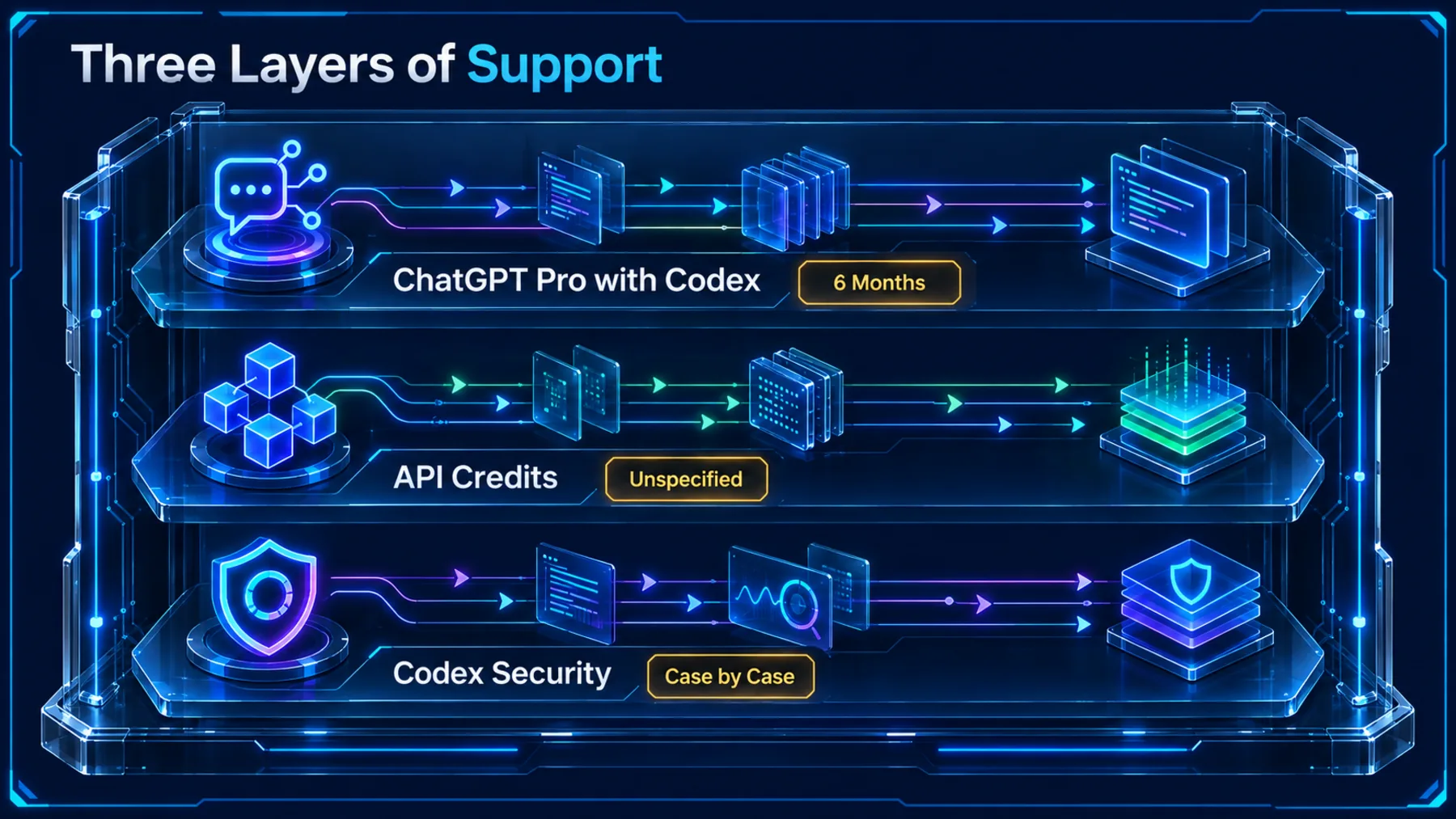
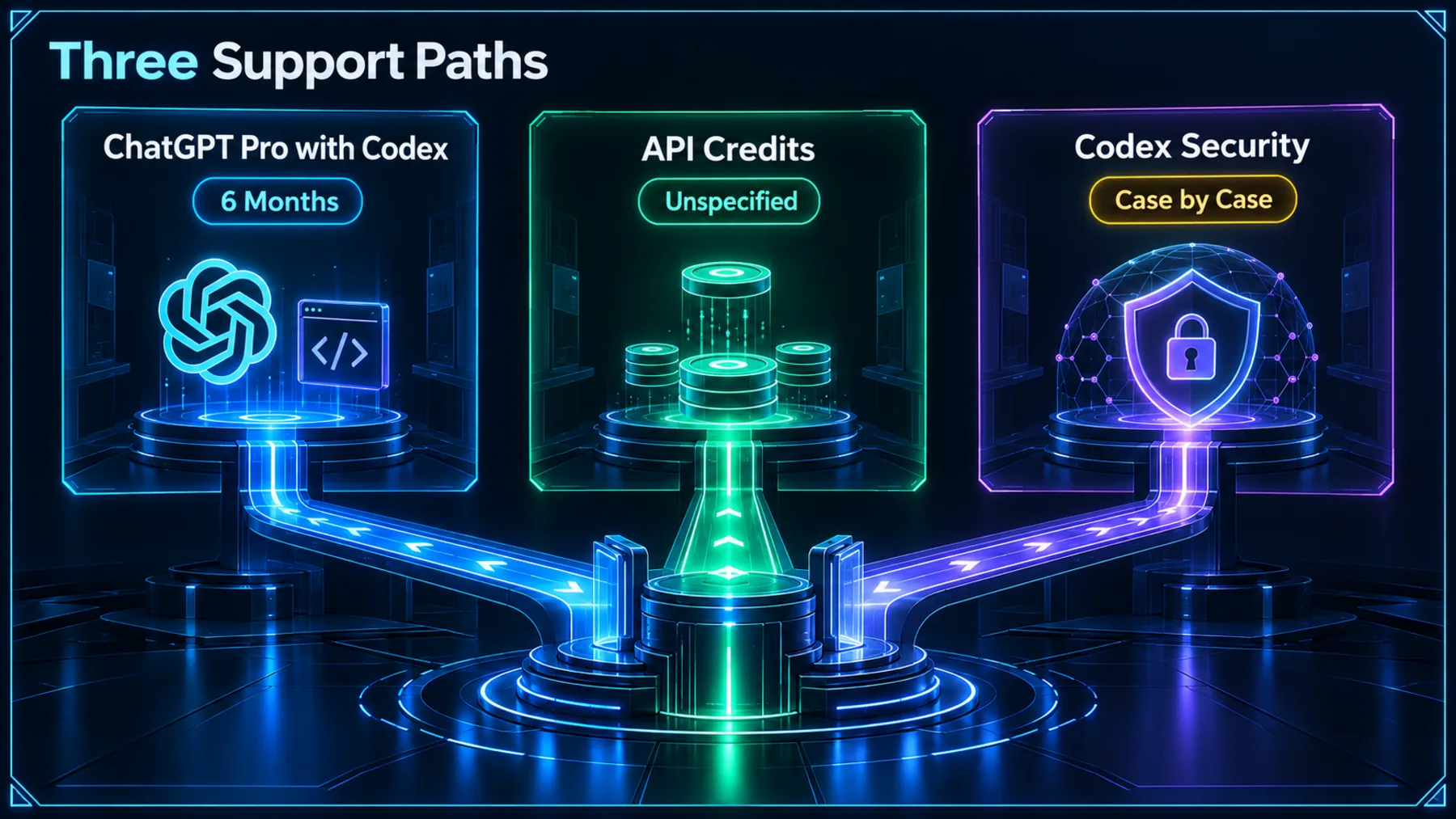
The stated duration belongs to one part of the offer: six months of ChatGPT Pro with Codex for day-to-day coding, triage, review and maintainer workflows. It should not be carried across to API credits or Codex Security.
API credits are named, but the captured source does not give their amount or duration. Codex Security is more conditional still: OpenAI says qualifying core maintainers with write access may receive access, reviewed case by case.
OpenAI says maintainers can apply
The central verb matters. The page presents an application route, not an automatic benefit.
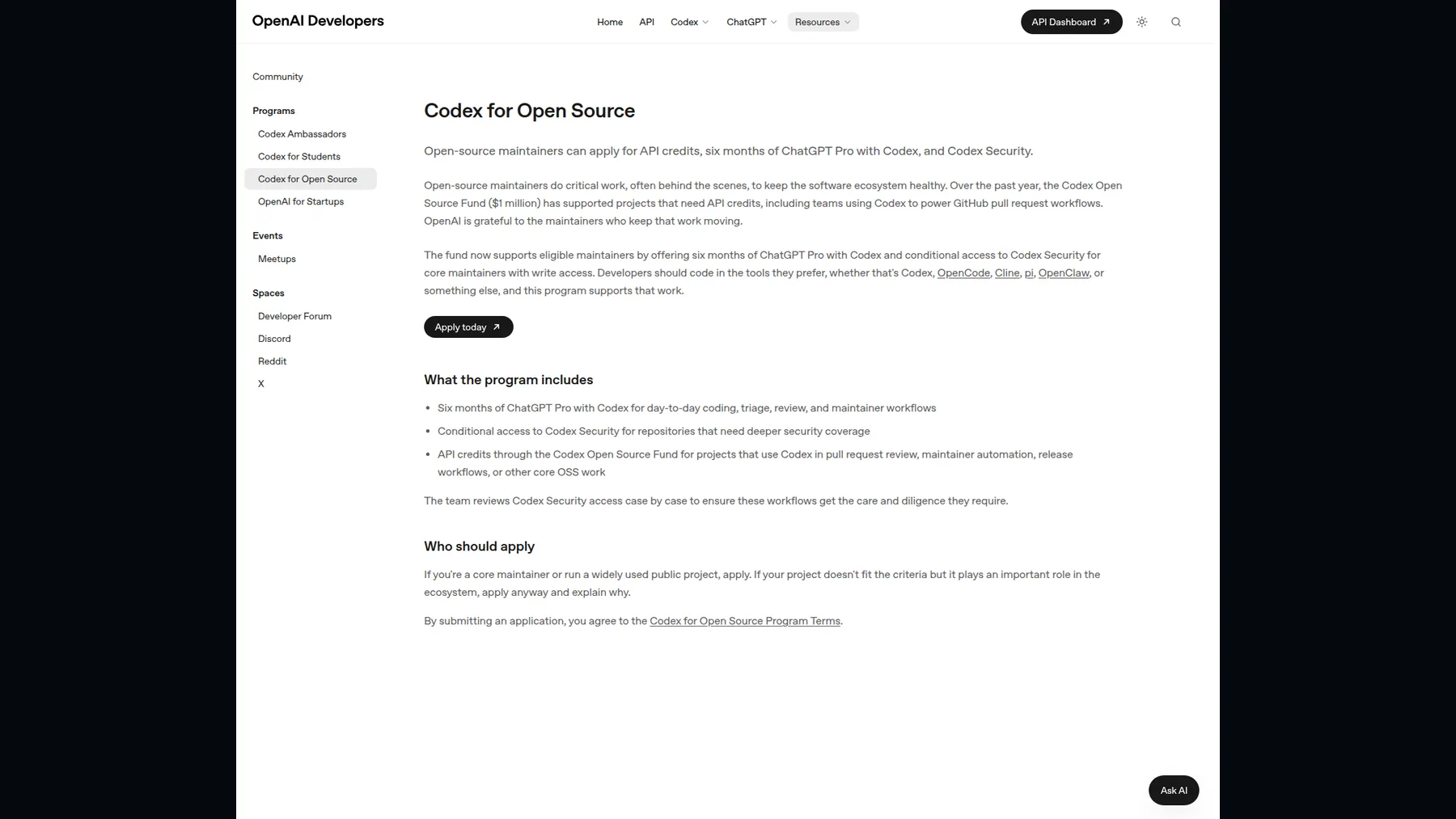
OpenAI’s page invites core maintainers and people running widely used public projects to apply. It also says that projects outside the stated criteria can still explain why they matter to the ecosystem.
That is broader than a narrow checklist, but it is not evidence of acceptance. The captured material does not include the application form or terms as approved source pages, so it cannot support claims about the full assessment process.
If your project doesn't fit the criteria but it plays an important role in the ecosystem, apply anyway and explain why.
OpenAI Developers, Codex for Open Source
Security support is conditional, not automatic
Codex Security is the most constrained part of the published offer: qualifying core maintainers with write access are reviewed case by case.
The caveat is not a footnote. It changes the practical meaning of the offer. Coding support, API capacity and deeper repository-security support are described as distinct paths, with different stated conditions.
We should also keep the unknowns visible. The captured page does not specify API-credit amounts, eligibility thresholds, review timing or geographical limits. It refers to a $1 million Codex Open Source Fund over the past year, not a new commitment or a disclosed remaining balance.
An application can lead to different support routes
The source supports a simple picture: maintainers apply, while the stated benefits and conditions remain distinct.
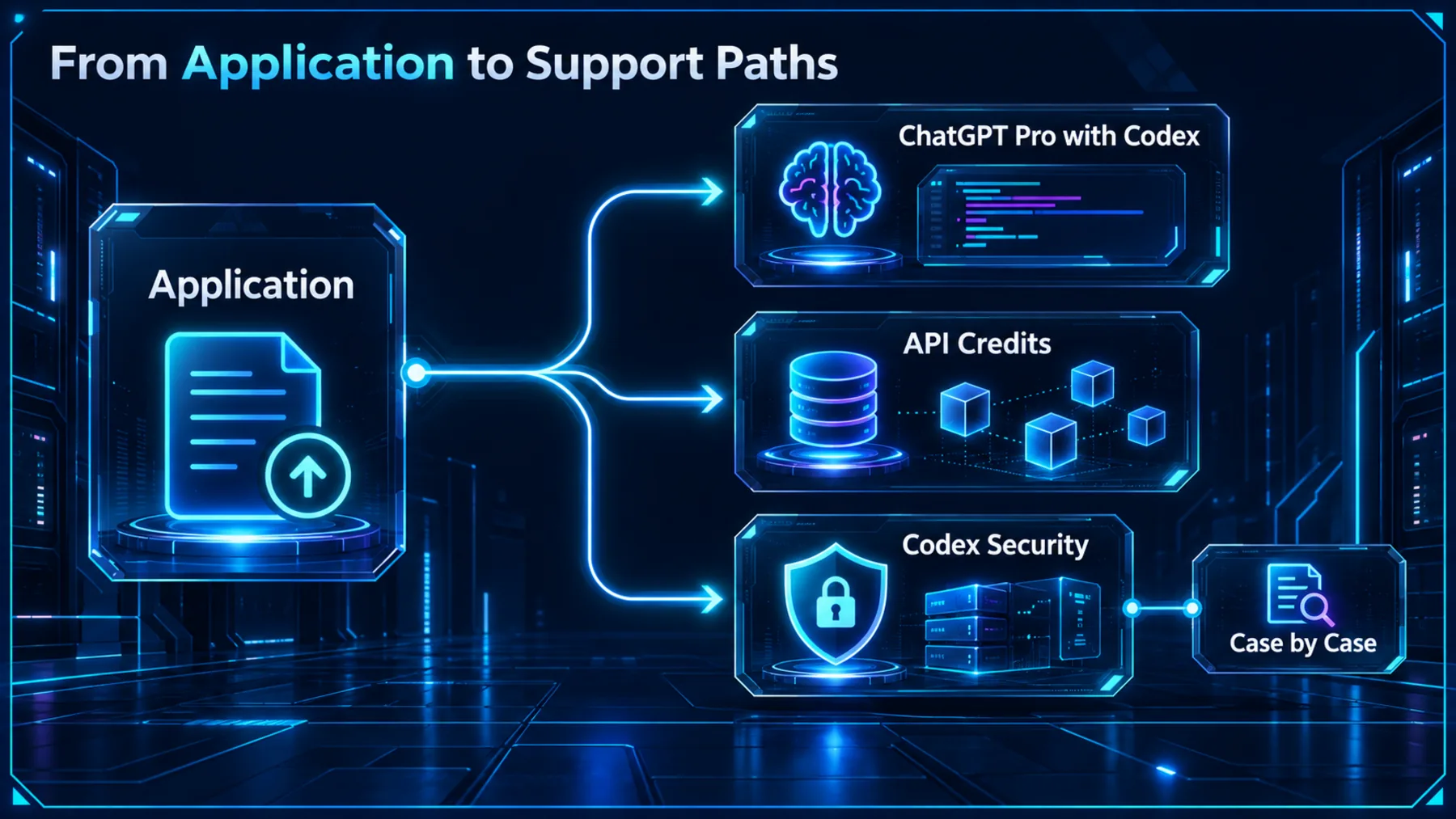
The strongest reading is deliberately modest. A maintainer can apply and explain the project’s role; OpenAI then describes several possible forms of support without publishing a scoring model, decision stages or response times.
That leaves room for a useful application without inventing a process around it. Describe the project, the maintenance work and the constraints clearly, then treat any outcome as conditional until it is confirmed.
The value is in the work around the code
OpenAI links Codex support to day-to-day coding, triage, review and maintainer workflows, while security access carries its own conditions.
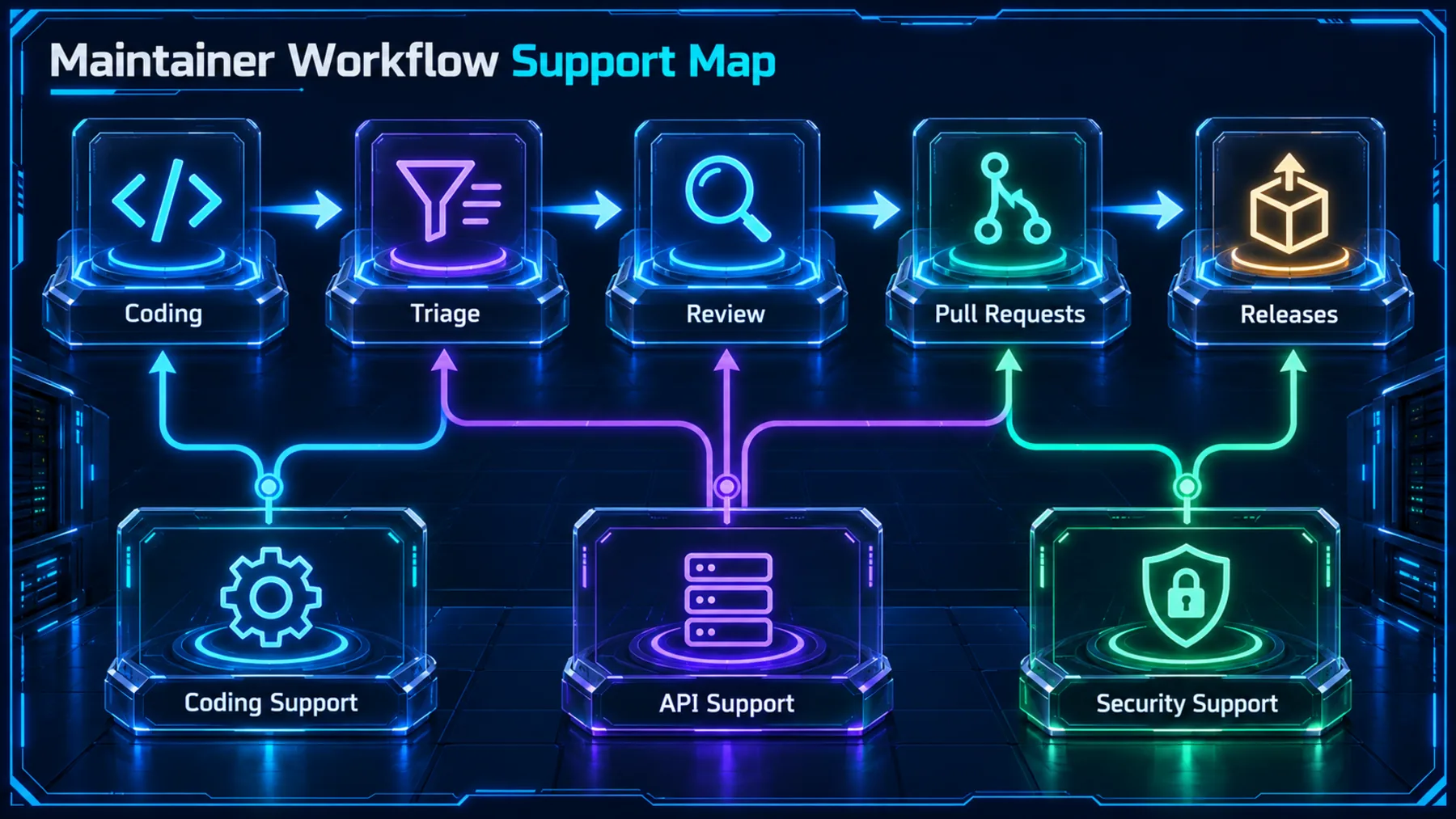
For a maintainer, the practical question is not whether a programme has an impressive headline. It is whether the available path matches the recurring work that slows the project down: coding tasks, issue triage, contribution review, automation or release preparation.
The security path deserves separate consideration. OpenAI ties it to qualifying core maintainers with write access and a case-by-case review, so it should be treated as a possible route rather than a baseline capability.
Describe the work
Set out the maintenance load: coding, triage, review, releases, automation or security needs.
Separate the paths
Do not treat ChatGPT Pro with Codex, API credits and Codex Security as one guaranteed bundle.
Name the unknowns
Credit amounts, timing, thresholds and regions are not specified in the captured source.
The real question is what access actually looks like
The offer may be meaningful for maintainers, but its value depends on the support path available to a specific project.
The useful distinction is between being invited to apply and being granted a particular form of support.
OpenAI Developers — Codex for Open Source
OpenAI has made a clear invitation to open-source maintainers, and the six-month ChatGPT Pro with Codex element is concrete. The rest of the picture requires more care: API-credit terms are unspecified, and Codex Security access is conditional and reviewed case by case.
That does not make the programme less relevant. It makes the application more important. A strong submission should explain the project’s role, the maintainer work under pressure and why the relevant support path would matter—without assuming what OpenAI will decide.
Maintainer support-value check
I maintain an open-source project. Help me assess whether applying to OpenAI’s Codex for Open Source programme is worth pursuing. Ask me for the project’s public use, my maintainer role and write access, the work creating the most pressure, and whether repository security support is relevant. Then draft a concise application outline that distinguishes what I can evidence from what I should explain. Do not assume acceptance, a credit amount, a review timeline, regional availability, or automatic Codex Security access.Ready to copy
Watch the detail behind the invitation
The programme’s headline is now clear. The next useful evidence would show how eligibility, credits, regions, review timing and actual access develop in practice.
Until then, keep the distinction intact: maintainers can apply; outcomes and several important terms remain undisclosed.
Try the promptOpen questions worth tracking
- API-credit amount The captured page names API credits but does not state a value or duration.
- Eligibility and review detail Thresholds, timing, acceptance rates and regional limits are not specified.
- Evidence of access Watch for confirmed programme detail that clarifies how the distinct support paths operate in practice.