Talk through the work
Claude says voice conversations can now reach connected tools such as email and calendar without ending the exchange.
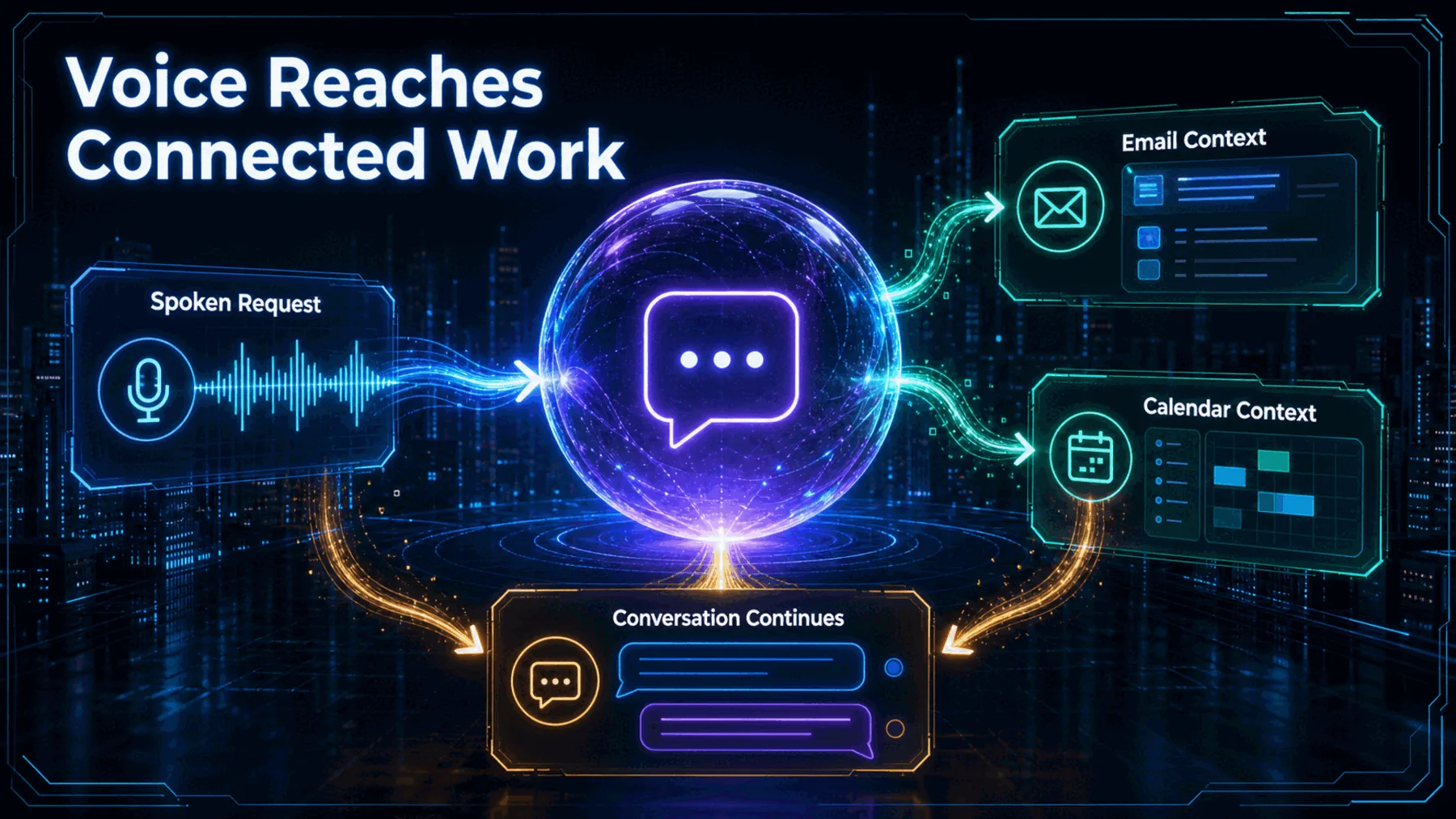
Imagine talking through the week ahead and needing context from an email or calendar event. Claude says voice mode can reach tools we have already connected while that conversation is still in progress.
That moves the feature beyond dictation and spoken chat. It suggests a continuous work surface, although the announcement does not prove which accounts have access or what actions any connected tool can perform.
Voice becomes a work surface
The practical shift is from discussing a task to drawing connected context into the same spoken exchange.
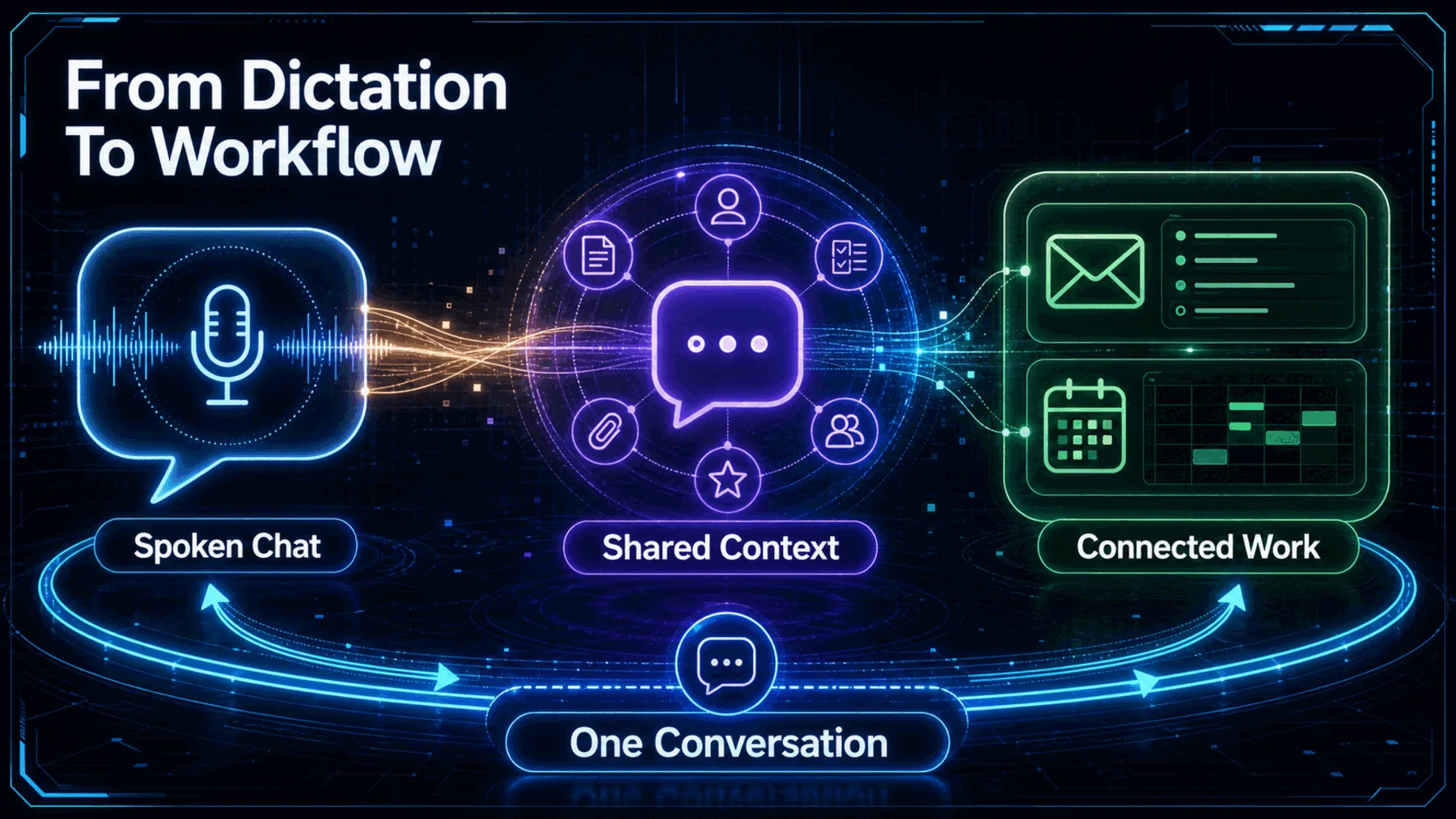
Voice interfaces often stop at transcription or a spoken answer. Claude’s announcement points to a different experience: we can keep talking while the conversation reaches information held in a tool we have chosen to connect.
The distinction matters. Access to context can reduce the interruption of switching between surfaces, but Claude has not published evidence here about speed, accuracy, productivity or completed actions.
What Claude actually announced
The update combines broader model use, connected-tool access, more languages and a public-beta rollout.
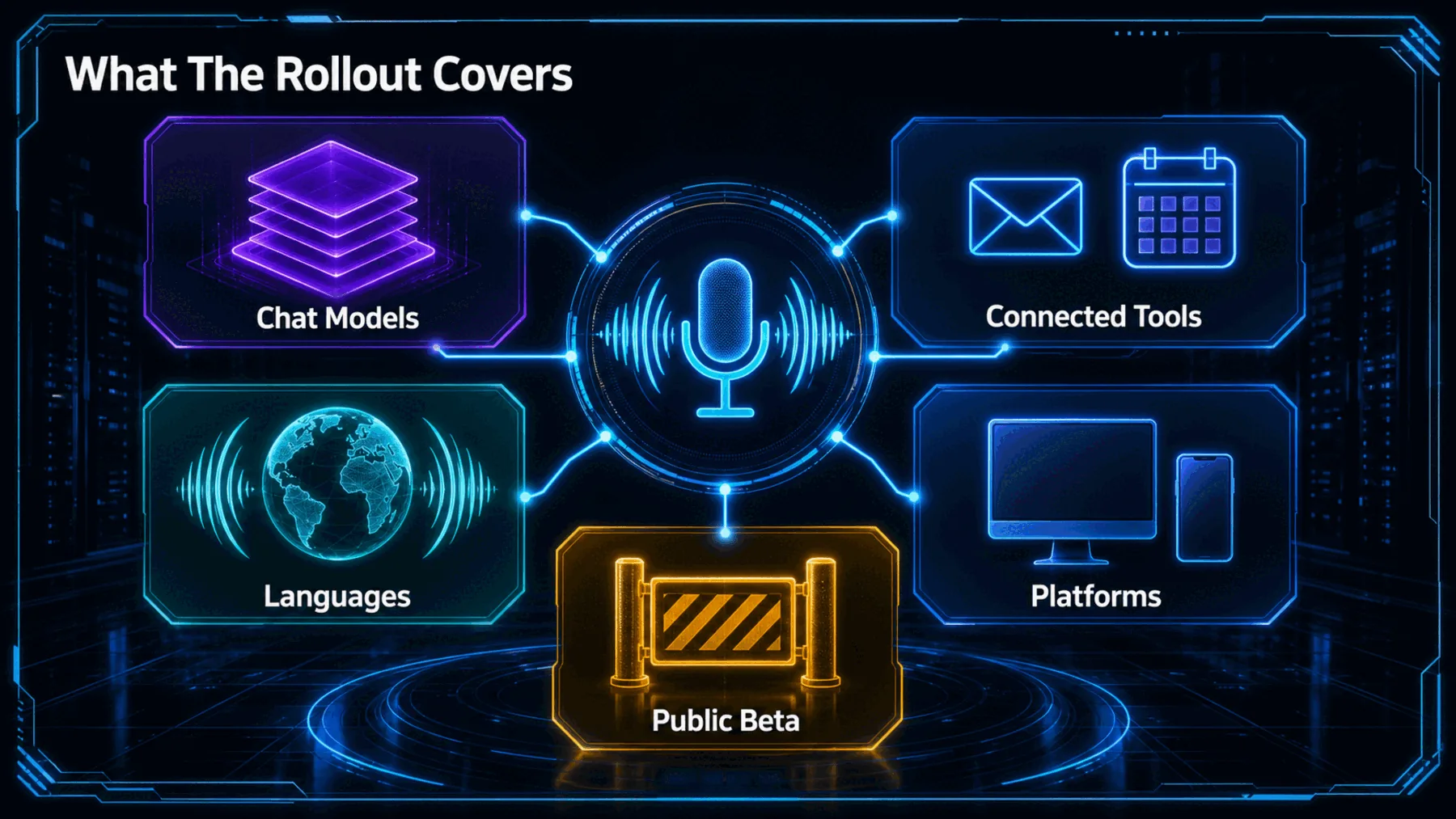
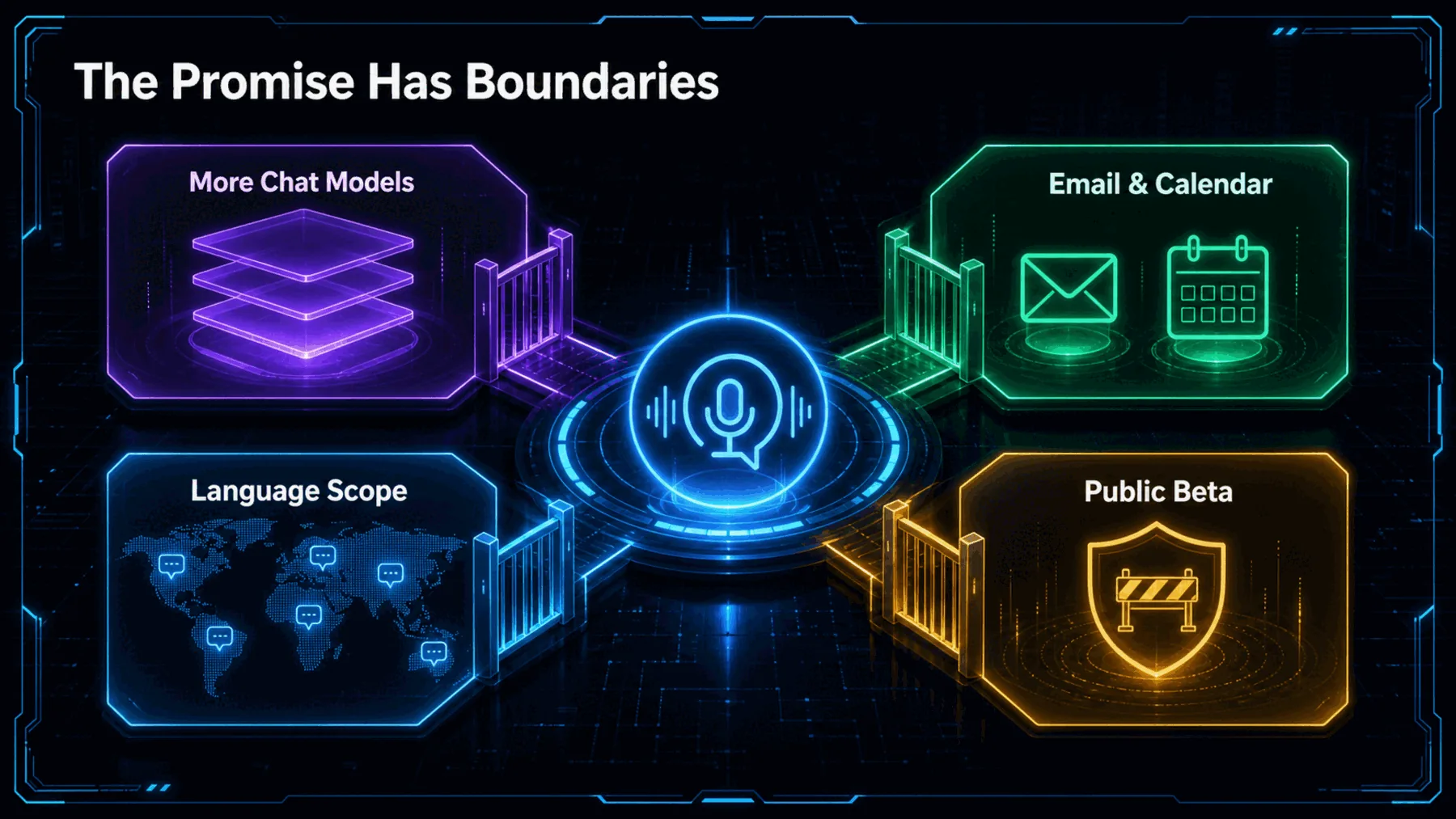
Claude says voice conversations now use more of the models available in chat, including Claude Opus and Sonnet. It also says voice mode supports more languages on every plan, naming Spanish, French, Hindi and Japanese.
Those statements need to remain separate. The every-plan wording applies to languages, not to Opus, Sonnet or connected tools. Claude described the update as rolling out in public beta on mobile, desktop and web on 23 July 2026; that is not evidence that rollout has finished everywhere.
Claude’s words set the boundary
The official announcement supports the model and connected-tool claims, while leaving account-level availability unproven.
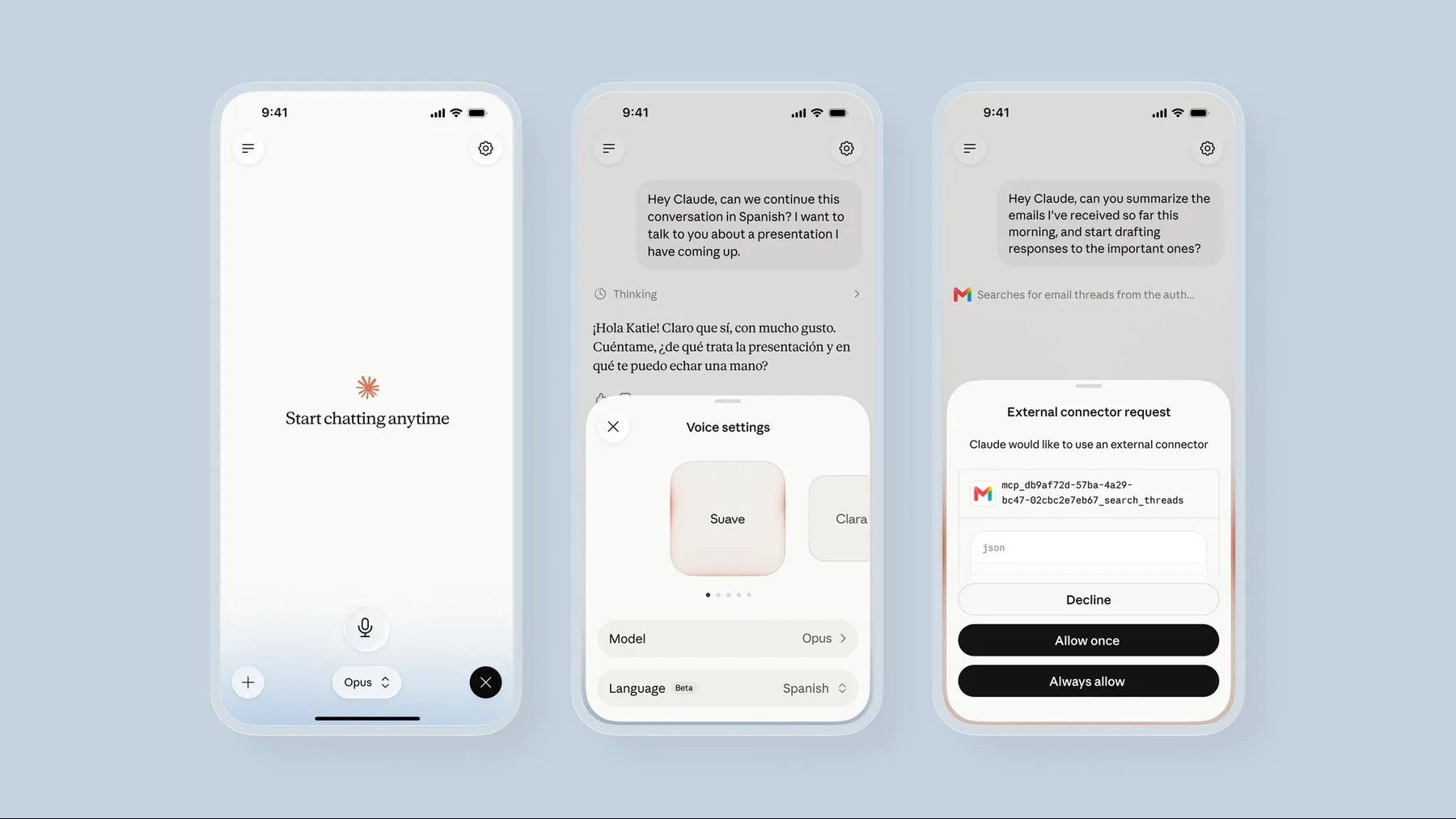
The source is Claude’s own X thread. That makes it direct evidence of what Claude announced, but not an independent test of how the feature behaves in practice.
Its wording is deliberately bounded: more of the models already available in chat, and tools we have already connected. It does not promise every model, every connector or universal account access.
“Voice conversations now use more of the models you have in chat, including Claude Opus and Sonnet. Claude can also reach the tools you've connected mid-conversation, like your email and calendar.”
Claude on X
What the post does not prove
An official announcement establishes the release claim, not universal access or independently tested behaviour.
The phrase “rolling out” matters. It describes a release in progress, so we cannot treat the post as proof that every account, plan, platform or region already has the same experience.
The thread also does not specify every supported connector, permission boundary, failure mode or data-handling policy. Nor does it show Claude sending an email, changing a calendar event or completing another external action.
Speak, retrieve, keep talking
The bounded experience starts with our request, reaches permitted context and returns to the conversation.
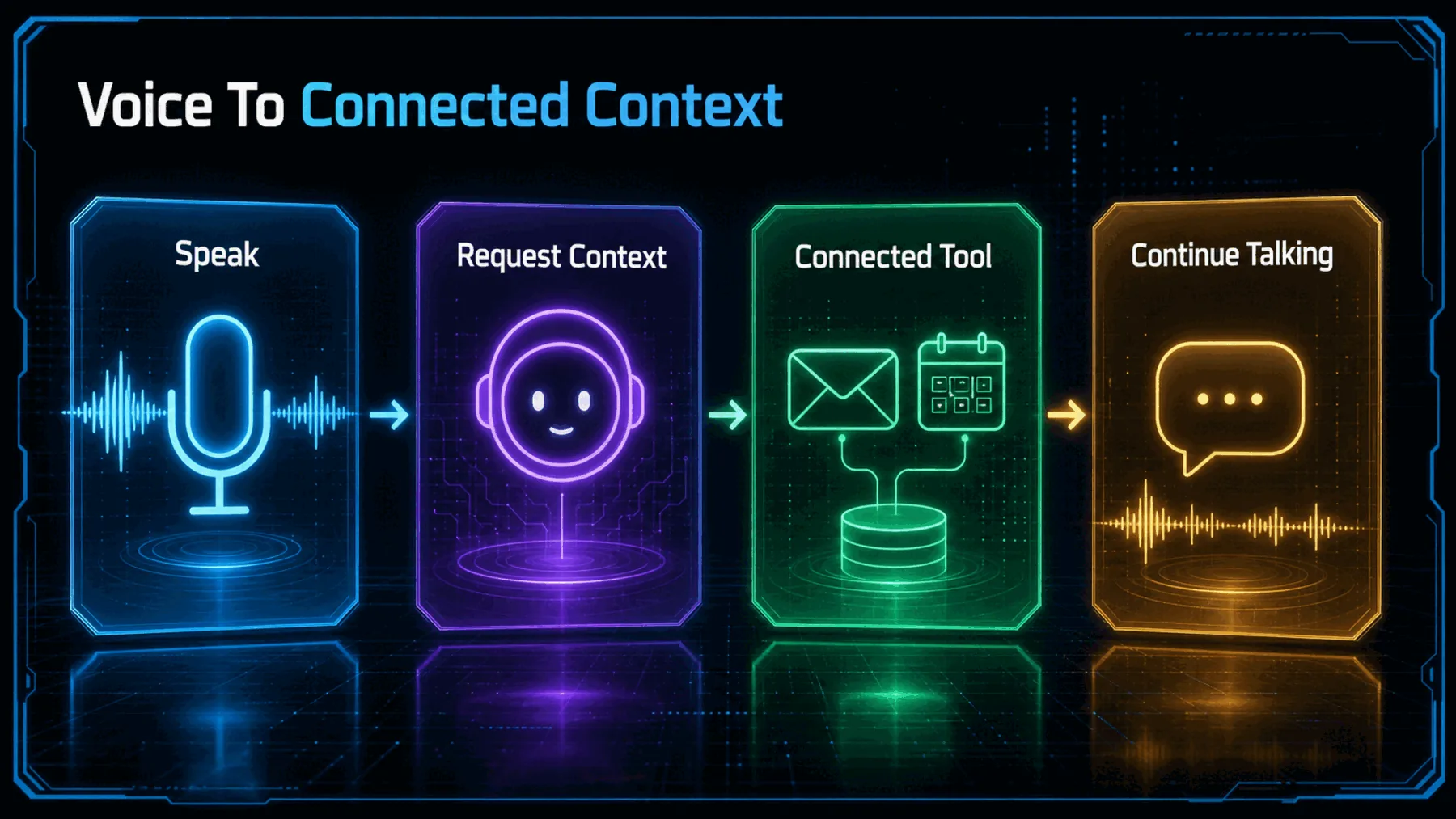
The useful sequence is simple. We describe the task aloud; Claude looks for relevant context in an email or calendar connection that is already available to the account; then we continue the discussion with that context in view.
This is a model of the announced interaction, not proof of autonomous execution. The source supports reaching connected tools mid-conversation, but it does not establish every action those tools permit.
Check access before the task
Platform presence, account availability, model access and connector permissions can all shape the experience.
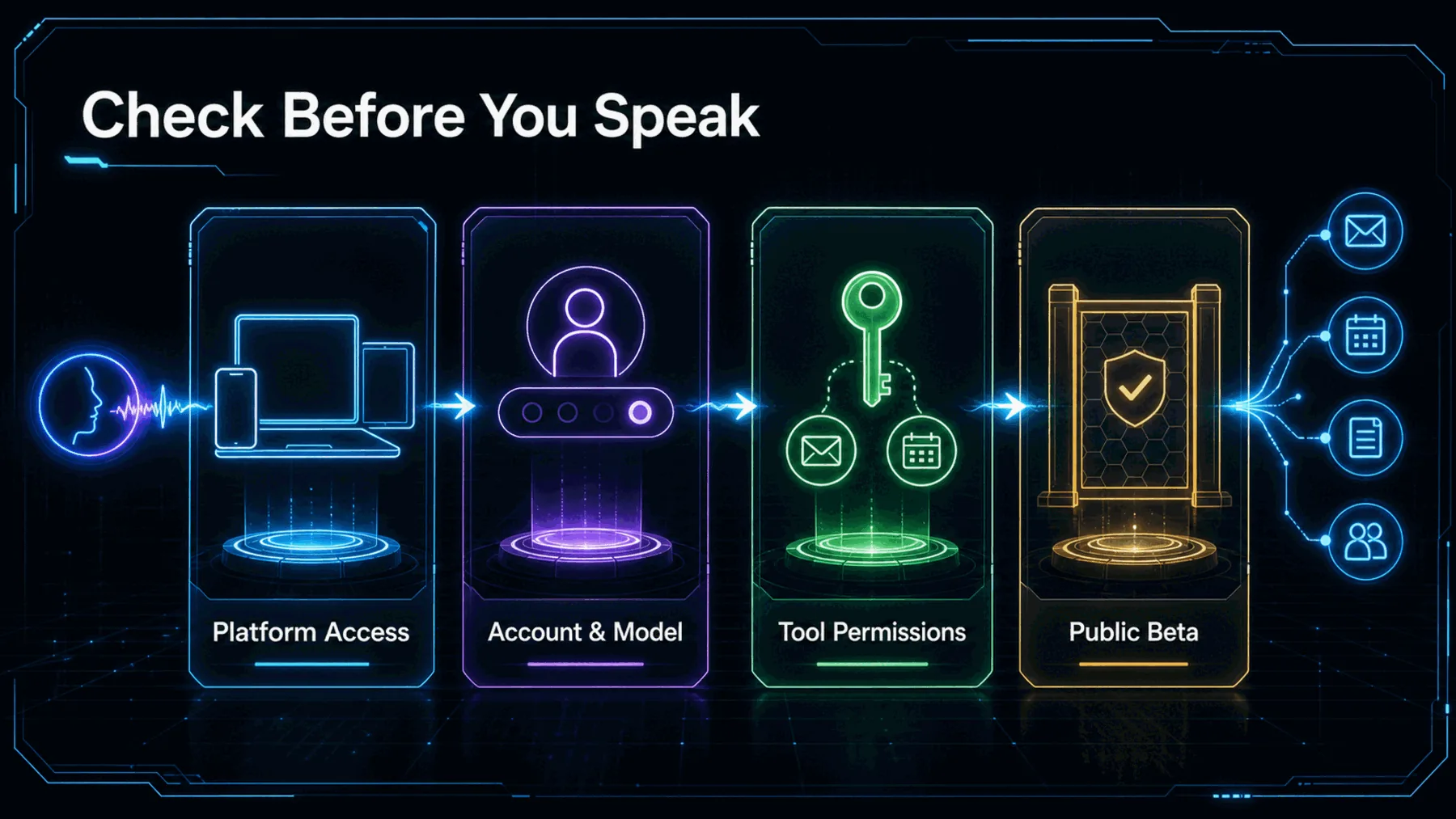
Before planning a real workflow around the feature, we need to see whether voice mode has reached our account on mobile, desktop or web. We also need to distinguish the models available in our chat from the separate every-plan language claim.
Connected tools require their own check. Email and calendar are examples in Claude’s post, not a complete compatibility list, and the announcement does not define their permission boundaries. Public beta is the final constraint: useful to try, premature to treat as settled infrastructure.
Voice stays inside the work
The stronger idea is continuity: a conversation can draw on connected context without forcing us out of the exchange.
Voice becomes more useful when the conversation can carry the task forward with permitted context, while keeping its limits visible.
Creator Broadcast analysis based on Claude’s announcement
More models and languages broaden the surface, but connected context changes its shape. If the feature works as announced for our account, voice can become a place where we think through a task and consult relevant information in one continuous exchange.
The cautious reading is also the useful one. Claude has announced the direction and supplied examples; our account access, model availability, connector permissions and the limits of public beta determine what we can actually do.
Build a voice-first weekly briefing
During this voice conversation, inspect only the email and calendar tools already connected to this Claude account. Build a briefing for the next seven days with three sections: scheduled commitments, email threads that may affect those commitments, and unresolved questions. For every item, cite the date and the source tool. Do not send messages, change calendar events or infer missing details. If a tool, account or permission is unavailable, name the gap instead of filling it from assumption.Ready to copy
Verify access, then speak
Open voice mode on an available platform, confirm the connected tools and permissions on the account, then test one read-only task whose result can be checked against the source material.
Try the promptWhat could change the takeaway
- Account availability
- Model access
- Tool permissions
- Release status