Claude Moves Into the Moment of Work
Separate Security and Voice betas place Claude closer to the decisions we make before code ships and while conversations unfold.
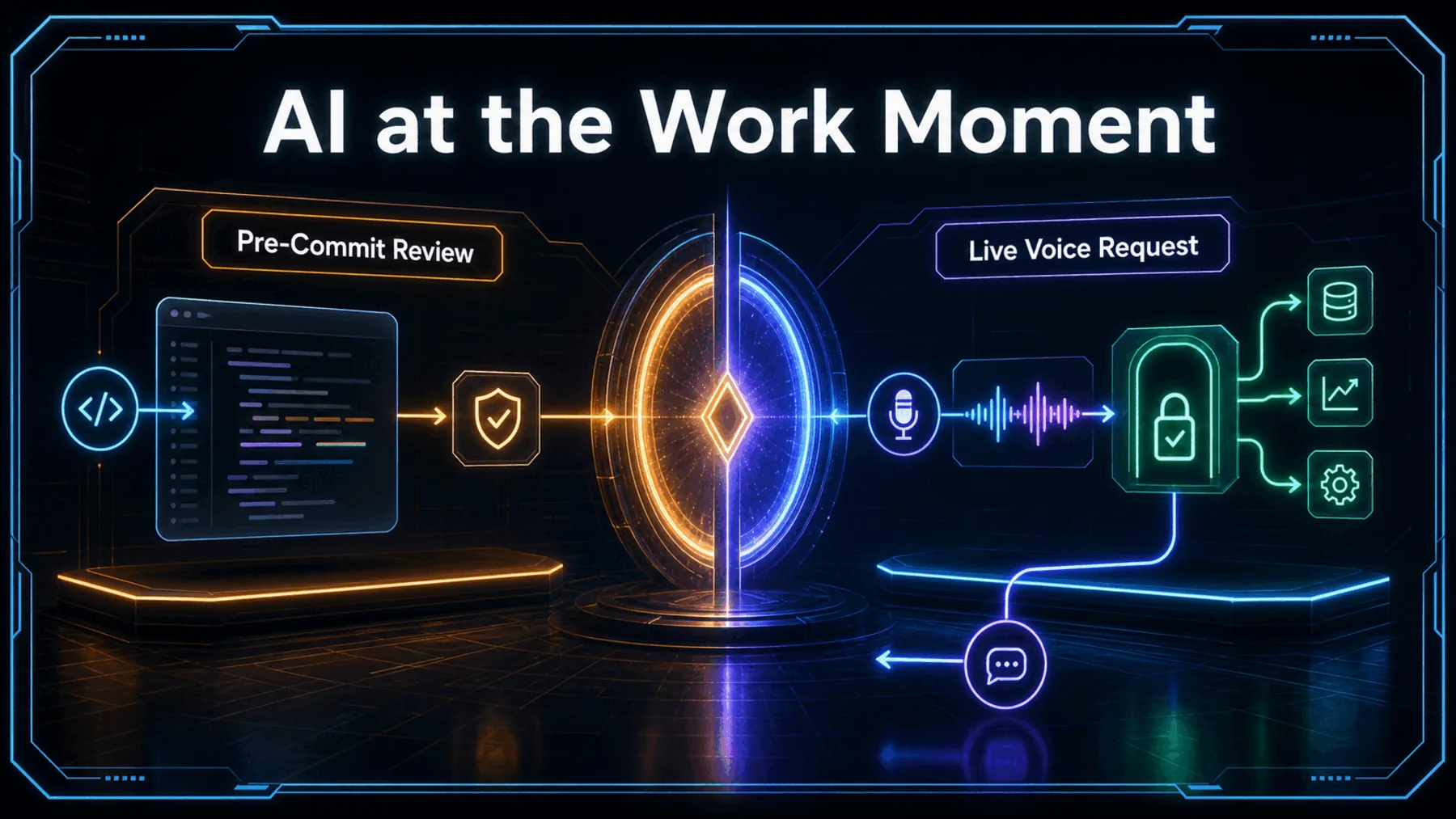
One beta brings a security scan to changed code before commit. The other lets a voice conversation reach tools we have connected, including email and calendar. They are separate products with separate boundaries, not one combined release.
Their shared significance is timing. Claude is being positioned closer to the point where information becomes action, while human review and connected-tool permissions still define what should happen next.
The Decision Point Is Moving
Claude is shifting from discussing completed work towards participating while choices are still being made.
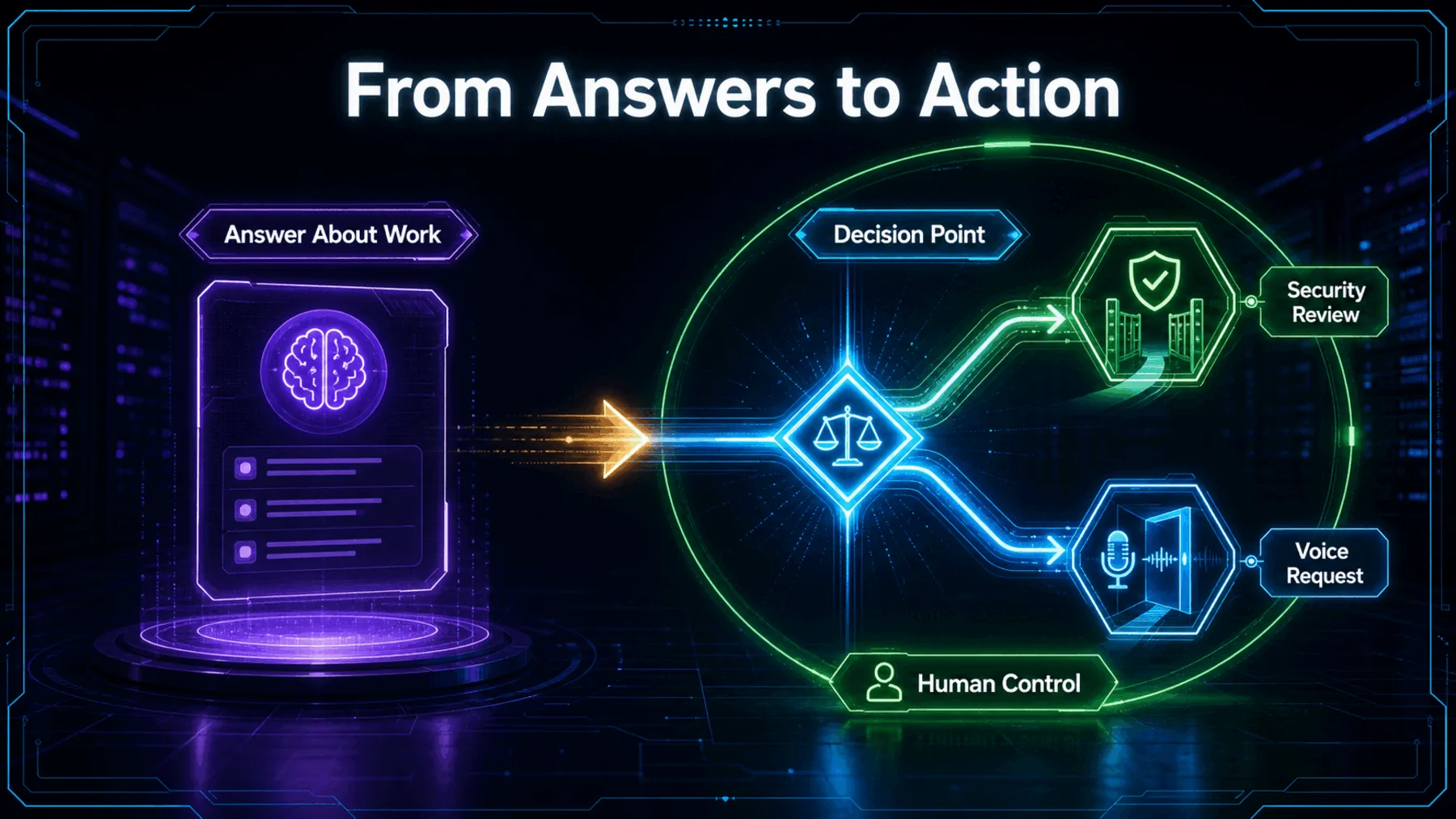
A capable answer delivered after the fact can still be useful. An intervention before a commit, or a tool lookup while we are speaking, changes the practical shape of that usefulness because it arrives inside the workflow.
That does not make either beta proven or autonomous. The available evidence comes from Claude and Anthropic, and each path retains a boundary: proposed security patches require review, while Voice reaches only tools that have been connected.
Separate Betas, Shared Direction
Security and Voice approach different work, but both reduce the distance between a question and the next decision.
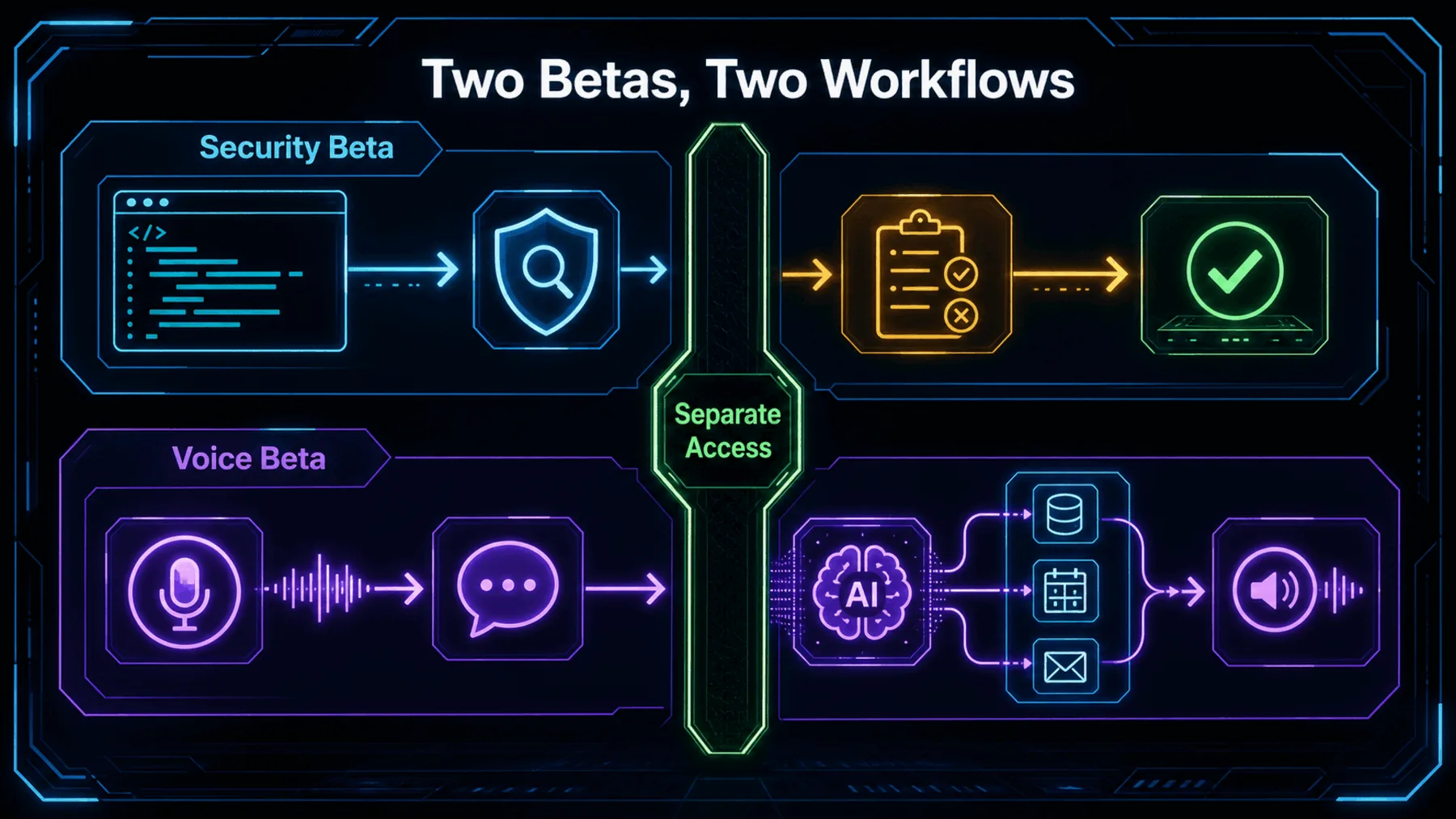
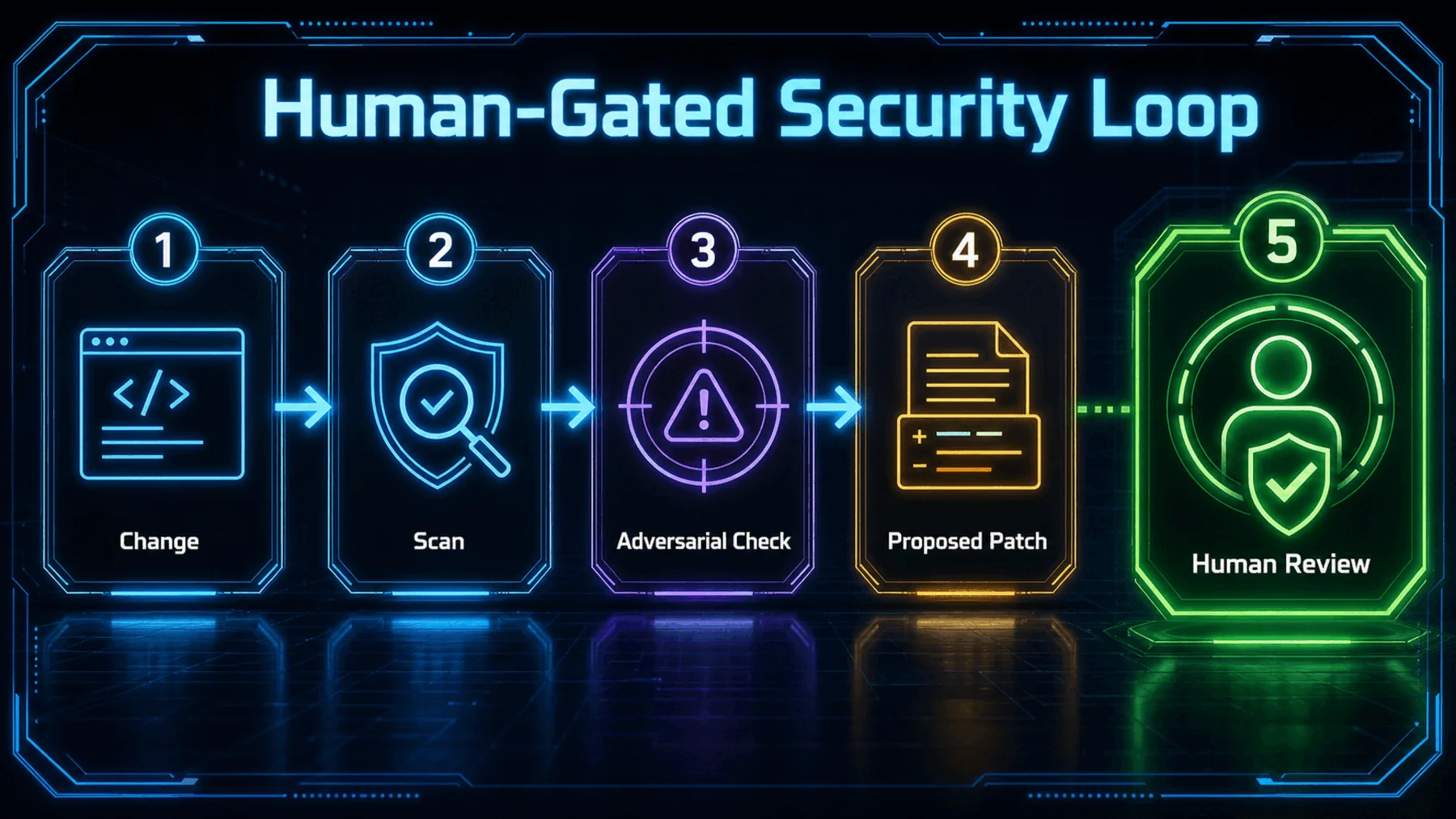
Claude says the Security plugin can scan changes before commit or scan a full codebase. Anthropic’s product page adds validation, explained findings and recommended patches. These are Anthropic-published capability statements, not independent evidence of detection accuracy.
Availability is less tidy. Claude’s announcement says the plugin is available in beta, while Anthropic’s product page describes a public beta for Claude Enterprise. The evidence does not justify smoothing those statements into universal access.
A Patch Is Still a Proposal
Anthropic places review and approval after the scan, not outside the process.
Claude can make mistakes, so you should always review proposed patches before applying them, especially for critical systems.
Anthropic, Claude Security
The distinction between proposing and applying matters. Anthropic says Claude Security can identify an issue, explain why it matters and suggest a patch; it does not establish that the patch is safe to accept without inspection.
The stronger workflow is therefore collaborative: the system surfaces a candidate finding and fix, while we retain responsibility for verification, testing and approval.
Connected Tools Enter the Conversation
Claude says Voice can reach selected tools mid-conversation while running on Opus or Sonnet.
The practical change is continuity. A spoken request can remain inside the conversation while Claude reaches an account we have already connected and brings the result back into the exchange.
Claude also said the beta was rolling out across mobile, desktop and web, with more languages and availability on every plan. That is a dated rollout statement from Claude, not independent confirmation that every account received every capability at once.
Human Review Closes the Loop
The scan can advance the investigation, but approval remains a separate human decision.
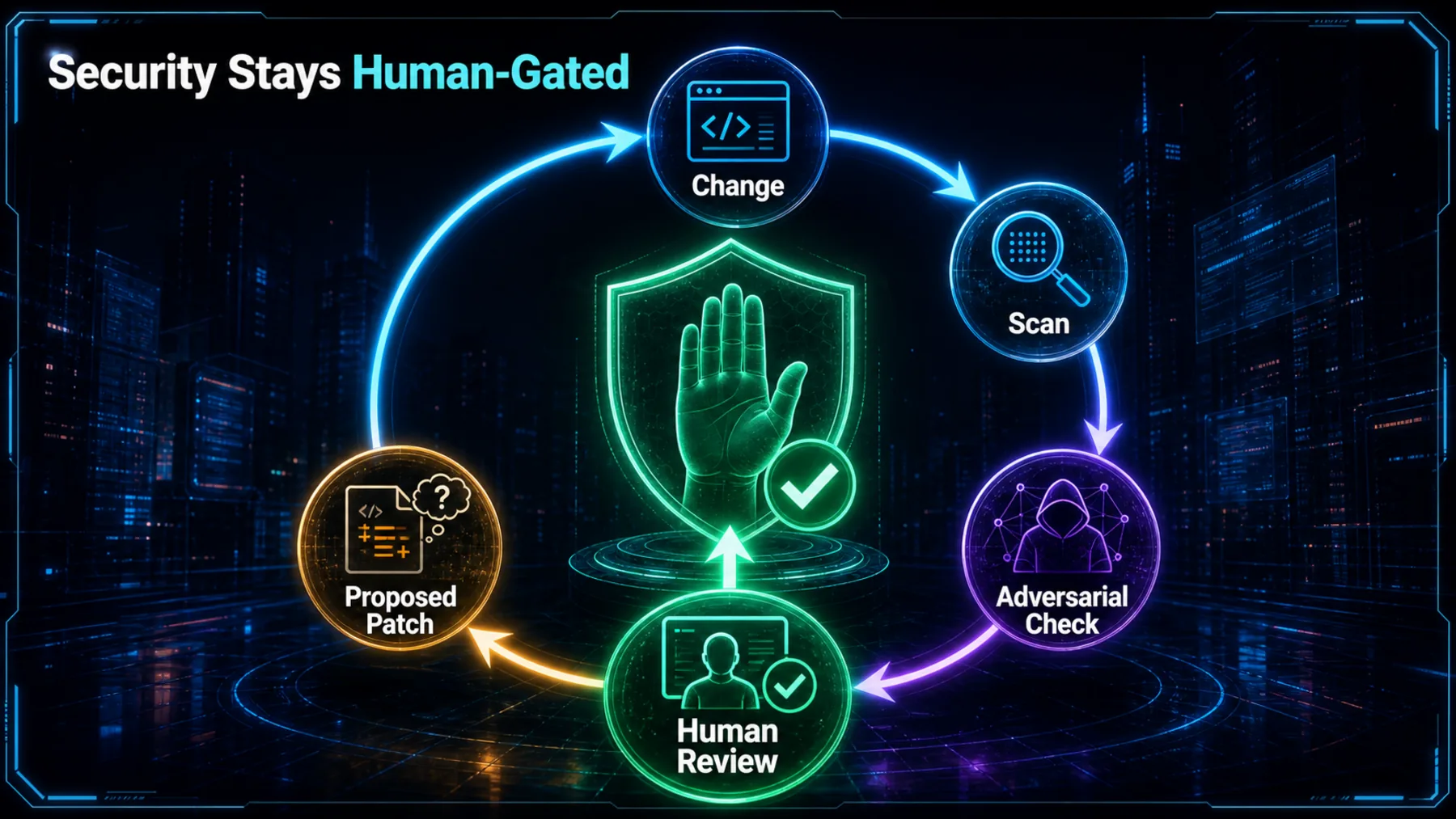
Anthropic says every surfaced finding passes through an adversarial verification step in which Claude challenges its own result. It then presents the vulnerability, its significance and a proposed fix.
That self-check is part of Anthropic’s described process, not proof of accuracy. We still need to inspect the reasoning, test the change and decide whether the patch belongs in the codebase.
Scan
Propose
Approve
The Conversation Can Reach Further
A spoken request can move through Claude to a connected tool and return without leaving the exchange.
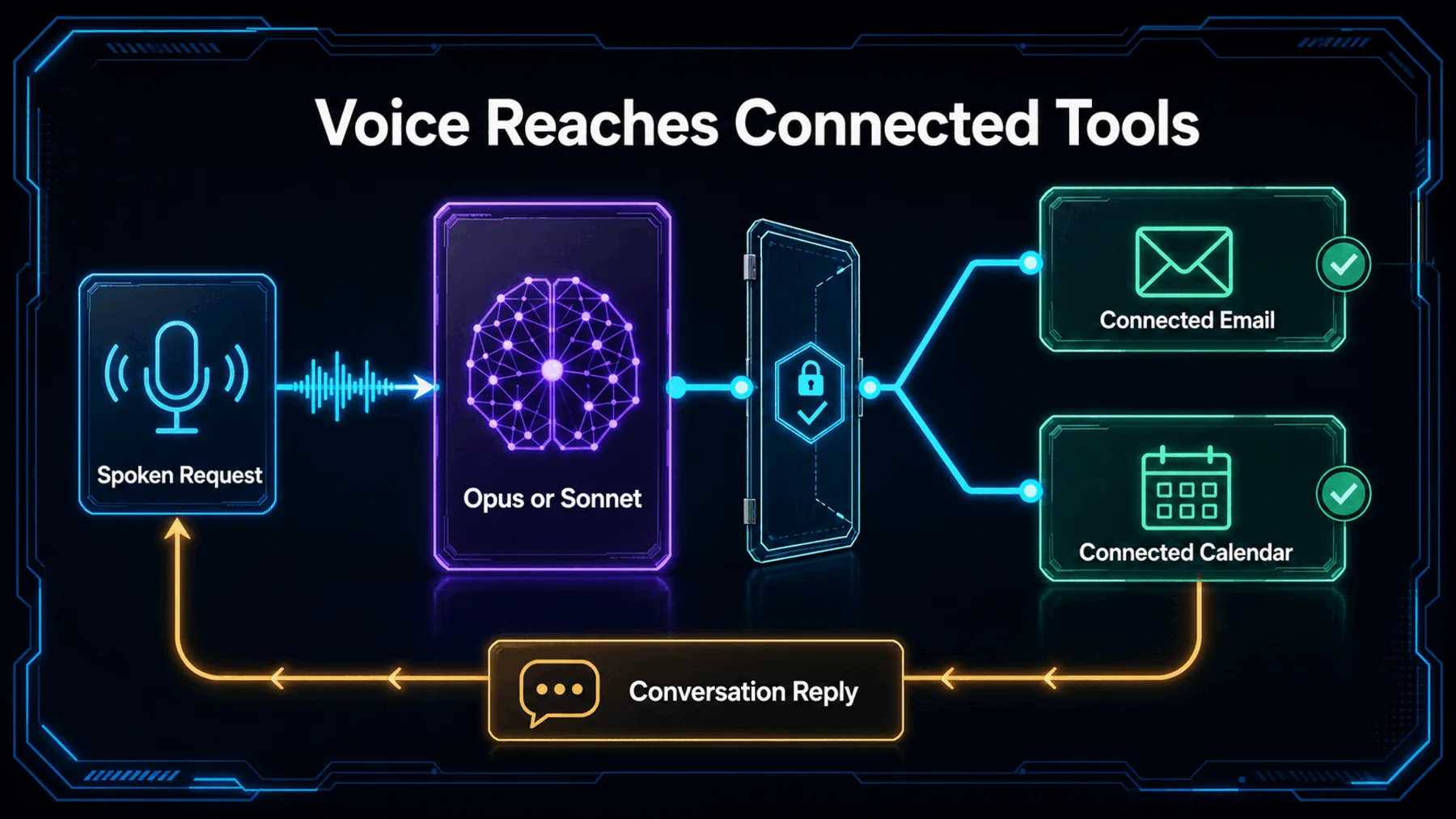
Claude’s examples make the boundary concrete: email and calendar are tools that can be reached after they have been connected. The announcement does not support a broader claim that Voice controls our accounts without permission.
What changes is the interaction cost. We can ask aloud, let Claude retrieve relevant information through an authorised connection and continue the discussion with that context in place. Tool reliability and action handling still need testing in real use.
Connected first
Model in use
Control retained
Placement Changes Practical Value
The common thread is not a merged feature set, but Claude appearing closer to consequential choices.
Security and Voice do not need to share a product surface to reveal the same direction. In each case, Claude is moving nearer to the moment when we decide: whether code is ready to commit, or what information should enter a live conversation.
That placement can make capability feel more useful because less context is lost between asking and acting. It also raises the importance of boundaries. The closer an AI system sits to action, the clearer its permissions, evidence and human checkpoints must become.
The shift is not that Claude has become one autonomous system for work. It is that two separate betas place assistance nearer to the moment a decision becomes an action.
Creator Broadcast synthesis from Claude and Anthropic announcements
Stress-test Claude at the moment of work
Act as a workflow-risk analyst. Compare these two separate Claude betas without merging their capabilities: Claude Security scans changed code or a codebase, validates findings, proposes patches and requires human approval; Claude Voice can use Opus or Sonnet to reach connected tools such as email and calendar during a conversation. Produce a two-column comparison covering the decision point, permitted action, human control, evidence limitation and one safe trial. End with a 60-word judgement on whether workflow placement changes practical usefulness more than model choice. Treat all capability statements as Anthropic-published and do not infer security accuracy, tool reliability or shared availability.Ready to copy
Watch the Boundaries, Not the Hype
The useful test is whether these betas shorten real workflows while preserving visible permissions, reliable evidence and meaningful human review.
Try the promptFour Signals Worth Watching
- Security access wording
- Independent security evidence
- Voice rollout verification
- Human control