Agents get an operating console
Claude’s new controls connect effort, starting context, shared skills and lifecycle signals—but the outcomes still need proving.
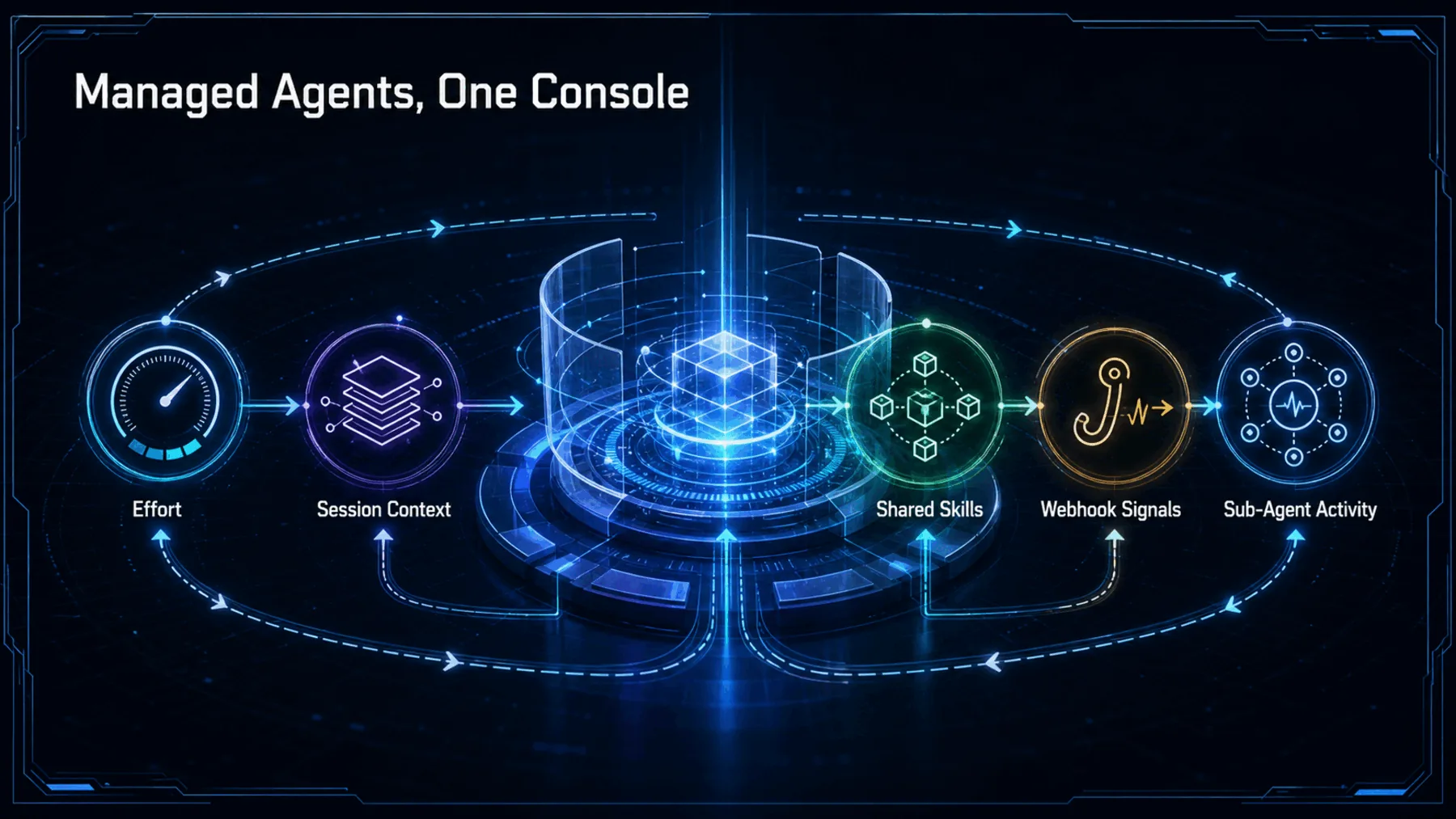
An agent that can act is only part of the system. We still need to decide how much thinking a task deserves, provide the right starting context and see what delegated work is doing.
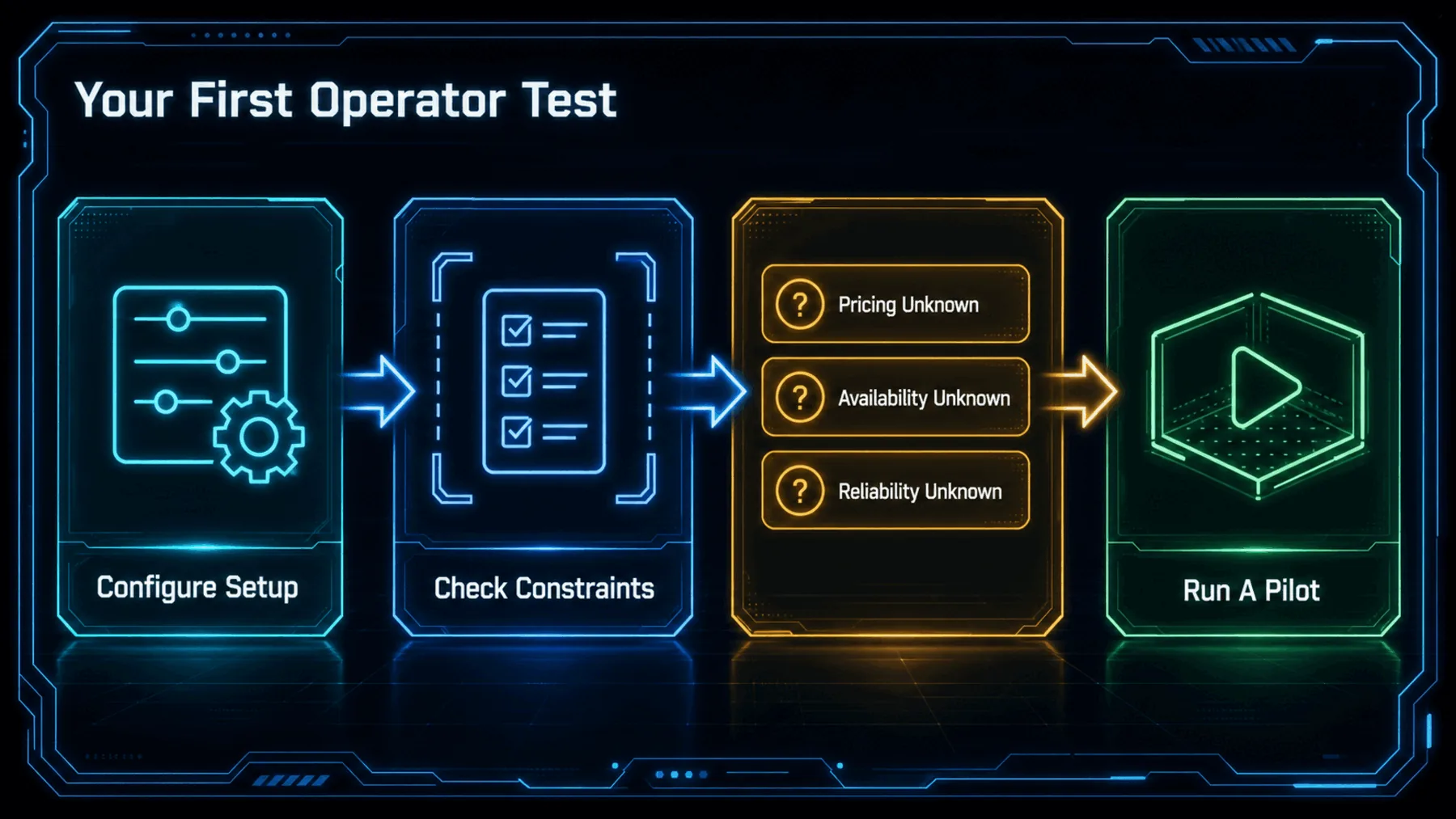
ClaudeDevs has announced controls that bring those decisions into one operating loop. The announcement establishes the controls and two limits; it does not establish pricing, availability, reliability or performance.
Control matters more than autonomy
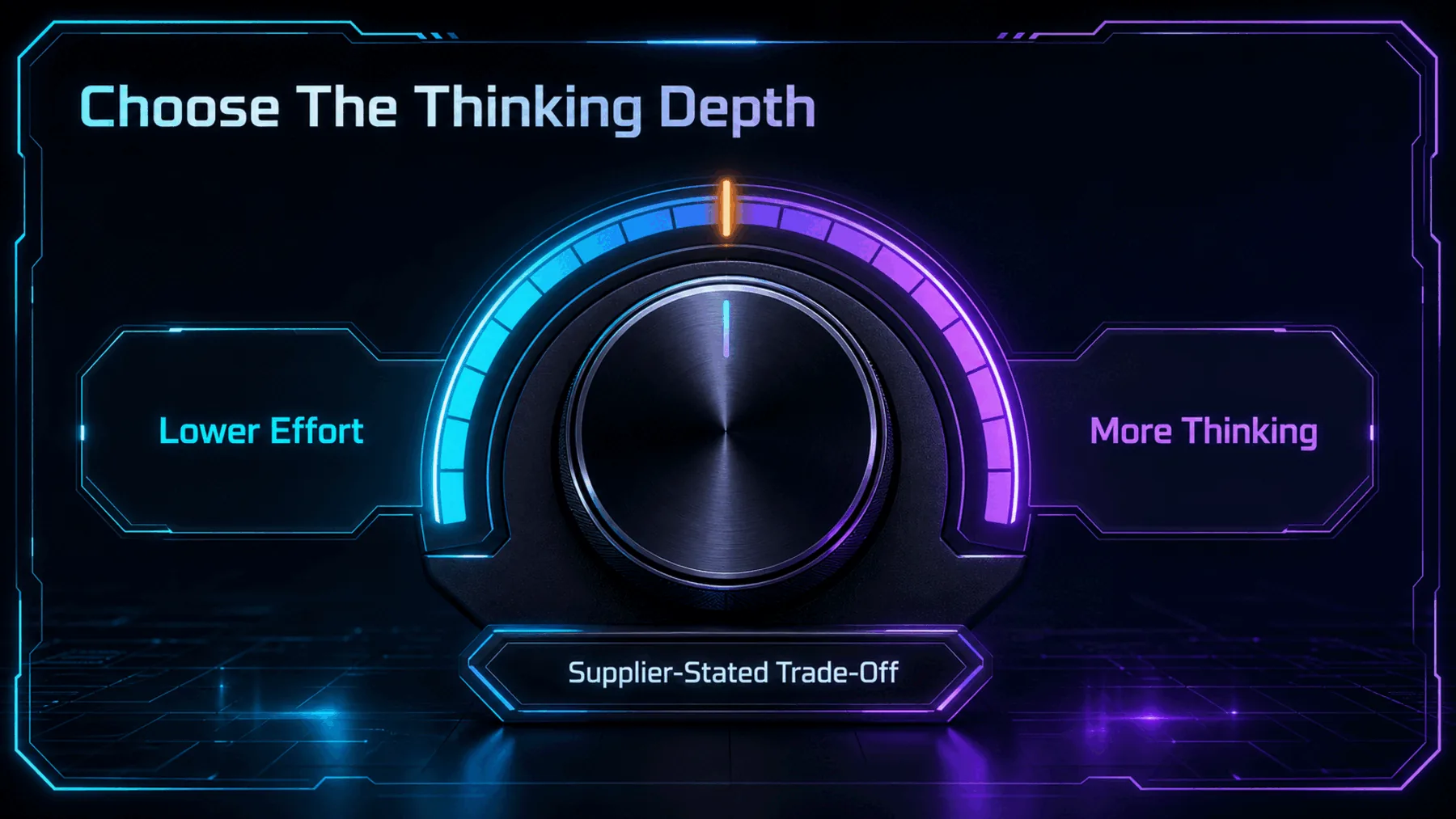
The new effort setting makes a familiar trade-off explicit without resolving it for us.
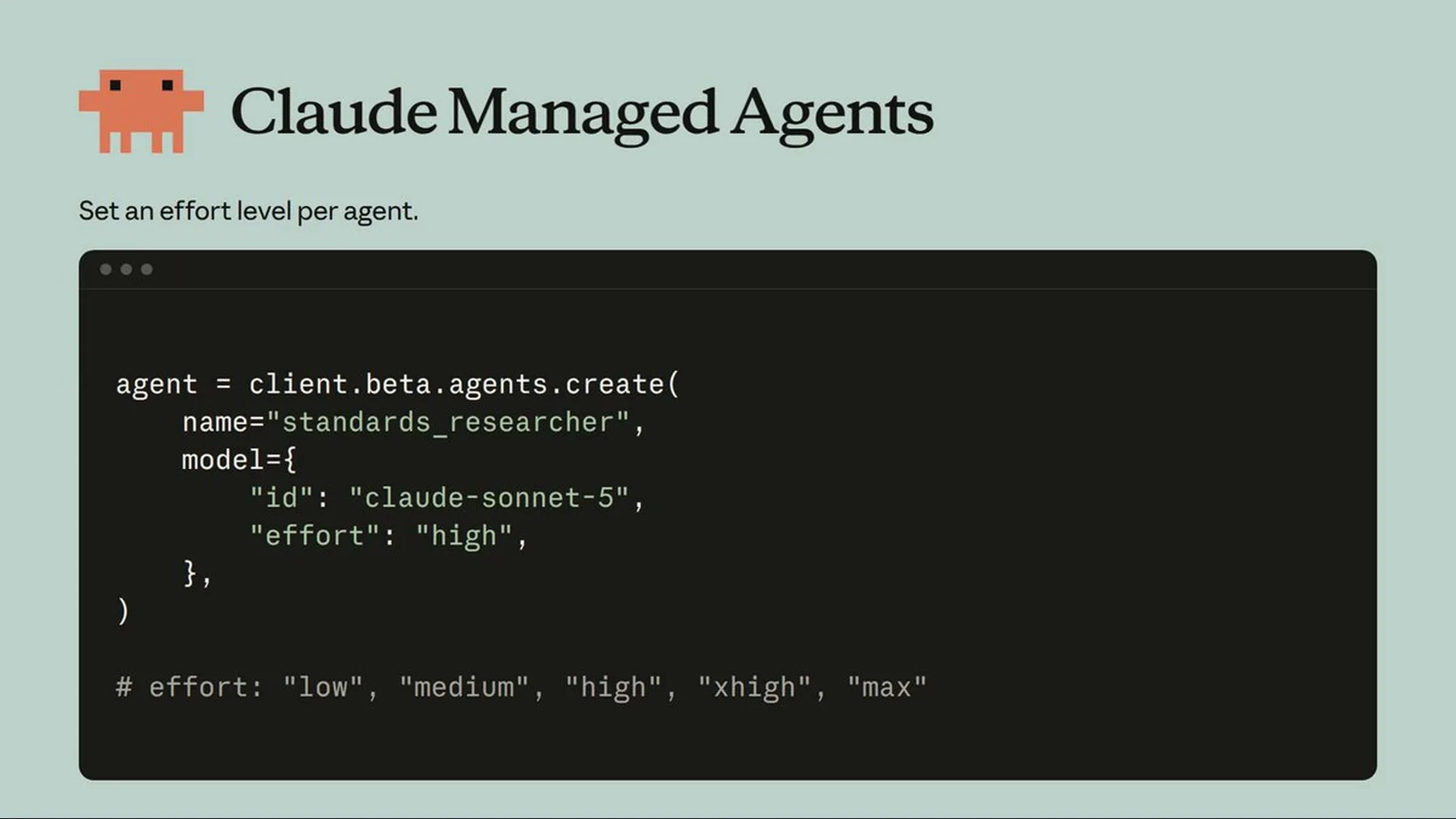
ClaudeDevs says effort controls how much each Managed Agent thinks, and that lowering it gives faster responses and lower cost. That is a directional product claim, not a quantified result or a universal recommendation.
The practical value is choice. We can reserve more thinking for work that appears to need it and test lower-effort paths elsewhere, but only our own measurements can show what that does to quality, time and cost.
Five controls form one loop
Taken together, the updates shape how a managed session starts, operates and becomes observable.
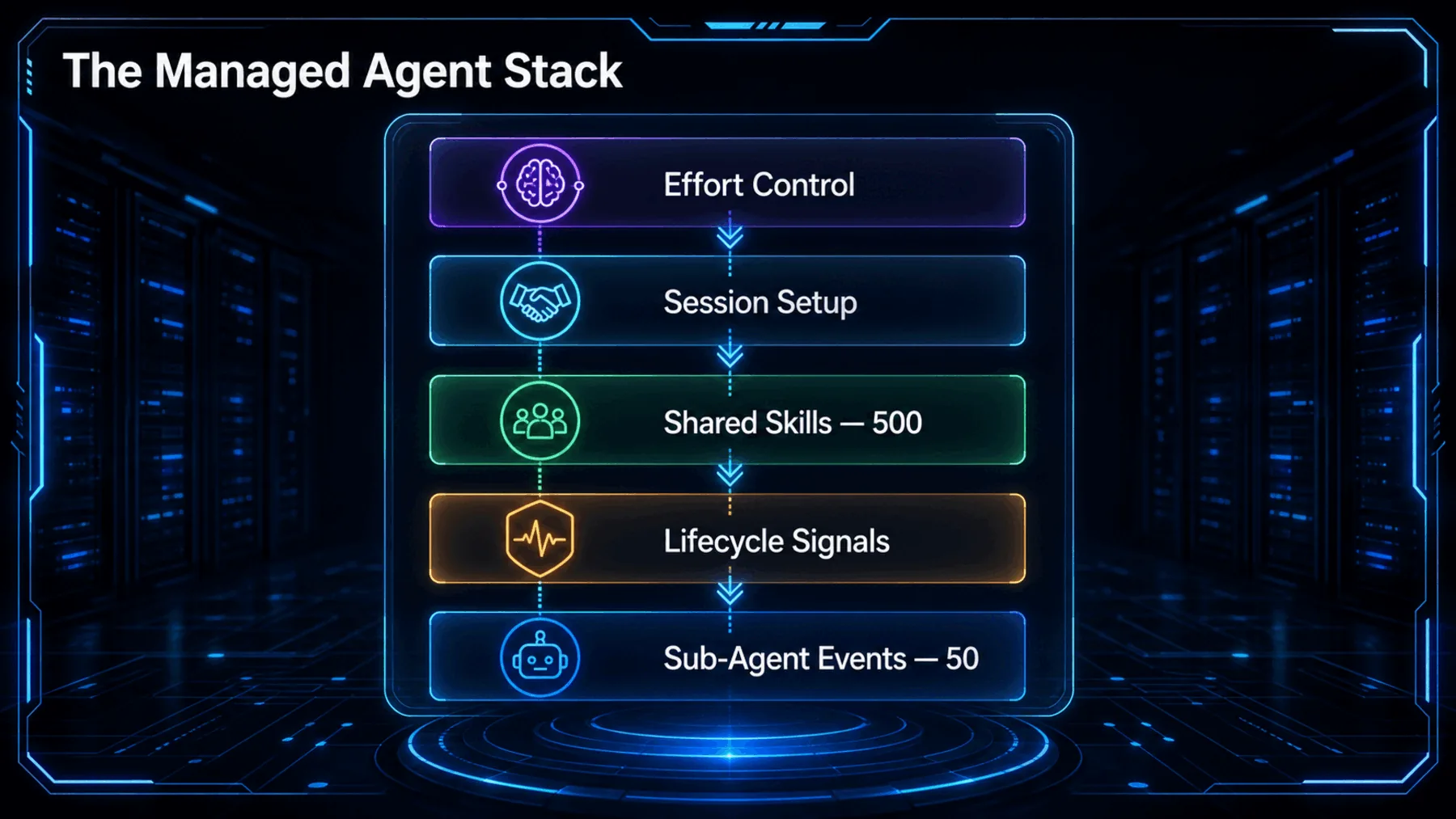
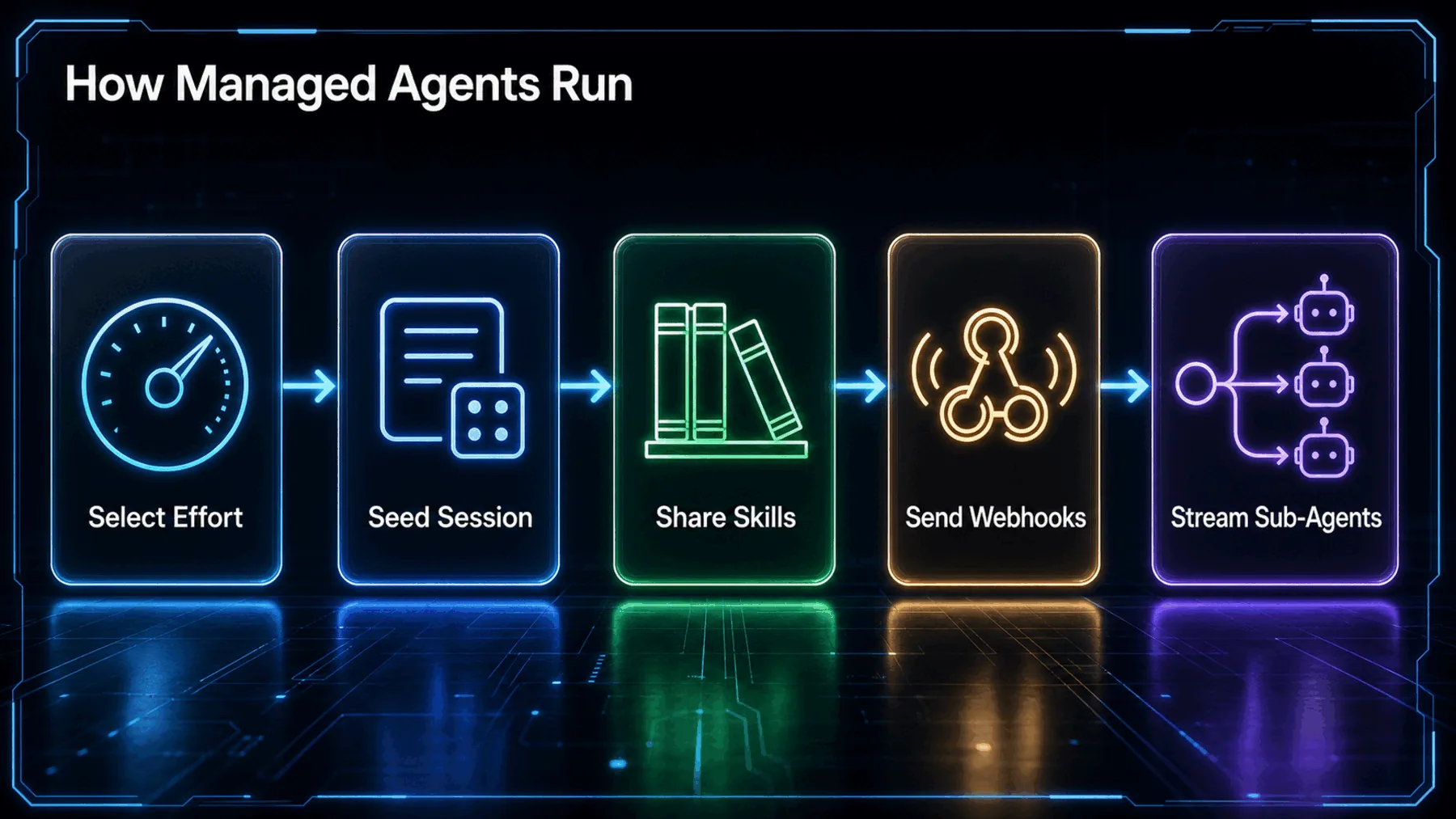
The announced stack has five parts: configure effort per agent, seed a session with events, supply skills across the agent team, receive webhooks from environments and memory stores, and stream events from sub-agents.
Two boundaries are explicit. A create call can include up to 50 user_message and define_outcome events, while the skills ceiling is up to 500 across all Managed Agents in one session—not 500 for each agent.
Begin the session already briefed
Opening messages and outcomes can now travel with the create call instead of following in separate calls.
Before this update, ClaudeDevs says creating a session and sending it events required separate API calls. The new create flow can carry the opening context with it.
That can simplify orchestration at the start of a run. The stated scope is precise: up to 50 user_message and define_outcome events in the create call. It does not establish how much context any particular workflow should preload.
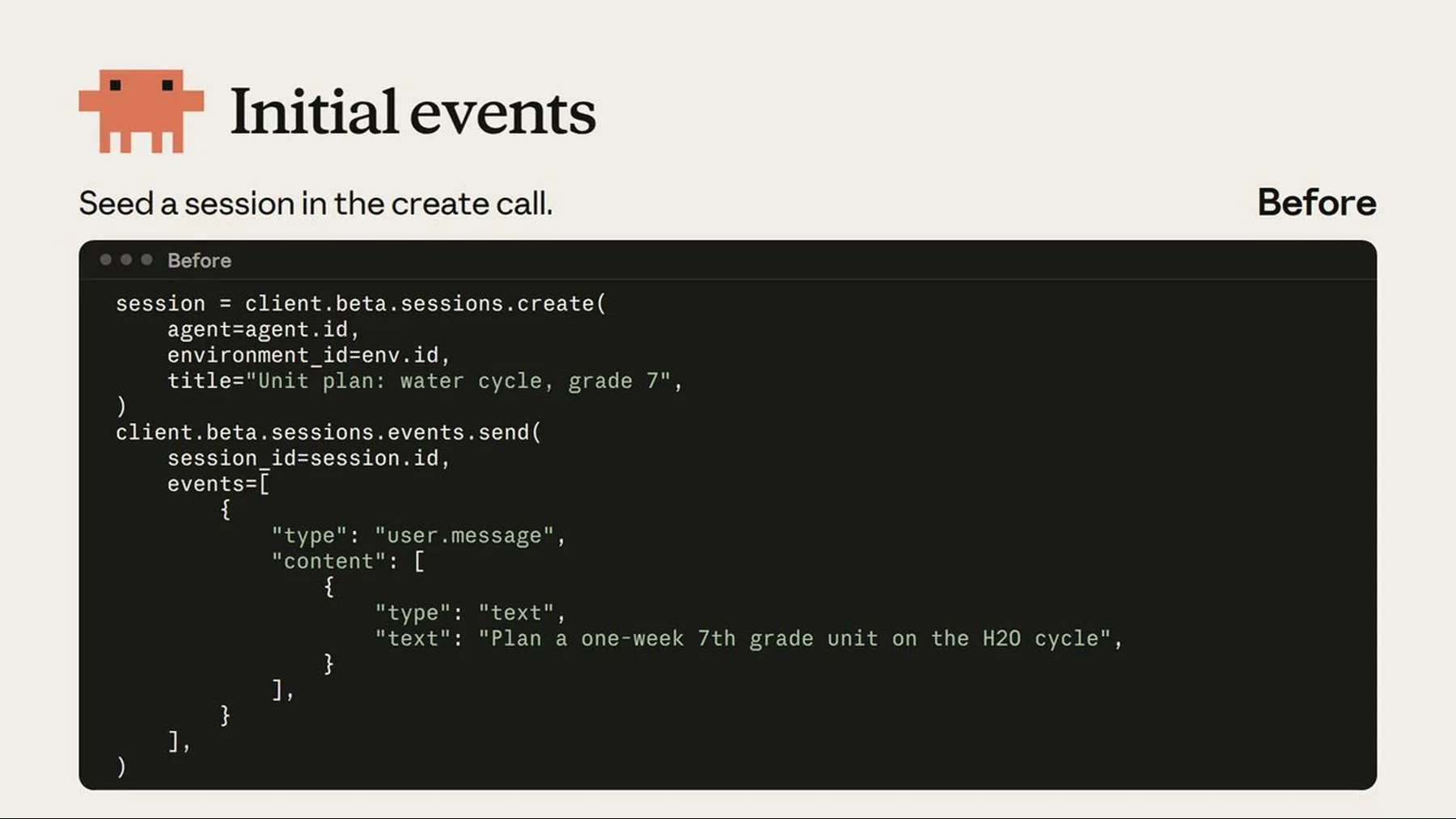
You can now seed a new session with up to 50 user_message and define_outcome events in the create call.
ClaudeDevs
More skills, one session-wide limit
The larger ceiling expands what an agent team can draw on, but says nothing about whether more instructions improve its work.
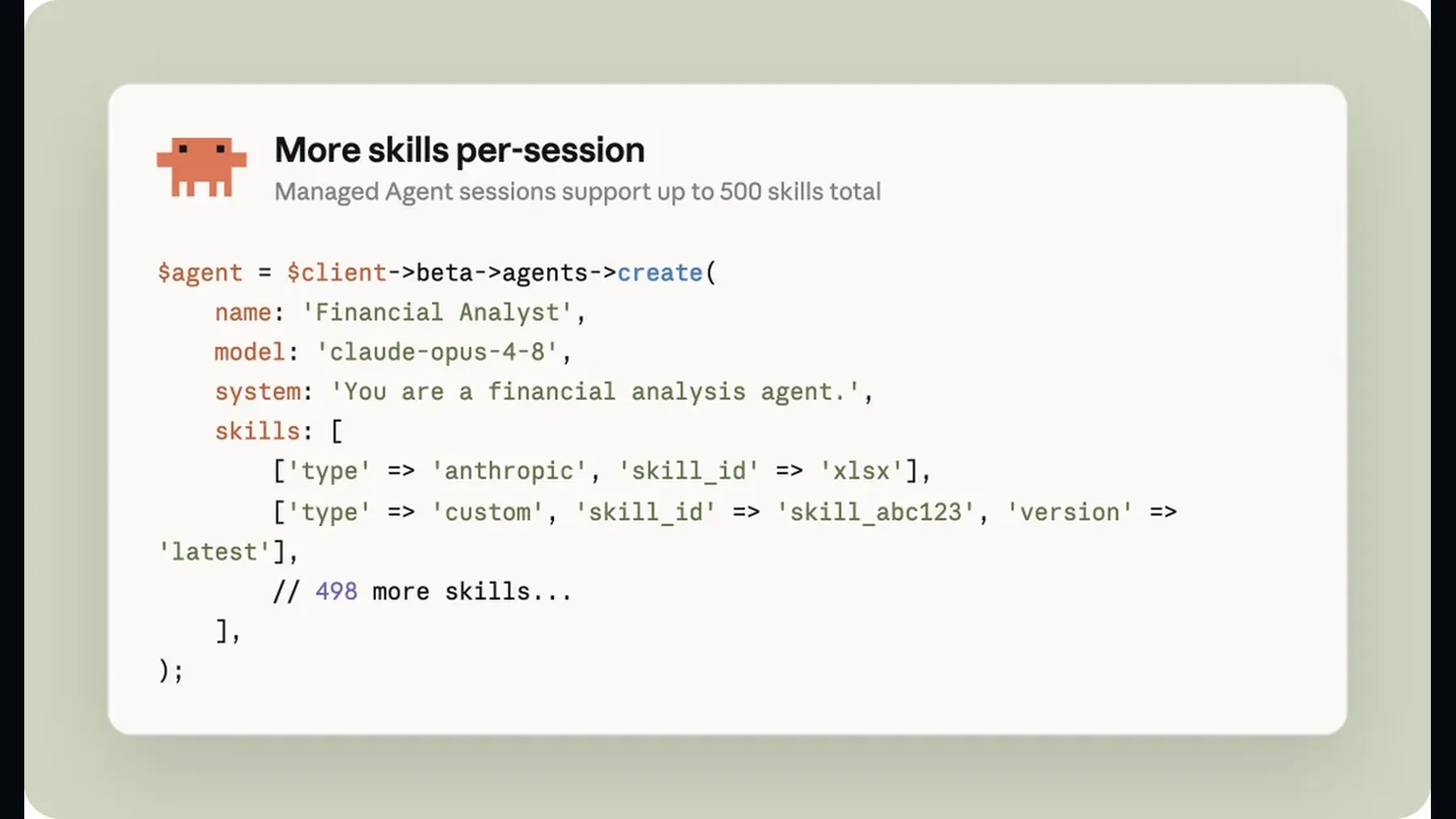
ClaudeDevs says skills give a Managed Agent task-specific instructions. The announced ceiling is up to 500 skills across all Managed Agents in a session.
The scope matters more than the headline number: this is a shared session limit, not a per-agent allowance. Nor is scale proof of usefulness. We still need to test whether the selected skills are relevant, followed correctly and worth the added complexity.
The operating loop closes
Setup choices flow into shared instructions, external signals and visibility over delegated work.
The sequence begins with an effort choice and a seeded start state. Managed Agents can then draw on the skills made available across the session while environments and memory stores send webhook signals.
Streamed sub-agent events bring delegated activity back into view. That makes the five announcements coherent as an operating model, although the thread does not prove that signals arrive reliably, instantly or without loss.
What we would test first
The controls create a practical path, but every meaningful outcome remains ours to measure.
We would begin with one bounded workflow: assign effort by task, seed only the opening messages and outcomes it needs, and expose a small, relevant skill set. Then we would record webhook and sub-agent events against the run.
The first comparison should be deliberately modest: completion time, cost, output quality, failed steps and missed signals across controlled variants. Pricing, availability, rollout scope and reliability are not established by the announcement, so they remain questions rather than inputs.
Controls are not proof
Claude has exposed a more coherent operating surface; whether it improves serious workflows is still an empirical question.
The release matters because the controls fit together. Effort, session seeding, shared skills, webhooks and sub-agent events give us more places to shape and inspect a managed run.
But an operating console is not an outcome. ClaudeDevs has not published benchmarks, pricing, rollout detail or reliability evidence here, and a larger skill allowance does not itself make an agent better. The useful next move is a bounded test, not a conclusion.
Managed agents become more useful when we can shape the run and see it unfold. Those controls earn attention; their results still have to earn trust.
AI News analysis, bounded by the ClaudeDevs announcement
Test a Managed Agents control plan
Act as an AI operations architect. Design a bounded test for one Claude Managed Agents workflow that uses per-agent effort, session seeding with no more than 50 user_message and define_outcome events, shared access within the limit of 500 skills across all Managed Agents in the session, environment or memory-store webhooks, and streamed sub-agent events. Use a research-and-draft task as the example. Return: (1) the agent roles, (2) the effort choice for each role with a brief rationale, (3) the opening events to seed, (4) the minimum skills required, (5) the webhook and event signals to record, and (6) a comparison table for completion time, cost, output quality, failed steps and missed events. Treat performance, pricing, availability and reliability as unknown until measured; do not invent product behaviour or results.Ready to copy
Test the loop, not the promise
Choose one repeatable workflow, vary one control at a time and record the outcomes the announcement leaves unanswered.
Try the promptWhat could change the verdict
- Independent or reproducible benchmarks for effort settings
- Published pricing and cost behaviour
- Confirmed availability and rollout scope
- Reliability evidence for webhooks and event streams
- Measured effects of larger shared skill sets