Four controls for a working agent
Anthropic’s updates make a managed agent easier to frame: limit its spend, choose where it runs, equip it from the repository and give it a route to stronger judgement.

Anthropic says Claude Managed Agents can now carry four operational controls: a session budget, an inference geography setting, repository-loaded skills and a stronger advisor model. Taken together, they describe a worker with a job, a location, a knowledge base and a limit.
The useful catch is in the edges. A budget pause is not job completion; repository skills are picked up at session start; US inference is billed at 1.1x; and the posts leave rollout scope, advisor policy and advisor pricing unstated.
Control changes the promise
Managed work becomes more legible when the boundaries are named before the job begins.

“Managed” can sound like unconstrained autonomy until we ask four plainer questions: how much can the session spend, where will inference run, what knowledge does it begin with, and when can it seek a second opinion?
Anthropic’s four announcements do not answer every operational question. They do, however, make the boundaries visible enough to discuss the work as an operating loop rather than a vague promise of autonomy.
Limit, locate, equip, escalate
Each control governs a different moment in the same working session.
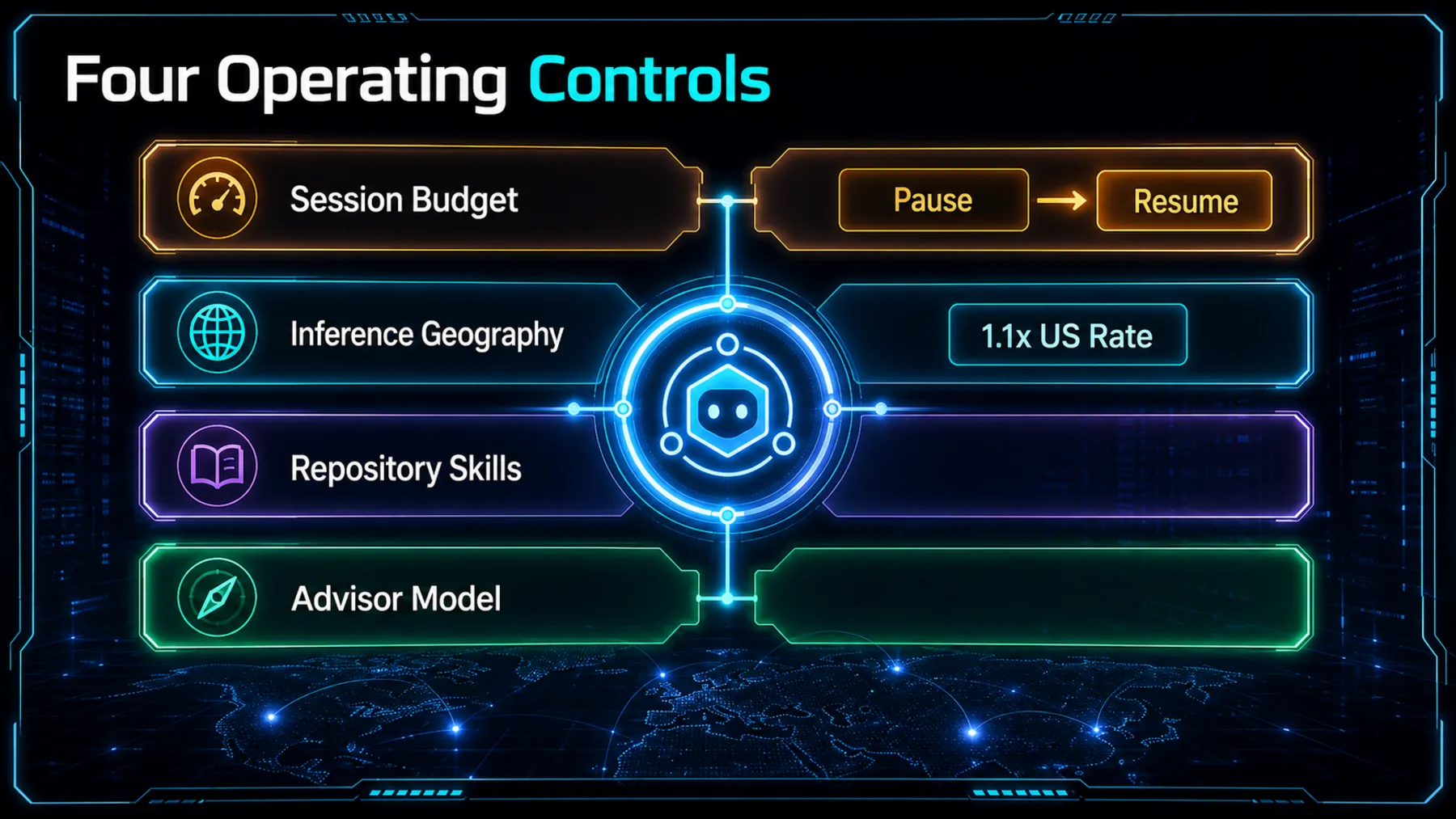
The controls are distinct, but they are not separate stories. Geography is a cost and placement choice; skills shape what the session starts with; an advisor is available for a second opinion; and the budget is the hard stop when spend reaches its ceiling.
That still leaves important unknowns. The announcements do not specify budget ranges, who receives the controls, what an advisor call costs, or the policy that governs when an advisor should be used.
A budget can pause the work
The announced limit is a session boundary, with an explicit route to resume after it is raised.
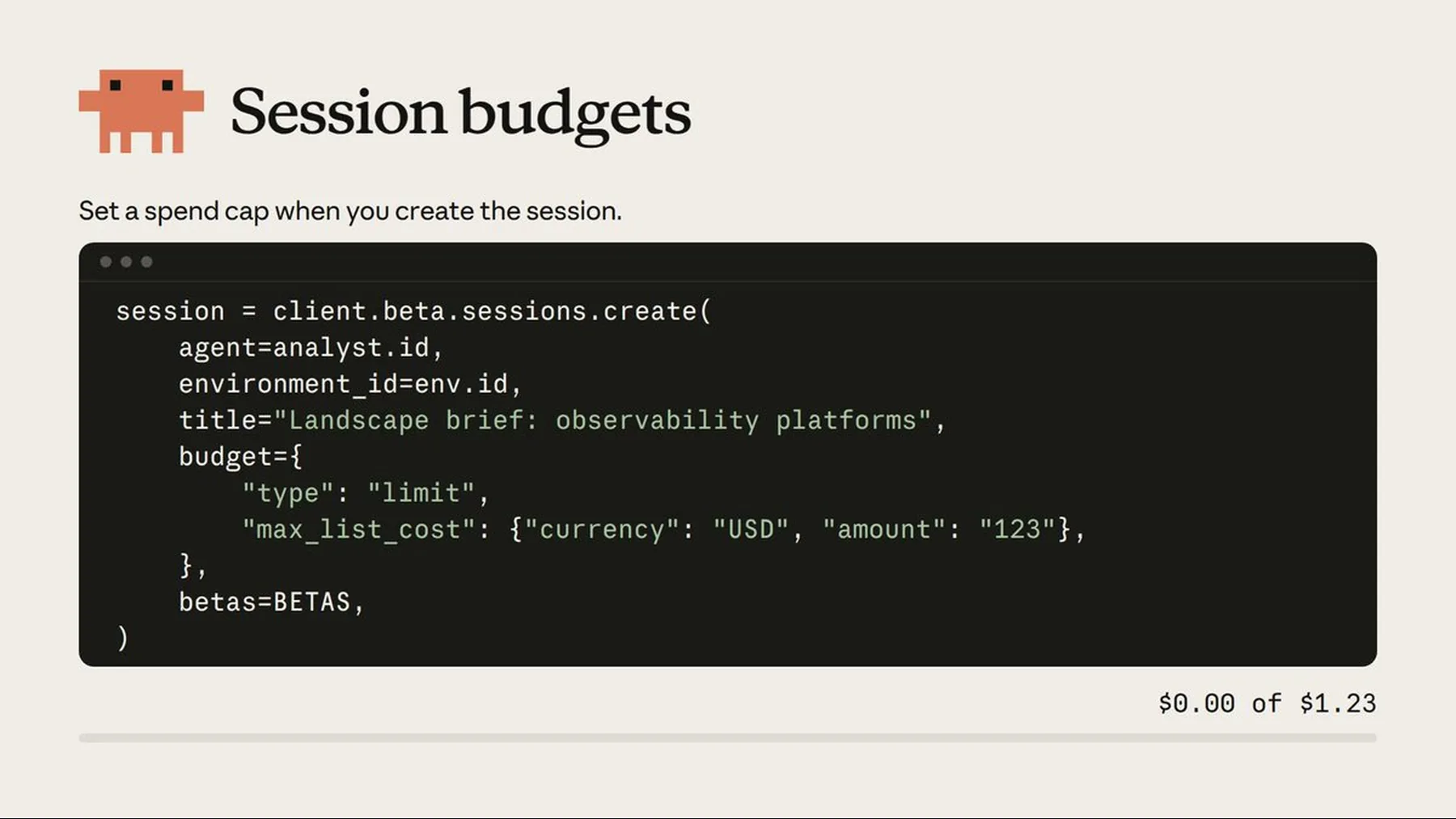
A spending limit is only useful if its consequence is clear. Here, Anthropic says the session pauses when it reaches the configured budget; it does not say the work has finished, succeeded or failed.
That distinction matters in practice. A pause returns the decision to us: raise the budget and continue, or stop and inspect the work already done. The post does not state what budget values are available.
Sessions that hit the limit pause with a budget_reached event, you can raise the budget to resume.
Claude Developers on X
Location comes with a price
Inference geography is stated as a configuration choice, while stronger-model advice remains optional and its policy is unstated.
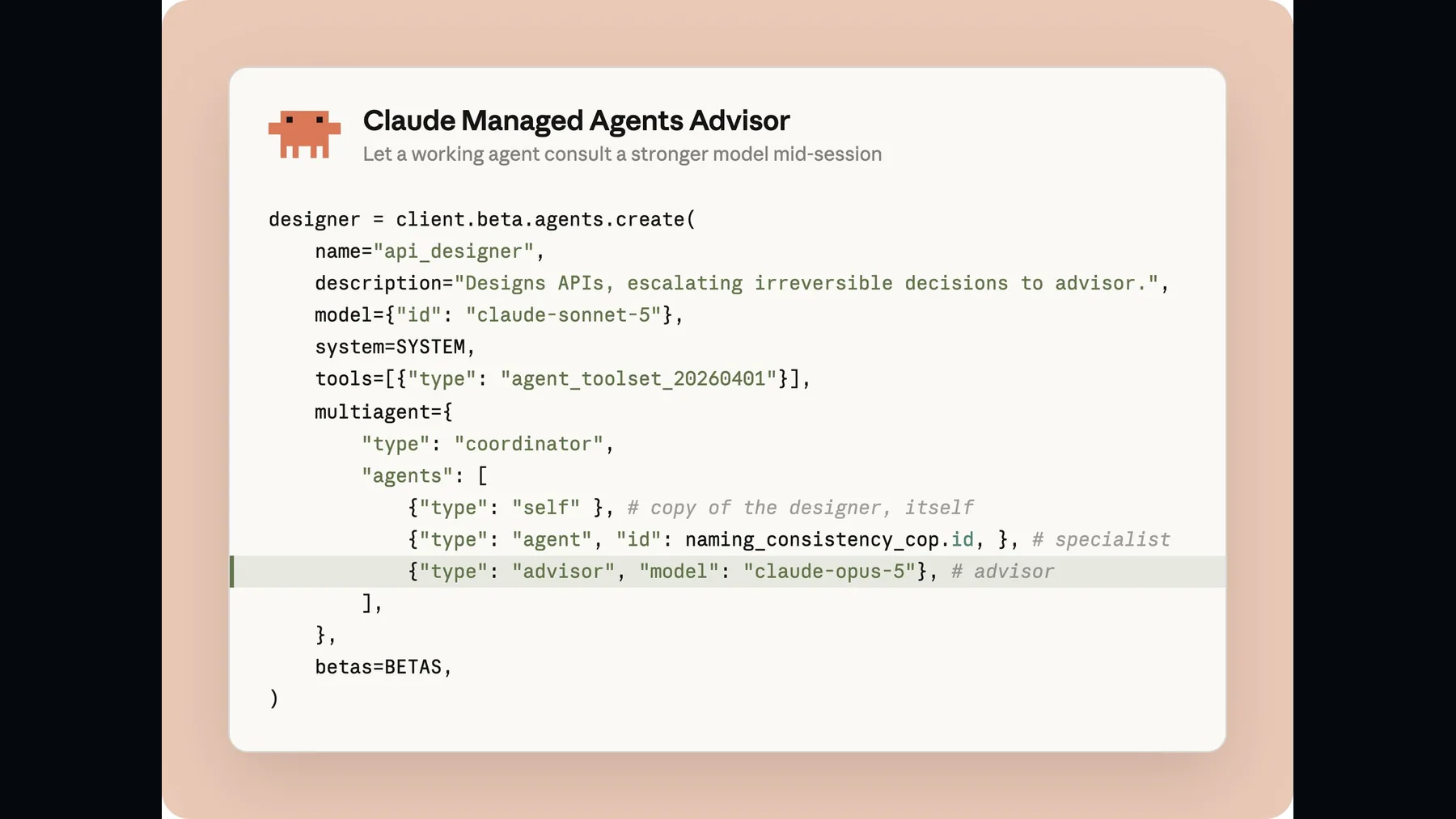
The advisor control is deliberately narrower than an automatic escalation story. Anthropic says the working agent can call a stronger model mid-session for a second opinion; it does not say when that call happens, whether it is required, or what it costs.
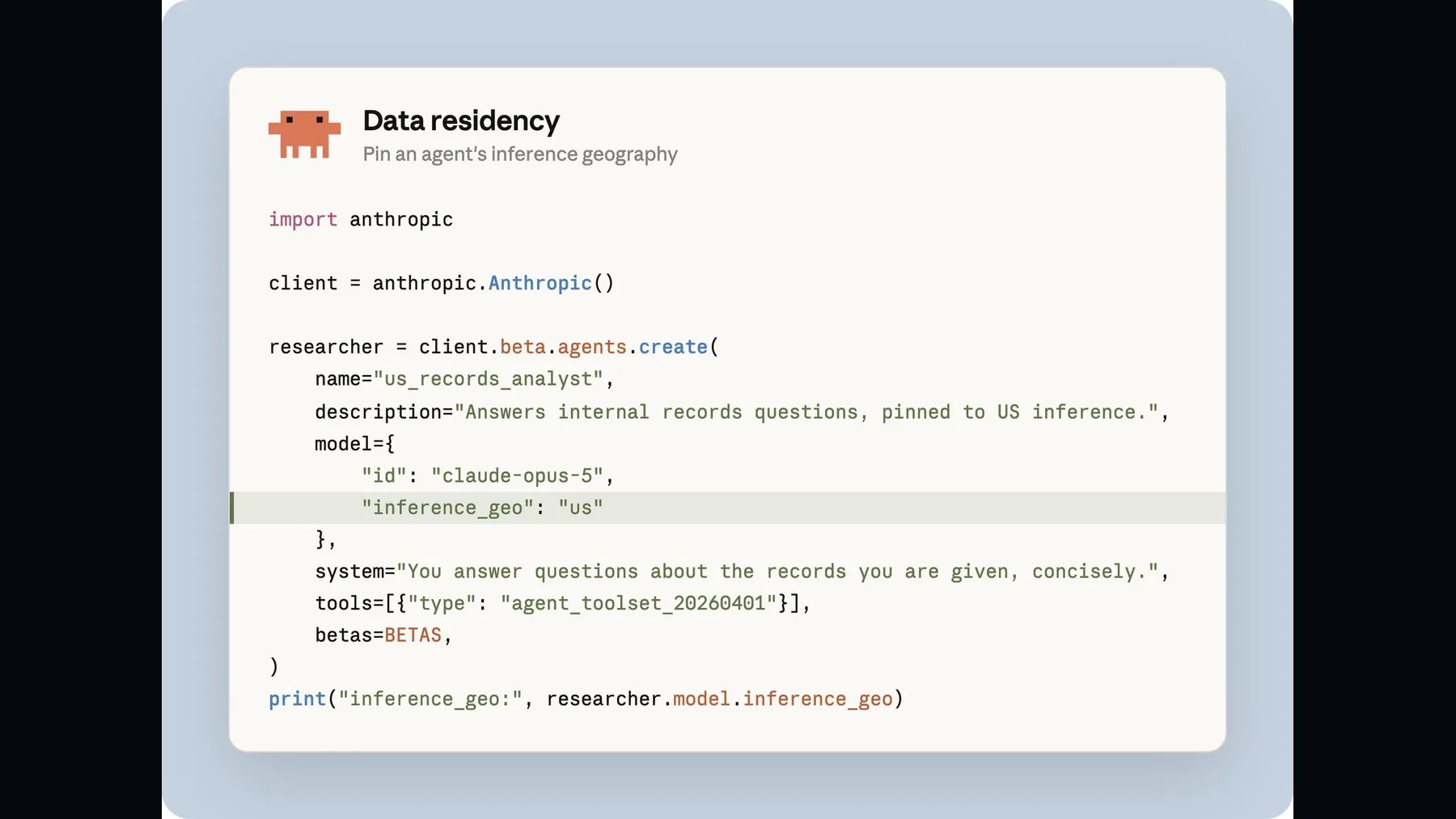
The same restraint applies to location. US inference is presented as an in-region option billed at 1.1x, while global runs at the standard rate. That is a stated configuration and price distinction, not a general compliance claim.
How the control loop works
The session begins with supplied knowledge and location, then carries its limits through the work.
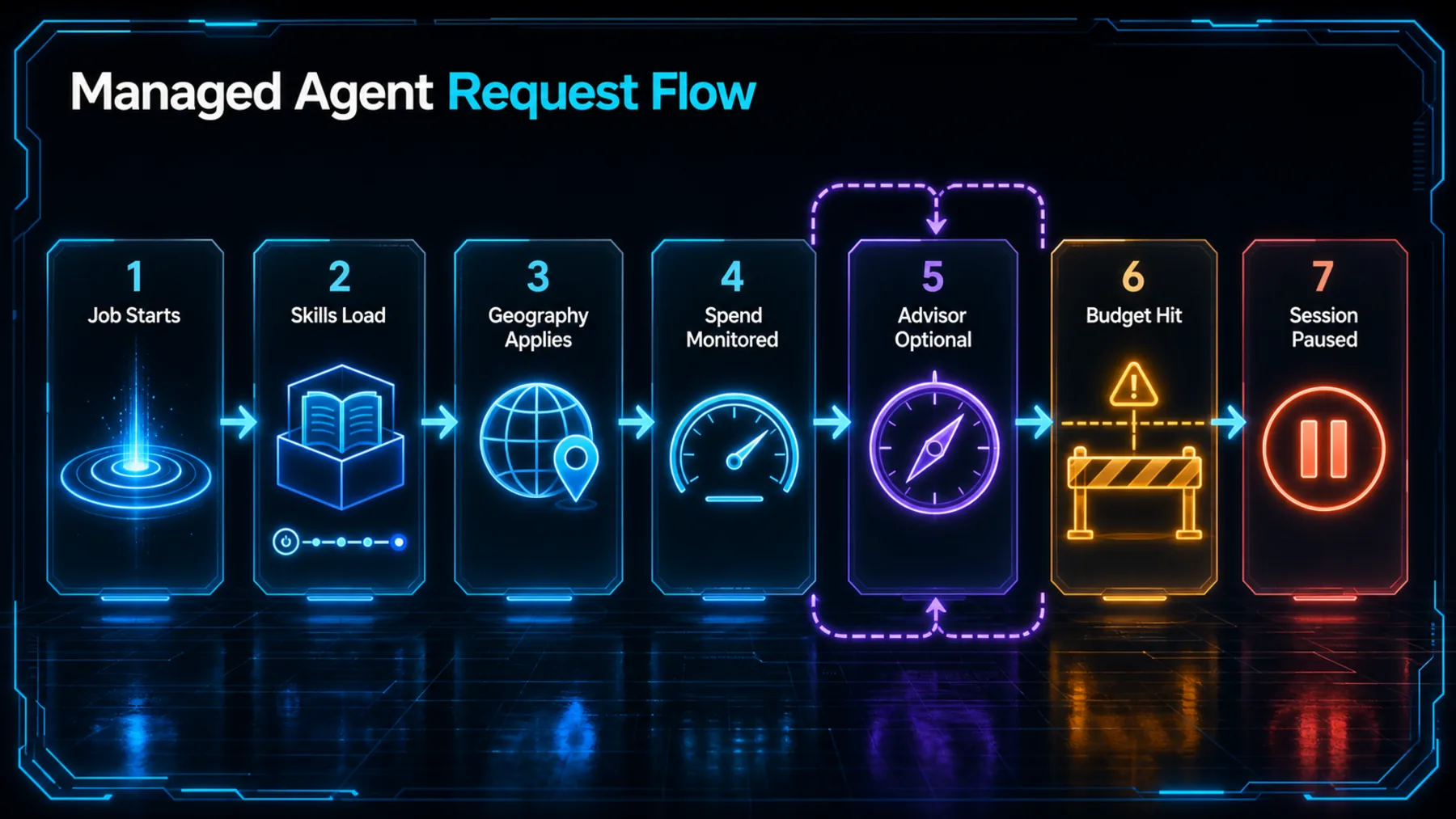
The sequence is simple enough to hold in mind. A job begins with repository skills already picked up at session start. The session runs in the selected inference geography, tracks spend against its budget, and may call an advisor when a second opinion is useful.
Nothing in the announcements suggests skills hot-reload during the session or that advisor use is automatic. The point is not hidden automation; it is a clearer account of where intervention can happen.
Start equipped
Pick up repository skills at session start.
Run bounded
Apply geography and monitor session spend.
Escalate or pause
Call an advisor if needed, or pause at the budget limit.
Choose the boundaries first
The announced controls are most useful when we settle the operating choices before assigning the job.
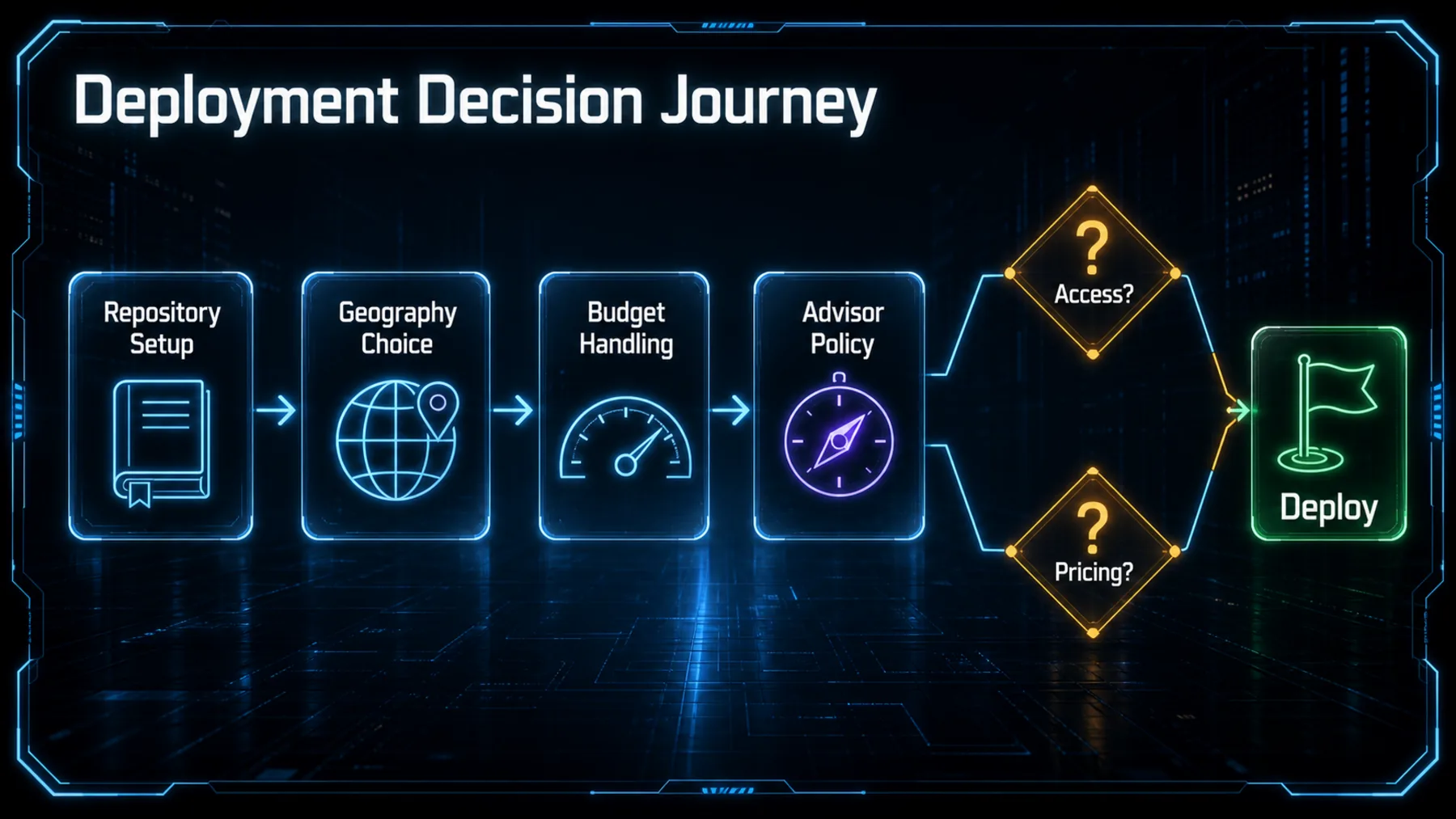
Before we hand a meaningful job to an agent, the practical questions come first. What skills should the repository provide at session start? Should inference run globally or in the US at the stated 1.1x rate? What happens when a budget pause arrives?
The advisor decision deserves the same care. The source confirms that a stronger model can be called for a second opinion, but not the policy, price or availability around that call. Those are decisions to make, not gaps to paper over.
Prepare
Keep the needed skills in the attached repository.
Constrain
Choose geography and budget handling before work begins.
Govern
Set an advisor policy without assuming price or access.
An agent needs operating boundaries
The four announcements form a useful test for whether managed work is governable in practice.
A managed agent becomes easier to trust operationally when we can limit it, locate it, equip it and give it a defined path to escalate.
Altior analysis of four Claude Developers posts
The stronger reading is also the more cautious one. Anthropic has described four controls that make a session easier to frame and inspect, but the announcements do not establish universal availability, outcome quality, security, compliance or savings.
That is enough for a practical test. If we cannot explain the limit, location, starting knowledge and escalation path for a job, calling the agent “managed” does not make the work governable.
Test a managed-agent control loop
Act as an operations lead preparing a Claude Managed Agent session. For the job “review this repository’s open deployment risks”, produce a compact control plan with four labelled parts: session budget and the action to take after a budget_reached pause; inference geography with the stated US versus global rate trade-off; repository skills to load from .claude/skills/ at session start; and the exact question to send to a stronger advisor model for a second opinion. Mark any policy, price or rollout detail not supplied here as unknown.Ready to copy
Keep the unknowns visible
The four controls give us a clearer operating model, but the next evidence needs to answer the unresolved questions: rollout scope, budget ranges, advisor policy and pricing, and whether these controls extend beyond the announced configuration.
Try the promptSignals that could change the picture
- Rollout scope
- Budget ranges
- Advisor policy and price
- Control coverage