Claude Fable 5: A sharper biology safety line
Anthropic says it has narrowed Fable 5’s biology safeguard so more everyday health and learning questions can pass, while dual-use research remains constrained.
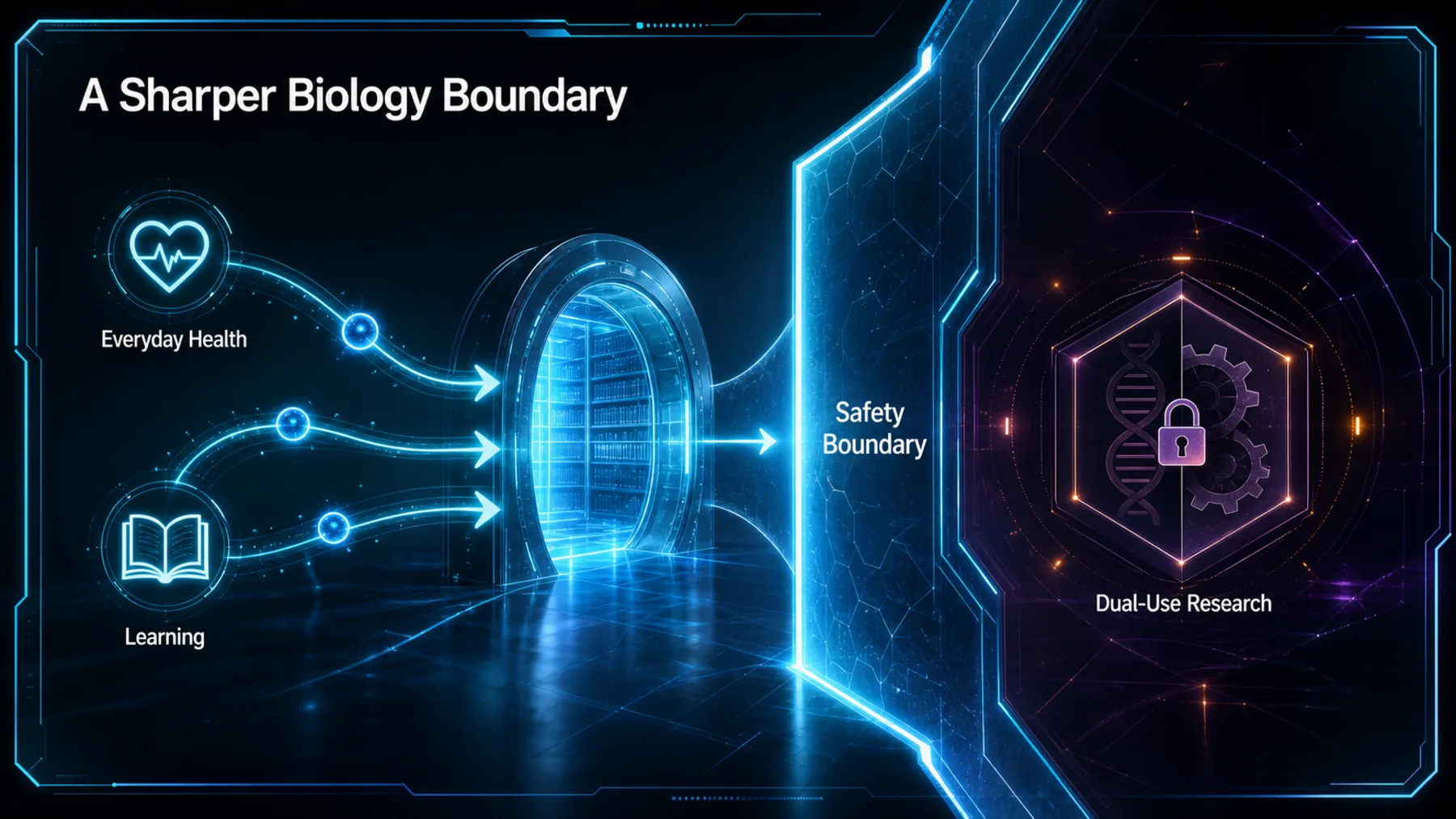
A safety net built for dangerous biology was also catching questions about symptoms, lab results and classroom learning. Anthropic says its update redraws that line: more plainly benign requests can reach Fable 5, while requests judged to involve dual-use biology still fall back to Opus 5.
The useful story is not that the safeguard vanished. It is that Anthropic says it made the boundary more precise—and that precision remains difficult when the same biological knowledge can support care, education or harm.
Useful biology has a dangerous twin
The hard part is not recognising biology. It is separating ordinary help from work that could be misused.
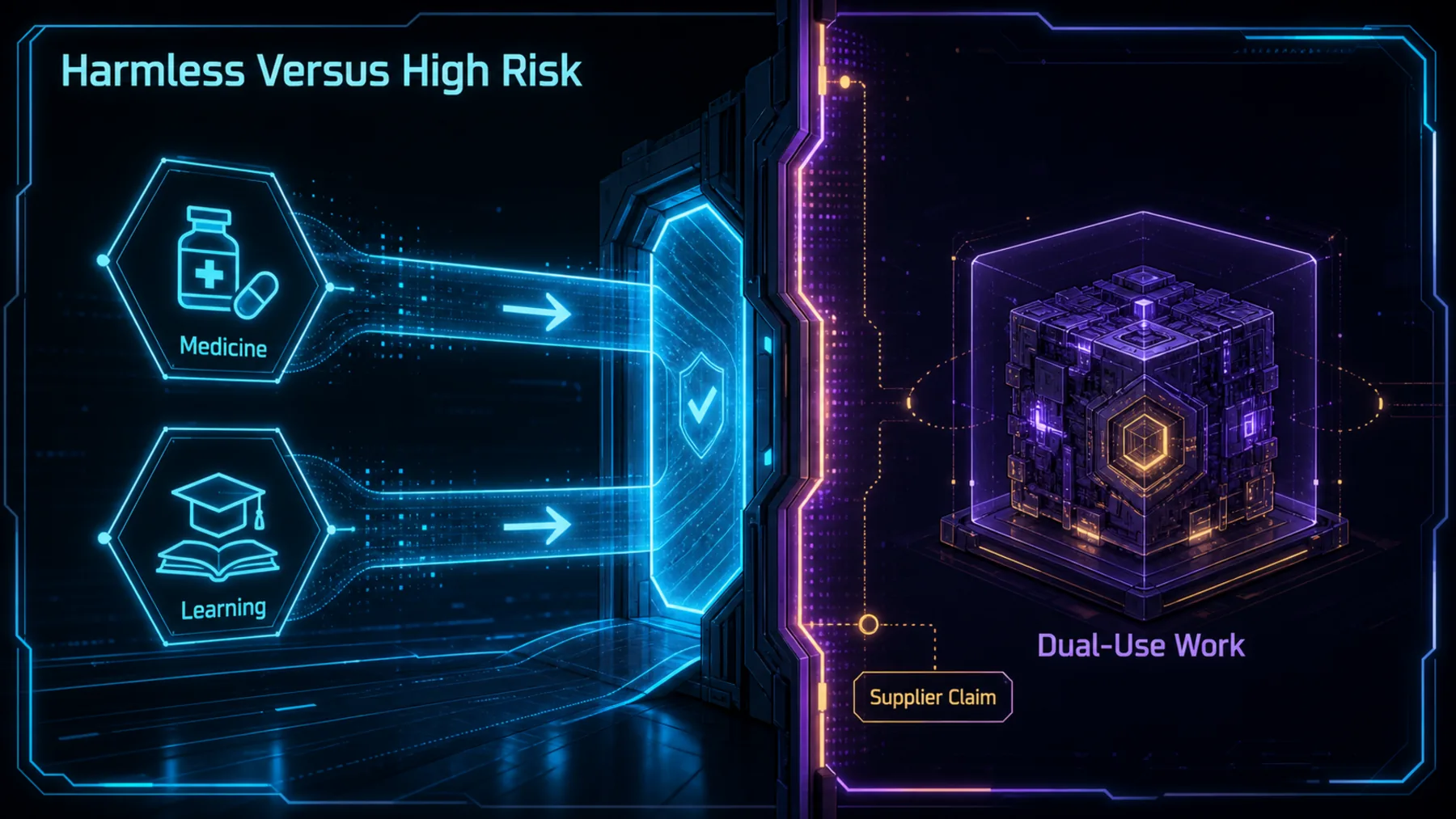
Anthropic says it is often difficult to tell beneficial and harmful uses of AI in biology apart. A question about symptoms, a laboratory result or a classroom topic can sit close to knowledge that becomes riskier in a different context.
That is why a broad safeguard can be both protective and frustrating. The change Anthropic describes is an attempt to reduce unnecessary detours without turning a difficult safety judgement into an automatic yes.
Anthropic says the net narrowed
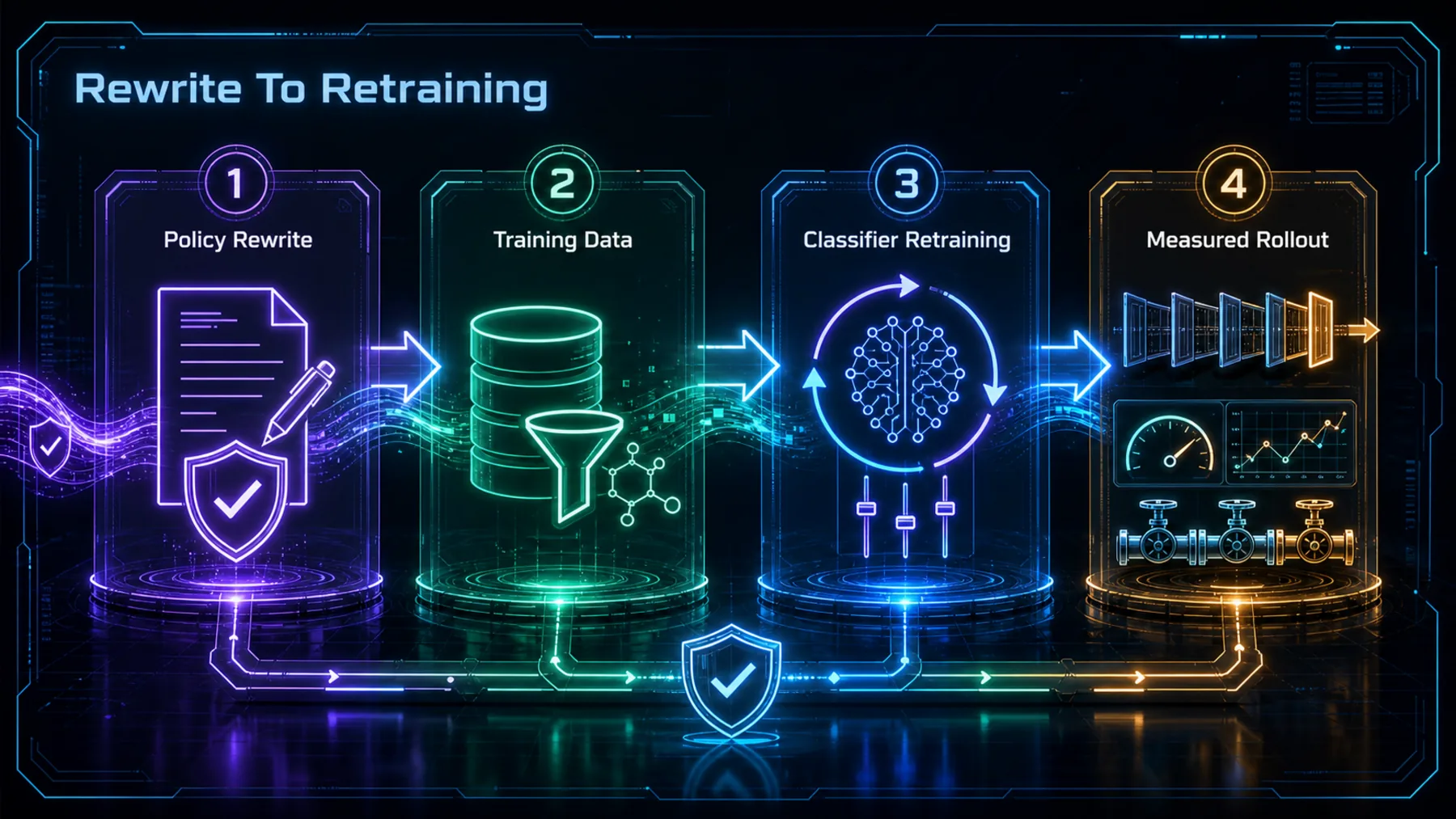
A rewritten rule set, new training data and retraining sit behind the reported reduction in biology-related fallbacks.
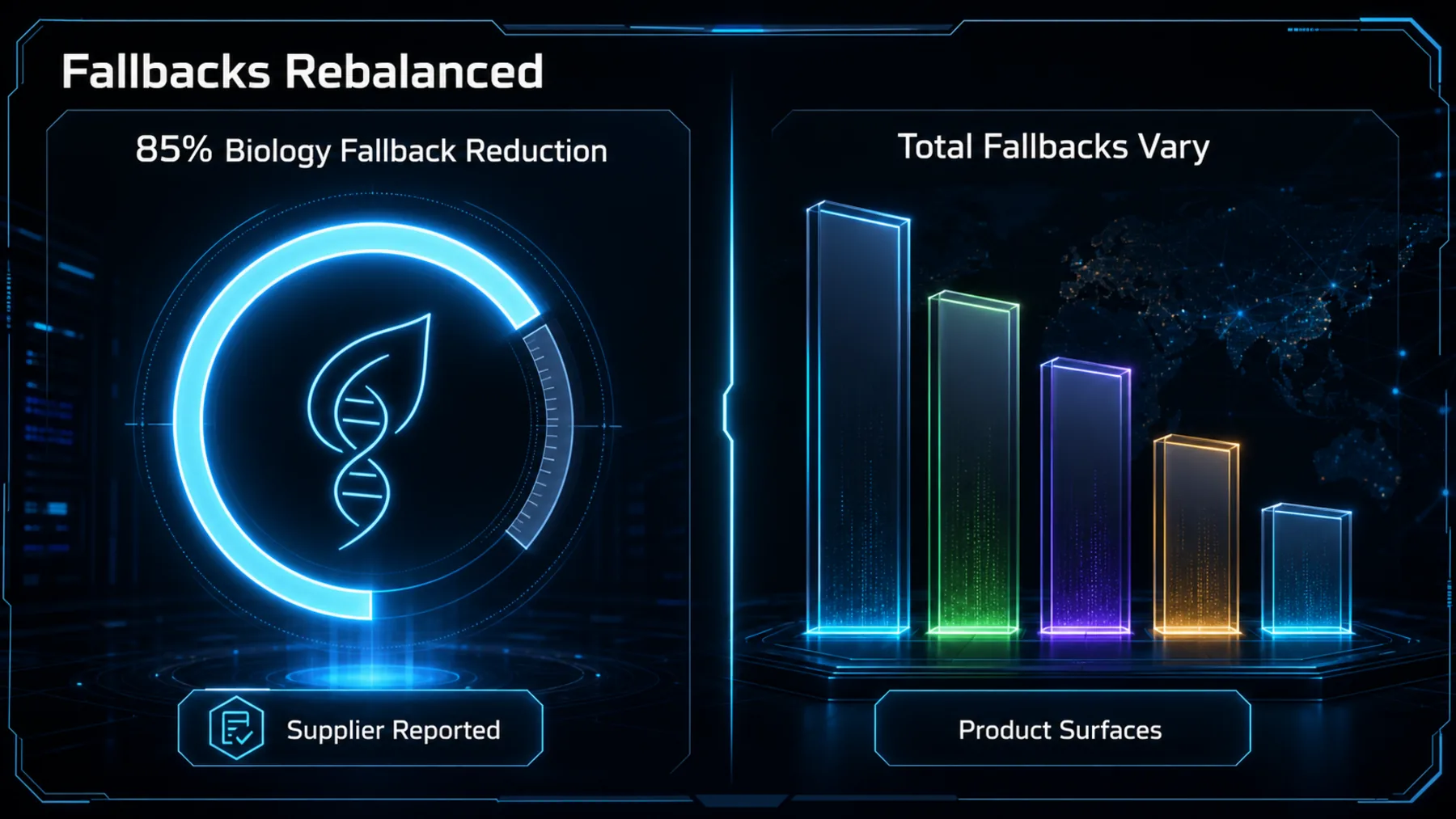
The headline number needs a careful reading. Anthropic reports about 85% fewer biology-related fallbacks in testing across its product surfaces. That is different from a claim about all fallbacks, and different again from an independently verified result in live use.
Anthropic also gives separate expected reductions in total fallbacks: roughly 67% on Claude.ai, 55% on Cowork, 17% on Claude Code and 7% on the Claude Platform. Those figures describe different surfaces and remain Anthropic’s expectations.
The claim in Anthropic’s words
The company’s central promise is fewer unnecessary fallbacks on everyday health and educational questions.
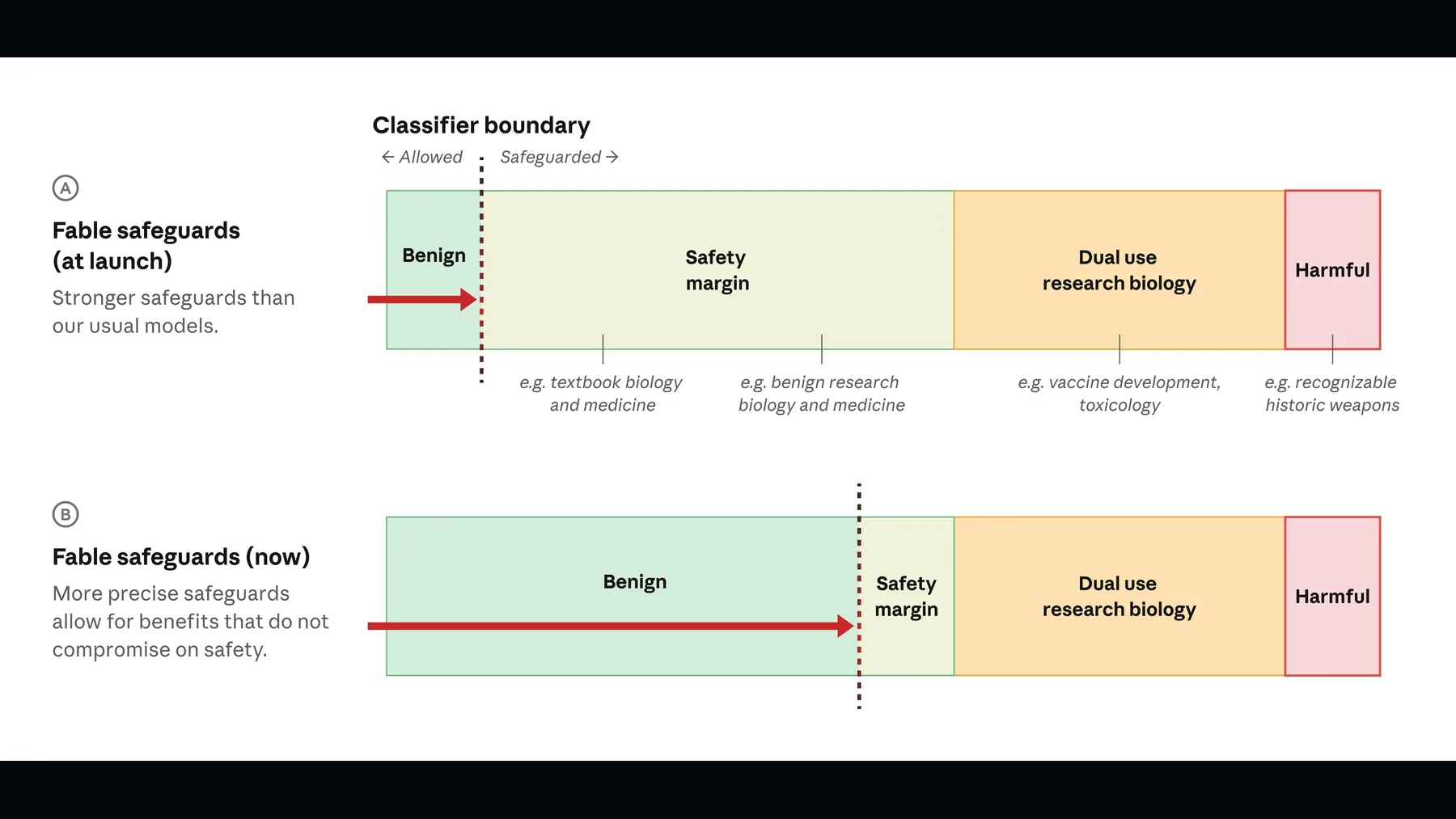
Anthropic’s examples make the intended benefit concrete: interpreting lab results, understanding symptoms and learning about biology in an educational setting. These are the kinds of useful requests an over-wide safety boundary can interrupt.
But the source does not say the problem is finished. It says the update should reduce fallbacks, and it keeps the harder professional and dual-use cases outside the newly widened route.
“In practice, users should see far fewer fallbacks on everyday health and educational questions—for example, interpreting lab results, understanding symptoms, and learning about biology in an educational context.”
Anthropic, “Improving Fable 5’s biology safeguards”
The boundary moved, not disappeared
Anthropic says dual-use biology requests still route away from Fable 5, and false positives remain.
That qualification is the centre of the release. Anthropic says Fable 5 is still not usable for professional biology research and drug development where it considers the request dual-use, including virology, toxicology and molecular design.
It also says false positives will inevitably remain: low-risk requests can still fall within the classifier’s safety margin. A narrower line is useful only if we keep seeing where it still catches too much.
How the safeguard decides
A smaller classifier checks biology requests before Fable 5 answers; safeguarded requests are routed to Opus 5.
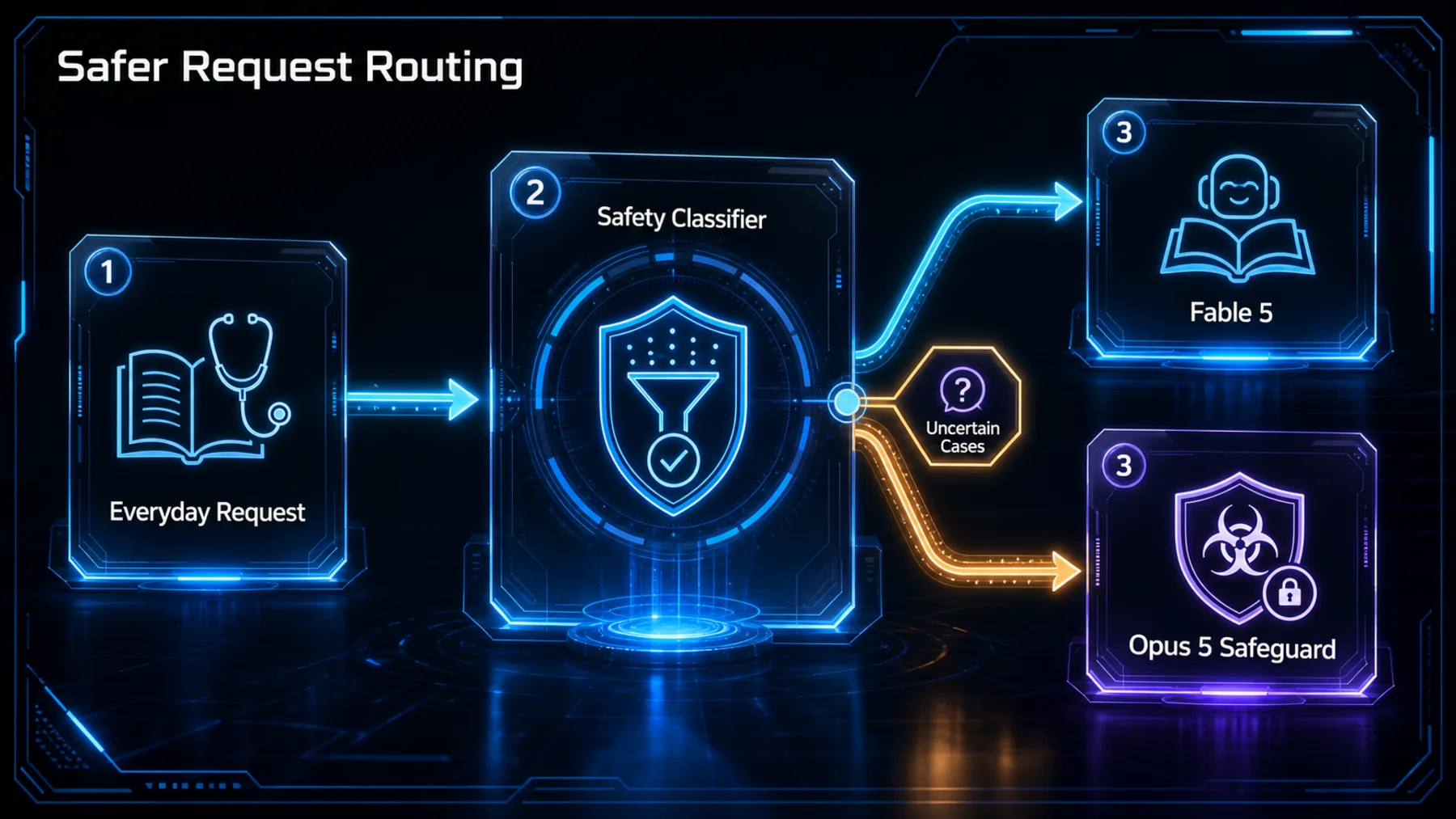
In plain language, Anthropic describes a smaller safety model sitting in front of Fable 5 for biology-related questions. Its job is to decide whether a request can continue or should be redirected to Opus 5 under the safeguard.
The update changes that decision boundary, not the existence of the check. Anthropic says it revised the classifier’s rules in detail around benign uses, then created new training data and retrained it.
Check
A biology request is assessed before Fable 5 responds.
Continue
Anthropic says more benign health and learning requests can proceed.
Redirect
Requests judged dual-use still fall back to Opus 5.
What changes when we ask
Everyday health, clinical and educational questions are the intended beneficiaries; professional dual-use research is not.
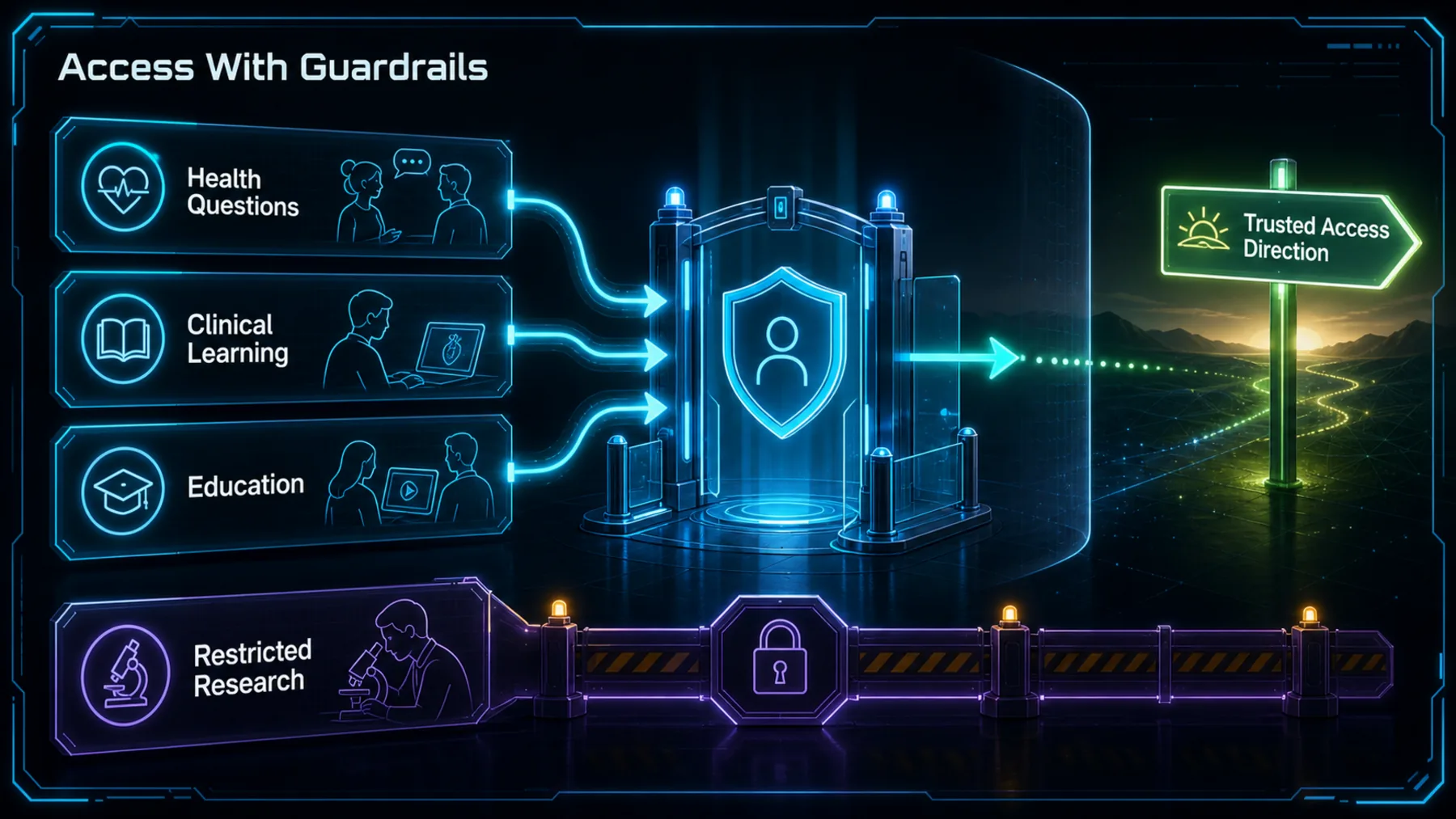
For a plainly benign question, the change is meant to feel less dramatic than the underlying engineering: fewer unexpected diversions. Anthropic says everyday health, clinical and educational questions should be less likely to fall back under the updated safeguard.
That practical improvement has a firm edge. We should not read it as access to professional biology research or drug development, and we should not treat Anthropic’s trusted-access direction as a released programme.
Everyday
Health and learning questions are intended to face fewer fallbacks.
Clinical
Useful clinical context may pass when it remains plainly benign.
Dual-use
Professional research and drug-development work remain restricted.
A narrower line is still a line
The update matters if it makes ordinary help more available without hiding the uncertainty that remains.
Anthropic’s reported result is encouraging precisely because it is limited. A safeguard that needlessly blocks symptoms, lab results and learning questions can make a capable system less useful; a safeguard that ignores dual-use biology creates a different problem altogether.
The stronger reading is also the more cautious one: Anthropic says it has improved the classifier’s precision, not solved biological safety. The real measure is whether the useful path widens while the hard boundary, remaining false positives and unresolved access questions stay visible.
A useful safeguard is not the one that catches everything. It is the one that can become more precise without pretending risk has disappeared.
Creator Broadcast synthesis, based on Anthropic’s 7 August 2026 materials
Test a benign biology boundary
Act as a careful biology explainer. Explain, in plain language, what a routine blood-test result can and cannot suggest, using only general educational information. Give three possible non-diagnostic reasons for one out-of-range marker, list four questions to take to a qualified clinician, and end with a short safety note. Do not diagnose, recommend treatment, or infer personal medical details.Ready to copy
Watch the boundary
Follow whether Anthropic publishes evidence that its narrower safeguard remains effective in practice, how false positives are handled, and whether trusted access becomes a clearly governed route rather than a vague promise.
Try the promptWhat could change the picture
- Published evidence beyond Anthropic’s testing
- False-positive reporting
- Trusted-access details