Claude Code: Separate sessions. One narrow bridge.
Claude Code sessions can exchange short updates without sharing the histories, files or authority that make each session its own.
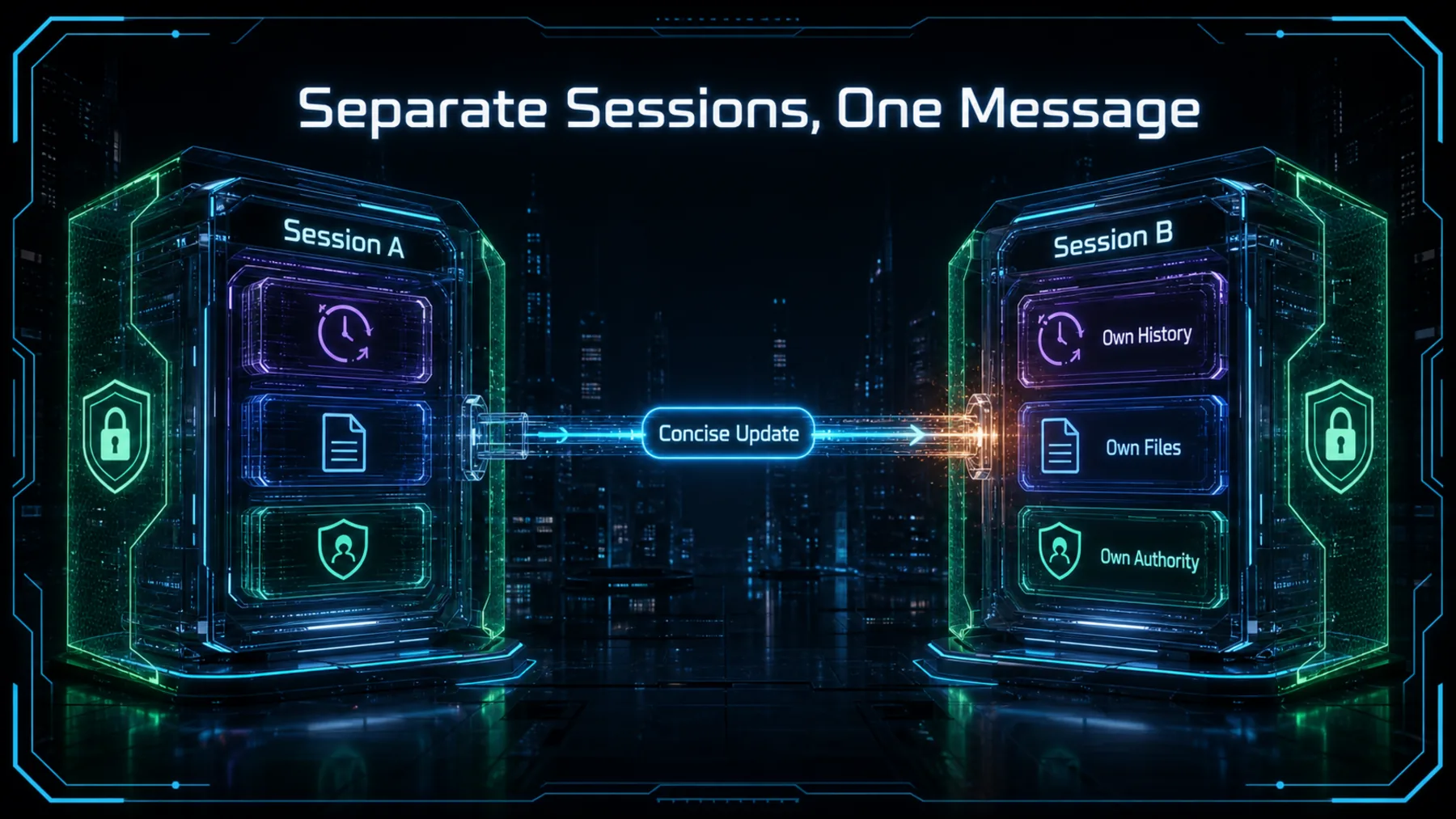
Parallel work usually breaks at the handoff. One session changes something consequential; another continues from an assumption that is no longer true; we become the messenger, copying the update between terminals.
Anthropic says Claude Code sessions can now message each other. What crosses that boundary is a bounded text update, question or reply—not the conversation, the files, or permission to act.
The handoff we stop carrying
A short warning can arrive while related work is still in motion, leaving each session separate.
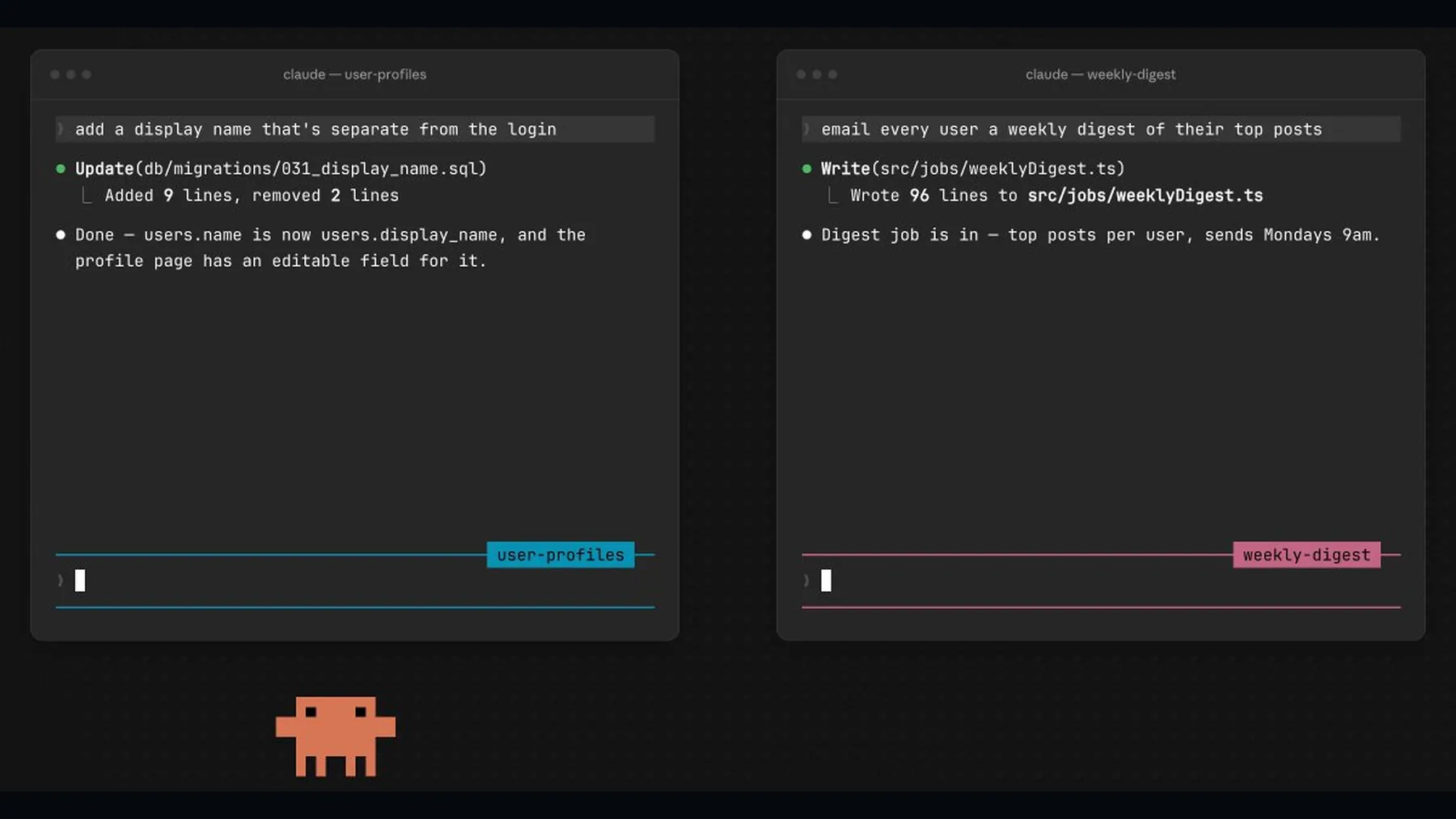
Picture two terminals on connected work. One changes a database field while the other is writing against the old shape. Anthropic says Claude can warn the affected session before we notice the mismatch ourselves.
That makes the feature a coordination layer, not a merged workspace. The message may carry the decision that matters; the receiving session still has to interpret it and act under its own controls.
What can cross — and what cannot
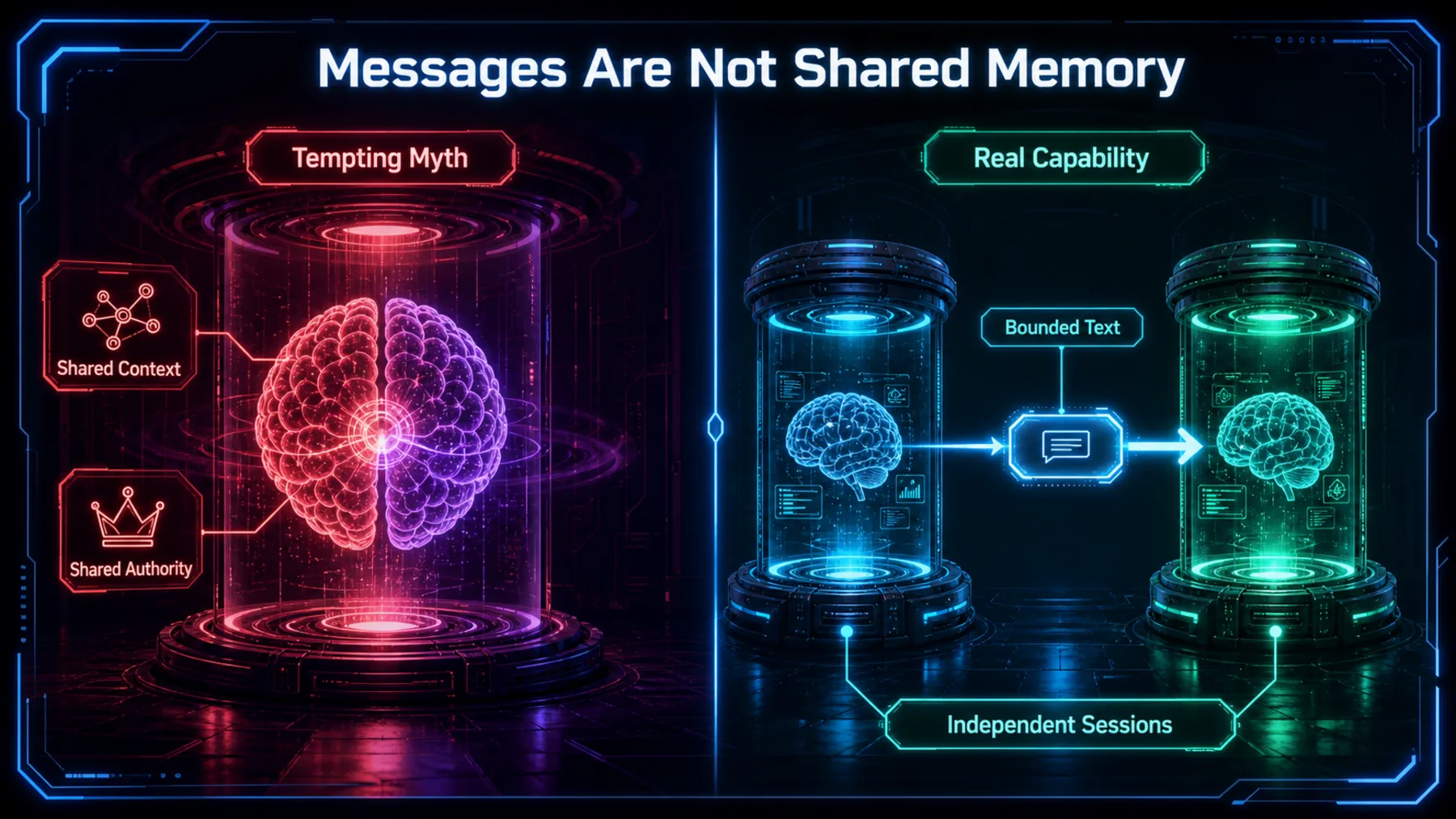
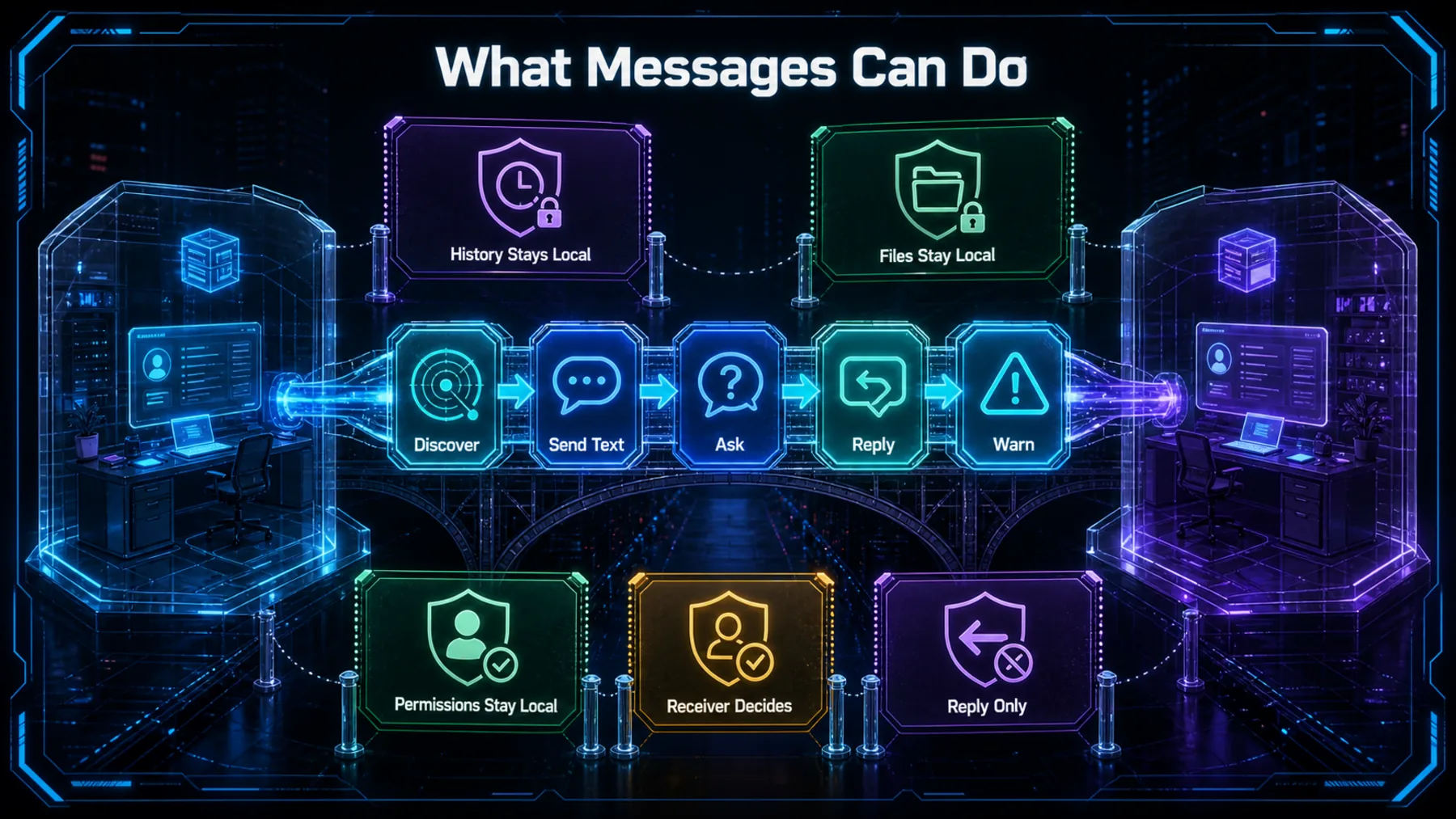
Messages, questions and replies can move between reachable sessions; control does not travel with them.
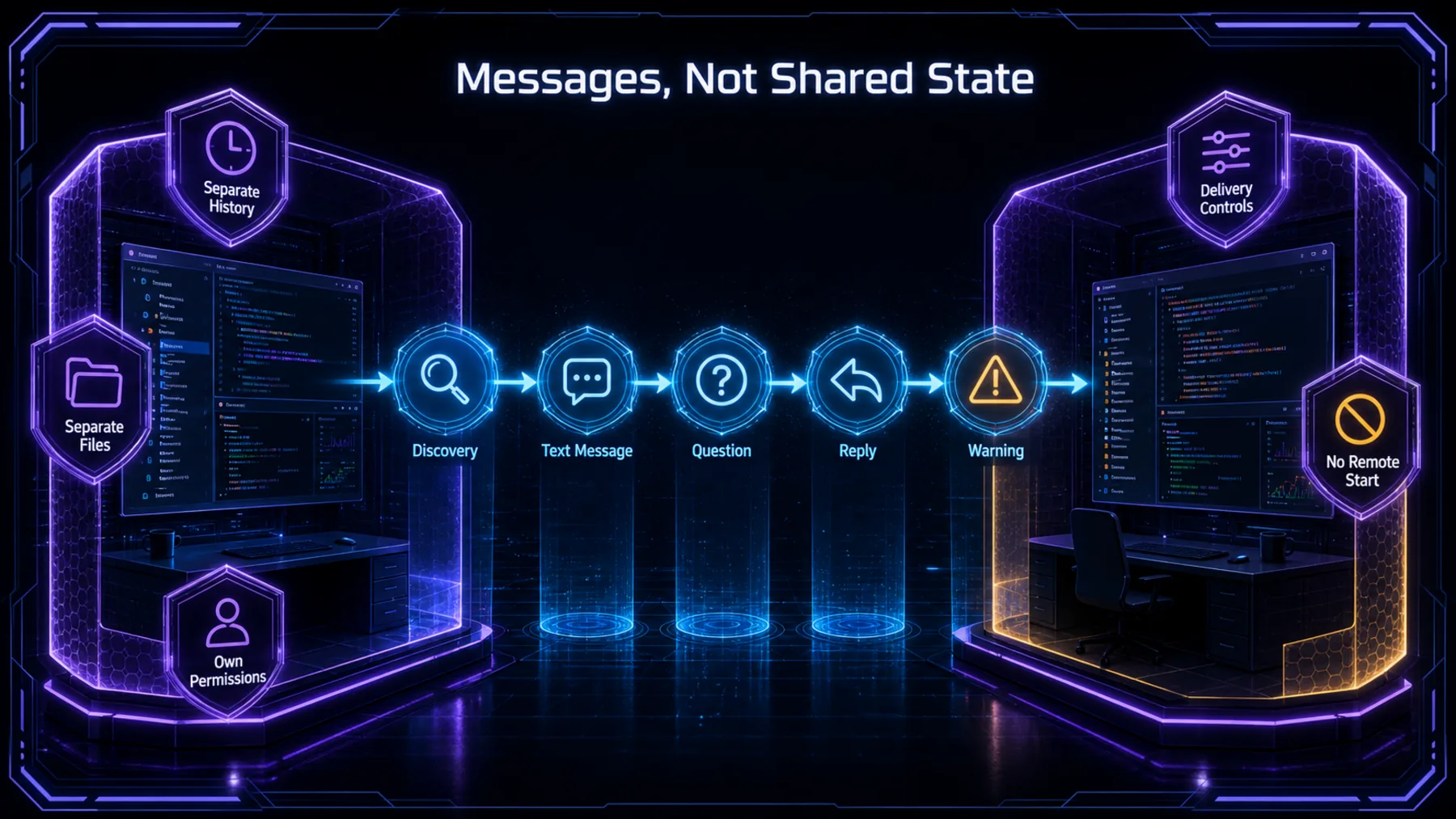
Anthropic documents a useful set of moves: discover a reachable session, send a text message, ask a question, receive a reply, or raise a proactive warning when one task affects another. Same-machine sessions can exchange new messages and replies.
The limits define the feature as much as the capability. A message is text, never history or files. Incoming peer messages cannot approve anything, change configuration or execute commands, and the receiving session’s permissions remain in force.
The boundary Anthropic draws
The official definition is short enough to keep the story honest.
Anthropic’s documentation gives the cleanest description of the feature: one Claude writes a piece of text to another. That wording matters because it rules out the most expansive interpretation before it takes hold.
We can treat a message as a handoff note between independent workspaces. We cannot treat it as a transferred working state, a shared approval path or a substitute for the controls already attached to the receiving session.
A message is a piece of text one Claude writes to another, never conversation history or files.
Anthropic, Claude Code documentation
What the demo proves — and does not
The supplier demonstration shows separate tasks in contact, not a guarantee about every outcome.
The ClaudeDevs announcement shows the intended shape of the feature: sessions can send summaries, ask questions and surface a change that affects another task. It is useful context for how Anthropic presents the release.
It is not evidence of guaranteed delivery, security outcomes, reliability, productivity or broad availability. Those claims would need evidence the announcement does not provide.
How a message moves
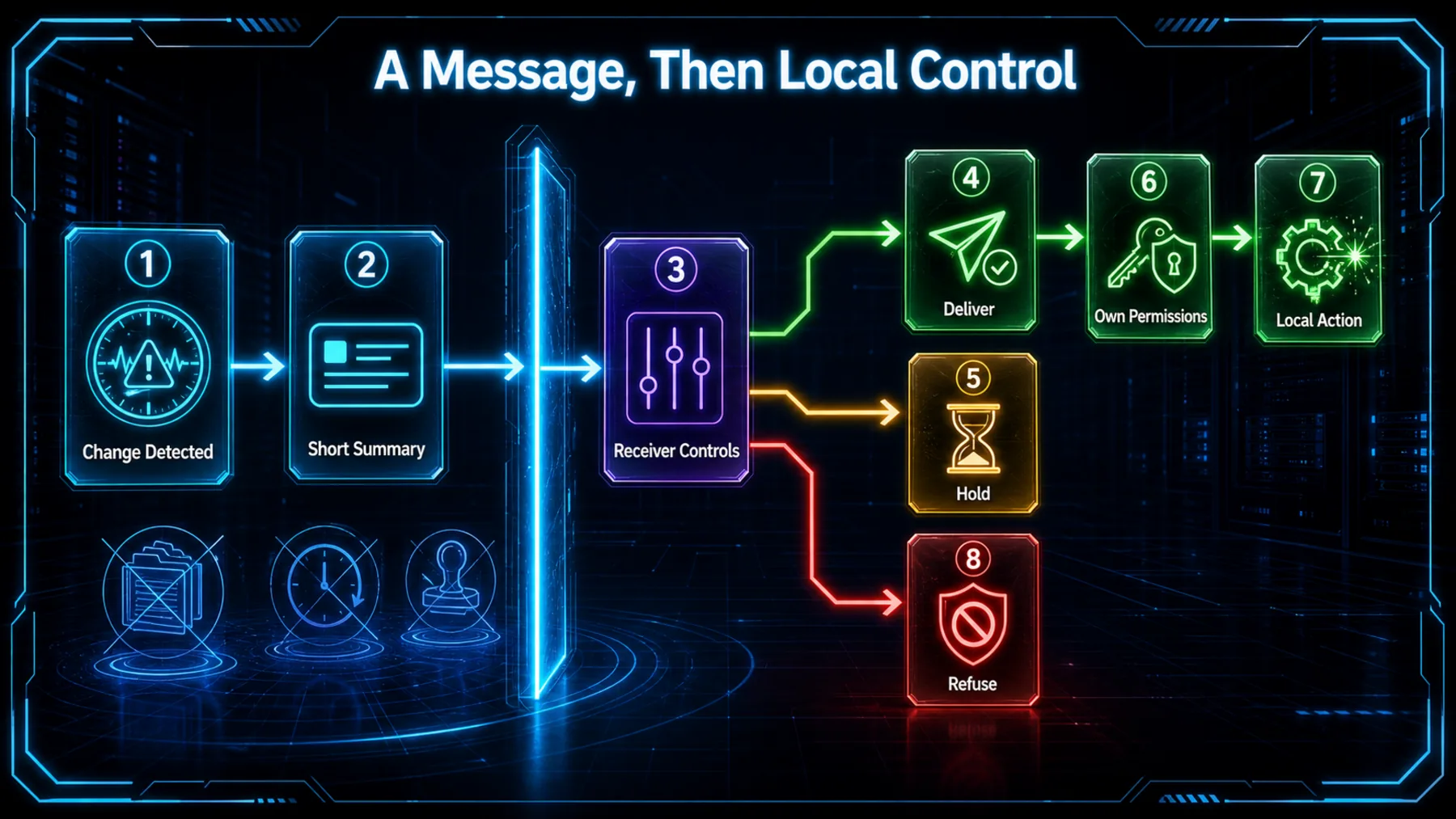
A consequential change becomes a short note, then the receiving session decides what happens next.
A useful handoff begins with a change that matters elsewhere: an updated field, a discovered constraint, a direct question or a warning. The sending session turns that into a concise text message rather than pushing its whole working state across the boundary.
The receiver then controls the outcome. Anthropic documents delivery, hold and refusal behaviours, while its permissions still govern any resulting action. That is the distinction worth keeping in view: coordination can travel; authority stays local.
What we check before relying on it
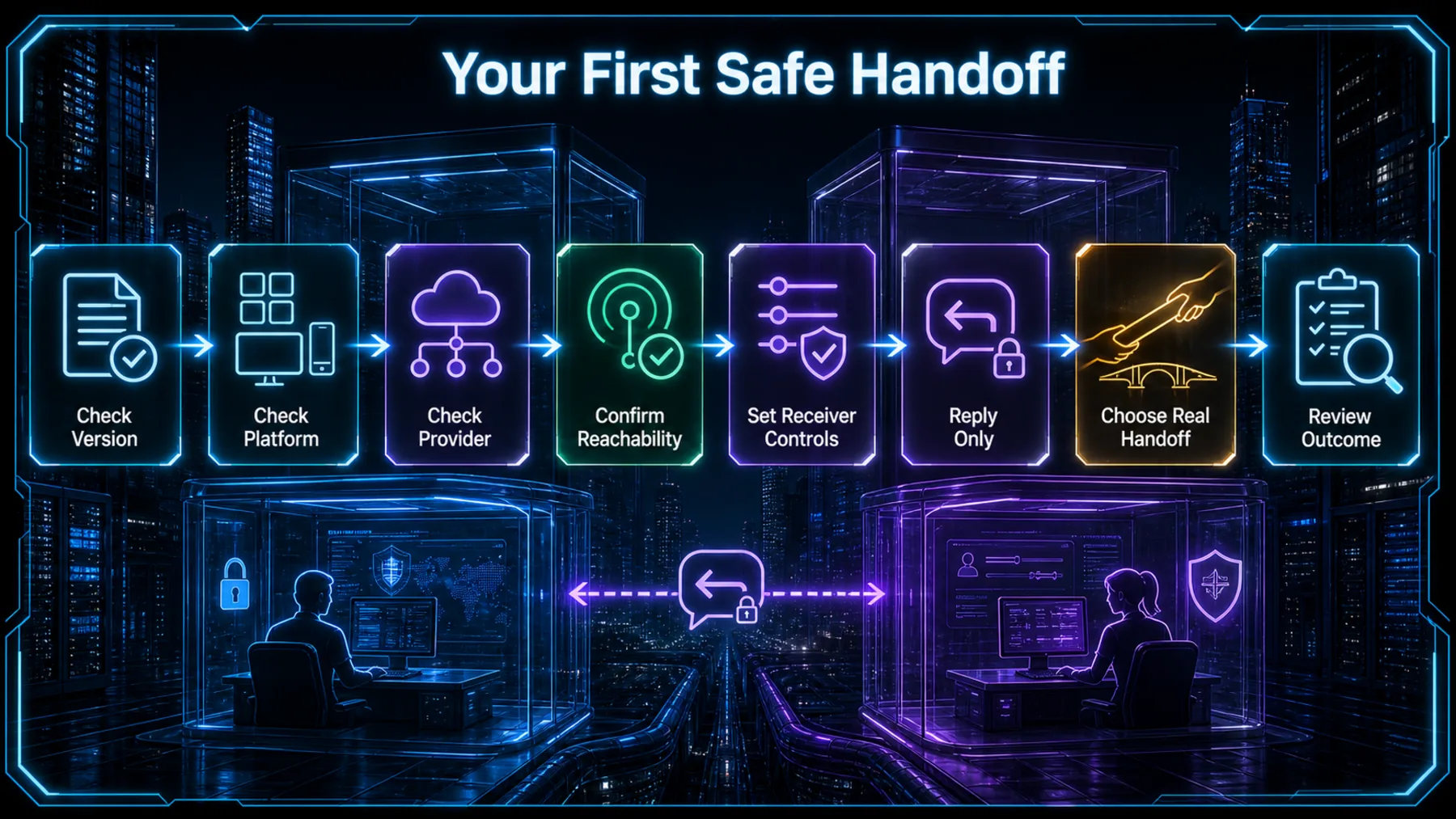
The right first run is a bounded handoff, not an assumption that every session can coordinate everywhere.
Before we rely on cross-session messaging, we check the version and environment first. Anthropic says the feature requires Claude Code v2.1.224 or later and runs on macOS and Linux, including WSL 2—not native Windows.
Then we check the route. Same-machine sessions can send new messages and replies; sessions on another machine and Claude Code on the web are reply-only from the local session. Provider exclusions, Remote Control requirements, feature flags and receiver controls can also constrain what is available.
Coordination without a shared brain
The feature reduces the manual gap between related tasks while preserving the separation that makes those tasks controllable.
Cross-session messaging is most useful when the work is related but the sessions should remain independent. It can move the warning, question or update that prevents a second task from continuing on a stale assumption.
That is a narrower promise than autonomous collaboration, and a more credible one. Anthropic’s documentation describes a channel for text coordination with local controls intact; the missing evidence on reliability and outcomes should remain missing from the claim.
The value is not that separate sessions become one system. It is that the right piece of information can cross the gap without taking history, files or authority with it.
Grounded in Anthropic’s announcement and Claude Code documentation
Test a bounded Claude Code handoff
You are finishing one Claude Code task and need to hand off to another separate session. Write a plain-text update of no more than 120 words: state what changed, name one unresolved risk, ask one precise question, and list the next action. Do not assume the other session has our history, files, configuration or permissions. End with a three-line format: Confirmed / Needs decision / Next action.Ready to copy
Start with one handoff
Test a consequential update between two separate sessions, then inspect what arrived, what stayed local and which receiver controls remained in charge.
Try the promptWhat could change the picture
- Availability
- Receiver controls
- Remote behaviour
- Missing evidence